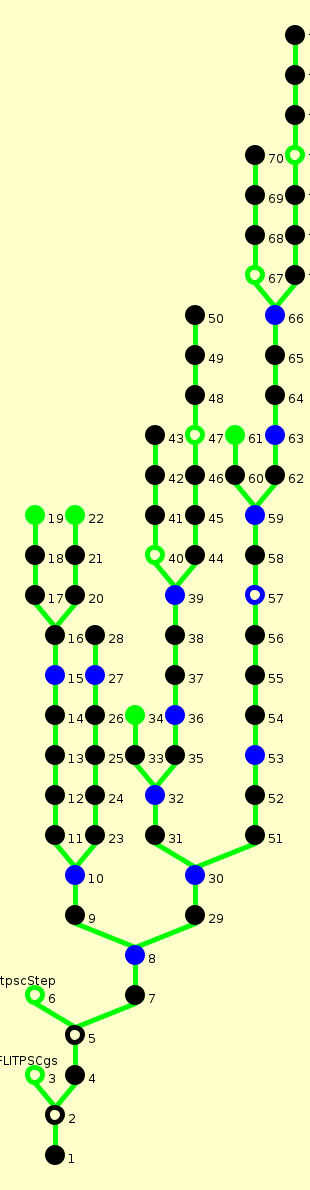
Proof Tree for fliqtStep-lem (View conclusion)
The following image shows the proof tree of sequent calculus. The proved goal is at the bottom. You can click on the nodes to view additional rules. See here for details on colors in a proof tree.
| ⊦ flitpscStep(mkstate(gs, lsf, pcf), a, mkstate(gs0, lsf0, pcf0)) ↔ (∃ t, ls, pc. lstep(gs, lsf(t), pcf(t), a, gs0, ls, pc) ∧ lsf0 = lsf(t := ls) ∧ pcf0 = pcf(t := pc)) ∨ (∃ l. a = globalPSCPERSIST_W(l) ∧ firstPersistW(gs.p(l)) < # gs.p(l) ∧ gs0 = (gs.mem:= gs.mem(l := gs.p(l)[firstPersistW(gs.p(l))].val)).p:= gs.p(l := gs.p(l) -p firstPersistW(gs.p(l))) ∧ lsf0 = lsf ∧ pcf0 = pcf) ∨ (∃ l. a = globalPSCPERSIST_FO(l) ∧ (∃ n. isPersistFO(n, gs.p(l)) ∧ gs0 = gs.p:= gs.p(l := gs.p(l) -p n)) ∧ lsf0 = lsf ∧ pcf0 = pcf) ∨ a = globalPSCCRASH ∧ gs0 = mkFLITPSCgs(gs.mem, λ l. [], λ l. 0, λ l. ∅, λ l. ∅) ∧ lsf0 = lsf ∧ pcf0 = (λ t. (pcf(t) = idle ⊃ idle;crashed)) |
⊦ flitpscStep(mkstate(gs, lsf, pcf), a, mkstate(gs0, lsf0, pcf0)) ↔ (∃ t. pre(gs, lsf(t), pcf(t), a) ∧ gs0 = gstepf(gs, lsf(t), pcf(t), a) ∧ lsf0 = lsf(t := lstepf(gs, lsf(t), pcf(t), a)) ∧ pcf0 = pcf(t := pcstepf(gs, lsf(t), pcf(t), a))) ∨ (∃ l. a = globalPSCPERSIST_W(l) ∧ firstPersistW(gs.p(l)) < # gs.p(l) ∧ gs0 = (gs.mem:= gs.mem(l := gs.p(l)[firstPersistW(gs.p(l))].val)).p:= gs.p(l := gs.p(l) -p firstPersistW(gs.p(l))) ∧ lsf0 = lsf ∧ pcf0 = pcf) ∨ (∃ l. a = globalPSCPERSIST_FO(l) ∧ (∃ n. isPersistFO(n, gs.p(l)) ∧ gs0 = gs.p:= gs.p(l := gs.p(l) -p n)) ∧ lsf0 = lsf ∧ pcf0 = pcf) ∨ a = globalPSCCRASH ∧ gs0 = mkFLITPSCgs(gs.mem, λ l. [], λ l. 0, λ l. ∅, λ l. ∅) ∧ lsf0 = lsf ∧ pcf0 = (λ t. (pcf(t) = idle ⊃ idle;crashed))
Used simplifier rules: lstep: ⊦ lstep(gs, ls, pc, a, gs0, ls0, pc0) ↔ pre(gs, ls, pc, a) ∧ ls0 = lstepf(gs, ls, pc, a) ∧ gs0 = gstepf(gs, ls, pc, a) ∧ pc0 = pcstepf(gs, ls, pc, a);
| ⊦ flitpscStep(mkstate(gs, lsf, pcf), a, mkstate(gs0, lsf0, pcf0)) ↔ (∃ t. pre(gs, lsf(t), pcf(t), a) ∧ gs0 = gstepf(gs, lsf(t), pcf(t), a) ∧ lsf0 = lsf(t := lstepf(gs, lsf(t), pcf(t), a)) ∧ pcf0 = pcf(t := pcstepf(gs, lsf(t), pcf(t), a))) ∨ (∃ l. a = globalPSCPERSIST_W(l) ∧ firstPersistW(gs.p(l)) < # gs.p(l) ∧ gs0 = (gs.mem:= gs.mem(l := gs.p(l)[firstPersistW(gs.p(l))].val)).p:= gs.p(l := gs.p(l) -p firstPersistW(gs.p(l))) ∧ lsf0 = lsf ∧ pcf0 = pcf) ∨ (∃ l. a = globalPSCPERSIST_FO(l) ∧ (∃ n. isPersistFO(n, gs.p(l)) ∧ gs0 = gs.p:= gs.p(l := gs.p(l) -p n)) ∧ lsf0 = lsf ∧ pcf0 = pcf) ∨ a = globalPSCCRASH ∧ gs0 = mkFLITPSCgs(gs.mem, λ l. [], λ l. 0, λ l. ∅, λ l. ∅) ∧ lsf0 = lsf ∧ pcf0 = (λ t. (pcf(t) = idle ⊃ idle;crashed)) |
⊦ (((mem = gs.mem ∧ p = gs.p) ∧ ctr = gs.ctr) ∧ writers = gs.writers) ∧ readers = gs.readers ↔ gs = mkFLITPSCgs(mem, p, ctr, writers, readers)
gs = mkFLITPSCgs(mem, p, ctr, writers, readers) ⊦ flitpscStep(mkstate(gs, lsf, pcf), a, mkstate(gs0, lsf0, pcf0)) ↔ (∃ t. pre(gs, lsf(t), pcf(t), a) ∧ gs0 = gstepf(gs, lsf(t), pcf(t), a) ∧ lsf0 = lsf(t := lstepf(gs, lsf(t), pcf(t), a)) ∧ pcf0 = pcf(t := pcstepf(gs, lsf(t), pcf(t), a))) ∨ (∃ l. a = globalPSCPERSIST_W(l) ∧ firstPersistW(p(l)) < # p(l) ∧ gs0 = (gs.mem:= mem(l := p(l)[firstPersistW(p(l))].val)).p:= p(l := p(l) -p firstPersistW(p(l))) ∧ lsf0 = lsf ∧ pcf0 = pcf) ∨ (∃ l. a = globalPSCPERSIST_FO(l) ∧ (∃ n. isPersistFO(n, p(l)) ∧ gs0 = gs.p:= p(l := p(l) -p n)) ∧ lsf0 = lsf ∧ pcf0 = pcf) ∨ a = globalPSCCRASH ∧ gs0 = mkFLITPSCgs(mem, λ l. [], λ l. 0, λ l. ∅, λ l. ∅) ∧ lsf0 = lsf ∧ pcf0 = (λ t. (pcf(t) = idle ⊃ idle;crashed))
Used terms: gs, mem, ctr, writers, readers, p
| ⊦ (((mem = gs.mem ∧ p = gs.p) ∧ ctr = gs.ctr) ∧ writers = gs.writers) ∧ readers = gs.readers ↔ gs = mkFLITPSCgs(mem, p, ctr, writers, readers) |
| gs = mkFLITPSCgs(mem, p, ctr, writers, readers) ⊦ flitpscStep(mkstate(gs, lsf, pcf), a, mkstate(gs0, lsf0, pcf0)) ↔ (∃ t. pre(gs, lsf(t), pcf(t), a) ∧ gs0 = gstepf(gs, lsf(t), pcf(t), a) ∧ lsf0 = lsf(t := lstepf(gs, lsf(t), pcf(t), a)) ∧ pcf0 = pcf(t := pcstepf(gs, lsf(t), pcf(t), a))) ∨ (∃ l. a = globalPSCPERSIST_W(l) ∧ firstPersistW(p(l)) < # p(l) ∧ gs0 = (gs.mem:= mem(l := p(l)[firstPersistW(p(l))].val)).p:= p(l := p(l) -p firstPersistW(p(l))) ∧ lsf0 = lsf ∧ pcf0 = pcf) ∨ (∃ l. a = globalPSCPERSIST_FO(l) ∧ (∃ n. isPersistFO(n, p(l)) ∧ gs0 = gs.p:= p(l := p(l) -p n)) ∧ lsf0 = lsf ∧ pcf0 = pcf) ∨ a = globalPSCCRASH ∧ gs0 = mkFLITPSCgs(mem, λ l. [], λ l. 0, λ l. ∅, λ l. ∅) ∧ lsf0 = lsf ∧ pcf0 = (λ t. (pcf(t) = idle ⊃ idle;crashed)) |
⊦ flitpscStep(mkstate(mkFLITPSCgs(mem, p, ctr, writers, readers), lsf, pcf), a, mkstate(gs0, lsf0, pcf0)) ↔ (∃ t. pre(mkFLITPSCgs(mem, p, ctr, writers, readers), lsf(t), pcf(t), a) ∧ gs0 = gstepf(mkFLITPSCgs(mem, p, ctr, writers, readers), lsf(t), pcf(t), a) ∧ lsf0 = lsf(t := lstepf(mkFLITPSCgs(mem, p, ctr, writers, readers), lsf(t), pcf(t), a)) ∧ pcf0 = pcf(t := pcstepf(mkFLITPSCgs(mem, p, ctr, writers, readers), lsf(t), pcf(t), a))) ∨ (∃ l. a = globalPSCPERSIST_W(l) ∧ firstPersistW(p(l)) < # p(l) ∧ gs0 = mkFLITPSCgs(mem(l := p(l)[firstPersistW(p(l))].val), p(l := p(l) -p firstPersistW(p(l))), ctr, writers, readers) ∧ lsf0 = lsf ∧ pcf0 = pcf) ∨ (∃ l. a = globalPSCPERSIST_FO(l) ∧ (∃ n. isPersistFO(n, p(l)) ∧ gs0 = mkFLITPSCgs(mem, p(l := p(l) -p n), ctr, writers, readers)) ∧ lsf0 = lsf ∧ pcf0 = pcf) ∨ a = globalPSCCRASH ∧ gs0 = mkFLITPSCgs(mem, λ l. [], λ l. 0, λ l. ∅, λ l. ∅) ∧ lsf0 = lsf ∧ pcf0 = (λ t. (pcf(t) = idle ⊃ idle;crashed))
Used simplifier rules: upd-mkFLITPSCgs-dotmem: ⊦ mkFLITPSCgs(mem, p, ctr, writers, writers0).mem:= mem0 = mkFLITPSCgs(mem0, p, ctr, writers, writers0); upd-mkFLITPSCgs-dotp: ⊦ mkFLITPSCgs(mem, p, ctr, writers, writers0).p:= p0 = mkFLITPSCgs(mem, p0, ctr, writers, writers0);
| ⊦ flitpscStep(mkstate(mkFLITPSCgs(mem, p, ctr, writers, readers), lsf, pcf), a, mkstate(gs0, lsf0, pcf0)) ↔ (∃ t. pre(mkFLITPSCgs(mem, p, ctr, writers, readers), lsf(t), pcf(t), a) ∧ gs0 = gstepf(mkFLITPSCgs(mem, p, ctr, writers, readers), lsf(t), pcf(t), a) ∧ lsf0 = lsf(t := lstepf(mkFLITPSCgs(mem, p, ctr, writers, readers), lsf(t), pcf(t), a)) ∧ pcf0 = pcf(t := pcstepf(mkFLITPSCgs(mem, p, ctr, writers, readers), lsf(t), pcf(t), a))) ∨ (∃ l. a = globalPSCPERSIST_W(l) ∧ firstPersistW(p(l)) < # p(l) ∧ gs0 = mkFLITPSCgs(mem(l := p(l)[firstPersistW(p(l))].val), p(l := p(l) -p firstPersistW(p(l))), ctr, writers, readers) ∧ lsf0 = lsf ∧ pcf0 = pcf) ∨ (∃ l. a = globalPSCPERSIST_FO(l) ∧ (∃ n. isPersistFO(n, p(l)) ∧ gs0 = mkFLITPSCgs(mem, p(l := p(l) -p n), ctr, writers, readers)) ∧ lsf0 = lsf ∧ pcf0 = pcf) ∨ a = globalPSCCRASH ∧ gs0 = mkFLITPSCgs(mem, λ l. [], λ l. 0, λ l. ∅, λ l. ∅) ∧ lsf0 = lsf ∧ pcf0 = (λ t. (pcf(t) = idle ⊃ idle;crashed)) |
⊦ flitpscStep(mkstate(gs, lsf, pcf), a, mkstate(gs0, lsf0, pcf0)) ↔ (∃ t, ls, pc. lstep(gs, lsf(t), pcf(t), a, gs0, ls, pc) ∧ lsf0 = lsf(t := ls) ∧ pcf0 = pcf(t := pc)) ∨ (∃ l. a = globalPSCPERSIST_W(l) ∧ firstPersistW(gs.p(l)) < # gs.p(l) ∧ gs0 = (gs.mem:= gs.mem(l := gs.p(l)[firstPersistW(gs.p(l))].val)).p:= gs.p(l := gs.p(l) -p firstPersistW(gs.p(l))) ∧ lsf0 = lsf ∧ pcf0 = pcf) ∨ (∃ l. a = globalPSCPERSIST_FO(l) ∧ (∃ n. isPersistFO(n, gs.p(l))) ∧ ⟨p := gs.p; PSCPERSIST_FO(l; p); gs.p := p⟩ (gs0 = gs ∧ lsf0 = lsf ∧ pcf0 = pcf)) ∨ a = globalPSCCRASH ∧ ⟨p := gs.p, ctr := gs.ctr, writers := gs.writers, readers := gs.readers; PSCCRASH(; p, ctr, writers, readers, pcf); gs := (((gs.p:= p).ctr:= ctr).writers:= writers).readers:= readers⟩ (gs0 = gs ∧ lsf0 = lsf ∧ pcf0 = pcf)
a0 = a, gs1 = mkFLITPSCgs(mem, p, ctr, writers, readers), gs2 = gs0, lsf1 = lsf0, lsf2 = lsf, pcf1 = pcf0, pcf2 = pcf ⊦ (∃ t, ls, pc. lstep(gs1, lsf2(t), pcf2(t), a0, gs2, ls, pc) ∧ lsf1 = lsf2(t := ls) ∧ pcf1 = pcf2(t := pc)) ∨ (∃ l. a0 = globalPSCPERSIST_W(l) ∧ firstPersistW(gs1.p(l)) < # gs1.p(l) ∧ gs2 = (gs1.mem:= gs1.mem(l := gs1.p(l)[firstPersistW(gs1.p(l))].val)).p:= gs1.p(l := gs1.p(l) -p firstPersistW(gs1.p(l))) ∧ lsf1 = lsf2 ∧ pcf1 = pcf2) ∨ (∃ l. a0 = globalPSCPERSIST_FO(l) ∧ (∃ n. isPersistFO(n, gs1.p(l))) ∧ ⟨p := gs1.p; PSCPERSIST_FO(l; p); gs1.p := p⟩ (gs2 = gs1 ∧ lsf1 = lsf2 ∧ pcf1 = pcf2)) ∨ a0 = globalPSCCRASH ∧ ⟨p := gs1.p, ctr := gs1.ctr, writers := gs1.writers, readers := gs1.readers; PSCCRASH(; p, ctr, writers, readers, pcf2); gs1 := (((gs1.p:= p).ctr:= ctr).writers:= writers).readers:= readers⟩ (gs2 = gs1 ∧ lsf1 = lsf2 ∧ pcf1 = pcf2) ↔ (∃ t. pre(mkFLITPSCgs(mem, p, ctr, writers, readers), lsf(t), pcf(t), a) ∧ gs0 = gstepf(mkFLITPSCgs(mem, p, ctr, writers, readers), lsf(t), pcf(t), a) ∧ lsf0 = lsf(t := lstepf(mkFLITPSCgs(mem, p, ctr, writers, readers), lsf(t), pcf(t), a)) ∧ pcf0 = pcf(t := pcstepf(mkFLITPSCgs(mem, p, ctr, writers, readers), lsf(t), pcf(t), a))) ∨ (∃ l. a = globalPSCPERSIST_W(l) ∧ firstPersistW(p(l)) < # p(l) ∧ gs0 = mkFLITPSCgs(mem(l := p(l)[firstPersistW(p(l))].val), p(l := p(l) -p firstPersistW(p(l))), ctr, writers, readers) ∧ lsf0 = lsf ∧ pcf0 = pcf) ∨ (∃ l. a = globalPSCPERSIST_FO(l) ∧ (∃ n. isPersistFO(n, p(l)) ∧ gs0 = mkFLITPSCgs(mem, p(l := p(l) -p n), ctr, writers, readers)) ∧ lsf0 = lsf ∧ pcf0 = pcf) ∨ a = globalPSCCRASH ∧ gs0 = mkFLITPSCgs(mem, λ l. [], λ l. 0, λ l. ∅, λ l. ∅) ∧ lsf0 = lsf ∧ pcf0 = (λ t. (pcf(t) = idle ⊃ idle;crashed))
Used terms: mkFLITPSCgs(mem, p, ctr, writers, readers), gs0, lsf0, a, pcf0, pcf, lsf
| ⊦ flitpscStep(mkstate(gs, lsf, pcf), a, mkstate(gs0, lsf0, pcf0)) ↔ (∃ t, ls, pc. lstep(gs, lsf(t), pcf(t), a, gs0, ls, pc) ∧ lsf0 = lsf(t := ls) ∧ pcf0 = pcf(t := pc)) ∨ (∃ l. a = globalPSCPERSIST_W(l) ∧ firstPersistW(gs.p(l)) < # gs.p(l) ∧ gs0 = (gs.mem:= gs.mem(l := gs.p(l)[firstPersistW(gs.p(l))].val)).p:= gs.p(l := gs.p(l) -p firstPersistW(gs.p(l))) ∧ lsf0 = lsf ∧ pcf0 = pcf) ∨ (∃ l. a = globalPSCPERSIST_FO(l) ∧ (∃ n. isPersistFO(n, gs.p(l))) ∧ ⟨p := gs.p; PSCPERSIST_FO(l; p); gs.p := p⟩ (gs0 = gs ∧ lsf0 = lsf ∧ pcf0 = pcf)) ∨ a = globalPSCCRASH ∧ ⟨p := gs.p, ctr := gs.ctr, writers := gs.writers, readers := gs.readers; PSCCRASH(; p, ctr, writers, readers, pcf); gs := (((gs.p:= p).ctr:= ctr).writers:= writers).readers:= readers⟩ (gs0 = gs ∧ lsf0 = lsf ∧ pcf0 = pcf) |
| a0 = a, gs1 = mkFLITPSCgs(mem, p, ctr, writers, readers), gs2 = gs0, lsf1 = lsf0, lsf2 = lsf, pcf1 = pcf0, pcf2 = pcf ⊦ (∃ t, ls, pc. lstep(gs1, lsf2(t), pcf2(t), a0, gs2, ls, pc) ∧ lsf1 = lsf2(t := ls) ∧ pcf1 = pcf2(t := pc)) ∨ (∃ l. a0 = globalPSCPERSIST_W(l) ∧ firstPersistW(gs1.p(l)) < # gs1.p(l) ∧ gs2 = (gs1.mem:= gs1.mem(l := gs1.p(l)[firstPersistW(gs1.p(l))].val)).p:= gs1.p(l := gs1.p(l) -p firstPersistW(gs1.p(l))) ∧ lsf1 = lsf2 ∧ pcf1 = pcf2) ∨ (∃ l. a0 = globalPSCPERSIST_FO(l) ∧ (∃ n. isPersistFO(n, gs1.p(l))) ∧ ⟨p := gs1.p; PSCPERSIST_FO(l; p); gs1.p := p⟩ (gs2 = gs1 ∧ lsf1 = lsf2 ∧ pcf1 = pcf2)) ∨ a0 = globalPSCCRASH ∧ ⟨p := gs1.p, ctr := gs1.ctr, writers := gs1.writers, readers := gs1.readers; PSCCRASH(; p, ctr, writers, readers, pcf2); gs1 := (((gs1.p:= p).ctr:= ctr).writers:= writers).readers:= readers⟩ (gs2 = gs1 ∧ lsf1 = lsf2 ∧ pcf1 = pcf2) ↔ (∃ t. pre(mkFLITPSCgs(mem, p, ctr, writers, readers), lsf(t), pcf(t), a) ∧ gs0 = gstepf(mkFLITPSCgs(mem, p, ctr, writers, readers), lsf(t), pcf(t), a) ∧ lsf0 = lsf(t := lstepf(mkFLITPSCgs(mem, p, ctr, writers, readers), lsf(t), pcf(t), a)) ∧ pcf0 = pcf(t := pcstepf(mkFLITPSCgs(mem, p, ctr, writers, readers), lsf(t), pcf(t), a))) ∨ (∃ l. a = globalPSCPERSIST_W(l) ∧ firstPersistW(p(l)) < # p(l) ∧ gs0 = mkFLITPSCgs(mem(l := p(l)[firstPersistW(p(l))].val), p(l := p(l) -p firstPersistW(p(l))), ctr, writers, readers) ∧ lsf0 = lsf ∧ pcf0 = pcf) ∨ (∃ l. a = globalPSCPERSIST_FO(l) ∧ (∃ n. isPersistFO(n, p(l)) ∧ gs0 = mkFLITPSCgs(mem, p(l := p(l) -p n), ctr, writers, readers)) ∧ lsf0 = lsf ∧ pcf0 = pcf) ∨ a = globalPSCCRASH ∧ gs0 = mkFLITPSCgs(mem, λ l. [], λ l. 0, λ l. ∅, λ l. ∅) ∧ lsf0 = lsf ∧ pcf0 = (λ t. (pcf(t) = idle ⊃ idle;crashed)) |
gs1 = mkFLITPSCgs(mem, p, ctr, writers, readers), pcf2 = pcf ⊦ (∃ l. a = globalPSCPERSIST_FO(l) ∧ (∃ n. isPersistFO(n, p(l))) ∧ ⟨p := gs1.p; PSCPERSIST_FO(l; p); gs1.p := p⟩ (gs0 = gs1 ∧ lsf0 = lsf ∧ pcf0 = pcf)) ∨ a = globalPSCCRASH ∧ ⟨p := gs1.p, ctr := gs1.ctr, writers := gs1.writers, readers := gs1.readers; PSCCRASH(; p, ctr, writers, readers, pcf2); gs1 := (((gs1.p:= p).ctr:= ctr).writers:= writers).readers:= readers⟩ (gs0 = gs1 ∧ lsf0 = lsf ∧ pcf0 = pcf2) ↔ (∃ l. a = globalPSCPERSIST_FO(l) ∧ (∃ n. isPersistFO(n, p(l)) ∧ gs0 = mkFLITPSCgs(mem, p(l := p(l) -p n), ctr, writers, readers)) ∧ lsf0 = lsf ∧ pcf0 = pcf) ∨ a = globalPSCCRASH ∧ gs0 = mkFLITPSCgs(mem, λ l. [], λ l. 0, λ l. ∅, λ l. ∅) ∧ lsf0 = lsf ∧ pcf0 = (λ t. (pcf(t) = idle ⊃ idle;crashed)), ∃ l. a = globalPSCPERSIST_W(l) ∧ firstPersistW(p(l)) < # p(l) ∧ gs0 = mkFLITPSCgs(mem(l := p(l)[firstPersistW(p(l))].val), p(l := p(l) -p firstPersistW(p(l))), ctr, writers, readers) ∧ lsf0 = lsf ∧ pcf0 = pcf, ∃ t. pre(mkFLITPSCgs(mem, p, ctr, writers, readers), lsf(t), pcf(t), a) ∧ gs0 = gstepf(mkFLITPSCgs(mem, p, ctr, writers, readers), lsf(t), pcf(t), a) ∧ lsf0 = lsf(t := lstepf(mkFLITPSCgs(mem, p, ctr, writers, readers), lsf(t), pcf(t), a)) ∧ pcf0 = pcf(t := pcstepf(mkFLITPSCgs(mem, p, ctr, writers, readers), lsf(t), pcf(t), a))
Used simplifier rules: lstep: ⊦ lstep(gs, ls, pc, a, gs0, ls0, pc0) ↔ pre(gs, ls, pc, a) ∧ ls0 = lstepf(gs, ls, pc, a) ∧ gs0 = gstepf(gs, ls, pc, a) ∧ pc0 = pcstepf(gs, ls, pc, a); sel-mkFLITPSCgs-dotmem: ⊦ mkFLITPSCgs(mem, p, ctr, writers, writers0).mem = mem; upd-mkFLITPSCgs-dotmem: ⊦ mkFLITPSCgs(mem, p, ctr, writers, writers0).mem:= mem0 = mkFLITPSCgs(mem0, p, ctr, writers, writers0); upd-mkFLITPSCgs-dotp: ⊦ mkFLITPSCgs(mem, p, ctr, writers, writers0).p:= p0 = mkFLITPSCgs(mem, p0, ctr, writers, writers0); sel-mkFLITPSCgs-dotp: ⊦ mkFLITPSCgs(mem, p, ctr, writers, writers0).p = p;
| gs1 = mkFLITPSCgs(mem, p, ctr, writers, readers), pcf2 = pcf ⊦ (∃ l. a = globalPSCPERSIST_FO(l) ∧ (∃ n. isPersistFO(n, p(l))) ∧ ⟨p := gs1.p; PSCPERSIST_FO(l; p); gs1.p := p⟩ (gs0 = gs1 ∧ lsf0 = lsf ∧ pcf0 = pcf)) ∨ a = globalPSCCRASH ∧ ⟨p := gs1.p, ctr := gs1.ctr, writers := gs1.writers, readers := gs1.readers; PSCCRASH(; p, ctr, writers, readers, pcf2); gs1 := (((gs1.p:= p).ctr:= ctr).writers:= writers).readers:= readers⟩ (gs0 = gs1 ∧ lsf0 = lsf ∧ pcf0 = pcf2) ↔ (∃ l. a = globalPSCPERSIST_FO(l) ∧ (∃ n. isPersistFO(n, p(l)) ∧ gs0 = mkFLITPSCgs(mem, p(l := p(l) -p n), ctr, writers, readers)) ∧ lsf0 = lsf ∧ pcf0 = pcf) ∨ a = globalPSCCRASH ∧ gs0 = mkFLITPSCgs(mem, λ l. [], λ l. 0, λ l. ∅, λ l. ∅) ∧ lsf0 = lsf ∧ pcf0 = (λ t. (pcf(t) = idle ⊃ idle;crashed)), ∃ l. a = globalPSCPERSIST_W(l) ∧ firstPersistW(p(l)) < # p(l) ∧ gs0 = mkFLITPSCgs(mem(l := p(l)[firstPersistW(p(l))].val), p(l := p(l) -p firstPersistW(p(l))), ctr, writers, readers) ∧ lsf0 = lsf ∧ pcf0 = pcf, ∃ t. pre(mkFLITPSCgs(mem, p, ctr, writers, readers), lsf(t), pcf(t), a) ∧ gs0 = gstepf(mkFLITPSCgs(mem, p, ctr, writers, readers), lsf(t), pcf(t), a) ∧ lsf0 = lsf(t := lstepf(mkFLITPSCgs(mem, p, ctr, writers, readers), lsf(t), pcf(t), a)) ∧ pcf0 = pcf(t := pcstepf(mkFLITPSCgs(mem, p, ctr, writers, readers), lsf(t), pcf(t), a)) |
(∃ l. a = globalPSCPERSIST_FO(l) ∧ (∃ n. isPersistFO(n, p(l))) ∧ ⟨p := gs1.p; PSCPERSIST_FO(l; p); gs1.p := p⟩ (gs0 = gs1 ∧ lsf0 = lsf ∧ pcf0 = pcf)) ∨ a = globalPSCCRASH ∧ ⟨p := gs1.p, ctr := gs1.ctr, writers := gs1.writers, readers := gs1.readers; PSCCRASH(; p, ctr, writers, readers, pcf2); gs1 := (((gs1.p:= p).ctr:= ctr).writers:= writers).readers:= readers⟩ (gs0 = gs1 ∧ lsf0 = lsf ∧ pcf0 = pcf2), gs1 = mkFLITPSCgs(mem, p, ctr, writers, readers), pcf2 = pcf ⊦ ∃ t. pre(mkFLITPSCgs(mem, p, ctr, writers, readers), lsf(t), pcf(t), a) ∧ gs0 = gstepf(mkFLITPSCgs(mem, p, ctr, writers, readers), lsf(t), pcf(t), a) ∧ lsf0 = lsf(t := lstepf(mkFLITPSCgs(mem, p, ctr, writers, readers), lsf(t), pcf(t), a)) ∧ pcf0 = pcf(t := pcstepf(mkFLITPSCgs(mem, p, ctr, writers, readers), lsf(t), pcf(t), a)), ∃ l. a = globalPSCPERSIST_W(l) ∧ firstPersistW(p(l)) < # p(l) ∧ gs0 = mkFLITPSCgs(mem(l := p(l)[firstPersistW(p(l))].val), p(l := p(l) -p firstPersistW(p(l))), ctr, writers, readers) ∧ lsf0 = lsf ∧ pcf0 = pcf, ∃ l. a = globalPSCPERSIST_FO(l) ∧ (∃ n. isPersistFO(n, p(l)) ∧ gs0 = mkFLITPSCgs(mem, p(l := p(l) -p n), ctr, writers, readers)) ∧ lsf0 = lsf ∧ pcf0 = pcf, a = globalPSCCRASH ∧ gs0 = mkFLITPSCgs(mem, λ l. [], λ l. 0, λ l. ∅, λ l. ∅) ∧ lsf0 = lsf ∧ pcf0 = (λ t. (pcf(t) = idle ⊃ idle;crashed))
gs1 = mkFLITPSCgs(mem, p, ctr, writers, readers), pcf2 = pcf, (∃ l. a = globalPSCPERSIST_FO(l) ∧ (∃ n. isPersistFO(n, p(l)) ∧ gs0 = mkFLITPSCgs(mem, p(l := p(l) -p n), ctr, writers, readers)) ∧ lsf0 = lsf ∧ pcf0 = pcf) ∨ a = globalPSCCRASH ∧ gs0 = mkFLITPSCgs(mem, λ l. [], λ l. 0, λ l. ∅, λ l. ∅) ∧ lsf0 = lsf ∧ pcf0 = (λ t. (pcf(t) = idle ⊃ idle;crashed)) ⊦ a = globalPSCCRASH ∧ ⟨p := gs1.p, ctr := gs1.ctr, writers := gs1.writers, readers := gs1.readers; PSCCRASH(; p, ctr, writers, readers, pcf2); gs1 := (((gs1.p:= p).ctr:= ctr).writers:= writers).readers:= readers⟩ (gs0 = gs1 ∧ lsf0 = lsf ∧ pcf0 = pcf2), ∃ l. a = globalPSCPERSIST_FO(l) ∧ (∃ n. isPersistFO(n, p(l))) ∧ ⟨p := gs1.p; PSCPERSIST_FO(l; p); gs1.p := p⟩ (gs0 = gs1 ∧ lsf0 = lsf ∧ pcf0 = pcf), ∃ t. pre(mkFLITPSCgs(mem, p, ctr, writers, readers), lsf(t), pcf(t), a) ∧ gs0 = gstepf(mkFLITPSCgs(mem, p, ctr, writers, readers), lsf(t), pcf(t), a) ∧ lsf0 = lsf(t := lstepf(mkFLITPSCgs(mem, p, ctr, writers, readers), lsf(t), pcf(t), a)) ∧ pcf0 = pcf(t := pcstepf(mkFLITPSCgs(mem, p, ctr, writers, readers), lsf(t), pcf(t), a)), ∃ l. a = globalPSCPERSIST_W(l) ∧ firstPersistW(p(l)) < # p(l) ∧ gs0 = mkFLITPSCgs(mem(l := p(l)[firstPersistW(p(l))].val), p(l := p(l) -p firstPersistW(p(l))), ctr, writers, readers) ∧ lsf0 = lsf ∧ pcf0 = pcf
| (∃ l. a = globalPSCPERSIST_FO(l) ∧ (∃ n. isPersistFO(n, p(l))) ∧ ⟨p := gs1.p; PSCPERSIST_FO(l; p); gs1.p := p⟩ (gs0 = gs1 ∧ lsf0 = lsf ∧ pcf0 = pcf)) ∨ a = globalPSCCRASH ∧ ⟨p := gs1.p, ctr := gs1.ctr, writers := gs1.writers, readers := gs1.readers; PSCCRASH(; p, ctr, writers, readers, pcf2); gs1 := (((gs1.p:= p).ctr:= ctr).writers:= writers).readers:= readers⟩ (gs0 = gs1 ∧ lsf0 = lsf ∧ pcf0 = pcf2), gs1 = mkFLITPSCgs(mem, p, ctr, writers, readers), pcf2 = pcf ⊦ ∃ t. pre(mkFLITPSCgs(mem, p, ctr, writers, readers), lsf(t), pcf(t), a) ∧ gs0 = gstepf(mkFLITPSCgs(mem, p, ctr, writers, readers), lsf(t), pcf(t), a) ∧ lsf0 = lsf(t := lstepf(mkFLITPSCgs(mem, p, ctr, writers, readers), lsf(t), pcf(t), a)) ∧ pcf0 = pcf(t := pcstepf(mkFLITPSCgs(mem, p, ctr, writers, readers), lsf(t), pcf(t), a)), ∃ l. a = globalPSCPERSIST_W(l) ∧ firstPersistW(p(l)) < # p(l) ∧ gs0 = mkFLITPSCgs(mem(l := p(l)[firstPersistW(p(l))].val), p(l := p(l) -p firstPersistW(p(l))), ctr, writers, readers) ∧ lsf0 = lsf ∧ pcf0 = pcf, ∃ l. a = globalPSCPERSIST_FO(l) ∧ (∃ n. isPersistFO(n, p(l)) ∧ gs0 = mkFLITPSCgs(mem, p(l := p(l) -p n), ctr, writers, readers)) ∧ lsf0 = lsf ∧ pcf0 = pcf, a = globalPSCCRASH ∧ gs0 = mkFLITPSCgs(mem, λ l. [], λ l. 0, λ l. ∅, λ l. ∅) ∧ lsf0 = lsf ∧ pcf0 = (λ t. (pcf(t) = idle ⊃ idle;crashed)) |
a = globalPSCPERSIST_FO(l) ∧ isPersistFO(n, p(l)) ∧ ⟨p := gs1.p; PSCPERSIST_FO(l; p); gs1.p := p⟩ (gs0 = gs1 ∧ lsf0 = lsf ∧ pcf0 = pcf) ∨ a = globalPSCCRASH ∧ ⟨p := gs1.p, ctr := gs1.ctr, writers := gs1.writers, readers := gs1.readers; PSCCRASH(; p, ctr, writers, readers, pcf2); gs1 := (((gs1.p:= p).ctr:= ctr).writers:= writers).readers:= readers⟩ (gs0 = gs1 ∧ lsf0 = lsf ∧ pcf0 = pcf2), gs1 = mkFLITPSCgs(mem, p, ctr, writers, readers), pcf2 = pcf ⊦ ∃ l. a = globalPSCPERSIST_FO(l) ∧ (∃ n. isPersistFO(n, p(l)) ∧ gs0 = mkFLITPSCgs(mem, p(l := p(l) -p n), ctr, writers, readers)) ∧ lsf0 = lsf ∧ pcf0 = pcf, ∃ l. a = globalPSCPERSIST_W(l) ∧ firstPersistW(p(l)) < # p(l) ∧ gs0 = mkFLITPSCgs(mem(l := p(l)[firstPersistW(p(l))].val), p(l := p(l) -p firstPersistW(p(l))), ctr, writers, readers) ∧ lsf0 = lsf ∧ pcf0 = pcf, ∃ t. pre(mkFLITPSCgs(mem, p, ctr, writers, readers), lsf(t), pcf(t), a) ∧ gs0 = gstepf(mkFLITPSCgs(mem, p, ctr, writers, readers), lsf(t), pcf(t), a) ∧ lsf0 = lsf(t := lstepf(mkFLITPSCgs(mem, p, ctr, writers, readers), lsf(t), pcf(t), a)) ∧ pcf0 = pcf(t := pcstepf(mkFLITPSCgs(mem, p, ctr, writers, readers), lsf(t), pcf(t), a)), a = globalPSCCRASH ∧ gs0 = mkFLITPSCgs(mem, λ l. [], λ l. 0, λ l. ∅, λ l. ∅) ∧ lsf0 = lsf ∧ pcf0(t) = (pcf(t) = idle ⊃ idle;crashed)
| a = globalPSCPERSIST_FO(l) ∧ isPersistFO(n, p(l)) ∧ ⟨p := gs1.p; PSCPERSIST_FO(l; p); gs1.p := p⟩ (gs0 = gs1 ∧ lsf0 = lsf ∧ pcf0 = pcf) ∨ a = globalPSCCRASH ∧ ⟨p := gs1.p, ctr := gs1.ctr, writers := gs1.writers, readers := gs1.readers; PSCCRASH(; p, ctr, writers, readers, pcf2); gs1 := (((gs1.p:= p).ctr:= ctr).writers:= writers).readers:= readers⟩ (gs0 = gs1 ∧ lsf0 = lsf ∧ pcf0 = pcf2), gs1 = mkFLITPSCgs(mem, p, ctr, writers, readers), pcf2 = pcf ⊦ ∃ l. a = globalPSCPERSIST_FO(l) ∧ (∃ n. isPersistFO(n, p(l)) ∧ gs0 = mkFLITPSCgs(mem, p(l := p(l) -p n), ctr, writers, readers)) ∧ lsf0 = lsf ∧ pcf0 = pcf, ∃ l. a = globalPSCPERSIST_W(l) ∧ firstPersistW(p(l)) < # p(l) ∧ gs0 = mkFLITPSCgs(mem(l := p(l)[firstPersistW(p(l))].val), p(l := p(l) -p firstPersistW(p(l))), ctr, writers, readers) ∧ lsf0 = lsf ∧ pcf0 = pcf, ∃ t. pre(mkFLITPSCgs(mem, p, ctr, writers, readers), lsf(t), pcf(t), a) ∧ gs0 = gstepf(mkFLITPSCgs(mem, p, ctr, writers, readers), lsf(t), pcf(t), a) ∧ lsf0 = lsf(t := lstepf(mkFLITPSCgs(mem, p, ctr, writers, readers), lsf(t), pcf(t), a)) ∧ pcf0 = pcf(t := pcstepf(mkFLITPSCgs(mem, p, ctr, writers, readers), lsf(t), pcf(t), a)), a = globalPSCCRASH ∧ gs0 = mkFLITPSCgs(mem, λ l. [], λ l. 0, λ l. ∅, λ l. ∅) ∧ lsf0 = lsf ∧ pcf0(t) = (pcf(t) = idle ⊃ idle;crashed) |
⟨p := gs1.p; PSCPERSIST_FO(l; p); gs1.p := p⟩ (gs0 = gs1 ∧ lsf0 = lsf ∧ pcf0 = pcf), a = globalPSCPERSIST_FO(l), gs1 = mkFLITPSCgs(mem, p, ctr, writers, readers), pcf2 = pcf, isPersistFO(n, p(l)) ⊦ ∃ t. pre(mkFLITPSCgs(mem, p, ctr, writers, readers), lsf(t), pcf(t), a) ∧ gs0 = gstepf(mkFLITPSCgs(mem, p, ctr, writers, readers), lsf(t), pcf(t), a) ∧ lsf0 = lsf(t := lstepf(mkFLITPSCgs(mem, p, ctr, writers, readers), lsf(t), pcf(t), a)) ∧ pcf0 = pcf(t := pcstepf(mkFLITPSCgs(mem, p, ctr, writers, readers), lsf(t), pcf(t), a)), ∃ l. a = globalPSCPERSIST_W(l) ∧ firstPersistW(p(l)) < # p(l) ∧ gs0 = mkFLITPSCgs(mem(l := p(l)[firstPersistW(p(l))].val), p(l := p(l) -p firstPersistW(p(l))), ctr, writers, readers) ∧ lsf0 = lsf ∧ pcf0 = pcf, ∃ l. a = globalPSCPERSIST_FO(l) ∧ (∃ n. isPersistFO(n, p(l)) ∧ gs0 = mkFLITPSCgs(mem, p(l := p(l) -p n), ctr, writers, readers)) ∧ lsf0 = lsf ∧ pcf0 = pcf, a = globalPSCCRASH ∧ gs0 = mkFLITPSCgs(mem, λ l. [], λ l. 0, λ l. ∅, λ l. ∅) ∧ lsf0 = lsf ∧ pcf0(t) = (pcf(t) = idle ⊃ idle;crashed)
⟨p := gs1.p, ctr := gs1.ctr, writers := gs1.writers, readers := gs1.readers; PSCCRASH(; p, ctr, writers, readers, pcf2); gs1 := (((gs1.p:= p).ctr:= ctr).writers:= writers).readers:= readers⟩ (gs0 = gs1 ∧ lsf0 = lsf ∧ pcf0 = pcf2), a = globalPSCCRASH, gs1 = mkFLITPSCgs(mem, p, ctr, writers, readers), pcf2 = pcf ⊦ ∃ t. pre(mkFLITPSCgs(mem, p, ctr, writers, readers), lsf(t), pcf(t), a) ∧ gs0 = gstepf(mkFLITPSCgs(mem, p, ctr, writers, readers), lsf(t), pcf(t), a) ∧ lsf0 = lsf(t := lstepf(mkFLITPSCgs(mem, p, ctr, writers, readers), lsf(t), pcf(t), a)) ∧ pcf0 = pcf(t := pcstepf(mkFLITPSCgs(mem, p, ctr, writers, readers), lsf(t), pcf(t), a)), ∃ l. a = globalPSCPERSIST_W(l) ∧ firstPersistW(p(l)) < # p(l) ∧ gs0 = mkFLITPSCgs(mem(l := p(l)[firstPersistW(p(l))].val), p(l := p(l) -p firstPersistW(p(l))), ctr, writers, readers) ∧ lsf0 = lsf ∧ pcf0 = pcf, ∃ l. a = globalPSCPERSIST_FO(l) ∧ (∃ n. isPersistFO(n, p(l)) ∧ gs0 = mkFLITPSCgs(mem, p(l := p(l) -p n), ctr, writers, readers)) ∧ lsf0 = lsf ∧ pcf0 = pcf, a = globalPSCCRASH ∧ gs0 = mkFLITPSCgs(mem, λ l. [], λ l. 0, λ l. ∅, λ l. ∅) ∧ lsf0 = lsf ∧ pcf0(t) = (pcf(t) = idle ⊃ idle;crashed)
| ⟨p := gs1.p; PSCPERSIST_FO(l; p); gs1.p := p⟩ (gs0 = gs1 ∧ lsf0 = lsf ∧ pcf0 = pcf), a = globalPSCPERSIST_FO(l), gs1 = mkFLITPSCgs(mem, p, ctr, writers, readers), pcf2 = pcf, isPersistFO(n, p(l)) ⊦ ∃ t. pre(mkFLITPSCgs(mem, p, ctr, writers, readers), lsf(t), pcf(t), a) ∧ gs0 = gstepf(mkFLITPSCgs(mem, p, ctr, writers, readers), lsf(t), pcf(t), a) ∧ lsf0 = lsf(t := lstepf(mkFLITPSCgs(mem, p, ctr, writers, readers), lsf(t), pcf(t), a)) ∧ pcf0 = pcf(t := pcstepf(mkFLITPSCgs(mem, p, ctr, writers, readers), lsf(t), pcf(t), a)), ∃ l. a = globalPSCPERSIST_W(l) ∧ firstPersistW(p(l)) < # p(l) ∧ gs0 = mkFLITPSCgs(mem(l := p(l)[firstPersistW(p(l))].val), p(l := p(l) -p firstPersistW(p(l))), ctr, writers, readers) ∧ lsf0 = lsf ∧ pcf0 = pcf, ∃ l. a = globalPSCPERSIST_FO(l) ∧ (∃ n. isPersistFO(n, p(l)) ∧ gs0 = mkFLITPSCgs(mem, p(l := p(l) -p n), ctr, writers, readers)) ∧ lsf0 = lsf ∧ pcf0 = pcf, a = globalPSCCRASH ∧ gs0 = mkFLITPSCgs(mem, λ l. [], λ l. 0, λ l. ∅, λ l. ∅) ∧ lsf0 = lsf ∧ pcf0(t) = (pcf(t) = idle ⊃ idle;crashed) |
⟨PSCPERSIST_FO(l; p); gs1.p := p⟩ (gs0 = gs1 ∧ lsf0 = lsf ∧ pcf0 = pcf), a = globalPSCPERSIST_FO(l), gs1 = mkFLITPSCgs(mem, p0, ctr, writers, readers), p = gs1.p, pcf2 = pcf, isPersistFO(n, p0(l)) ⊦ ∃ l. a = globalPSCPERSIST_FO(l) ∧ (∃ n. isPersistFO(n, p0(l)) ∧ gs0 = mkFLITPSCgs(mem, p0(l := p0(l) -p n), ctr, writers, readers)) ∧ lsf0 = lsf ∧ pcf0 = pcf, ∃ l. a = globalPSCPERSIST_W(l) ∧ firstPersistW(p0(l)) < # p0(l) ∧ gs0 = mkFLITPSCgs(mem(l := p0(l)[firstPersistW(p0(l))].val), p0(l := p0(l) -p firstPersistW(p0(l))), ctr, writers, readers) ∧ lsf0 = lsf ∧ pcf0 = pcf, ∃ t. pre(mkFLITPSCgs(mem, p0, ctr, writers, readers), lsf(t), pcf(t), a) ∧ gs0 = gstepf(mkFLITPSCgs(mem, p0, ctr, writers, readers), lsf(t), pcf(t), a) ∧ lsf0 = lsf(t := lstepf(mkFLITPSCgs(mem, p0, ctr, writers, readers), lsf(t), pcf(t), a)) ∧ pcf0 = pcf(t := pcstepf(mkFLITPSCgs(mem, p0, ctr, writers, readers), lsf(t), pcf(t), a)), a = globalPSCCRASH ∧ gs0 = mkFLITPSCgs(mem, λ l. [], λ l. 0, λ l. ∅, λ l. ∅) ∧ lsf0 = lsf ∧ pcf0(t) = (pcf(t) = idle ⊃ idle;crashed)
| ⟨PSCPERSIST_FO(l; p); gs1.p := p⟩ (gs0 = gs1 ∧ lsf0 = lsf ∧ pcf0 = pcf), a = globalPSCPERSIST_FO(l), gs1 = mkFLITPSCgs(mem, p0, ctr, writers, readers), p = gs1.p, pcf2 = pcf, isPersistFO(n, p0(l)) ⊦ ∃ l. a = globalPSCPERSIST_FO(l) ∧ (∃ n. isPersistFO(n, p0(l)) ∧ gs0 = mkFLITPSCgs(mem, p0(l := p0(l) -p n), ctr, writers, readers)) ∧ lsf0 = lsf ∧ pcf0 = pcf, ∃ l. a = globalPSCPERSIST_W(l) ∧ firstPersistW(p0(l)) < # p0(l) ∧ gs0 = mkFLITPSCgs(mem(l := p0(l)[firstPersistW(p0(l))].val), p0(l := p0(l) -p firstPersistW(p0(l))), ctr, writers, readers) ∧ lsf0 = lsf ∧ pcf0 = pcf, ∃ t. pre(mkFLITPSCgs(mem, p0, ctr, writers, readers), lsf(t), pcf(t), a) ∧ gs0 = gstepf(mkFLITPSCgs(mem, p0, ctr, writers, readers), lsf(t), pcf(t), a) ∧ lsf0 = lsf(t := lstepf(mkFLITPSCgs(mem, p0, ctr, writers, readers), lsf(t), pcf(t), a)) ∧ pcf0 = pcf(t := pcstepf(mkFLITPSCgs(mem, p0, ctr, writers, readers), lsf(t), pcf(t), a)), a = globalPSCCRASH ∧ gs0 = mkFLITPSCgs(mem, λ l. [], λ l. 0, λ l. ∅, λ l. ∅) ∧ lsf0 = lsf ∧ pcf0(t) = (pcf(t) = idle ⊃ idle;crashed) |
⟨gs1.p := p1⟩ (gs0 = gs1 ∧ lsf0 = lsf ∧ pcf0 = pcf), ⟨PSCPERSIST_FO(l; p)⟩ (p = p1), a = globalPSCPERSIST_FO(l), gs1 = mkFLITPSCgs(mem, p0, ctr, writers, readers), p = gs1.p, pcf2 = pcf, isPersistFO(n, p0(l)) ⊦ ∃ t. pre(mkFLITPSCgs(mem, p0, ctr, writers, readers), lsf(t), pcf(t), a) ∧ gs0 = gstepf(mkFLITPSCgs(mem, p0, ctr, writers, readers), lsf(t), pcf(t), a) ∧ lsf0 = lsf(t := lstepf(mkFLITPSCgs(mem, p0, ctr, writers, readers), lsf(t), pcf(t), a)) ∧ pcf0 = pcf(t := pcstepf(mkFLITPSCgs(mem, p0, ctr, writers, readers), lsf(t), pcf(t), a)), ∃ l. a = globalPSCPERSIST_W(l) ∧ firstPersistW(p0(l)) < # p0(l) ∧ gs0 = mkFLITPSCgs(mem(l := p0(l)[firstPersistW(p0(l))].val), p0(l := p0(l) -p firstPersistW(p0(l))), ctr, writers, readers) ∧ lsf0 = lsf ∧ pcf0 = pcf, ∃ l. a = globalPSCPERSIST_FO(l) ∧ (∃ n. isPersistFO(n, p0(l)) ∧ gs0 = mkFLITPSCgs(mem, p0(l := p0(l) -p n), ctr, writers, readers)) ∧ lsf0 = lsf ∧ pcf0 = pcf, a = globalPSCCRASH ∧ gs0 = mkFLITPSCgs(mem, λ l. [], λ l. 0, λ l. ∅, λ l. ∅) ∧ lsf0 = lsf ∧ pcf0(t) = (pcf(t) = idle ⊃ idle;crashed)
| ⟨gs1.p := p1⟩ (gs0 = gs1 ∧ lsf0 = lsf ∧ pcf0 = pcf), ⟨PSCPERSIST_FO(l; p)⟩ (p = p1), a = globalPSCPERSIST_FO(l), gs1 = mkFLITPSCgs(mem, p0, ctr, writers, readers), p = gs1.p, pcf2 = pcf, isPersistFO(n, p0(l)) ⊦ ∃ t. pre(mkFLITPSCgs(mem, p0, ctr, writers, readers), lsf(t), pcf(t), a) ∧ gs0 = gstepf(mkFLITPSCgs(mem, p0, ctr, writers, readers), lsf(t), pcf(t), a) ∧ lsf0 = lsf(t := lstepf(mkFLITPSCgs(mem, p0, ctr, writers, readers), lsf(t), pcf(t), a)) ∧ pcf0 = pcf(t := pcstepf(mkFLITPSCgs(mem, p0, ctr, writers, readers), lsf(t), pcf(t), a)), ∃ l. a = globalPSCPERSIST_W(l) ∧ firstPersistW(p0(l)) < # p0(l) ∧ gs0 = mkFLITPSCgs(mem(l := p0(l)[firstPersistW(p0(l))].val), p0(l := p0(l) -p firstPersistW(p0(l))), ctr, writers, readers) ∧ lsf0 = lsf ∧ pcf0 = pcf, ∃ l. a = globalPSCPERSIST_FO(l) ∧ (∃ n. isPersistFO(n, p0(l)) ∧ gs0 = mkFLITPSCgs(mem, p0(l := p0(l) -p n), ctr, writers, readers)) ∧ lsf0 = lsf ∧ pcf0 = pcf, a = globalPSCCRASH ∧ gs0 = mkFLITPSCgs(mem, λ l. [], λ l. 0, λ l. ∅, λ l. ∅) ∧ lsf0 = lsf ∧ pcf0(t) = (pcf(t) = idle ⊃ idle;crashed) |
⟨PSCPERSIST_FO(l; p)⟩ (p = p1), a = globalPSCPERSIST_FO(l), gs0 = gs1.p:= p1, gs1 = mkFLITPSCgs(mem, p0, ctr, writers, readers), lsf0 = lsf, p = gs1.p, pcf0 = pcf, pcf2 = pcf, isPersistFO(n, p0(l)) ⊦ ∃ l. a = globalPSCPERSIST_FO(l) ∧ (∃ n. isPersistFO(n, p0(l)) ∧ gs0 = mkFLITPSCgs(mem, p0(l := p0(l) -p n), ctr, writers, readers)) ∧ lsf0 = lsf ∧ pcf0 = pcf, ∃ l. a = globalPSCPERSIST_W(l) ∧ firstPersistW(p0(l)) < # p0(l) ∧ gs0 = mkFLITPSCgs(mem(l := p0(l)[firstPersistW(p0(l))].val), p0(l := p0(l) -p firstPersistW(p0(l))), ctr, writers, readers) ∧ lsf0 = lsf ∧ pcf0 = pcf, ∃ t. pre(mkFLITPSCgs(mem, p0, ctr, writers, readers), lsf(t), pcf(t), a) ∧ gs0 = gstepf(mkFLITPSCgs(mem, p0, ctr, writers, readers), lsf(t), pcf(t), a) ∧ lsf0 = lsf(t := lstepf(mkFLITPSCgs(mem, p0, ctr, writers, readers), lsf(t), pcf(t), a)) ∧ pcf0 = pcf(t := pcstepf(mkFLITPSCgs(mem, p0, ctr, writers, readers), lsf(t), pcf(t), a)), a = globalPSCCRASH ∧ gs0 = mkFLITPSCgs(mem, λ l. [], λ l. 0, λ l. ∅, λ l. ∅) ∧ lsf0 = lsf ∧ pcf0(t) = (pcf(t) = idle ⊃ idle;crashed)
| ⟨PSCPERSIST_FO(l; p)⟩ (p = p1), a = globalPSCPERSIST_FO(l), gs0 = gs1.p:= p1, gs1 = mkFLITPSCgs(mem, p0, ctr, writers, readers), lsf0 = lsf, p = gs1.p, pcf0 = pcf, pcf2 = pcf, isPersistFO(n, p0(l)) ⊦ ∃ l. a = globalPSCPERSIST_FO(l) ∧ (∃ n. isPersistFO(n, p0(l)) ∧ gs0 = mkFLITPSCgs(mem, p0(l := p0(l) -p n), ctr, writers, readers)) ∧ lsf0 = lsf ∧ pcf0 = pcf, ∃ l. a = globalPSCPERSIST_W(l) ∧ firstPersistW(p0(l)) < # p0(l) ∧ gs0 = mkFLITPSCgs(mem(l := p0(l)[firstPersistW(p0(l))].val), p0(l := p0(l) -p firstPersistW(p0(l))), ctr, writers, readers) ∧ lsf0 = lsf ∧ pcf0 = pcf, ∃ t. pre(mkFLITPSCgs(mem, p0, ctr, writers, readers), lsf(t), pcf(t), a) ∧ gs0 = gstepf(mkFLITPSCgs(mem, p0, ctr, writers, readers), lsf(t), pcf(t), a) ∧ lsf0 = lsf(t := lstepf(mkFLITPSCgs(mem, p0, ctr, writers, readers), lsf(t), pcf(t), a)) ∧ pcf0 = pcf(t := pcstepf(mkFLITPSCgs(mem, p0, ctr, writers, readers), lsf(t), pcf(t), a)), a = globalPSCCRASH ∧ gs0 = mkFLITPSCgs(mem, λ l. [], λ l. 0, λ l. ∅, λ l. ∅) ∧ lsf0 = lsf ∧ pcf0(t) = (pcf(t) = idle ⊃ idle;crashed) |
⟨PSCPERSIST_FO(l; p0)⟩ (p0 = p1), isPersistFO(n, p0(l)) ⊦ ∃ n0. isPersistFO(n0, p0(l)) ∧ p1 = p0(l := p0(l) -p n0)
Used simplifier rules: sel-mkFLITPSCgs-dotp: ⊦ mkFLITPSCgs(mem, p, ctr, writers, writers0).p = p; disj-globalPSCCRASH-globalPSCPERSISTuscFO: ⊦ globalPSCCRASH ≠ globalPSCPERSIST_FO(l); not-pre-global-tsync: ⊦ ¬ pre(gs, ls, pc, globalPSCPERSIST_FO(l)); disj-globalPSCPERSISTuscFO-globalPSCPERSISTuscW: ⊦ globalPSCPERSIST_FO(l) ≠ globalPSCPERSIST_W(l0); inj-globalPSCPERSISTuscFO: ⊦ globalPSCPERSIST_FO(l) = globalPSCPERSIST_FO(l0) ↔ l = l0; upd-mkFLITPSCgs-dotp: ⊦ mkFLITPSCgs(mem, p, ctr, writers, writers0).p:= p0 = mkFLITPSCgs(mem, p0, ctr, writers, writers0); inj-mkFLITPSCgs: ⊦ mkFLITPSCgs(mem, p, ctr, writers, writers0) = mkFLITPSCgs(mem0, p0, ctr0, writers1, writers2) ↔ mem = mem0 ∧ p = p0 ∧ ctr = ctr0 ∧ writers = writers1 ∧ writers0 = writers2;
| ⟨PSCPERSIST_FO(l; p0)⟩ (p0 = p1), isPersistFO(n, p0(l)) ⊦ ∃ n0. isPersistFO(n0, p0(l)) ∧ p1 = p0(l := p0(l) -p n0) |
⟨choose n with isPersistFO(n, p(l)) in p(l) := p(l) -p n ifnone skip⟩ (p = p1), p = p0, isPersistFO(n, p0(l)) ⊦ ∃ n0. isPersistFO(n0, p0(l)) ∧ p1 = p0(l := p0(l) -p n0)
Used simplifier rules: PSCPERSIST_FO: ⊦ ;
| ⟨choose n with isPersistFO(n, p(l)) in p(l) := p(l) -p n ifnone skip⟩ (p = p1), p = p0, isPersistFO(n, p0(l)) ⊦ ∃ n0. isPersistFO(n0, p0(l)) ∧ p1 = p0(l := p0(l) -p n0) |
⟨p(l) := p(l) -p n⟩ (p = p1), p = p0, isPersistFO(n1, p0(l)), isPersistFO(n, p(l)) ⊦ ∃ n0. isPersistFO(n0, p0(l)) ∧ p1 = p0(l := p0(l) -p n0)
⟨skip⟩ (p = p1), p = p0, isPersistFO(n, p0(l)), ∀ n. ¬ isPersistFO(n, p(l)) ⊦ ∃ n0. isPersistFO(n0, p0(l)) ∧ p1 = p0(l := p0(l) -p n0)
| ⟨p(l) := p(l) -p n⟩ (p = p1), p = p0, isPersistFO(n1, p0(l)), isPersistFO(n, p(l)) ⊦ ∃ n0. isPersistFO(n0, p0(l)) ∧ p1 = p0(l := p0(l) -p n0) |
p(l := p(l) -p n) = p1, p = p0, isPersistFO(n, p(l)), isPersistFO(n1, p0(l)) ⊦ ∃ n0. isPersistFO(n0, p0(l)) ∧ p1 = p0(l := p0(l) -p n0)
| p(l := p(l) -p n) = p1, p = p0, isPersistFO(n, p(l)), isPersistFO(n1, p0(l)) ⊦ ∃ n0. isPersistFO(n0, p0(l)) ∧ p1 = p0(l := p0(l) -p n0) |
isPersistFO(n1, p0(l)), isPersistFO(n, p0(l)) ⊦ ∃ n0. isPersistFO(n0, p0(l)) ∧ p0(l := p0(l) -p n) = p0(l := p0(l) -p n0)
| isPersistFO(n1, p0(l)), isPersistFO(n, p0(l)) ⊦ ∃ n0. isPersistFO(n0, p0(l)) ∧ p0(l := p0(l) -p n) = p0(l := p0(l) -p n0) |
Used terms: n
| ⟨skip⟩ (p = p1), p = p0, isPersistFO(n, p0(l)), ∀ n. ¬ isPersistFO(n, p(l)) ⊦ ∃ n0. isPersistFO(n0, p0(l)) ∧ p1 = p0(l := p0(l) -p n0) |
p = p0, p = p1, isPersistFO(n, p0(l)), ∀ n. ¬ isPersistFO(n, p(l)) ⊦ ∃ n0. isPersistFO(n0, p0(l)) ∧ p1 = p0(l := p0(l) -p n0)
| p = p0, p = p1, isPersistFO(n, p0(l)), ∀ n. ¬ isPersistFO(n, p(l)) ⊦ ∃ n0. isPersistFO(n0, p0(l)) ∧ p1 = p0(l := p0(l) -p n0) |
isPersistFO(n, p0(l)), ∀ n. ¬ isPersistFO(n, p0(l)) ⊦ ∃ n0. isPersistFO(n0, p0(l)) ∧ p0(l) = p0(l) -p n0
| isPersistFO(n, p0(l)), ∀ n. ¬ isPersistFO(n, p0(l)) ⊦ ∃ n0. isPersistFO(n0, p0(l)) ∧ p0(l) = p0(l) -p n0 |
Used terms: n
| ⟨p := gs1.p, ctr := gs1.ctr, writers := gs1.writers, readers := gs1.readers; PSCCRASH(; p, ctr, writers, readers, pcf2); gs1 := (((gs1.p:= p).ctr:= ctr).writers:= writers).readers:= readers⟩ (gs0 = gs1 ∧ lsf0 = lsf ∧ pcf0 = pcf2), a = globalPSCCRASH, gs1 = mkFLITPSCgs(mem, p, ctr, writers, readers), pcf2 = pcf ⊦ ∃ t. pre(mkFLITPSCgs(mem, p, ctr, writers, readers), lsf(t), pcf(t), a) ∧ gs0 = gstepf(mkFLITPSCgs(mem, p, ctr, writers, readers), lsf(t), pcf(t), a) ∧ lsf0 = lsf(t := lstepf(mkFLITPSCgs(mem, p, ctr, writers, readers), lsf(t), pcf(t), a)) ∧ pcf0 = pcf(t := pcstepf(mkFLITPSCgs(mem, p, ctr, writers, readers), lsf(t), pcf(t), a)), ∃ l. a = globalPSCPERSIST_W(l) ∧ firstPersistW(p(l)) < # p(l) ∧ gs0 = mkFLITPSCgs(mem(l := p(l)[firstPersistW(p(l))].val), p(l := p(l) -p firstPersistW(p(l))), ctr, writers, readers) ∧ lsf0 = lsf ∧ pcf0 = pcf, ∃ l. a = globalPSCPERSIST_FO(l) ∧ (∃ n. isPersistFO(n, p(l)) ∧ gs0 = mkFLITPSCgs(mem, p(l := p(l) -p n), ctr, writers, readers)) ∧ lsf0 = lsf ∧ pcf0 = pcf, a = globalPSCCRASH ∧ gs0 = mkFLITPSCgs(mem, λ l. [], λ l. 0, λ l. ∅, λ l. ∅) ∧ lsf0 = lsf ∧ pcf0(t) = (pcf(t) = idle ⊃ idle;crashed) |
⟨PSCCRASH(; p, ctr, writers, readers, pcf2); gs1 := (((gs1.p:= p).ctr:= ctr).writers:= writers).readers:= readers⟩ (gs0 = gs1 ∧ lsf0 = lsf ∧ pcf0 = pcf2), a = globalPSCCRASH, ctr = gs1.ctr, gs1 = mkFLITPSCgs(mem, p0, ctr0, writers0, readers0), p = gs1.p, pcf2 = pcf, readers = gs1.readers, writers = gs1.writers ⊦ ∃ l. a = globalPSCPERSIST_FO(l) ∧ (∃ n. isPersistFO(n, p0(l)) ∧ gs0 = mkFLITPSCgs(mem, p0(l := p0(l) -p n), ctr0, writers0, readers0)) ∧ lsf0 = lsf ∧ pcf0 = pcf, ∃ l. a = globalPSCPERSIST_W(l) ∧ firstPersistW(p0(l)) < # p0(l) ∧ gs0 = mkFLITPSCgs(mem(l := p0(l)[firstPersistW(p0(l))].val), p0(l := p0(l) -p firstPersistW(p0(l))), ctr0, writers0, readers0) ∧ lsf0 = lsf ∧ pcf0 = pcf, ∃ t. pre(mkFLITPSCgs(mem, p0, ctr0, writers0, readers0), lsf(t), pcf(t), a) ∧ gs0 = gstepf(mkFLITPSCgs(mem, p0, ctr0, writers0, readers0), lsf(t), pcf(t), a) ∧ lsf0 = lsf(t := lstepf(mkFLITPSCgs(mem, p0, ctr0, writers0, readers0), lsf(t), pcf(t), a)) ∧ pcf0 = pcf(t := pcstepf(mkFLITPSCgs(mem, p0, ctr0, writers0, readers0), lsf(t), pcf(t), a)), a = globalPSCCRASH ∧ gs0 = mkFLITPSCgs(mem, λ l. [], λ l. 0, λ l. ∅, λ l. ∅) ∧ lsf0 = lsf ∧ pcf0(t) = (pcf(t) = idle ⊃ idle;crashed)
| ⟨PSCCRASH(; p, ctr, writers, readers, pcf2); gs1 := (((gs1.p:= p).ctr:= ctr).writers:= writers).readers:= readers⟩ (gs0 = gs1 ∧ lsf0 = lsf ∧ pcf0 = pcf2), a = globalPSCCRASH, ctr = gs1.ctr, gs1 = mkFLITPSCgs(mem, p0, ctr0, writers0, readers0), p = gs1.p, pcf2 = pcf, readers = gs1.readers, writers = gs1.writers ⊦ ∃ l. a = globalPSCPERSIST_FO(l) ∧ (∃ n. isPersistFO(n, p0(l)) ∧ gs0 = mkFLITPSCgs(mem, p0(l := p0(l) -p n), ctr0, writers0, readers0)) ∧ lsf0 = lsf ∧ pcf0 = pcf, ∃ l. a = globalPSCPERSIST_W(l) ∧ firstPersistW(p0(l)) < # p0(l) ∧ gs0 = mkFLITPSCgs(mem(l := p0(l)[firstPersistW(p0(l))].val), p0(l := p0(l) -p firstPersistW(p0(l))), ctr0, writers0, readers0) ∧ lsf0 = lsf ∧ pcf0 = pcf, ∃ t. pre(mkFLITPSCgs(mem, p0, ctr0, writers0, readers0), lsf(t), pcf(t), a) ∧ gs0 = gstepf(mkFLITPSCgs(mem, p0, ctr0, writers0, readers0), lsf(t), pcf(t), a) ∧ lsf0 = lsf(t := lstepf(mkFLITPSCgs(mem, p0, ctr0, writers0, readers0), lsf(t), pcf(t), a)) ∧ pcf0 = pcf(t := pcstepf(mkFLITPSCgs(mem, p0, ctr0, writers0, readers0), lsf(t), pcf(t), a)), a = globalPSCCRASH ∧ gs0 = mkFLITPSCgs(mem, λ l. [], λ l. 0, λ l. ∅, λ l. ∅) ∧ lsf0 = lsf ∧ pcf0(t) = (pcf(t) = idle ⊃ idle;crashed) |
⟨gs1 := (((gs1.p:= p1).ctr:= ctr1).writers:= writers1).readers:= readers1⟩ (gs0 = gs1 ∧ lsf0 = lsf ∧ pcf0 = pcf1), ⟨PSCCRASH(; p, ctr, writers, readers, pcf2)⟩ (p = p1 ∧ ctr = ctr1 ∧ writers = writers1 ∧ readers = readers1 ∧ pcf2 = pcf1), a = globalPSCCRASH, ctr = gs1.ctr, gs1 = mkFLITPSCgs(mem, p0, ctr0, writers0, readers0), p = gs1.p, pcf2 = pcf, readers = gs1.readers, writers = gs1.writers ⊦ ∃ t. pre(mkFLITPSCgs(mem, p0, ctr0, writers0, readers0), lsf(t), pcf(t), a) ∧ gs0 = gstepf(mkFLITPSCgs(mem, p0, ctr0, writers0, readers0), lsf(t), pcf(t), a) ∧ lsf0 = lsf(t := lstepf(mkFLITPSCgs(mem, p0, ctr0, writers0, readers0), lsf(t), pcf(t), a)) ∧ pcf0 = pcf(t := pcstepf(mkFLITPSCgs(mem, p0, ctr0, writers0, readers0), lsf(t), pcf(t), a)), ∃ l. a = globalPSCPERSIST_W(l) ∧ firstPersistW(p0(l)) < # p0(l) ∧ gs0 = mkFLITPSCgs(mem(l := p0(l)[firstPersistW(p0(l))].val), p0(l := p0(l) -p firstPersistW(p0(l))), ctr0, writers0, readers0) ∧ lsf0 = lsf ∧ pcf0 = pcf, ∃ l. a = globalPSCPERSIST_FO(l) ∧ (∃ n. isPersistFO(n, p0(l)) ∧ gs0 = mkFLITPSCgs(mem, p0(l := p0(l) -p n), ctr0, writers0, readers0)) ∧ lsf0 = lsf ∧ pcf0 = pcf, a = globalPSCCRASH ∧ gs0 = mkFLITPSCgs(mem, λ l. [], λ l. 0, λ l. ∅, λ l. ∅) ∧ lsf0 = lsf ∧ pcf0(t) = (pcf(t) = idle ⊃ idle;crashed)
| ⟨gs1 := (((gs1.p:= p1).ctr:= ctr1).writers:= writers1).readers:= readers1⟩ (gs0 = gs1 ∧ lsf0 = lsf ∧ pcf0 = pcf1), ⟨PSCCRASH(; p, ctr, writers, readers, pcf2)⟩ (p = p1 ∧ ctr = ctr1 ∧ writers = writers1 ∧ readers = readers1 ∧ pcf2 = pcf1), a = globalPSCCRASH, ctr = gs1.ctr, gs1 = mkFLITPSCgs(mem, p0, ctr0, writers0, readers0), p = gs1.p, pcf2 = pcf, readers = gs1.readers, writers = gs1.writers ⊦ ∃ t. pre(mkFLITPSCgs(mem, p0, ctr0, writers0, readers0), lsf(t), pcf(t), a) ∧ gs0 = gstepf(mkFLITPSCgs(mem, p0, ctr0, writers0, readers0), lsf(t), pcf(t), a) ∧ lsf0 = lsf(t := lstepf(mkFLITPSCgs(mem, p0, ctr0, writers0, readers0), lsf(t), pcf(t), a)) ∧ pcf0 = pcf(t := pcstepf(mkFLITPSCgs(mem, p0, ctr0, writers0, readers0), lsf(t), pcf(t), a)), ∃ l. a = globalPSCPERSIST_W(l) ∧ firstPersistW(p0(l)) < # p0(l) ∧ gs0 = mkFLITPSCgs(mem(l := p0(l)[firstPersistW(p0(l))].val), p0(l := p0(l) -p firstPersistW(p0(l))), ctr0, writers0, readers0) ∧ lsf0 = lsf ∧ pcf0 = pcf, ∃ l. a = globalPSCPERSIST_FO(l) ∧ (∃ n. isPersistFO(n, p0(l)) ∧ gs0 = mkFLITPSCgs(mem, p0(l := p0(l) -p n), ctr0, writers0, readers0)) ∧ lsf0 = lsf ∧ pcf0 = pcf, a = globalPSCCRASH ∧ gs0 = mkFLITPSCgs(mem, λ l. [], λ l. 0, λ l. ∅, λ l. ∅) ∧ lsf0 = lsf ∧ pcf0(t) = (pcf(t) = idle ⊃ idle;crashed) |
⟨PSCCRASH(; p, ctr, writers, readers, pcf2)⟩ (p = p1 ∧ ctr = ctr1 ∧ writers = writers1 ∧ readers = readers1 ∧ pcf2 = pcf1), a = globalPSCCRASH, ctr = gs1.ctr, gs0 = (((gs1.p:= p1).ctr:= ctr1).writers:= writers1).readers:= readers1, gs1 = mkFLITPSCgs(mem, p0, ctr0, writers0, readers0), lsf0 = lsf, p = gs1.p, pcf0 = pcf1, pcf2 = pcf, readers = gs1.readers, writers = gs1.writers ⊦ ∃ l. a = globalPSCPERSIST_FO(l) ∧ (∃ n. isPersistFO(n, p0(l)) ∧ gs0 = mkFLITPSCgs(mem, p0(l := p0(l) -p n), ctr0, writers0, readers0)) ∧ lsf0 = lsf ∧ pcf0 = pcf, ∃ l. a = globalPSCPERSIST_W(l) ∧ firstPersistW(p0(l)) < # p0(l) ∧ gs0 = mkFLITPSCgs(mem(l := p0(l)[firstPersistW(p0(l))].val), p0(l := p0(l) -p firstPersistW(p0(l))), ctr0, writers0, readers0) ∧ lsf0 = lsf ∧ pcf0 = pcf, ∃ t. pre(mkFLITPSCgs(mem, p0, ctr0, writers0, readers0), lsf(t), pcf(t), a) ∧ gs0 = gstepf(mkFLITPSCgs(mem, p0, ctr0, writers0, readers0), lsf(t), pcf(t), a) ∧ lsf0 = lsf(t := lstepf(mkFLITPSCgs(mem, p0, ctr0, writers0, readers0), lsf(t), pcf(t), a)) ∧ pcf0 = pcf(t := pcstepf(mkFLITPSCgs(mem, p0, ctr0, writers0, readers0), lsf(t), pcf(t), a)), a = globalPSCCRASH ∧ gs0 = mkFLITPSCgs(mem, λ l. [], λ l. 0, λ l. ∅, λ l. ∅) ∧ lsf0 = lsf ∧ pcf0(t) = (pcf(t) = idle ⊃ idle;crashed)
| ⟨PSCCRASH(; p, ctr, writers, readers, pcf2)⟩ (p = p1 ∧ ctr = ctr1 ∧ writers = writers1 ∧ readers = readers1 ∧ pcf2 = pcf1), a = globalPSCCRASH, ctr = gs1.ctr, gs0 = (((gs1.p:= p1).ctr:= ctr1).writers:= writers1).readers:= readers1, gs1 = mkFLITPSCgs(mem, p0, ctr0, writers0, readers0), lsf0 = lsf, p = gs1.p, pcf0 = pcf1, pcf2 = pcf, readers = gs1.readers, writers = gs1.writers ⊦ ∃ l. a = globalPSCPERSIST_FO(l) ∧ (∃ n. isPersistFO(n, p0(l)) ∧ gs0 = mkFLITPSCgs(mem, p0(l := p0(l) -p n), ctr0, writers0, readers0)) ∧ lsf0 = lsf ∧ pcf0 = pcf, ∃ l. a = globalPSCPERSIST_W(l) ∧ firstPersistW(p0(l)) < # p0(l) ∧ gs0 = mkFLITPSCgs(mem(l := p0(l)[firstPersistW(p0(l))].val), p0(l := p0(l) -p firstPersistW(p0(l))), ctr0, writers0, readers0) ∧ lsf0 = lsf ∧ pcf0 = pcf, ∃ t. pre(mkFLITPSCgs(mem, p0, ctr0, writers0, readers0), lsf(t), pcf(t), a) ∧ gs0 = gstepf(mkFLITPSCgs(mem, p0, ctr0, writers0, readers0), lsf(t), pcf(t), a) ∧ lsf0 = lsf(t := lstepf(mkFLITPSCgs(mem, p0, ctr0, writers0, readers0), lsf(t), pcf(t), a)) ∧ pcf0 = pcf(t := pcstepf(mkFLITPSCgs(mem, p0, ctr0, writers0, readers0), lsf(t), pcf(t), a)), a = globalPSCCRASH ∧ gs0 = mkFLITPSCgs(mem, λ l. [], λ l. 0, λ l. ∅, λ l. ∅) ∧ lsf0 = lsf ∧ pcf0(t) = (pcf(t) = idle ⊃ idle;crashed) |
⟨PSCCRASH(; p, ctr, writers, readers, pcf)⟩ (p = p1 ∧ ctr = ctr1 ∧ writers = writers1 ∧ readers = readers1 ∧ pcf = pcf1) ⊦ mkFLITPSCgs(mem, p1, ctr1, writers1, readers1) = mkFLITPSCgs(mem, λ l. [], λ l. 0, λ l. ∅, λ l. ∅) ∧ pcf1(t) = (pcf(t) = idle ⊃ idle;crashed)
Used simplifier rules: sel-mkFLITPSCgs-dotwriters: ⊦ mkFLITPSCgs(mem, p, ctr, writers, writers0).writers = writers; sel-mkFLITPSCgs-dotreaders: ⊦ mkFLITPSCgs(mem, p, ctr, writers, writers0).readers = writers0; sel-mkFLITPSCgs-dotp: ⊦ mkFLITPSCgs(mem, p, ctr, writers, writers0).p = p; sel-mkFLITPSCgs-dotctr: ⊦ mkFLITPSCgs(mem, p, ctr, writers, writers0).ctr = ctr; upd-mkFLITPSCgs-dotp: ⊦ mkFLITPSCgs(mem, p, ctr, writers, writers0).p:= p0 = mkFLITPSCgs(mem, p0, ctr, writers, writers0); upd-mkFLITPSCgs-dotctr: ⊦ mkFLITPSCgs(mem, p, ctr, writers, writers0).ctr:= ctr0 = mkFLITPSCgs(mem, p, ctr0, writers, writers0); upd-mkFLITPSCgs-dotwriters: ⊦ mkFLITPSCgs(mem, p, ctr, writers, writers0).writers:= writers1 = mkFLITPSCgs(mem, p, ctr, writers1, writers0); upd-mkFLITPSCgs-dotreaders: ⊦ mkFLITPSCgs(mem, p, ctr, writers, writers0).readers:= writers2 = mkFLITPSCgs(mem, p, ctr, writers, writers2); not-pre-global-crash: ⊦ ¬ pre(gs, ls, pc, globalPSCCRASH); disj-globalPSCCRASH-globalPSCPERSISTuscW: ⊦ globalPSCCRASH ≠ globalPSCPERSIST_W(l); disj-globalPSCCRASH-globalPSCPERSISTuscFO: ⊦ globalPSCCRASH ≠ globalPSCPERSIST_FO(l);
| ⟨PSCCRASH(; p, ctr, writers, readers, pcf)⟩ (p = p1 ∧ ctr = ctr1 ∧ writers = writers1 ∧ readers = readers1 ∧ pcf = pcf1) ⊦ mkFLITPSCgs(mem, p1, ctr1, writers1, readers1) = mkFLITPSCgs(mem, λ l. [], λ l. 0, λ l. ∅, λ l. ∅) ∧ pcf1(t) = (pcf(t) = idle ⊃ idle;crashed) |
⟨pcf := λ t. (pcf(t) = idle ⊃ idle;crashed), p := λ l. [], ctr := λ l. 0, readers := λ l. ∅, writers := λ l. ∅⟩ (p = p1 ∧ ctr = ctr1 ∧ writers = writers1 ∧ readers = readers1 ∧ pcf = pcf1) ⊦ mkFLITPSCgs(mem, p1, ctr1, writers1, readers1) = mkFLITPSCgs(mem, λ l. [], λ l. 0, λ l. ∅, λ l. ∅) ∧ pcf1(t) = (pcf(t) = idle ⊃ idle;crashed)
Used simplifier rules: PSCCRASH: ⊦ ;
| ⟨pcf := λ t. (pcf(t) = idle ⊃ idle;crashed), p := λ l. [], ctr := λ l. 0, readers := λ l. ∅, writers := λ l. ∅⟩ (p = p1 ∧ ctr = ctr1 ∧ writers = writers1 ∧ readers = readers1 ∧ pcf = pcf1) ⊦ mkFLITPSCgs(mem, p1, ctr1, writers1, readers1) = mkFLITPSCgs(mem, λ l. [], λ l. 0, λ l. ∅, λ l. ∅) ∧ pcf1(t) = (pcf(t) = idle ⊃ idle;crashed) |
| gs1 = mkFLITPSCgs(mem, p, ctr, writers, readers), pcf2 = pcf, (∃ l. a = globalPSCPERSIST_FO(l) ∧ (∃ n. isPersistFO(n, p(l)) ∧ gs0 = mkFLITPSCgs(mem, p(l := p(l) -p n), ctr, writers, readers)) ∧ lsf0 = lsf ∧ pcf0 = pcf) ∨ a = globalPSCCRASH ∧ gs0 = mkFLITPSCgs(mem, λ l. [], λ l. 0, λ l. ∅, λ l. ∅) ∧ lsf0 = lsf ∧ pcf0 = (λ t. (pcf(t) = idle ⊃ idle;crashed)) ⊦ a = globalPSCCRASH ∧ ⟨p := gs1.p, ctr := gs1.ctr, writers := gs1.writers, readers := gs1.readers; PSCCRASH(; p, ctr, writers, readers, pcf2); gs1 := (((gs1.p:= p).ctr:= ctr).writers:= writers).readers:= readers⟩ (gs0 = gs1 ∧ lsf0 = lsf ∧ pcf0 = pcf2), ∃ l. a = globalPSCPERSIST_FO(l) ∧ (∃ n. isPersistFO(n, p(l))) ∧ ⟨p := gs1.p; PSCPERSIST_FO(l; p); gs1.p := p⟩ (gs0 = gs1 ∧ lsf0 = lsf ∧ pcf0 = pcf), ∃ t. pre(mkFLITPSCgs(mem, p, ctr, writers, readers), lsf(t), pcf(t), a) ∧ gs0 = gstepf(mkFLITPSCgs(mem, p, ctr, writers, readers), lsf(t), pcf(t), a) ∧ lsf0 = lsf(t := lstepf(mkFLITPSCgs(mem, p, ctr, writers, readers), lsf(t), pcf(t), a)) ∧ pcf0 = pcf(t := pcstepf(mkFLITPSCgs(mem, p, ctr, writers, readers), lsf(t), pcf(t), a)), ∃ l. a = globalPSCPERSIST_W(l) ∧ firstPersistW(p(l)) < # p(l) ∧ gs0 = mkFLITPSCgs(mem(l := p(l)[firstPersistW(p(l))].val), p(l := p(l) -p firstPersistW(p(l))), ctr, writers, readers) ∧ lsf0 = lsf ∧ pcf0 = pcf |
gs1 = mkFLITPSCgs(mem, p, ctr, writers, readers), a = globalPSCPERSIST_FO(l) ∧ isPersistFO(n, p(l)) ∧ gs0 = mkFLITPSCgs(mem, p(l := p(l) -p n), ctr, writers, readers) ∧ lsf0 = lsf ∧ pcf0 = pcf ∨ a = globalPSCCRASH ∧ gs0 = mkFLITPSCgs(mem, λ l. [], λ l. 0, λ l. ∅, λ l. ∅) ∧ lsf0 = lsf ∧ pcf0 = (λ t. (pcf(t) = idle ⊃ idle;crashed)) ⊦ a = globalPSCCRASH ∧ ⟨p := gs1.p, ctr := gs1.ctr, writers := gs1.writers, readers := gs1.readers; PSCCRASH(; p, ctr, writers, readers, pcf); gs1 := (((gs1.p:= p).ctr:= ctr).writers:= writers).readers:= readers⟩ (gs0 = gs1 ∧ lsf0 = lsf ∧ pcf0 = pcf), ∃ l. a = globalPSCPERSIST_FO(l) ∧ (∃ n. isPersistFO(n, p(l))) ∧ ⟨p := gs1.p; PSCPERSIST_FO(l; p); gs1.p := p⟩ (gs0 = gs1 ∧ lsf0 = lsf ∧ pcf0 = pcf), ∃ l. a = globalPSCPERSIST_W(l) ∧ firstPersistW(p(l)) < # p(l) ∧ gs0 = mkFLITPSCgs(mem(l := p(l)[firstPersistW(p(l))].val), p(l := p(l) -p firstPersistW(p(l))), ctr, writers, readers) ∧ lsf0 = lsf ∧ pcf0 = pcf, ∃ t. pre(mkFLITPSCgs(mem, p, ctr, writers, readers), lsf(t), pcf(t), a) ∧ gs0 = gstepf(mkFLITPSCgs(mem, p, ctr, writers, readers), lsf(t), pcf(t), a) ∧ lsf0 = lsf(t := lstepf(mkFLITPSCgs(mem, p, ctr, writers, readers), lsf(t), pcf(t), a)) ∧ pcf0 = pcf(t := pcstepf(mkFLITPSCgs(mem, p, ctr, writers, readers), lsf(t), pcf(t), a))
| gs1 = mkFLITPSCgs(mem, p, ctr, writers, readers), a = globalPSCPERSIST_FO(l) ∧ isPersistFO(n, p(l)) ∧ gs0 = mkFLITPSCgs(mem, p(l := p(l) -p n), ctr, writers, readers) ∧ lsf0 = lsf ∧ pcf0 = pcf ∨ a = globalPSCCRASH ∧ gs0 = mkFLITPSCgs(mem, λ l. [], λ l. 0, λ l. ∅, λ l. ∅) ∧ lsf0 = lsf ∧ pcf0 = (λ t. (pcf(t) = idle ⊃ idle;crashed)) ⊦ a = globalPSCCRASH ∧ ⟨p := gs1.p, ctr := gs1.ctr, writers := gs1.writers, readers := gs1.readers; PSCCRASH(; p, ctr, writers, readers, pcf); gs1 := (((gs1.p:= p).ctr:= ctr).writers:= writers).readers:= readers⟩ (gs0 = gs1 ∧ lsf0 = lsf ∧ pcf0 = pcf), ∃ l. a = globalPSCPERSIST_FO(l) ∧ (∃ n. isPersistFO(n, p(l))) ∧ ⟨p := gs1.p; PSCPERSIST_FO(l; p); gs1.p := p⟩ (gs0 = gs1 ∧ lsf0 = lsf ∧ pcf0 = pcf), ∃ l. a = globalPSCPERSIST_W(l) ∧ firstPersistW(p(l)) < # p(l) ∧ gs0 = mkFLITPSCgs(mem(l := p(l)[firstPersistW(p(l))].val), p(l := p(l) -p firstPersistW(p(l))), ctr, writers, readers) ∧ lsf0 = lsf ∧ pcf0 = pcf, ∃ t. pre(mkFLITPSCgs(mem, p, ctr, writers, readers), lsf(t), pcf(t), a) ∧ gs0 = gstepf(mkFLITPSCgs(mem, p, ctr, writers, readers), lsf(t), pcf(t), a) ∧ lsf0 = lsf(t := lstepf(mkFLITPSCgs(mem, p, ctr, writers, readers), lsf(t), pcf(t), a)) ∧ pcf0 = pcf(t := pcstepf(mkFLITPSCgs(mem, p, ctr, writers, readers), lsf(t), pcf(t), a)) |
gs1 = mkFLITPSCgs(mem, p, ctr, writers, readers), a ≠ globalPSCCRASH, a = globalPSCPERSIST_FO(l) ∧ isPersistFO(n, p(l)) ∧ gs0 = mkFLITPSCgs(mem, p(l := p(l) -p n), ctr, writers, readers) ∧ lsf0 = lsf ∧ pcf0 = pcf ∨ a = globalPSCCRASH ∧ gs0 = mkFLITPSCgs(mem, λ l. [], λ l. 0, λ l. ∅, λ l. ∅) ∧ lsf0 = lsf ∧ pcf0 = (λ t. (pcf(t) = idle ⊃ idle;crashed)) ⊦ ∃ l. a = globalPSCPERSIST_FO(l) ∧ (∃ n. isPersistFO(n, p(l))) ∧ ⟨p := gs1.p; PSCPERSIST_FO(l; p); gs1.p := p⟩ (gs0 = gs1 ∧ lsf0 = lsf ∧ pcf0 = pcf), ∃ t. pre(mkFLITPSCgs(mem, p, ctr, writers, readers), lsf(t), pcf(t), a) ∧ gs0 = gstepf(mkFLITPSCgs(mem, p, ctr, writers, readers), lsf(t), pcf(t), a) ∧ lsf0 = lsf(t := lstepf(mkFLITPSCgs(mem, p, ctr, writers, readers), lsf(t), pcf(t), a)) ∧ pcf0 = pcf(t := pcstepf(mkFLITPSCgs(mem, p, ctr, writers, readers), lsf(t), pcf(t), a)), ∃ l. a = globalPSCPERSIST_W(l) ∧ firstPersistW(p(l)) < # p(l) ∧ gs0 = mkFLITPSCgs(mem(l := p(l)[firstPersistW(p(l))].val), p(l := p(l) -p firstPersistW(p(l))), ctr, writers, readers) ∧ lsf0 = lsf ∧ pcf0 = pcf
gs1 = mkFLITPSCgs(mem, p, ctr, writers, readers), a = globalPSCPERSIST_FO(l) ∧ isPersistFO(n, p(l)) ∧ gs0 = mkFLITPSCgs(mem, p(l := p(l) -p n), ctr, writers, readers) ∧ lsf0 = lsf ∧ pcf0 = pcf ∨ a = globalPSCCRASH ∧ gs0 = mkFLITPSCgs(mem, λ l. [], λ l. 0, λ l. ∅, λ l. ∅) ∧ lsf0 = lsf ∧ pcf0 = (λ t. (pcf(t) = idle ⊃ idle;crashed)) ⊦ ⟨p := gs1.p, ctr := gs1.ctr, writers := gs1.writers, readers := gs1.readers; PSCCRASH(; p, ctr, writers, readers, pcf); gs1 := (((gs1.p:= p).ctr:= ctr).writers:= writers).readers:= readers⟩ (gs0 = gs1 ∧ lsf0 = lsf ∧ pcf0 = pcf), ∃ l. a = globalPSCPERSIST_FO(l) ∧ (∃ n. isPersistFO(n, p(l))) ∧ ⟨p := gs1.p; PSCPERSIST_FO(l; p); gs1.p := p⟩ (gs0 = gs1 ∧ lsf0 = lsf ∧ pcf0 = pcf), ∃ t. pre(mkFLITPSCgs(mem, p, ctr, writers, readers), lsf(t), pcf(t), a) ∧ gs0 = gstepf(mkFLITPSCgs(mem, p, ctr, writers, readers), lsf(t), pcf(t), a) ∧ lsf0 = lsf(t := lstepf(mkFLITPSCgs(mem, p, ctr, writers, readers), lsf(t), pcf(t), a)) ∧ pcf0 = pcf(t := pcstepf(mkFLITPSCgs(mem, p, ctr, writers, readers), lsf(t), pcf(t), a)), ∃ l. a = globalPSCPERSIST_W(l) ∧ firstPersistW(p(l)) < # p(l) ∧ gs0 = mkFLITPSCgs(mem(l := p(l)[firstPersistW(p(l))].val), p(l := p(l) -p firstPersistW(p(l))), ctr, writers, readers) ∧ lsf0 = lsf ∧ pcf0 = pcf
| gs1 = mkFLITPSCgs(mem, p, ctr, writers, readers), a ≠ globalPSCCRASH, a = globalPSCPERSIST_FO(l) ∧ isPersistFO(n, p(l)) ∧ gs0 = mkFLITPSCgs(mem, p(l := p(l) -p n), ctr, writers, readers) ∧ lsf0 = lsf ∧ pcf0 = pcf ∨ a = globalPSCCRASH ∧ gs0 = mkFLITPSCgs(mem, λ l. [], λ l. 0, λ l. ∅, λ l. ∅) ∧ lsf0 = lsf ∧ pcf0 = (λ t. (pcf(t) = idle ⊃ idle;crashed)) ⊦ ∃ l. a = globalPSCPERSIST_FO(l) ∧ (∃ n. isPersistFO(n, p(l))) ∧ ⟨p := gs1.p; PSCPERSIST_FO(l; p); gs1.p := p⟩ (gs0 = gs1 ∧ lsf0 = lsf ∧ pcf0 = pcf), ∃ t. pre(mkFLITPSCgs(mem, p, ctr, writers, readers), lsf(t), pcf(t), a) ∧ gs0 = gstepf(mkFLITPSCgs(mem, p, ctr, writers, readers), lsf(t), pcf(t), a) ∧ lsf0 = lsf(t := lstepf(mkFLITPSCgs(mem, p, ctr, writers, readers), lsf(t), pcf(t), a)) ∧ pcf0 = pcf(t := pcstepf(mkFLITPSCgs(mem, p, ctr, writers, readers), lsf(t), pcf(t), a)), ∃ l. a = globalPSCPERSIST_W(l) ∧ firstPersistW(p(l)) < # p(l) ∧ gs0 = mkFLITPSCgs(mem(l := p(l)[firstPersistW(p(l))].val), p(l := p(l) -p firstPersistW(p(l))), ctr, writers, readers) ∧ lsf0 = lsf ∧ pcf0 = pcf |
gs0 = mkFLITPSCgs(mem, p(l := p(l) -p n), ctr, writers, readers), gs1 = mkFLITPSCgs(mem, p, ctr, writers, readers), isPersistFO(n, p(l)) ⊦ (∃ n. isPersistFO(n, p(l))) ∧ ⟨p := gs1.p; PSCPERSIST_FO(l; p); gs1.p := p⟩ (gs0 = gs1)
Used simplifier rules: disj-globalPSCCRASH-globalPSCPERSISTuscFO: ⊦ globalPSCCRASH ≠ globalPSCPERSIST_FO(l); disj-globalPSCPERSISTuscFO-globalPSCPERSISTuscW: ⊦ globalPSCPERSIST_FO(l) ≠ globalPSCPERSIST_W(l0); not-pre-global-tsync: ⊦ ¬ pre(gs, ls, pc, globalPSCPERSIST_FO(l)); inj-globalPSCPERSISTuscFO: ⊦ globalPSCPERSIST_FO(l) = globalPSCPERSIST_FO(l0) ↔ l = l0;
| gs0 = mkFLITPSCgs(mem, p(l := p(l) -p n), ctr, writers, readers), gs1 = mkFLITPSCgs(mem, p, ctr, writers, readers), isPersistFO(n, p(l)) ⊦ (∃ n. isPersistFO(n, p(l))) ∧ ⟨p := gs1.p; PSCPERSIST_FO(l; p); gs1.p := p⟩ (gs0 = gs1) |
gs0 = mkFLITPSCgs(mem, p(l := p(l) -p n), ctr, writers, readers), gs1 = mkFLITPSCgs(mem, p, ctr, writers, readers), isPersistFO(n, p(l)) ⊦ ∃ n. isPersistFO(n, p(l))
gs0 = mkFLITPSCgs(mem, p(l := p(l) -p n), ctr, writers, readers), gs1 = mkFLITPSCgs(mem, p, ctr, writers, readers), isPersistFO(n, p(l)) ⊦ ⟨p := gs1.p; PSCPERSIST_FO(l; p); gs1.p := p⟩ (gs0 = gs1)
| gs0 = mkFLITPSCgs(mem, p(l := p(l) -p n), ctr, writers, readers), gs1 = mkFLITPSCgs(mem, p, ctr, writers, readers), isPersistFO(n, p(l)) ⊦ ∃ n. isPersistFO(n, p(l)) |
isPersistFO(n, p(l)) ⊦ ∃ n. isPersistFO(n, p(l))
| isPersistFO(n, p(l)) ⊦ ∃ n. isPersistFO(n, p(l)) |
Used terms: n
| gs0 = mkFLITPSCgs(mem, p(l := p(l) -p n), ctr, writers, readers), gs1 = mkFLITPSCgs(mem, p, ctr, writers, readers), isPersistFO(n, p(l)) ⊦ ⟨p := gs1.p; PSCPERSIST_FO(l; p); gs1.p := p⟩ (gs0 = gs1) |
gs0 = mkFLITPSCgs(mem, p0(l := p0(l) -p n), ctr, writers, readers), gs1 = mkFLITPSCgs(mem, p0, ctr, writers, readers), p = gs1.p, isPersistFO(n, p0(l)) ⊦ ⟨PSCPERSIST_FO(l; p); gs1.p := p⟩ (gs0 = gs1)
| gs0 = mkFLITPSCgs(mem, p0(l := p0(l) -p n), ctr, writers, readers), gs1 = mkFLITPSCgs(mem, p0, ctr, writers, readers), p = gs1.p, isPersistFO(n, p0(l)) ⊦ ⟨PSCPERSIST_FO(l; p); gs1.p := p⟩ (gs0 = gs1) |
gs0 = mkFLITPSCgs(mem, p0(l := p0(l) -p n), ctr, writers, readers), gs1 = mkFLITPSCgs(mem, p0, ctr, writers, readers), p = gs1.p, isPersistFO(n, p0(l)) ⊦ ⟨choose n with isPersistFO(n, p(l)) in p(l) := p(l) -p n ifnone skip; gs1.p := p⟩ (gs0 = gs1)
Used simplifier rules: PSCPERSIST_FO: ⊦ ;
| gs0 = mkFLITPSCgs(mem, p0(l := p0(l) -p n), ctr, writers, readers), gs1 = mkFLITPSCgs(mem, p0, ctr, writers, readers), p = gs1.p, isPersistFO(n, p0(l)) ⊦ ⟨choose n with isPersistFO(n, p(l)) in p(l) := p(l) -p n ifnone skip; gs1.p := p⟩ (gs0 = gs1) |
gs0 = mkFLITPSCgs(mem, p0(l := p0(l) -p n0), ctr, writers, readers), gs1 = mkFLITPSCgs(mem, p0, ctr, writers, readers), p = gs1.p, isPersistFO(n0, p0(l)) ⊦ (∀ n. ¬ isPersistFO(n, p(l))) ∧ ⟨skip; gs1.p := p⟩ (gs0 = gs1), ∃ n. isPersistFO(n, p(l)) ∧ ⟨p(l) := p(l) -p n; gs1.p := p⟩ (gs0 = gs1)
| gs0 = mkFLITPSCgs(mem, p0(l := p0(l) -p n0), ctr, writers, readers), gs1 = mkFLITPSCgs(mem, p0, ctr, writers, readers), p = gs1.p, isPersistFO(n0, p0(l)) ⊦ (∀ n. ¬ isPersistFO(n, p(l))) ∧ ⟨skip; gs1.p := p⟩ (gs0 = gs1), ∃ n. isPersistFO(n, p(l)) ∧ ⟨p(l) := p(l) -p n; gs1.p := p⟩ (gs0 = gs1) |
gs0 = mkFLITPSCgs(mem, p0(l := p0(l) -p n0), ctr, writers, readers), gs1 = mkFLITPSCgs(mem, p0, ctr, writers, readers), p = p0, isPersistFO(n0, p0(l)) ⊦ ¬ isPersistFO(n, p0(l)) ∧ ⟨skip; gs1.p := p⟩ (gs0 = gs1), ∃ n1. isPersistFO(n1, p0(l)) ∧ ⟨p(l) := p(l) -p n1; gs1.p := p⟩ (gs0 = gs1)
Used simplifier rules: sel-mkFLITPSCgs-dotp: ⊦ mkFLITPSCgs(mem, p, ctr, writers, writers0).p = p;
| gs0 = mkFLITPSCgs(mem, p0(l := p0(l) -p n0), ctr, writers, readers), gs1 = mkFLITPSCgs(mem, p0, ctr, writers, readers), p = p0, isPersistFO(n0, p0(l)) ⊦ ¬ isPersistFO(n, p0(l)) ∧ ⟨skip; gs1.p := p⟩ (gs0 = gs1), ∃ n1. isPersistFO(n1, p0(l)) ∧ ⟨p(l) := p(l) -p n1; gs1.p := p⟩ (gs0 = gs1) |
gs0 = mkFLITPSCgs(mem, p0(l := p0(l) -p n0), ctr, writers, readers), gs1 = mkFLITPSCgs(mem, p0, ctr, writers, readers), p = p0, isPersistFO(n, p0(l)), isPersistFO(n0, p0(l)) ⊦ ∃ n1. isPersistFO(n1, p0(l)) ∧ ⟨p(l) := p(l) -p n1; gs1.p := p⟩ (gs0 = gs1)
gs0 = mkFLITPSCgs(mem, p0(l := p0(l) -p n0), ctr, writers, readers), gs1 = mkFLITPSCgs(mem, p0, ctr, writers, readers), p = p0, isPersistFO(n0, p0(l)) ⊦ ⟨skip; gs1.p := p⟩ (gs0 = gs1), ∃ n1. isPersistFO(n1, p0(l)) ∧ ⟨p(l) := p(l) -p n1; gs1.p := p⟩ (gs0 = gs1)
| gs0 = mkFLITPSCgs(mem, p0(l := p0(l) -p n0), ctr, writers, readers), gs1 = mkFLITPSCgs(mem, p0, ctr, writers, readers), p = p0, isPersistFO(n, p0(l)), isPersistFO(n0, p0(l)) ⊦ ∃ n1. isPersistFO(n1, p0(l)) ∧ ⟨p(l) := p(l) -p n1; gs1.p := p⟩ (gs0 = gs1) |
gs0 = mkFLITPSCgs(mem, p0(l := p0(l) -p n0), ctr, writers, readers), gs1 = mkFLITPSCgs(mem, p0, ctr, writers, readers), p = p0, isPersistFO(n0, p0(l)), isPersistFO(n, p0(l)) ⊦ isPersistFO(n0, p0(l)) ∧ ⟨p(l) := p(l) -p n0; gs1.p := p⟩ (gs0 = gs1), ∃ n1. isPersistFO(n1, p0(l)) ∧ ⟨p(l) := p(l) -p n1; gs1.p := p⟩ (gs0 = gs1)
Used terms: n0
| gs0 = mkFLITPSCgs(mem, p0(l := p0(l) -p n0), ctr, writers, readers), gs1 = mkFLITPSCgs(mem, p0, ctr, writers, readers), p = p0, isPersistFO(n0, p0(l)), isPersistFO(n, p0(l)) ⊦ isPersistFO(n0, p0(l)) ∧ ⟨p(l) := p(l) -p n0; gs1.p := p⟩ (gs0 = gs1), ∃ n1. isPersistFO(n1, p0(l)) ∧ ⟨p(l) := p(l) -p n1; gs1.p := p⟩ (gs0 = gs1) |
gs0 = mkFLITPSCgs(mem, p0(l := p0(l) -p n0), ctr, writers, readers), gs1 = mkFLITPSCgs(mem, p0, ctr, writers, readers), p = p0, isPersistFO(n0, p0(l)), isPersistFO(n, p0(l)) ⊦ ⟨p0(l) := p0(l) -p n0; gs1.p := p0⟩ (gs0 = gs1), ∃ n1. isPersistFO(n1, p0(l)) ∧ ⟨p(l) := p(l) -p n1; gs1.p := p⟩ (gs0 = gs1)
| gs0 = mkFLITPSCgs(mem, p0(l := p0(l) -p n0), ctr, writers, readers), gs1 = mkFLITPSCgs(mem, p0, ctr, writers, readers), p = p0, isPersistFO(n0, p0(l)), isPersistFO(n, p0(l)) ⊦ ⟨p0(l) := p0(l) -p n0; gs1.p := p0⟩ (gs0 = gs1), ∃ n1. isPersistFO(n1, p0(l)) ∧ ⟨p(l) := p(l) -p n1; gs1.p := p⟩ (gs0 = gs1) |
gs0 = mkFLITPSCgs(mem, p0(l := p0(l) -p n0), ctr, writers, readers), gs1 = mkFLITPSCgs(mem, p0, ctr, writers, readers), p = p0, isPersistFO(n, p0(l)), isPersistFO(n0, p0(l)) ⊦ ⟨gs1.p := p0(l := p0(l) -p n0)⟩ (gs0 = gs1), ∃ n1. isPersistFO(n1, p0(l)) ∧ ⟨p(l) := p(l) -p n1; gs1.p := p⟩ (gs0 = gs1)
| gs0 = mkFLITPSCgs(mem, p0(l := p0(l) -p n0), ctr, writers, readers), gs1 = mkFLITPSCgs(mem, p0, ctr, writers, readers), p = p0, isPersistFO(n, p0(l)), isPersistFO(n0, p0(l)) ⊦ ⟨gs1.p := p0(l := p0(l) -p n0)⟩ (gs0 = gs1), ∃ n1. isPersistFO(n1, p0(l)) ∧ ⟨p(l) := p(l) -p n1; gs1.p := p⟩ (gs0 = gs1) |
Used simplifier rules: upd-mkFLITPSCgs-dotp: ⊦ mkFLITPSCgs(mem, p, ctr, writers, writers0).p:= p0 = mkFLITPSCgs(mem, p0, ctr, writers, writers0); inj-mkFLITPSCgs: ⊦ mkFLITPSCgs(mem, p, ctr, writers, writers0) = mkFLITPSCgs(mem0, p0, ctr0, writers1, writers2) ↔ mem = mem0 ∧ p = p0 ∧ ctr = ctr0 ∧ writers = writers1 ∧ writers0 = writers2;
| gs0 = mkFLITPSCgs(mem, p0(l := p0(l) -p n0), ctr, writers, readers), gs1 = mkFLITPSCgs(mem, p0, ctr, writers, readers), p = p0, isPersistFO(n0, p0(l)) ⊦ ⟨skip; gs1.p := p⟩ (gs0 = gs1), ∃ n1. isPersistFO(n1, p0(l)) ∧ ⟨p(l) := p(l) -p n1; gs1.p := p⟩ (gs0 = gs1) |
gs0 = mkFLITPSCgs(mem, p0(l := p0(l) -p n0), ctr, writers, readers), gs1 = mkFLITPSCgs(mem, p0, ctr, writers, readers), p = p0, isPersistFO(n0, p0(l)) ⊦ ⟨gs1.p := p⟩ (gs0 = gs1), ∃ n1. isPersistFO(n1, p0(l)) ∧ ⟨p(l) := p(l) -p n1; gs1.p := p⟩ (gs0 = gs1)
| gs0 = mkFLITPSCgs(mem, p0(l := p0(l) -p n0), ctr, writers, readers), gs1 = mkFLITPSCgs(mem, p0, ctr, writers, readers), p = p0, isPersistFO(n0, p0(l)) ⊦ ⟨gs1.p := p⟩ (gs0 = gs1), ∃ n1. isPersistFO(n1, p0(l)) ∧ ⟨p(l) := p(l) -p n1; gs1.p := p⟩ (gs0 = gs1) |
gs0 = mkFLITPSCgs(mem, p0(l := p0(l) -p n0), ctr, writers, readers), gs1 = mkFLITPSCgs(mem, p0, ctr, writers, readers), p = p0, gs0 ≠ gs1.p:= p, isPersistFO(n0, p0(l)) ⊦ ∃ n1. isPersistFO(n1, p0(l)) ∧ ⟨p(l) := p(l) -p n1; gs1.p := p⟩ (gs0 = gs1)
| gs0 = mkFLITPSCgs(mem, p0(l := p0(l) -p n0), ctr, writers, readers), gs1 = mkFLITPSCgs(mem, p0, ctr, writers, readers), p = p0, gs0 ≠ gs1.p:= p, isPersistFO(n0, p0(l)) ⊦ ∃ n1. isPersistFO(n1, p0(l)) ∧ ⟨p(l) := p(l) -p n1; gs1.p := p⟩ (gs0 = gs1) |
gs0 = mkFLITPSCgs(mem, p0(l := p0(l) -p n0), ctr, writers, readers), gs1 = mkFLITPSCgs(mem, p0, ctr, writers, readers), p = p0, p0(l) ≠ p0(l) -p n0, isPersistFO(n0, p0(l)) ⊦ ∃ n1. isPersistFO(n1, p0(l)) ∧ ⟨p(l) := p(l) -p n1; gs1.p := p⟩ (gs0 = gs1)
Used simplifier rules: upd-mkFLITPSCgs-dotp: ⊦ mkFLITPSCgs(mem, p, ctr, writers, writers0).p:= p0 = mkFLITPSCgs(mem, p0, ctr, writers, writers0); inj-mkFLITPSCgs: ⊦ mkFLITPSCgs(mem, p, ctr, writers, writers0) = mkFLITPSCgs(mem0, p0, ctr0, writers1, writers2) ↔ mem = mem0 ∧ p = p0 ∧ ctr = ctr0 ∧ writers = writers1 ∧ writers0 = writers2;
| gs0 = mkFLITPSCgs(mem, p0(l := p0(l) -p n0), ctr, writers, readers), gs1 = mkFLITPSCgs(mem, p0, ctr, writers, readers), p = p0, p0(l) ≠ p0(l) -p n0, isPersistFO(n0, p0(l)) ⊦ ∃ n1. isPersistFO(n1, p0(l)) ∧ ⟨p(l) := p(l) -p n1; gs1.p := p⟩ (gs0 = gs1) |
gs0 = mkFLITPSCgs(mem, p0(l := p0(l) -p n0), ctr, writers, readers), gs1 = mkFLITPSCgs(mem, p0, ctr, writers, readers), p = p0, p0(l) ≠ p0(l) -p n0, isPersistFO(n0, p0(l)) ⊦ isPersistFO(n0, p0(l)) ∧ ⟨p(l) := p(l) -p n0; gs1.p := p⟩ (gs0 = gs1), ∃ n1. isPersistFO(n1, p0(l)) ∧ ⟨p(l) := p(l) -p n1; gs1.p := p⟩ (gs0 = gs1)
Used terms: n0
| gs0 = mkFLITPSCgs(mem, p0(l := p0(l) -p n0), ctr, writers, readers), gs1 = mkFLITPSCgs(mem, p0, ctr, writers, readers), p = p0, p0(l) ≠ p0(l) -p n0, isPersistFO(n0, p0(l)) ⊦ isPersistFO(n0, p0(l)) ∧ ⟨p(l) := p(l) -p n0; gs1.p := p⟩ (gs0 = gs1), ∃ n1. isPersistFO(n1, p0(l)) ∧ ⟨p(l) := p(l) -p n1; gs1.p := p⟩ (gs0 = gs1) |
gs0 = mkFLITPSCgs(mem, p0(l := p0(l) -p n0), ctr, writers, readers), gs1 = mkFLITPSCgs(mem, p0, ctr, writers, readers), p = p0, p0(l) ≠ p0(l) -p n0, isPersistFO(n0, p0(l)) ⊦ ⟨p0(l) := p0(l) -p n0; gs1.p := p0⟩ (gs0 = gs1), ∃ n1. isPersistFO(n1, p0(l)) ∧ ⟨p(l) := p(l) -p n1; gs1.p := p⟩ (gs0 = gs1)
| gs0 = mkFLITPSCgs(mem, p0(l := p0(l) -p n0), ctr, writers, readers), gs1 = mkFLITPSCgs(mem, p0, ctr, writers, readers), p = p0, p0(l) ≠ p0(l) -p n0, isPersistFO(n0, p0(l)) ⊦ ⟨p0(l) := p0(l) -p n0; gs1.p := p0⟩ (gs0 = gs1), ∃ n1. isPersistFO(n1, p0(l)) ∧ ⟨p(l) := p(l) -p n1; gs1.p := p⟩ (gs0 = gs1) |
gs0 = mkFLITPSCgs(mem, p0(l := p0(l) -p n0), ctr, writers, readers), gs1 = mkFLITPSCgs(mem, p0, ctr, writers, readers), p = p0, p0(l) ≠ p0(l) -p n0, isPersistFO(n0, p0(l)) ⊦ ⟨gs1.p := p0(l := p0(l) -p n0)⟩ (gs0 = gs1), ∃ n1. isPersistFO(n1, p0(l)) ∧ ⟨p(l) := p(l) -p n1; gs1.p := p⟩ (gs0 = gs1)
| gs0 = mkFLITPSCgs(mem, p0(l := p0(l) -p n0), ctr, writers, readers), gs1 = mkFLITPSCgs(mem, p0, ctr, writers, readers), p = p0, p0(l) ≠ p0(l) -p n0, isPersistFO(n0, p0(l)) ⊦ ⟨gs1.p := p0(l := p0(l) -p n0)⟩ (gs0 = gs1), ∃ n1. isPersistFO(n1, p0(l)) ∧ ⟨p(l) := p(l) -p n1; gs1.p := p⟩ (gs0 = gs1) |
Used simplifier rules: upd-mkFLITPSCgs-dotp: ⊦ mkFLITPSCgs(mem, p, ctr, writers, writers0).p:= p0 = mkFLITPSCgs(mem, p0, ctr, writers, writers0); inj-mkFLITPSCgs: ⊦ mkFLITPSCgs(mem, p, ctr, writers, writers0) = mkFLITPSCgs(mem0, p0, ctr0, writers1, writers2) ↔ mem = mem0 ∧ p = p0 ∧ ctr = ctr0 ∧ writers = writers1 ∧ writers0 = writers2;
| gs1 = mkFLITPSCgs(mem, p, ctr, writers, readers), a = globalPSCPERSIST_FO(l) ∧ isPersistFO(n, p(l)) ∧ gs0 = mkFLITPSCgs(mem, p(l := p(l) -p n), ctr, writers, readers) ∧ lsf0 = lsf ∧ pcf0 = pcf ∨ a = globalPSCCRASH ∧ gs0 = mkFLITPSCgs(mem, λ l. [], λ l. 0, λ l. ∅, λ l. ∅) ∧ lsf0 = lsf ∧ pcf0 = (λ t. (pcf(t) = idle ⊃ idle;crashed)) ⊦ ⟨p := gs1.p, ctr := gs1.ctr, writers := gs1.writers, readers := gs1.readers; PSCCRASH(; p, ctr, writers, readers, pcf); gs1 := (((gs1.p:= p).ctr:= ctr).writers:= writers).readers:= readers⟩ (gs0 = gs1 ∧ lsf0 = lsf ∧ pcf0 = pcf), ∃ l. a = globalPSCPERSIST_FO(l) ∧ (∃ n. isPersistFO(n, p(l))) ∧ ⟨p := gs1.p; PSCPERSIST_FO(l; p); gs1.p := p⟩ (gs0 = gs1 ∧ lsf0 = lsf ∧ pcf0 = pcf), ∃ t. pre(mkFLITPSCgs(mem, p, ctr, writers, readers), lsf(t), pcf(t), a) ∧ gs0 = gstepf(mkFLITPSCgs(mem, p, ctr, writers, readers), lsf(t), pcf(t), a) ∧ lsf0 = lsf(t := lstepf(mkFLITPSCgs(mem, p, ctr, writers, readers), lsf(t), pcf(t), a)) ∧ pcf0 = pcf(t := pcstepf(mkFLITPSCgs(mem, p, ctr, writers, readers), lsf(t), pcf(t), a)), ∃ l. a = globalPSCPERSIST_W(l) ∧ firstPersistW(p(l)) < # p(l) ∧ gs0 = mkFLITPSCgs(mem(l := p(l)[firstPersistW(p(l))].val), p(l := p(l) -p firstPersistW(p(l))), ctr, writers, readers) ∧ lsf0 = lsf ∧ pcf0 = pcf |
ctr = gs1.ctr, gs1 = mkFLITPSCgs(mem, p0, ctr0, writers0, readers0), p = gs1.p, readers = gs1.readers, writers = gs1.writers, a = globalPSCPERSIST_FO(l) ∧ isPersistFO(n, p0(l)) ∧ gs0 = mkFLITPSCgs(mem, p0(l := p0(l) -p n), ctr0, writers0, readers0) ∧ lsf0 = lsf ∧ pcf0 = pcf ∨ a = globalPSCCRASH ∧ gs0 = mkFLITPSCgs(mem, λ l. [], λ l. 0, λ l. ∅, λ l. ∅) ∧ lsf0 = lsf ∧ pcf0 = (λ t. (pcf(t) = idle ⊃ idle;crashed)) ⊦ ⟨PSCCRASH(; p, ctr, writers, readers, pcf); gs1 := (((gs1.p:= p).ctr:= ctr).writers:= writers).readers:= readers⟩ (gs0 = gs1 ∧ lsf0 = lsf ∧ pcf0 = pcf), ∃ l. a = globalPSCPERSIST_FO(l) ∧ (∃ n. isPersistFO(n, p0(l))) ∧ ⟨p0 := gs1.p; PSCPERSIST_FO(l; p0); gs1.p := p0⟩ (gs0 = gs1 ∧ lsf0 = lsf ∧ pcf0 = pcf), ∃ l. a = globalPSCPERSIST_W(l) ∧ firstPersistW(p0(l)) < # p0(l) ∧ gs0 = mkFLITPSCgs(mem(l := p0(l)[firstPersistW(p0(l))].val), p0(l := p0(l) -p firstPersistW(p0(l))), ctr0, writers0, readers0) ∧ lsf0 = lsf ∧ pcf0 = pcf, ∃ t. pre(mkFLITPSCgs(mem, p0, ctr0, writers0, readers0), lsf(t), pcf(t), a) ∧ gs0 = gstepf(mkFLITPSCgs(mem, p0, ctr0, writers0, readers0), lsf(t), pcf(t), a) ∧ lsf0 = lsf(t := lstepf(mkFLITPSCgs(mem, p0, ctr0, writers0, readers0), lsf(t), pcf(t), a)) ∧ pcf0 = pcf(t := pcstepf(mkFLITPSCgs(mem, p0, ctr0, writers0, readers0), lsf(t), pcf(t), a))
| ctr = gs1.ctr, gs1 = mkFLITPSCgs(mem, p0, ctr0, writers0, readers0), p = gs1.p, readers = gs1.readers, writers = gs1.writers, a = globalPSCPERSIST_FO(l) ∧ isPersistFO(n, p0(l)) ∧ gs0 = mkFLITPSCgs(mem, p0(l := p0(l) -p n), ctr0, writers0, readers0) ∧ lsf0 = lsf ∧ pcf0 = pcf ∨ a = globalPSCCRASH ∧ gs0 = mkFLITPSCgs(mem, λ l. [], λ l. 0, λ l. ∅, λ l. ∅) ∧ lsf0 = lsf ∧ pcf0 = (λ t. (pcf(t) = idle ⊃ idle;crashed)) ⊦ ⟨PSCCRASH(; p, ctr, writers, readers, pcf); gs1 := (((gs1.p:= p).ctr:= ctr).writers:= writers).readers:= readers⟩ (gs0 = gs1 ∧ lsf0 = lsf ∧ pcf0 = pcf), ∃ l. a = globalPSCPERSIST_FO(l) ∧ (∃ n. isPersistFO(n, p0(l))) ∧ ⟨p0 := gs1.p; PSCPERSIST_FO(l; p0); gs1.p := p0⟩ (gs0 = gs1 ∧ lsf0 = lsf ∧ pcf0 = pcf), ∃ l. a = globalPSCPERSIST_W(l) ∧ firstPersistW(p0(l)) < # p0(l) ∧ gs0 = mkFLITPSCgs(mem(l := p0(l)[firstPersistW(p0(l))].val), p0(l := p0(l) -p firstPersistW(p0(l))), ctr0, writers0, readers0) ∧ lsf0 = lsf ∧ pcf0 = pcf, ∃ t. pre(mkFLITPSCgs(mem, p0, ctr0, writers0, readers0), lsf(t), pcf(t), a) ∧ gs0 = gstepf(mkFLITPSCgs(mem, p0, ctr0, writers0, readers0), lsf(t), pcf(t), a) ∧ lsf0 = lsf(t := lstepf(mkFLITPSCgs(mem, p0, ctr0, writers0, readers0), lsf(t), pcf(t), a)) ∧ pcf0 = pcf(t := pcstepf(mkFLITPSCgs(mem, p0, ctr0, writers0, readers0), lsf(t), pcf(t), a)) |
gs1 = mkFLITPSCgs(mem, p0, ctr0, writers0, readers0), a = globalPSCPERSIST_FO(l) ∧ isPersistFO(n, p0(l)) ∧ gs0 = mkFLITPSCgs(mem, p0(l := p0(l) -p n), ctr0, writers0, readers0) ∧ lsf0 = lsf ∧ pcf0 = pcf ∨ a = globalPSCCRASH ∧ gs0 = mkFLITPSCgs(mem, λ l. [], λ l. 0, λ l. ∅, λ l. ∅) ∧ lsf0 = lsf ∧ pcf0 = (λ t. (pcf(t) = idle ⊃ idle;crashed)) ⊦ ∃ l. a = globalPSCPERSIST_FO(l) ∧ (∃ n. isPersistFO(n, p0(l))) ∧ ⟨p0 := gs1.p; PSCPERSIST_FO(l; p0); gs1.p := p0⟩ (gs0 = gs1 ∧ lsf0 = lsf ∧ pcf0 = pcf), ⟨PSCCRASH(; p0, ctr0, writers0, readers0, pcf); gs1 := (((gs1.p:= p0).ctr:= ctr0).writers:= writers0).readers:= readers0⟩ (gs0 = gs1 ∧ lsf0 = lsf ∧ pcf0 = pcf), ∃ l. a = globalPSCPERSIST_W(l) ∧ firstPersistW(p0(l)) < # p0(l) ∧ gs0 = mkFLITPSCgs(mem(l := p0(l)[firstPersistW(p0(l))].val), p0(l := p0(l) -p firstPersistW(p0(l))), ctr0, writers0, readers0) ∧ lsf0 = lsf ∧ pcf0 = pcf, ∃ t. pre(mkFLITPSCgs(mem, p0, ctr0, writers0, readers0), lsf(t), pcf(t), a) ∧ gs0 = gstepf(mkFLITPSCgs(mem, p0, ctr0, writers0, readers0), lsf(t), pcf(t), a) ∧ lsf0 = lsf(t := lstepf(mkFLITPSCgs(mem, p0, ctr0, writers0, readers0), lsf(t), pcf(t), a)) ∧ pcf0 = pcf(t := pcstepf(mkFLITPSCgs(mem, p0, ctr0, writers0, readers0), lsf(t), pcf(t), a))
Used simplifier rules: sel-mkFLITPSCgs-dotwriters: ⊦ mkFLITPSCgs(mem, p, ctr, writers, writers0).writers = writers; sel-mkFLITPSCgs-dotreaders: ⊦ mkFLITPSCgs(mem, p, ctr, writers, writers0).readers = writers0; sel-mkFLITPSCgs-dotp: ⊦ mkFLITPSCgs(mem, p, ctr, writers, writers0).p = p; sel-mkFLITPSCgs-dotctr: ⊦ mkFLITPSCgs(mem, p, ctr, writers, writers0).ctr = ctr;
| gs1 = mkFLITPSCgs(mem, p0, ctr0, writers0, readers0), a = globalPSCPERSIST_FO(l) ∧ isPersistFO(n, p0(l)) ∧ gs0 = mkFLITPSCgs(mem, p0(l := p0(l) -p n), ctr0, writers0, readers0) ∧ lsf0 = lsf ∧ pcf0 = pcf ∨ a = globalPSCCRASH ∧ gs0 = mkFLITPSCgs(mem, λ l. [], λ l. 0, λ l. ∅, λ l. ∅) ∧ lsf0 = lsf ∧ pcf0 = (λ t. (pcf(t) = idle ⊃ idle;crashed)) ⊦ ∃ l. a = globalPSCPERSIST_FO(l) ∧ (∃ n. isPersistFO(n, p0(l))) ∧ ⟨p0 := gs1.p; PSCPERSIST_FO(l; p0); gs1.p := p0⟩ (gs0 = gs1 ∧ lsf0 = lsf ∧ pcf0 = pcf), ⟨PSCCRASH(; p0, ctr0, writers0, readers0, pcf); gs1 := (((gs1.p:= p0).ctr:= ctr0).writers:= writers0).readers:= readers0⟩ (gs0 = gs1 ∧ lsf0 = lsf ∧ pcf0 = pcf), ∃ l. a = globalPSCPERSIST_W(l) ∧ firstPersistW(p0(l)) < # p0(l) ∧ gs0 = mkFLITPSCgs(mem(l := p0(l)[firstPersistW(p0(l))].val), p0(l := p0(l) -p firstPersistW(p0(l))), ctr0, writers0, readers0) ∧ lsf0 = lsf ∧ pcf0 = pcf, ∃ t. pre(mkFLITPSCgs(mem, p0, ctr0, writers0, readers0), lsf(t), pcf(t), a) ∧ gs0 = gstepf(mkFLITPSCgs(mem, p0, ctr0, writers0, readers0), lsf(t), pcf(t), a) ∧ lsf0 = lsf(t := lstepf(mkFLITPSCgs(mem, p0, ctr0, writers0, readers0), lsf(t), pcf(t), a)) ∧ pcf0 = pcf(t := pcstepf(mkFLITPSCgs(mem, p0, ctr0, writers0, readers0), lsf(t), pcf(t), a)) |
ctr = ctr0, gs1 = mkFLITPSCgs(mem, p0, ctr0, writers0, readers0), p = p0, readers = readers0, writers = writers0, a = globalPSCPERSIST_FO(l) ∧ isPersistFO(n, p0(l)) ∧ gs0 = mkFLITPSCgs(mem, p0(l := p0(l) -p n), ctr0, writers0, readers0) ∧ lsf0 = lsf ∧ pcf0 = pcf ∨ a = globalPSCCRASH ∧ gs0 = mkFLITPSCgs(mem, λ l. [], λ l. 0, λ l. ∅, λ l. ∅) ∧ lsf0 = lsf ∧ pcf0 = (λ t. (pcf(t) = idle ⊃ idle;crashed)) ⊦ ⟨pcf := λ t. (pcf(t) = idle ⊃ idle;crashed), p := λ l. [], ctr := λ l. 0, readers := λ l. ∅, writers := λ l. ∅; gs1 := (((gs1.p:= p).ctr:= ctr).writers:= writers).readers:= readers⟩ (gs0 = gs1 ∧ lsf0 = lsf ∧ pcf0 = pcf), ∃ l. a = globalPSCPERSIST_FO(l) ∧ (∃ n. isPersistFO(n, p0(l))) ∧ ⟨p0 := gs1.p; PSCPERSIST_FO(l; p0); gs1.p := p0⟩ (gs0 = gs1 ∧ lsf0 = lsf ∧ pcf0 = pcf), ∃ t. pre(mkFLITPSCgs(mem, p0, ctr0, writers0, readers0), lsf(t), pcf(t), a) ∧ gs0 = gstepf(mkFLITPSCgs(mem, p0, ctr0, writers0, readers0), lsf(t), pcf(t), a) ∧ lsf0 = lsf(t := lstepf(mkFLITPSCgs(mem, p0, ctr0, writers0, readers0), lsf(t), pcf(t), a)) ∧ pcf0 = pcf(t := pcstepf(mkFLITPSCgs(mem, p0, ctr0, writers0, readers0), lsf(t), pcf(t), a)), ∃ l. a = globalPSCPERSIST_W(l) ∧ firstPersistW(p0(l)) < # p0(l) ∧ gs0 = mkFLITPSCgs(mem(l := p0(l)[firstPersistW(p0(l))].val), p0(l := p0(l) -p firstPersistW(p0(l))), ctr0, writers0, readers0) ∧ lsf0 = lsf ∧ pcf0 = pcf
Used simplifier rules: PSCCRASH: ⊦ ;
| ctr = ctr0, gs1 = mkFLITPSCgs(mem, p0, ctr0, writers0, readers0), p = p0, readers = readers0, writers = writers0, a = globalPSCPERSIST_FO(l) ∧ isPersistFO(n, p0(l)) ∧ gs0 = mkFLITPSCgs(mem, p0(l := p0(l) -p n), ctr0, writers0, readers0) ∧ lsf0 = lsf ∧ pcf0 = pcf ∨ a = globalPSCCRASH ∧ gs0 = mkFLITPSCgs(mem, λ l. [], λ l. 0, λ l. ∅, λ l. ∅) ∧ lsf0 = lsf ∧ pcf0 = (λ t. (pcf(t) = idle ⊃ idle;crashed)) ⊦ ⟨pcf := λ t. (pcf(t) = idle ⊃ idle;crashed), p := λ l. [], ctr := λ l. 0, readers := λ l. ∅, writers := λ l. ∅; gs1 := (((gs1.p:= p).ctr:= ctr).writers:= writers).readers:= readers⟩ (gs0 = gs1 ∧ lsf0 = lsf ∧ pcf0 = pcf), ∃ l. a = globalPSCPERSIST_FO(l) ∧ (∃ n. isPersistFO(n, p0(l))) ∧ ⟨p0 := gs1.p; PSCPERSIST_FO(l; p0); gs1.p := p0⟩ (gs0 = gs1 ∧ lsf0 = lsf ∧ pcf0 = pcf), ∃ t. pre(mkFLITPSCgs(mem, p0, ctr0, writers0, readers0), lsf(t), pcf(t), a) ∧ gs0 = gstepf(mkFLITPSCgs(mem, p0, ctr0, writers0, readers0), lsf(t), pcf(t), a) ∧ lsf0 = lsf(t := lstepf(mkFLITPSCgs(mem, p0, ctr0, writers0, readers0), lsf(t), pcf(t), a)) ∧ pcf0 = pcf(t := pcstepf(mkFLITPSCgs(mem, p0, ctr0, writers0, readers0), lsf(t), pcf(t), a)), ∃ l. a = globalPSCPERSIST_W(l) ∧ firstPersistW(p0(l)) < # p0(l) ∧ gs0 = mkFLITPSCgs(mem(l := p0(l)[firstPersistW(p0(l))].val), p0(l := p0(l) -p firstPersistW(p0(l))), ctr0, writers0, readers0) ∧ lsf0 = lsf ∧ pcf0 = pcf |
ctr = ctr0, gs1 = mkFLITPSCgs(mem, p0, ctr0, writers0, readers0), p = p0, readers = readers0, writers = writers0, a = globalPSCPERSIST_FO(l) ∧ isPersistFO(n, p0(l)) ∧ gs0 = mkFLITPSCgs(mem, p0(l := p0(l) -p n), ctr0, writers0, readers0) ∧ lsf0 = lsf ∧ pcf0 = pcf ∨ a = globalPSCCRASH ∧ gs0 = mkFLITPSCgs(mem, λ l. [], λ l. 0, λ l. ∅, λ l. ∅) ∧ lsf0 = lsf ∧ pcf0 = (λ t. (pcf(t) = idle ⊃ idle;crashed)) ⊦ ⟨gs1 := (((gs1.p:= (λ l. [])).ctr:= (λ l. 0)).writers:= (λ l. ∅)).readers:= (λ l. ∅)⟩ (gs0 = gs1 ∧ lsf0 = lsf ∧ pcf0 = (λ t. (pcf(t) = idle ⊃ idle;crashed))), ∃ l. a = globalPSCPERSIST_FO(l) ∧ (∃ n. isPersistFO(n, p0(l))) ∧ ⟨p0 := gs1.p; PSCPERSIST_FO(l; p0); gs1.p := p0⟩ (gs0 = gs1 ∧ lsf0 = lsf ∧ pcf0 = pcf), ∃ l. a = globalPSCPERSIST_W(l) ∧ firstPersistW(p0(l)) < # p0(l) ∧ gs0 = mkFLITPSCgs(mem(l := p0(l)[firstPersistW(p0(l))].val), p0(l := p0(l) -p firstPersistW(p0(l))), ctr0, writers0, readers0) ∧ lsf0 = lsf ∧ pcf0 = pcf, ∃ t. pre(mkFLITPSCgs(mem, p0, ctr0, writers0, readers0), lsf(t), pcf(t), a) ∧ gs0 = gstepf(mkFLITPSCgs(mem, p0, ctr0, writers0, readers0), lsf(t), pcf(t), a) ∧ lsf0 = lsf(t := lstepf(mkFLITPSCgs(mem, p0, ctr0, writers0, readers0), lsf(t), pcf(t), a)) ∧ pcf0 = pcf(t := pcstepf(mkFLITPSCgs(mem, p0, ctr0, writers0, readers0), lsf(t), pcf(t), a))
| ctr = ctr0, gs1 = mkFLITPSCgs(mem, p0, ctr0, writers0, readers0), p = p0, readers = readers0, writers = writers0, a = globalPSCPERSIST_FO(l) ∧ isPersistFO(n, p0(l)) ∧ gs0 = mkFLITPSCgs(mem, p0(l := p0(l) -p n), ctr0, writers0, readers0) ∧ lsf0 = lsf ∧ pcf0 = pcf ∨ a = globalPSCCRASH ∧ gs0 = mkFLITPSCgs(mem, λ l. [], λ l. 0, λ l. ∅, λ l. ∅) ∧ lsf0 = lsf ∧ pcf0 = (λ t. (pcf(t) = idle ⊃ idle;crashed)) ⊦ ⟨gs1 := (((gs1.p:= (λ l. [])).ctr:= (λ l. 0)).writers:= (λ l. ∅)).readers:= (λ l. ∅)⟩ (gs0 = gs1 ∧ lsf0 = lsf ∧ pcf0 = (λ t. (pcf(t) = idle ⊃ idle;crashed))), ∃ l. a = globalPSCPERSIST_FO(l) ∧ (∃ n. isPersistFO(n, p0(l))) ∧ ⟨p0 := gs1.p; PSCPERSIST_FO(l; p0); gs1.p := p0⟩ (gs0 = gs1 ∧ lsf0 = lsf ∧ pcf0 = pcf), ∃ l. a = globalPSCPERSIST_W(l) ∧ firstPersistW(p0(l)) < # p0(l) ∧ gs0 = mkFLITPSCgs(mem(l := p0(l)[firstPersistW(p0(l))].val), p0(l := p0(l) -p firstPersistW(p0(l))), ctr0, writers0, readers0) ∧ lsf0 = lsf ∧ pcf0 = pcf, ∃ t. pre(mkFLITPSCgs(mem, p0, ctr0, writers0, readers0), lsf(t), pcf(t), a) ∧ gs0 = gstepf(mkFLITPSCgs(mem, p0, ctr0, writers0, readers0), lsf(t), pcf(t), a) ∧ lsf0 = lsf(t := lstepf(mkFLITPSCgs(mem, p0, ctr0, writers0, readers0), lsf(t), pcf(t), a)) ∧ pcf0 = pcf(t := pcstepf(mkFLITPSCgs(mem, p0, ctr0, writers0, readers0), lsf(t), pcf(t), a)) |
ctr = ctr0, gs1 = mkFLITPSCgs(mem, p0, ctr0, writers0, readers0), p = p0, readers = readers0, writers = writers0, a = globalPSCPERSIST_FO(l) ∧ isPersistFO(n, p0(l)) ∧ gs0 = mkFLITPSCgs(mem, p0(l := p0(l) -p n), ctr0, writers0, readers0) ∧ lsf0 = lsf ∧ pcf0 = pcf ∨ a = globalPSCCRASH ∧ gs0 = mkFLITPSCgs(mem, λ l. [], λ l. 0, λ l. ∅, λ l. ∅) ∧ lsf0 = lsf ∧ pcf0 = (λ t. (pcf(t) = idle ⊃ idle;crashed)) ⊦ ∃ l. a = globalPSCPERSIST_FO(l) ∧ (∃ n. isPersistFO(n, p0(l))) ∧ ⟨p0 := gs1.p; PSCPERSIST_FO(l; p0); gs1.p := p0⟩ (gs0 = gs1 ∧ lsf0 = lsf ∧ pcf0 = pcf), ∃ t. pre(mkFLITPSCgs(mem, p0, ctr0, writers0, readers0), lsf(t), pcf(t), a) ∧ gs0 = gstepf(mkFLITPSCgs(mem, p0, ctr0, writers0, readers0), lsf(t), pcf(t), a) ∧ lsf0 = lsf(t := lstepf(mkFLITPSCgs(mem, p0, ctr0, writers0, readers0), lsf(t), pcf(t), a)) ∧ pcf0 = pcf(t := pcstepf(mkFLITPSCgs(mem, p0, ctr0, writers0, readers0), lsf(t), pcf(t), a)), ∃ l. a = globalPSCPERSIST_W(l) ∧ firstPersistW(p0(l)) < # p0(l) ∧ gs0 = mkFLITPSCgs(mem(l := p0(l)[firstPersistW(p0(l))].val), p0(l := p0(l) -p firstPersistW(p0(l))), ctr0, writers0, readers0) ∧ lsf0 = lsf ∧ pcf0 = pcf, gs0 = (((gs1.p:= (λ l. [])).ctr:= (λ l. 0)).writers:= (λ l. ∅)).readers:= (λ l. ∅) ∧ lsf0 = lsf ∧ pcf0 = (λ t. (pcf(t) = idle ⊃ idle;crashed))
| ctr = ctr0, gs1 = mkFLITPSCgs(mem, p0, ctr0, writers0, readers0), p = p0, readers = readers0, writers = writers0, a = globalPSCPERSIST_FO(l) ∧ isPersistFO(n, p0(l)) ∧ gs0 = mkFLITPSCgs(mem, p0(l := p0(l) -p n), ctr0, writers0, readers0) ∧ lsf0 = lsf ∧ pcf0 = pcf ∨ a = globalPSCCRASH ∧ gs0 = mkFLITPSCgs(mem, λ l. [], λ l. 0, λ l. ∅, λ l. ∅) ∧ lsf0 = lsf ∧ pcf0 = (λ t. (pcf(t) = idle ⊃ idle;crashed)) ⊦ ∃ l. a = globalPSCPERSIST_FO(l) ∧ (∃ n. isPersistFO(n, p0(l))) ∧ ⟨p0 := gs1.p; PSCPERSIST_FO(l; p0); gs1.p := p0⟩ (gs0 = gs1 ∧ lsf0 = lsf ∧ pcf0 = pcf), ∃ t. pre(mkFLITPSCgs(mem, p0, ctr0, writers0, readers0), lsf(t), pcf(t), a) ∧ gs0 = gstepf(mkFLITPSCgs(mem, p0, ctr0, writers0, readers0), lsf(t), pcf(t), a) ∧ lsf0 = lsf(t := lstepf(mkFLITPSCgs(mem, p0, ctr0, writers0, readers0), lsf(t), pcf(t), a)) ∧ pcf0 = pcf(t := pcstepf(mkFLITPSCgs(mem, p0, ctr0, writers0, readers0), lsf(t), pcf(t), a)), ∃ l. a = globalPSCPERSIST_W(l) ∧ firstPersistW(p0(l)) < # p0(l) ∧ gs0 = mkFLITPSCgs(mem(l := p0(l)[firstPersistW(p0(l))].val), p0(l := p0(l) -p firstPersistW(p0(l))), ctr0, writers0, readers0) ∧ lsf0 = lsf ∧ pcf0 = pcf, gs0 = (((gs1.p:= (λ l. [])).ctr:= (λ l. 0)).writers:= (λ l. ∅)).readers:= (λ l. ∅) ∧ lsf0 = lsf ∧ pcf0 = (λ t. (pcf(t) = idle ⊃ idle;crashed)) |
gs1 = mkFLITPSCgs(mem, p0, ctr0, writers0, readers0), a = globalPSCPERSIST_FO(l) ∧ isPersistFO(n, p0(l)) ∧ gs0 = mkFLITPSCgs(mem, p0(l := p0(l) -p n), ctr0, writers0, readers0) ∧ lsf0 = lsf ∧ pcf0 = pcf ∨ a = globalPSCCRASH ∧ gs0 = mkFLITPSCgs(mem, λ l. [], λ l. 0, λ l. ∅, λ l. ∅) ∧ lsf0 = lsf ∧ pcf0 = (λ t. (pcf(t) = idle ⊃ idle;crashed)) ⊦ ∃ l. a = globalPSCPERSIST_FO(l) ∧ (∃ n. isPersistFO(n, p0(l))) ∧ ⟨p0 := gs1.p; PSCPERSIST_FO(l; p0); gs1.p := p0⟩ (gs0 = gs1 ∧ lsf0 = lsf ∧ pcf0 = pcf), ∃ l. a = globalPSCPERSIST_W(l) ∧ firstPersistW(p0(l)) < # p0(l) ∧ gs0 = mkFLITPSCgs(mem(l := p0(l)[firstPersistW(p0(l))].val), p0(l := p0(l) -p firstPersistW(p0(l))), ctr0, writers0, readers0) ∧ lsf0 = lsf ∧ pcf0 = pcf, ∃ t. pre(mkFLITPSCgs(mem, p0, ctr0, writers0, readers0), lsf(t), pcf(t), a) ∧ gs0 = gstepf(mkFLITPSCgs(mem, p0, ctr0, writers0, readers0), lsf(t), pcf(t), a) ∧ lsf0 = lsf(t := lstepf(mkFLITPSCgs(mem, p0, ctr0, writers0, readers0), lsf(t), pcf(t), a)) ∧ pcf0 = pcf(t := pcstepf(mkFLITPSCgs(mem, p0, ctr0, writers0, readers0), lsf(t), pcf(t), a)), gs0 = mkFLITPSCgs(mem, λ l. [], λ l. 0, λ l. ∅, λ l. ∅) ∧ lsf0 = lsf ∧ pcf0(t) = (pcf(t) = idle ⊃ idle;crashed)
Used simplifier rules: upd-mkFLITPSCgs-dotp: ⊦ mkFLITPSCgs(mem, p, ctr, writers, writers0).p:= p0 = mkFLITPSCgs(mem, p0, ctr, writers, writers0); upd-mkFLITPSCgs-dotctr: ⊦ mkFLITPSCgs(mem, p, ctr, writers, writers0).ctr:= ctr0 = mkFLITPSCgs(mem, p, ctr0, writers, writers0); upd-mkFLITPSCgs-dotwriters: ⊦ mkFLITPSCgs(mem, p, ctr, writers, writers0).writers:= writers1 = mkFLITPSCgs(mem, p, ctr, writers1, writers0); upd-mkFLITPSCgs-dotreaders: ⊦ mkFLITPSCgs(mem, p, ctr, writers, writers0).readers:= writers2 = mkFLITPSCgs(mem, p, ctr, writers, writers2);
| gs1 = mkFLITPSCgs(mem, p0, ctr0, writers0, readers0), a = globalPSCPERSIST_FO(l) ∧ isPersistFO(n, p0(l)) ∧ gs0 = mkFLITPSCgs(mem, p0(l := p0(l) -p n), ctr0, writers0, readers0) ∧ lsf0 = lsf ∧ pcf0 = pcf ∨ a = globalPSCCRASH ∧ gs0 = mkFLITPSCgs(mem, λ l. [], λ l. 0, λ l. ∅, λ l. ∅) ∧ lsf0 = lsf ∧ pcf0 = (λ t. (pcf(t) = idle ⊃ idle;crashed)) ⊦ ∃ l. a = globalPSCPERSIST_FO(l) ∧ (∃ n. isPersistFO(n, p0(l))) ∧ ⟨p0 := gs1.p; PSCPERSIST_FO(l; p0); gs1.p := p0⟩ (gs0 = gs1 ∧ lsf0 = lsf ∧ pcf0 = pcf), ∃ l. a = globalPSCPERSIST_W(l) ∧ firstPersistW(p0(l)) < # p0(l) ∧ gs0 = mkFLITPSCgs(mem(l := p0(l)[firstPersistW(p0(l))].val), p0(l := p0(l) -p firstPersistW(p0(l))), ctr0, writers0, readers0) ∧ lsf0 = lsf ∧ pcf0 = pcf, ∃ t. pre(mkFLITPSCgs(mem, p0, ctr0, writers0, readers0), lsf(t), pcf(t), a) ∧ gs0 = gstepf(mkFLITPSCgs(mem, p0, ctr0, writers0, readers0), lsf(t), pcf(t), a) ∧ lsf0 = lsf(t := lstepf(mkFLITPSCgs(mem, p0, ctr0, writers0, readers0), lsf(t), pcf(t), a)) ∧ pcf0 = pcf(t := pcstepf(mkFLITPSCgs(mem, p0, ctr0, writers0, readers0), lsf(t), pcf(t), a)), gs0 = mkFLITPSCgs(mem, λ l. [], λ l. 0, λ l. ∅, λ l. ∅) ∧ lsf0 = lsf ∧ pcf0(t) = (pcf(t) = idle ⊃ idle;crashed) |
a = globalPSCPERSIST_FO(l), gs0 = mkFLITPSCgs(mem, p0(l := p0(l) -p n), ctr0, writers0, readers0), gs1 = mkFLITPSCgs(mem, p0, ctr0, writers0, readers0), lsf0 = lsf, pcf0 = pcf, isPersistFO(n, p0(l)) ⊦ ∃ l. a = globalPSCPERSIST_FO(l) ∧ (∃ n. isPersistFO(n, p0(l))) ∧ ⟨p0 := gs1.p; PSCPERSIST_FO(l; p0); gs1.p := p0⟩ (gs0 = gs1 ∧ lsf0 = lsf ∧ pcf0 = pcf), ∃ t. pre(mkFLITPSCgs(mem, p0, ctr0, writers0, readers0), lsf(t), pcf(t), a) ∧ gs0 = gstepf(mkFLITPSCgs(mem, p0, ctr0, writers0, readers0), lsf(t), pcf(t), a) ∧ lsf0 = lsf(t := lstepf(mkFLITPSCgs(mem, p0, ctr0, writers0, readers0), lsf(t), pcf(t), a)) ∧ pcf0 = pcf(t := pcstepf(mkFLITPSCgs(mem, p0, ctr0, writers0, readers0), lsf(t), pcf(t), a)), ∃ l. a = globalPSCPERSIST_W(l) ∧ firstPersistW(p0(l)) < # p0(l) ∧ gs0 = mkFLITPSCgs(mem(l := p0(l)[firstPersistW(p0(l))].val), p0(l := p0(l) -p firstPersistW(p0(l))), ctr0, writers0, readers0) ∧ lsf0 = lsf ∧ pcf0 = pcf, gs0 = mkFLITPSCgs(mem, λ l. [], λ l. 0, λ l. ∅, λ l. ∅) ∧ lsf0 = lsf ∧ pcf0(t) = (pcf(t) = idle ⊃ idle;crashed)
| a = globalPSCPERSIST_FO(l), gs0 = mkFLITPSCgs(mem, p0(l := p0(l) -p n), ctr0, writers0, readers0), gs1 = mkFLITPSCgs(mem, p0, ctr0, writers0, readers0), lsf0 = lsf, pcf0 = pcf, isPersistFO(n, p0(l)) ⊦ ∃ l. a = globalPSCPERSIST_FO(l) ∧ (∃ n. isPersistFO(n, p0(l))) ∧ ⟨p0 := gs1.p; PSCPERSIST_FO(l; p0); gs1.p := p0⟩ (gs0 = gs1 ∧ lsf0 = lsf ∧ pcf0 = pcf), ∃ t. pre(mkFLITPSCgs(mem, p0, ctr0, writers0, readers0), lsf(t), pcf(t), a) ∧ gs0 = gstepf(mkFLITPSCgs(mem, p0, ctr0, writers0, readers0), lsf(t), pcf(t), a) ∧ lsf0 = lsf(t := lstepf(mkFLITPSCgs(mem, p0, ctr0, writers0, readers0), lsf(t), pcf(t), a)) ∧ pcf0 = pcf(t := pcstepf(mkFLITPSCgs(mem, p0, ctr0, writers0, readers0), lsf(t), pcf(t), a)), ∃ l. a = globalPSCPERSIST_W(l) ∧ firstPersistW(p0(l)) < # p0(l) ∧ gs0 = mkFLITPSCgs(mem(l := p0(l)[firstPersistW(p0(l))].val), p0(l := p0(l) -p firstPersistW(p0(l))), ctr0, writers0, readers0) ∧ lsf0 = lsf ∧ pcf0 = pcf, gs0 = mkFLITPSCgs(mem, λ l. [], λ l. 0, λ l. ∅, λ l. ∅) ∧ lsf0 = lsf ∧ pcf0(t) = (pcf(t) = idle ⊃ idle;crashed) |
gs0 = mkFLITPSCgs(mem, p0(l := p0(l) -p n), ctr0, writers0, readers0), gs1 = mkFLITPSCgs(mem, p0, ctr0, writers0, readers0), isPersistFO(n, p0(l)) ⊦ (∃ n. isPersistFO(n, p0(l))) ∧ ⟨p0 := gs1.p; PSCPERSIST_FO(l; p0); gs1.p := p0⟩ (gs0 = gs1), mkFLITPSCgs(mem, p0(l := p0(l) -p n), ctr0, writers0, readers0) = mkFLITPSCgs(mem, λ l. [], λ l. 0, λ l. ∅, λ l. ∅) ∧ pcf(t) = (pcf(t) = idle ⊃ idle;crashed)
Used simplifier rules: disj-globalPSCPERSISTuscFO-globalPSCPERSISTuscW: ⊦ globalPSCPERSIST_FO(l) ≠ globalPSCPERSIST_W(l0); not-pre-global-tsync: ⊦ ¬ pre(gs, ls, pc, globalPSCPERSIST_FO(l)); inj-globalPSCPERSISTuscFO: ⊦ globalPSCPERSIST_FO(l) = globalPSCPERSIST_FO(l0) ↔ l = l0;
| gs0 = mkFLITPSCgs(mem, p0(l := p0(l) -p n), ctr0, writers0, readers0), gs1 = mkFLITPSCgs(mem, p0, ctr0, writers0, readers0), isPersistFO(n, p0(l)) ⊦ (∃ n. isPersistFO(n, p0(l))) ∧ ⟨p0 := gs1.p; PSCPERSIST_FO(l; p0); gs1.p := p0⟩ (gs0 = gs1), mkFLITPSCgs(mem, p0(l := p0(l) -p n), ctr0, writers0, readers0) = mkFLITPSCgs(mem, λ l. [], λ l. 0, λ l. ∅, λ l. ∅) ∧ pcf(t) = (pcf(t) = idle ⊃ idle;crashed) |
gs0 = mkFLITPSCgs(mem, p0(l := p0(l) -p n), ctr0, writers0, readers0), gs1 = mkFLITPSCgs(mem, p0, ctr0, writers0, readers0), isPersistFO(n, p0(l)) ⊦ ∃ n. isPersistFO(n, p0(l)), mkFLITPSCgs(mem, p0(l := p0(l) -p n), ctr0, writers0, readers0) = mkFLITPSCgs(mem, λ l. [], λ l. 0, λ l. ∅, λ l. ∅) ∧ pcf(t) = (pcf(t) = idle ⊃ idle;crashed)
gs0 = mkFLITPSCgs(mem, p0(l := p0(l) -p n), ctr0, writers0, readers0), gs1 = mkFLITPSCgs(mem, p0, ctr0, writers0, readers0), isPersistFO(n, p0(l)) ⊦ ⟨p0 := gs1.p; PSCPERSIST_FO(l; p0); gs1.p := p0⟩ (gs0 = gs1), mkFLITPSCgs(mem, p0(l := p0(l) -p n), ctr0, writers0, readers0) = mkFLITPSCgs(mem, λ l. [], λ l. 0, λ l. ∅, λ l. ∅) ∧ pcf(t) = (pcf(t) = idle ⊃ idle;crashed)
| gs0 = mkFLITPSCgs(mem, p0(l := p0(l) -p n), ctr0, writers0, readers0), gs1 = mkFLITPSCgs(mem, p0, ctr0, writers0, readers0), isPersistFO(n, p0(l)) ⊦ ∃ n. isPersistFO(n, p0(l)), mkFLITPSCgs(mem, p0(l := p0(l) -p n), ctr0, writers0, readers0) = mkFLITPSCgs(mem, λ l. [], λ l. 0, λ l. ∅, λ l. ∅) ∧ pcf(t) = (pcf(t) = idle ⊃ idle;crashed) |
isPersistFO(n, p0(l)) ⊦ ∃ n. isPersistFO(n, p0(l)), mkFLITPSCgs(mem, p0(l := p0(l) -p n), ctr0, writers0, readers0) = mkFLITPSCgs(mem, λ l. [], λ l. 0, λ l. ∅, λ l. ∅) ∧ pcf(t) = (pcf(t) = idle ⊃ idle;crashed)
| isPersistFO(n, p0(l)) ⊦ ∃ n. isPersistFO(n, p0(l)), mkFLITPSCgs(mem, p0(l := p0(l) -p n), ctr0, writers0, readers0) = mkFLITPSCgs(mem, λ l. [], λ l. 0, λ l. ∅, λ l. ∅) ∧ pcf(t) = (pcf(t) = idle ⊃ idle;crashed) |
Used terms: n
| gs0 = mkFLITPSCgs(mem, p0(l := p0(l) -p n), ctr0, writers0, readers0), gs1 = mkFLITPSCgs(mem, p0, ctr0, writers0, readers0), isPersistFO(n, p0(l)) ⊦ ⟨p0 := gs1.p; PSCPERSIST_FO(l; p0); gs1.p := p0⟩ (gs0 = gs1), mkFLITPSCgs(mem, p0(l := p0(l) -p n), ctr0, writers0, readers0) = mkFLITPSCgs(mem, λ l. [], λ l. 0, λ l. ∅, λ l. ∅) ∧ pcf(t) = (pcf(t) = idle ⊃ idle;crashed) |
gs0 = mkFLITPSCgs(mem, p(l := p(l) -p n), ctr0, writers0, readers0), gs1 = mkFLITPSCgs(mem, p, ctr0, writers0, readers0), p0 = gs1.p, isPersistFO(n, p(l)) ⊦ ⟨PSCPERSIST_FO(l; p0); gs1.p := p0⟩ (gs0 = gs1), mkFLITPSCgs(mem, p(l := p(l) -p n), ctr0, writers0, readers0) = mkFLITPSCgs(mem, λ l. [], λ l. 0, λ l. ∅, λ l. ∅) ∧ pcf(t) = (pcf(t) = idle ⊃ idle;crashed)
| gs0 = mkFLITPSCgs(mem, p(l := p(l) -p n), ctr0, writers0, readers0), gs1 = mkFLITPSCgs(mem, p, ctr0, writers0, readers0), p0 = gs1.p, isPersistFO(n, p(l)) ⊦ ⟨PSCPERSIST_FO(l; p0); gs1.p := p0⟩ (gs0 = gs1), mkFLITPSCgs(mem, p(l := p(l) -p n), ctr0, writers0, readers0) = mkFLITPSCgs(mem, λ l. [], λ l. 0, λ l. ∅, λ l. ∅) ∧ pcf(t) = (pcf(t) = idle ⊃ idle;crashed) |
gs0 = mkFLITPSCgs(mem, p1(l := p1(l) -p n), ctr0, writers0, readers0), gs1 = mkFLITPSCgs(mem, p1, ctr0, writers0, readers0), p = p0, p0 = gs1.p, isPersistFO(n, p1(l)) ⊦ ⟨choose n with isPersistFO(n, p(l)) in p(l) := p(l) -p n ifnone skip; gs1.p := p⟩ (gs0 = gs1), mkFLITPSCgs(mem, p1(l := p1(l) -p n), ctr0, writers0, readers0) = mkFLITPSCgs(mem, λ l. [], λ l. 0, λ l. ∅, λ l. ∅) ∧ pcf(t) = (pcf(t) = idle ⊃ idle;crashed)
Used simplifier rules: PSCPERSIST_FO: ⊦ ;
| gs0 = mkFLITPSCgs(mem, p1(l := p1(l) -p n), ctr0, writers0, readers0), gs1 = mkFLITPSCgs(mem, p1, ctr0, writers0, readers0), p = p0, p0 = gs1.p, isPersistFO(n, p1(l)) ⊦ ⟨choose n with isPersistFO(n, p(l)) in p(l) := p(l) -p n ifnone skip; gs1.p := p⟩ (gs0 = gs1), mkFLITPSCgs(mem, p1(l := p1(l) -p n), ctr0, writers0, readers0) = mkFLITPSCgs(mem, λ l. [], λ l. 0, λ l. ∅, λ l. ∅) ∧ pcf(t) = (pcf(t) = idle ⊃ idle;crashed) |
gs0 = mkFLITPSCgs(mem, p1(l := p1(l) -p n0), ctr0, writers0, readers0), gs1 = mkFLITPSCgs(mem, p1, ctr0, writers0, readers0), p = p0, p0 = gs1.p, isPersistFO(n0, p1(l)) ⊦ (∀ n. ¬ isPersistFO(n, p(l))) ∧ ⟨skip; gs1.p := p⟩ (gs0 = gs1), ∃ n. isPersistFO(n, p(l)) ∧ ⟨p(l) := p(l) -p n; gs1.p := p⟩ (gs0 = gs1), mkFLITPSCgs(mem, p1(l := p1(l) -p n0), ctr0, writers0, readers0) = mkFLITPSCgs(mem, λ l. [], λ l. 0, λ l. ∅, λ l. ∅) ∧ pcf(t) = (pcf(t) = idle ⊃ idle;crashed)
| gs0 = mkFLITPSCgs(mem, p1(l := p1(l) -p n0), ctr0, writers0, readers0), gs1 = mkFLITPSCgs(mem, p1, ctr0, writers0, readers0), p = p0, p0 = gs1.p, isPersistFO(n0, p1(l)) ⊦ (∀ n. ¬ isPersistFO(n, p(l))) ∧ ⟨skip; gs1.p := p⟩ (gs0 = gs1), ∃ n. isPersistFO(n, p(l)) ∧ ⟨p(l) := p(l) -p n; gs1.p := p⟩ (gs0 = gs1), mkFLITPSCgs(mem, p1(l := p1(l) -p n0), ctr0, writers0, readers0) = mkFLITPSCgs(mem, λ l. [], λ l. 0, λ l. ∅, λ l. ∅) ∧ pcf(t) = (pcf(t) = idle ⊃ idle;crashed) |
gs0 = mkFLITPSCgs(mem, p1(l := p1(l) -p n0), ctr0, writers0, readers0), gs1 = mkFLITPSCgs(mem, p1, ctr0, writers0, readers0), p = p1, isPersistFO(n0, p1(l)) ⊦ ¬ isPersistFO(n, p1(l)) ∧ ⟨skip; gs1.p := p⟩ (gs0 = gs1), ∃ n1. isPersistFO(n1, p1(l)) ∧ ⟨p(l) := p(l) -p n1; gs1.p := p⟩ (gs0 = gs1), mkFLITPSCgs(mem, p1(l := p1(l) -p n0), ctr0, writers0, readers0) = mkFLITPSCgs(mem, λ l. [], λ l. 0, λ l. ∅, λ l. ∅) ∧ pcf(t) = (pcf(t) = idle ⊃ idle;crashed)
Used simplifier rules: sel-mkFLITPSCgs-dotp: ⊦ mkFLITPSCgs(mem, p, ctr, writers, writers0).p = p;
| gs0 = mkFLITPSCgs(mem, p1(l := p1(l) -p n0), ctr0, writers0, readers0), gs1 = mkFLITPSCgs(mem, p1, ctr0, writers0, readers0), p = p1, isPersistFO(n0, p1(l)) ⊦ ¬ isPersistFO(n, p1(l)) ∧ ⟨skip; gs1.p := p⟩ (gs0 = gs1), ∃ n1. isPersistFO(n1, p1(l)) ∧ ⟨p(l) := p(l) -p n1; gs1.p := p⟩ (gs0 = gs1), mkFLITPSCgs(mem, p1(l := p1(l) -p n0), ctr0, writers0, readers0) = mkFLITPSCgs(mem, λ l. [], λ l. 0, λ l. ∅, λ l. ∅) ∧ pcf(t) = (pcf(t) = idle ⊃ idle;crashed) |
gs0 = mkFLITPSCgs(mem, p1(l := p1(l) -p n0), ctr0, writers0, readers0), gs1 = mkFLITPSCgs(mem, p1, ctr0, writers0, readers0), p = p1, isPersistFO(n, p1(l)), isPersistFO(n0, p1(l)) ⊦ ∃ n1. isPersistFO(n1, p1(l)) ∧ ⟨p(l) := p(l) -p n1; gs1.p := p⟩ (gs0 = gs1), mkFLITPSCgs(mem, p1(l := p1(l) -p n0), ctr0, writers0, readers0) = mkFLITPSCgs(mem, λ l. [], λ l. 0, λ l. ∅, λ l. ∅) ∧ pcf(t) = (pcf(t) = idle ⊃ idle;crashed)
gs0 = mkFLITPSCgs(mem, p1(l := p1(l) -p n0), ctr0, writers0, readers0), gs1 = mkFLITPSCgs(mem, p1, ctr0, writers0, readers0), p = p1, isPersistFO(n0, p1(l)) ⊦ ⟨skip; gs1.p := p⟩ (gs0 = gs1), ∃ n1. isPersistFO(n1, p1(l)) ∧ ⟨p(l) := p(l) -p n1; gs1.p := p⟩ (gs0 = gs1), mkFLITPSCgs(mem, p1(l := p1(l) -p n0), ctr0, writers0, readers0) = mkFLITPSCgs(mem, λ l. [], λ l. 0, λ l. ∅, λ l. ∅) ∧ pcf(t) = (pcf(t) = idle ⊃ idle;crashed)
| gs0 = mkFLITPSCgs(mem, p1(l := p1(l) -p n0), ctr0, writers0, readers0), gs1 = mkFLITPSCgs(mem, p1, ctr0, writers0, readers0), p = p1, isPersistFO(n, p1(l)), isPersistFO(n0, p1(l)) ⊦ ∃ n1. isPersistFO(n1, p1(l)) ∧ ⟨p(l) := p(l) -p n1; gs1.p := p⟩ (gs0 = gs1), mkFLITPSCgs(mem, p1(l := p1(l) -p n0), ctr0, writers0, readers0) = mkFLITPSCgs(mem, λ l. [], λ l. 0, λ l. ∅, λ l. ∅) ∧ pcf(t) = (pcf(t) = idle ⊃ idle;crashed) |
gs0 = mkFLITPSCgs(mem, p1(l := p1(l) -p n0), ctr0, writers0, readers0), gs1 = mkFLITPSCgs(mem, p1, ctr0, writers0, readers0), p = p1, isPersistFO(n0, p1(l)), isPersistFO(n, p1(l)) ⊦ isPersistFO(n0, p1(l)) ∧ ⟨p(l) := p(l) -p n0; gs1.p := p⟩ (gs0 = gs1), ∃ n1. isPersistFO(n1, p1(l)) ∧ ⟨p(l) := p(l) -p n1; gs1.p := p⟩ (gs0 = gs1), mkFLITPSCgs(mem, p1(l := p1(l) -p n0), ctr0, writers0, readers0) = mkFLITPSCgs(mem, λ l. [], λ l. 0, λ l. ∅, λ l. ∅) ∧ pcf(t) = (pcf(t) = idle ⊃ idle;crashed)
Used terms: n0
| gs0 = mkFLITPSCgs(mem, p1(l := p1(l) -p n0), ctr0, writers0, readers0), gs1 = mkFLITPSCgs(mem, p1, ctr0, writers0, readers0), p = p1, isPersistFO(n0, p1(l)), isPersistFO(n, p1(l)) ⊦ isPersistFO(n0, p1(l)) ∧ ⟨p(l) := p(l) -p n0; gs1.p := p⟩ (gs0 = gs1), ∃ n1. isPersistFO(n1, p1(l)) ∧ ⟨p(l) := p(l) -p n1; gs1.p := p⟩ (gs0 = gs1), mkFLITPSCgs(mem, p1(l := p1(l) -p n0), ctr0, writers0, readers0) = mkFLITPSCgs(mem, λ l. [], λ l. 0, λ l. ∅, λ l. ∅) ∧ pcf(t) = (pcf(t) = idle ⊃ idle;crashed) |
gs0 = mkFLITPSCgs(mem, p1(l := p1(l) -p n0), ctr0, writers0, readers0), gs1 = mkFLITPSCgs(mem, p1, ctr0, writers0, readers0), p = p1, isPersistFO(n0, p1(l)), isPersistFO(n, p1(l)) ⊦ ⟨p1(l) := p1(l) -p n0; gs1.p := p1⟩ (gs0 = gs1), ∃ n1. isPersistFO(n1, p1(l)) ∧ ⟨p(l) := p(l) -p n1; gs1.p := p⟩ (gs0 = gs1), mkFLITPSCgs(mem, p1(l := p1(l) -p n0), ctr0, writers0, readers0) = mkFLITPSCgs(mem, λ l. [], λ l. 0, λ l. ∅, λ l. ∅) ∧ pcf(t) = (pcf(t) = idle ⊃ idle;crashed)
| gs0 = mkFLITPSCgs(mem, p1(l := p1(l) -p n0), ctr0, writers0, readers0), gs1 = mkFLITPSCgs(mem, p1, ctr0, writers0, readers0), p = p1, isPersistFO(n0, p1(l)), isPersistFO(n, p1(l)) ⊦ ⟨p1(l) := p1(l) -p n0; gs1.p := p1⟩ (gs0 = gs1), ∃ n1. isPersistFO(n1, p1(l)) ∧ ⟨p(l) := p(l) -p n1; gs1.p := p⟩ (gs0 = gs1), mkFLITPSCgs(mem, p1(l := p1(l) -p n0), ctr0, writers0, readers0) = mkFLITPSCgs(mem, λ l. [], λ l. 0, λ l. ∅, λ l. ∅) ∧ pcf(t) = (pcf(t) = idle ⊃ idle;crashed) |
gs0 = mkFLITPSCgs(mem, p1(l := p1(l) -p n0), ctr0, writers0, readers0), gs1 = mkFLITPSCgs(mem, p1, ctr0, writers0, readers0), p = p1, isPersistFO(n, p1(l)), isPersistFO(n0, p1(l)) ⊦ ⟨gs1.p := p1(l := p1(l) -p n0)⟩ (gs0 = gs1), ∃ n1. isPersistFO(n1, p1(l)) ∧ ⟨p(l) := p(l) -p n1; gs1.p := p⟩ (gs0 = gs1), mkFLITPSCgs(mem, p1(l := p1(l) -p n0), ctr0, writers0, readers0) = mkFLITPSCgs(mem, λ l. [], λ l. 0, λ l. ∅, λ l. ∅) ∧ pcf(t) = (pcf(t) = idle ⊃ idle;crashed)
| gs0 = mkFLITPSCgs(mem, p1(l := p1(l) -p n0), ctr0, writers0, readers0), gs1 = mkFLITPSCgs(mem, p1, ctr0, writers0, readers0), p = p1, isPersistFO(n, p1(l)), isPersistFO(n0, p1(l)) ⊦ ⟨gs1.p := p1(l := p1(l) -p n0)⟩ (gs0 = gs1), ∃ n1. isPersistFO(n1, p1(l)) ∧ ⟨p(l) := p(l) -p n1; gs1.p := p⟩ (gs0 = gs1), mkFLITPSCgs(mem, p1(l := p1(l) -p n0), ctr0, writers0, readers0) = mkFLITPSCgs(mem, λ l. [], λ l. 0, λ l. ∅, λ l. ∅) ∧ pcf(t) = (pcf(t) = idle ⊃ idle;crashed) |
Used simplifier rules: upd-mkFLITPSCgs-dotp: ⊦ mkFLITPSCgs(mem, p, ctr, writers, writers0).p:= p0 = mkFLITPSCgs(mem, p0, ctr, writers, writers0); inj-mkFLITPSCgs: ⊦ mkFLITPSCgs(mem, p, ctr, writers, writers0) = mkFLITPSCgs(mem0, p0, ctr0, writers1, writers2) ↔ mem = mem0 ∧ p = p0 ∧ ctr = ctr0 ∧ writers = writers1 ∧ writers0 = writers2;
| gs0 = mkFLITPSCgs(mem, p1(l := p1(l) -p n0), ctr0, writers0, readers0), gs1 = mkFLITPSCgs(mem, p1, ctr0, writers0, readers0), p = p1, isPersistFO(n0, p1(l)) ⊦ ⟨skip; gs1.p := p⟩ (gs0 = gs1), ∃ n1. isPersistFO(n1, p1(l)) ∧ ⟨p(l) := p(l) -p n1; gs1.p := p⟩ (gs0 = gs1), mkFLITPSCgs(mem, p1(l := p1(l) -p n0), ctr0, writers0, readers0) = mkFLITPSCgs(mem, λ l. [], λ l. 0, λ l. ∅, λ l. ∅) ∧ pcf(t) = (pcf(t) = idle ⊃ idle;crashed) |
gs0 = mkFLITPSCgs(mem, p1(l := p1(l) -p n0), ctr0, writers0, readers0), gs1 = mkFLITPSCgs(mem, p1, ctr0, writers0, readers0), p = p1, isPersistFO(n0, p1(l)) ⊦ ⟨gs1.p := p⟩ (gs0 = gs1), ∃ n1. isPersistFO(n1, p1(l)) ∧ ⟨p(l) := p(l) -p n1; gs1.p := p⟩ (gs0 = gs1), mkFLITPSCgs(mem, p1(l := p1(l) -p n0), ctr0, writers0, readers0) = mkFLITPSCgs(mem, λ l. [], λ l. 0, λ l. ∅, λ l. ∅) ∧ pcf(t) = (pcf(t) = idle ⊃ idle;crashed)
| gs0 = mkFLITPSCgs(mem, p1(l := p1(l) -p n0), ctr0, writers0, readers0), gs1 = mkFLITPSCgs(mem, p1, ctr0, writers0, readers0), p = p1, isPersistFO(n0, p1(l)) ⊦ ⟨gs1.p := p⟩ (gs0 = gs1), ∃ n1. isPersistFO(n1, p1(l)) ∧ ⟨p(l) := p(l) -p n1; gs1.p := p⟩ (gs0 = gs1), mkFLITPSCgs(mem, p1(l := p1(l) -p n0), ctr0, writers0, readers0) = mkFLITPSCgs(mem, λ l. [], λ l. 0, λ l. ∅, λ l. ∅) ∧ pcf(t) = (pcf(t) = idle ⊃ idle;crashed) |
gs0 = mkFLITPSCgs(mem, p1(l := p1(l) -p n0), ctr0, writers0, readers0), gs1 = mkFLITPSCgs(mem, p1, ctr0, writers0, readers0), p = p1, gs0 ≠ gs1.p:= p, isPersistFO(n0, p1(l)) ⊦ ∃ n1. isPersistFO(n1, p1(l)) ∧ ⟨p(l) := p(l) -p n1; gs1.p := p⟩ (gs0 = gs1), mkFLITPSCgs(mem, p1(l := p1(l) -p n0), ctr0, writers0, readers0) = mkFLITPSCgs(mem, λ l. [], λ l. 0, λ l. ∅, λ l. ∅) ∧ pcf(t) = (pcf(t) = idle ⊃ idle;crashed)
| gs0 = mkFLITPSCgs(mem, p1(l := p1(l) -p n0), ctr0, writers0, readers0), gs1 = mkFLITPSCgs(mem, p1, ctr0, writers0, readers0), p = p1, gs0 ≠ gs1.p:= p, isPersistFO(n0, p1(l)) ⊦ ∃ n1. isPersistFO(n1, p1(l)) ∧ ⟨p(l) := p(l) -p n1; gs1.p := p⟩ (gs0 = gs1), mkFLITPSCgs(mem, p1(l := p1(l) -p n0), ctr0, writers0, readers0) = mkFLITPSCgs(mem, λ l. [], λ l. 0, λ l. ∅, λ l. ∅) ∧ pcf(t) = (pcf(t) = idle ⊃ idle;crashed) |
gs0 = mkFLITPSCgs(mem, p1(l := p1(l) -p n0), ctr0, writers0, readers0), gs1 = mkFLITPSCgs(mem, p1, ctr0, writers0, readers0), p = p1, p1(l) ≠ p1(l) -p n0, isPersistFO(n0, p1(l)) ⊦ ∃ n1. isPersistFO(n1, p1(l)) ∧ ⟨p(l) := p(l) -p n1; gs1.p := p⟩ (gs0 = gs1), mkFLITPSCgs(mem, p1(l := p1(l) -p n0), ctr0, writers0, readers0) = mkFLITPSCgs(mem, λ l. [], λ l. 0, λ l. ∅, λ l. ∅) ∧ pcf(t) = (pcf(t) = idle ⊃ idle;crashed)
Used simplifier rules: upd-mkFLITPSCgs-dotp: ⊦ mkFLITPSCgs(mem, p, ctr, writers, writers0).p:= p0 = mkFLITPSCgs(mem, p0, ctr, writers, writers0); inj-mkFLITPSCgs: ⊦ mkFLITPSCgs(mem, p, ctr, writers, writers0) = mkFLITPSCgs(mem0, p0, ctr0, writers1, writers2) ↔ mem = mem0 ∧ p = p0 ∧ ctr = ctr0 ∧ writers = writers1 ∧ writers0 = writers2;
| gs0 = mkFLITPSCgs(mem, p1(l := p1(l) -p n0), ctr0, writers0, readers0), gs1 = mkFLITPSCgs(mem, p1, ctr0, writers0, readers0), p = p1, p1(l) ≠ p1(l) -p n0, isPersistFO(n0, p1(l)) ⊦ ∃ n1. isPersistFO(n1, p1(l)) ∧ ⟨p(l) := p(l) -p n1; gs1.p := p⟩ (gs0 = gs1), mkFLITPSCgs(mem, p1(l := p1(l) -p n0), ctr0, writers0, readers0) = mkFLITPSCgs(mem, λ l. [], λ l. 0, λ l. ∅, λ l. ∅) ∧ pcf(t) = (pcf(t) = idle ⊃ idle;crashed) |
gs0 = mkFLITPSCgs(mem, p1(l := p1(l) -p n0), ctr0, writers0, readers0), gs1 = mkFLITPSCgs(mem, p1, ctr0, writers0, readers0), p = p1, p1(l) ≠ p1(l) -p n0, isPersistFO(n0, p1(l)) ⊦ isPersistFO(n0, p1(l)) ∧ ⟨p(l) := p(l) -p n0; gs1.p := p⟩ (gs0 = gs1), ∃ n1. isPersistFO(n1, p1(l)) ∧ ⟨p(l) := p(l) -p n1; gs1.p := p⟩ (gs0 = gs1), mkFLITPSCgs(mem, p1(l := p1(l) -p n0), ctr0, writers0, readers0) = mkFLITPSCgs(mem, λ l. [], λ l. 0, λ l. ∅, λ l. ∅) ∧ pcf(t) = (pcf(t) = idle ⊃ idle;crashed)
Used terms: n0
| gs0 = mkFLITPSCgs(mem, p1(l := p1(l) -p n0), ctr0, writers0, readers0), gs1 = mkFLITPSCgs(mem, p1, ctr0, writers0, readers0), p = p1, p1(l) ≠ p1(l) -p n0, isPersistFO(n0, p1(l)) ⊦ isPersistFO(n0, p1(l)) ∧ ⟨p(l) := p(l) -p n0; gs1.p := p⟩ (gs0 = gs1), ∃ n1. isPersistFO(n1, p1(l)) ∧ ⟨p(l) := p(l) -p n1; gs1.p := p⟩ (gs0 = gs1), mkFLITPSCgs(mem, p1(l := p1(l) -p n0), ctr0, writers0, readers0) = mkFLITPSCgs(mem, λ l. [], λ l. 0, λ l. ∅, λ l. ∅) ∧ pcf(t) = (pcf(t) = idle ⊃ idle;crashed) |
gs0 = mkFLITPSCgs(mem, p1(l := p1(l) -p n0), ctr0, writers0, readers0), gs1 = mkFLITPSCgs(mem, p1, ctr0, writers0, readers0), p = p1, p1(l) ≠ p1(l) -p n0, isPersistFO(n0, p1(l)) ⊦ ⟨p1(l) := p1(l) -p n0; gs1.p := p1⟩ (gs0 = gs1), ∃ n1. isPersistFO(n1, p1(l)) ∧ ⟨p(l) := p(l) -p n1; gs1.p := p⟩ (gs0 = gs1), mkFLITPSCgs(mem, p1(l := p1(l) -p n0), ctr0, writers0, readers0) = mkFLITPSCgs(mem, λ l. [], λ l. 0, λ l. ∅, λ l. ∅) ∧ pcf(t) = (pcf(t) = idle ⊃ idle;crashed)
| gs0 = mkFLITPSCgs(mem, p1(l := p1(l) -p n0), ctr0, writers0, readers0), gs1 = mkFLITPSCgs(mem, p1, ctr0, writers0, readers0), p = p1, p1(l) ≠ p1(l) -p n0, isPersistFO(n0, p1(l)) ⊦ ⟨p1(l) := p1(l) -p n0; gs1.p := p1⟩ (gs0 = gs1), ∃ n1. isPersistFO(n1, p1(l)) ∧ ⟨p(l) := p(l) -p n1; gs1.p := p⟩ (gs0 = gs1), mkFLITPSCgs(mem, p1(l := p1(l) -p n0), ctr0, writers0, readers0) = mkFLITPSCgs(mem, λ l. [], λ l. 0, λ l. ∅, λ l. ∅) ∧ pcf(t) = (pcf(t) = idle ⊃ idle;crashed) |
gs0 = mkFLITPSCgs(mem, p1(l := p1(l) -p n0), ctr0, writers0, readers0), gs1 = mkFLITPSCgs(mem, p1, ctr0, writers0, readers0), p = p1, p1(l) ≠ p1(l) -p n0, isPersistFO(n0, p1(l)) ⊦ ⟨gs1.p := p1(l := p1(l) -p n0)⟩ (gs0 = gs1), ∃ n1. isPersistFO(n1, p1(l)) ∧ ⟨p(l) := p(l) -p n1; gs1.p := p⟩ (gs0 = gs1), mkFLITPSCgs(mem, p1(l := p1(l) -p n0), ctr0, writers0, readers0) = mkFLITPSCgs(mem, λ l. [], λ l. 0, λ l. ∅, λ l. ∅) ∧ pcf(t) = (pcf(t) = idle ⊃ idle;crashed)
| gs0 = mkFLITPSCgs(mem, p1(l := p1(l) -p n0), ctr0, writers0, readers0), gs1 = mkFLITPSCgs(mem, p1, ctr0, writers0, readers0), p = p1, p1(l) ≠ p1(l) -p n0, isPersistFO(n0, p1(l)) ⊦ ⟨gs1.p := p1(l := p1(l) -p n0)⟩ (gs0 = gs1), ∃ n1. isPersistFO(n1, p1(l)) ∧ ⟨p(l) := p(l) -p n1; gs1.p := p⟩ (gs0 = gs1), mkFLITPSCgs(mem, p1(l := p1(l) -p n0), ctr0, writers0, readers0) = mkFLITPSCgs(mem, λ l. [], λ l. 0, λ l. ∅, λ l. ∅) ∧ pcf(t) = (pcf(t) = idle ⊃ idle;crashed) |
Used simplifier rules: upd-mkFLITPSCgs-dotp: ⊦ mkFLITPSCgs(mem, p, ctr, writers, writers0).p:= p0 = mkFLITPSCgs(mem, p0, ctr, writers, writers0); inj-mkFLITPSCgs: ⊦ mkFLITPSCgs(mem, p, ctr, writers, writers0) = mkFLITPSCgs(mem0, p0, ctr0, writers1, writers2) ↔ mem = mem0 ∧ p = p0 ∧ ctr = ctr0 ∧ writers = writers1 ∧ writers0 = writers2;
The following image shows the proof tree of sequent calculus. The proved goal is at the bottom. You can click on the nodes to view additional rules. See here for details on colors in a proof tree.