Proof Tree for hist-ind (View conclusion)
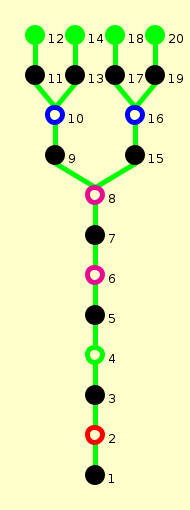
The following image shows the proof tree of sequent calculus. The proved goal is at the bottom. You can click on the nodes to view additional rules. See here for details on colors in a proof tree.
| hPred([]), ∀ t, l, v, h. hPred(h) → hPred((W(t, l, v), true) ' + h), ∀ t, l, v, h. hPred(h) → hPred((W(t, l, v), false) ' + h), ∀ t, l, v, h. hPred(h) → hPred((R(t, l, v), true) ' + h), ∀ t, l, v, h. hPred(h) → hPred((R(t, l, v), false) ' + h) ⊦ hPred(h) |
hPred([]), ¬ hPred(h), ∀ t, l, v, h. hPred(h) → hPred((R(t, l, v), false) ' + h), ∀ t, l, v, h. hPred(h) → hPred((R(t, l, v), true) ' + h), ∀ t, l, v, h. hPred(h) → hPred((W(t, l, v), false) ' + h), ∀ t, l, v, h. hPred(h) → hPred((W(t, l, v), true) ' + h) ⊦
| hPred([]), ¬ hPred(h), ∀ t, l, v, h. hPred(h) → hPred((R(t, l, v), false) ' + h), ∀ t, l, v, h. hPred(h) → hPred((R(t, l, v), true) ' + h), ∀ t, l, v, h. hPred(h) → hPred((W(t, l, v), false) ' + h), ∀ t, l, v, h. hPred(h) → hPred((W(t, l, v), true) ' + h) ⊦ |
hPred([]), ¬ hPred(vpe + h0), ∀ t, l, v, h. hPred(h) → hPred((W(t, l, v), true) ' + h), ∀ t, l, v, h. hPred(h) → hPred((W(t, l, v), false) ' + h), ∀ t, l, v, h. hPred(h) → hPred((R(t, l, v), true) ' + h), ∀ t, l, v, h. hPred(h) → hPred((R(t, l, v), false) ' + h), ∀ hPred. ¬ ( hPred([]) ∧ ¬ hPred(h0) ∧ (∀ t, l, v, h. hPred(h) → hPred((R(t, l, v), false) ' + h)) ∧ (∀ t, l, v, h. hPred(h) → hPred((R(t, l, v), true) ' + h)) ∧ (∀ t, l, v, h. hPred(h) → hPred((W(t, l, v), false) ' + h)) ∧ (∀ t, l, v, h. hPred(h) → hPred((W(t, l, v), true) ' + h))) ⊦
Used simplifier rules: List('a) freely generated by [], +;;
| hPred([]), ¬ hPred(vpe + h0), ∀ t, l, v, h. hPred(h) → hPred((W(t, l, v), true) ' + h), ∀ t, l, v, h. hPred(h) → hPred((W(t, l, v), false) ' + h), ∀ t, l, v, h. hPred(h) → hPred((R(t, l, v), true) ' + h), ∀ t, l, v, h. hPred(h) → hPred((R(t, l, v), false) ' + h), ∀ hPred. ¬ ( hPred([]) ∧ ¬ hPred(h0) ∧ (∀ t, l, v, h. hPred(h) → hPred((R(t, l, v), false) ' + h)) ∧ (∀ t, l, v, h. hPred(h) → hPred((R(t, l, v), true) ' + h)) ∧ (∀ t, l, v, h. hPred(h) → hPred((W(t, l, v), false) ' + h)) ∧ (∀ t, l, v, h. hPred(h) → hPred((W(t, l, v), true) ' + h))) ⊦ |
hPred([]), ¬ hPred(vpe ' + h0), ∀ t, l, v, h. hPred(h) → hPred((R(t, l, v), false) ' + h), ∀ t, l, v, h. hPred(h) → hPred((R(t, l, v), true) ' + h), ∀ t, l, v, h. hPred(h) → hPred((W(t, l, v), false) ' + h), ∀ t, l, v, h. hPred(h) → hPred((W(t, l, v), true) ' + h), ∀ hPred0. ¬ hPred0([]) ∨ hPred0(h0) ∨ ¬(∀ t, l, v, h. hPred0(h) → hPred0((R(t, l, v), false) ' + h)) ∨ ¬(∀ t, l, v, h. hPred0(h) → hPred0((R(t, l, v), true) ' + h)) ∨ ¬(∀ t, l, v, h. hPred0(h) → hPred0((W(t, l, v), false) ' + h)) ∨ ¬(∀ t, l, v, h. hPred0(h) → hPred0((W(t, l, v), true) ' + h)) ⊦
Used simplifier rules: ⊦ a + x = a ' + x; (s)
| hPred([]), ¬ hPred(vpe ' + h0), ∀ t, l, v, h. hPred(h) → hPred((R(t, l, v), false) ' + h), ∀ t, l, v, h. hPred(h) → hPred((R(t, l, v), true) ' + h), ∀ t, l, v, h. hPred(h) → hPred((W(t, l, v), false) ' + h), ∀ t, l, v, h. hPred(h) → hPred((W(t, l, v), true) ' + h), ∀ hPred0. ¬ hPred0([]) ∨ hPred0(h0) ∨ ¬(∀ t, l, v, h. hPred0(h) → hPred0((R(t, l, v), false) ' + h)) ∨ ¬(∀ t, l, v, h. hPred0(h) → hPred0((R(t, l, v), true) ' + h)) ∨ ¬(∀ t, l, v, h. hPred0(h) → hPred0((W(t, l, v), false) ' + h)) ∨ ¬(∀ t, l, v, h. hPred0(h) → hPred0((W(t, l, v), true) ' + h)) ⊦ |
hPred([]), ¬ hPred(vpe ' + h0), ∀ t, l, v, h. hPred(h) → hPred((W(t, l, v), true) ' + h), ∀ t, l, v, h. hPred(h) → hPred((W(t, l, v), false) ' + h), ∀ t, l, v, h. hPred(h) → hPred((R(t, l, v), true) ' + h), ∀ t, l, v, h. hPred(h) → hPred((R(t, l, v), false) ' + h), ¬ hPred([]) ∨ hPred(h0) ∨ ¬(∀ t, l, v, h. hPred(h) → hPred((R(t, l, v), false) ' + h)) ∨ ¬(∀ t, l, v, h. hPred(h) → hPred((R(t, l, v), true) ' + h)) ∨ ¬(∀ t, l, v, h. hPred(h) → hPred((W(t, l, v), false) ' + h)) ∨ ¬(∀ t, l, v, h. hPred(h) → hPred((W(t, l, v), true) ' + h)) ⊦
Used terms: hPred
| hPred([]), ¬ hPred(vpe ' + h0), ∀ t, l, v, h. hPred(h) → hPred((W(t, l, v), true) ' + h), ∀ t, l, v, h. hPred(h) → hPred((W(t, l, v), false) ' + h), ∀ t, l, v, h. hPred(h) → hPred((R(t, l, v), true) ' + h), ∀ t, l, v, h. hPred(h) → hPred((R(t, l, v), false) ' + h), ¬ hPred([]) ∨ hPred(h0) ∨ ¬(∀ t, l, v, h. hPred(h) → hPred((R(t, l, v), false) ' + h)) ∨ ¬(∀ t, l, v, h. hPred(h) → hPred((R(t, l, v), true) ' + h)) ∨ ¬(∀ t, l, v, h. hPred(h) → hPred((W(t, l, v), false) ' + h)) ∨ ¬(∀ t, l, v, h. hPred(h) → hPred((W(t, l, v), true) ' + h)) ⊦ |
hPred([]), hPred(h0), ¬ hPred(vpe ' + h0), ∀ t, l, v, h. hPred(h) → hPred((R(t, l, v), false) ' + h), ∀ t, l, v, h. hPred(h) → hPred((R(t, l, v), true) ' + h), ∀ t, l, v, h. hPred(h) → hPred((W(t, l, v), false) ' + h), ∀ t, l, v, h. hPred(h) → hPred((W(t, l, v), true) ' + h) ⊦
| hPred([]), hPred(h0), ¬ hPred(vpe ' + h0), ∀ t, l, v, h. hPred(h) → hPred((R(t, l, v), false) ' + h), ∀ t, l, v, h. hPred(h) → hPred((R(t, l, v), true) ' + h), ∀ t, l, v, h. hPred(h) → hPred((W(t, l, v), false) ' + h), ∀ t, l, v, h. hPred(h) → hPred((W(t, l, v), true) ' + h) ⊦ |
vpe = (e, b), hPred(h0), hPred([]), ¬ hPred(vpe ' + h0), ∀ t, l, v, h. hPred(h) → hPred((W(t, l, v), true) ' + h), ∀ t, l, v, h. hPred(h) → hPred((W(t, l, v), false) ' + h), ∀ t, l, v, h. hPred(h) → hPred((R(t, l, v), true) ' + h), ∀ t, l, v, h. hPred(h) → hPred((R(t, l, v), false) ' + h) ⊦
| vpe = (e, b), hPred(h0), hPred([]), ¬ hPred(vpe ' + h0), ∀ t, l, v, h. hPred(h) → hPred((W(t, l, v), true) ' + h), ∀ t, l, v, h. hPred(h) → hPred((W(t, l, v), false) ' + h), ∀ t, l, v, h. hPred(h) → hPred((R(t, l, v), true) ' + h), ∀ t, l, v, h. hPred(h) → hPred((R(t, l, v), false) ' + h) ⊦ |
hPred([]), hPred(h0), ¬ hPred((e, b) ' + h0), ∀ t, l, v, h. hPred(h) → hPred((R(t, l, v), false) ' + h), ∀ t, l, v, h. hPred(h) → hPred((R(t, l, v), true) ' + h), ∀ t, l, v, h. hPred(h) → hPred((W(t, l, v), false) ' + h), ∀ t, l, v, h. hPred(h) → hPred((W(t, l, v), true) ' + h) ⊦
| hPred([]), hPred(h0), ¬ hPred((e, b) ' + h0), ∀ t, l, v, h. hPred(h) → hPred((R(t, l, v), false) ' + h), ∀ t, l, v, h. hPred(h) → hPred((R(t, l, v), true) ' + h), ∀ t, l, v, h. hPred(h) → hPred((W(t, l, v), false) ' + h), ∀ t, l, v, h. hPred(h) → hPred((W(t, l, v), true) ' + h) ⊦ |
e = R(t0, l0, v0), hPred(h0), hPred([]), ¬ hPred((e, b) ' + h0), ∀ t, l, v, h. hPred(h) → hPred((W(t, l, v), true) ' + h), ∀ t, l, v, h. hPred(h) → hPred((W(t, l, v), false) ' + h), ∀ t, l, v, h. hPred(h) → hPred((R(t, l, v), true) ' + h), ∀ t, l, v, h. hPred(h) → hPred((R(t, l, v), false) ' + h) ⊦
e = W(t0, l0, v0), hPred(h0), hPred([]), ¬ hPred((e, b) ' + h0), ∀ t, l, v, h. hPred(h) → hPred((W(t, l, v), true) ' + h), ∀ t, l, v, h. hPred(h) → hPred((W(t, l, v), false) ' + h), ∀ t, l, v, h. hPred(h) → hPred((R(t, l, v), true) ' + h), ∀ t, l, v, h. hPred(h) → hPred((R(t, l, v), false) ' + h) ⊦
Used simplifier rules: RWevent freely generated by R, W;;
| e = R(t0, l0, v0), hPred(h0), hPred([]), ¬ hPred((e, b) ' + h0), ∀ t, l, v, h. hPred(h) → hPred((W(t, l, v), true) ' + h), ∀ t, l, v, h. hPred(h) → hPred((W(t, l, v), false) ' + h), ∀ t, l, v, h. hPred(h) → hPred((R(t, l, v), true) ' + h), ∀ t, l, v, h. hPred(h) → hPred((R(t, l, v), false) ' + h) ⊦ |
hPred([]), hPred(h0), ¬ hPred((R(t0, l0, v0), b) ' + h0), ∀ t, l, v, h. hPred(h) → hPred((R(t, l, v), false) ' + h), ∀ t, l, v, h. hPred(h) → hPred((R(t, l, v), true) ' + h), ∀ t, l, v, h. hPred(h) → hPred((W(t, l, v), false) ' + h), ∀ t, l, v, h. hPred(h) → hPred((W(t, l, v), true) ' + h) ⊦
| hPred([]), hPred(h0), ¬ hPred((R(t0, l0, v0), b) ' + h0), ∀ t, l, v, h. hPred(h) → hPred((R(t, l, v), false) ' + h), ∀ t, l, v, h. hPred(h) → hPred((R(t, l, v), true) ' + h), ∀ t, l, v, h. hPred(h) → hPred((W(t, l, v), false) ' + h), ∀ t, l, v, h. hPred(h) → hPred((W(t, l, v), true) ' + h) ⊦ |
b, hPred(h0), hPred([]), ¬ hPred((R(t0, l0, v0), b) ' + h0), ∀ t, l, v, h. hPred(h) → hPred((W(t, l, v), true) ' + h), ∀ t, l, v, h. hPred(h) → hPred((W(t, l, v), false) ' + h), ∀ t, l, v, h. hPred(h) → hPred((R(t, l, v), true) ' + h), ∀ t, l, v, h. hPred(h) → hPred((R(t, l, v), false) ' + h) ⊦
¬ b, hPred(h0), hPred([]), ¬ hPred((R(t0, l0, v0), b) ' + h0), ∀ t, l, v, h. hPred(h) → hPred((W(t, l, v), true) ' + h), ∀ t, l, v, h. hPred(h) → hPred((W(t, l, v), false) ' + h), ∀ t, l, v, h. hPred(h) → hPred((R(t, l, v), true) ' + h), ∀ t, l, v, h. hPred(h) → hPred((R(t, l, v), false) ' + h) ⊦
Used formulas: b
| b, hPred(h0), hPred([]), ¬ hPred((R(t0, l0, v0), b) ' + h0), ∀ t, l, v, h. hPred(h) → hPred((W(t, l, v), true) ' + h), ∀ t, l, v, h. hPred(h) → hPred((W(t, l, v), false) ' + h), ∀ t, l, v, h. hPred(h) → hPred((R(t, l, v), true) ' + h), ∀ t, l, v, h. hPred(h) → hPred((R(t, l, v), false) ' + h) ⊦ |
hPred([]), hPred(h0), ¬ hPred((R(t0, l0, v0), true) ' + h0), ∀ t, l, v, h. hPred(h) → hPred((R(t, l, v), false) ' + h), ∀ t, l, v, h. hPred(h) → hPred((R(t, l, v), true) ' + h), ∀ t, l, v, h. hPred(h) → hPred((W(t, l, v), false) ' + h), ∀ t, l, v, h. hPred(h) → hPred((W(t, l, v), true) ' + h) ⊦
| hPred([]), hPred(h0), ¬ hPred((R(t0, l0, v0), true) ' + h0), ∀ t, l, v, h. hPred(h) → hPred((R(t, l, v), false) ' + h), ∀ t, l, v, h. hPred(h) → hPred((R(t, l, v), true) ' + h), ∀ t, l, v, h. hPred(h) → hPred((W(t, l, v), false) ' + h), ∀ t, l, v, h. hPred(h) → hPred((W(t, l, v), true) ' + h) ⊦ |
Used terms: t0, l0, v0, h0
| ¬ b, hPred(h0), hPred([]), ¬ hPred((R(t0, l0, v0), b) ' + h0), ∀ t, l, v, h. hPred(h) → hPred((W(t, l, v), true) ' + h), ∀ t, l, v, h. hPred(h) → hPred((W(t, l, v), false) ' + h), ∀ t, l, v, h. hPred(h) → hPred((R(t, l, v), true) ' + h), ∀ t, l, v, h. hPred(h) → hPred((R(t, l, v), false) ' + h) ⊦ |
hPred([]), hPred(h0), ¬ hPred((R(t0, l0, v0), false) ' + h0), ∀ t, l, v, h. hPred(h) → hPred((R(t, l, v), false) ' + h), ∀ t, l, v, h. hPred(h) → hPred((R(t, l, v), true) ' + h), ∀ t, l, v, h. hPred(h) → hPred((W(t, l, v), false) ' + h), ∀ t, l, v, h. hPred(h) → hPred((W(t, l, v), true) ' + h) ⊦
| hPred([]), hPred(h0), ¬ hPred((R(t0, l0, v0), false) ' + h0), ∀ t, l, v, h. hPred(h) → hPred((R(t, l, v), false) ' + h), ∀ t, l, v, h. hPred(h) → hPred((R(t, l, v), true) ' + h), ∀ t, l, v, h. hPred(h) → hPred((W(t, l, v), false) ' + h), ∀ t, l, v, h. hPred(h) → hPred((W(t, l, v), true) ' + h) ⊦ |
Used terms: t0, l0, v0, h0
| e = W(t0, l0, v0), hPred(h0), hPred([]), ¬ hPred((e, b) ' + h0), ∀ t, l, v, h. hPred(h) → hPred((W(t, l, v), true) ' + h), ∀ t, l, v, h. hPred(h) → hPred((W(t, l, v), false) ' + h), ∀ t, l, v, h. hPred(h) → hPred((R(t, l, v), true) ' + h), ∀ t, l, v, h. hPred(h) → hPred((R(t, l, v), false) ' + h) ⊦ |
hPred([]), hPred(h0), ¬ hPred((W(t0, l0, v0), b) ' + h0), ∀ t, l, v, h. hPred(h) → hPred((R(t, l, v), false) ' + h), ∀ t, l, v, h. hPred(h) → hPred((R(t, l, v), true) ' + h), ∀ t, l, v, h. hPred(h) → hPred((W(t, l, v), false) ' + h), ∀ t, l, v, h. hPred(h) → hPred((W(t, l, v), true) ' + h) ⊦
| hPred([]), hPred(h0), ¬ hPred((W(t0, l0, v0), b) ' + h0), ∀ t, l, v, h. hPred(h) → hPred((R(t, l, v), false) ' + h), ∀ t, l, v, h. hPred(h) → hPred((R(t, l, v), true) ' + h), ∀ t, l, v, h. hPred(h) → hPred((W(t, l, v), false) ' + h), ∀ t, l, v, h. hPred(h) → hPred((W(t, l, v), true) ' + h) ⊦ |
b, hPred(h0), hPred([]), ¬ hPred((W(t0, l0, v0), b) ' + h0), ∀ t, l, v, h. hPred(h) → hPred((W(t, l, v), true) ' + h), ∀ t, l, v, h. hPred(h) → hPred((W(t, l, v), false) ' + h), ∀ t, l, v, h. hPred(h) → hPred((R(t, l, v), true) ' + h), ∀ t, l, v, h. hPred(h) → hPred((R(t, l, v), false) ' + h) ⊦
¬ b, hPred(h0), hPred([]), ¬ hPred((W(t0, l0, v0), b) ' + h0), ∀ t, l, v, h. hPred(h) → hPred((W(t, l, v), true) ' + h), ∀ t, l, v, h. hPred(h) → hPred((W(t, l, v), false) ' + h), ∀ t, l, v, h. hPred(h) → hPred((R(t, l, v), true) ' + h), ∀ t, l, v, h. hPred(h) → hPred((R(t, l, v), false) ' + h) ⊦
Used formulas: b
| b, hPred(h0), hPred([]), ¬ hPred((W(t0, l0, v0), b) ' + h0), ∀ t, l, v, h. hPred(h) → hPred((W(t, l, v), true) ' + h), ∀ t, l, v, h. hPred(h) → hPred((W(t, l, v), false) ' + h), ∀ t, l, v, h. hPred(h) → hPred((R(t, l, v), true) ' + h), ∀ t, l, v, h. hPred(h) → hPred((R(t, l, v), false) ' + h) ⊦ |
hPred([]), hPred(h0), ¬ hPred((W(t0, l0, v0), true) ' + h0), ∀ t, l, v, h. hPred(h) → hPred((R(t, l, v), false) ' + h), ∀ t, l, v, h. hPred(h) → hPred((R(t, l, v), true) ' + h), ∀ t, l, v, h. hPred(h) → hPred((W(t, l, v), false) ' + h), ∀ t, l, v, h. hPred(h) → hPred((W(t, l, v), true) ' + h) ⊦
| hPred([]), hPred(h0), ¬ hPred((W(t0, l0, v0), true) ' + h0), ∀ t, l, v, h. hPred(h) → hPred((R(t, l, v), false) ' + h), ∀ t, l, v, h. hPred(h) → hPred((R(t, l, v), true) ' + h), ∀ t, l, v, h. hPred(h) → hPred((W(t, l, v), false) ' + h), ∀ t, l, v, h. hPred(h) → hPred((W(t, l, v), true) ' + h) ⊦ |
Used terms: t0, l0, v0, h0
| ¬ b, hPred(h0), hPred([]), ¬ hPred((W(t0, l0, v0), b) ' + h0), ∀ t, l, v, h. hPred(h) → hPred((W(t, l, v), true) ' + h), ∀ t, l, v, h. hPred(h) → hPred((W(t, l, v), false) ' + h), ∀ t, l, v, h. hPred(h) → hPred((R(t, l, v), true) ' + h), ∀ t, l, v, h. hPred(h) → hPred((R(t, l, v), false) ' + h) ⊦ |
hPred([]), hPred(h0), ¬ hPred((W(t0, l0, v0), false) ' + h0), ∀ t, l, v, h. hPred(h) → hPred((R(t, l, v), false) ' + h), ∀ t, l, v, h. hPred(h) → hPred((R(t, l, v), true) ' + h), ∀ t, l, v, h. hPred(h) → hPred((W(t, l, v), false) ' + h), ∀ t, l, v, h. hPred(h) → hPred((W(t, l, v), true) ' + h) ⊦
| hPred([]), hPred(h0), ¬ hPred((W(t0, l0, v0), false) ' + h0), ∀ t, l, v, h. hPred(h) → hPred((R(t, l, v), false) ' + h), ∀ t, l, v, h. hPred(h) → hPred((R(t, l, v), true) ' + h), ∀ t, l, v, h. hPred(h) → hPred((W(t, l, v), false) ' + h), ∀ t, l, v, h. hPred(h) → hPred((W(t, l, v), true) ' + h) ⊦ |
Used terms: t0, l0, v0, h0
The following image shows the proof tree of sequent calculus. The proved goal is at the bottom. You can click on the nodes to view additional rules. See here for details on colors in a proof tree.