[Imprint][Data Privacy Statement][E-Mail]
View long theorem info.
View the proof.
Back to main index.
View the specification.
View theorem base summary,
View theorem base listing,
the used properties by spec,
the dependency list,
the symbol table,
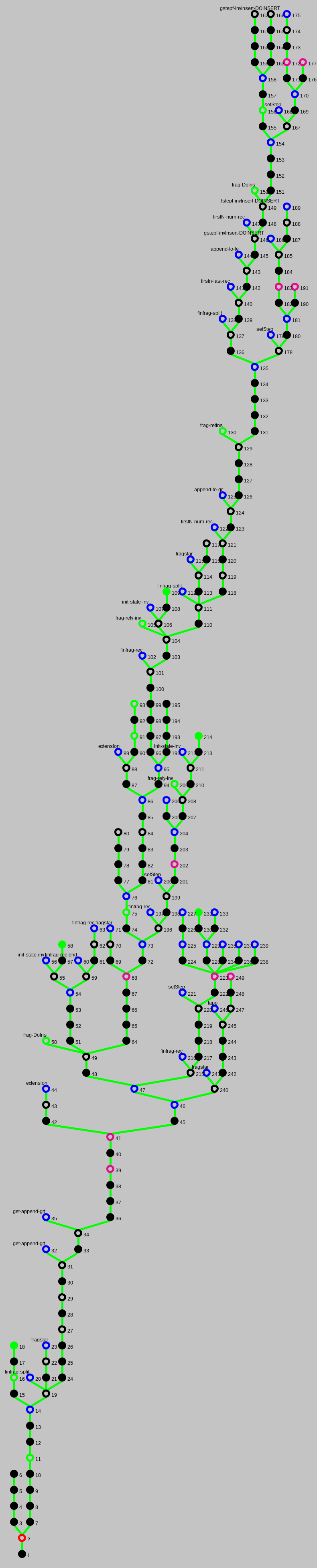
Proof step 1 from proof allinserts-finished-false-implies-notin-ind (conclusion)
(back to tree)
| exec*(IOAut(setInit, setStep, setExt))(sl, al), n < # sl,
∀ tid, al1, al2. al = al1 + (AInvInsert(tid, e) + al2) → (∃ al3, al4. al2 = al3 + (ARetInsert(tid, false) + al4) ∧ ¬ tid ∈ setExt !(al3).map(.tid))
⊦ ¬ e ∈ sl[n].gstate.set ∧ (sl[n].pcf(tid) = retInsert ∧ sl[n].lsf(tid).le = e → ¬ sl[n].lsf(tid).lb) |
System applied rule normalize
And obtained the following new goals
- Proof step 2:
n < # sl, exec*(IOAut(setInit, setStep, setExt))(sl, al),
∀ tid, al1, al2. al = al1 + (AInvInsert(tid, e) + al2) → (∃ al3, al4. al2 = al3 + (ARetInsert(tid, false) + al4) ∧ ¬ tid ∈ setExt !(al3).map(.tid))
⊦ ¬ e ∈ sl[n].gstate.set ∧ (sl[n].pcf(tid) = retInsert ∧ sl[n].lsf(tid).le = e → ¬ sl[n].lsf(tid).lb)
Rule argument
Additional information
Proof step 2 from proof allinserts-finished-false-implies-notin-ind (previous step)
(back to tree)
| n < # sl, exec*(IOAut(setInit, setStep, setExt))(sl, al),
∀ tid, al1, al2. al = al1 + (AInvInsert(tid, e) + al2) → (∃ al3, al4. al2 = al3 + (ARetInsert(tid, false) + al4) ∧ ¬ tid ∈ setExt !(al3).map(.tid))
⊦ ¬ e ∈ sl[n].gstate.set ∧ (sl[n].pcf(tid) = retInsert ∧ sl[n].lsf(tid).le = e → ¬ sl[n].lsf(tid).lb) |
User applied rule structural induction
And obtained the following new goals
- Proof step 3:
0 < # sl, exec*(IOAut(setInit, setStep, setExt))(sl, al),
∀ tid, al1, al2. al = al1 + (AInvInsert(tid, e) + al2) → (∃ al3, al4. al2 = al3 + (ARetInsert(tid, false) + al4) ∧ ¬ tid ∈ setExt !(al3).map(.tid))
⊦ ¬ e ∈ sl[0].gstate.set ∧ (sl[0].pcf(tid) = retInsert ∧ sl[0].lsf(tid).le = e → ¬ sl[0].lsf(tid).lb)
- Proof step 7:
n0 +1 < # sl, exec*(IOAut(setInit, setStep, setExt))(sl, al),
∀ tid, al1, al2. al = al1 + (AInvInsert(tid, e) + al2) → (∃ al3, al4. al2 = al3 + (ARetInsert(tid, false) + al4) ∧ ¬ tid ∈ setExt !(al3).map(.tid)),
∀ sl, al, e, tid.
n0 < # sl ∧ exec*(IOAut(setInit, setStep, setExt))(sl, al)
∧ (∀ tid, al1, al2.
al = al1 + (AInvInsert(tid, e) + al2) → (∃ al3, al4. al2 = al3 + (ARetInsert(tid, false) + al4) ∧ ¬ tid ∈ setExt !(al3).map(.tid)))
→ ¬ e ∈ sl[n0].gstate.set ∧ (sl[n0].pcf(tid) = retInsert ∧ sl[n0].lsf(tid).le = e → ¬ sl[n0].lsf(tid).lb)
⊦ ¬ e ∈ sl[n0 +1].gstate.set ∧ (sl[n0 +1].pcf(tid) = retInsert ∧ sl[n0 +1].lsf(tid).le = e → ¬ sl[n0 +1].lsf(tid).lb)
Rule argument
term: n
Additional information
Used simplifier rules:
Nat freely generated by 0, +1;;
Proof step 3 from proof allinserts-finished-false-implies-notin-ind (previous step)
(back to tree)
| 0 < # sl, exec*(IOAut(setInit, setStep, setExt))(sl, al),
∀ tid, al1, al2. al = al1 + (AInvInsert(tid, e) + al2) → (∃ al3, al4. al2 = al3 + (ARetInsert(tid, false) + al4) ∧ ¬ tid ∈ setExt !(al3).map(.tid))
⊦ ¬ e ∈ sl[0].gstate.set ∧ (sl[0].pcf(tid) = retInsert ∧ sl[0].lsf(tid).le = e → ¬ sl[0].lsf(tid).lb) |
Heuristic simplifier applied rule simplifier
And obtained the following new goals
- Proof step 4:
sl ≠ [], frag*(IOAut(setInit, setStep, setExt))(sl, al), setInit(sl.head),
∀ tid0, al1, al2.
al = al1 + AInvInsert(tid0, e) ' + al2 → (∃ al3, al4. al2 = al3 + ARetInsert(tid0, false) ' + al4 ∧ ¬ tid0 ∈ setExt !(al3).map(.tid))
⊦ ¬ e ∈ sl.head.gstate.set ∧ (sl.head.pcf(tid) = retInsert ∧ sl.head.lsf(tid).le = e → ¬ sl.head.lsf(tid).lb)
Rule argument
Additional information
Used simplifier rules:
⊦ x ≠ [] → x[0] = x.head; (s)
a: ⊦ (x + y) + z = x + y + z; from specification list
⊦ a + x = a ' + x; (s)
⊦ # x = 0 ↔ x = []; (s)
⊦ 0 < m ↔ m ≠ 0; (s)
⊦ IOAut(start, step, ext).start = start; (s)
⊦ exec*(ioa)(sl, al) ↔ frag*(ioa)(sl, al) ∧ ioa.start(sl[0]); (s)
Proof step 4 from proof allinserts-finished-false-implies-notin-ind (previous step)
(back to tree)
| sl ≠ [], frag*(IOAut(setInit, setStep, setExt))(sl, al), setInit(sl.head),
∀ tid0, al1, al2.
al = al1 + AInvInsert(tid0, e) ' + al2 → (∃ al3, al4. al2 = al3 + ARetInsert(tid0, false) ' + al4 ∧ ¬ tid0 ∈ setExt !(al3).map(.tid))
⊦ ¬ e ∈ sl.head.gstate.set ∧ (sl.head.pcf(tid) = retInsert ∧ sl.head.lsf(tid).le = e → ¬ sl.head.lsf(tid).lb) |
Heuristic elimination applied rule apply elim lemma
And obtained the following new goals
- Proof step 5:
sl = s + sl0, sl ≠ [], frag*(IOAut(setInit, setStep, setExt))(sl, al), setInit(s),
∀ tid0, al1, al2.
al = al1 + AInvInsert(tid0, e) ' + al2 → (∃ al3, al4. al2 = al3 + ARetInsert(tid0, false) ' + al4 ∧ ¬ tid0 ∈ setExt !(al3).map(.tid))
⊦ ¬ e ∈ s.gstate.set ∧ (s.pcf(tid) = retInsert ∧ s.lsf(tid).le = e → ¬ s.lsf(tid).lb)
Rule argument
spec: list-data, name:elim-add,
seq: ⊦ x ≠ [] → (head = x.head ∧ tail = x.tail ↔ x = head + tail),
subst:[x, head, tail] → [sl, s, sl0]; ['a] → [SetState]
Additional information
Used simplifier rules:
⊦ x ≠ [] → (head = x.head ∧ tail = x.tail ↔ x = head + tail); (elim)
Used terms: sl, s, sl0
Proof step 5 from proof allinserts-finished-false-implies-notin-ind (previous step)
(back to tree)
| sl = s + sl0, sl ≠ [], frag*(IOAut(setInit, setStep, setExt))(sl, al), setInit(s),
∀ tid0, al1, al2.
al = al1 + AInvInsert(tid0, e) ' + al2 → (∃ al3, al4. al2 = al3 + ARetInsert(tid0, false) ' + al4 ∧ ¬ tid0 ∈ setExt !(al3).map(.tid))
⊦ ¬ e ∈ s.gstate.set ∧ (s.pcf(tid) = retInsert ∧ s.lsf(tid).le = e → ¬ s.lsf(tid).lb) |
Heuristic simplifier applied rule simplifier
And obtained the following new goals
- Proof step 6:
frag*(IOAut(setInit, setStep, setExt))(s ' + sl0, al), setInit(s),
∀ tid0, al1, al2.
al = al1 + AInvInsert(tid0, e) ' + al2 → (∃ al3, al4. al2 = al3 + ARetInsert(tid0, false) ' + al4 ∧ ¬ tid0 ∈ setExt !(al3).map(.tid))
⊦ ¬ e ∈ s.gstate.set ∧ (s.pcf(tid) = retInsert ∧ s.lsf(tid).le = e → ¬ s.lsf(tid).lb)
Rule argument
Additional information
Used simplifier rules:
⊦ a + x = a ' + x; (s)
a: ⊦ (x + y) + z = x + y + z; from specification list
⊦ a ' ≠ []; (s)
⊦ x + y = [] ↔ x = [] ∧ y = []; (s)
Proof step 6 from proof allinserts-finished-false-implies-notin-ind (previous step)
(back to tree)
| frag*(IOAut(setInit, setStep, setExt))(s ' + sl0, al), setInit(s),
∀ tid0, al1, al2.
al = al1 + AInvInsert(tid0, e) ' + al2 → (∃ al3, al4. al2 = al3 + ARetInsert(tid0, false) ' + al4 ∧ ¬ tid0 ∈ setExt !(al3).map(.tid))
⊦ ¬ e ∈ s.gstate.set ∧ (s.pcf(tid) = retInsert ∧ s.lsf(tid).le = e → ¬ s.lsf(tid).lb) |
Heuristic elimination applied rule apply elim lemma
And closed the goal!
Rule argument
spec: Set, name:elim-mkstate,
seq: ⊦ (gstate = s.gstate ∧ lsf = s.lsf) ∧ pcf = s.pcf ↔ s = mkstate(gstate, lsf, pcf),
subst:[s, gstate, lsf, pcf] → [s, gstate, lsf, pcf]
Additional information
Used simplifier rules:
⊦ setInit(mkstate(gs, lsf, pcf))
↔ (gs.set = ∅ ∧ pcf = (λ tid. idle)) ∧ (∀ tid. lsf(tid).tid = tid); (s)
⊦ ¬ a ∈ ∅; (s)
⊦ idle ≠ retInsert; (s)
⊦ (gstate = s.gstate ∧ lsf = s.lsf) ∧ pcf = s.pcf ↔ s = mkstate(gstate, lsf, pcf); (elim)
Used terms: s, gstate, lsf, pcf
Proof step 7 from proof allinserts-finished-false-implies-notin-ind (previous step)
(back to tree)
| n0 +1 < # sl, exec*(IOAut(setInit, setStep, setExt))(sl, al),
∀ tid, al1, al2. al = al1 + (AInvInsert(tid, e) + al2) → (∃ al3, al4. al2 = al3 + (ARetInsert(tid, false) + al4) ∧ ¬ tid ∈ setExt !(al3).map(.tid)),
∀ sl, al, e, tid.
n0 < # sl ∧ exec*(IOAut(setInit, setStep, setExt))(sl, al)
∧ (∀ tid, al1, al2.
al = al1 + (AInvInsert(tid, e) + al2) → (∃ al3, al4. al2 = al3 + (ARetInsert(tid, false) + al4) ∧ ¬ tid ∈ setExt !(al3).map(.tid)))
→ ¬ e ∈ sl[n0].gstate.set ∧ (sl[n0].pcf(tid) = retInsert ∧ sl[n0].lsf(tid).le = e → ¬ sl[n0].lsf(tid).lb)
⊦ ¬ e ∈ sl[n0 +1].gstate.set ∧ (sl[n0 +1].pcf(tid) = retInsert ∧ sl[n0 +1].lsf(tid).le = e → ¬ sl[n0 +1].lsf(tid).lb) |
Heuristic simplifier applied rule simplifier
And obtained the following new goals
- Proof step 8:
sl ≠ [], n0 + 1 < # sl, frag*(IOAut(setInit, setStep, setExt))(sl, al), setInit(sl.head),
∀ tid0, al1, al2.
al = al1 + AInvInsert(tid0, e) ' + al2 → (∃ al3, al4. al2 = al3 + ARetInsert(tid0, false) ' + al4 ∧ ¬ tid0 ∈ setExt !(al3).map(.tid)),
∀ sl0, al0, e0, tid0.
n0 < # sl0 ∧ frag*(IOAut(setInit, setStep, setExt))(sl0, al0) ∧ setInit(sl0[0])
∧ (∀ tid1, al1, al2.
al0 = al1 + AInvInsert(tid1, e0) ' + al2 → (∃ al3, al4. al2 = al3 + ARetInsert(tid1, false) ' + al4 ∧ ¬ tid1 ∈ setExt !(al3).map(.tid)))
→ ¬ e0 ∈ sl0[n0].gstate.set ∧ (sl0[n0].pcf(tid0) = retInsert ∧ sl0[n0].lsf(tid0).le = e0 → ¬ sl0[n0].lsf(tid0).lb)
⊦ ¬ e ∈ sl[n0 + 1].gstate.set ∧ (sl[n0 + 1].pcf(tid) = retInsert ∧ sl[n0 + 1].lsf(tid).le = e → ¬ sl[n0 + 1].lsf(tid).lb)
Rule argument
Additional information
Used simplifier rules:
⊦ x ≠ [] → x[0] = x.head; (s)
⊦ # x = 0 ↔ x = []; (s)
f: ⊦ m < n → n ≠ 0; (forward) from specification nat-basic
⊦ m +1 = m + 1; (s)
a: ⊦ (x + y) + z = x + y + z; from specification list
⊦ a + x = a ' + x; (s)
⊦ IOAut(start, step, ext).start = start; (s)
⊦ exec*(ioa)(sl, al) ↔ frag*(ioa)(sl, al) ∧ ioa.start(sl[0]); (s)
Proof step 8 from proof allinserts-finished-false-implies-notin-ind (previous step)
(back to tree)
| sl ≠ [], n0 + 1 < # sl, frag*(IOAut(setInit, setStep, setExt))(sl, al), setInit(sl.head),
∀ tid0, al1, al2.
al = al1 + AInvInsert(tid0, e) ' + al2 → (∃ al3, al4. al2 = al3 + ARetInsert(tid0, false) ' + al4 ∧ ¬ tid0 ∈ setExt !(al3).map(.tid)),
∀ sl0, al0, e0, tid0.
n0 < # sl0 ∧ frag*(IOAut(setInit, setStep, setExt))(sl0, al0) ∧ setInit(sl0[0])
∧ (∀ tid1, al1, al2.
al0 = al1 + AInvInsert(tid1, e0) ' + al2 → (∃ al3, al4. al2 = al3 + ARetInsert(tid1, false) ' + al4 ∧ ¬ tid1 ∈ setExt !(al3).map(.tid)))
→ ¬ e0 ∈ sl0[n0].gstate.set ∧ (sl0[n0].pcf(tid0) = retInsert ∧ sl0[n0].lsf(tid0).le = e0 → ¬ sl0[n0].lsf(tid0).lb)
⊦ ¬ e ∈ sl[n0 + 1].gstate.set ∧ (sl[n0 + 1].pcf(tid) = retInsert ∧ sl[n0 + 1].lsf(tid).le = e → ¬ sl[n0 + 1].lsf(tid).lb) |
Heuristic elimination applied rule apply elim lemma
And obtained the following new goals
- Proof step 9:
sl = s + sl1, sl ≠ [], n0 + 1 < # sl, frag*(IOAut(setInit, setStep, setExt))(sl, al), setInit(s),
∀ sl0, al0, e0, tid0.
n0 < # sl0 ∧ frag*(IOAut(setInit, setStep, setExt))(sl0, al0) ∧ setInit(sl0[0])
∧ (∀ tid1, al1, al2.
al0 = al1 + AInvInsert(tid1, e0) ' + al2 → (∃ al3, al4. al2 = al3 + ARetInsert(tid1, false) ' + al4 ∧ ¬ tid1 ∈ setExt !(al3).map(.tid)))
→ ¬ e0 ∈ sl0[n0].gstate.set ∧ (sl0[n0].pcf(tid0) = retInsert ∧ sl0[n0].lsf(tid0).le = e0 → ¬ sl0[n0].lsf(tid0).lb),
∀ tid0, al1, al2.
al = al1 + AInvInsert(tid0, e) ' + al2 → (∃ al3, al4. al2 = al3 + ARetInsert(tid0, false) ' + al4 ∧ ¬ tid0 ∈ setExt !(al3).map(.tid))
⊦ ¬ e ∈ sl[n0 + 1].gstate.set ∧ (sl[n0 + 1].pcf(tid) = retInsert ∧ sl[n0 + 1].lsf(tid).le = e → ¬ sl[n0 + 1].lsf(tid).lb)
Rule argument
spec: list-data, name:elim-add,
seq: ⊦ x ≠ [] → (head = x.head ∧ tail = x.tail ↔ x = head + tail),
subst:[x, head, tail] → [sl, s, sl1]; ['a] → [SetState]
Additional information
Used simplifier rules:
⊦ x ≠ [] → (head = x.head ∧ tail = x.tail ↔ x = head + tail); (elim)
Used terms: sl, s, sl1
Proof step 9 from proof allinserts-finished-false-implies-notin-ind (previous step)
(back to tree)
| sl = s + sl1, sl ≠ [], n0 + 1 < # sl, frag*(IOAut(setInit, setStep, setExt))(sl, al), setInit(s),
∀ sl0, al0, e0, tid0.
n0 < # sl0 ∧ frag*(IOAut(setInit, setStep, setExt))(sl0, al0) ∧ setInit(sl0[0])
∧ (∀ tid1, al1, al2.
al0 = al1 + AInvInsert(tid1, e0) ' + al2 → (∃ al3, al4. al2 = al3 + ARetInsert(tid1, false) ' + al4 ∧ ¬ tid1 ∈ setExt !(al3).map(.tid)))
→ ¬ e0 ∈ sl0[n0].gstate.set ∧ (sl0[n0].pcf(tid0) = retInsert ∧ sl0[n0].lsf(tid0).le = e0 → ¬ sl0[n0].lsf(tid0).lb),
∀ tid0, al1, al2.
al = al1 + AInvInsert(tid0, e) ' + al2 → (∃ al3, al4. al2 = al3 + ARetInsert(tid0, false) ' + al4 ∧ ¬ tid0 ∈ setExt !(al3).map(.tid))
⊦ ¬ e ∈ sl[n0 + 1].gstate.set ∧ (sl[n0 + 1].pcf(tid) = retInsert ∧ sl[n0 + 1].lsf(tid).le = e → ¬ sl[n0 + 1].lsf(tid).lb) |
Heuristic simplifier applied rule simplifier
And obtained the following new goals
- Proof step 10:
sl1 ≠ [], n0 < # sl1, frag*(IOAut(setInit, setStep, setExt))(s ' + sl1, al), setInit(s),
∀ sl0, al0, e0, tid0.
n0 < # sl0 ∧ frag*(IOAut(setInit, setStep, setExt))(sl0, al0) ∧ setInit(sl0[0])
∧ (∀ tid1, al1, al2.
al0 = al1 + AInvInsert(tid1, e0) ' + al2 → (∃ al3, al4. al2 = al3 + ARetInsert(tid1, false) ' + al4 ∧ ¬ tid1 ∈ setExt !(al3).map(.tid)))
→ ¬ e0 ∈ sl0[n0].gstate.set ∧ (sl0[n0].pcf(tid0) = retInsert ∧ sl0[n0].lsf(tid0).le = e0 → ¬ sl0[n0].lsf(tid0).lb),
∀ tid0, al1, al2.
al = al1 + AInvInsert(tid0, e) ' + al2 → (∃ al3, al4. al2 = al3 + ARetInsert(tid0, false) ' + al4 ∧ ¬ tid0 ∈ setExt !(al3).map(.tid))
⊦ ¬ e ∈ sl1[n0].gstate.set ∧ (sl1[n0].pcf(tid) = retInsert ∧ sl1[n0].lsf(tid).le = e → ¬ sl1[n0].lsf(tid).lb)
Rule argument
Additional information
Used simplifier rules:
⊦ # x = 0 ↔ x = []; (s)
f: ⊦ m < n → n ≠ 0; (forward) from specification nat-basic
a: ⊦ (x + y) + z = x + y + z; from specification list
c: ⊦ m + n = n + m; from specification nat-basic
a: ⊦ (m + n0) + n1 = m + n0 + n1; from specification nat-basic
⊦ (a ' + x)[n + 1] = x[n]; (s)
⊦ a + x = a ' + x; (s)
⊦ m + n < m + n0 ↔ n < n0; (s)
⊦ m +1 = m + 1; (s)
⊦ #(a ' + x) = (# x)+1; (s)
⊦ a ' ≠ []; (s)
⊦ x + y = [] ↔ x = [] ∧ y = []; (s)
Proof step 10 from proof allinserts-finished-false-implies-notin-ind (previous step)
(back to tree)
| sl1 ≠ [], n0 < # sl1, frag*(IOAut(setInit, setStep, setExt))(s ' + sl1, al), setInit(s),
∀ sl0, al0, e0, tid0.
n0 < # sl0 ∧ frag*(IOAut(setInit, setStep, setExt))(sl0, al0) ∧ setInit(sl0[0])
∧ (∀ tid1, al1, al2.
al0 = al1 + AInvInsert(tid1, e0) ' + al2 → (∃ al3, al4. al2 = al3 + ARetInsert(tid1, false) ' + al4 ∧ ¬ tid1 ∈ setExt !(al3).map(.tid)))
→ ¬ e0 ∈ sl0[n0].gstate.set ∧ (sl0[n0].pcf(tid0) = retInsert ∧ sl0[n0].lsf(tid0).le = e0 → ¬ sl0[n0].lsf(tid0).lb),
∀ tid0, al1, al2.
al = al1 + AInvInsert(tid0, e) ' + al2 → (∃ al3, al4. al2 = al3 + ARetInsert(tid0, false) ' + al4 ∧ ¬ tid0 ∈ setExt !(al3).map(.tid))
⊦ ¬ e ∈ sl1[n0].gstate.set ∧ (sl1[n0].pcf(tid) = retInsert ∧ sl1[n0].lsf(tid).le = e → ¬ sl1[n0].lsf(tid).lb) |
Heuristic elimination applied rule apply elim lemma
And obtained the following new goals
- Proof step 11:
sl1[n0] = mkstate(gstate, lsf, pcf), sl1 ≠ [], n0 < # sl1, frag*(IOAut(setInit, setStep, setExt))(s ' + sl1, al), setInit(s),
∀ tid0, al1, al2.
al = al1 + AInvInsert(tid0, e) ' + al2 → (∃ al3, al4. al2 = al3 + ARetInsert(tid0, false) ' + al4 ∧ ¬ tid0 ∈ setExt !(al3).map(.tid)),
∀ sl0, al0, e0, tid0.
n0 < # sl0 ∧ frag*(IOAut(setInit, setStep, setExt))(sl0, al0) ∧ setInit(sl0[0])
∧ (∀ tid1, al1, al2.
al0 = al1 + AInvInsert(tid1, e0) ' + al2 → (∃ al3, al4. al2 = al3 + ARetInsert(tid1, false) ' + al4 ∧ ¬ tid1 ∈ setExt !(al3).map(.tid)))
→ ¬ e0 ∈ sl0[n0].gstate.set ∧ (sl0[n0].pcf(tid0) = retInsert ∧ sl0[n0].lsf(tid0).le = e0 → ¬ sl0[n0].lsf(tid0).lb)
⊦ ¬ e ∈ gstate.set ∧ (pcf(tid) = retInsert ∧ lsf(tid).le = e → ¬ lsf(tid).lb)
Rule argument
spec: Set, name:elim-mkstate,
seq: ⊦ (gstate = s.gstate ∧ lsf = s.lsf) ∧ pcf = s.pcf ↔ s = mkstate(gstate, lsf, pcf),
subst:[s, gstate, lsf, pcf] → [sl1[n0], gstate, lsf, pcf]
Additional information
Used simplifier rules:
⊦ (gstate = s.gstate ∧ lsf = s.lsf) ∧ pcf = s.pcf ↔ s = mkstate(gstate, lsf, pcf); (elim)
Used terms: sl1[n0], gstate, lsf, pcf
Proof step 11 from proof allinserts-finished-false-implies-notin-ind (previous step)
(back to tree)
| sl1[n0] = mkstate(gstate, lsf, pcf), sl1 ≠ [], n0 < # sl1, frag*(IOAut(setInit, setStep, setExt))(s ' + sl1, al), setInit(s),
∀ tid0, al1, al2.
al = al1 + AInvInsert(tid0, e) ' + al2 → (∃ al3, al4. al2 = al3 + ARetInsert(tid0, false) ' + al4 ∧ ¬ tid0 ∈ setExt !(al3).map(.tid)),
∀ sl0, al0, e0, tid0.
n0 < # sl0 ∧ frag*(IOAut(setInit, setStep, setExt))(sl0, al0) ∧ setInit(sl0[0])
∧ (∀ tid1, al1, al2.
al0 = al1 + AInvInsert(tid1, e0) ' + al2 → (∃ al3, al4. al2 = al3 + ARetInsert(tid1, false) ' + al4 ∧ ¬ tid1 ∈ setExt !(al3).map(.tid)))
→ ¬ e0 ∈ sl0[n0].gstate.set ∧ (sl0[n0].pcf(tid0) = retInsert ∧ sl0[n0].lsf(tid0).le = e0 → ¬ sl0[n0].lsf(tid0).lb)
⊦ ¬ e ∈ gstate.set ∧ (pcf(tid) = retInsert ∧ lsf(tid).le = e → ¬ lsf(tid).lb) |
User applied rule all left
And obtained the following new goals
- Proof step 12:
sl1[n0] = mkstate(gstate, lsf, pcf), sl1 ≠ [], n0 < # sl1, frag*(IOAut(setInit, setStep, setExt))(s ' + sl1, al), setInit(s),
n0 < #(s ' + sl1) ∧ frag*(IOAut(setInit, setStep, setExt))(s ' + sl1, al) ∧ setInit((s ' + sl1)[0])
∧ (∀ tid1, al1, al2.
al = al1 + AInvInsert(tid1, e) ' + al2 → (∃ al3, al4. al2 = al3 + ARetInsert(tid1, false) ' + al4 ∧ ¬ tid1 ∈ setExt !(al3).map(.tid)))
→ ¬ e ∈ (s ' + sl1)[n0].gstate.set ∧ ((s ' + sl1)[n0].pcf(tid) = retInsert ∧ (s ' + sl1)[n0].lsf(tid).le = e → ¬ (s ' + sl1)[n0].lsf(tid).lb),
∀ tid0, al1, al2.
al = al1 + AInvInsert(tid0, e) ' + al2 → (∃ al3, al4. al2 = al3 + ARetInsert(tid0, false) ' + al4 ∧ ¬ tid0 ∈ setExt !(al3).map(.tid))
⊦ ¬ e ∈ gstate.set ∧ (pcf(tid) = retInsert ∧ lsf(tid).le = e → ¬ lsf(tid).lb)
Rule argument
pos: left 7 terms: s ' + sl1, al, e, tid abort: F discard: T computed: T
Additional information
Used terms: s ' + sl1, al, e, tid
Proof step 12 from proof allinserts-finished-false-implies-notin-ind (previous step)
(back to tree)
| sl1[n0] = mkstate(gstate, lsf, pcf), sl1 ≠ [], n0 < # sl1, frag*(IOAut(setInit, setStep, setExt))(s ' + sl1, al), setInit(s),
n0 < #(s ' + sl1) ∧ frag*(IOAut(setInit, setStep, setExt))(s ' + sl1, al) ∧ setInit((s ' + sl1)[0])
∧ (∀ tid1, al1, al2.
al = al1 + AInvInsert(tid1, e) ' + al2 → (∃ al3, al4. al2 = al3 + ARetInsert(tid1, false) ' + al4 ∧ ¬ tid1 ∈ setExt !(al3).map(.tid)))
→ ¬ e ∈ (s ' + sl1)[n0].gstate.set ∧ ((s ' + sl1)[n0].pcf(tid) = retInsert ∧ (s ' + sl1)[n0].lsf(tid).le = e → ¬ (s ' + sl1)[n0].lsf(tid).lb),
∀ tid0, al1, al2.
al = al1 + AInvInsert(tid0, e) ' + al2 → (∃ al3, al4. al2 = al3 + ARetInsert(tid0, false) ' + al4 ∧ ¬ tid0 ∈ setExt !(al3).map(.tid))
⊦ ¬ e ∈ gstate.set ∧ (pcf(tid) = retInsert ∧ lsf(tid).le = e → ¬ lsf(tid).lb) |
Heuristic simplifier applied rule simplifier
And obtained the following new goals
- Proof step 13:
sl1[n0] = mkstate(gstate, lsf, pcf), sl1 ≠ [], n0 < # sl1, frag*(IOAut(setInit, setStep, setExt))(s ' + sl1, al), setInit(s),
(al = al1 + AInvInsert(tid1, e) ' + al2 → (∃ al3, al4. al2 = al3 + ARetInsert(tid1, false) ' + al4 ∧ ¬ tid1 ∈ setExt !(al3).map(.tid)))
→ ¬ e ∈ (s ' + sl1)[n0].gstate.set ∧ ((s ' + sl1)[n0].pcf(tid) = retInsert ∧ (s ' + sl1)[n0].lsf(tid).le = e → ¬ (s ' + sl1)[n0].lsf(tid).lb),
∀ tid0, al1, al2.
al = al1 + AInvInsert(tid0, e) ' + al2 → (∃ al3, al4. al2 = al3 + ARetInsert(tid0, false) ' + al4 ∧ ¬ tid0 ∈ setExt !(al3).map(.tid))
⊦ ¬ e ∈ gstate.set ∧ (pcf(tid) = retInsert ∧ lsf(tid).le = e → ¬ lsf(tid).lb)
Rule argument
Additional information
Used simplifier rules:
a: ⊦ (x + y) + z = x + y + z; from specification list
⊦ (a ' + x)[0] = a; (s)
c: ⊦ m + n = n + m; from specification nat-basic
a: ⊦ (m + n0) + n1 = m + n0 + n1; from specification nat-basic
⊦ m < n → ¬ n < m; (s)
⊦ m < n + 1 ↔ ¬ n < m; (s)
⊦ m +1 = m + 1; (s)
⊦ #(a ' + x) = (# x)+1; (s)
Proof step 13 from proof allinserts-finished-false-implies-notin-ind (previous step)
(back to tree)
| sl1[n0] = mkstate(gstate, lsf, pcf), sl1 ≠ [], n0 < # sl1, frag*(IOAut(setInit, setStep, setExt))(s ' + sl1, al), setInit(s),
(al = al1 + AInvInsert(tid1, e) ' + al2 → (∃ al3, al4. al2 = al3 + ARetInsert(tid1, false) ' + al4 ∧ ¬ tid1 ∈ setExt !(al3).map(.tid)))
→ ¬ e ∈ (s ' + sl1)[n0].gstate.set ∧ ((s ' + sl1)[n0].pcf(tid) = retInsert ∧ (s ' + sl1)[n0].lsf(tid).le = e → ¬ (s ' + sl1)[n0].lsf(tid).lb),
∀ tid0, al1, al2.
al = al1 + AInvInsert(tid0, e) ' + al2 → (∃ al3, al4. al2 = al3 + ARetInsert(tid0, false) ' + al4 ∧ ¬ tid0 ∈ setExt !(al3).map(.tid))
⊦ ¬ e ∈ gstate.set ∧ (pcf(tid) = retInsert ∧ lsf(tid).le = e → ¬ lsf(tid).lb) |
Heuristic elimination applied rule apply elim lemma
And obtained the following new goals
- Proof step 14:
sl1[n0] = mkstate(gstate, lsf, pcf), (s ' + sl1)[n0] = mkstate(gstate0, lsf0, pcf0), sl1 ≠ [], n0 < # sl1,
frag*(IOAut(setInit, setStep, setExt))(s ' + sl1, al), setInit(s),
(al = al1 + AInvInsert(tid1, e) ' + al2 → (∃ al3, al4. al2 = al3 + ARetInsert(tid1, false) ' + al4 ∧ ¬ tid1 ∈ setExt !(al3).map(.tid)))
→ ¬ e ∈ gstate0.set ∧ (pcf0(tid) = retInsert ∧ lsf0(tid).le = e → ¬ lsf0(tid).lb),
∀ tid0, al1, al2.
al = al1 + AInvInsert(tid0, e) ' + al2 → (∃ al3, al4. al2 = al3 + ARetInsert(tid0, false) ' + al4 ∧ ¬ tid0 ∈ setExt !(al3).map(.tid))
⊦ ¬ e ∈ gstate.set ∧ (pcf(tid) = retInsert ∧ lsf(tid).le = e → ¬ lsf(tid).lb)
Rule argument
spec: Set, name:elim-mkstate,
seq: ⊦ (gstate = s.gstate ∧ lsf = s.lsf) ∧ pcf = s.pcf ↔ s = mkstate(gstate, lsf, pcf),
subst:[s, gstate, lsf, pcf] → [(s ' + sl1)[n0], gstate0, lsf0, pcf0]
Additional information
Used simplifier rules:
⊦ (gstate = s.gstate ∧ lsf = s.lsf) ∧ pcf = s.pcf ↔ s = mkstate(gstate, lsf, pcf); (elim)
Used terms: (s ' + sl1)[n0], gstate0, lsf0, pcf0
Proof step 14 from proof allinserts-finished-false-implies-notin-ind (previous step)
(back to tree)
| sl1[n0] = mkstate(gstate, lsf, pcf), (s ' + sl1)[n0] = mkstate(gstate0, lsf0, pcf0), sl1 ≠ [], n0 < # sl1,
frag*(IOAut(setInit, setStep, setExt))(s ' + sl1, al), setInit(s),
(al = al1 + AInvInsert(tid1, e) ' + al2 → (∃ al3, al4. al2 = al3 + ARetInsert(tid1, false) ' + al4 ∧ ¬ tid1 ∈ setExt !(al3).map(.tid)))
→ ¬ e ∈ gstate0.set ∧ (pcf0(tid) = retInsert ∧ lsf0(tid).le = e → ¬ lsf0(tid).lb),
∀ tid0, al1, al2.
al = al1 + AInvInsert(tid0, e) ' + al2 → (∃ al3, al4. al2 = al3 + ARetInsert(tid0, false) ' + al4 ∧ ¬ tid0 ∈ setExt !(al3).map(.tid))
⊦ ¬ e ∈ gstate.set ∧ (pcf(tid) = retInsert ∧ lsf(tid).le = e → ¬ lsf(tid).lb) |
User applied rule case distinction
And obtained the following new goals
- Proof step 15:
(s ' + sl1)[n0] = mkstate(gstate0, lsf0, pcf0), sl1[n0] = mkstate(gstate, lsf, pcf), al = al1 + AInvInsert(tid1, e) ' + al2, sl1 ≠ [],
n0 < # sl1, frag*(IOAut(setInit, setStep, setExt))(s ' + sl1, al), setInit(s),
∀ tid0, al1, al2.
al = al1 + AInvInsert(tid0, e) ' + al2 → (∃ al3, al4. al2 = al3 + ARetInsert(tid0, false) ' + al4 ∧ ¬ tid0 ∈ setExt !(al3).map(.tid))
⊦ ∃ al3, al4. al2 = al3 + ARetInsert(tid1, false) ' + al4 ∧ ¬ tid1 ∈ setExt !(al3).map(.tid),
¬ e ∈ gstate.set ∧ (pcf(tid) = retInsert ∧ lsf(tid).le = e → ¬ lsf(tid).lb)
- Proof step 19:
(s ' + sl1)[n0] = mkstate(gstate0, lsf0, pcf0), sl1[n0] = mkstate(gstate, lsf, pcf), sl1 ≠ [], n0 < # sl1,
frag*(IOAut(setInit, setStep, setExt))(s ' + sl1, al), setInit(s), ¬ e ∈ gstate0.set, pcf0(tid) = retInsert ∧ lsf0(tid).le = e → ¬ lsf0(tid).lb,
∀ tid0, al1, al2.
al = al1 + AInvInsert(tid0, e) ' + al2 → (∃ al3, al4. al2 = al3 + ARetInsert(tid0, false) ' + al4 ∧ ¬ tid0 ∈ setExt !(al3).map(.tid))
⊦ ¬ e ∈ gstate.set ∧ (pcf(tid) = retInsert ∧ lsf(tid).le = e → ¬ lsf(tid).lb)
Rule argument
pos: left 7
Additional information
Proof step 15 from proof allinserts-finished-false-implies-notin-ind (previous step)
(back to tree)
| (s ' + sl1)[n0] = mkstate(gstate0, lsf0, pcf0), sl1[n0] = mkstate(gstate, lsf, pcf), al = al1 + AInvInsert(tid1, e) ' + al2, sl1 ≠ [],
n0 < # sl1, frag*(IOAut(setInit, setStep, setExt))(s ' + sl1, al), setInit(s),
∀ tid0, al1, al2.
al = al1 + AInvInsert(tid0, e) ' + al2 → (∃ al3, al4. al2 = al3 + ARetInsert(tid0, false) ' + al4 ∧ ¬ tid0 ∈ setExt !(al3).map(.tid))
⊦ ∃ al3, al4. al2 = al3 + ARetInsert(tid1, false) ' + al4 ∧ ¬ tid1 ∈ setExt !(al3).map(.tid),
¬ e ∈ gstate.set ∧ (pcf(tid) = retInsert ∧ lsf(tid).le = e → ¬ lsf(tid).lb) |
Heuristic simplifier applied rule simplifier
And obtained the following new goals
- Proof step 16:
sl1[n0] = mkstate(gstate, lsf, pcf), (s ' + sl1)[n0] = mkstate(gstate0, lsf0, pcf0), sl1 ≠ [], n0 < # sl1,
frag*(IOAut(setInit, setStep, setExt))(s ' + sl1, al1 + AInvInsert(tid1, e) ' + al2), setInit(s),
∀ tid0, al0, al3.
al1 + AInvInsert(tid1, e) ' + al2 = al0 + AInvInsert(tid0, e) ' + al3
→ (∃ al, al4. al3 = al + ARetInsert(tid0, false) ' + al4 ∧ ¬ tid0 ∈ setExt !(al).map(.tid))
⊦ ∃ al3, al4. al2 = al3 + ARetInsert(tid1, false) ' + al4 ∧ ¬ tid1 ∈ setExt !(al3).map(.tid),
¬ e ∈ gstate.set ∧ (pcf(tid) = retInsert ∧ lsf(tid).le = e → ¬ lsf(tid).lb)
Rule argument
Additional information
Proof step 16 from proof allinserts-finished-false-implies-notin-ind (previous step)
(back to tree)
| sl1[n0] = mkstate(gstate, lsf, pcf), (s ' + sl1)[n0] = mkstate(gstate0, lsf0, pcf0), sl1 ≠ [], n0 < # sl1,
frag*(IOAut(setInit, setStep, setExt))(s ' + sl1, al1 + AInvInsert(tid1, e) ' + al2), setInit(s),
∀ tid0, al0, al3.
al1 + AInvInsert(tid1, e) ' + al2 = al0 + AInvInsert(tid0, e) ' + al3
→ (∃ al, al4. al3 = al + ARetInsert(tid0, false) ' + al4 ∧ ¬ tid0 ∈ setExt !(al).map(.tid))
⊦ ∃ al3, al4. al2 = al3 + ARetInsert(tid1, false) ' + al4 ∧ ¬ tid1 ∈ setExt !(al3).map(.tid),
¬ e ∈ gstate.set ∧ (pcf(tid) = retInsert ∧ lsf(tid).le = e → ¬ lsf(tid).lb) |
User applied rule all left
And obtained the following new goals
- Proof step 17:
(s ' + sl1)[n0] = mkstate(gstate0, lsf0, pcf0), sl1[n0] = mkstate(gstate, lsf, pcf), sl1 ≠ [], n0 < # sl1,
frag*(IOAut(setInit, setStep, setExt))(s ' + sl1, al1 + AInvInsert(tid1, e) ' + al2), setInit(s),
al1 + AInvInsert(tid1, e) ' + al2 = al1 + AInvInsert(tid1, e) ' + al2
→ (∃ al, al4. al2 = al + ARetInsert(tid1, false) ' + al4 ∧ ¬ tid1 ∈ setExt !(al).map(.tid))
⊦ ∃ al3, al4. al2 = al3 + ARetInsert(tid1, false) ' + al4 ∧ ¬ tid1 ∈ setExt !(al3).map(.tid),
¬ e ∈ gstate.set ∧ (pcf(tid) = retInsert ∧ lsf(tid).le = e → ¬ lsf(tid).lb)
Rule argument
pos: left 7 terms: tid1, al1, al2 abort: F discard: T computed: T
Additional information
Used terms: tid1, al1, al2
Proof step 17 from proof allinserts-finished-false-implies-notin-ind (previous step)
(back to tree)
| (s ' + sl1)[n0] = mkstate(gstate0, lsf0, pcf0), sl1[n0] = mkstate(gstate, lsf, pcf), sl1 ≠ [], n0 < # sl1,
frag*(IOAut(setInit, setStep, setExt))(s ' + sl1, al1 + AInvInsert(tid1, e) ' + al2), setInit(s),
al1 + AInvInsert(tid1, e) ' + al2 = al1 + AInvInsert(tid1, e) ' + al2
→ (∃ al, al4. al2 = al + ARetInsert(tid1, false) ' + al4 ∧ ¬ tid1 ∈ setExt !(al).map(.tid))
⊦ ∃ al3, al4. al2 = al3 + ARetInsert(tid1, false) ' + al4 ∧ ¬ tid1 ∈ setExt !(al3).map(.tid),
¬ e ∈ gstate.set ∧ (pcf(tid) = retInsert ∧ lsf(tid).le = e → ¬ lsf(tid).lb) |
Heuristic simplifier applied rule simplifier
And obtained the following new goals
- Proof step 18:
(s ' + sl1)[n0] = mkstate(gstate0, lsf0, pcf0), sl1[n0] = mkstate(gstate, lsf, pcf), sl1 ≠ [], n0 < # sl1,
frag*(IOAut(setInit, setStep, setExt))(s ' + sl1, al1 + AInvInsert(tid1, e) ' + al + ARetInsert(tid1, false) ' + al4), setInit(s),
¬ tid1 ∈ setExt !(al).map(.tid)
⊦ ∃ al3, al0. al + ARetInsert(tid1, false) ' + al4 = al3 + ARetInsert(tid1, false) ' + al0 ∧ ¬ tid1 ∈ setExt !(al3).map(.tid),
¬ e ∈ gstate.set ∧ (pcf(tid) = retInsert ∧ lsf(tid).le = e → ¬ lsf(tid).lb)
Rule argument
Additional information
Used simplifier rules:
a: ⊦ (x + y) + z = x + y + z; from specification list
Proof step 18 from proof allinserts-finished-false-implies-notin-ind (previous step)
(back to tree)
| (s ' + sl1)[n0] = mkstate(gstate0, lsf0, pcf0), sl1[n0] = mkstate(gstate, lsf, pcf), sl1 ≠ [], n0 < # sl1,
frag*(IOAut(setInit, setStep, setExt))(s ' + sl1, al1 + AInvInsert(tid1, e) ' + al + ARetInsert(tid1, false) ' + al4), setInit(s),
¬ tid1 ∈ setExt !(al).map(.tid)
⊦ ∃ al3, al0. al + ARetInsert(tid1, false) ' + al4 = al3 + ARetInsert(tid1, false) ' + al0 ∧ ¬ tid1 ∈ setExt !(al3).map(.tid),
¬ e ∈ gstate.set ∧ (pcf(tid) = retInsert ∧ lsf(tid).le = e → ¬ lsf(tid).lb) |
Heuristic quantifier closing applied rule exists right
And closed the goal!
Rule argument
pos: right 1 terms: al, al4
Additional information
Used simplifier rules:
a: ⊦ (x + y) + z = x + y + z; from specification list
Used terms: al, al4
Proof step 19 from proof allinserts-finished-false-implies-notin-ind (previous step)
(back to tree)
| (s ' + sl1)[n0] = mkstate(gstate0, lsf0, pcf0), sl1[n0] = mkstate(gstate, lsf, pcf), sl1 ≠ [], n0 < # sl1,
frag*(IOAut(setInit, setStep, setExt))(s ' + sl1, al), setInit(s), ¬ e ∈ gstate0.set, pcf0(tid) = retInsert ∧ lsf0(tid).le = e → ¬ lsf0(tid).lb,
∀ tid0, al1, al2.
al = al1 + AInvInsert(tid0, e) ' + al2 → (∃ al3, al4. al2 = al3 + ARetInsert(tid0, false) ' + al4 ∧ ¬ tid0 ∈ setExt !(al3).map(.tid))
⊦ ¬ e ∈ gstate.set ∧ (pcf(tid) = retInsert ∧ lsf(tid).le = e → ¬ lsf(tid).lb) |
User applied rule apply rewrite lemma
And obtained the following new goals
- Proof step 20:
⊦ ¬ # al < n ∧ n < # sl
→ ( frag*(IOAut(start, step, ext))(sl, al)
↔ frag*(IOAut(start, step, ext))(sl.take(n + 1), al.take(n)) ∧ frag*(IOAut(start, step, ext))(sl.drop(n), al.drop(n)))
- Proof step 21:
sl1[n0] = mkstate(gstate, lsf, pcf), (s ' + sl1)[n0] = mkstate(gstate0, lsf0, pcf0), sl1 ≠ [], n0 < # sl1,
frag*(IOAut(setInit, setStep, setExt))(s ' + sl1, al), setInit(s), ¬ e ∈ gstate0.set, pcf0(tid) = retInsert ∧ lsf0(tid).le = e → ¬ lsf0(tid).lb,
∀ tid0, al1, al2.
al = al1 + AInvInsert(tid0, e) ' + al2 → (∃ al3, al4. al2 = al3 + ARetInsert(tid0, false) ' + al4 ∧ ¬ tid0 ∈ setExt !(al3).map(.tid))
⊦ ¬ e ∈ gstate.set ∧ (pcf(tid) = retInsert ∧ lsf(tid).le = e → ¬ lsf(tid).lb), ¬ # al < n0 ∧ n0 < #(s ' + sl1)
- Proof step 24:
sl1[n0] = mkstate(gstate, lsf, pcf), (s ' + sl1)[n0] = mkstate(gstate0, lsf0, pcf0), sl1 ≠ [], n0 < # sl1, n0 < #(s ' + sl1),
frag*(IOAut(setInit, setStep, setExt))((s ' + sl1).take(n0 + 1), al.take(n0)),
frag*(IOAut(setInit, setStep, setExt))((s ' + sl1).drop(n0), al.drop(n0)), setInit(s), ¬ # al < n0, ¬ e ∈ gstate0.set,
pcf0(tid) = retInsert ∧ lsf0(tid).le = e → ¬ lsf0(tid).lb,
∀ tid0, al1, al2.
al = al1 + AInvInsert(tid0, e) ' + al2 → (∃ al3, al4. al2 = al3 + ARetInsert(tid0, false) ' + al4 ∧ ¬ tid0 ∈ setExt !(al3).map(.tid))
⊦ ¬ e ∈ gstate.set ∧ (pcf(tid) = retInsert ∧ lsf(tid).le = e → ¬ lsf(tid).lb)
Rule argument
spec: IOtrace, name:finfrag-split,
seq:⊦ ¬ # al < n ∧ n < # sl
→ ( frag*(IOAut(start, step, ext))(sl, al)
↔ frag*(IOAut(start, step, ext))(sl.take(n + 1), al.take(n))
∧ frag*(IOAut(start, step, ext))(sl.drop(n), al.drop(n))),
subst:[al, ext, sl, start, n, step] → [al, setExt, s ' + sl1, setInit, n0, setStep];
['s, 'a, 'e] → [SetState, SetAction, EAction],
<all paths>
Additional information
Used terms: al, setExt, s ' + sl1, setInit, n0, setStep
Proof step 20 from proof allinserts-finished-false-implies-notin-ind (previous step)
(back to tree)
| ⊦ ¬ # al < n ∧ n < # sl
→ ( frag*(IOAut(start, step, ext))(sl, al)
↔ frag*(IOAut(start, step, ext))(sl.take(n + 1), al.take(n)) ∧ frag*(IOAut(start, step, ext))(sl.drop(n), al.drop(n))) |
A spec-lemma
Proof step 21 from proof allinserts-finished-false-implies-notin-ind (previous step)
(back to tree)
| sl1[n0] = mkstate(gstate, lsf, pcf), (s ' + sl1)[n0] = mkstate(gstate0, lsf0, pcf0), sl1 ≠ [], n0 < # sl1,
frag*(IOAut(setInit, setStep, setExt))(s ' + sl1, al), setInit(s), ¬ e ∈ gstate0.set, pcf0(tid) = retInsert ∧ lsf0(tid).le = e → ¬ lsf0(tid).lb,
∀ tid0, al1, al2.
al = al1 + AInvInsert(tid0, e) ' + al2 → (∃ al3, al4. al2 = al3 + ARetInsert(tid0, false) ' + al4 ∧ ¬ tid0 ∈ setExt !(al3).map(.tid))
⊦ ¬ e ∈ gstate.set ∧ (pcf(tid) = retInsert ∧ lsf(tid).le = e → ¬ lsf(tid).lb), ¬ # al < n0 ∧ n0 < #(s ' + sl1) |
Heuristic simplifier applied rule simplifier
And obtained the following new goals
- Proof step 22:
sl1[n0] = mkstate(gstate, lsf, pcf), (s ' + sl1)[n0] = mkstate(gstate0, lsf0, pcf0), sl1 ≠ [], # al < # sl1, # al < n0,
n0 < # sl1, # al + 1 < # sl1, frag*(IOAut(setInit, setStep, setExt))(s ' + sl1, al), setInit(s), ¬ e ∈ gstate0.set,
pcf0(tid) = retInsert ∧ lsf0(tid).le = e → ¬ lsf0(tid).lb,
∀ tid0, al1, al2.
al = al1 + AInvInsert(tid0, e) ' + al2 → (∃ al3, al4. al2 = al3 + ARetInsert(tid0, false) ' + al4 ∧ ¬ tid0 ∈ setExt !(al3).map(.tid))
⊦ ¬ e ∈ gstate.set ∧ (pcf(tid) = retInsert ∧ lsf(tid).le = e → ¬ lsf(tid).lb)
Rule argument
Additional information
Used simplifier rules:
⊦ m +1 = m + 1; (s)
⊦ m < n → n ≠ 0; (s)
trans-Nat: ⊦ n < n0 ∧ n0 < n1 → n < n1; (forward) from specification nat-basic
lf: ⊦ m < n ∧ n < n0 → m +1 < n0; (forward) from specification nat-basic
f: ⊦ m < n → n ≠ 0; (forward) from specification nat-basic
c: ⊦ m + n = n + m; from specification nat-basic
a: ⊦ (m + n0) + n1 = m + n0 + n1; from specification nat-basic
⊦ m < n → ¬ n < m; (s)
⊦ m < n + 1 ↔ ¬ n < m; (s)
a: ⊦ (x + y) + z = x + y + z; from specification list
⊦ #(a ' + x) = (# x)+1; (s)
Proof step 22 from proof allinserts-finished-false-implies-notin-ind (previous step)
(back to tree)
| sl1[n0] = mkstate(gstate, lsf, pcf), (s ' + sl1)[n0] = mkstate(gstate0, lsf0, pcf0), sl1 ≠ [], # al < # sl1, # al < n0,
n0 < # sl1, # al + 1 < # sl1, frag*(IOAut(setInit, setStep, setExt))(s ' + sl1, al), setInit(s), ¬ e ∈ gstate0.set,
pcf0(tid) = retInsert ∧ lsf0(tid).le = e → ¬ lsf0(tid).lb,
∀ tid0, al1, al2.
al = al1 + AInvInsert(tid0, e) ' + al2 → (∃ al3, al4. al2 = al3 + ARetInsert(tid0, false) ' + al4 ∧ ¬ tid0 ∈ setExt !(al3).map(.tid))
⊦ ¬ e ∈ gstate.set ∧ (pcf(tid) = retInsert ∧ lsf(tid).le = e → ¬ lsf(tid).lb) |
User applied rule apply rewrite lemma
And obtained the following new goals
Rule argument
spec: IOtrace, name:fragstar,
seq:⊦ frag*(ioa)(sl, al)
↔ # sl = # al + 1
∧ (∀ n. n < # al → ioa.step(sl[n], al[n], sl[n +1])),
subst:[ioa, sl, al] → [IOAut(setInit, setStep, setExt), s ' + sl1, al];
['s, 'a, 'e] → [SetState, SetAction, EAction],
<all paths>
Additional information
Used simplifier rules:
⊦ #(a ' + x) = (# x)+1; (s)
⊦ m + n = m + n0 ↔ n = n0; (s)
⊦ (a ' + x)[n + 1] = x[n]; (s)
a: ⊦ (x + y) + z = x + y + z; from specification list
⊦ IOAut(start, step, ext).step = step; (s)
f: ⊦ m < n → n ≠ 0; (forward) from specification nat-basic
lf-01: ⊦ m < n ∧ n = n0 → m < n0; (forward) from specification nat-basic
lf: ⊦ m < n ∧ n < n0 → m +1 < n0; (forward) from specification nat-basic
lf-02: ⊦ m < n ∧ m = n0 → n0 < n; (forward) from specification nat-basic
trans-Nat: ⊦ n < n0 ∧ n0 < n1 → n < n1; (forward) from specification nat-basic
⊦ # x = 0 ↔ x = []; (s)
⊦ m +1 = m + 1; (s)
⊦ m + m0 < n → ¬ n + n0 < m; (s)
a: ⊦ (m + n0) + n1 = m + n0 + n1; from specification nat-basic
c: ⊦ m + n = n + m; from specification nat-basic
Used terms: IOAut(setInit, setStep, setExt), s ' + sl1, al
Proof step 23 from proof allinserts-finished-false-implies-notin-ind (previous step)
(back to tree)
| ⊦ frag*(ioa)(sl, al) ↔ # sl = # al + 1 ∧ (∀ n. n < # al → ioa.step(sl[n], al[n], sl[n +1])) |
A spec-lemma
Proof step 24 from proof allinserts-finished-false-implies-notin-ind (previous step)
(back to tree)
| sl1[n0] = mkstate(gstate, lsf, pcf), (s ' + sl1)[n0] = mkstate(gstate0, lsf0, pcf0), sl1 ≠ [], n0 < # sl1, n0 < #(s ' + sl1),
frag*(IOAut(setInit, setStep, setExt))((s ' + sl1).take(n0 + 1), al.take(n0)),
frag*(IOAut(setInit, setStep, setExt))((s ' + sl1).drop(n0), al.drop(n0)), setInit(s), ¬ # al < n0, ¬ e ∈ gstate0.set,
pcf0(tid) = retInsert ∧ lsf0(tid).le = e → ¬ lsf0(tid).lb,
∀ tid0, al1, al2.
al = al1 + AInvInsert(tid0, e) ' + al2 → (∃ al3, al4. al2 = al3 + ARetInsert(tid0, false) ' + al4 ∧ ¬ tid0 ∈ setExt !(al3).map(.tid))
⊦ ¬ e ∈ gstate.set ∧ (pcf(tid) = retInsert ∧ lsf(tid).le = e → ¬ lsf(tid).lb) |
Heuristic simplifier applied rule simplifier
And obtained the following new goals
- Proof step 25:
(s ' + sl1)[n0] = mkstate(gstate0, lsf0, pcf0), sl1[n0] = mkstate(gstate, lsf, pcf), sl1 ≠ [], n0 < # sl1,
frag*(IOAut(setInit, setStep, setExt))((s ' + sl1).drop(n0), al.drop(n0)), frag*(IOAut(setInit, setStep, setExt))(s ' + sl1.take(n0), al.take(n0)),
setInit(s), n0 ≤ # al, ¬ e ∈ gstate0.set, pcf0(tid) = retInsert ∧ lsf0(tid).le = e → ¬ lsf0(tid).lb,
∀ tid0, al1, al2.
al = al1 + AInvInsert(tid0, e) ' + al2 → (∃ al3, al4. al2 = al3 + ARetInsert(tid0, false) ' + al4 ∧ ¬ tid0 ∈ setExt !(al3).map(.tid))
⊦ ¬ e ∈ gstate.set ∧ (pcf(tid) = retInsert ∧ lsf(tid).le = e → ¬ lsf(tid).lb)
Rule argument
Additional information
Used simplifier rules:
⊦ m < n ↔ ¬ n ≤ m; (ss)
c: ⊦ m + n = n + m; from specification nat-basic
a: ⊦ (m + n0) + n1 = m + n0 + n1; from specification nat-basic
⊦ m < n → ¬ n < m; (s)
⊦ m < n + 1 ↔ ¬ n < m; (s)
a: ⊦ (x + y) + z = x + y + z; from specification list
⊦ m +1 = m + 1; (s)
⊦ #(a ' + x) = (# x)+1; (s)
⊦ a + x = a ' + x; (s)
⊦ (a ' + x).take(n + 1) = a + x.take(n); (s)
Proof step 25 from proof allinserts-finished-false-implies-notin-ind (previous step)
(back to tree)
| (s ' + sl1)[n0] = mkstate(gstate0, lsf0, pcf0), sl1[n0] = mkstate(gstate, lsf, pcf), sl1 ≠ [], n0 < # sl1,
frag*(IOAut(setInit, setStep, setExt))((s ' + sl1).drop(n0), al.drop(n0)), frag*(IOAut(setInit, setStep, setExt))(s ' + sl1.take(n0), al.take(n0)),
setInit(s), n0 ≤ # al, ¬ e ∈ gstate0.set, pcf0(tid) = retInsert ∧ lsf0(tid).le = e → ¬ lsf0(tid).lb,
∀ tid0, al1, al2.
al = al1 + AInvInsert(tid0, e) ' + al2 → (∃ al3, al4. al2 = al3 + ARetInsert(tid0, false) ' + al4 ∧ ¬ tid0 ∈ setExt !(al3).map(.tid))
⊦ ¬ e ∈ gstate.set ∧ (pcf(tid) = retInsert ∧ lsf(tid).le = e → ¬ lsf(tid).lb) |
Heuristic elimination applied rule apply elim lemma
And obtained the following new goals
- Proof step 26:
# al0 = n0, sl1[n0] = mkstate(gstate, lsf, pcf), (s ' + sl1)[n0] = mkstate(gstate0, lsf0, pcf0), al = al0 + al5, sl1 ≠ [], n0 < # sl1,
frag*(IOAut(setInit, setStep, setExt))(s ' + sl1.take(n0), al0), frag*(IOAut(setInit, setStep, setExt))((s ' + sl1).drop(n0), al5), setInit(s),
n0 ≤ # al, ¬ e ∈ gstate0.set, pcf0(tid) = retInsert ∧ lsf0(tid).le = e → ¬ lsf0(tid).lb,
∀ tid0, al1, al2.
al = al1 + AInvInsert(tid0, e) ' + al2 → (∃ al3, al4. al2 = al3 + ARetInsert(tid0, false) ' + al4 ∧ ¬ tid0 ∈ setExt !(al3).map(.tid))
⊦ ¬ e ∈ gstate.set ∧ (pcf(tid) = retInsert ∧ lsf(tid).le = e → ¬ lsf(tid).lb)
Rule argument
spec: list-del, name:elim-firstn-restn,
seq: ⊦ n ≤ # x → (y = x.take(n) ∧ z = x.drop(n) ↔ x = y + z ∧ # y = n),
subst:[x, n, y, z] → [al, n0, al0, al5]; ['a] → [SetAction]
Additional information
Used simplifier rules:
⊦ n ≤ # x → (y = x.take(n) ∧ z = x.drop(n) ↔ x = y + z ∧ # y = n); (elim)
Used terms: al, n0, al0, al5
Proof step 26 from proof allinserts-finished-false-implies-notin-ind (previous step)
(back to tree)
| # al0 = n0, sl1[n0] = mkstate(gstate, lsf, pcf), (s ' + sl1)[n0] = mkstate(gstate0, lsf0, pcf0), al = al0 + al5, sl1 ≠ [], n0 < # sl1,
frag*(IOAut(setInit, setStep, setExt))(s ' + sl1.take(n0), al0), frag*(IOAut(setInit, setStep, setExt))((s ' + sl1).drop(n0), al5), setInit(s),
n0 ≤ # al, ¬ e ∈ gstate0.set, pcf0(tid) = retInsert ∧ lsf0(tid).le = e → ¬ lsf0(tid).lb,
∀ tid0, al1, al2.
al = al1 + AInvInsert(tid0, e) ' + al2 → (∃ al3, al4. al2 = al3 + ARetInsert(tid0, false) ' + al4 ∧ ¬ tid0 ∈ setExt !(al3).map(.tid))
⊦ ¬ e ∈ gstate.set ∧ (pcf(tid) = retInsert ∧ lsf(tid).le = e → ¬ lsf(tid).lb) |
Heuristic simplifier applied rule simplifier
And obtained the following new goals
- Proof step 27:
(s ' + sl1)[# al0] = mkstate(gstate0, lsf0, pcf0), sl1[# al0] = mkstate(gstate, lsf, pcf), sl1 ≠ [], # al0 < # sl1,
frag*(IOAut(setInit, setStep, setExt))((s ' + sl1).drop(# al0), al5), frag*(IOAut(setInit, setStep, setExt))(s ' + sl1.take(# al0), al0),
setInit(s), ¬ e ∈ gstate0.set, pcf0(tid) = retInsert ∧ lsf0(tid).le = e → ¬ lsf0(tid).lb,
∀ tid0, al1, al2.
al0 + al5 = al1 + AInvInsert(tid0, e) ' + al2 → (∃ al3, al4. al2 = al3 + ARetInsert(tid0, false) ' + al4 ∧ ¬ tid0 ∈ setExt !(al3).map(.tid))
⊦ ¬ e ∈ gstate.set ∧ (pcf(tid) = retInsert ∧ lsf(tid).le = e → ¬ lsf(tid).lb)
Rule argument
Additional information
Used simplifier rules:
c: ⊦ m + n = n + m; from specification nat-basic
a: ⊦ (m + n0) + n1 = m + n0 + n1; from specification nat-basic
⊦ m ≤ m + n; (s)
a: ⊦ (x + y) + z = x + y + z; from specification list
⊦ #(x + y) = # x + # y; (s)
Proof step 27 from proof allinserts-finished-false-implies-notin-ind (previous step)
(back to tree)
| (s ' + sl1)[# al0] = mkstate(gstate0, lsf0, pcf0), sl1[# al0] = mkstate(gstate, lsf, pcf), sl1 ≠ [], # al0 < # sl1,
frag*(IOAut(setInit, setStep, setExt))((s ' + sl1).drop(# al0), al5), frag*(IOAut(setInit, setStep, setExt))(s ' + sl1.take(# al0), al0),
setInit(s), ¬ e ∈ gstate0.set, pcf0(tid) = retInsert ∧ lsf0(tid).le = e → ¬ lsf0(tid).lb,
∀ tid0, al1, al2.
al0 + al5 = al1 + AInvInsert(tid0, e) ' + al2 → (∃ al3, al4. al2 = al3 + ARetInsert(tid0, false) ' + al4 ∧ ¬ tid0 ∈ setExt !(al3).map(.tid))
⊦ ¬ e ∈ gstate.set ∧ (pcf(tid) = retInsert ∧ lsf(tid).le = e → ¬ lsf(tid).lb) |
User applied rule apply elim lemma
And obtained the following new goals
- Proof step 28:
# sl = # al0, sl1[# al0] = mkstate(gstate, lsf, pcf), (s ' + sl1)[# al0] = mkstate(gstate0, lsf0, pcf0), sl1 = sl + sl0, sl1 ≠ [],
# al0 < # sl1, frag*(IOAut(setInit, setStep, setExt))(s ' + sl, al0),
frag*(IOAut(setInit, setStep, setExt))((s ' + sl1).drop(# al0), al5), setInit(s), # al0 ≤ # sl1, ¬ e ∈ gstate0.set,
pcf0(tid) = retInsert ∧ lsf0(tid).le = e → ¬ lsf0(tid).lb,
∀ tid0, al1, al2.
al0 + al5 = al1 + AInvInsert(tid0, e) ' + al2 → (∃ al3, al4. al2 = al3 + ARetInsert(tid0, false) ' + al4 ∧ ¬ tid0 ∈ setExt !(al3).map(.tid))
⊦ ¬ e ∈ gstate.set ∧ (pcf(tid) = retInsert ∧ lsf(tid).le = e → ¬ lsf(tid).lb)
Rule argument
spec: list-del, name:elim-firstn-restn,
seq: ⊦ n ≤ # x → (y = x.take(n) ∧ z = x.drop(n) ↔ x = y + z ∧ # y = n),
subst:[x, n, y, z] → [sl1, # al0, sl, sl0]; ['a] → [SetState]
Additional information
Used simplifier rules:
⊦ m < n → m ≤ n; (s)
⊦ n ≤ # x → (y = x.take(n) ∧ z = x.drop(n) ↔ x = y + z ∧ # y = n); (elim)
Used terms: sl1, # al0, sl, sl0
Proof step 28 from proof allinserts-finished-false-implies-notin-ind (previous step)
(back to tree)
| # sl = # al0, sl1[# al0] = mkstate(gstate, lsf, pcf), (s ' + sl1)[# al0] = mkstate(gstate0, lsf0, pcf0), sl1 = sl + sl0, sl1 ≠ [],
# al0 < # sl1, frag*(IOAut(setInit, setStep, setExt))(s ' + sl, al0),
frag*(IOAut(setInit, setStep, setExt))((s ' + sl1).drop(# al0), al5), setInit(s), # al0 ≤ # sl1, ¬ e ∈ gstate0.set,
pcf0(tid) = retInsert ∧ lsf0(tid).le = e → ¬ lsf0(tid).lb,
∀ tid0, al1, al2.
al0 + al5 = al1 + AInvInsert(tid0, e) ' + al2 → (∃ al3, al4. al2 = al3 + ARetInsert(tid0, false) ' + al4 ∧ ¬ tid0 ∈ setExt !(al3).map(.tid))
⊦ ¬ e ∈ gstate.set ∧ (pcf(tid) = retInsert ∧ lsf(tid).le = e → ¬ lsf(tid).lb) |
Heuristic simplifier applied rule simplifier
And obtained the following new goals
- Proof step 29:
# sl = # al0, (s ' + sl + sl0)[# al0] = mkstate(gstate0, lsf0, pcf0), (sl + sl0)[# al0] = mkstate(gstate, lsf, pcf), sl0 ≠ [],
frag*(IOAut(setInit, setStep, setExt))((s ' + sl + sl0).drop(# al0), al5), frag*(IOAut(setInit, setStep, setExt))(s ' + sl, al0), setInit(s),
¬ e ∈ gstate0.set, pcf0(tid) = retInsert ∧ lsf0(tid).le = e → ¬ lsf0(tid).lb,
∀ tid0, al1, al2.
al0 + al5 = al1 + AInvInsert(tid0, e) ' + al2 → (∃ al3, al4. al2 = al3 + ARetInsert(tid0, false) ' + al4 ∧ ¬ tid0 ∈ setExt !(al3).map(.tid))
⊦ ¬ e ∈ gstate.set ∧ (pcf(tid) = retInsert ∧ lsf(tid).le = e → ¬ lsf(tid).lb)
Rule argument
Additional information
Used simplifier rules:
c: ⊦ m + n = n + m; from specification nat-basic
a: ⊦ (m + n0) + n1 = m + n0 + n1; from specification nat-basic
⊦ # x = 0 ↔ x = []; (s)
⊦ m < m + n ↔ n ≠ 0; (s)
⊦ m < n → n ≠ 0; (s)
lf-02: ⊦ m < n ∧ m = n0 → n0 < n; (forward) from specification nat-basic
f: ⊦ m < n → n ≠ 0; (forward) from specification nat-basic
⊦ m < n → m ≤ n; (s)
a: ⊦ (x + y) + z = x + y + z; from specification list
⊦ #(x + y) = # x + # y; (s)
⊦ x + y = [] ↔ x = [] ∧ y = []; (s)
Proof step 29 from proof allinserts-finished-false-implies-notin-ind (previous step)
(back to tree)
| # sl = # al0, (s ' + sl + sl0)[# al0] = mkstate(gstate0, lsf0, pcf0), (sl + sl0)[# al0] = mkstate(gstate, lsf, pcf), sl0 ≠ [],
frag*(IOAut(setInit, setStep, setExt))((s ' + sl + sl0).drop(# al0), al5), frag*(IOAut(setInit, setStep, setExt))(s ' + sl, al0), setInit(s),
¬ e ∈ gstate0.set, pcf0(tid) = retInsert ∧ lsf0(tid).le = e → ¬ lsf0(tid).lb,
∀ tid0, al1, al2.
al0 + al5 = al1 + AInvInsert(tid0, e) ' + al2 → (∃ al3, al4. al2 = al3 + ARetInsert(tid0, false) ' + al4 ∧ ¬ tid0 ∈ setExt !(al3).map(.tid))
⊦ ¬ e ∈ gstate.set ∧ (pcf(tid) = retInsert ∧ lsf(tid).le = e → ¬ lsf(tid).lb) |
User applied rule apply elim lemma
And obtained the following new goals
- Proof step 30:
# sl = # al0, # sl1 = # al0, s ' + sl + sl0 = sl1 + sl2, (sl + sl0)[# al0] = mkstate(gstate, lsf, pcf),
(s ' + sl + sl0)[# al0] = mkstate(gstate0, lsf0, pcf0), sl0 ≠ [], frag*(IOAut(setInit, setStep, setExt))(s ' + sl, al0),
frag*(IOAut(setInit, setStep, setExt))(sl2, al5), setInit(s), # al0 ≤ #(s ' + sl + sl0), ¬ e ∈ gstate0.set,
pcf0(tid) = retInsert ∧ lsf0(tid).le = e → ¬ lsf0(tid).lb,
∀ tid0, al1, al2.
al0 + al5 = al1 + AInvInsert(tid0, e) ' + al2 → (∃ al3, al4. al2 = al3 + ARetInsert(tid0, false) ' + al4 ∧ ¬ tid0 ∈ setExt !(al3).map(.tid))
⊦ ¬ e ∈ gstate.set ∧ (pcf(tid) = retInsert ∧ lsf(tid).le = e → ¬ lsf(tid).lb)
Rule argument
spec: list-del, name:elim-firstn-restn,
seq: ⊦ n ≤ # x → (y = x.take(n) ∧ z = x.drop(n) ↔ x = y + z ∧ # y = n),
subst:[x, n, y, z] → [s ' + sl + sl0, # al0, sl1, sl2]; ['a] → [SetState]
Additional information
Used simplifier rules:
⊦ #(a ' + x) = (# x)+1; (s)
⊦ #(x + y) = # x + # y; (s)
⊦ m +1 = m + 1; (s)
a: ⊦ (x + y) + z = x + y + z; from specification list
⊦ m ≤ n ↔ ¬ n < m; (ss)
f: ⊦ m < n → n ≠ 0; (forward) from specification nat-basic
lf-01: ⊦ m < n ∧ n = n0 → m < n0; (forward) from specification nat-basic
⊦ # x = 0 ↔ x = []; (s)
⊦ ¬ m + n < m; (s)
a: ⊦ (m + n0) + n1 = m + n0 + n1; from specification nat-basic
c: ⊦ m + n = n + m; from specification nat-basic
⊦ n ≤ # x → (y = x.take(n) ∧ z = x.drop(n) ↔ x = y + z ∧ # y = n); (elim)
Used terms: s ' + sl + sl0, # al0, sl1, sl2
Proof step 30 from proof allinserts-finished-false-implies-notin-ind (previous step)
(back to tree)
| # sl = # al0, # sl1 = # al0, s ' + sl + sl0 = sl1 + sl2, (sl + sl0)[# al0] = mkstate(gstate, lsf, pcf),
(s ' + sl + sl0)[# al0] = mkstate(gstate0, lsf0, pcf0), sl0 ≠ [], frag*(IOAut(setInit, setStep, setExt))(s ' + sl, al0),
frag*(IOAut(setInit, setStep, setExt))(sl2, al5), setInit(s), # al0 ≤ #(s ' + sl + sl0), ¬ e ∈ gstate0.set,
pcf0(tid) = retInsert ∧ lsf0(tid).le = e → ¬ lsf0(tid).lb,
∀ tid0, al1, al2.
al0 + al5 = al1 + AInvInsert(tid0, e) ' + al2 → (∃ al3, al4. al2 = al3 + ARetInsert(tid0, false) ' + al4 ∧ ¬ tid0 ∈ setExt !(al3).map(.tid))
⊦ ¬ e ∈ gstate.set ∧ (pcf(tid) = retInsert ∧ lsf(tid).le = e → ¬ lsf(tid).lb) |
Heuristic simplifier applied rule simplifier
And obtained the following new goals
- Proof step 31:
# sl = # al0, # sl1 = # al0, s ' + sl + sl0 = sl1 + sl2, (sl + sl0)[# al0] = mkstate(gstate, lsf, pcf),
(sl1 + sl2)[# al0] = mkstate(gstate0, lsf0, pcf0), sl0 ≠ [], frag*(IOAut(setInit, setStep, setExt))(s ' + sl, al0),
frag*(IOAut(setInit, setStep, setExt))(sl2, al5), setInit(s), ¬ e ∈ gstate0.set, pcf0(tid) = retInsert ∧ lsf0(tid).le = e → ¬ lsf0(tid).lb,
∀ tid0, al1, al2.
al0 + al5 = al1 + AInvInsert(tid0, e) ' + al2 → (∃ al3, al4. al2 = al3 + ARetInsert(tid0, false) ' + al4 ∧ ¬ tid0 ∈ setExt !(al3).map(.tid)),
s ∈ sl1 ∨ s ∈ sl2
⊦ ¬ e ∈ gstate.set ∧ (pcf(tid) = retInsert ∧ lsf(tid).le = e → ¬ lsf(tid).lb)
Rule argument
Additional information
Used simplifier rules:
c: ⊦ m + n = n + m; from specification nat-basic
a: ⊦ (m + n0) + n1 = m + n0 + n1; from specification nat-basic
⊦ m ≤ m + n; (s)
a: ⊦ (x + y) + z = x + y + z; from specification list
⊦ a ∈ x + y ↔ a ∈ x ∨ a ∈ y; (s)
in-14: ⊦ a ' + x = y → a ∈ y; (forward) from specification list
⊦ m +1 = m + 1; (s)
⊦ #(x + y) = # x + # y; (s)
⊦ #(a ' + x) = (# x)+1; (s)
Proof step 31 from proof allinserts-finished-false-implies-notin-ind (previous step)
(back to tree)
| # sl = # al0, # sl1 = # al0, s ' + sl + sl0 = sl1 + sl2, (sl + sl0)[# al0] = mkstate(gstate, lsf, pcf),
(sl1 + sl2)[# al0] = mkstate(gstate0, lsf0, pcf0), sl0 ≠ [], frag*(IOAut(setInit, setStep, setExt))(s ' + sl, al0),
frag*(IOAut(setInit, setStep, setExt))(sl2, al5), setInit(s), ¬ e ∈ gstate0.set, pcf0(tid) = retInsert ∧ lsf0(tid).le = e → ¬ lsf0(tid).lb,
∀ tid0, al1, al2.
al0 + al5 = al1 + AInvInsert(tid0, e) ' + al2 → (∃ al3, al4. al2 = al3 + ARetInsert(tid0, false) ' + al4 ∧ ¬ tid0 ∈ setExt !(al3).map(.tid)),
s ∈ sl1 ∨ s ∈ sl2
⊦ ¬ e ∈ gstate.set ∧ (pcf(tid) = retInsert ∧ lsf(tid).le = e → ¬ lsf(tid).lb) |
User applied rule apply rewrite lemma
And obtained the following new goals
- Proof step 32:
⊦ ¬ n < # x → (x + y)[n] = y[n - # x]
- Proof step 33:
# sl1 = # al0, # sl = # al0, s ' + sl + sl0 = sl1 + sl2, sl2[# al0 - # sl1] = mkstate(gstate0, lsf0, pcf0),
(sl + sl0)[# al0] = mkstate(gstate, lsf, pcf), sl0 ≠ [], frag*(IOAut(setInit, setStep, setExt))(sl2, al5),
frag*(IOAut(setInit, setStep, setExt))(s ' + sl, al0), setInit(s), ¬ # al0 < # sl1, ¬ e ∈ gstate0.set,
pcf0(tid) = retInsert ∧ lsf0(tid).le = e → ¬ lsf0(tid).lb,
∀ tid0, al1, al2.
al0 + al5 = al1 + AInvInsert(tid0, e) ' + al2 → (∃ al3, al4. al2 = al3 + ARetInsert(tid0, false) ' + al4 ∧ ¬ tid0 ∈ setExt !(al3).map(.tid)),
s ∈ sl1 ∨ s ∈ sl2
⊦ ¬ e ∈ gstate.set ∧ (pcf(tid) = retInsert ∧ lsf(tid).le = e → ¬ lsf(tid).lb)
Rule argument
spec: list-del, name:get-append-grt, seq: ⊦ ¬ n < # x → (x + y)[n] = y[n - # x],
subst:[n, x, y] → [# al0, sl1, sl2]; ['a] → [SetState], <all paths>
Additional information
Used simplifier rules:
f: ⊦ m < n → n ≠ 0; (forward) from specification nat-basic
lf-02: ⊦ m < n ∧ m = n0 → n0 < n; (forward) from specification nat-basic
lf-01: ⊦ m < n ∧ n = n0 → m < n0; (forward) from specification nat-basic
⊦ n < # x → (x + y)[n] = x[n]; (s)
a: ⊦ (x + y) + z = x + y + z; from specification list
⊦ # x = 0 ↔ x = []; (s)
⊦ m < n → ¬ n < m; (s)
Used terms: # al0, sl1, sl2
Proof step 32 from proof allinserts-finished-false-implies-notin-ind (previous step)
(back to tree)
| ⊦ ¬ n < # x → (x + y)[n] = y[n - # x] |
A spec-lemma
Proof step 33 from proof allinserts-finished-false-implies-notin-ind (previous step)
(back to tree)
| # sl1 = # al0, # sl = # al0, s ' + sl + sl0 = sl1 + sl2, sl2[# al0 - # sl1] = mkstate(gstate0, lsf0, pcf0),
(sl + sl0)[# al0] = mkstate(gstate, lsf, pcf), sl0 ≠ [], frag*(IOAut(setInit, setStep, setExt))(sl2, al5),
frag*(IOAut(setInit, setStep, setExt))(s ' + sl, al0), setInit(s), ¬ # al0 < # sl1, ¬ e ∈ gstate0.set,
pcf0(tid) = retInsert ∧ lsf0(tid).le = e → ¬ lsf0(tid).lb,
∀ tid0, al1, al2.
al0 + al5 = al1 + AInvInsert(tid0, e) ' + al2 → (∃ al3, al4. al2 = al3 + ARetInsert(tid0, false) ' + al4 ∧ ¬ tid0 ∈ setExt !(al3).map(.tid)),
s ∈ sl1 ∨ s ∈ sl2
⊦ ¬ e ∈ gstate.set ∧ (pcf(tid) = retInsert ∧ lsf(tid).le = e → ¬ lsf(tid).lb) |
Heuristic simplifier applied rule simplifier
And obtained the following new goals
- Proof step 34:
# sl1 = # al0, # sl = # al0, s ' + sl + sl0 = sl1 + sl2, (sl + sl0)[# al0] = mkstate(gstate, lsf, pcf),
sl2[0] = mkstate(gstate0, lsf0, pcf0), sl0 ≠ [], frag*(IOAut(setInit, setStep, setExt))(sl2, al5),
frag*(IOAut(setInit, setStep, setExt))(s ' + sl, al0), setInit(s), ¬ e ∈ gstate0.set, pcf0(tid) = retInsert ∧ lsf0(tid).le = e → ¬ lsf0(tid).lb,
∀ tid0, al1, al2.
al0 + al5 = al1 + AInvInsert(tid0, e) ' + al2 → (∃ al3, al4. al2 = al3 + ARetInsert(tid0, false) ' + al4 ∧ ¬ tid0 ∈ setExt !(al3).map(.tid)),
s ∈ sl1 ∨ s ∈ sl2
⊦ ¬ e ∈ gstate.set ∧ (pcf(tid) = retInsert ∧ lsf(tid).le = e → ¬ lsf(tid).lb)
Rule argument
Additional information
Used simplifier rules:
⊦ m ≤ m; (s)
⊦ m - m = 0; (s)
⊦ m < n ↔ ¬ n ≤ m; (ss)
Proof step 34 from proof allinserts-finished-false-implies-notin-ind (previous step)
(back to tree)
| # sl1 = # al0, # sl = # al0, s ' + sl + sl0 = sl1 + sl2, (sl + sl0)[# al0] = mkstate(gstate, lsf, pcf),
sl2[0] = mkstate(gstate0, lsf0, pcf0), sl0 ≠ [], frag*(IOAut(setInit, setStep, setExt))(sl2, al5),
frag*(IOAut(setInit, setStep, setExt))(s ' + sl, al0), setInit(s), ¬ e ∈ gstate0.set, pcf0(tid) = retInsert ∧ lsf0(tid).le = e → ¬ lsf0(tid).lb,
∀ tid0, al1, al2.
al0 + al5 = al1 + AInvInsert(tid0, e) ' + al2 → (∃ al3, al4. al2 = al3 + ARetInsert(tid0, false) ' + al4 ∧ ¬ tid0 ∈ setExt !(al3).map(.tid)),
s ∈ sl1 ∨ s ∈ sl2
⊦ ¬ e ∈ gstate.set ∧ (pcf(tid) = retInsert ∧ lsf(tid).le = e → ¬ lsf(tid).lb) |
User applied rule apply rewrite lemma
And obtained the following new goals
- Proof step 35:
⊦ ¬ n < # x → (x + y)[n] = y[n - # x]
- Proof step 36:
# sl = # al0, # sl1 = # al0, s ' + sl + sl0 = sl1 + sl2, sl2[0] = mkstate(gstate0, lsf0, pcf0),
sl0[# al0 - # sl] = mkstate(gstate, lsf, pcf), sl0 ≠ [], frag*(IOAut(setInit, setStep, setExt))(s ' + sl, al0),
frag*(IOAut(setInit, setStep, setExt))(sl2, al5), setInit(s), ¬ # al0 < # sl, ¬ e ∈ gstate0.set,
pcf0(tid) = retInsert ∧ lsf0(tid).le = e → ¬ lsf0(tid).lb,
∀ tid0, al1, al2.
al0 + al5 = al1 + AInvInsert(tid0, e) ' + al2 → (∃ al3, al4. al2 = al3 + ARetInsert(tid0, false) ' + al4 ∧ ¬ tid0 ∈ setExt !(al3).map(.tid)),
s ∈ sl1 ∨ s ∈ sl2
⊦ ¬ e ∈ gstate.set ∧ (pcf(tid) = retInsert ∧ lsf(tid).le = e → ¬ lsf(tid).lb)
Rule argument
spec: list-del, name:get-append-grt, seq: ⊦ ¬ n < # x → (x + y)[n] = y[n - # x],
subst:[n, x, y] → [# al0, sl, sl0]; ['a] → [SetState], <all paths>
Additional information
Used simplifier rules:
⊦ n < # x → (x + y)[n] = x[n]; (s)
a: ⊦ (x + y) + z = x + y + z; from specification list
f: ⊦ m < n → n ≠ 0; (forward) from specification nat-basic
lf-02: ⊦ m < n ∧ m = n0 → n0 < n; (forward) from specification nat-basic
lf-01: ⊦ m < n ∧ n = n0 → m < n0; (forward) from specification nat-basic
⊦ # x = 0 ↔ x = []; (s)
⊦ frag*(IOAut(start, step, ext))(s ' + sl, al) → (# sl < # al ↔ false); (s)
Used terms: # al0, sl, sl0
Proof step 35 from proof allinserts-finished-false-implies-notin-ind (previous step)
(back to tree)
| ⊦ ¬ n < # x → (x + y)[n] = y[n - # x] |
A spec-lemma
Proof step 36 from proof allinserts-finished-false-implies-notin-ind (previous step)
(back to tree)
| # sl = # al0, # sl1 = # al0, s ' + sl + sl0 = sl1 + sl2, sl2[0] = mkstate(gstate0, lsf0, pcf0),
sl0[# al0 - # sl] = mkstate(gstate, lsf, pcf), sl0 ≠ [], frag*(IOAut(setInit, setStep, setExt))(s ' + sl, al0),
frag*(IOAut(setInit, setStep, setExt))(sl2, al5), setInit(s), ¬ # al0 < # sl, ¬ e ∈ gstate0.set,
pcf0(tid) = retInsert ∧ lsf0(tid).le = e → ¬ lsf0(tid).lb,
∀ tid0, al1, al2.
al0 + al5 = al1 + AInvInsert(tid0, e) ' + al2 → (∃ al3, al4. al2 = al3 + ARetInsert(tid0, false) ' + al4 ∧ ¬ tid0 ∈ setExt !(al3).map(.tid)),
s ∈ sl1 ∨ s ∈ sl2
⊦ ¬ e ∈ gstate.set ∧ (pcf(tid) = retInsert ∧ lsf(tid).le = e → ¬ lsf(tid).lb) |
Heuristic simplifier applied rule simplifier
And obtained the following new goals
- Proof step 37:
# sl = # al0, # sl1 = # al0, s ' + sl + sl0 = sl1 + sl2, sl0.head = mkstate(gstate, lsf, pcf), sl2[0] = mkstate(gstate0, lsf0, pcf0),
sl0 ≠ [], frag*(IOAut(setInit, setStep, setExt))(s ' + sl, al0), frag*(IOAut(setInit, setStep, setExt))(sl2, al5), setInit(s), ¬ e ∈ gstate0.set,
pcf0(tid) = retInsert ∧ lsf0(tid).le = e → ¬ lsf0(tid).lb,
∀ tid0, al1, al2.
al0 + al5 = al1 + AInvInsert(tid0, e) ' + al2 → (∃ al3, al4. al2 = al3 + ARetInsert(tid0, false) ' + al4 ∧ ¬ tid0 ∈ setExt !(al3).map(.tid)),
s ∈ sl1 ∨ s ∈ sl2
⊦ ¬ e ∈ gstate.set ∧ (pcf(tid) = retInsert ∧ lsf(tid).le = e → ¬ lsf(tid).lb)
Rule argument
Additional information
Used simplifier rules:
⊦ x ≠ [] → x[0] = x.head; (s)
⊦ m - m = 0; (s)
⊦ frag*(IOAut(start, step, ext))(s ' + sl, al) → (# al < # sl ↔ false); (ss)
a: ⊦ (x + y) + z = x + y + z; from specification list
Proof step 37 from proof allinserts-finished-false-implies-notin-ind (previous step)
(back to tree)
| # sl = # al0, # sl1 = # al0, s ' + sl + sl0 = sl1 + sl2, sl0.head = mkstate(gstate, lsf, pcf), sl2[0] = mkstate(gstate0, lsf0, pcf0),
sl0 ≠ [], frag*(IOAut(setInit, setStep, setExt))(s ' + sl, al0), frag*(IOAut(setInit, setStep, setExt))(sl2, al5), setInit(s), ¬ e ∈ gstate0.set,
pcf0(tid) = retInsert ∧ lsf0(tid).le = e → ¬ lsf0(tid).lb,
∀ tid0, al1, al2.
al0 + al5 = al1 + AInvInsert(tid0, e) ' + al2 → (∃ al3, al4. al2 = al3 + ARetInsert(tid0, false) ' + al4 ∧ ¬ tid0 ∈ setExt !(al3).map(.tid)),
s ∈ sl1 ∨ s ∈ sl2
⊦ ¬ e ∈ gstate.set ∧ (pcf(tid) = retInsert ∧ lsf(tid).le = e → ¬ lsf(tid).lb) |
Heuristic elimination applied rule apply elim lemma
And obtained the following new goals
- Proof step 38:
# sl1 = # al0, # sl = # al0, s ' + sl + sl0 = sl1 + sl2, sl2[0] = mkstate(gstate0, lsf0, pcf0), s0 = mkstate(gstate, lsf, pcf),
sl0 = s0 + sl3, sl0 ≠ [], frag*(IOAut(setInit, setStep, setExt))(sl2, al5), frag*(IOAut(setInit, setStep, setExt))(s ' + sl, al0), setInit(s),
¬ e ∈ gstate0.set, pcf0(tid) = retInsert ∧ lsf0(tid).le = e → ¬ lsf0(tid).lb,
∀ tid0, al1, al2.
al0 + al5 = al1 + AInvInsert(tid0, e) ' + al2 → (∃ al3, al4. al2 = al3 + ARetInsert(tid0, false) ' + al4 ∧ ¬ tid0 ∈ setExt !(al3).map(.tid)),
s ∈ sl1 ∨ s ∈ sl2
⊦ ¬ e ∈ gstate.set ∧ (pcf(tid) = retInsert ∧ lsf(tid).le = e → ¬ lsf(tid).lb)
Rule argument
spec: list-data, name:elim-add,
seq: ⊦ x ≠ [] → (head = x.head ∧ tail = x.tail ↔ x = head + tail),
subst:[x, head, tail] → [sl0, s0, sl3]; ['a] → [SetState]
Additional information
Used simplifier rules:
⊦ x ≠ [] → (head = x.head ∧ tail = x.tail ↔ x = head + tail); (elim)
Used terms: sl0, s0, sl3
Proof step 38 from proof allinserts-finished-false-implies-notin-ind (previous step)
(back to tree)
| # sl1 = # al0, # sl = # al0, s ' + sl + sl0 = sl1 + sl2, sl2[0] = mkstate(gstate0, lsf0, pcf0), s0 = mkstate(gstate, lsf, pcf),
sl0 = s0 + sl3, sl0 ≠ [], frag*(IOAut(setInit, setStep, setExt))(sl2, al5), frag*(IOAut(setInit, setStep, setExt))(s ' + sl, al0), setInit(s),
¬ e ∈ gstate0.set, pcf0(tid) = retInsert ∧ lsf0(tid).le = e → ¬ lsf0(tid).lb,
∀ tid0, al1, al2.
al0 + al5 = al1 + AInvInsert(tid0, e) ' + al2 → (∃ al3, al4. al2 = al3 + ARetInsert(tid0, false) ' + al4 ∧ ¬ tid0 ∈ setExt !(al3).map(.tid)),
s ∈ sl1 ∨ s ∈ sl2
⊦ ¬ e ∈ gstate.set ∧ (pcf(tid) = retInsert ∧ lsf(tid).le = e → ¬ lsf(tid).lb) |
Heuristic simplifier applied rule simplifier
And obtained the following new goals
- Proof step 39:
# sl = # al0, # sl1 = # al0, s ' + sl + mkstate(gstate, lsf, pcf) ' + sl3 = sl1 + sl2, sl2[0] = mkstate(gstate0, lsf0, pcf0),
frag*(IOAut(setInit, setStep, setExt))(s ' + sl, al0), frag*(IOAut(setInit, setStep, setExt))(sl2, al5), setInit(s), ¬ e ∈ gstate0.set,
pcf0(tid) = retInsert ∧ lsf0(tid).le = e → ¬ lsf0(tid).lb,
∀ tid0, al1, al2.
al0 + al5 = al1 + AInvInsert(tid0, e) ' + al2 → (∃ al3, al4. al2 = al3 + ARetInsert(tid0, false) ' + al4 ∧ ¬ tid0 ∈ setExt !(al3).map(.tid)),
s ∈ sl1 ∨ s ∈ sl2
⊦ ¬ e ∈ gstate.set ∧ (pcf(tid) = retInsert ∧ lsf(tid).le = e → ¬ lsf(tid).lb)
Rule argument
Additional information
Used simplifier rules:
a: ⊦ (x + y) + z = x + y + z; from specification list
⊦ a ' ≠ []; (s)
⊦ x + y = [] ↔ x = [] ∧ y = []; (s)
⊦ a + x = a ' + x; (s)
Proof step 39 from proof allinserts-finished-false-implies-notin-ind (previous step)
(back to tree)
| # sl = # al0, # sl1 = # al0, s ' + sl + mkstate(gstate, lsf, pcf) ' + sl3 = sl1 + sl2, sl2[0] = mkstate(gstate0, lsf0, pcf0),
frag*(IOAut(setInit, setStep, setExt))(s ' + sl, al0), frag*(IOAut(setInit, setStep, setExt))(sl2, al5), setInit(s), ¬ e ∈ gstate0.set,
pcf0(tid) = retInsert ∧ lsf0(tid).le = e → ¬ lsf0(tid).lb,
∀ tid0, al1, al2.
al0 + al5 = al1 + AInvInsert(tid0, e) ' + al2 → (∃ al3, al4. al2 = al3 + ARetInsert(tid0, false) ' + al4 ∧ ¬ tid0 ∈ setExt !(al3).map(.tid)),
s ∈ sl1 ∨ s ∈ sl2
⊦ ¬ e ∈ gstate.set ∧ (pcf(tid) = retInsert ∧ lsf(tid).le = e → ¬ lsf(tid).lb) |
User applied rule constructor cut
And obtained the following new goals
- Proof step 40:
# sl1 = # al0, # sl = # al0, s ' + sl + mkstate(gstate, lsf, pcf) ' + sl3 = sl1 + sl2, sl2[0] = mkstate(gstate0, lsf0, pcf0),
sl2 = s0 + sl0, frag*(IOAut(setInit, setStep, setExt))(sl2, al5), frag*(IOAut(setInit, setStep, setExt))(s ' + sl, al0), setInit(s), ¬ e ∈ gstate0.set,
pcf0(tid) = retInsert ∧ lsf0(tid).le = e → ¬ lsf0(tid).lb,
∀ tid0, al1, al2.
al0 + al5 = al1 + AInvInsert(tid0, e) ' + al2 → (∃ al3, al4. al2 = al3 + ARetInsert(tid0, false) ' + al4 ∧ ¬ tid0 ∈ setExt !(al3).map(.tid)),
s ∈ sl1 ∨ s ∈ sl2
⊦ ¬ e ∈ gstate.set ∧ (pcf(tid) = retInsert ∧ lsf(tid).le = e → ¬ lsf(tid).lb)
Rule argument
var: sl2
Additional information
Used simplifier rules:
List('a) freely generated by [], +;;
⊦ x + [] = x; (s)
a: ⊦ (x + y) + z = x + y + z; from specification list
⊦ ¬ frag*(IOAut(start, step, ext))([], al); (s)
Proof step 40 from proof allinserts-finished-false-implies-notin-ind (previous step)
(back to tree)
| # sl1 = # al0, # sl = # al0, s ' + sl + mkstate(gstate, lsf, pcf) ' + sl3 = sl1 + sl2, sl2[0] = mkstate(gstate0, lsf0, pcf0),
sl2 = s0 + sl0, frag*(IOAut(setInit, setStep, setExt))(sl2, al5), frag*(IOAut(setInit, setStep, setExt))(s ' + sl, al0), setInit(s), ¬ e ∈ gstate0.set,
pcf0(tid) = retInsert ∧ lsf0(tid).le = e → ¬ lsf0(tid).lb,
∀ tid0, al1, al2.
al0 + al5 = al1 + AInvInsert(tid0, e) ' + al2 → (∃ al3, al4. al2 = al3 + ARetInsert(tid0, false) ' + al4 ∧ ¬ tid0 ∈ setExt !(al3).map(.tid)),
s ∈ sl1 ∨ s ∈ sl2
⊦ ¬ e ∈ gstate.set ∧ (pcf(tid) = retInsert ∧ lsf(tid).le = e → ¬ lsf(tid).lb) |
Heuristic simplifier applied rule simplifier
And obtained the following new goals
- Proof step 41:
# sl = # al0, # sl1 = # al0, s ' + sl + mkstate(gstate, lsf, pcf) ' + sl3 = sl1 + mkstate(gstate0, lsf0, pcf0) ' + sl0,
frag*(IOAut(setInit, setStep, setExt))(s ' + sl, al0), frag*(IOAut(setInit, setStep, setExt))(mkstate(gstate0, lsf0, pcf0) ' + sl0, al5), setInit(s),
¬ e ∈ gstate0.set, pcf0(tid) = retInsert ∧ lsf0(tid).le = e → ¬ lsf0(tid).lb,
∀ tid0, al1, al2.
al0 + al5 = al1 + AInvInsert(tid0, e) ' + al2 → (∃ al3, al4. al2 = al3 + ARetInsert(tid0, false) ' + al4 ∧ ¬ tid0 ∈ setExt !(al3).map(.tid)),
s ∈ sl1 ∨ s = mkstate(gstate0, lsf0, pcf0) ∨ s ∈ sl0
⊦ ¬ e ∈ gstate.set ∧ (pcf(tid) = retInsert ∧ lsf(tid).le = e → ¬ lsf(tid).lb)
Rule argument
Additional information
Used simplifier rules:
a: ⊦ (x + y) + z = x + y + z; from specification list
⊦ a ∈ a0 ' + x ↔ a = a0 ∨ a ∈ x; (s)
⊦ a ∈ x + y ↔ a ∈ x ∨ a ∈ y; (s)
in-14: ⊦ a ' + x = y → a ∈ y; (forward) from specification list
⊦ a + x = a ' + x; (s)
⊦ (a ' + x)[0] = a; (s)
Proof step 41 from proof allinserts-finished-false-implies-notin-ind (previous step)
(back to tree)
| # sl = # al0, # sl1 = # al0, s ' + sl + mkstate(gstate, lsf, pcf) ' + sl3 = sl1 + mkstate(gstate0, lsf0, pcf0) ' + sl0,
frag*(IOAut(setInit, setStep, setExt))(s ' + sl, al0), frag*(IOAut(setInit, setStep, setExt))(mkstate(gstate0, lsf0, pcf0) ' + sl0, al5), setInit(s),
¬ e ∈ gstate0.set, pcf0(tid) = retInsert ∧ lsf0(tid).le = e → ¬ lsf0(tid).lb,
∀ tid0, al1, al2.
al0 + al5 = al1 + AInvInsert(tid0, e) ' + al2 → (∃ al3, al4. al2 = al3 + ARetInsert(tid0, false) ' + al4 ∧ ¬ tid0 ∈ setExt !(al3).map(.tid)),
s ∈ sl1 ∨ s = mkstate(gstate0, lsf0, pcf0) ∨ s ∈ sl0
⊦ ¬ e ∈ gstate.set ∧ (pcf(tid) = retInsert ∧ lsf(tid).le = e → ¬ lsf(tid).lb) |
User applied rule constructor cut
And obtained the following new goals
- Proof step 42:
# sl1 = # al0, # sl = # al0, s ' + sl + mkstate(gstate, lsf, pcf) ' + sl3 = sl1 + mkstate(gstate0, lsf0, pcf0) ' + sl0, al5 = [],
frag*(IOAut(setInit, setStep, setExt))(mkstate(gstate0, lsf0, pcf0) ' + sl0, al5), frag*(IOAut(setInit, setStep, setExt))(s ' + sl, al0), setInit(s),
¬ e ∈ gstate0.set, pcf0(tid) = retInsert ∧ lsf0(tid).le = e → ¬ lsf0(tid).lb,
∀ tid0, al1, al2.
al0 + al5 = al1 + AInvInsert(tid0, e) ' + al2 → (∃ al3, al4. al2 = al3 + ARetInsert(tid0, false) ' + al4 ∧ ¬ tid0 ∈ setExt !(al3).map(.tid)),
s ∈ sl1 ∨ s = mkstate(gstate0, lsf0, pcf0) ∨ s ∈ sl0
⊦ ¬ e ∈ gstate.set ∧ (pcf(tid) = retInsert ∧ lsf(tid).le = e → ¬ lsf(tid).lb)
- Proof step 45:
# sl1 = # al0, # sl = # al0, s ' + sl + mkstate(gstate, lsf, pcf) ' + sl3 = sl1 + mkstate(gstate0, lsf0, pcf0) ' + sl0, al5 = a + al,
frag*(IOAut(setInit, setStep, setExt))(mkstate(gstate0, lsf0, pcf0) ' + sl0, al5), frag*(IOAut(setInit, setStep, setExt))(s ' + sl, al0), setInit(s),
¬ e ∈ gstate0.set, pcf0(tid) = retInsert ∧ lsf0(tid).le = e → ¬ lsf0(tid).lb,
∀ tid0, al1, al2.
al0 + al5 = al1 + AInvInsert(tid0, e) ' + al2 → (∃ al3, al4. al2 = al3 + ARetInsert(tid0, false) ' + al4 ∧ ¬ tid0 ∈ setExt !(al3).map(.tid)),
s ∈ sl1 ∨ s = mkstate(gstate0, lsf0, pcf0) ∨ s ∈ sl0
⊦ ¬ e ∈ gstate.set ∧ (pcf(tid) = retInsert ∧ lsf(tid).le = e → ¬ lsf(tid).lb)
Rule argument
var: al5
Additional information
Used simplifier rules:
List('a) freely generated by [], +;;
Proof step 42 from proof allinserts-finished-false-implies-notin-ind (previous step)
(back to tree)
| # sl1 = # al0, # sl = # al0, s ' + sl + mkstate(gstate, lsf, pcf) ' + sl3 = sl1 + mkstate(gstate0, lsf0, pcf0) ' + sl0, al5 = [],
frag*(IOAut(setInit, setStep, setExt))(mkstate(gstate0, lsf0, pcf0) ' + sl0, al5), frag*(IOAut(setInit, setStep, setExt))(s ' + sl, al0), setInit(s),
¬ e ∈ gstate0.set, pcf0(tid) = retInsert ∧ lsf0(tid).le = e → ¬ lsf0(tid).lb,
∀ tid0, al1, al2.
al0 + al5 = al1 + AInvInsert(tid0, e) ' + al2 → (∃ al3, al4. al2 = al3 + ARetInsert(tid0, false) ' + al4 ∧ ¬ tid0 ∈ setExt !(al3).map(.tid)),
s ∈ sl1 ∨ s = mkstate(gstate0, lsf0, pcf0) ∨ s ∈ sl0
⊦ ¬ e ∈ gstate.set ∧ (pcf(tid) = retInsert ∧ lsf(tid).le = e → ¬ lsf(tid).lb) |
Heuristic simplifier applied rule simplifier
And obtained the following new goals
- Proof step 43:
# sl = # al0, # sl1 = # al0, s ' + sl + mkstate(gstate, lsf, pcf) ' + sl3 = sl1 + mkstate(gstate0, lsf0, pcf0) ',
frag*(IOAut(setInit, setStep, setExt))(s ' + sl, al0), setInit(s), ¬ e ∈ gstate0.set, pcf0(tid) = retInsert ∧ lsf0(tid).le = e → ¬ lsf0(tid).lb,
∀ tid0, al1, al2.
al0 = al1 + AInvInsert(tid0, e) ' + al2 → (∃ al3, al4. al2 = al3 + ARetInsert(tid0, false) ' + al4 ∧ ¬ tid0 ∈ setExt !(al3).map(.tid)),
s ∈ sl1 ∨ s = mkstate(gstate0, lsf0, pcf0),
mkstate(gstate0, lsf0, pcf0) = s ∨ mkstate(gstate0, lsf0, pcf0) ∈ sl ∨ mkstate(gstate0, lsf0, pcf0) = mkstate(gstate, lsf, pcf)
∨ mkstate(gstate0, lsf0, pcf0) ∈ sl3
⊦ ¬ e ∈ gstate.set ∧ (pcf(tid) = retInsert ∧ lsf(tid).le = e → ¬ lsf(tid).lb)
Rule argument
Additional information
Used simplifier rules:
a: ⊦ (x + y) + z = x + y + z; from specification list
⊦ a ∈ a0 ' + x ↔ a = a0 ∨ a ∈ x; (s)
⊦ a ∈ x + y ↔ a ∈ x ∨ a ∈ y; (s)
⊦ a ∈ a0 ' ↔ a = a0; (s)
in-15: ⊦ x + a ' = y → a ∈ y; (forward) from specification list
in-14: ⊦ a ' + x = y → a ∈ y; (forward) from specification list
⊦ ¬ a ∈ []; (s)
⊦ x + [] = x; (s)
⊦ a ' = a0 ' + x ↔ a = a0 ∧ x = []; (ws)
⊦ (a ' + x).head = a; (s)
⊦ frag*(IOAut(start, step, ext))(sl, []) ↔ sl = sl.head '; (s)
Proof step 43 from proof allinserts-finished-false-implies-notin-ind (previous step)
(back to tree)
| # sl = # al0, # sl1 = # al0, s ' + sl + mkstate(gstate, lsf, pcf) ' + sl3 = sl1 + mkstate(gstate0, lsf0, pcf0) ',
frag*(IOAut(setInit, setStep, setExt))(s ' + sl, al0), setInit(s), ¬ e ∈ gstate0.set, pcf0(tid) = retInsert ∧ lsf0(tid).le = e → ¬ lsf0(tid).lb,
∀ tid0, al1, al2.
al0 = al1 + AInvInsert(tid0, e) ' + al2 → (∃ al3, al4. al2 = al3 + ARetInsert(tid0, false) ' + al4 ∧ ¬ tid0 ∈ setExt !(al3).map(.tid)),
s ∈ sl1 ∨ s = mkstate(gstate0, lsf0, pcf0),
mkstate(gstate0, lsf0, pcf0) = s ∨ mkstate(gstate0, lsf0, pcf0) ∈ sl ∨ mkstate(gstate0, lsf0, pcf0) = mkstate(gstate, lsf, pcf)
∨ mkstate(gstate0, lsf0, pcf0) ∈ sl3
⊦ ¬ e ∈ gstate.set ∧ (pcf(tid) = retInsert ∧ lsf(tid).le = e → ¬ lsf(tid).lb) |
User applied rule apply rewrite lemma
And obtained the following new goals
Rule argument
spec: list-getput, name:extension,
seq: ⊦ x = y ↔ # x = # y ∧ (∀ n. n < # x → x[n] = y[n]),
subst:[y, x]
→ [s ' + sl + mkstate(gstate, lsf, pcf) ' + sl3,
sl1 + mkstate(gstate0, lsf0, pcf0) '];
['a] → [SetState],
<all paths>
Additional information
Used simplifier rules:
⊦ #(a ' + x) = (# x)+1; (s)
⊦ m +1 = m + 1; (s)
n < n0 ⊦ m + (* n) = m0 + (* n0) ↔ m = m0 + (n0 - n); (s)
⊦ #(x + y) = # x + # y; (s)
⊦ # a ' = 0 +1; (s)
a: ⊦ (x + y) + z = x + y + z; from specification list
⊦ m < n + 1 ↔ ¬ n < m; (s)
⊦ m = m + n ↔ n = 0; (s)
⊦ m + n = 0 ↔ m = 0 ∧ n = 0; (ws)
⊦ # x = 0 ↔ x = []; (s)
a: ⊦ (m + n0) + n1 = m + n0 + n1; from specification nat-basic
c: ⊦ m + n = n + m; from specification nat-basic
Used terms: s ' + sl + mkstate(gstate, lsf, pcf) ' + sl3, sl1 + mkstate(gstate0, lsf0, pcf0) '
Proof step 44 from proof allinserts-finished-false-implies-notin-ind (previous step)
(back to tree)
| ⊦ x = y ↔ # x = # y ∧ (∀ n. n < # x → x[n] = y[n]) |
A spec-lemma
Proof step 45 from proof allinserts-finished-false-implies-notin-ind (previous step)
(back to tree)
| # sl1 = # al0, # sl = # al0, s ' + sl + mkstate(gstate, lsf, pcf) ' + sl3 = sl1 + mkstate(gstate0, lsf0, pcf0) ' + sl0, al5 = a + al,
frag*(IOAut(setInit, setStep, setExt))(mkstate(gstate0, lsf0, pcf0) ' + sl0, al5), frag*(IOAut(setInit, setStep, setExt))(s ' + sl, al0), setInit(s),
¬ e ∈ gstate0.set, pcf0(tid) = retInsert ∧ lsf0(tid).le = e → ¬ lsf0(tid).lb,
∀ tid0, al1, al2.
al0 + al5 = al1 + AInvInsert(tid0, e) ' + al2 → (∃ al3, al4. al2 = al3 + ARetInsert(tid0, false) ' + al4 ∧ ¬ tid0 ∈ setExt !(al3).map(.tid)),
s ∈ sl1 ∨ s = mkstate(gstate0, lsf0, pcf0) ∨ s ∈ sl0
⊦ ¬ e ∈ gstate.set ∧ (pcf(tid) = retInsert ∧ lsf(tid).le = e → ¬ lsf(tid).lb) |
Heuristic simplifier applied rule simplifier
And obtained the following new goals
- Proof step 46:
# sl = # al0, # sl1 = # al0, s ' + sl + mkstate(gstate, lsf, pcf) ' + sl3 = sl1 + mkstate(gstate0, lsf0, pcf0) ' + sl0,
frag*(IOAut(setInit, setStep, setExt))(s ' + sl, al0), frag*(IOAut(setInit, setStep, setExt))(mkstate(gstate0, lsf0, pcf0) ' + sl0, a ' + al),
setInit(s), ¬ e ∈ gstate0.set, pcf0(tid) = retInsert ∧ lsf0(tid).le = e → ¬ lsf0(tid).lb,
∀ tid0, al1, al2.
al0 + a ' + al = al1 + AInvInsert(tid0, e) ' + al2 → (∃ al3, al4. al2 = al3 + ARetInsert(tid0, false) ' + al4 ∧ ¬ tid0 ∈ setExt !(al3).map(.tid)),
s ∈ sl1 ∨ s = mkstate(gstate0, lsf0, pcf0) ∨ s ∈ sl0
⊦ ¬ e ∈ gstate.set ∧ (pcf(tid) = retInsert ∧ lsf(tid).le = e → ¬ lsf(tid).lb)
Rule argument
Additional information
Used simplifier rules:
a: ⊦ (x + y) + z = x + y + z; from specification list
⊦ a + x = a ' + x; (s)
Proof step 46 from proof allinserts-finished-false-implies-notin-ind (previous step)
(back to tree)
| # sl = # al0, # sl1 = # al0, s ' + sl + mkstate(gstate, lsf, pcf) ' + sl3 = sl1 + mkstate(gstate0, lsf0, pcf0) ' + sl0,
frag*(IOAut(setInit, setStep, setExt))(s ' + sl, al0), frag*(IOAut(setInit, setStep, setExt))(mkstate(gstate0, lsf0, pcf0) ' + sl0, a ' + al),
setInit(s), ¬ e ∈ gstate0.set, pcf0(tid) = retInsert ∧ lsf0(tid).le = e → ¬ lsf0(tid).lb,
∀ tid0, al1, al2.
al0 + a ' + al = al1 + AInvInsert(tid0, e) ' + al2 → (∃ al3, al4. al2 = al3 + ARetInsert(tid0, false) ' + al4 ∧ ¬ tid0 ∈ setExt !(al3).map(.tid)),
s ∈ sl1 ∨ s = mkstate(gstate0, lsf0, pcf0) ∨ s ∈ sl0
⊦ ¬ e ∈ gstate.set ∧ (pcf(tid) = retInsert ∧ lsf(tid).le = e → ¬ lsf(tid).lb) |
User applied rule cut formula
And obtained the following new goals
- Proof step 47:
# sl1 = # al0, # sl = # al0, s ' + sl + mkstate(gstate, lsf, pcf) ' + sl3 = sl1 + mkstate(gstate0, lsf0, pcf0) ' + sl0,
(s ' + sl).last = mkstate(gstate0, lsf0, pcf0), mkstate(gstate, lsf, pcf) = sl0.head,
frag*(IOAut(setInit, setStep, setExt))(mkstate(gstate0, lsf0, pcf0) ' + sl0, a ' + al), frag*(IOAut(setInit, setStep, setExt))(s ' + sl, al0),
setInit(s), ¬ e ∈ gstate0.set, pcf0(tid) = retInsert ∧ lsf0(tid).le = e → ¬ lsf0(tid).lb,
∀ tid0, al1, al2.
al0 + a ' + al = al1 + AInvInsert(tid0, e) ' + al2 → (∃ al3, al4. al2 = al3 + ARetInsert(tid0, false) ' + al4 ∧ ¬ tid0 ∈ setExt !(al3).map(.tid)),
s ∈ sl1 ∨ s = mkstate(gstate0, lsf0, pcf0) ∨ s ∈ sl0
⊦ ¬ e ∈ gstate.set ∧ (pcf(tid) = retInsert ∧ lsf(tid).le = e → ¬ lsf(tid).lb)
- Proof step 240:
# sl1 = # al0, # sl = # al0, s ' + sl + mkstate(gstate, lsf, pcf) ' + sl3 = sl1 + mkstate(gstate0, lsf0, pcf0) ' + sl0,
frag*(IOAut(setInit, setStep, setExt))(mkstate(gstate0, lsf0, pcf0) ' + sl0, a ' + al), frag*(IOAut(setInit, setStep, setExt))(s ' + sl, al0),
setInit(s), ¬ e ∈ gstate0.set, pcf0(tid) = retInsert ∧ lsf0(tid).le = e → ¬ lsf0(tid).lb,
∀ tid0, al1, al2.
al0 + a ' + al = al1 + AInvInsert(tid0, e) ' + al2 → (∃ al3, al4. al2 = al3 + ARetInsert(tid0, false) ' + al4 ∧ ¬ tid0 ∈ setExt !(al3).map(.tid)),
s ∈ sl1 ∨ s = mkstate(gstate0, lsf0, pcf0) ∨ s ∈ sl0
⊦ ¬ e ∈ gstate.set ∧ (pcf(tid) = retInsert ∧ lsf(tid).le = e → ¬ lsf(tid).lb),
(s ' + sl).last = mkstate(gstate0, lsf0, pcf0) ∧ mkstate(gstate, lsf, pcf) = sl0.head
Rule argument
fma: (s ' + sl).last = mkstate(gstate0, lsf0, pcf0) ∧ mkstate(gstate, lsf, pcf) = sl0.head
Additional information
Used formulas: (s ' + sl).last = mkstate(gstate0, lsf0, pcf0) ∧ mkstate(gstate, lsf, pcf) = sl0.head
Proof step 47 from proof allinserts-finished-false-implies-notin-ind (previous step)
(back to tree)
| # sl1 = # al0, # sl = # al0, s ' + sl + mkstate(gstate, lsf, pcf) ' + sl3 = sl1 + mkstate(gstate0, lsf0, pcf0) ' + sl0,
(s ' + sl).last = mkstate(gstate0, lsf0, pcf0), mkstate(gstate, lsf, pcf) = sl0.head,
frag*(IOAut(setInit, setStep, setExt))(mkstate(gstate0, lsf0, pcf0) ' + sl0, a ' + al), frag*(IOAut(setInit, setStep, setExt))(s ' + sl, al0),
setInit(s), ¬ e ∈ gstate0.set, pcf0(tid) = retInsert ∧ lsf0(tid).le = e → ¬ lsf0(tid).lb,
∀ tid0, al1, al2.
al0 + a ' + al = al1 + AInvInsert(tid0, e) ' + al2 → (∃ al3, al4. al2 = al3 + ARetInsert(tid0, false) ' + al4 ∧ ¬ tid0 ∈ setExt !(al3).map(.tid)),
s ∈ sl1 ∨ s = mkstate(gstate0, lsf0, pcf0) ∨ s ∈ sl0
⊦ ¬ e ∈ gstate.set ∧ (pcf(tid) = retInsert ∧ lsf(tid).le = e → ¬ lsf(tid).lb) |
User applied rule cut formula
And obtained the following new goals
- Proof step 48:
# sl = # al0, # sl1 = # al0, s ' + sl + mkstate(gstate, lsf, pcf) ' + sl3 = sl1 + mkstate(gstate0, lsf0, pcf0) ' + sl0,
(s ' + sl).last = mkstate(gstate0, lsf0, pcf0), mkstate(gstate, lsf, pcf) = sl0.head, frag*(IOAut(setInit, setStep, setExt))(s ' + sl, al0),
frag*(IOAut(setInit, setStep, setExt))(mkstate(gstate0, lsf0, pcf0) ' + sl0, a ' + al), setInit(s), ¬ e ∈ gstate0.set,
pcf0(tid) = retInsert ∧ lsf0(tid).le = e → ¬ lsf0(tid).lb,
∀ tid0, al1, al2.
al0 + a ' + al = al1 + AInvInsert(tid0, e) ' + al2 → (∃ al3, al4. al2 = al3 + ARetInsert(tid0, false) ' + al4 ∧ ¬ tid0 ∈ setExt !(al3).map(.tid)),
∃ tid. a = ADoInsert(tid, true), s ∈ sl1 ∨ s = mkstate(gstate0, lsf0, pcf0) ∨ s ∈ sl0
⊦ ¬ e ∈ gstate.set ∧ (pcf(tid) = retInsert ∧ lsf(tid).le = e → ¬ lsf(tid).lb)
- Proof step 215:
# sl = # al0, # sl1 = # al0, s ' + sl + mkstate(gstate, lsf, pcf) ' + sl3 = sl1 + mkstate(gstate0, lsf0, pcf0) ' + sl0,
(s ' + sl).last = mkstate(gstate0, lsf0, pcf0), mkstate(gstate, lsf, pcf) = sl0.head, frag*(IOAut(setInit, setStep, setExt))(s ' + sl, al0),
frag*(IOAut(setInit, setStep, setExt))(mkstate(gstate0, lsf0, pcf0) ' + sl0, a ' + al), setInit(s), ¬ e ∈ gstate0.set,
pcf0(tid) = retInsert ∧ lsf0(tid).le = e → ¬ lsf0(tid).lb,
∀ tid0, al1, al2.
al0 + a ' + al = al1 + AInvInsert(tid0, e) ' + al2 → (∃ al3, al4. al2 = al3 + ARetInsert(tid0, false) ' + al4 ∧ ¬ tid0 ∈ setExt !(al3).map(.tid)),
s ∈ sl1 ∨ s = mkstate(gstate0, lsf0, pcf0) ∨ s ∈ sl0
⊦ ∃ tid. a = ADoInsert(tid, true), ¬ e ∈ gstate.set ∧ (pcf(tid) = retInsert ∧ lsf(tid).le = e → ¬ lsf(tid).lb)
Rule argument
fma: ∃ tid. a = ADoInsert(tid, true)
Additional information
Used formulas: ∃ tid. a = ADoInsert(tid, true)
Proof step 48 from proof allinserts-finished-false-implies-notin-ind (previous step)
(back to tree)
| # sl = # al0, # sl1 = # al0, s ' + sl + mkstate(gstate, lsf, pcf) ' + sl3 = sl1 + mkstate(gstate0, lsf0, pcf0) ' + sl0,
(s ' + sl).last = mkstate(gstate0, lsf0, pcf0), mkstate(gstate, lsf, pcf) = sl0.head, frag*(IOAut(setInit, setStep, setExt))(s ' + sl, al0),
frag*(IOAut(setInit, setStep, setExt))(mkstate(gstate0, lsf0, pcf0) ' + sl0, a ' + al), setInit(s), ¬ e ∈ gstate0.set,
pcf0(tid) = retInsert ∧ lsf0(tid).le = e → ¬ lsf0(tid).lb,
∀ tid0, al1, al2.
al0 + a ' + al = al1 + AInvInsert(tid0, e) ' + al2 → (∃ al3, al4. al2 = al3 + ARetInsert(tid0, false) ' + al4 ∧ ¬ tid0 ∈ setExt !(al3).map(.tid)),
∃ tid. a = ADoInsert(tid, true), s ∈ sl1 ∨ s = mkstate(gstate0, lsf0, pcf0) ∨ s ∈ sl0
⊦ ¬ e ∈ gstate.set ∧ (pcf(tid) = retInsert ∧ lsf(tid).le = e → ¬ lsf(tid).lb) |
Heuristic simplifier applied rule simplifier
And obtained the following new goals
- Proof step 49:
# sl1 = # al0, # sl = # al0, s ' + sl + mkstate(gstate, lsf, pcf) ' + sl3 = sl1 + mkstate(gstate0, lsf0, pcf0) ' + sl0,
(s ' + sl).last = mkstate(gstate0, lsf0, pcf0), mkstate(gstate, lsf, pcf) = sl0.head,
frag*(IOAut(setInit, setStep, setExt))(mkstate(gstate0, lsf0, pcf0) ' + sl0, ADoInsert(tid0, true) ' + al),
frag*(IOAut(setInit, setStep, setExt))(s ' + sl, al0), setInit(s), ¬ e ∈ gstate0.set, pcf0(tid) = retInsert ∧ lsf0(tid).le = e → ¬ lsf0(tid).lb,
∀ tid, al1, al2.
al0 + ADoInsert(tid0, true) ' + al = al1 + AInvInsert(tid, e) ' + al2
→ (∃ al3, al4. al2 = al3 + ARetInsert(tid, false) ' + al4 ∧ ¬ tid ∈ setExt !(al3).map(.tid)),
s ∈ sl1 ∨ s = mkstate(gstate0, lsf0, pcf0) ∨ s ∈ sl0
⊦ ¬ e ∈ gstate.set ∧ (pcf(tid) = retInsert ∧ lsf(tid).le = e → ¬ lsf(tid).lb)
Rule argument
Additional information
Proof step 49 from proof allinserts-finished-false-implies-notin-ind (previous step)
(back to tree)
| # sl1 = # al0, # sl = # al0, s ' + sl + mkstate(gstate, lsf, pcf) ' + sl3 = sl1 + mkstate(gstate0, lsf0, pcf0) ' + sl0,
(s ' + sl).last = mkstate(gstate0, lsf0, pcf0), mkstate(gstate, lsf, pcf) = sl0.head,
frag*(IOAut(setInit, setStep, setExt))(mkstate(gstate0, lsf0, pcf0) ' + sl0, ADoInsert(tid0, true) ' + al),
frag*(IOAut(setInit, setStep, setExt))(s ' + sl, al0), setInit(s), ¬ e ∈ gstate0.set, pcf0(tid) = retInsert ∧ lsf0(tid).le = e → ¬ lsf0(tid).lb,
∀ tid, al1, al2.
al0 + ADoInsert(tid0, true) ' + al = al1 + AInvInsert(tid, e) ' + al2
→ (∃ al3, al4. al2 = al3 + ARetInsert(tid, false) ' + al4 ∧ ¬ tid ∈ setExt !(al3).map(.tid)),
s ∈ sl1 ∨ s = mkstate(gstate0, lsf0, pcf0) ∨ s ∈ sl0
⊦ ¬ e ∈ gstate.set ∧ (pcf(tid) = retInsert ∧ lsf(tid).le = e → ¬ lsf(tid).lb) |
User applied rule apply lemma
And obtained the following new goals
- Proof step 50:
# sl = # al + 2, SetInv(sl.head.gstate, sl.head.lsf, sl.head.pcf), frag*(IOAut(setInit, setStep, setExt))(sl, al + ADoInsert(tid, b) ')
⊦ (∃ n.
n < # al ∧ al[n] = AInvInsert(tid, sl.last.lsf(tid).le) ∧ sl[n].pcf(tid) = idle
∧ (∀ m. n < m ∧ m < # al → al[m] ≠ τ ∧ al[m].tid ≠ tid))
∨ sl.last.lsf(tid).le = sl.head.lsf(tid).le ∧ sl.head.pcf(tid) = invInsert ∧ (∀ m. m < # al → al[m] ≠ τ ∧ al[m].tid ≠ tid)
- Proof step 51:
# sl = # al0, # sl1 = # al0, s ' + sl + mkstate(gstate, lsf, pcf) ' + sl3 = sl1 + mkstate(gstate0, lsf0, pcf0) ' + sl0,
(s ' + sl).last = mkstate(gstate0, lsf0, pcf0), mkstate(gstate, lsf, pcf) = sl0.head, frag*(IOAut(setInit, setStep, setExt))(s ' + sl, al0),
frag*(IOAut(setInit, setStep, setExt))(mkstate(gstate0, lsf0, pcf0) ' + sl0, ADoInsert(tid0, true) ' + al), setInit(s), ¬ e ∈ gstate0.set,
pcf0(tid) = retInsert ∧ lsf0(tid).le = e → ¬ lsf0(tid).lb,
∀ tid, al1, al2.
al0 + ADoInsert(tid0, true) ' + al = al1 + AInvInsert(tid, e) ' + al2
→ (∃ al3, al4. al2 = al3 + ARetInsert(tid, false) ' + al4 ∧ ¬ tid ∈ setExt !(al3).map(.tid)),
s ∈ sl1 ∨ s = mkstate(gstate0, lsf0, pcf0) ∨ s ∈ sl0
⊦ ¬ e ∈ gstate.set ∧ (pcf(tid) = retInsert ∧ lsf(tid).le = e → ¬ lsf(tid).lb),
#(s ' + (sl + sl0.head)) = # al0 + 2
∧ SetInv((s ' + (sl + sl0.head)).head.gstate, (s ' + (sl + sl0.head)).head.lsf, (s ' + (sl + sl0.head)).head.pcf)
∧ frag*(IOAut(setInit, setStep, setExt))(s ' + (sl + sl0.head), al0 + ADoInsert(tid0, true) ')
- Proof step 64:
# sl = # al0, # sl1 = # al0, s ' + sl + mkstate(gstate, lsf, pcf) ' + sl3 = sl1 + mkstate(gstate0, lsf0, pcf0) ' + sl0,
(s ' + sl).last = mkstate(gstate0, lsf0, pcf0), mkstate(gstate, lsf, pcf) = sl0.head, frag*(IOAut(setInit, setStep, setExt))(s ' + sl, al0),
frag*(IOAut(setInit, setStep, setExt))(mkstate(gstate0, lsf0, pcf0) ' + sl0, ADoInsert(tid0, true) ' + al), setInit(s), ¬ e ∈ gstate0.set,
pcf0(tid) = retInsert ∧ lsf0(tid).le = e → ¬ lsf0(tid).lb,
∀ tid, al1, al2.
al0 + ADoInsert(tid0, true) ' + al = al1 + AInvInsert(tid, e) ' + al2
→ (∃ al3, al4. al2 = al3 + ARetInsert(tid, false) ' + al4 ∧ ¬ tid ∈ setExt !(al3).map(.tid)),
s ∈ sl1 ∨ s = mkstate(gstate0, lsf0, pcf0) ∨ s ∈ sl0,
(∃ n.
n < # al0 ∧ al0[n] = AInvInsert(tid0, (s ' + (sl + sl0.head)).last.lsf(tid0).le) ∧ (s ' + (sl + sl0.head))[n].pcf(tid0) = idle
∧ (∀ m. n < m ∧ m < # al0 → al0[m] ≠ τ ∧ al0[m].tid ≠ tid0))
∨ (s ' + (sl + sl0.head)).last.lsf(tid0).le = (s ' + (sl + sl0.head)).head.lsf(tid0).le ∧ (s ' + (sl + sl0.head)).head.pcf(tid0) = invInsert
∧ (∀ m. m < # al0 → al0[m] ≠ τ ∧ al0[m].tid ≠ tid0)
⊦ ¬ e ∈ gstate.set ∧ (pcf(tid) = retInsert ∧ lsf(tid).le = e → ¬ lsf(tid).lb)
Rule argument
spec: <toplevel>, name:frag-DoIns,
seq:# sl = # al + 2, SetInv(sl.head.gstate, sl.head.lsf, sl.head.pcf),
frag*(IOAut(setInit, setStep, setExt))(sl, al + ADoInsert(tid, b) ')
⊦ (∃ n.
n < # al ∧ al[n] = AInvInsert(tid, sl.last.lsf(tid).le)
∧ sl[n].pcf(tid) = idle
∧ (∀ m. n < m ∧ m < # al → al[m] ≠ τ ∧ al[m].tid ≠ tid))
∨ sl.last.lsf(tid).le = sl.head.lsf(tid).le ∧ sl.head.pcf(tid) = invInsert
∧ (∀ m. m < # al → al[m] ≠ τ ∧ al[m].tid ≠ tid),
subst:[sl, al, tid, b] → [s ' + (sl + sl0.head), al0, tid0, true]
Additional information
Used terms: s ' + (sl + sl0.head), al0, tid0, true
Proof step 50 from proof allinserts-finished-false-implies-notin-ind (previous step)
(back to tree)
| # sl = # al + 2, SetInv(sl.head.gstate, sl.head.lsf, sl.head.pcf), frag*(IOAut(setInit, setStep, setExt))(sl, al + ADoInsert(tid, b) ')
⊦ (∃ n.
n < # al ∧ al[n] = AInvInsert(tid, sl.last.lsf(tid).le) ∧ sl[n].pcf(tid) = idle
∧ (∀ m. n < m ∧ m < # al → al[m] ≠ τ ∧ al[m].tid ≠ tid))
∨ sl.last.lsf(tid).le = sl.head.lsf(tid).le ∧ sl.head.pcf(tid) = invInsert ∧ (∀ m. m < # al → al[m] ≠ τ ∧ al[m].tid ≠ tid) |
Proof step 51 from proof allinserts-finished-false-implies-notin-ind (previous step)
(back to tree)
| # sl = # al0, # sl1 = # al0, s ' + sl + mkstate(gstate, lsf, pcf) ' + sl3 = sl1 + mkstate(gstate0, lsf0, pcf0) ' + sl0,
(s ' + sl).last = mkstate(gstate0, lsf0, pcf0), mkstate(gstate, lsf, pcf) = sl0.head, frag*(IOAut(setInit, setStep, setExt))(s ' + sl, al0),
frag*(IOAut(setInit, setStep, setExt))(mkstate(gstate0, lsf0, pcf0) ' + sl0, ADoInsert(tid0, true) ' + al), setInit(s), ¬ e ∈ gstate0.set,
pcf0(tid) = retInsert ∧ lsf0(tid).le = e → ¬ lsf0(tid).lb,
∀ tid, al1, al2.
al0 + ADoInsert(tid0, true) ' + al = al1 + AInvInsert(tid, e) ' + al2
→ (∃ al3, al4. al2 = al3 + ARetInsert(tid, false) ' + al4 ∧ ¬ tid ∈ setExt !(al3).map(.tid)),
s ∈ sl1 ∨ s = mkstate(gstate0, lsf0, pcf0) ∨ s ∈ sl0
⊦ ¬ e ∈ gstate.set ∧ (pcf(tid) = retInsert ∧ lsf(tid).le = e → ¬ lsf(tid).lb),
#(s ' + (sl + sl0.head)) = # al0 + 2
∧ SetInv((s ' + (sl + sl0.head)).head.gstate, (s ' + (sl + sl0.head)).head.lsf, (s ' + (sl + sl0.head)).head.pcf)
∧ frag*(IOAut(setInit, setStep, setExt))(s ' + (sl + sl0.head), al0 + ADoInsert(tid0, true) ') |
Heuristic simplifier applied rule simplifier
And obtained the following new goals
- Proof step 52:
# sl1 = # al0, # sl = # al0, s ' + sl + mkstate(gstate, lsf, pcf) ' + sl3 = sl1 + mkstate(gstate0, lsf0, pcf0) ' + sl0,
(s ' + sl).last = mkstate(gstate0, lsf0, pcf0), mkstate(gstate, lsf, pcf) = sl0.head,
frag*(IOAut(setInit, setStep, setExt))(mkstate(gstate0, lsf0, pcf0) ' + sl0, ADoInsert(tid0, true) ' + al),
frag*(IOAut(setInit, setStep, setExt))(s ' + sl, al0), setInit(s), ¬ e ∈ gstate0.set, pcf0(tid) = retInsert ∧ lsf0(tid).le = e → ¬ lsf0(tid).lb,
∀ tid, al1, al2.
al0 + ADoInsert(tid0, true) ' + al = al1 + AInvInsert(tid, e) ' + al2
→ (∃ al3, al4. al2 = al3 + ARetInsert(tid, false) ' + al4 ∧ ¬ tid ∈ setExt !(al3).map(.tid)),
s ∈ sl1 ∨ s = mkstate(gstate0, lsf0, pcf0) ∨ s ∈ sl0
⊦ ¬ e ∈ gstate.set ∧ (pcf(tid) = retInsert ∧ lsf(tid).le = e → ¬ lsf(tid).lb),
SetInv(s.gstate, s.lsf, s.pcf) ∧ frag*(IOAut(setInit, setStep, setExt))(s ' + sl + mkstate(gstate, lsf, pcf) ', al0 + ADoInsert(tid0, true) ')
Rule argument
Additional information
Used simplifier rules:
a: ⊦ (x + y) + z = x + y + z; from specification list
⊦ x + a = x + a '; (s)
⊦ (a ' + x).head = a; (s)
c: ⊦ m + n = n + m; from specification nat-basic
a: ⊦ (m + n0) + n1 = m + n0 + n1; from specification nat-basic
⊦ m + n = m + n0 ↔ n = n0; (s)
⊦ m +1 = m + 1; (s)
⊦ # a ' = 0 +1; (s)
⊦ #(x + y) = # x + # y; (s)
⊦ #(a ' + x) = (# x)+1; (s)
Proof step 52 from proof allinserts-finished-false-implies-notin-ind (previous step)
(back to tree)
| # sl1 = # al0, # sl = # al0, s ' + sl + mkstate(gstate, lsf, pcf) ' + sl3 = sl1 + mkstate(gstate0, lsf0, pcf0) ' + sl0,
(s ' + sl).last = mkstate(gstate0, lsf0, pcf0), mkstate(gstate, lsf, pcf) = sl0.head,
frag*(IOAut(setInit, setStep, setExt))(mkstate(gstate0, lsf0, pcf0) ' + sl0, ADoInsert(tid0, true) ' + al),
frag*(IOAut(setInit, setStep, setExt))(s ' + sl, al0), setInit(s), ¬ e ∈ gstate0.set, pcf0(tid) = retInsert ∧ lsf0(tid).le = e → ¬ lsf0(tid).lb,
∀ tid, al1, al2.
al0 + ADoInsert(tid0, true) ' + al = al1 + AInvInsert(tid, e) ' + al2
→ (∃ al3, al4. al2 = al3 + ARetInsert(tid, false) ' + al4 ∧ ¬ tid ∈ setExt !(al3).map(.tid)),
s ∈ sl1 ∨ s = mkstate(gstate0, lsf0, pcf0) ∨ s ∈ sl0
⊦ ¬ e ∈ gstate.set ∧ (pcf(tid) = retInsert ∧ lsf(tid).le = e → ¬ lsf(tid).lb),
SetInv(s.gstate, s.lsf, s.pcf) ∧ frag*(IOAut(setInit, setStep, setExt))(s ' + sl + mkstate(gstate, lsf, pcf) ', al0 + ADoInsert(tid0, true) ') |
Heuristic elimination applied rule apply elim lemma
And obtained the following new goals
- Proof step 53:
# sl = # al0, # sl1 = # al0, s ' + sl + mkstate(gstate, lsf, pcf) ' + sl3 = sl1 + mkstate(gstate0, lsf0, pcf0) ' + sl0,
(s ' + sl).last = mkstate(gstate0, lsf0, pcf0), mkstate(gstate, lsf, pcf) = sl0.head, s = mkstate(gstate1, lsf1, pcf1),
frag*(IOAut(setInit, setStep, setExt))(s ' + sl, al0),
frag*(IOAut(setInit, setStep, setExt))(mkstate(gstate0, lsf0, pcf0) ' + sl0, ADoInsert(tid0, true) ' + al), setInit(s), ¬ e ∈ gstate0.set,
pcf0(tid) = retInsert ∧ lsf0(tid).le = e → ¬ lsf0(tid).lb,
∀ tid, al1, al2.
al0 + ADoInsert(tid0, true) ' + al = al1 + AInvInsert(tid, e) ' + al2
→ (∃ al3, al4. al2 = al3 + ARetInsert(tid, false) ' + al4 ∧ ¬ tid ∈ setExt !(al3).map(.tid)),
s ∈ sl1 ∨ s = mkstate(gstate0, lsf0, pcf0) ∨ s ∈ sl0
⊦ SetInv(gstate1, lsf1, pcf1) ∧ frag*(IOAut(setInit, setStep, setExt))(s ' + sl + mkstate(gstate, lsf, pcf) ', al0 + ADoInsert(tid0, true) '),
¬ e ∈ gstate.set ∧ (pcf(tid) = retInsert ∧ lsf(tid).le = e → ¬ lsf(tid).lb)
Rule argument
spec: Set, name:elim-mkstate,
seq: ⊦ (gstate = s.gstate ∧ lsf = s.lsf) ∧ pcf = s.pcf ↔ s = mkstate(gstate, lsf, pcf),
subst:[s, gstate, lsf, pcf] → [s, gstate1, lsf1, pcf1]
Additional information
Used simplifier rules:
⊦ (gstate = s.gstate ∧ lsf = s.lsf) ∧ pcf = s.pcf ↔ s = mkstate(gstate, lsf, pcf); (elim)
Used terms: s, gstate1, lsf1, pcf1
Proof step 53 from proof allinserts-finished-false-implies-notin-ind (previous step)
(back to tree)
| # sl = # al0, # sl1 = # al0, s ' + sl + mkstate(gstate, lsf, pcf) ' + sl3 = sl1 + mkstate(gstate0, lsf0, pcf0) ' + sl0,
(s ' + sl).last = mkstate(gstate0, lsf0, pcf0), mkstate(gstate, lsf, pcf) = sl0.head, s = mkstate(gstate1, lsf1, pcf1),
frag*(IOAut(setInit, setStep, setExt))(s ' + sl, al0),
frag*(IOAut(setInit, setStep, setExt))(mkstate(gstate0, lsf0, pcf0) ' + sl0, ADoInsert(tid0, true) ' + al), setInit(s), ¬ e ∈ gstate0.set,
pcf0(tid) = retInsert ∧ lsf0(tid).le = e → ¬ lsf0(tid).lb,
∀ tid, al1, al2.
al0 + ADoInsert(tid0, true) ' + al = al1 + AInvInsert(tid, e) ' + al2
→ (∃ al3, al4. al2 = al3 + ARetInsert(tid, false) ' + al4 ∧ ¬ tid ∈ setExt !(al3).map(.tid)),
s ∈ sl1 ∨ s = mkstate(gstate0, lsf0, pcf0) ∨ s ∈ sl0
⊦ SetInv(gstate1, lsf1, pcf1) ∧ frag*(IOAut(setInit, setStep, setExt))(s ' + sl + mkstate(gstate, lsf, pcf) ', al0 + ADoInsert(tid0, true) '),
¬ e ∈ gstate.set ∧ (pcf(tid) = retInsert ∧ lsf(tid).le = e → ¬ lsf(tid).lb) |
Heuristic simplifier applied rule simplifier
And obtained the following new goals
- Proof step 54:
# sl1 = # al0, # sl = # al0,
mkstate(gstate1, lsf1, λ tid. idle) ' + sl + mkstate(gstate, lsf, pcf) ' + sl3 = sl1 + mkstate(gstate0, lsf0, pcf0) ' + sl0,
(mkstate(gstate1, lsf1, λ tid. idle) ' + sl).last = mkstate(gstate0, lsf0, pcf0), gstate1.set = ∅, mkstate(gstate, lsf, pcf) = sl0.head,
frag*(IOAut(setInit, setStep, setExt))(mkstate(gstate0, lsf0, pcf0) ' + sl0, ADoInsert(tid0, true) ' + al),
frag*(IOAut(setInit, setStep, setExt))(mkstate(gstate1, lsf1, λ tid. idle) ' + sl, al0), ¬ e ∈ gstate0.set,
pcf0(tid) = retInsert ∧ lsf0(tid).le = e → ¬ lsf0(tid).lb,
∀ tid, al1, al2.
al0 + ADoInsert(tid0, true) ' + al = al1 + AInvInsert(tid, e) ' + al2
→ (∃ al3, al4. al2 = al3 + ARetInsert(tid, false) ' + al4 ∧ ¬ tid ∈ setExt !(al3).map(.tid)),
∀ tid. lsf1(tid).tid = tid,
mkstate(gstate1, lsf1, λ tid. idle) ∈ sl1 ∨ mkstate(gstate1, lsf1, λ tid. idle) = mkstate(gstate0, lsf0, pcf0)
∨ mkstate(gstate1, lsf1, λ tid. idle) ∈ sl0
⊦ ¬ e ∈ gstate.set ∧ (pcf(tid) = retInsert ∧ lsf(tid).le = e → ¬ lsf(tid).lb),
SetInv(gstate1, lsf1, λ tid. idle)
∧ frag*(IOAut(setInit, setStep, setExt))(mkstate(gstate1, lsf1, λ tid. idle) ' + sl + mkstate(gstate, lsf, pcf) ', al0 + ADoInsert(tid0, true) ')
Rule argument
Additional information
Used simplifier rules:
a: ⊦ (x + y) + z = x + y + z; from specification list
⊦ a ∈ a0 ' + x ↔ a = a0 ∨ a ∈ x; (s)
⊦ a ∈ x + y ↔ a ∈ x ∨ a ∈ y; (s)
in-14: ⊦ a ' + x = y → a ∈ y; (forward) from specification list
⊦ setInit(mkstate(gs, lsf, pcf))
↔ (gs.set = ∅ ∧ pcf = (λ tid. idle)) ∧ (∀ tid. lsf(tid).tid = tid); (s)
Proof step 54 from proof allinserts-finished-false-implies-notin-ind (previous step)
(back to tree)
| # sl1 = # al0, # sl = # al0,
mkstate(gstate1, lsf1, λ tid. idle) ' + sl + mkstate(gstate, lsf, pcf) ' + sl3 = sl1 + mkstate(gstate0, lsf0, pcf0) ' + sl0,
(mkstate(gstate1, lsf1, λ tid. idle) ' + sl).last = mkstate(gstate0, lsf0, pcf0), gstate1.set = ∅, mkstate(gstate, lsf, pcf) = sl0.head,
frag*(IOAut(setInit, setStep, setExt))(mkstate(gstate0, lsf0, pcf0) ' + sl0, ADoInsert(tid0, true) ' + al),
frag*(IOAut(setInit, setStep, setExt))(mkstate(gstate1, lsf1, λ tid. idle) ' + sl, al0), ¬ e ∈ gstate0.set,
pcf0(tid) = retInsert ∧ lsf0(tid).le = e → ¬ lsf0(tid).lb,
∀ tid, al1, al2.
al0 + ADoInsert(tid0, true) ' + al = al1 + AInvInsert(tid, e) ' + al2
→ (∃ al3, al4. al2 = al3 + ARetInsert(tid, false) ' + al4 ∧ ¬ tid ∈ setExt !(al3).map(.tid)),
∀ tid. lsf1(tid).tid = tid,
mkstate(gstate1, lsf1, λ tid. idle) ∈ sl1 ∨ mkstate(gstate1, lsf1, λ tid. idle) = mkstate(gstate0, lsf0, pcf0)
∨ mkstate(gstate1, lsf1, λ tid. idle) ∈ sl0
⊦ ¬ e ∈ gstate.set ∧ (pcf(tid) = retInsert ∧ lsf(tid).le = e → ¬ lsf(tid).lb),
SetInv(gstate1, lsf1, λ tid. idle)
∧ frag*(IOAut(setInit, setStep, setExt))(mkstate(gstate1, lsf1, λ tid. idle) ' + sl + mkstate(gstate, lsf, pcf) ', al0 + ADoInsert(tid0, true) ') |
User applied rule case distinction
And obtained the following new goals
- Proof step 55:
# sl = # al0, # sl1 = # al0,
mkstate(gstate1, lsf1, λ tid. idle) ' + sl + mkstate(gstate, lsf, pcf) ' + sl3 = sl1 + mkstate(gstate0, lsf0, pcf0) ' + sl0,
(mkstate(gstate1, lsf1, λ tid. idle) ' + sl).last = mkstate(gstate0, lsf0, pcf0), gstate1.set = ∅, mkstate(gstate, lsf, pcf) = sl0.head,
frag*(IOAut(setInit, setStep, setExt))(mkstate(gstate1, lsf1, λ tid. idle) ' + sl, al0),
frag*(IOAut(setInit, setStep, setExt))(mkstate(gstate0, lsf0, pcf0) ' + sl0, ADoInsert(tid0, true) ' + al), ¬ SetInv(gstate1, lsf1, λ tid. idle),
¬ e ∈ gstate0.set, pcf0(tid) = retInsert ∧ lsf0(tid).le = e → ¬ lsf0(tid).lb, ∀ tid. lsf1(tid).tid = tid,
∀ tid, al1, al2.
al0 + ADoInsert(tid0, true) ' + al = al1 + AInvInsert(tid, e) ' + al2
→ (∃ al3, al4. al2 = al3 + ARetInsert(tid, false) ' + al4 ∧ ¬ tid ∈ setExt !(al3).map(.tid)),
mkstate(gstate1, lsf1, λ tid. idle) ∈ sl1 ∨ mkstate(gstate1, lsf1, λ tid. idle) = mkstate(gstate0, lsf0, pcf0)
∨ mkstate(gstate1, lsf1, λ tid. idle) ∈ sl0
⊦ ¬ e ∈ gstate.set ∧ (pcf(tid) = retInsert ∧ lsf(tid).le = e → ¬ lsf(tid).lb)
- Proof step 59:
# sl = # al0, # sl1 = # al0,
mkstate(gstate1, lsf1, λ tid. idle) ' + sl + mkstate(gstate, lsf, pcf) ' + sl3 = sl1 + mkstate(gstate0, lsf0, pcf0) ' + sl0,
(mkstate(gstate1, lsf1, λ tid. idle) ' + sl).last = mkstate(gstate0, lsf0, pcf0), gstate1.set = ∅, mkstate(gstate, lsf, pcf) = sl0.head,
frag*(IOAut(setInit, setStep, setExt))(mkstate(gstate1, lsf1, λ tid. idle) ' + sl, al0),
frag*(IOAut(setInit, setStep, setExt))(mkstate(gstate0, lsf0, pcf0) ' + sl0, ADoInsert(tid0, true) ' + al),
¬ frag*(IOAut(setInit, setStep, setExt))(mkstate(gstate1, lsf1, λ tid. idle) ' + sl + mkstate(gstate, lsf, pcf) ', al0 + ADoInsert(tid0, true) '),
¬ e ∈ gstate0.set, pcf0(tid) = retInsert ∧ lsf0(tid).le = e → ¬ lsf0(tid).lb, ∀ tid. lsf1(tid).tid = tid,
∀ tid, al1, al2.
al0 + ADoInsert(tid0, true) ' + al = al1 + AInvInsert(tid, e) ' + al2
→ (∃ al3, al4. al2 = al3 + ARetInsert(tid, false) ' + al4 ∧ ¬ tid ∈ setExt !(al3).map(.tid)),
mkstate(gstate1, lsf1, λ tid. idle) ∈ sl1 ∨ mkstate(gstate1, lsf1, λ tid. idle) = mkstate(gstate0, lsf0, pcf0)
∨ mkstate(gstate1, lsf1, λ tid. idle) ∈ sl0
⊦ ¬ e ∈ gstate.set ∧ (pcf(tid) = retInsert ∧ lsf(tid).le = e → ¬ lsf(tid).lb)
Rule argument
pos: right 2
Additional information
Proof step 55 from proof allinserts-finished-false-implies-notin-ind (previous step)
(back to tree)
| # sl = # al0, # sl1 = # al0,
mkstate(gstate1, lsf1, λ tid. idle) ' + sl + mkstate(gstate, lsf, pcf) ' + sl3 = sl1 + mkstate(gstate0, lsf0, pcf0) ' + sl0,
(mkstate(gstate1, lsf1, λ tid. idle) ' + sl).last = mkstate(gstate0, lsf0, pcf0), gstate1.set = ∅, mkstate(gstate, lsf, pcf) = sl0.head,
frag*(IOAut(setInit, setStep, setExt))(mkstate(gstate1, lsf1, λ tid. idle) ' + sl, al0),
frag*(IOAut(setInit, setStep, setExt))(mkstate(gstate0, lsf0, pcf0) ' + sl0, ADoInsert(tid0, true) ' + al), ¬ SetInv(gstate1, lsf1, λ tid. idle),
¬ e ∈ gstate0.set, pcf0(tid) = retInsert ∧ lsf0(tid).le = e → ¬ lsf0(tid).lb, ∀ tid. lsf1(tid).tid = tid,
∀ tid, al1, al2.
al0 + ADoInsert(tid0, true) ' + al = al1 + AInvInsert(tid, e) ' + al2
→ (∃ al3, al4. al2 = al3 + ARetInsert(tid, false) ' + al4 ∧ ¬ tid ∈ setExt !(al3).map(.tid)),
mkstate(gstate1, lsf1, λ tid. idle) ∈ sl1 ∨ mkstate(gstate1, lsf1, λ tid. idle) = mkstate(gstate0, lsf0, pcf0)
∨ mkstate(gstate1, lsf1, λ tid. idle) ∈ sl0
⊦ ¬ e ∈ gstate.set ∧ (pcf(tid) = retInsert ∧ lsf(tid).le = e → ¬ lsf(tid).lb) |
User applied rule apply lemma
And obtained the following new goals
- Proof step 56:
(gs.set = ∅ ∧ pcf = (λ tid. idle)) ∧ (∀ tid. tid = lsf(tid).tid) ⊦ SetInv(gs, lsf, pcf)
- Proof step 57:
# sl1 = # al0, # sl = # al0,
mkstate(gstate1, lsf1, λ tid. idle) ' + sl + mkstate(gstate, lsf, pcf) ' + sl3 = sl1 + mkstate(gstate0, lsf0, pcf0) ' + sl0,
(mkstate(gstate1, lsf1, λ tid. idle) ' + sl).last = mkstate(gstate0, lsf0, pcf0), gstate1.set = ∅, mkstate(gstate, lsf, pcf) = sl0.head,
frag*(IOAut(setInit, setStep, setExt))(mkstate(gstate0, lsf0, pcf0) ' + sl0, ADoInsert(tid0, true) ' + al),
frag*(IOAut(setInit, setStep, setExt))(mkstate(gstate1, lsf1, λ tid. idle) ' + sl, al0), ¬ SetInv(gstate1, lsf1, λ tid. idle), ¬ e ∈ gstate0.set,
pcf0(tid) = retInsert ∧ lsf0(tid).le = e → ¬ lsf0(tid).lb,
∀ tid, al1, al2.
al0 + ADoInsert(tid0, true) ' + al = al1 + AInvInsert(tid, e) ' + al2
→ (∃ al3, al4. al2 = al3 + ARetInsert(tid, false) ' + al4 ∧ ¬ tid ∈ setExt !(al3).map(.tid)),
∀ tid. lsf1(tid).tid = tid,
mkstate(gstate1, lsf1, λ tid. idle) ∈ sl1 ∨ mkstate(gstate1, lsf1, λ tid. idle) = mkstate(gstate0, lsf0, pcf0)
∨ mkstate(gstate1, lsf1, λ tid. idle) ∈ sl0
⊦ ¬ e ∈ gstate.set ∧ (pcf(tid) = retInsert ∧ lsf(tid).le = e → ¬ lsf(tid).lb), (λ tid. idle) = (λ tid. idle) ∧ (∀ tid. tid = lsf1(tid).tid)
Rule argument
spec: Set-proofs, name:init-state-inv,
seq:(gs.set = ∅ ∧ pcf = (λ tid. idle)) ∧ (∀ tid. tid = lsf(tid).tid)
⊦ SetInv(gs, lsf, pcf),
subst:[lsf, gs, pcf] → [lsf1, gstate1, λ tid. idle]
Additional information
Used terms: lsf1, gstate1, λ tid. idle
Proof step 56 from proof allinserts-finished-false-implies-notin-ind (previous step)
(back to tree)
| (gs.set = ∅ ∧ pcf = (λ tid. idle)) ∧ (∀ tid. tid = lsf(tid).tid) ⊦ SetInv(gs, lsf, pcf) |
A spec-lemma
Proof step 57 from proof allinserts-finished-false-implies-notin-ind (previous step)
(back to tree)
| # sl1 = # al0, # sl = # al0,
mkstate(gstate1, lsf1, λ tid. idle) ' + sl + mkstate(gstate, lsf, pcf) ' + sl3 = sl1 + mkstate(gstate0, lsf0, pcf0) ' + sl0,
(mkstate(gstate1, lsf1, λ tid. idle) ' + sl).last = mkstate(gstate0, lsf0, pcf0), gstate1.set = ∅, mkstate(gstate, lsf, pcf) = sl0.head,
frag*(IOAut(setInit, setStep, setExt))(mkstate(gstate0, lsf0, pcf0) ' + sl0, ADoInsert(tid0, true) ' + al),
frag*(IOAut(setInit, setStep, setExt))(mkstate(gstate1, lsf1, λ tid. idle) ' + sl, al0), ¬ SetInv(gstate1, lsf1, λ tid. idle), ¬ e ∈ gstate0.set,
pcf0(tid) = retInsert ∧ lsf0(tid).le = e → ¬ lsf0(tid).lb,
∀ tid, al1, al2.
al0 + ADoInsert(tid0, true) ' + al = al1 + AInvInsert(tid, e) ' + al2
→ (∃ al3, al4. al2 = al3 + ARetInsert(tid, false) ' + al4 ∧ ¬ tid ∈ setExt !(al3).map(.tid)),
∀ tid. lsf1(tid).tid = tid,
mkstate(gstate1, lsf1, λ tid. idle) ∈ sl1 ∨ mkstate(gstate1, lsf1, λ tid. idle) = mkstate(gstate0, lsf0, pcf0)
∨ mkstate(gstate1, lsf1, λ tid. idle) ∈ sl0
⊦ ¬ e ∈ gstate.set ∧ (pcf(tid) = retInsert ∧ lsf(tid).le = e → ¬ lsf(tid).lb), (λ tid. idle) = (λ tid. idle) ∧ (∀ tid. tid = lsf1(tid).tid) |
Heuristic simplifier applied rule simplifier
And obtained the following new goals
- Proof step 58:
# sl = # al0, # sl1 = # al0,
mkstate(gstate1, lsf1, λ tid. idle) ' + sl + mkstate(gstate, lsf, pcf) ' + sl3 = sl1 + mkstate(gstate0, lsf0, pcf0) ' + sl0,
(mkstate(gstate1, lsf1, λ tid. idle) ' + sl).last = mkstate(gstate0, lsf0, pcf0), gstate1.set = ∅, mkstate(gstate, lsf, pcf) = sl0.head,
tid1 ≠ lsf1(tid1).tid, frag*(IOAut(setInit, setStep, setExt))(mkstate(gstate1, lsf1, λ tid. idle) ' + sl, al0),
frag*(IOAut(setInit, setStep, setExt))(mkstate(gstate0, lsf0, pcf0) ' + sl0, ADoInsert(tid0, true) ' + al), ¬ SetInv(gstate1, lsf1, λ tid. idle),
¬ e ∈ gstate0.set, pcf0(tid) = retInsert ∧ lsf0(tid).le = e → ¬ lsf0(tid).lb, ∀ tid. lsf1(tid).tid = tid,
∀ tid, al1, al2.
al0 + ADoInsert(tid0, true) ' + al = al1 + AInvInsert(tid, e) ' + al2
→ (∃ al3, al4. al2 = al3 + ARetInsert(tid, false) ' + al4 ∧ ¬ tid ∈ setExt !(al3).map(.tid)),
mkstate(gstate1, lsf1, λ tid. idle) ∈ sl1 ∨ mkstate(gstate1, lsf1, λ tid. idle) = mkstate(gstate0, lsf0, pcf0)
∨ mkstate(gstate1, lsf1, λ tid. idle) ∈ sl0
⊦ ¬ e ∈ gstate.set ∧ (pcf(tid) = retInsert ∧ lsf(tid).le = e → ¬ lsf(tid).lb)
Rule argument
Additional information
Proof step 58 from proof allinserts-finished-false-implies-notin-ind (previous step)
(back to tree)
| # sl = # al0, # sl1 = # al0,
mkstate(gstate1, lsf1, λ tid. idle) ' + sl + mkstate(gstate, lsf, pcf) ' + sl3 = sl1 + mkstate(gstate0, lsf0, pcf0) ' + sl0,
(mkstate(gstate1, lsf1, λ tid. idle) ' + sl).last = mkstate(gstate0, lsf0, pcf0), gstate1.set = ∅, mkstate(gstate, lsf, pcf) = sl0.head,
tid1 ≠ lsf1(tid1).tid, frag*(IOAut(setInit, setStep, setExt))(mkstate(gstate1, lsf1, λ tid. idle) ' + sl, al0),
frag*(IOAut(setInit, setStep, setExt))(mkstate(gstate0, lsf0, pcf0) ' + sl0, ADoInsert(tid0, true) ' + al), ¬ SetInv(gstate1, lsf1, λ tid. idle),
¬ e ∈ gstate0.set, pcf0(tid) = retInsert ∧ lsf0(tid).le = e → ¬ lsf0(tid).lb, ∀ tid. lsf1(tid).tid = tid,
∀ tid, al1, al2.
al0 + ADoInsert(tid0, true) ' + al = al1 + AInvInsert(tid, e) ' + al2
→ (∃ al3, al4. al2 = al3 + ARetInsert(tid, false) ' + al4 ∧ ¬ tid ∈ setExt !(al3).map(.tid)),
mkstate(gstate1, lsf1, λ tid. idle) ∈ sl1 ∨ mkstate(gstate1, lsf1, λ tid. idle) = mkstate(gstate0, lsf0, pcf0)
∨ mkstate(gstate1, lsf1, λ tid. idle) ∈ sl0
⊦ ¬ e ∈ gstate.set ∧ (pcf(tid) = retInsert ∧ lsf(tid).le = e → ¬ lsf(tid).lb) |
Heuristic quantifier closing applied rule all left
And closed the goal!
Rule argument
pos: left 13 terms: tid1
Additional information
Used terms: tid1
Proof step 59 from proof allinserts-finished-false-implies-notin-ind (previous step)
(back to tree)
| # sl = # al0, # sl1 = # al0,
mkstate(gstate1, lsf1, λ tid. idle) ' + sl + mkstate(gstate, lsf, pcf) ' + sl3 = sl1 + mkstate(gstate0, lsf0, pcf0) ' + sl0,
(mkstate(gstate1, lsf1, λ tid. idle) ' + sl).last = mkstate(gstate0, lsf0, pcf0), gstate1.set = ∅, mkstate(gstate, lsf, pcf) = sl0.head,
frag*(IOAut(setInit, setStep, setExt))(mkstate(gstate1, lsf1, λ tid. idle) ' + sl, al0),
frag*(IOAut(setInit, setStep, setExt))(mkstate(gstate0, lsf0, pcf0) ' + sl0, ADoInsert(tid0, true) ' + al),
¬ frag*(IOAut(setInit, setStep, setExt))(mkstate(gstate1, lsf1, λ tid. idle) ' + sl + mkstate(gstate, lsf, pcf) ', al0 + ADoInsert(tid0, true) '),
¬ e ∈ gstate0.set, pcf0(tid) = retInsert ∧ lsf0(tid).le = e → ¬ lsf0(tid).lb, ∀ tid. lsf1(tid).tid = tid,
∀ tid, al1, al2.
al0 + ADoInsert(tid0, true) ' + al = al1 + AInvInsert(tid, e) ' + al2
→ (∃ al3, al4. al2 = al3 + ARetInsert(tid, false) ' + al4 ∧ ¬ tid ∈ setExt !(al3).map(.tid)),
mkstate(gstate1, lsf1, λ tid. idle) ∈ sl1 ∨ mkstate(gstate1, lsf1, λ tid. idle) = mkstate(gstate0, lsf0, pcf0)
∨ mkstate(gstate1, lsf1, λ tid. idle) ∈ sl0
⊦ ¬ e ∈ gstate.set ∧ (pcf(tid) = retInsert ∧ lsf(tid).le = e → ¬ lsf(tid).lb) |
User applied rule apply rewrite lemma
And obtained the following new goals
- Proof step 60:
⊦ frag*(IOAut(start, step, ext))(sl + s ', al + a ') ↔ step(sl.last, a, s) ∧ frag*(IOAut(start, step, ext))(sl, al)
- Proof step 61:
# sl1 = # al0, # sl = # al0,
mkstate(gstate1, lsf1, λ tid. idle) ' + sl + mkstate(gstate, lsf, pcf) ' + sl3 = sl1 + mkstate(gstate0, lsf0, pcf0) ' + sl0,
(mkstate(gstate1, lsf1, λ tid. idle) ' + sl).last = mkstate(gstate0, lsf0, pcf0), gstate1.set = ∅, mkstate(gstate, lsf, pcf) = sl0.head,
frag*(IOAut(setInit, setStep, setExt))(mkstate(gstate0, lsf0, pcf0) ' + sl0, ADoInsert(tid0, true) ' + al),
frag*(IOAut(setInit, setStep, setExt))(mkstate(gstate1, lsf1, λ tid. idle) ' + sl, al0), ¬ e ∈ gstate0.set,
pcf0(tid) = retInsert ∧ lsf0(tid).le = e → ¬ lsf0(tid).lb,
∀ tid, al1, al2.
al0 + ADoInsert(tid0, true) ' + al = al1 + AInvInsert(tid, e) ' + al2
→ (∃ al3, al4. al2 = al3 + ARetInsert(tid, false) ' + al4 ∧ ¬ tid ∈ setExt !(al3).map(.tid)),
∀ tid. lsf1(tid).tid = tid,
mkstate(gstate1, lsf1, λ tid. idle) ∈ sl1 ∨ mkstate(gstate1, lsf1, λ tid. idle) = mkstate(gstate0, lsf0, pcf0)
∨ mkstate(gstate1, lsf1, λ tid. idle) ∈ sl0,
¬ setStep((mkstate(gstate1, lsf1, λ tid. idle) ' + sl).last, ADoInsert(tid0, true), mkstate(gstate, lsf, pcf))
∨ ¬ frag*(IOAut(setInit, setStep, setExt))(mkstate(gstate1, lsf1, λ tid. idle) ' + sl, al0)
⊦ ¬ e ∈ gstate.set ∧ (pcf(tid) = retInsert ∧ lsf(tid).le = e → ¬ lsf(tid).lb)
Rule argument
spec: IOtrace, name:finfrag-rec-end,
seq:⊦ frag*(IOAut(start, step, ext))(sl + s ', al + a ')
↔ step(sl.last, a, s) ∧ frag*(IOAut(start, step, ext))(sl, al),
subst:[al, s, ext, sl, a, start, step]
→ [al0, mkstate(gstate, lsf, pcf), setExt,
mkstate(gstate1, lsf1, λ tid. idle) ' + sl, ADoInsert(tid0, true), setInit,
setStep];
['s, 'a, 'e] → [SetState, SetAction, EAction],
<all paths>
Additional information
Used simplifier rules:
a: ⊦ (x + y) + z = x + y + z; from specification list
Used terms: al0, mkstate(gstate, lsf, pcf), setExt, mkstate(gstate1, lsf1, λ tid. idle) ' + sl, ADoInsert(tid0, true), setInit, setStep
Proof step 60 from proof allinserts-finished-false-implies-notin-ind (previous step)
(back to tree)
| ⊦ frag*(IOAut(start, step, ext))(sl + s ', al + a ') ↔ step(sl.last, a, s) ∧ frag*(IOAut(start, step, ext))(sl, al) |
A spec-lemma
Proof step 61 from proof allinserts-finished-false-implies-notin-ind (previous step)
(back to tree)
| # sl1 = # al0, # sl = # al0,
mkstate(gstate1, lsf1, λ tid. idle) ' + sl + mkstate(gstate, lsf, pcf) ' + sl3 = sl1 + mkstate(gstate0, lsf0, pcf0) ' + sl0,
(mkstate(gstate1, lsf1, λ tid. idle) ' + sl).last = mkstate(gstate0, lsf0, pcf0), gstate1.set = ∅, mkstate(gstate, lsf, pcf) = sl0.head,
frag*(IOAut(setInit, setStep, setExt))(mkstate(gstate0, lsf0, pcf0) ' + sl0, ADoInsert(tid0, true) ' + al),
frag*(IOAut(setInit, setStep, setExt))(mkstate(gstate1, lsf1, λ tid. idle) ' + sl, al0), ¬ e ∈ gstate0.set,
pcf0(tid) = retInsert ∧ lsf0(tid).le = e → ¬ lsf0(tid).lb,
∀ tid, al1, al2.
al0 + ADoInsert(tid0, true) ' + al = al1 + AInvInsert(tid, e) ' + al2
→ (∃ al3, al4. al2 = al3 + ARetInsert(tid, false) ' + al4 ∧ ¬ tid ∈ setExt !(al3).map(.tid)),
∀ tid. lsf1(tid).tid = tid,
mkstate(gstate1, lsf1, λ tid. idle) ∈ sl1 ∨ mkstate(gstate1, lsf1, λ tid. idle) = mkstate(gstate0, lsf0, pcf0)
∨ mkstate(gstate1, lsf1, λ tid. idle) ∈ sl0,
¬ setStep((mkstate(gstate1, lsf1, λ tid. idle) ' + sl).last, ADoInsert(tid0, true), mkstate(gstate, lsf, pcf))
∨ ¬ frag*(IOAut(setInit, setStep, setExt))(mkstate(gstate1, lsf1, λ tid. idle) ' + sl, al0)
⊦ ¬ e ∈ gstate.set ∧ (pcf(tid) = retInsert ∧ lsf(tid).le = e → ¬ lsf(tid).lb) |
Heuristic simplifier applied rule simplifier
And obtained the following new goals
- Proof step 62:
# sl = # al0, # sl1 = # al0,
mkstate(gstate1, lsf1, λ tid. idle) ' + sl + mkstate(gstate, lsf, pcf) ' + sl3 = sl1 + mkstate(gstate0, lsf0, pcf0) ' + sl0,
(mkstate(gstate1, lsf1, λ tid. idle) ' + sl).last = mkstate(gstate0, lsf0, pcf0), gstate1.set = ∅, mkstate(gstate, lsf, pcf) = sl0.head,
frag*(IOAut(setInit, setStep, setExt))(mkstate(gstate1, lsf1, λ tid. idle) ' + sl, al0),
frag*(IOAut(setInit, setStep, setExt))(mkstate(gstate0, lsf0, pcf0) ' + sl0, ADoInsert(tid0, true) ' + al),
¬ setStep(mkstate(gstate0, lsf0, pcf0), ADoInsert(tid0, true), mkstate(gstate, lsf, pcf)), ¬ e ∈ gstate0.set,
pcf0(tid) = retInsert ∧ lsf0(tid).le = e → ¬ lsf0(tid).lb, ∀ tid. lsf1(tid).tid = tid,
∀ tid, al1, al2.
al0 + ADoInsert(tid0, true) ' + al = al1 + AInvInsert(tid, e) ' + al2
→ (∃ al3, al4. al2 = al3 + ARetInsert(tid, false) ' + al4 ∧ ¬ tid ∈ setExt !(al3).map(.tid)),
mkstate(gstate1, lsf1, λ tid. idle) ∈ sl1 ∨ mkstate(gstate1, lsf1, λ tid. idle) = mkstate(gstate0, lsf0, pcf0)
∨ mkstate(gstate1, lsf1, λ tid. idle) ∈ sl0
⊦ ¬ e ∈ gstate.set ∧ (pcf(tid) = retInsert ∧ lsf(tid).le = e → ¬ lsf(tid).lb)
Rule argument
Additional information
Proof step 62 from proof allinserts-finished-false-implies-notin-ind (previous step)
(back to tree)
| # sl = # al0, # sl1 = # al0,
mkstate(gstate1, lsf1, λ tid. idle) ' + sl + mkstate(gstate, lsf, pcf) ' + sl3 = sl1 + mkstate(gstate0, lsf0, pcf0) ' + sl0,
(mkstate(gstate1, lsf1, λ tid. idle) ' + sl).last = mkstate(gstate0, lsf0, pcf0), gstate1.set = ∅, mkstate(gstate, lsf, pcf) = sl0.head,
frag*(IOAut(setInit, setStep, setExt))(mkstate(gstate1, lsf1, λ tid. idle) ' + sl, al0),
frag*(IOAut(setInit, setStep, setExt))(mkstate(gstate0, lsf0, pcf0) ' + sl0, ADoInsert(tid0, true) ' + al),
¬ setStep(mkstate(gstate0, lsf0, pcf0), ADoInsert(tid0, true), mkstate(gstate, lsf, pcf)), ¬ e ∈ gstate0.set,
pcf0(tid) = retInsert ∧ lsf0(tid).le = e → ¬ lsf0(tid).lb, ∀ tid. lsf1(tid).tid = tid,
∀ tid, al1, al2.
al0 + ADoInsert(tid0, true) ' + al = al1 + AInvInsert(tid, e) ' + al2
→ (∃ al3, al4. al2 = al3 + ARetInsert(tid, false) ' + al4 ∧ ¬ tid ∈ setExt !(al3).map(.tid)),
mkstate(gstate1, lsf1, λ tid. idle) ∈ sl1 ∨ mkstate(gstate1, lsf1, λ tid. idle) = mkstate(gstate0, lsf0, pcf0)
∨ mkstate(gstate1, lsf1, λ tid. idle) ∈ sl0
⊦ ¬ e ∈ gstate.set ∧ (pcf(tid) = retInsert ∧ lsf(tid).le = e → ¬ lsf(tid).lb) |
User applied rule apply rewrite lemma
And obtained the following new goals
- Proof step 63:
⊦ frag*(IOAut(start, step, ext))(s ' + sl, a ' + al) ↔ step(s, a, sl.head) ∧ frag*(IOAut(start, step, ext))(sl, al)
Rule argument
spec: IOtrace, name:finfrag-rec,
seq:⊦ frag*(IOAut(start, step, ext))(s ' + sl, a ' + al)
↔ step(s, a, sl.head) ∧ frag*(IOAut(start, step, ext))(sl, al),
subst:[al, s, ext, sl, a, start, step]
→ [al, mkstate(gstate0, lsf0, pcf0), setExt, sl0, ADoInsert(tid0, true), setInit,
setStep];
['s, 'a, 'e] → [SetState, SetAction, EAction],
<all paths>
Additional information
Used terms: al, mkstate(gstate0, lsf0, pcf0), setExt, sl0, ADoInsert(tid0, true), setInit, setStep
Proof step 63 from proof allinserts-finished-false-implies-notin-ind (previous step)
(back to tree)
| ⊦ frag*(IOAut(start, step, ext))(s ' + sl, a ' + al) ↔ step(s, a, sl.head) ∧ frag*(IOAut(start, step, ext))(sl, al) |
A spec-lemma
Proof step 64 from proof allinserts-finished-false-implies-notin-ind (previous step)
(back to tree)
| # sl = # al0, # sl1 = # al0, s ' + sl + mkstate(gstate, lsf, pcf) ' + sl3 = sl1 + mkstate(gstate0, lsf0, pcf0) ' + sl0,
(s ' + sl).last = mkstate(gstate0, lsf0, pcf0), mkstate(gstate, lsf, pcf) = sl0.head, frag*(IOAut(setInit, setStep, setExt))(s ' + sl, al0),
frag*(IOAut(setInit, setStep, setExt))(mkstate(gstate0, lsf0, pcf0) ' + sl0, ADoInsert(tid0, true) ' + al), setInit(s), ¬ e ∈ gstate0.set,
pcf0(tid) = retInsert ∧ lsf0(tid).le = e → ¬ lsf0(tid).lb,
∀ tid, al1, al2.
al0 + ADoInsert(tid0, true) ' + al = al1 + AInvInsert(tid, e) ' + al2
→ (∃ al3, al4. al2 = al3 + ARetInsert(tid, false) ' + al4 ∧ ¬ tid ∈ setExt !(al3).map(.tid)),
s ∈ sl1 ∨ s = mkstate(gstate0, lsf0, pcf0) ∨ s ∈ sl0,
(∃ n.
n < # al0 ∧ al0[n] = AInvInsert(tid0, (s ' + (sl + sl0.head)).last.lsf(tid0).le) ∧ (s ' + (sl + sl0.head))[n].pcf(tid0) = idle
∧ (∀ m. n < m ∧ m < # al0 → al0[m] ≠ τ ∧ al0[m].tid ≠ tid0))
∨ (s ' + (sl + sl0.head)).last.lsf(tid0).le = (s ' + (sl + sl0.head)).head.lsf(tid0).le ∧ (s ' + (sl + sl0.head)).head.pcf(tid0) = invInsert
∧ (∀ m. m < # al0 → al0[m] ≠ τ ∧ al0[m].tid ≠ tid0)
⊦ ¬ e ∈ gstate.set ∧ (pcf(tid) = retInsert ∧ lsf(tid).le = e → ¬ lsf(tid).lb) |
Heuristic simplifier applied rule simplifier
And obtained the following new goals
- Proof step 65:
# sl = # al0, # sl1 = # al0, s ' + sl + mkstate(gstate, lsf, pcf) ' + sl3 = sl1 + mkstate(gstate0, lsf0, pcf0) ' + sl0,
(s ' + sl).last = mkstate(gstate0, lsf0, pcf0), mkstate(gstate, lsf, pcf) = sl0.head, frag*(IOAut(setInit, setStep, setExt))(s ' + sl, al0),
frag*(IOAut(setInit, setStep, setExt))(mkstate(gstate0, lsf0, pcf0) ' + sl0, ADoInsert(tid0, true) ' + al), setInit(s), ¬ e ∈ gstate0.set,
pcf0(tid) = retInsert ∧ lsf0(tid).le = e → ¬ lsf0(tid).lb,
∀ tid, al1, al2.
al0 + ADoInsert(tid0, true) ' + al = al1 + AInvInsert(tid, e) ' + al2
→ (∃ al3, al4. al2 = al3 + ARetInsert(tid, false) ' + al4 ∧ ¬ tid ∈ setExt !(al3).map(.tid)),
s ∈ sl1 ∨ s = mkstate(gstate0, lsf0, pcf0) ∨ s ∈ sl0,
n < # al0 ∧ al0[n] = AInvInsert(tid0, lsf(tid0).le) ∧ (s ' + sl + mkstate(gstate, lsf, pcf) ')[n].pcf(tid0) = idle
∧ (∀ m. n < m ∧ m < # al0 → al0[m] ≠ τ ∧ al0[m].tid ≠ tid0)
∨ lsf(tid0).le = s.lsf(tid0).le ∧ s.pcf(tid0) = invInsert ∧ (∀ m. m < # al0 → al0[m] ≠ τ ∧ al0[m].tid ≠ tid0)
⊦ ¬ e ∈ gstate.set ∧ (pcf(tid) = retInsert ∧ lsf(tid).le = e → ¬ lsf(tid).lb)
Rule argument
Additional information
Used simplifier rules:
⊦ mkstate(gstate, lsf, pcf).lsf = lsf; (s)
a: ⊦ (x + y) + z = x + y + z; from specification list
⊦ (a ' + x).head = a; (s)
⊦ x + a = x + a '; (s)
⊦ (a ' + x + b ').last = b; (s)
Proof step 65 from proof allinserts-finished-false-implies-notin-ind (previous step)
(back to tree)
| # sl = # al0, # sl1 = # al0, s ' + sl + mkstate(gstate, lsf, pcf) ' + sl3 = sl1 + mkstate(gstate0, lsf0, pcf0) ' + sl0,
(s ' + sl).last = mkstate(gstate0, lsf0, pcf0), mkstate(gstate, lsf, pcf) = sl0.head, frag*(IOAut(setInit, setStep, setExt))(s ' + sl, al0),
frag*(IOAut(setInit, setStep, setExt))(mkstate(gstate0, lsf0, pcf0) ' + sl0, ADoInsert(tid0, true) ' + al), setInit(s), ¬ e ∈ gstate0.set,
pcf0(tid) = retInsert ∧ lsf0(tid).le = e → ¬ lsf0(tid).lb,
∀ tid, al1, al2.
al0 + ADoInsert(tid0, true) ' + al = al1 + AInvInsert(tid, e) ' + al2
→ (∃ al3, al4. al2 = al3 + ARetInsert(tid, false) ' + al4 ∧ ¬ tid ∈ setExt !(al3).map(.tid)),
s ∈ sl1 ∨ s = mkstate(gstate0, lsf0, pcf0) ∨ s ∈ sl0,
n < # al0 ∧ al0[n] = AInvInsert(tid0, lsf(tid0).le) ∧ (s ' + sl + mkstate(gstate, lsf, pcf) ')[n].pcf(tid0) = idle
∧ (∀ m. n < m ∧ m < # al0 → al0[m] ≠ τ ∧ al0[m].tid ≠ tid0)
∨ lsf(tid0).le = s.lsf(tid0).le ∧ s.pcf(tid0) = invInsert ∧ (∀ m. m < # al0 → al0[m] ≠ τ ∧ al0[m].tid ≠ tid0)
⊦ ¬ e ∈ gstate.set ∧ (pcf(tid) = retInsert ∧ lsf(tid).le = e → ¬ lsf(tid).lb) |
Heuristic elimination applied rule apply elim lemma
And obtained the following new goals
- Proof step 66:
# sl1 = # al0, # sl = # al0, s ' + sl + mkstate(gstate, lsf, pcf) ' + sl3 = sl1 + mkstate(gstate0, lsf0, pcf0) ' + sl0,
(s ' + sl).last = mkstate(gstate0, lsf0, pcf0), mkstate(gstate, lsf, pcf) = sl0.head, s = mkstate(gstate1, lsf1, pcf1),
frag*(IOAut(setInit, setStep, setExt))(mkstate(gstate0, lsf0, pcf0) ' + sl0, ADoInsert(tid0, true) ' + al),
frag*(IOAut(setInit, setStep, setExt))(s ' + sl, al0), setInit(s), ¬ e ∈ gstate0.set, pcf0(tid) = retInsert ∧ lsf0(tid).le = e → ¬ lsf0(tid).lb,
∀ tid, al1, al2.
al0 + ADoInsert(tid0, true) ' + al = al1 + AInvInsert(tid, e) ' + al2
→ (∃ al3, al4. al2 = al3 + ARetInsert(tid, false) ' + al4 ∧ ¬ tid ∈ setExt !(al3).map(.tid)),
n < # al0 ∧ al0[n] = AInvInsert(tid0, lsf(tid0).le) ∧ (s ' + sl + mkstate(gstate, lsf, pcf) ')[n].pcf(tid0) = idle
∧ (∀ m. n < m ∧ m < # al0 → al0[m] ≠ τ ∧ al0[m].tid ≠ tid0)
∨ lsf(tid0).le = lsf1(tid0).le ∧ pcf1(tid0) = invInsert ∧ (∀ m. m < # al0 → al0[m] ≠ τ ∧ al0[m].tid ≠ tid0),
s ∈ sl1 ∨ s = mkstate(gstate0, lsf0, pcf0) ∨ s ∈ sl0
⊦ ¬ e ∈ gstate.set ∧ (pcf(tid) = retInsert ∧ lsf(tid).le = e → ¬ lsf(tid).lb)
Rule argument
spec: Set, name:elim-mkstate,
seq: ⊦ (gstate = s.gstate ∧ lsf = s.lsf) ∧ pcf = s.pcf ↔ s = mkstate(gstate, lsf, pcf),
subst:[s, gstate, lsf, pcf] → [s, gstate1, lsf1, pcf1]
Additional information
Used simplifier rules:
⊦ (gstate = s.gstate ∧ lsf = s.lsf) ∧ pcf = s.pcf ↔ s = mkstate(gstate, lsf, pcf); (elim)
Used terms: s, gstate1, lsf1, pcf1
Proof step 66 from proof allinserts-finished-false-implies-notin-ind (previous step)
(back to tree)
| # sl1 = # al0, # sl = # al0, s ' + sl + mkstate(gstate, lsf, pcf) ' + sl3 = sl1 + mkstate(gstate0, lsf0, pcf0) ' + sl0,
(s ' + sl).last = mkstate(gstate0, lsf0, pcf0), mkstate(gstate, lsf, pcf) = sl0.head, s = mkstate(gstate1, lsf1, pcf1),
frag*(IOAut(setInit, setStep, setExt))(mkstate(gstate0, lsf0, pcf0) ' + sl0, ADoInsert(tid0, true) ' + al),
frag*(IOAut(setInit, setStep, setExt))(s ' + sl, al0), setInit(s), ¬ e ∈ gstate0.set, pcf0(tid) = retInsert ∧ lsf0(tid).le = e → ¬ lsf0(tid).lb,
∀ tid, al1, al2.
al0 + ADoInsert(tid0, true) ' + al = al1 + AInvInsert(tid, e) ' + al2
→ (∃ al3, al4. al2 = al3 + ARetInsert(tid, false) ' + al4 ∧ ¬ tid ∈ setExt !(al3).map(.tid)),
n < # al0 ∧ al0[n] = AInvInsert(tid0, lsf(tid0).le) ∧ (s ' + sl + mkstate(gstate, lsf, pcf) ')[n].pcf(tid0) = idle
∧ (∀ m. n < m ∧ m < # al0 → al0[m] ≠ τ ∧ al0[m].tid ≠ tid0)
∨ lsf(tid0).le = lsf1(tid0).le ∧ pcf1(tid0) = invInsert ∧ (∀ m. m < # al0 → al0[m] ≠ τ ∧ al0[m].tid ≠ tid0),
s ∈ sl1 ∨ s = mkstate(gstate0, lsf0, pcf0) ∨ s ∈ sl0
⊦ ¬ e ∈ gstate.set ∧ (pcf(tid) = retInsert ∧ lsf(tid).le = e → ¬ lsf(tid).lb) |
Heuristic simplifier applied rule simplifier
And obtained the following new goals
- Proof step 67:
# sl = # al0, # sl1 = # al0,
mkstate(gstate1, lsf1, λ tid. idle) ' + sl + mkstate(gstate, lsf, pcf) ' + sl3 = sl1 + mkstate(gstate0, lsf0, pcf0) ' + sl0,
(mkstate(gstate1, lsf1, λ tid. idle) ' + sl).last = mkstate(gstate0, lsf0, pcf0),
(mkstate(gstate1, lsf1, λ tid. idle) ' + sl + mkstate(gstate, lsf, pcf) ')[n].pcf(tid0) = idle, gstate1.set = ∅,
al0[n] = AInvInsert(tid0, lsf(tid0).le), mkstate(gstate, lsf, pcf) = sl0.head, al0 ≠ [], n < # al0,
frag*(IOAut(setInit, setStep, setExt))(mkstate(gstate1, lsf1, λ tid. idle) ' + sl, al0),
frag*(IOAut(setInit, setStep, setExt))(mkstate(gstate0, lsf0, pcf0) ' + sl0, ADoInsert(tid0, true) ' + al), mkstate(gstate1, lsf1, λ tid. idle) ∈ sl1,
¬ e ∈ gstate0.set, pcf0(tid) = retInsert ∧ lsf0(tid).le = e → ¬ lsf0(tid).lb, ∀ m. n < m ∧ m < # al0 → al0[m] ≠ τ ∧ al0[m].tid ≠ tid0,
∀ tid, al1, al2.
al0 + ADoInsert(tid0, true) ' + al = al1 + AInvInsert(tid, e) ' + al2
→ (∃ al3, al4. al2 = al3 + ARetInsert(tid, false) ' + al4 ∧ ¬ tid ∈ setExt !(al3).map(.tid)),
∀ tid. lsf1(tid).tid = tid
⊦ ¬ e ∈ gstate.set ∧ (pcf(tid) = retInsert ∧ lsf(tid).le = e → ¬ lsf(tid).lb)
Rule argument
Additional information
Used simplifier rules:
⊦ # x = 0 ↔ x = []; (s)
f: ⊦ m < n → n ≠ 0; (forward) from specification nat-basic
lf-01: ⊦ m < n ∧ n = n0 → m < n0; (forward) from specification nat-basic
⊦ mkstate(gstate, lsf, pcf) = mkstate(gstate0, lsf0, pcf0)
↔ gstate = gstate0 ∧ lsf = lsf0 ∧ pcf = pcf0; (ws)
a: ⊦ (x + y) + z = x + y + z; from specification list
⊦ ¬ a ∈ y → (y + a0 ' + z = a ' + z0 ↔ y = [] ∧ a0 = a ∧ z = z0); (ws)
⊦ a ∈ a0 ' + x ↔ a = a0 ∨ a ∈ x; (s)
⊦ a ∈ x + y ↔ a ∈ x ∨ a ∈ y; (s)
in-14: ⊦ a ' + x = y → a ∈ y; (forward) from specification list
⊦ idle ≠ invInsert; (s)
⊦ setInit(mkstate(gs, lsf, pcf))
↔ (gs.set = ∅ ∧ pcf = (λ tid. idle)) ∧ (∀ tid. lsf(tid).tid = tid); (s)
Proof step 67 from proof allinserts-finished-false-implies-notin-ind (previous step)
(back to tree)
| # sl = # al0, # sl1 = # al0,
mkstate(gstate1, lsf1, λ tid. idle) ' + sl + mkstate(gstate, lsf, pcf) ' + sl3 = sl1 + mkstate(gstate0, lsf0, pcf0) ' + sl0,
(mkstate(gstate1, lsf1, λ tid. idle) ' + sl).last = mkstate(gstate0, lsf0, pcf0),
(mkstate(gstate1, lsf1, λ tid. idle) ' + sl + mkstate(gstate, lsf, pcf) ')[n].pcf(tid0) = idle, gstate1.set = ∅,
al0[n] = AInvInsert(tid0, lsf(tid0).le), mkstate(gstate, lsf, pcf) = sl0.head, al0 ≠ [], n < # al0,
frag*(IOAut(setInit, setStep, setExt))(mkstate(gstate1, lsf1, λ tid. idle) ' + sl, al0),
frag*(IOAut(setInit, setStep, setExt))(mkstate(gstate0, lsf0, pcf0) ' + sl0, ADoInsert(tid0, true) ' + al), mkstate(gstate1, lsf1, λ tid. idle) ∈ sl1,
¬ e ∈ gstate0.set, pcf0(tid) = retInsert ∧ lsf0(tid).le = e → ¬ lsf0(tid).lb, ∀ m. n < m ∧ m < # al0 → al0[m] ≠ τ ∧ al0[m].tid ≠ tid0,
∀ tid, al1, al2.
al0 + ADoInsert(tid0, true) ' + al = al1 + AInvInsert(tid, e) ' + al2
→ (∃ al3, al4. al2 = al3 + ARetInsert(tid, false) ' + al4 ∧ ¬ tid ∈ setExt !(al3).map(.tid)),
∀ tid. lsf1(tid).tid = tid
⊦ ¬ e ∈ gstate.set ∧ (pcf(tid) = retInsert ∧ lsf(tid).le = e → ¬ lsf(tid).lb) |
Heuristic elimination applied rule apply elim lemma
And obtained the following new goals
- Proof step 68:
# sl1 = # al0, # sl = # al0,
mkstate(gstate1, lsf1, λ tid. idle) ' + sl + mkstate(gstate, lsf, pcf) ' + sl3 = sl1 + mkstate(gstate0, lsf0, pcf0) ' + sl0,
(mkstate(gstate1, lsf1, λ tid. idle) ' + sl).last = mkstate(gstate0, lsf0, pcf0), gstate1.set = ∅, al0[n] = AInvInsert(tid0, lsf(tid0).le),
(mkstate(gstate1, lsf1, λ tid. idle) ' + sl + mkstate(gstate, lsf, pcf) ')[n] = mkstate(gstate2, lsf2, pcf1), mkstate(gstate, lsf, pcf) = sl0.head,
pcf1(tid0) = idle, al0 ≠ [], n < # al0,
frag*(IOAut(setInit, setStep, setExt))(mkstate(gstate0, lsf0, pcf0) ' + sl0, ADoInsert(tid0, true) ' + al),
frag*(IOAut(setInit, setStep, setExt))(mkstate(gstate1, lsf1, λ tid. idle) ' + sl, al0), mkstate(gstate1, lsf1, λ tid. idle) ∈ sl1, ¬ e ∈ gstate0.set,
pcf0(tid) = retInsert ∧ lsf0(tid).le = e → ¬ lsf0(tid).lb, ∀ tid. lsf1(tid).tid = tid,
∀ tid, al1, al2.
al0 + ADoInsert(tid0, true) ' + al = al1 + AInvInsert(tid, e) ' + al2
→ (∃ al3, al4. al2 = al3 + ARetInsert(tid, false) ' + al4 ∧ ¬ tid ∈ setExt !(al3).map(.tid)),
∀ m. n < m ∧ m < # al0 → al0[m] ≠ τ ∧ al0[m].tid ≠ tid0
⊦ ¬ e ∈ gstate.set ∧ (pcf(tid) = retInsert ∧ lsf(tid).le = e → ¬ lsf(tid).lb)
Rule argument
spec: Set, name:elim-mkstate,
seq: ⊦ (gstate = s.gstate ∧ lsf = s.lsf) ∧ pcf = s.pcf ↔ s = mkstate(gstate, lsf, pcf),
subst:[s, gstate, lsf, pcf]
→ [(mkstate(gstate1, lsf1, λ tid. idle) ' + sl + mkstate(gstate, lsf, pcf) ')[n],
gstate2, lsf2, pcf1]
Additional information
Used simplifier rules:
⊦ (gstate = s.gstate ∧ lsf = s.lsf) ∧ pcf = s.pcf ↔ s = mkstate(gstate, lsf, pcf); (elim)
Used terms: (mkstate(gstate1, lsf1, λ tid. idle) ' + sl + mkstate(gstate, lsf, pcf) ')[n], gstate2, lsf2, pcf1
Proof step 68 from proof allinserts-finished-false-implies-notin-ind (previous step)
(back to tree)
| # sl1 = # al0, # sl = # al0,
mkstate(gstate1, lsf1, λ tid. idle) ' + sl + mkstate(gstate, lsf, pcf) ' + sl3 = sl1 + mkstate(gstate0, lsf0, pcf0) ' + sl0,
(mkstate(gstate1, lsf1, λ tid. idle) ' + sl).last = mkstate(gstate0, lsf0, pcf0), gstate1.set = ∅, al0[n] = AInvInsert(tid0, lsf(tid0).le),
(mkstate(gstate1, lsf1, λ tid. idle) ' + sl + mkstate(gstate, lsf, pcf) ')[n] = mkstate(gstate2, lsf2, pcf1), mkstate(gstate, lsf, pcf) = sl0.head,
pcf1(tid0) = idle, al0 ≠ [], n < # al0,
frag*(IOAut(setInit, setStep, setExt))(mkstate(gstate0, lsf0, pcf0) ' + sl0, ADoInsert(tid0, true) ' + al),
frag*(IOAut(setInit, setStep, setExt))(mkstate(gstate1, lsf1, λ tid. idle) ' + sl, al0), mkstate(gstate1, lsf1, λ tid. idle) ∈ sl1, ¬ e ∈ gstate0.set,
pcf0(tid) = retInsert ∧ lsf0(tid).le = e → ¬ lsf0(tid).lb, ∀ tid. lsf1(tid).tid = tid,
∀ tid, al1, al2.
al0 + ADoInsert(tid0, true) ' + al = al1 + AInvInsert(tid, e) ' + al2
→ (∃ al3, al4. al2 = al3 + ARetInsert(tid, false) ' + al4 ∧ ¬ tid ∈ setExt !(al3).map(.tid)),
∀ m. n < m ∧ m < # al0 → al0[m] ≠ τ ∧ al0[m].tid ≠ tid0
⊦ ¬ e ∈ gstate.set ∧ (pcf(tid) = retInsert ∧ lsf(tid).le = e → ¬ lsf(tid).lb) |
User applied rule constructor cut
And obtained the following new goals
- Proof step 69:
# sl = # al0, # sl1 = # al0,
mkstate(gstate1, lsf1, λ tid. idle) ' + sl + mkstate(gstate, lsf, pcf) ' + sl3 = sl1 + mkstate(gstate0, lsf0, pcf0) ' + sl0,
(mkstate(gstate1, lsf1, λ tid. idle) ' + sl).last = mkstate(gstate0, lsf0, pcf0), gstate1.set = ∅,
(mkstate(gstate1, lsf1, λ tid. idle) ' + sl + mkstate(gstate, lsf, pcf) ')[n] = mkstate(gstate2, lsf2, pcf1), al0[n] = AInvInsert(tid0, lsf(tid0).le),
mkstate(gstate, lsf, pcf) = sl0.head, pcf1(tid0) = idle, sl0 = [], al0 ≠ [], n < # al0,
frag*(IOAut(setInit, setStep, setExt))(mkstate(gstate1, lsf1, λ tid. idle) ' + sl, al0),
frag*(IOAut(setInit, setStep, setExt))(mkstate(gstate0, lsf0, pcf0) ' + sl0, ADoInsert(tid0, true) ' + al), mkstate(gstate1, lsf1, λ tid. idle) ∈ sl1,
¬ e ∈ gstate0.set, pcf0(tid) = retInsert ∧ lsf0(tid).le = e → ¬ lsf0(tid).lb, ∀ m. n < m ∧ m < # al0 → al0[m] ≠ τ ∧ al0[m].tid ≠ tid0,
∀ tid, al1, al2.
al0 + ADoInsert(tid0, true) ' + al = al1 + AInvInsert(tid, e) ' + al2
→ (∃ al3, al4. al2 = al3 + ARetInsert(tid, false) ' + al4 ∧ ¬ tid ∈ setExt !(al3).map(.tid)),
∀ tid. lsf1(tid).tid = tid
⊦ ¬ e ∈ gstate.set ∧ (pcf(tid) = retInsert ∧ lsf(tid).le = e → ¬ lsf(tid).lb)
- Proof step 72:
# sl = # al0, # sl1 = # al0,
mkstate(gstate1, lsf1, λ tid. idle) ' + sl + mkstate(gstate, lsf, pcf) ' + sl3 = sl1 + mkstate(gstate0, lsf0, pcf0) ' + sl0,
(mkstate(gstate1, lsf1, λ tid. idle) ' + sl).last = mkstate(gstate0, lsf0, pcf0), gstate1.set = ∅,
(mkstate(gstate1, lsf1, λ tid. idle) ' + sl + mkstate(gstate, lsf, pcf) ')[n] = mkstate(gstate2, lsf2, pcf1), al0[n] = AInvInsert(tid0, lsf(tid0).le),
mkstate(gstate, lsf, pcf) = sl0.head, pcf1(tid0) = idle, sl0 = s + sl2, al0 ≠ [], n < # al0,
frag*(IOAut(setInit, setStep, setExt))(mkstate(gstate1, lsf1, λ tid. idle) ' + sl, al0),
frag*(IOAut(setInit, setStep, setExt))(mkstate(gstate0, lsf0, pcf0) ' + sl0, ADoInsert(tid0, true) ' + al), mkstate(gstate1, lsf1, λ tid. idle) ∈ sl1,
¬ e ∈ gstate0.set, pcf0(tid) = retInsert ∧ lsf0(tid).le = e → ¬ lsf0(tid).lb, ∀ m. n < m ∧ m < # al0 → al0[m] ≠ τ ∧ al0[m].tid ≠ tid0,
∀ tid, al1, al2.
al0 + ADoInsert(tid0, true) ' + al = al1 + AInvInsert(tid, e) ' + al2
→ (∃ al3, al4. al2 = al3 + ARetInsert(tid, false) ' + al4 ∧ ¬ tid ∈ setExt !(al3).map(.tid)),
∀ tid. lsf1(tid).tid = tid
⊦ ¬ e ∈ gstate.set ∧ (pcf(tid) = retInsert ∧ lsf(tid).le = e → ¬ lsf(tid).lb)
Rule argument
var: sl0
Additional information
Used simplifier rules:
List('a) freely generated by [], +;;
Proof step 69 from proof allinserts-finished-false-implies-notin-ind (previous step)
(back to tree)
| # sl = # al0, # sl1 = # al0,
mkstate(gstate1, lsf1, λ tid. idle) ' + sl + mkstate(gstate, lsf, pcf) ' + sl3 = sl1 + mkstate(gstate0, lsf0, pcf0) ' + sl0,
(mkstate(gstate1, lsf1, λ tid. idle) ' + sl).last = mkstate(gstate0, lsf0, pcf0), gstate1.set = ∅,
(mkstate(gstate1, lsf1, λ tid. idle) ' + sl + mkstate(gstate, lsf, pcf) ')[n] = mkstate(gstate2, lsf2, pcf1), al0[n] = AInvInsert(tid0, lsf(tid0).le),
mkstate(gstate, lsf, pcf) = sl0.head, pcf1(tid0) = idle, sl0 = [], al0 ≠ [], n < # al0,
frag*(IOAut(setInit, setStep, setExt))(mkstate(gstate1, lsf1, λ tid. idle) ' + sl, al0),
frag*(IOAut(setInit, setStep, setExt))(mkstate(gstate0, lsf0, pcf0) ' + sl0, ADoInsert(tid0, true) ' + al), mkstate(gstate1, lsf1, λ tid. idle) ∈ sl1,
¬ e ∈ gstate0.set, pcf0(tid) = retInsert ∧ lsf0(tid).le = e → ¬ lsf0(tid).lb, ∀ m. n < m ∧ m < # al0 → al0[m] ≠ τ ∧ al0[m].tid ≠ tid0,
∀ tid, al1, al2.
al0 + ADoInsert(tid0, true) ' + al = al1 + AInvInsert(tid, e) ' + al2
→ (∃ al3, al4. al2 = al3 + ARetInsert(tid, false) ' + al4 ∧ ¬ tid ∈ setExt !(al3).map(.tid)),
∀ tid. lsf1(tid).tid = tid
⊦ ¬ e ∈ gstate.set ∧ (pcf(tid) = retInsert ∧ lsf(tid).le = e → ¬ lsf(tid).lb) |
Heuristic simplifier applied rule simplifier
And obtained the following new goals
- Proof step 70:
# sl = # al0, # sl1 = # al0,
mkstate(gstate1, lsf1, λ tid. idle) ' + sl + mkstate(gstate, lsf, pcf) ' + sl3 = sl1 + mkstate(gstate0, lsf0, pcf0) ',
(mkstate(gstate1, lsf1, λ tid. idle) ' + sl).last = mkstate(gstate0, lsf0, pcf0), gstate1.set = ∅,
(mkstate(gstate1, lsf1, λ tid. idle) ' + sl + mkstate(gstate, lsf, pcf) ')[n] = mkstate(gstate2, lsf2, pcf1), al0[n] = AInvInsert(tid0, lsf(tid0).le),
mkstate(gstate, lsf, pcf) = [].head, pcf1(tid0) = idle, al0 ≠ [], n < # al0,
frag*(IOAut(setInit, setStep, setExt))(mkstate(gstate0, lsf0, pcf0) ', ADoInsert(tid0, true) ' + al),
frag*(IOAut(setInit, setStep, setExt))(mkstate(gstate1, lsf1, λ tid. idle) ' + sl, al0), mkstate(gstate1, lsf1, λ tid. idle) ∈ sl1, ¬ e ∈ gstate0.set,
pcf0(tid) = retInsert ∧ lsf0(tid).le = e → ¬ lsf0(tid).lb, ∀ m. n < m ∧ m < # al0 → al0[m] ≠ τ ∧ al0[m].tid ≠ tid0,
∀ tid, al1, al2.
al0 + ADoInsert(tid0, true) ' + al = al1 + AInvInsert(tid, e) ' + al2
→ (∃ al3, al4. al2 = al3 + ARetInsert(tid, false) ' + al4 ∧ ¬ tid ∈ setExt !(al3).map(.tid)),
∀ tid. lsf1(tid).tid = tid,
mkstate(gstate0, lsf0, pcf0) = mkstate(gstate1, lsf1, λ tid. idle) ∨ mkstate(gstate0, lsf0, pcf0) ∈ sl
∨ mkstate(gstate0, lsf0, pcf0) = mkstate(gstate, lsf, pcf) ∨ mkstate(gstate0, lsf0, pcf0) ∈ sl3
⊦ ¬ e ∈ gstate.set ∧ (pcf(tid) = retInsert ∧ lsf(tid).le = e → ¬ lsf(tid).lb)
Rule argument
Additional information
Used simplifier rules:
a: ⊦ (x + y) + z = x + y + z; from specification list
⊦ a ∈ a0 ' + x ↔ a = a0 ∨ a ∈ x; (s)
⊦ a ∈ x + y ↔ a ∈ x ∨ a ∈ y; (s)
⊦ a ∈ x → a ∈ x + y; (s)
in-15: ⊦ x + a ' = y → a ∈ y; (forward) from specification list
in-14: ⊦ a ' + x = y → a ∈ y; (forward) from specification list
⊦ x + [] = x; (s)
Proof step 70 from proof allinserts-finished-false-implies-notin-ind (previous step)
(back to tree)
| # sl = # al0, # sl1 = # al0,
mkstate(gstate1, lsf1, λ tid. idle) ' + sl + mkstate(gstate, lsf, pcf) ' + sl3 = sl1 + mkstate(gstate0, lsf0, pcf0) ',
(mkstate(gstate1, lsf1, λ tid. idle) ' + sl).last = mkstate(gstate0, lsf0, pcf0), gstate1.set = ∅,
(mkstate(gstate1, lsf1, λ tid. idle) ' + sl + mkstate(gstate, lsf, pcf) ')[n] = mkstate(gstate2, lsf2, pcf1), al0[n] = AInvInsert(tid0, lsf(tid0).le),
mkstate(gstate, lsf, pcf) = [].head, pcf1(tid0) = idle, al0 ≠ [], n < # al0,
frag*(IOAut(setInit, setStep, setExt))(mkstate(gstate0, lsf0, pcf0) ', ADoInsert(tid0, true) ' + al),
frag*(IOAut(setInit, setStep, setExt))(mkstate(gstate1, lsf1, λ tid. idle) ' + sl, al0), mkstate(gstate1, lsf1, λ tid. idle) ∈ sl1, ¬ e ∈ gstate0.set,
pcf0(tid) = retInsert ∧ lsf0(tid).le = e → ¬ lsf0(tid).lb, ∀ m. n < m ∧ m < # al0 → al0[m] ≠ τ ∧ al0[m].tid ≠ tid0,
∀ tid, al1, al2.
al0 + ADoInsert(tid0, true) ' + al = al1 + AInvInsert(tid, e) ' + al2
→ (∃ al3, al4. al2 = al3 + ARetInsert(tid, false) ' + al4 ∧ ¬ tid ∈ setExt !(al3).map(.tid)),
∀ tid. lsf1(tid).tid = tid,
mkstate(gstate0, lsf0, pcf0) = mkstate(gstate1, lsf1, λ tid. idle) ∨ mkstate(gstate0, lsf0, pcf0) ∈ sl
∨ mkstate(gstate0, lsf0, pcf0) = mkstate(gstate, lsf, pcf) ∨ mkstate(gstate0, lsf0, pcf0) ∈ sl3
⊦ ¬ e ∈ gstate.set ∧ (pcf(tid) = retInsert ∧ lsf(tid).le = e → ¬ lsf(tid).lb) |
User applied rule apply rewrite lemma
And obtained the following new goals
Rule argument
spec: IOtrace, name:fragstar,
seq:⊦ frag*(ioa)(sl, al)
↔ # sl = # al + 1
∧ (∀ n. n < # al → ioa.step(sl[n], al[n], sl[n +1])),
subst:[ioa, sl, al]
→ [IOAut(setInit, setStep, setExt), mkstate(gstate0, lsf0, pcf0) ',
ADoInsert(tid0, true) ' + al];
['s, 'a, 'e] → [SetState, SetAction, EAction],
<all paths>
Additional information
Used simplifier rules:
⊦ # a ' = 0 +1; (s)
⊦ #(a ' + x) = (# x)+1; (s)
⊦ m +1 = m + 1; (s)
a: ⊦ (x + y) + z = x + y + z; from specification list
⊦ m ≠ 1 → (m + n = 1 ↔ m = 0 ∧ n = 1); (ws)
a: ⊦ (m + n0) + n1 = m + n0 + n1; from specification nat-basic
c: ⊦ m + n = n + m; from specification nat-basic
Used terms: IOAut(setInit, setStep, setExt), mkstate(gstate0, lsf0, pcf0) ', ADoInsert(tid0, true) ' + al
Proof step 71 from proof allinserts-finished-false-implies-notin-ind (previous step)
(back to tree)
| ⊦ frag*(ioa)(sl, al) ↔ # sl = # al + 1 ∧ (∀ n. n < # al → ioa.step(sl[n], al[n], sl[n +1])) |
A spec-lemma
Proof step 72 from proof allinserts-finished-false-implies-notin-ind (previous step)
(back to tree)
| # sl = # al0, # sl1 = # al0,
mkstate(gstate1, lsf1, λ tid. idle) ' + sl + mkstate(gstate, lsf, pcf) ' + sl3 = sl1 + mkstate(gstate0, lsf0, pcf0) ' + sl0,
(mkstate(gstate1, lsf1, λ tid. idle) ' + sl).last = mkstate(gstate0, lsf0, pcf0), gstate1.set = ∅,
(mkstate(gstate1, lsf1, λ tid. idle) ' + sl + mkstate(gstate, lsf, pcf) ')[n] = mkstate(gstate2, lsf2, pcf1), al0[n] = AInvInsert(tid0, lsf(tid0).le),
mkstate(gstate, lsf, pcf) = sl0.head, pcf1(tid0) = idle, sl0 = s + sl2, al0 ≠ [], n < # al0,
frag*(IOAut(setInit, setStep, setExt))(mkstate(gstate1, lsf1, λ tid. idle) ' + sl, al0),
frag*(IOAut(setInit, setStep, setExt))(mkstate(gstate0, lsf0, pcf0) ' + sl0, ADoInsert(tid0, true) ' + al), mkstate(gstate1, lsf1, λ tid. idle) ∈ sl1,
¬ e ∈ gstate0.set, pcf0(tid) = retInsert ∧ lsf0(tid).le = e → ¬ lsf0(tid).lb, ∀ m. n < m ∧ m < # al0 → al0[m] ≠ τ ∧ al0[m].tid ≠ tid0,
∀ tid, al1, al2.
al0 + ADoInsert(tid0, true) ' + al = al1 + AInvInsert(tid, e) ' + al2
→ (∃ al3, al4. al2 = al3 + ARetInsert(tid, false) ' + al4 ∧ ¬ tid ∈ setExt !(al3).map(.tid)),
∀ tid. lsf1(tid).tid = tid
⊦ ¬ e ∈ gstate.set ∧ (pcf(tid) = retInsert ∧ lsf(tid).le = e → ¬ lsf(tid).lb) |
Heuristic simplifier applied rule simplifier
And obtained the following new goals
- Proof step 73:
# sl1 = # al0, # sl = # al0,
mkstate(gstate1, lsf1, λ tid. idle) ' + sl + mkstate(gstate, lsf, pcf) ' + sl3
= sl1 + mkstate(gstate0, lsf0, pcf0) ' + mkstate(gstate, lsf, pcf) ' + sl2,
(mkstate(gstate1, lsf1, λ tid. idle) ' + sl).last = mkstate(gstate0, lsf0, pcf0), gstate1.set = ∅, al0[n] = AInvInsert(tid0, lsf(tid0).le),
(mkstate(gstate1, lsf1, λ tid. idle) ' + sl + mkstate(gstate, lsf, pcf) ')[n] = mkstate(gstate2, lsf2, pcf1), pcf1(tid0) = idle, al0 ≠ [],
n < # al0, frag*(IOAut(setInit, setStep, setExt))(mkstate(gstate1, lsf1, λ tid. idle) ' + sl, al0),
frag*(IOAut(setInit, setStep, setExt))(mkstate(gstate0, lsf0, pcf0) ' + mkstate(gstate, lsf, pcf) ' + sl2, ADoInsert(tid0, true) ' + al),
mkstate(gstate1, lsf1, λ tid. idle) ∈ sl1, ¬ e ∈ gstate0.set, pcf0(tid) = retInsert ∧ lsf0(tid).le = e → ¬ lsf0(tid).lb, ∀ tid. lsf1(tid).tid = tid,
∀ tid, al1, al2.
al0 + ADoInsert(tid0, true) ' + al = al1 + AInvInsert(tid, e) ' + al2
→ (∃ al3, al4. al2 = al3 + ARetInsert(tid, false) ' + al4 ∧ ¬ tid ∈ setExt !(al3).map(.tid)),
∀ m. n < m ∧ m < # al0 → al0[m] ≠ τ ∧ al0[m].tid ≠ tid0
⊦ ¬ e ∈ gstate.set ∧ (pcf(tid) = retInsert ∧ lsf(tid).le = e → ¬ lsf(tid).lb)
Rule argument
Additional information
Used simplifier rules:
a: ⊦ (x + y) + z = x + y + z; from specification list
⊦ a ∈ x → a ∈ x + y; (s)
in-14: ⊦ a ' + x = y → a ∈ y; (forward) from specification list
⊦ a + x = a ' + x; (s)
⊦ (a ' + x).head = a; (s)
Proof step 73 from proof allinserts-finished-false-implies-notin-ind (previous step)
(back to tree)
| # sl1 = # al0, # sl = # al0,
mkstate(gstate1, lsf1, λ tid. idle) ' + sl + mkstate(gstate, lsf, pcf) ' + sl3
= sl1 + mkstate(gstate0, lsf0, pcf0) ' + mkstate(gstate, lsf, pcf) ' + sl2,
(mkstate(gstate1, lsf1, λ tid. idle) ' + sl).last = mkstate(gstate0, lsf0, pcf0), gstate1.set = ∅, al0[n] = AInvInsert(tid0, lsf(tid0).le),
(mkstate(gstate1, lsf1, λ tid. idle) ' + sl + mkstate(gstate, lsf, pcf) ')[n] = mkstate(gstate2, lsf2, pcf1), pcf1(tid0) = idle, al0 ≠ [],
n < # al0, frag*(IOAut(setInit, setStep, setExt))(mkstate(gstate1, lsf1, λ tid. idle) ' + sl, al0),
frag*(IOAut(setInit, setStep, setExt))(mkstate(gstate0, lsf0, pcf0) ' + mkstate(gstate, lsf, pcf) ' + sl2, ADoInsert(tid0, true) ' + al),
mkstate(gstate1, lsf1, λ tid. idle) ∈ sl1, ¬ e ∈ gstate0.set, pcf0(tid) = retInsert ∧ lsf0(tid).le = e → ¬ lsf0(tid).lb, ∀ tid. lsf1(tid).tid = tid,
∀ tid, al1, al2.
al0 + ADoInsert(tid0, true) ' + al = al1 + AInvInsert(tid, e) ' + al2
→ (∃ al3, al4. al2 = al3 + ARetInsert(tid, false) ' + al4 ∧ ¬ tid ∈ setExt !(al3).map(.tid)),
∀ m. n < m ∧ m < # al0 → al0[m] ≠ τ ∧ al0[m].tid ≠ tid0
⊦ ¬ e ∈ gstate.set ∧ (pcf(tid) = retInsert ∧ lsf(tid).le = e → ¬ lsf(tid).lb) |
User applied rule cut formula
And obtained the following new goals
- Proof step 74:
# sl = # al0, # sl1 = # al0,
mkstate(gstate1, lsf1, λ tid. idle) ' + sl + mkstate(gstate, lsf, pcf) ' + sl3
= sl1 + mkstate(gstate0, lsf0, pcf0) ' + mkstate(gstate, lsf, pcf) ' + sl2,
(mkstate(gstate1, lsf1, λ tid. idle) ' + sl).last = mkstate(gstate0, lsf0, pcf0), gstate1.set = ∅,
(mkstate(gstate1, lsf1, λ tid. idle) ' + sl + mkstate(gstate, lsf, pcf) ')[n] = mkstate(gstate2, lsf2, pcf1), al0[n] = AInvInsert(tid0, lsf(tid0).le),
e = lsf(tid0).le, pcf1(tid0) = idle, al0 ≠ [], n < # al0,
frag*(IOAut(setInit, setStep, setExt))(mkstate(gstate0, lsf0, pcf0) ' + mkstate(gstate, lsf, pcf) ' + sl2, ADoInsert(tid0, true) ' + al),
frag*(IOAut(setInit, setStep, setExt))(mkstate(gstate1, lsf1, λ tid. idle) ' + sl, al0), mkstate(gstate1, lsf1, λ tid. idle) ∈ sl1, ¬ e ∈ gstate0.set,
pcf0(tid) = retInsert ∧ lsf0(tid).le = e → ¬ lsf0(tid).lb, ∀ m. n < m ∧ m < # al0 → al0[m] ≠ τ ∧ al0[m].tid ≠ tid0,
∀ tid, al1, al2.
al0 + ADoInsert(tid0, true) ' + al = al1 + AInvInsert(tid, e) ' + al2
→ (∃ al3, al4. al2 = al3 + ARetInsert(tid, false) ' + al4 ∧ ¬ tid ∈ setExt !(al3).map(.tid)),
∀ tid. lsf1(tid).tid = tid
⊦ ¬ e ∈ gstate.set ∧ (pcf(tid) = retInsert ∧ lsf(tid).le = e → ¬ lsf(tid).lb)
- Proof step 196:
# sl = # al0, # sl1 = # al0,
mkstate(gstate1, lsf1, λ tid. idle) ' + sl + mkstate(gstate, lsf, pcf) ' + sl3
= sl1 + mkstate(gstate0, lsf0, pcf0) ' + mkstate(gstate, lsf, pcf) ' + sl2,
(mkstate(gstate1, lsf1, λ tid. idle) ' + sl).last = mkstate(gstate0, lsf0, pcf0), gstate1.set = ∅,
(mkstate(gstate1, lsf1, λ tid. idle) ' + sl + mkstate(gstate, lsf, pcf) ')[n] = mkstate(gstate2, lsf2, pcf1), al0[n] = AInvInsert(tid0, lsf(tid0).le),
pcf1(tid0) = idle, al0 ≠ [], e ≠ lsf(tid0).le, n < # al0,
frag*(IOAut(setInit, setStep, setExt))(mkstate(gstate0, lsf0, pcf0) ' + mkstate(gstate, lsf, pcf) ' + sl2, ADoInsert(tid0, true) ' + al),
frag*(IOAut(setInit, setStep, setExt))(mkstate(gstate1, lsf1, λ tid. idle) ' + sl, al0), mkstate(gstate1, lsf1, λ tid. idle) ∈ sl1, ¬ e ∈ gstate0.set,
pcf0(tid) = retInsert ∧ lsf0(tid).le = e → ¬ lsf0(tid).lb, ∀ m. n < m ∧ m < # al0 → al0[m] ≠ τ ∧ al0[m].tid ≠ tid0,
∀ tid, al1, al2.
al0 + ADoInsert(tid0, true) ' + al = al1 + AInvInsert(tid, e) ' + al2
→ (∃ al3, al4. al2 = al3 + ARetInsert(tid, false) ' + al4 ∧ ¬ tid ∈ setExt !(al3).map(.tid)),
∀ tid. lsf1(tid).tid = tid
⊦ ¬ e ∈ gstate.set ∧ (pcf(tid) = retInsert ∧ lsf(tid).le = e → ¬ lsf(tid).lb)
Rule argument
fma: e = lsf(tid0).le
Additional information
Used formulas: e = lsf(tid0).le
Proof step 74 from proof allinserts-finished-false-implies-notin-ind (previous step)
(back to tree)
| # sl = # al0, # sl1 = # al0,
mkstate(gstate1, lsf1, λ tid. idle) ' + sl + mkstate(gstate, lsf, pcf) ' + sl3
= sl1 + mkstate(gstate0, lsf0, pcf0) ' + mkstate(gstate, lsf, pcf) ' + sl2,
(mkstate(gstate1, lsf1, λ tid. idle) ' + sl).last = mkstate(gstate0, lsf0, pcf0), gstate1.set = ∅,
(mkstate(gstate1, lsf1, λ tid. idle) ' + sl + mkstate(gstate, lsf, pcf) ')[n] = mkstate(gstate2, lsf2, pcf1), al0[n] = AInvInsert(tid0, lsf(tid0).le),
e = lsf(tid0).le, pcf1(tid0) = idle, al0 ≠ [], n < # al0,
frag*(IOAut(setInit, setStep, setExt))(mkstate(gstate0, lsf0, pcf0) ' + mkstate(gstate, lsf, pcf) ' + sl2, ADoInsert(tid0, true) ' + al),
frag*(IOAut(setInit, setStep, setExt))(mkstate(gstate1, lsf1, λ tid. idle) ' + sl, al0), mkstate(gstate1, lsf1, λ tid. idle) ∈ sl1, ¬ e ∈ gstate0.set,
pcf0(tid) = retInsert ∧ lsf0(tid).le = e → ¬ lsf0(tid).lb, ∀ m. n < m ∧ m < # al0 → al0[m] ≠ τ ∧ al0[m].tid ≠ tid0,
∀ tid, al1, al2.
al0 + ADoInsert(tid0, true) ' + al = al1 + AInvInsert(tid, e) ' + al2
→ (∃ al3, al4. al2 = al3 + ARetInsert(tid, false) ' + al4 ∧ ¬ tid ∈ setExt !(al3).map(.tid)),
∀ tid. lsf1(tid).tid = tid
⊦ ¬ e ∈ gstate.set ∧ (pcf(tid) = retInsert ∧ lsf(tid).le = e → ¬ lsf(tid).lb) |
Heuristic simplifier applied rule simplifier
And obtained the following new goals
- Proof step 75:
# sl1 = # al0, # sl = # al0,
mkstate(gstate1, lsf1, λ tid. idle) ' + sl + mkstate(gstate, lsf, pcf) ' + sl3
= sl1 + mkstate(gstate0, lsf0, pcf0) ' + mkstate(gstate, lsf, pcf) ' + sl2,
(mkstate(gstate1, lsf1, λ tid. idle) ' + sl).last = mkstate(gstate0, lsf0, pcf0), gstate1.set = ∅, al0[n] = AInvInsert(tid0, lsf(tid0).le),
(mkstate(gstate1, lsf1, λ tid. idle) ' + sl + mkstate(gstate, lsf, pcf) ')[n] = mkstate(gstate2, lsf2, pcf1), pcf1(tid0) = idle, al0 ≠ [],
n < # al0, frag*(IOAut(setInit, setStep, setExt))(mkstate(gstate1, lsf1, λ tid. idle) ' + sl, al0),
frag*(IOAut(setInit, setStep, setExt))(mkstate(gstate0, lsf0, pcf0) ' + mkstate(gstate, lsf, pcf) ' + sl2, ADoInsert(tid0, true) ' + al),
mkstate(gstate1, lsf1, λ tid. idle) ∈ sl1, ¬ lsf(tid0).le ∈ gstate0.set, pcf0(tid) = retInsert ∧ lsf0(tid).le = lsf(tid0).le → ¬ lsf0(tid).lb,
∀ tid. lsf1(tid).tid = tid,
∀ tid, al1, al2.
al0 + ADoInsert(tid0, true) ' + al = al1 + AInvInsert(tid, lsf(tid0).le) ' + al2
→ (∃ al3, al4. al2 = al3 + ARetInsert(tid, false) ' + al4 ∧ ¬ tid ∈ setExt !(al3).map(.tid)),
∀ m. n < m ∧ m < # al0 → al0[m] ≠ τ ∧ al0[m].tid ≠ tid0
⊦ ¬ lsf(tid0).le ∈ gstate.set ∧ (pcf(tid) = retInsert ∧ lsf(tid).le = lsf(tid0).le → ¬ lsf(tid).lb)
Rule argument
Additional information
Proof step 75 from proof allinserts-finished-false-implies-notin-ind (previous step)
(back to tree)
| # sl1 = # al0, # sl = # al0,
mkstate(gstate1, lsf1, λ tid. idle) ' + sl + mkstate(gstate, lsf, pcf) ' + sl3
= sl1 + mkstate(gstate0, lsf0, pcf0) ' + mkstate(gstate, lsf, pcf) ' + sl2,
(mkstate(gstate1, lsf1, λ tid. idle) ' + sl).last = mkstate(gstate0, lsf0, pcf0), gstate1.set = ∅, al0[n] = AInvInsert(tid0, lsf(tid0).le),
(mkstate(gstate1, lsf1, λ tid. idle) ' + sl + mkstate(gstate, lsf, pcf) ')[n] = mkstate(gstate2, lsf2, pcf1), pcf1(tid0) = idle, al0 ≠ [],
n < # al0, frag*(IOAut(setInit, setStep, setExt))(mkstate(gstate1, lsf1, λ tid. idle) ' + sl, al0),
frag*(IOAut(setInit, setStep, setExt))(mkstate(gstate0, lsf0, pcf0) ' + mkstate(gstate, lsf, pcf) ' + sl2, ADoInsert(tid0, true) ' + al),
mkstate(gstate1, lsf1, λ tid. idle) ∈ sl1, ¬ lsf(tid0).le ∈ gstate0.set, pcf0(tid) = retInsert ∧ lsf0(tid).le = lsf(tid0).le → ¬ lsf0(tid).lb,
∀ tid. lsf1(tid).tid = tid,
∀ tid, al1, al2.
al0 + ADoInsert(tid0, true) ' + al = al1 + AInvInsert(tid, lsf(tid0).le) ' + al2
→ (∃ al3, al4. al2 = al3 + ARetInsert(tid, false) ' + al4 ∧ ¬ tid ∈ setExt !(al3).map(.tid)),
∀ m. n < m ∧ m < # al0 → al0[m] ≠ τ ∧ al0[m].tid ≠ tid0
⊦ ¬ lsf(tid0).le ∈ gstate.set ∧ (pcf(tid) = retInsert ∧ lsf(tid).le = lsf(tid0).le → ¬ lsf(tid).lb) |
User applied rule all left
And obtained the following new goals
- Proof step 76:
# sl = # al0, # sl1 = # al0,
mkstate(gstate1, lsf1, λ tid. idle) ' + sl + mkstate(gstate, lsf, pcf) ' + sl3
= sl1 + mkstate(gstate0, lsf0, pcf0) ' + mkstate(gstate, lsf, pcf) ' + sl2,
(mkstate(gstate1, lsf1, λ tid. idle) ' + sl).last = mkstate(gstate0, lsf0, pcf0), gstate1.set = ∅,
(mkstate(gstate1, lsf1, λ tid. idle) ' + sl + mkstate(gstate, lsf, pcf) ')[n] = mkstate(gstate2, lsf2, pcf1), al0[n] = AInvInsert(tid0, lsf(tid0).le),
pcf1(tid0) = idle, al0 ≠ [], n < # al0,
frag*(IOAut(setInit, setStep, setExt))(mkstate(gstate0, lsf0, pcf0) ' + mkstate(gstate, lsf, pcf) ' + sl2, ADoInsert(tid0, true) ' + al),
frag*(IOAut(setInit, setStep, setExt))(mkstate(gstate1, lsf1, λ tid. idle) ' + sl, al0), mkstate(gstate1, lsf1, λ tid. idle) ∈ sl1,
¬ lsf(tid0).le ∈ gstate0.set, pcf0(tid) = retInsert ∧ lsf0(tid).le = lsf(tid0).le → ¬ lsf0(tid).lb,
al0 + ADoInsert(tid0, true) ' + al = al0.take(n) + AInvInsert(tid0, lsf(tid0).le) ' + (al0.drop(n)).tail + ADoInsert(tid0, true) ' + al
→ (∃ al3, al4. (al0.drop(n)).tail + ADoInsert(tid0, true) ' + al = al3 + ARetInsert(tid0, false) ' + al4 ∧ ¬ tid0 ∈ setExt !(al3).map(.tid)),
∀ m. n < m ∧ m < # al0 → al0[m] ≠ τ ∧ al0[m].tid ≠ tid0, ∀ tid. lsf1(tid).tid = tid
⊦ ¬ lsf(tid0).le ∈ gstate.set ∧ (pcf(tid) = retInsert ∧ lsf(tid).le = lsf(tid0).le → ¬ lsf(tid).lb)
Rule argument
pos: left 17
terms: tid0, al0.take(n), (al0.drop(n)).tail + ADoInsert(tid0, true) ' + al
abort: F
discard: T
computed: F
Additional information
Used terms: tid0, al0.take(n), (al0.drop(n)).tail + ADoInsert(tid0, true) ' + al
Proof step 76 from proof allinserts-finished-false-implies-notin-ind (previous step)
(back to tree)
| # sl = # al0, # sl1 = # al0,
mkstate(gstate1, lsf1, λ tid. idle) ' + sl + mkstate(gstate, lsf, pcf) ' + sl3
= sl1 + mkstate(gstate0, lsf0, pcf0) ' + mkstate(gstate, lsf, pcf) ' + sl2,
(mkstate(gstate1, lsf1, λ tid. idle) ' + sl).last = mkstate(gstate0, lsf0, pcf0), gstate1.set = ∅,
(mkstate(gstate1, lsf1, λ tid. idle) ' + sl + mkstate(gstate, lsf, pcf) ')[n] = mkstate(gstate2, lsf2, pcf1), al0[n] = AInvInsert(tid0, lsf(tid0).le),
pcf1(tid0) = idle, al0 ≠ [], n < # al0,
frag*(IOAut(setInit, setStep, setExt))(mkstate(gstate0, lsf0, pcf0) ' + mkstate(gstate, lsf, pcf) ' + sl2, ADoInsert(tid0, true) ' + al),
frag*(IOAut(setInit, setStep, setExt))(mkstate(gstate1, lsf1, λ tid. idle) ' + sl, al0), mkstate(gstate1, lsf1, λ tid. idle) ∈ sl1,
¬ lsf(tid0).le ∈ gstate0.set, pcf0(tid) = retInsert ∧ lsf0(tid).le = lsf(tid0).le → ¬ lsf0(tid).lb,
al0 + ADoInsert(tid0, true) ' + al = al0.take(n) + AInvInsert(tid0, lsf(tid0).le) ' + (al0.drop(n)).tail + ADoInsert(tid0, true) ' + al
→ (∃ al3, al4. (al0.drop(n)).tail + ADoInsert(tid0, true) ' + al = al3 + ARetInsert(tid0, false) ' + al4 ∧ ¬ tid0 ∈ setExt !(al3).map(.tid)),
∀ m. n < m ∧ m < # al0 → al0[m] ≠ τ ∧ al0[m].tid ≠ tid0, ∀ tid. lsf1(tid).tid = tid
⊦ ¬ lsf(tid0).le ∈ gstate.set ∧ (pcf(tid) = retInsert ∧ lsf(tid).le = lsf(tid0).le → ¬ lsf(tid).lb) |
User applied rule case distinction
And obtained the following new goals
- Proof step 77:
# sl1 = # al0, # sl = # al0,
mkstate(gstate1, lsf1, λ tid. idle) ' + sl + mkstate(gstate, lsf, pcf) ' + sl3
= sl1 + mkstate(gstate0, lsf0, pcf0) ' + mkstate(gstate, lsf, pcf) ' + sl2,
(mkstate(gstate1, lsf1, λ tid. idle) ' + sl).last = mkstate(gstate0, lsf0, pcf0), gstate1.set = ∅, al0[n] = AInvInsert(tid0, lsf(tid0).le),
(mkstate(gstate1, lsf1, λ tid. idle) ' + sl + mkstate(gstate, lsf, pcf) ')[n] = mkstate(gstate2, lsf2, pcf1), pcf1(tid0) = idle,
al0 + ADoInsert(tid0, true) ' + al ≠ al0.take(n) + AInvInsert(tid0, lsf(tid0).le) ' + (al0.drop(n)).tail + ADoInsert(tid0, true) ' + al, al0 ≠ [],
n < # al0, frag*(IOAut(setInit, setStep, setExt))(mkstate(gstate1, lsf1, λ tid. idle) ' + sl, al0),
frag*(IOAut(setInit, setStep, setExt))(mkstate(gstate0, lsf0, pcf0) ' + mkstate(gstate, lsf, pcf) ' + sl2, ADoInsert(tid0, true) ' + al),
mkstate(gstate1, lsf1, λ tid. idle) ∈ sl1, ¬ lsf(tid0).le ∈ gstate0.set, pcf0(tid) = retInsert ∧ lsf0(tid).le = lsf(tid0).le → ¬ lsf0(tid).lb,
∀ tid. lsf1(tid).tid = tid, ∀ m. n < m ∧ m < # al0 → al0[m] ≠ τ ∧ al0[m].tid ≠ tid0
⊦ ¬ lsf(tid0).le ∈ gstate.set ∧ (pcf(tid) = retInsert ∧ lsf(tid).le = lsf(tid0).le → ¬ lsf(tid).lb)
- Proof step 81:
# sl1 = # al0, # sl = # al0,
mkstate(gstate1, lsf1, λ tid. idle) ' + sl + mkstate(gstate, lsf, pcf) ' + sl3
= sl1 + mkstate(gstate0, lsf0, pcf0) ' + mkstate(gstate, lsf, pcf) ' + sl2,
(mkstate(gstate1, lsf1, λ tid. idle) ' + sl).last = mkstate(gstate0, lsf0, pcf0), gstate1.set = ∅, al0[n] = AInvInsert(tid0, lsf(tid0).le),
(mkstate(gstate1, lsf1, λ tid. idle) ' + sl + mkstate(gstate, lsf, pcf) ')[n] = mkstate(gstate2, lsf2, pcf1), pcf1(tid0) = idle, al0 ≠ [],
n < # al0, frag*(IOAut(setInit, setStep, setExt))(mkstate(gstate1, lsf1, λ tid. idle) ' + sl, al0),
frag*(IOAut(setInit, setStep, setExt))(mkstate(gstate0, lsf0, pcf0) ' + mkstate(gstate, lsf, pcf) ' + sl2, ADoInsert(tid0, true) ' + al),
mkstate(gstate1, lsf1, λ tid. idle) ∈ sl1, ¬ lsf(tid0).le ∈ gstate0.set, pcf0(tid) = retInsert ∧ lsf0(tid).le = lsf(tid0).le → ¬ lsf0(tid).lb,
∀ tid. lsf1(tid).tid = tid, ∀ m. n < m ∧ m < # al0 → al0[m] ≠ τ ∧ al0[m].tid ≠ tid0,
∃ al3, al4. (al0.drop(n)).tail + ADoInsert(tid0, true) ' + al = al3 + ARetInsert(tid0, false) ' + al4 ∧ ¬ tid0 ∈ setExt !(al3).map(.tid)
⊦ ¬ lsf(tid0).le ∈ gstate.set ∧ (pcf(tid) = retInsert ∧ lsf(tid).le = lsf(tid0).le → ¬ lsf(tid).lb)
Rule argument
pos: left 16
Additional information
Proof step 77 from proof allinserts-finished-false-implies-notin-ind (previous step)
(back to tree)
| # sl1 = # al0, # sl = # al0,
mkstate(gstate1, lsf1, λ tid. idle) ' + sl + mkstate(gstate, lsf, pcf) ' + sl3
= sl1 + mkstate(gstate0, lsf0, pcf0) ' + mkstate(gstate, lsf, pcf) ' + sl2,
(mkstate(gstate1, lsf1, λ tid. idle) ' + sl).last = mkstate(gstate0, lsf0, pcf0), gstate1.set = ∅, al0[n] = AInvInsert(tid0, lsf(tid0).le),
(mkstate(gstate1, lsf1, λ tid. idle) ' + sl + mkstate(gstate, lsf, pcf) ')[n] = mkstate(gstate2, lsf2, pcf1), pcf1(tid0) = idle,
al0 + ADoInsert(tid0, true) ' + al ≠ al0.take(n) + AInvInsert(tid0, lsf(tid0).le) ' + (al0.drop(n)).tail + ADoInsert(tid0, true) ' + al, al0 ≠ [],
n < # al0, frag*(IOAut(setInit, setStep, setExt))(mkstate(gstate1, lsf1, λ tid. idle) ' + sl, al0),
frag*(IOAut(setInit, setStep, setExt))(mkstate(gstate0, lsf0, pcf0) ' + mkstate(gstate, lsf, pcf) ' + sl2, ADoInsert(tid0, true) ' + al),
mkstate(gstate1, lsf1, λ tid. idle) ∈ sl1, ¬ lsf(tid0).le ∈ gstate0.set, pcf0(tid) = retInsert ∧ lsf0(tid).le = lsf(tid0).le → ¬ lsf0(tid).lb,
∀ tid. lsf1(tid).tid = tid, ∀ m. n < m ∧ m < # al0 → al0[m] ≠ τ ∧ al0[m].tid ≠ tid0
⊦ ¬ lsf(tid0).le ∈ gstate.set ∧ (pcf(tid) = retInsert ∧ lsf(tid).le = lsf(tid0).le → ¬ lsf(tid).lb) |
Heuristic simplifier applied rule simplifier
And obtained the following new goals
- Proof step 78:
# sl = # al0, # sl1 = # al0,
mkstate(gstate1, lsf1, λ tid. idle) ' + sl + mkstate(gstate, lsf, pcf) ' + sl3
= sl1 + mkstate(gstate0, lsf0, pcf0) ' + mkstate(gstate, lsf, pcf) ' + sl2,
(mkstate(gstate1, lsf1, λ tid. idle) ' + sl).last = mkstate(gstate0, lsf0, pcf0), gstate1.set = ∅,
(mkstate(gstate1, lsf1, λ tid. idle) ' + sl + mkstate(gstate, lsf, pcf) ')[n] = mkstate(gstate2, lsf2, pcf1), al0[n] = AInvInsert(tid0, lsf(tid0).le),
pcf1(tid0) = idle, al0 ≠ [], al0 ≠ al0.take(n) + AInvInsert(tid0, lsf(tid0).le) ' + (al0.drop(n)).tail, n < # al0,
frag*(IOAut(setInit, setStep, setExt))(mkstate(gstate0, lsf0, pcf0) ' + mkstate(gstate, lsf, pcf) ' + sl2, ADoInsert(tid0, true) ' + al),
frag*(IOAut(setInit, setStep, setExt))(mkstate(gstate1, lsf1, λ tid. idle) ' + sl, al0), mkstate(gstate1, lsf1, λ tid. idle) ∈ sl1,
¬ lsf(tid0).le ∈ gstate0.set, pcf0(tid) = retInsert ∧ lsf0(tid).le = lsf(tid0).le → ¬ lsf0(tid).lb,
∀ m. n < m ∧ m < # al0 → al0[m] ≠ τ ∧ al0[m].tid ≠ tid0, ∀ tid. lsf1(tid).tid = tid
⊦ ¬ lsf(tid0).le ∈ gstate.set ∧ (pcf(tid) = retInsert ∧ lsf(tid).le = lsf(tid0).le → ¬ lsf(tid).lb)
Rule argument
Additional information
Used simplifier rules:
a: ⊦ (x + y) + z = x + y + z; from specification list
⊦ # y = # y0 → (x + y = z + y0 ↔ x = z ∧ y = y0); (ws)
Proof step 78 from proof allinserts-finished-false-implies-notin-ind (previous step)
(back to tree)
| # sl = # al0, # sl1 = # al0,
mkstate(gstate1, lsf1, λ tid. idle) ' + sl + mkstate(gstate, lsf, pcf) ' + sl3
= sl1 + mkstate(gstate0, lsf0, pcf0) ' + mkstate(gstate, lsf, pcf) ' + sl2,
(mkstate(gstate1, lsf1, λ tid. idle) ' + sl).last = mkstate(gstate0, lsf0, pcf0), gstate1.set = ∅,
(mkstate(gstate1, lsf1, λ tid. idle) ' + sl + mkstate(gstate, lsf, pcf) ')[n] = mkstate(gstate2, lsf2, pcf1), al0[n] = AInvInsert(tid0, lsf(tid0).le),
pcf1(tid0) = idle, al0 ≠ [], al0 ≠ al0.take(n) + AInvInsert(tid0, lsf(tid0).le) ' + (al0.drop(n)).tail, n < # al0,
frag*(IOAut(setInit, setStep, setExt))(mkstate(gstate0, lsf0, pcf0) ' + mkstate(gstate, lsf, pcf) ' + sl2, ADoInsert(tid0, true) ' + al),
frag*(IOAut(setInit, setStep, setExt))(mkstate(gstate1, lsf1, λ tid. idle) ' + sl, al0), mkstate(gstate1, lsf1, λ tid. idle) ∈ sl1,
¬ lsf(tid0).le ∈ gstate0.set, pcf0(tid) = retInsert ∧ lsf0(tid).le = lsf(tid0).le → ¬ lsf0(tid).lb,
∀ m. n < m ∧ m < # al0 → al0[m] ≠ τ ∧ al0[m].tid ≠ tid0, ∀ tid. lsf1(tid).tid = tid
⊦ ¬ lsf(tid0).le ∈ gstate.set ∧ (pcf(tid) = retInsert ∧ lsf(tid).le = lsf(tid0).le → ¬ lsf(tid).lb) |
Heuristic elimination applied rule apply elim lemma
And obtained the following new goals
- Proof step 79:
# sl1 = # al0, # sl = # al0,
mkstate(gstate1, lsf1, λ tid. idle) ' + sl + mkstate(gstate, lsf, pcf) ' + sl3
= sl1 + mkstate(gstate0, lsf0, pcf0) ' + mkstate(gstate, lsf, pcf) ' + sl2,
al0.drop(n) = a + al1, (mkstate(gstate1, lsf1, λ tid. idle) ' + sl).last = mkstate(gstate0, lsf0, pcf0), gstate1.set = ∅,
al0[n] = AInvInsert(tid0, lsf(tid0).le), (mkstate(gstate1, lsf1, λ tid. idle) ' + sl + mkstate(gstate, lsf, pcf) ')[n] = mkstate(gstate2, lsf2, pcf1),
pcf1(tid0) = idle, al0.drop(n) ≠ [], al0 ≠ [], al0 ≠ al0.take(n) + AInvInsert(tid0, lsf(tid0).le) ' + al1, n < # al0,
frag*(IOAut(setInit, setStep, setExt))(mkstate(gstate1, lsf1, λ tid. idle) ' + sl, al0),
frag*(IOAut(setInit, setStep, setExt))(mkstate(gstate0, lsf0, pcf0) ' + mkstate(gstate, lsf, pcf) ' + sl2, ADoInsert(tid0, true) ' + al),
mkstate(gstate1, lsf1, λ tid. idle) ∈ sl1, ¬ lsf(tid0).le ∈ gstate0.set, pcf0(tid) = retInsert ∧ lsf0(tid).le = lsf(tid0).le → ¬ lsf0(tid).lb,
∀ tid. lsf1(tid).tid = tid, ∀ m. n < m ∧ m < # al0 → al0[m] ≠ τ ∧ al0[m].tid ≠ tid0
⊦ ¬ lsf(tid0).le ∈ gstate.set ∧ (pcf(tid) = retInsert ∧ lsf(tid).le = lsf(tid0).le → ¬ lsf(tid).lb)
Rule argument
spec: list-data, name:elim-list-c, seq:x ≠ [] ⊦ a = x.head ∧ y = x.tail ↔ x = a + y,
subst:[x, a, y] → [al0.drop(n), a, al1]; ['a] → [SetAction]
Additional information
Used simplifier rules:
⊦ n < # x → (x.drop(n) = [] ↔ false); (s)
x ≠ [] ⊦ a = x.head ∧ y = x.tail ↔ x = a + y; (elim)
Used terms: al0.drop(n), a, al1
Proof step 79 from proof allinserts-finished-false-implies-notin-ind (previous step)
(back to tree)
| # sl1 = # al0, # sl = # al0,
mkstate(gstate1, lsf1, λ tid. idle) ' + sl + mkstate(gstate, lsf, pcf) ' + sl3
= sl1 + mkstate(gstate0, lsf0, pcf0) ' + mkstate(gstate, lsf, pcf) ' + sl2,
al0.drop(n) = a + al1, (mkstate(gstate1, lsf1, λ tid. idle) ' + sl).last = mkstate(gstate0, lsf0, pcf0), gstate1.set = ∅,
al0[n] = AInvInsert(tid0, lsf(tid0).le), (mkstate(gstate1, lsf1, λ tid. idle) ' + sl + mkstate(gstate, lsf, pcf) ')[n] = mkstate(gstate2, lsf2, pcf1),
pcf1(tid0) = idle, al0.drop(n) ≠ [], al0 ≠ [], al0 ≠ al0.take(n) + AInvInsert(tid0, lsf(tid0).le) ' + al1, n < # al0,
frag*(IOAut(setInit, setStep, setExt))(mkstate(gstate1, lsf1, λ tid. idle) ' + sl, al0),
frag*(IOAut(setInit, setStep, setExt))(mkstate(gstate0, lsf0, pcf0) ' + mkstate(gstate, lsf, pcf) ' + sl2, ADoInsert(tid0, true) ' + al),
mkstate(gstate1, lsf1, λ tid. idle) ∈ sl1, ¬ lsf(tid0).le ∈ gstate0.set, pcf0(tid) = retInsert ∧ lsf0(tid).le = lsf(tid0).le → ¬ lsf0(tid).lb,
∀ tid. lsf1(tid).tid = tid, ∀ m. n < m ∧ m < # al0 → al0[m] ≠ τ ∧ al0[m].tid ≠ tid0
⊦ ¬ lsf(tid0).le ∈ gstate.set ∧ (pcf(tid) = retInsert ∧ lsf(tid).le = lsf(tid0).le → ¬ lsf(tid).lb) |
Heuristic simplifier applied rule simplifier
And obtained the following new goals
- Proof step 80:
# sl = # al0, # sl1 = # al0,
mkstate(gstate1, lsf1, λ tid. idle) ' + sl + mkstate(gstate, lsf, pcf) ' + sl3
= sl1 + mkstate(gstate0, lsf0, pcf0) ' + mkstate(gstate, lsf, pcf) ' + sl2,
al0.drop(n) = a ' + al1, (mkstate(gstate1, lsf1, λ tid. idle) ' + sl).last = mkstate(gstate0, lsf0, pcf0), gstate1.set = ∅,
(mkstate(gstate1, lsf1, λ tid. idle) ' + sl + mkstate(gstate, lsf, pcf) ')[n] = mkstate(gstate2, lsf2, pcf1), al0[n] = AInvInsert(tid0, lsf(tid0).le),
pcf1(tid0) = idle, al0 ≠ [], al0 ≠ al0.take(n) + AInvInsert(tid0, lsf(tid0).le) ' + al1, n < # al0,
frag*(IOAut(setInit, setStep, setExt))(mkstate(gstate0, lsf0, pcf0) ' + mkstate(gstate, lsf, pcf) ' + sl2, ADoInsert(tid0, true) ' + al),
frag*(IOAut(setInit, setStep, setExt))(mkstate(gstate1, lsf1, λ tid. idle) ' + sl, al0), mkstate(gstate1, lsf1, λ tid. idle) ∈ sl1, a ∈ al0.drop(n),
¬ lsf(tid0).le ∈ gstate0.set, pcf0(tid) = retInsert ∧ lsf0(tid).le = lsf(tid0).le → ¬ lsf0(tid).lb,
∀ m. n < m ∧ m < # al0 → al0[m] ≠ τ ∧ al0[m].tid ≠ tid0, ∀ tid. lsf1(tid).tid = tid
⊦ ¬ lsf(tid0).le ∈ gstate.set ∧ (pcf(tid) = retInsert ∧ lsf(tid).le = lsf(tid0).le → ¬ lsf(tid).lb)
Rule argument
Additional information
Used simplifier rules:
a: ⊦ (x + y) + z = x + y + z; from specification list
in-14: ⊦ a ' + x = y → a ∈ y; (forward) from specification list
⊦ n < # x → (x.drop(n) = [] ↔ false); (s)
⊦ a + x = a ' + x; (s)
Proof step 80 from proof allinserts-finished-false-implies-notin-ind (previous step)
(back to tree)
| # sl = # al0, # sl1 = # al0,
mkstate(gstate1, lsf1, λ tid. idle) ' + sl + mkstate(gstate, lsf, pcf) ' + sl3
= sl1 + mkstate(gstate0, lsf0, pcf0) ' + mkstate(gstate, lsf, pcf) ' + sl2,
al0.drop(n) = a ' + al1, (mkstate(gstate1, lsf1, λ tid. idle) ' + sl).last = mkstate(gstate0, lsf0, pcf0), gstate1.set = ∅,
(mkstate(gstate1, lsf1, λ tid. idle) ' + sl + mkstate(gstate, lsf, pcf) ')[n] = mkstate(gstate2, lsf2, pcf1), al0[n] = AInvInsert(tid0, lsf(tid0).le),
pcf1(tid0) = idle, al0 ≠ [], al0 ≠ al0.take(n) + AInvInsert(tid0, lsf(tid0).le) ' + al1, n < # al0,
frag*(IOAut(setInit, setStep, setExt))(mkstate(gstate0, lsf0, pcf0) ' + mkstate(gstate, lsf, pcf) ' + sl2, ADoInsert(tid0, true) ' + al),
frag*(IOAut(setInit, setStep, setExt))(mkstate(gstate1, lsf1, λ tid. idle) ' + sl, al0), mkstate(gstate1, lsf1, λ tid. idle) ∈ sl1, a ∈ al0.drop(n),
¬ lsf(tid0).le ∈ gstate0.set, pcf0(tid) = retInsert ∧ lsf0(tid).le = lsf(tid0).le → ¬ lsf0(tid).lb,
∀ m. n < m ∧ m < # al0 → al0[m] ≠ τ ∧ al0[m].tid ≠ tid0, ∀ tid. lsf1(tid).tid = tid
⊦ ¬ lsf(tid0).le ∈ gstate.set ∧ (pcf(tid) = retInsert ∧ lsf(tid).le = lsf(tid0).le → ¬ lsf(tid).lb) |
User applied rule apply elim lemma
And closed the goal!
Rule argument
spec: list-del, name:elim-firstn-restn,
seq: ⊦ n ≤ # x → (y = x.take(n) ∧ z = x.drop(n) ↔ x = y + z ∧ # y = n),
subst:[x, n, y, z] → [al0, n, al2, al3]; ['a] → [SetAction]
Additional information
Used simplifier rules:
⊦ (x + a ' + y)[# x] = a; (s)
a: ⊦ (x + y) + z = x + y + z; from specification list
⊦ m < n → m ≤ n; (s)
⊦ n ≤ # x → (y = x.take(n) ∧ z = x.drop(n) ↔ x = y + z ∧ # y = n); (elim)
Used terms: al0, n, al2, al3
Proof step 81 from proof allinserts-finished-false-implies-notin-ind (previous step)
(back to tree)
| # sl1 = # al0, # sl = # al0,
mkstate(gstate1, lsf1, λ tid. idle) ' + sl + mkstate(gstate, lsf, pcf) ' + sl3
= sl1 + mkstate(gstate0, lsf0, pcf0) ' + mkstate(gstate, lsf, pcf) ' + sl2,
(mkstate(gstate1, lsf1, λ tid. idle) ' + sl).last = mkstate(gstate0, lsf0, pcf0), gstate1.set = ∅, al0[n] = AInvInsert(tid0, lsf(tid0).le),
(mkstate(gstate1, lsf1, λ tid. idle) ' + sl + mkstate(gstate, lsf, pcf) ')[n] = mkstate(gstate2, lsf2, pcf1), pcf1(tid0) = idle, al0 ≠ [],
n < # al0, frag*(IOAut(setInit, setStep, setExt))(mkstate(gstate1, lsf1, λ tid. idle) ' + sl, al0),
frag*(IOAut(setInit, setStep, setExt))(mkstate(gstate0, lsf0, pcf0) ' + mkstate(gstate, lsf, pcf) ' + sl2, ADoInsert(tid0, true) ' + al),
mkstate(gstate1, lsf1, λ tid. idle) ∈ sl1, ¬ lsf(tid0).le ∈ gstate0.set, pcf0(tid) = retInsert ∧ lsf0(tid).le = lsf(tid0).le → ¬ lsf0(tid).lb,
∀ tid. lsf1(tid).tid = tid, ∀ m. n < m ∧ m < # al0 → al0[m] ≠ τ ∧ al0[m].tid ≠ tid0,
∃ al3, al4. (al0.drop(n)).tail + ADoInsert(tid0, true) ' + al = al3 + ARetInsert(tid0, false) ' + al4 ∧ ¬ tid0 ∈ setExt !(al3).map(.tid)
⊦ ¬ lsf(tid0).le ∈ gstate.set ∧ (pcf(tid) = retInsert ∧ lsf(tid).le = lsf(tid0).le → ¬ lsf(tid).lb) |
Heuristic simplifier applied rule simplifier
And obtained the following new goals
- Proof step 82:
# sl = # al0, # sl1 = # al0, (al0.drop(n)).tail + ADoInsert(tid0, true) ' + al = al3 + ARetInsert(tid0, false) ' + al4,
mkstate(gstate1, lsf1, λ tid. idle) ' + sl + mkstate(gstate, lsf, pcf) ' + sl3
= sl1 + mkstate(gstate0, lsf0, pcf0) ' + mkstate(gstate, lsf, pcf) ' + sl2,
(mkstate(gstate1, lsf1, λ tid. idle) ' + sl).last = mkstate(gstate0, lsf0, pcf0), gstate1.set = ∅,
(mkstate(gstate1, lsf1, λ tid. idle) ' + sl + mkstate(gstate, lsf, pcf) ')[n] = mkstate(gstate2, lsf2, pcf1), al0[n] = AInvInsert(tid0, lsf(tid0).le),
pcf1(tid0) = idle, al0 ≠ [], n < # al0,
frag*(IOAut(setInit, setStep, setExt))(mkstate(gstate0, lsf0, pcf0) ' + mkstate(gstate, lsf, pcf) ' + sl2, ADoInsert(tid0, true) ' + al),
frag*(IOAut(setInit, setStep, setExt))(mkstate(gstate1, lsf1, λ tid. idle) ' + sl, al0), mkstate(gstate1, lsf1, λ tid. idle) ∈ sl1,
¬ lsf(tid0).le ∈ gstate0.set, ¬ tid0 ∈ setExt !(al3).map(.tid), pcf0(tid) = retInsert ∧ lsf0(tid).le = lsf(tid0).le → ¬ lsf0(tid).lb,
∀ m. n < m ∧ m < # al0 → al0[m] ≠ τ ∧ al0[m].tid ≠ tid0, ∀ tid. lsf1(tid).tid = tid
⊦ ¬ lsf(tid0).le ∈ gstate.set ∧ (pcf(tid) = retInsert ∧ lsf(tid).le = lsf(tid0).le → ¬ lsf(tid).lb)
Rule argument
Additional information
Proof step 82 from proof allinserts-finished-false-implies-notin-ind (previous step)
(back to tree)
| # sl = # al0, # sl1 = # al0, (al0.drop(n)).tail + ADoInsert(tid0, true) ' + al = al3 + ARetInsert(tid0, false) ' + al4,
mkstate(gstate1, lsf1, λ tid. idle) ' + sl + mkstate(gstate, lsf, pcf) ' + sl3
= sl1 + mkstate(gstate0, lsf0, pcf0) ' + mkstate(gstate, lsf, pcf) ' + sl2,
(mkstate(gstate1, lsf1, λ tid. idle) ' + sl).last = mkstate(gstate0, lsf0, pcf0), gstate1.set = ∅,
(mkstate(gstate1, lsf1, λ tid. idle) ' + sl + mkstate(gstate, lsf, pcf) ')[n] = mkstate(gstate2, lsf2, pcf1), al0[n] = AInvInsert(tid0, lsf(tid0).le),
pcf1(tid0) = idle, al0 ≠ [], n < # al0,
frag*(IOAut(setInit, setStep, setExt))(mkstate(gstate0, lsf0, pcf0) ' + mkstate(gstate, lsf, pcf) ' + sl2, ADoInsert(tid0, true) ' + al),
frag*(IOAut(setInit, setStep, setExt))(mkstate(gstate1, lsf1, λ tid. idle) ' + sl, al0), mkstate(gstate1, lsf1, λ tid. idle) ∈ sl1,
¬ lsf(tid0).le ∈ gstate0.set, ¬ tid0 ∈ setExt !(al3).map(.tid), pcf0(tid) = retInsert ∧ lsf0(tid).le = lsf(tid0).le → ¬ lsf0(tid).lb,
∀ m. n < m ∧ m < # al0 → al0[m] ≠ τ ∧ al0[m].tid ≠ tid0, ∀ tid. lsf1(tid).tid = tid
⊦ ¬ lsf(tid0).le ∈ gstate.set ∧ (pcf(tid) = retInsert ∧ lsf(tid).le = lsf(tid0).le → ¬ lsf(tid).lb) |
Heuristic elimination applied rule apply elim lemma
And obtained the following new goals
- Proof step 83:
# sl1 = # al0, # sl = # al0,
mkstate(gstate1, lsf1, λ tid. idle) ' + sl + mkstate(gstate, lsf, pcf) ' + sl3
= sl1 + mkstate(gstate0, lsf0, pcf0) ' + mkstate(gstate, lsf, pcf) ' + sl2,
al1 + ADoInsert(tid0, true) ' + al = al3 + ARetInsert(tid0, false) ' + al4, al0.drop(n) = a + al1,
(mkstate(gstate1, lsf1, λ tid. idle) ' + sl).last = mkstate(gstate0, lsf0, pcf0), gstate1.set = ∅, al0[n] = AInvInsert(tid0, lsf(tid0).le),
(mkstate(gstate1, lsf1, λ tid. idle) ' + sl + mkstate(gstate, lsf, pcf) ')[n] = mkstate(gstate2, lsf2, pcf1), pcf1(tid0) = idle, al0.drop(n) ≠ [],
al0 ≠ [], n < # al0, frag*(IOAut(setInit, setStep, setExt))(mkstate(gstate1, lsf1, λ tid. idle) ' + sl, al0),
frag*(IOAut(setInit, setStep, setExt))(mkstate(gstate0, lsf0, pcf0) ' + mkstate(gstate, lsf, pcf) ' + sl2, ADoInsert(tid0, true) ' + al),
mkstate(gstate1, lsf1, λ tid. idle) ∈ sl1, ¬ lsf(tid0).le ∈ gstate0.set, ¬ tid0 ∈ setExt !(al3).map(.tid),
pcf0(tid) = retInsert ∧ lsf0(tid).le = lsf(tid0).le → ¬ lsf0(tid).lb, ∀ tid. lsf1(tid).tid = tid,
∀ m. n < m ∧ m < # al0 → al0[m] ≠ τ ∧ al0[m].tid ≠ tid0
⊦ ¬ lsf(tid0).le ∈ gstate.set ∧ (pcf(tid) = retInsert ∧ lsf(tid).le = lsf(tid0).le → ¬ lsf(tid).lb)
Rule argument
spec: list-data, name:elim-list-c, seq:x ≠ [] ⊦ a = x.head ∧ y = x.tail ↔ x = a + y,
subst:[x, a, y] → [al0.drop(n), a, al1]; ['a] → [SetAction]
Additional information
Used simplifier rules:
⊦ n < # x → (x.drop(n) = [] ↔ false); (s)
x ≠ [] ⊦ a = x.head ∧ y = x.tail ↔ x = a + y; (elim)
Used terms: al0.drop(n), a, al1
Proof step 83 from proof allinserts-finished-false-implies-notin-ind (previous step)
(back to tree)
| # sl1 = # al0, # sl = # al0,
mkstate(gstate1, lsf1, λ tid. idle) ' + sl + mkstate(gstate, lsf, pcf) ' + sl3
= sl1 + mkstate(gstate0, lsf0, pcf0) ' + mkstate(gstate, lsf, pcf) ' + sl2,
al1 + ADoInsert(tid0, true) ' + al = al3 + ARetInsert(tid0, false) ' + al4, al0.drop(n) = a + al1,
(mkstate(gstate1, lsf1, λ tid. idle) ' + sl).last = mkstate(gstate0, lsf0, pcf0), gstate1.set = ∅, al0[n] = AInvInsert(tid0, lsf(tid0).le),
(mkstate(gstate1, lsf1, λ tid. idle) ' + sl + mkstate(gstate, lsf, pcf) ')[n] = mkstate(gstate2, lsf2, pcf1), pcf1(tid0) = idle, al0.drop(n) ≠ [],
al0 ≠ [], n < # al0, frag*(IOAut(setInit, setStep, setExt))(mkstate(gstate1, lsf1, λ tid. idle) ' + sl, al0),
frag*(IOAut(setInit, setStep, setExt))(mkstate(gstate0, lsf0, pcf0) ' + mkstate(gstate, lsf, pcf) ' + sl2, ADoInsert(tid0, true) ' + al),
mkstate(gstate1, lsf1, λ tid. idle) ∈ sl1, ¬ lsf(tid0).le ∈ gstate0.set, ¬ tid0 ∈ setExt !(al3).map(.tid),
pcf0(tid) = retInsert ∧ lsf0(tid).le = lsf(tid0).le → ¬ lsf0(tid).lb, ∀ tid. lsf1(tid).tid = tid,
∀ m. n < m ∧ m < # al0 → al0[m] ≠ τ ∧ al0[m].tid ≠ tid0
⊦ ¬ lsf(tid0).le ∈ gstate.set ∧ (pcf(tid) = retInsert ∧ lsf(tid).le = lsf(tid0).le → ¬ lsf(tid).lb) |
Heuristic simplifier applied rule simplifier
And obtained the following new goals
- Proof step 84:
# sl = # al0, # sl1 = # al0, al1 + ADoInsert(tid0, true) ' + al = al3 + ARetInsert(tid0, false) ' + al4,
mkstate(gstate1, lsf1, λ tid. idle) ' + sl + mkstate(gstate, lsf, pcf) ' + sl3
= sl1 + mkstate(gstate0, lsf0, pcf0) ' + mkstate(gstate, lsf, pcf) ' + sl2,
al0.drop(n) = a ' + al1, (mkstate(gstate1, lsf1, λ tid. idle) ' + sl).last = mkstate(gstate0, lsf0, pcf0), gstate1.set = ∅,
(mkstate(gstate1, lsf1, λ tid. idle) ' + sl + mkstate(gstate, lsf, pcf) ')[n] = mkstate(gstate2, lsf2, pcf1), al0[n] = AInvInsert(tid0, lsf(tid0).le),
pcf1(tid0) = idle, al0 ≠ [], n < # al0,
frag*(IOAut(setInit, setStep, setExt))(mkstate(gstate0, lsf0, pcf0) ' + mkstate(gstate, lsf, pcf) ' + sl2, ADoInsert(tid0, true) ' + al),
frag*(IOAut(setInit, setStep, setExt))(mkstate(gstate1, lsf1, λ tid. idle) ' + sl, al0), mkstate(gstate1, lsf1, λ tid. idle) ∈ sl1, a ∈ al0.drop(n),
¬ lsf(tid0).le ∈ gstate0.set, ¬ tid0 ∈ setExt !(al3).map(.tid), pcf0(tid) = retInsert ∧ lsf0(tid).le = lsf(tid0).le → ¬ lsf0(tid).lb,
∀ m. n < m ∧ m < # al0 → al0[m] ≠ τ ∧ al0[m].tid ≠ tid0, ∀ tid. lsf1(tid).tid = tid
⊦ ¬ lsf(tid0).le ∈ gstate.set ∧ (pcf(tid) = retInsert ∧ lsf(tid).le = lsf(tid0).le → ¬ lsf(tid).lb)
Rule argument
Additional information
Used simplifier rules:
a: ⊦ (x + y) + z = x + y + z; from specification list
in-14: ⊦ a ' + x = y → a ∈ y; (forward) from specification list
⊦ n < # x → (x.drop(n) = [] ↔ false); (s)
⊦ a + x = a ' + x; (s)
Proof step 84 from proof allinserts-finished-false-implies-notin-ind (previous step)
(back to tree)
| # sl = # al0, # sl1 = # al0, al1 + ADoInsert(tid0, true) ' + al = al3 + ARetInsert(tid0, false) ' + al4,
mkstate(gstate1, lsf1, λ tid. idle) ' + sl + mkstate(gstate, lsf, pcf) ' + sl3
= sl1 + mkstate(gstate0, lsf0, pcf0) ' + mkstate(gstate, lsf, pcf) ' + sl2,
al0.drop(n) = a ' + al1, (mkstate(gstate1, lsf1, λ tid. idle) ' + sl).last = mkstate(gstate0, lsf0, pcf0), gstate1.set = ∅,
(mkstate(gstate1, lsf1, λ tid. idle) ' + sl + mkstate(gstate, lsf, pcf) ')[n] = mkstate(gstate2, lsf2, pcf1), al0[n] = AInvInsert(tid0, lsf(tid0).le),
pcf1(tid0) = idle, al0 ≠ [], n < # al0,
frag*(IOAut(setInit, setStep, setExt))(mkstate(gstate0, lsf0, pcf0) ' + mkstate(gstate, lsf, pcf) ' + sl2, ADoInsert(tid0, true) ' + al),
frag*(IOAut(setInit, setStep, setExt))(mkstate(gstate1, lsf1, λ tid. idle) ' + sl, al0), mkstate(gstate1, lsf1, λ tid. idle) ∈ sl1, a ∈ al0.drop(n),
¬ lsf(tid0).le ∈ gstate0.set, ¬ tid0 ∈ setExt !(al3).map(.tid), pcf0(tid) = retInsert ∧ lsf0(tid).le = lsf(tid0).le → ¬ lsf0(tid).lb,
∀ m. n < m ∧ m < # al0 → al0[m] ≠ τ ∧ al0[m].tid ≠ tid0, ∀ tid. lsf1(tid).tid = tid
⊦ ¬ lsf(tid0).le ∈ gstate.set ∧ (pcf(tid) = retInsert ∧ lsf(tid).le = lsf(tid0).le → ¬ lsf(tid).lb) |
User applied rule apply elim lemma
And obtained the following new goals
- Proof step 85:
# sl1 = # al0, # sl = # al0, # al2 = n,
mkstate(gstate1, lsf1, λ tid. idle) ' + sl + mkstate(gstate, lsf, pcf) ' + sl3
= sl1 + mkstate(gstate0, lsf0, pcf0) ' + mkstate(gstate, lsf, pcf) ' + sl2,
al1 + ADoInsert(tid0, true) ' + al = al3 + ARetInsert(tid0, false) ' + al4,
(mkstate(gstate1, lsf1, λ tid. idle) ' + sl).last = mkstate(gstate0, lsf0, pcf0), gstate1.set = ∅, al0[n] = AInvInsert(tid0, lsf(tid0).le),
(mkstate(gstate1, lsf1, λ tid. idle) ' + sl + mkstate(gstate, lsf, pcf) ')[n] = mkstate(gstate2, lsf2, pcf1), al0 = al2 + al5, al5 = a ' + al1,
pcf1(tid0) = idle, al0 ≠ [], n < # al0, frag*(IOAut(setInit, setStep, setExt))(mkstate(gstate1, lsf1, λ tid. idle) ' + sl, al0),
frag*(IOAut(setInit, setStep, setExt))(mkstate(gstate0, lsf0, pcf0) ' + mkstate(gstate, lsf, pcf) ' + sl2, ADoInsert(tid0, true) ' + al), a ∈ al5,
mkstate(gstate1, lsf1, λ tid. idle) ∈ sl1, n ≤ # al0, ¬ lsf(tid0).le ∈ gstate0.set, ¬ tid0 ∈ setExt !(al3).map(.tid),
pcf0(tid) = retInsert ∧ lsf0(tid).le = lsf(tid0).le → ¬ lsf0(tid).lb, ∀ tid. lsf1(tid).tid = tid,
∀ m. n < m ∧ m < # al0 → al0[m] ≠ τ ∧ al0[m].tid ≠ tid0
⊦ ¬ lsf(tid0).le ∈ gstate.set ∧ (pcf(tid) = retInsert ∧ lsf(tid).le = lsf(tid0).le → ¬ lsf(tid).lb)
Rule argument
spec: list-del, name:elim-firstn-restn,
seq: ⊦ n ≤ # x → (y = x.take(n) ∧ z = x.drop(n) ↔ x = y + z ∧ # y = n),
subst:[x, n, y, z] → [al0, n, al2, al5]; ['a] → [SetAction]
Additional information
Used simplifier rules:
⊦ m < n → m ≤ n; (s)
⊦ n ≤ # x → (y = x.take(n) ∧ z = x.drop(n) ↔ x = y + z ∧ # y = n); (elim)
Used terms: al0, n, al2, al5
Proof step 85 from proof allinserts-finished-false-implies-notin-ind (previous step)
(back to tree)
| # sl1 = # al0, # sl = # al0, # al2 = n,
mkstate(gstate1, lsf1, λ tid. idle) ' + sl + mkstate(gstate, lsf, pcf) ' + sl3
= sl1 + mkstate(gstate0, lsf0, pcf0) ' + mkstate(gstate, lsf, pcf) ' + sl2,
al1 + ADoInsert(tid0, true) ' + al = al3 + ARetInsert(tid0, false) ' + al4,
(mkstate(gstate1, lsf1, λ tid. idle) ' + sl).last = mkstate(gstate0, lsf0, pcf0), gstate1.set = ∅, al0[n] = AInvInsert(tid0, lsf(tid0).le),
(mkstate(gstate1, lsf1, λ tid. idle) ' + sl + mkstate(gstate, lsf, pcf) ')[n] = mkstate(gstate2, lsf2, pcf1), al0 = al2 + al5, al5 = a ' + al1,
pcf1(tid0) = idle, al0 ≠ [], n < # al0, frag*(IOAut(setInit, setStep, setExt))(mkstate(gstate1, lsf1, λ tid. idle) ' + sl, al0),
frag*(IOAut(setInit, setStep, setExt))(mkstate(gstate0, lsf0, pcf0) ' + mkstate(gstate, lsf, pcf) ' + sl2, ADoInsert(tid0, true) ' + al), a ∈ al5,
mkstate(gstate1, lsf1, λ tid. idle) ∈ sl1, n ≤ # al0, ¬ lsf(tid0).le ∈ gstate0.set, ¬ tid0 ∈ setExt !(al3).map(.tid),
pcf0(tid) = retInsert ∧ lsf0(tid).le = lsf(tid0).le → ¬ lsf0(tid).lb, ∀ tid. lsf1(tid).tid = tid,
∀ m. n < m ∧ m < # al0 → al0[m] ≠ τ ∧ al0[m].tid ≠ tid0
⊦ ¬ lsf(tid0).le ∈ gstate.set ∧ (pcf(tid) = retInsert ∧ lsf(tid).le = lsf(tid0).le → ¬ lsf(tid).lb) |
Heuristic simplifier applied rule simplifier
And obtained the following new goals
- Proof step 86:
# sl1 = # al2 + # al1 + 1, # sl = # sl1,
mkstate(gstate1, lsf1, λ tid. idle) ' + sl + mkstate(gstate, lsf, pcf) ' + sl3
= sl1 + mkstate(gstate0, lsf0, pcf0) ' + mkstate(gstate, lsf, pcf) ' + sl2,
al1 + ADoInsert(tid0, true) ' + al = al3 + ARetInsert(tid0, false) ' + al4,
(mkstate(gstate1, lsf1, λ tid. idle) ' + sl).last = mkstate(gstate0, lsf0, pcf0), gstate1.set = ∅,
(mkstate(gstate1, lsf1, λ tid. idle) ' + sl + mkstate(gstate, lsf, pcf) ')[# al2] = mkstate(gstate2, lsf2, pcf1), pcf1(tid0) = idle,
frag*(IOAut(setInit, setStep, setExt))(mkstate(gstate1, lsf1, λ tid. idle) ' + sl, al2 + AInvInsert(tid0, lsf(tid0).le) ' + al1),
frag*(IOAut(setInit, setStep, setExt))(mkstate(gstate0, lsf0, pcf0) ' + mkstate(gstate, lsf, pcf) ' + sl2, ADoInsert(tid0, true) ' + al),
mkstate(gstate1, lsf1, λ tid. idle) ∈ sl1, ¬ tid0 ∈ setExt !(al3).map(.tid), ¬ lsf(tid0).le ∈ gstate0.set,
pcf0(tid) = retInsert ∧ lsf0(tid).le = lsf(tid0).le → ¬ lsf0(tid).lb,
∀ m.
# al2 < m ∧ ¬ # al2 + # al1 < m
→ (al2 + AInvInsert(tid0, lsf(tid0).le) ' + al1)[m] ≠ τ ∧ (al2 + AInvInsert(tid0, lsf(tid0).le) ' + al1)[m].tid ≠ tid0,
∀ tid. lsf1(tid).tid = tid
⊦ ¬ lsf(tid0).le ∈ gstate.set ∧ (pcf(tid) = retInsert ∧ lsf(tid).le = lsf(tid0).le → ¬ lsf(tid).lb)
Rule argument
Additional information
Used simplifier rules:
c: ⊦ m + n = n + m; from specification nat-basic
a: ⊦ (m + n0) + n1 = m + n0 + n1; from specification nat-basic
⊦ m < n + 1 ↔ ¬ n < m; (s)
a: ⊦ (x + y) + z = x + y + z; from specification list
⊦ m +1 = m + 1; (s)
⊦ #(a ' + x) = (# x)+1; (s)
⊦ #(x + y) = # x + # y; (s)
⊦ ¬ m + n < m; (s)
⊦ a ∈ a0 ' + x ↔ a = a0 ∨ a ∈ x; (s)
⊦ m ≤ m + n; (s)
⊦ a ' ≠ []; (s)
⊦ x + y = [] ↔ x = [] ∧ y = []; (s)
⊦ (x + a ' + y)[# x] = a; (s)
Proof step 86 from proof allinserts-finished-false-implies-notin-ind (previous step)
(back to tree)
| # sl1 = # al2 + # al1 + 1, # sl = # sl1,
mkstate(gstate1, lsf1, λ tid. idle) ' + sl + mkstate(gstate, lsf, pcf) ' + sl3
= sl1 + mkstate(gstate0, lsf0, pcf0) ' + mkstate(gstate, lsf, pcf) ' + sl2,
al1 + ADoInsert(tid0, true) ' + al = al3 + ARetInsert(tid0, false) ' + al4,
(mkstate(gstate1, lsf1, λ tid. idle) ' + sl).last = mkstate(gstate0, lsf0, pcf0), gstate1.set = ∅,
(mkstate(gstate1, lsf1, λ tid. idle) ' + sl + mkstate(gstate, lsf, pcf) ')[# al2] = mkstate(gstate2, lsf2, pcf1), pcf1(tid0) = idle,
frag*(IOAut(setInit, setStep, setExt))(mkstate(gstate1, lsf1, λ tid. idle) ' + sl, al2 + AInvInsert(tid0, lsf(tid0).le) ' + al1),
frag*(IOAut(setInit, setStep, setExt))(mkstate(gstate0, lsf0, pcf0) ' + mkstate(gstate, lsf, pcf) ' + sl2, ADoInsert(tid0, true) ' + al),
mkstate(gstate1, lsf1, λ tid. idle) ∈ sl1, ¬ tid0 ∈ setExt !(al3).map(.tid), ¬ lsf(tid0).le ∈ gstate0.set,
pcf0(tid) = retInsert ∧ lsf0(tid).le = lsf(tid0).le → ¬ lsf0(tid).lb,
∀ m.
# al2 < m ∧ ¬ # al2 + # al1 < m
→ (al2 + AInvInsert(tid0, lsf(tid0).le) ' + al1)[m] ≠ τ ∧ (al2 + AInvInsert(tid0, lsf(tid0).le) ' + al1)[m].tid ≠ tid0,
∀ tid. lsf1(tid).tid = tid
⊦ ¬ lsf(tid0).le ∈ gstate.set ∧ (pcf(tid) = retInsert ∧ lsf(tid).le = lsf(tid0).le → ¬ lsf(tid).lb) |
User applied rule cut formula
And obtained the following new goals
- Proof step 87:
# sl = # sl1, # sl1 = # al2 + # al1 + 1, al1 + ADoInsert(tid0, true) ' + al = al3 + ARetInsert(tid0, false) ' + al4,
mkstate(gstate1, lsf1, λ tid. idle) ' + sl + mkstate(gstate, lsf, pcf) ' + sl3
= sl1 + mkstate(gstate0, lsf0, pcf0) ' + mkstate(gstate, lsf, pcf) ' + sl2,
(mkstate(gstate1, lsf1, λ tid. idle) ' + sl).last = mkstate(gstate0, lsf0, pcf0), gstate1.set = ∅,
(mkstate(gstate1, lsf1, λ tid. idle) ' + sl + mkstate(gstate, lsf, pcf) ')[# al2] = mkstate(gstate2, lsf2, pcf1), pcf1(tid0) = idle,
# al3 < # al1,
frag*(IOAut(setInit, setStep, setExt))(mkstate(gstate0, lsf0, pcf0) ' + mkstate(gstate, lsf, pcf) ' + sl2, ADoInsert(tid0, true) ' + al),
frag*(IOAut(setInit, setStep, setExt))(mkstate(gstate1, lsf1, λ tid. idle) ' + sl, al2 + AInvInsert(tid0, lsf(tid0).le) ' + al1),
mkstate(gstate1, lsf1, λ tid. idle) ∈ sl1, ¬ tid0 ∈ setExt !(al3).map(.tid), ¬ lsf(tid0).le ∈ gstate0.set,
pcf0(tid) = retInsert ∧ lsf0(tid).le = lsf(tid0).le → ¬ lsf0(tid).lb, ∀ tid. lsf1(tid).tid = tid,
∀ m.
# al2 < m ∧ ¬ # al2 + # al1 < m
→ (al2 + AInvInsert(tid0, lsf(tid0).le) ' + al1)[m] ≠ τ ∧ (al2 + AInvInsert(tid0, lsf(tid0).le) ' + al1)[m].tid ≠ tid0
⊦ ¬ lsf(tid0).le ∈ gstate.set ∧ (pcf(tid) = retInsert ∧ lsf(tid).le = lsf(tid0).le → ¬ lsf(tid).lb)
- Proof step 94:
# sl = # sl1, # sl1 = # al2 + # al1 + 1, al1 + ADoInsert(tid0, true) ' + al = al3 + ARetInsert(tid0, false) ' + al4,
mkstate(gstate1, lsf1, λ tid. idle) ' + sl + mkstate(gstate, lsf, pcf) ' + sl3
= sl1 + mkstate(gstate0, lsf0, pcf0) ' + mkstate(gstate, lsf, pcf) ' + sl2,
(mkstate(gstate1, lsf1, λ tid. idle) ' + sl).last = mkstate(gstate0, lsf0, pcf0), gstate1.set = ∅,
(mkstate(gstate1, lsf1, λ tid. idle) ' + sl + mkstate(gstate, lsf, pcf) ')[# al2] = mkstate(gstate2, lsf2, pcf1), pcf1(tid0) = idle,
frag*(IOAut(setInit, setStep, setExt))(mkstate(gstate0, lsf0, pcf0) ' + mkstate(gstate, lsf, pcf) ' + sl2, ADoInsert(tid0, true) ' + al),
frag*(IOAut(setInit, setStep, setExt))(mkstate(gstate1, lsf1, λ tid. idle) ' + sl, al2 + AInvInsert(tid0, lsf(tid0).le) ' + al1),
mkstate(gstate1, lsf1, λ tid. idle) ∈ sl1, ¬ # al3 < # al1, ¬ tid0 ∈ setExt !(al3).map(.tid), ¬ lsf(tid0).le ∈ gstate0.set,
pcf0(tid) = retInsert ∧ lsf0(tid).le = lsf(tid0).le → ¬ lsf0(tid).lb, ∀ tid. lsf1(tid).tid = tid,
∀ m.
# al2 < m ∧ ¬ # al2 + # al1 < m
→ (al2 + AInvInsert(tid0, lsf(tid0).le) ' + al1)[m] ≠ τ ∧ (al2 + AInvInsert(tid0, lsf(tid0).le) ' + al1)[m].tid ≠ tid0
⊦ ¬ lsf(tid0).le ∈ gstate.set ∧ (pcf(tid) = retInsert ∧ lsf(tid).le = lsf(tid0).le → ¬ lsf(tid).lb)
Rule argument
fma: # al3 < # al1
Additional information
Used formulas: # al3 < # al1
Proof step 87 from proof allinserts-finished-false-implies-notin-ind (previous step)
(back to tree)
| # sl = # sl1, # sl1 = # al2 + # al1 + 1, al1 + ADoInsert(tid0, true) ' + al = al3 + ARetInsert(tid0, false) ' + al4,
mkstate(gstate1, lsf1, λ tid. idle) ' + sl + mkstate(gstate, lsf, pcf) ' + sl3
= sl1 + mkstate(gstate0, lsf0, pcf0) ' + mkstate(gstate, lsf, pcf) ' + sl2,
(mkstate(gstate1, lsf1, λ tid. idle) ' + sl).last = mkstate(gstate0, lsf0, pcf0), gstate1.set = ∅,
(mkstate(gstate1, lsf1, λ tid. idle) ' + sl + mkstate(gstate, lsf, pcf) ')[# al2] = mkstate(gstate2, lsf2, pcf1), pcf1(tid0) = idle,
# al3 < # al1,
frag*(IOAut(setInit, setStep, setExt))(mkstate(gstate0, lsf0, pcf0) ' + mkstate(gstate, lsf, pcf) ' + sl2, ADoInsert(tid0, true) ' + al),
frag*(IOAut(setInit, setStep, setExt))(mkstate(gstate1, lsf1, λ tid. idle) ' + sl, al2 + AInvInsert(tid0, lsf(tid0).le) ' + al1),
mkstate(gstate1, lsf1, λ tid. idle) ∈ sl1, ¬ tid0 ∈ setExt !(al3).map(.tid), ¬ lsf(tid0).le ∈ gstate0.set,
pcf0(tid) = retInsert ∧ lsf0(tid).le = lsf(tid0).le → ¬ lsf0(tid).lb, ∀ tid. lsf1(tid).tid = tid,
∀ m.
# al2 < m ∧ ¬ # al2 + # al1 < m
→ (al2 + AInvInsert(tid0, lsf(tid0).le) ' + al1)[m] ≠ τ ∧ (al2 + AInvInsert(tid0, lsf(tid0).le) ' + al1)[m].tid ≠ tid0
⊦ ¬ lsf(tid0).le ∈ gstate.set ∧ (pcf(tid) = retInsert ∧ lsf(tid).le = lsf(tid0).le → ¬ lsf(tid).lb) |
Heuristic simplifier applied rule simplifier
And obtained the following new goals
- Proof step 88:
# sl = # sl1, # sl1 = # al2 + # al1 + 1, al1 + ADoInsert(tid0, true) ' + al = al3 + ARetInsert(tid0, false) ' + al4,
mkstate(gstate1, lsf1, λ tid. idle) ' + sl + mkstate(gstate, lsf, pcf) ' + sl3
= sl1 + mkstate(gstate0, lsf0, pcf0) ' + mkstate(gstate, lsf, pcf) ' + sl2,
(mkstate(gstate1, lsf1, λ tid. idle) ' + sl).last = mkstate(gstate0, lsf0, pcf0), gstate1.set = ∅,
(mkstate(gstate1, lsf1, λ tid. idle) ' + sl + mkstate(gstate, lsf, pcf) ')[# al2] = mkstate(gstate2, lsf2, pcf1), pcf1(tid0) = idle, al1 ≠ [],
# al3 < # al1,
frag*(IOAut(setInit, setStep, setExt))(mkstate(gstate0, lsf0, pcf0) ' + mkstate(gstate, lsf, pcf) ' + sl2, ADoInsert(tid0, true) ' + al),
frag*(IOAut(setInit, setStep, setExt))(mkstate(gstate1, lsf1, λ tid. idle) ' + sl, al2 + AInvInsert(tid0, lsf(tid0).le) ' + al1),
mkstate(gstate1, lsf1, λ tid. idle) ∈ sl1, ¬ lsf(tid0).le ∈ gstate0.set, ¬ tid0 ∈ setExt !(al3).map(.tid),
pcf0(tid) = retInsert ∧ lsf0(tid).le = lsf(tid0).le → ¬ lsf0(tid).lb, ∀ tid. lsf1(tid).tid = tid,
∀ m.
# al2 < m ∧ ¬ # al2 + # al1 < m
→ (al2 + AInvInsert(tid0, lsf(tid0).le) ' + al1)[m] ≠ τ ∧ (al2 + AInvInsert(tid0, lsf(tid0).le) ' + al1)[m].tid ≠ tid0
⊦ ¬ lsf(tid0).le ∈ gstate.set ∧ (pcf(tid) = retInsert ∧ lsf(tid).le = lsf(tid0).le → ¬ lsf(tid).lb)
Rule argument
Additional information
Used simplifier rules:
⊦ # x = 0 ↔ x = []; (s)
f: ⊦ m < n → n ≠ 0; (forward) from specification nat-basic
Proof step 88 from proof allinserts-finished-false-implies-notin-ind (previous step)
(back to tree)
| # sl = # sl1, # sl1 = # al2 + # al1 + 1, al1 + ADoInsert(tid0, true) ' + al = al3 + ARetInsert(tid0, false) ' + al4,
mkstate(gstate1, lsf1, λ tid. idle) ' + sl + mkstate(gstate, lsf, pcf) ' + sl3
= sl1 + mkstate(gstate0, lsf0, pcf0) ' + mkstate(gstate, lsf, pcf) ' + sl2,
(mkstate(gstate1, lsf1, λ tid. idle) ' + sl).last = mkstate(gstate0, lsf0, pcf0), gstate1.set = ∅,
(mkstate(gstate1, lsf1, λ tid. idle) ' + sl + mkstate(gstate, lsf, pcf) ')[# al2] = mkstate(gstate2, lsf2, pcf1), pcf1(tid0) = idle, al1 ≠ [],
# al3 < # al1,
frag*(IOAut(setInit, setStep, setExt))(mkstate(gstate0, lsf0, pcf0) ' + mkstate(gstate, lsf, pcf) ' + sl2, ADoInsert(tid0, true) ' + al),
frag*(IOAut(setInit, setStep, setExt))(mkstate(gstate1, lsf1, λ tid. idle) ' + sl, al2 + AInvInsert(tid0, lsf(tid0).le) ' + al1),
mkstate(gstate1, lsf1, λ tid. idle) ∈ sl1, ¬ lsf(tid0).le ∈ gstate0.set, ¬ tid0 ∈ setExt !(al3).map(.tid),
pcf0(tid) = retInsert ∧ lsf0(tid).le = lsf(tid0).le → ¬ lsf0(tid).lb, ∀ tid. lsf1(tid).tid = tid,
∀ m.
# al2 < m ∧ ¬ # al2 + # al1 < m
→ (al2 + AInvInsert(tid0, lsf(tid0).le) ' + al1)[m] ≠ τ ∧ (al2 + AInvInsert(tid0, lsf(tid0).le) ' + al1)[m].tid ≠ tid0
⊦ ¬ lsf(tid0).le ∈ gstate.set ∧ (pcf(tid) = retInsert ∧ lsf(tid).le = lsf(tid0).le → ¬ lsf(tid).lb) |
User applied rule apply rewrite lemma
And obtained the following new goals
- Proof step 89:
⊦ x = y ↔ # x = # y ∧ (∀ n. n < # x → x[n] = y[n])
- Proof step 90:
#(al3 + ARetInsert(tid0, false) ' + al4) = #(al1 + ADoInsert(tid0, true) ' + al), # sl1 = # al2 + # al1 + 1, # sl = # sl1,
mkstate(gstate1, lsf1, λ tid. idle) ' + sl + mkstate(gstate, lsf, pcf) ' + sl3
= sl1 + mkstate(gstate0, lsf0, pcf0) ' + mkstate(gstate, lsf, pcf) ' + sl2,
(mkstate(gstate1, lsf1, λ tid. idle) ' + sl).last = mkstate(gstate0, lsf0, pcf0), gstate1.set = ∅,
(mkstate(gstate1, lsf1, λ tid. idle) ' + sl + mkstate(gstate, lsf, pcf) ')[# al2] = mkstate(gstate2, lsf2, pcf1), pcf1(tid0) = idle, al1 ≠ [],
# al3 < # al1,
frag*(IOAut(setInit, setStep, setExt))(mkstate(gstate1, lsf1, λ tid. idle) ' + sl, al2 + AInvInsert(tid0, lsf(tid0).le) ' + al1),
frag*(IOAut(setInit, setStep, setExt))(mkstate(gstate0, lsf0, pcf0) ' + mkstate(gstate, lsf, pcf) ' + sl2, ADoInsert(tid0, true) ' + al),
mkstate(gstate1, lsf1, λ tid. idle) ∈ sl1, ¬ lsf(tid0).le ∈ gstate0.set, ¬ tid0 ∈ setExt !(al3).map(.tid),
pcf0(tid) = retInsert ∧ lsf0(tid).le = lsf(tid0).le → ¬ lsf0(tid).lb,
∀ m.
# al2 < m ∧ ¬ # al2 + # al1 < m
→ (al2 + AInvInsert(tid0, lsf(tid0).le) ' + al1)[m] ≠ τ ∧ (al2 + AInvInsert(tid0, lsf(tid0).le) ' + al1)[m].tid ≠ tid0,
∀ tid. lsf1(tid).tid = tid,
∀ n. n < #(al3 + ARetInsert(tid0, false) ' + al4) → (al3 + ARetInsert(tid0, false) ' + al4)[n] = (al1 + ADoInsert(tid0, true) ' + al)[n]
⊦ ¬ lsf(tid0).le ∈ gstate.set ∧ (pcf(tid) = retInsert ∧ lsf(tid).le = lsf(tid0).le → ¬ lsf(tid).lb)
Rule argument
spec: list-getput, name:extension,
seq: ⊦ x = y ↔ # x = # y ∧ (∀ n. n < # x → x[n] = y[n]),
subst:[y, x] → [al1 + ADoInsert(tid0, true) ' + al, al3 + ARetInsert(tid0, false) ' + al4];
['a] → [SetAction],
<all paths>
Additional information
Used terms: al1 + ADoInsert(tid0, true) ' + al, al3 + ARetInsert(tid0, false) ' + al4
Proof step 89 from proof allinserts-finished-false-implies-notin-ind (previous step)
(back to tree)
| ⊦ x = y ↔ # x = # y ∧ (∀ n. n < # x → x[n] = y[n]) |
A spec-lemma
Proof step 90 from proof allinserts-finished-false-implies-notin-ind (previous step)
(back to tree)
| #(al3 + ARetInsert(tid0, false) ' + al4) = #(al1 + ADoInsert(tid0, true) ' + al), # sl1 = # al2 + # al1 + 1, # sl = # sl1,
mkstate(gstate1, lsf1, λ tid. idle) ' + sl + mkstate(gstate, lsf, pcf) ' + sl3
= sl1 + mkstate(gstate0, lsf0, pcf0) ' + mkstate(gstate, lsf, pcf) ' + sl2,
(mkstate(gstate1, lsf1, λ tid. idle) ' + sl).last = mkstate(gstate0, lsf0, pcf0), gstate1.set = ∅,
(mkstate(gstate1, lsf1, λ tid. idle) ' + sl + mkstate(gstate, lsf, pcf) ')[# al2] = mkstate(gstate2, lsf2, pcf1), pcf1(tid0) = idle, al1 ≠ [],
# al3 < # al1,
frag*(IOAut(setInit, setStep, setExt))(mkstate(gstate1, lsf1, λ tid. idle) ' + sl, al2 + AInvInsert(tid0, lsf(tid0).le) ' + al1),
frag*(IOAut(setInit, setStep, setExt))(mkstate(gstate0, lsf0, pcf0) ' + mkstate(gstate, lsf, pcf) ' + sl2, ADoInsert(tid0, true) ' + al),
mkstate(gstate1, lsf1, λ tid. idle) ∈ sl1, ¬ lsf(tid0).le ∈ gstate0.set, ¬ tid0 ∈ setExt !(al3).map(.tid),
pcf0(tid) = retInsert ∧ lsf0(tid).le = lsf(tid0).le → ¬ lsf0(tid).lb,
∀ m.
# al2 < m ∧ ¬ # al2 + # al1 < m
→ (al2 + AInvInsert(tid0, lsf(tid0).le) ' + al1)[m] ≠ τ ∧ (al2 + AInvInsert(tid0, lsf(tid0).le) ' + al1)[m].tid ≠ tid0,
∀ tid. lsf1(tid).tid = tid,
∀ n. n < #(al3 + ARetInsert(tid0, false) ' + al4) → (al3 + ARetInsert(tid0, false) ' + al4)[n] = (al1 + ADoInsert(tid0, true) ' + al)[n]
⊦ ¬ lsf(tid0).le ∈ gstate.set ∧ (pcf(tid) = retInsert ∧ lsf(tid).le = lsf(tid0).le → ¬ lsf(tid).lb) |
Heuristic simplifier applied rule simplifier
And obtained the following new goals
- Proof step 91:
# sl = # sl1, # sl1 = # al2 + # al1 + 1,
mkstate(gstate1, lsf1, λ tid. idle) ' + sl + mkstate(gstate, lsf, pcf) ' + sl3
= sl1 + mkstate(gstate0, lsf0, pcf0) ' + mkstate(gstate, lsf, pcf) ' + sl2,
# al3 + # al4 = # al1 + # al, (mkstate(gstate1, lsf1, λ tid. idle) ' + sl).last = mkstate(gstate0, lsf0, pcf0), gstate1.set = ∅,
(mkstate(gstate1, lsf1, λ tid. idle) ' + sl + mkstate(gstate, lsf, pcf) ')[# al2] = mkstate(gstate2, lsf2, pcf1), pcf1(tid0) = idle, al1 ≠ [],
# al3 < # al1,
frag*(IOAut(setInit, setStep, setExt))(mkstate(gstate0, lsf0, pcf0) ' + mkstate(gstate, lsf, pcf) ' + sl2, ADoInsert(tid0, true) ' + al),
frag*(IOAut(setInit, setStep, setExt))(mkstate(gstate1, lsf1, λ tid. idle) ' + sl, al2 + AInvInsert(tid0, lsf(tid0).le) ' + al1),
mkstate(gstate1, lsf1, λ tid. idle) ∈ sl1, ¬ lsf(tid0).le ∈ gstate0.set, ¬ tid0 ∈ setExt !(al3).map(.tid),
pcf0(tid) = retInsert ∧ lsf0(tid).le = lsf(tid0).le → ¬ lsf0(tid).lb, ∀ tid. lsf1(tid).tid = tid,
∀ m.
# al2 < m ∧ ¬ # al2 + # al1 < m
→ (al2 + AInvInsert(tid0, lsf(tid0).le) ' + al1)[m] ≠ τ ∧ (al2 + AInvInsert(tid0, lsf(tid0).le) ' + al1)[m].tid ≠ tid0,
∀ n. ¬ # al1 + # al < n → (al3 + ARetInsert(tid0, false) ' + al4)[n] = (al1 + ADoInsert(tid0, true) ' + al)[n]
⊦ ¬ lsf(tid0).le ∈ gstate.set ∧ (pcf(tid) = retInsert ∧ lsf(tid).le = lsf(tid0).le → ¬ lsf(tid).lb)
Rule argument
Additional information
Used simplifier rules:
c: ⊦ m + n = n + m; from specification nat-basic
a: ⊦ (m + n0) + n1 = m + n0 + n1; from specification nat-basic
⊦ m < n + 1 ↔ ¬ n < m; (s)
a: ⊦ (x + y) + z = x + y + z; from specification list
⊦ m +1 = m + 1; (s)
⊦ #(a ' + x) = (# x)+1; (s)
⊦ #(x + y) = # x + # y; (s)
⊦ m + n = m + n0 ↔ n = n0; (s)
Proof step 91 from proof allinserts-finished-false-implies-notin-ind (previous step)
(back to tree)
| # sl = # sl1, # sl1 = # al2 + # al1 + 1,
mkstate(gstate1, lsf1, λ tid. idle) ' + sl + mkstate(gstate, lsf, pcf) ' + sl3
= sl1 + mkstate(gstate0, lsf0, pcf0) ' + mkstate(gstate, lsf, pcf) ' + sl2,
# al3 + # al4 = # al1 + # al, (mkstate(gstate1, lsf1, λ tid. idle) ' + sl).last = mkstate(gstate0, lsf0, pcf0), gstate1.set = ∅,
(mkstate(gstate1, lsf1, λ tid. idle) ' + sl + mkstate(gstate, lsf, pcf) ')[# al2] = mkstate(gstate2, lsf2, pcf1), pcf1(tid0) = idle, al1 ≠ [],
# al3 < # al1,
frag*(IOAut(setInit, setStep, setExt))(mkstate(gstate0, lsf0, pcf0) ' + mkstate(gstate, lsf, pcf) ' + sl2, ADoInsert(tid0, true) ' + al),
frag*(IOAut(setInit, setStep, setExt))(mkstate(gstate1, lsf1, λ tid. idle) ' + sl, al2 + AInvInsert(tid0, lsf(tid0).le) ' + al1),
mkstate(gstate1, lsf1, λ tid. idle) ∈ sl1, ¬ lsf(tid0).le ∈ gstate0.set, ¬ tid0 ∈ setExt !(al3).map(.tid),
pcf0(tid) = retInsert ∧ lsf0(tid).le = lsf(tid0).le → ¬ lsf0(tid).lb, ∀ tid. lsf1(tid).tid = tid,
∀ m.
# al2 < m ∧ ¬ # al2 + # al1 < m
→ (al2 + AInvInsert(tid0, lsf(tid0).le) ' + al1)[m] ≠ τ ∧ (al2 + AInvInsert(tid0, lsf(tid0).le) ' + al1)[m].tid ≠ tid0,
∀ n. ¬ # al1 + # al < n → (al3 + ARetInsert(tid0, false) ' + al4)[n] = (al1 + ADoInsert(tid0, true) ' + al)[n]
⊦ ¬ lsf(tid0).le ∈ gstate.set ∧ (pcf(tid) = retInsert ∧ lsf(tid).le = lsf(tid0).le → ¬ lsf(tid).lb) |
User applied rule all left
And obtained the following new goals
- Proof step 92:
# sl1 = # al2 + # al1 + 1, # sl = # sl1, # al3 + # al4 = # al1 + # al,
mkstate(gstate1, lsf1, λ tid. idle) ' + sl + mkstate(gstate, lsf, pcf) ' + sl3
= sl1 + mkstate(gstate0, lsf0, pcf0) ' + mkstate(gstate, lsf, pcf) ' + sl2,
(mkstate(gstate1, lsf1, λ tid. idle) ' + sl).last = mkstate(gstate0, lsf0, pcf0), gstate1.set = ∅,
(mkstate(gstate1, lsf1, λ tid. idle) ' + sl + mkstate(gstate, lsf, pcf) ')[# al2] = mkstate(gstate2, lsf2, pcf1), pcf1(tid0) = idle, al1 ≠ [],
# al3 < # al1,
frag*(IOAut(setInit, setStep, setExt))(mkstate(gstate1, lsf1, λ tid. idle) ' + sl, al2 + AInvInsert(tid0, lsf(tid0).le) ' + al1),
frag*(IOAut(setInit, setStep, setExt))(mkstate(gstate0, lsf0, pcf0) ' + mkstate(gstate, lsf, pcf) ' + sl2, ADoInsert(tid0, true) ' + al),
mkstate(gstate1, lsf1, λ tid. idle) ∈ sl1, ¬ lsf(tid0).le ∈ gstate0.set, ¬ tid0 ∈ setExt !(al3).map(.tid),
pcf0(tid) = retInsert ∧ lsf0(tid).le = lsf(tid0).le → ¬ lsf0(tid).lb,
¬ # al1 + # al < # al3 → (al3 + ARetInsert(tid0, false) ' + al4)[# al3] = (al1 + ADoInsert(tid0, true) ' + al)[# al3],
∀ n. ¬ # al1 + # al < n → (al3 + ARetInsert(tid0, false) ' + al4)[n] = (al1 + ADoInsert(tid0, true) ' + al)[n],
∀ m.
# al2 < m ∧ ¬ # al2 + # al1 < m
→ (al2 + AInvInsert(tid0, lsf(tid0).le) ' + al1)[m] ≠ τ ∧ (al2 + AInvInsert(tid0, lsf(tid0).le) ' + al1)[m].tid ≠ tid0,
∀ tid. lsf1(tid).tid = tid
⊦ ¬ lsf(tid0).le ∈ gstate.set ∧ (pcf(tid) = retInsert ∧ lsf(tid).le = lsf(tid0).le → ¬ lsf(tid).lb)
Rule argument
pos: left 19 terms: # al3 abort: F discard: F computed: F
Additional information
Used terms: # al3
Proof step 92 from proof allinserts-finished-false-implies-notin-ind (previous step)
(back to tree)
| # sl1 = # al2 + # al1 + 1, # sl = # sl1, # al3 + # al4 = # al1 + # al,
mkstate(gstate1, lsf1, λ tid. idle) ' + sl + mkstate(gstate, lsf, pcf) ' + sl3
= sl1 + mkstate(gstate0, lsf0, pcf0) ' + mkstate(gstate, lsf, pcf) ' + sl2,
(mkstate(gstate1, lsf1, λ tid. idle) ' + sl).last = mkstate(gstate0, lsf0, pcf0), gstate1.set = ∅,
(mkstate(gstate1, lsf1, λ tid. idle) ' + sl + mkstate(gstate, lsf, pcf) ')[# al2] = mkstate(gstate2, lsf2, pcf1), pcf1(tid0) = idle, al1 ≠ [],
# al3 < # al1,
frag*(IOAut(setInit, setStep, setExt))(mkstate(gstate1, lsf1, λ tid. idle) ' + sl, al2 + AInvInsert(tid0, lsf(tid0).le) ' + al1),
frag*(IOAut(setInit, setStep, setExt))(mkstate(gstate0, lsf0, pcf0) ' + mkstate(gstate, lsf, pcf) ' + sl2, ADoInsert(tid0, true) ' + al),
mkstate(gstate1, lsf1, λ tid. idle) ∈ sl1, ¬ lsf(tid0).le ∈ gstate0.set, ¬ tid0 ∈ setExt !(al3).map(.tid),
pcf0(tid) = retInsert ∧ lsf0(tid).le = lsf(tid0).le → ¬ lsf0(tid).lb,
¬ # al1 + # al < # al3 → (al3 + ARetInsert(tid0, false) ' + al4)[# al3] = (al1 + ADoInsert(tid0, true) ' + al)[# al3],
∀ n. ¬ # al1 + # al < n → (al3 + ARetInsert(tid0, false) ' + al4)[n] = (al1 + ADoInsert(tid0, true) ' + al)[n],
∀ m.
# al2 < m ∧ ¬ # al2 + # al1 < m
→ (al2 + AInvInsert(tid0, lsf(tid0).le) ' + al1)[m] ≠ τ ∧ (al2 + AInvInsert(tid0, lsf(tid0).le) ' + al1)[m].tid ≠ tid0,
∀ tid. lsf1(tid).tid = tid
⊦ ¬ lsf(tid0).le ∈ gstate.set ∧ (pcf(tid) = retInsert ∧ lsf(tid).le = lsf(tid0).le → ¬ lsf(tid).lb) |
Heuristic simplifier applied rule simplifier
And obtained the following new goals
- Proof step 93:
# sl1 = # al2 + # al1 + 1, # sl = # sl1, # al3 + # al4 = # al1 + # al,
mkstate(gstate1, lsf1, λ tid. idle) ' + sl + mkstate(gstate, lsf, pcf) ' + sl3
= sl1 + mkstate(gstate0, lsf0, pcf0) ' + mkstate(gstate, lsf, pcf) ' + sl2,
(mkstate(gstate1, lsf1, λ tid. idle) ' + sl).last = mkstate(gstate0, lsf0, pcf0), gstate1.set = ∅, ARetInsert(tid0, false) = al1[# al3],
(mkstate(gstate1, lsf1, λ tid. idle) ' + sl + mkstate(gstate, lsf, pcf) ')[# al2] = mkstate(gstate2, lsf2, pcf1), pcf1(tid0) = idle, al1 ≠ [],
# al3 < # al1,
frag*(IOAut(setInit, setStep, setExt))(mkstate(gstate1, lsf1, λ tid. idle) ' + sl, al2 + AInvInsert(tid0, lsf(tid0).le) ' + al1),
frag*(IOAut(setInit, setStep, setExt))(mkstate(gstate0, lsf0, pcf0) ' + mkstate(gstate, lsf, pcf) ' + sl2, ADoInsert(tid0, true) ' + al),
mkstate(gstate1, lsf1, λ tid. idle) ∈ sl1, # al3 ≤ # al1 + # al, ¬ tid0 ∈ setExt !(al3).map(.tid), ¬ lsf(tid0).le ∈ gstate0.set,
pcf0(tid) = retInsert ∧ lsf0(tid).le = lsf(tid0).le → ¬ lsf0(tid).lb,
∀ n. ¬ # al1 + # al < n → (al3 + ARetInsert(tid0, false) ' + al4)[n] = (al1 + ADoInsert(tid0, true) ' + al)[n],
∀ m.
# al2 < m ∧ ¬ # al2 + # al1 < m
→ (al2 + AInvInsert(tid0, lsf(tid0).le) ' + al1)[m] ≠ τ ∧ (al2 + AInvInsert(tid0, lsf(tid0).le) ' + al1)[m].tid ≠ tid0,
∀ tid. lsf1(tid).tid = tid
⊦ ¬ lsf(tid0).le ∈ gstate.set ∧ (pcf(tid) = retInsert ∧ lsf(tid).le = lsf(tid0).le → ¬ lsf(tid).lb)
Rule argument
Additional information
Used simplifier rules:
⊦ m < n ↔ ¬ n ≤ m; (ss)
c: ⊦ m + n = n + m; from specification nat-basic
a: ⊦ (m + n0) + n1 = m + n0 + n1; from specification nat-basic
⊦ m + m0 < n → ¬ n + n0 < m; (s)
⊦ m +1 = m + 1; (s)
⊦ # x = 0 ↔ x = []; (s)
trans-Nat: ⊦ n < n0 ∧ n0 < n1 → n < n1; (forward) from specification nat-basic
lf-02: ⊦ m < n ∧ m = n0 → n0 < n; (forward) from specification nat-basic
lf: ⊦ m < n ∧ n < n0 → m +1 < n0; (forward) from specification nat-basic
f: ⊦ m < n → n ≠ 0; (forward) from specification nat-basic
a: ⊦ (x + y) + z = x + y + z; from specification list
⊦ n < # x → (x + y)[n] = x[n]; (s)
⊦ (x + a ' + y)[# x] = a; (s)
Proof step 93 from proof allinserts-finished-false-implies-notin-ind (previous step)
(back to tree)
| # sl1 = # al2 + # al1 + 1, # sl = # sl1, # al3 + # al4 = # al1 + # al,
mkstate(gstate1, lsf1, λ tid. idle) ' + sl + mkstate(gstate, lsf, pcf) ' + sl3
= sl1 + mkstate(gstate0, lsf0, pcf0) ' + mkstate(gstate, lsf, pcf) ' + sl2,
(mkstate(gstate1, lsf1, λ tid. idle) ' + sl).last = mkstate(gstate0, lsf0, pcf0), gstate1.set = ∅, ARetInsert(tid0, false) = al1[# al3],
(mkstate(gstate1, lsf1, λ tid. idle) ' + sl + mkstate(gstate, lsf, pcf) ')[# al2] = mkstate(gstate2, lsf2, pcf1), pcf1(tid0) = idle, al1 ≠ [],
# al3 < # al1,
frag*(IOAut(setInit, setStep, setExt))(mkstate(gstate1, lsf1, λ tid. idle) ' + sl, al2 + AInvInsert(tid0, lsf(tid0).le) ' + al1),
frag*(IOAut(setInit, setStep, setExt))(mkstate(gstate0, lsf0, pcf0) ' + mkstate(gstate, lsf, pcf) ' + sl2, ADoInsert(tid0, true) ' + al),
mkstate(gstate1, lsf1, λ tid. idle) ∈ sl1, # al3 ≤ # al1 + # al, ¬ tid0 ∈ setExt !(al3).map(.tid), ¬ lsf(tid0).le ∈ gstate0.set,
pcf0(tid) = retInsert ∧ lsf0(tid).le = lsf(tid0).le → ¬ lsf0(tid).lb,
∀ n. ¬ # al1 + # al < n → (al3 + ARetInsert(tid0, false) ' + al4)[n] = (al1 + ADoInsert(tid0, true) ' + al)[n],
∀ m.
# al2 < m ∧ ¬ # al2 + # al1 < m
→ (al2 + AInvInsert(tid0, lsf(tid0).le) ' + al1)[m] ≠ τ ∧ (al2 + AInvInsert(tid0, lsf(tid0).le) ' + al1)[m].tid ≠ tid0,
∀ tid. lsf1(tid).tid = tid
⊦ ¬ lsf(tid0).le ∈ gstate.set ∧ (pcf(tid) = retInsert ∧ lsf(tid).le = lsf(tid0).le → ¬ lsf(tid).lb) |
User applied rule all left
And closed the goal!
Rule argument
pos: left 20 terms: # al2 + # al3 + 1 abort: F discard: T computed: F
Additional information
Used simplifier rules:
⊦ ¬ m + n < m; (s)
⊦ m + n < m + n0 ↔ n < n0; (s)
⊦ m < n + 1 ↔ ¬ n < m; (s)
⊦ (x + y)[n + # x] = y[n]; (s)
⊦ (a ' + x)[n + 1] = x[n]; (s)
a: ⊦ (m + n0) + n1 = m + n0 + n1; from specification nat-basic
c: ⊦ m + n = n + m; from specification nat-basic
a: ⊦ (x + y) + z = x + y + z; from specification list
⊦ ARetInsert(tid, b) ≠ τ; (s)
⊦ ARetInsert(tid, b).tid = tid; (s)
Used terms: # al2 + # al3 + 1
Proof step 94 from proof allinserts-finished-false-implies-notin-ind (previous step)
(back to tree)
| # sl = # sl1, # sl1 = # al2 + # al1 + 1, al1 + ADoInsert(tid0, true) ' + al = al3 + ARetInsert(tid0, false) ' + al4,
mkstate(gstate1, lsf1, λ tid. idle) ' + sl + mkstate(gstate, lsf, pcf) ' + sl3
= sl1 + mkstate(gstate0, lsf0, pcf0) ' + mkstate(gstate, lsf, pcf) ' + sl2,
(mkstate(gstate1, lsf1, λ tid. idle) ' + sl).last = mkstate(gstate0, lsf0, pcf0), gstate1.set = ∅,
(mkstate(gstate1, lsf1, λ tid. idle) ' + sl + mkstate(gstate, lsf, pcf) ')[# al2] = mkstate(gstate2, lsf2, pcf1), pcf1(tid0) = idle,
frag*(IOAut(setInit, setStep, setExt))(mkstate(gstate0, lsf0, pcf0) ' + mkstate(gstate, lsf, pcf) ' + sl2, ADoInsert(tid0, true) ' + al),
frag*(IOAut(setInit, setStep, setExt))(mkstate(gstate1, lsf1, λ tid. idle) ' + sl, al2 + AInvInsert(tid0, lsf(tid0).le) ' + al1),
mkstate(gstate1, lsf1, λ tid. idle) ∈ sl1, ¬ # al3 < # al1, ¬ tid0 ∈ setExt !(al3).map(.tid), ¬ lsf(tid0).le ∈ gstate0.set,
pcf0(tid) = retInsert ∧ lsf0(tid).le = lsf(tid0).le → ¬ lsf0(tid).lb, ∀ tid. lsf1(tid).tid = tid,
∀ m.
# al2 < m ∧ ¬ # al2 + # al1 < m
→ (al2 + AInvInsert(tid0, lsf(tid0).le) ' + al1)[m] ≠ τ ∧ (al2 + AInvInsert(tid0, lsf(tid0).le) ' + al1)[m].tid ≠ tid0
⊦ ¬ lsf(tid0).le ∈ gstate.set ∧ (pcf(tid) = retInsert ∧ lsf(tid).le = lsf(tid0).le → ¬ lsf(tid).lb) |
Heuristic simplifier applied rule simplifier
And obtained the following new goals
- Proof step 95:
# sl1 = # al2 + # al1 + 1, # sl = # sl1,
mkstate(gstate1, lsf1, λ tid. idle) ' + sl + mkstate(gstate, lsf, pcf) ' + sl3
= sl1 + mkstate(gstate0, lsf0, pcf0) ' + mkstate(gstate, lsf, pcf) ' + sl2,
al1 + ADoInsert(tid0, true) ' + al = al3 + ARetInsert(tid0, false) ' + al4,
(mkstate(gstate1, lsf1, λ tid. idle) ' + sl).last = mkstate(gstate0, lsf0, pcf0), gstate1.set = ∅,
(mkstate(gstate1, lsf1, λ tid. idle) ' + sl + mkstate(gstate, lsf, pcf) ')[# al2] = mkstate(gstate2, lsf2, pcf1), pcf1(tid0) = idle,
frag*(IOAut(setInit, setStep, setExt))(mkstate(gstate1, lsf1, λ tid. idle) ' + sl, al2 + AInvInsert(tid0, lsf(tid0).le) ' + al1),
frag*(IOAut(setInit, setStep, setExt))(mkstate(gstate0, lsf0, pcf0) ' + mkstate(gstate, lsf, pcf) ' + sl2, ADoInsert(tid0, true) ' + al),
mkstate(gstate1, lsf1, λ tid. idle) ∈ sl1, # al1 ≤ # al3, ¬ tid0 ∈ setExt !(al3).map(.tid), ¬ lsf(tid0).le ∈ gstate0.set,
pcf0(tid) = retInsert ∧ lsf0(tid).le = lsf(tid0).le → ¬ lsf0(tid).lb,
∀ m.
# al2 < m ∧ ¬ # al2 + # al1 < m
→ (al2 + AInvInsert(tid0, lsf(tid0).le) ' + al1)[m] ≠ τ ∧ (al2 + AInvInsert(tid0, lsf(tid0).le) ' + al1)[m].tid ≠ tid0,
∀ tid. lsf1(tid).tid = tid
⊦ ¬ lsf(tid0).le ∈ gstate.set ∧ (pcf(tid) = retInsert ∧ lsf(tid).le = lsf(tid0).le → ¬ lsf(tid).lb)
Rule argument
Additional information
Used simplifier rules:
⊦ m < n ↔ ¬ n ≤ m; (ss)
Proof step 95 from proof allinserts-finished-false-implies-notin-ind (previous step)
(back to tree)
| # sl1 = # al2 + # al1 + 1, # sl = # sl1,
mkstate(gstate1, lsf1, λ tid. idle) ' + sl + mkstate(gstate, lsf, pcf) ' + sl3
= sl1 + mkstate(gstate0, lsf0, pcf0) ' + mkstate(gstate, lsf, pcf) ' + sl2,
al1 + ADoInsert(tid0, true) ' + al = al3 + ARetInsert(tid0, false) ' + al4,
(mkstate(gstate1, lsf1, λ tid. idle) ' + sl).last = mkstate(gstate0, lsf0, pcf0), gstate1.set = ∅,
(mkstate(gstate1, lsf1, λ tid. idle) ' + sl + mkstate(gstate, lsf, pcf) ')[# al2] = mkstate(gstate2, lsf2, pcf1), pcf1(tid0) = idle,
frag*(IOAut(setInit, setStep, setExt))(mkstate(gstate1, lsf1, λ tid. idle) ' + sl, al2 + AInvInsert(tid0, lsf(tid0).le) ' + al1),
frag*(IOAut(setInit, setStep, setExt))(mkstate(gstate0, lsf0, pcf0) ' + mkstate(gstate, lsf, pcf) ' + sl2, ADoInsert(tid0, true) ' + al),
mkstate(gstate1, lsf1, λ tid. idle) ∈ sl1, # al1 ≤ # al3, ¬ tid0 ∈ setExt !(al3).map(.tid), ¬ lsf(tid0).le ∈ gstate0.set,
pcf0(tid) = retInsert ∧ lsf0(tid).le = lsf(tid0).le → ¬ lsf0(tid).lb,
∀ m.
# al2 < m ∧ ¬ # al2 + # al1 < m
→ (al2 + AInvInsert(tid0, lsf(tid0).le) ' + al1)[m] ≠ τ ∧ (al2 + AInvInsert(tid0, lsf(tid0).le) ' + al1)[m].tid ≠ tid0,
∀ tid. lsf1(tid).tid = tid
⊦ ¬ lsf(tid0).le ∈ gstate.set ∧ (pcf(tid) = retInsert ∧ lsf(tid).le = lsf(tid0).le → ¬ lsf(tid).lb) |
User applied rule cut formula
And obtained the following new goals
- Proof step 96:
# sl = # sl1, # sl1 = # al2 + # al1 + 1, al1 + ADoInsert(tid0, true) ' + al = al3 + ARetInsert(tid0, false) ' + al4,
mkstate(gstate1, lsf1, λ tid. idle) ' + sl + mkstate(gstate, lsf, pcf) ' + sl3
= sl1 + mkstate(gstate0, lsf0, pcf0) ' + mkstate(gstate, lsf, pcf) ' + sl2,
(mkstate(gstate1, lsf1, λ tid. idle) ' + sl).last = mkstate(gstate0, lsf0, pcf0), gstate1.set = ∅,
(mkstate(gstate1, lsf1, λ tid. idle) ' + sl + mkstate(gstate, lsf, pcf) ')[# al2] = mkstate(gstate2, lsf2, pcf1),
al3 = al3.take(# al1) + (ADoInsert(tid0, true) + (al3.drop(# al1)).tail), pcf1(tid0) = idle,
frag*(IOAut(setInit, setStep, setExt))(mkstate(gstate0, lsf0, pcf0) ' + mkstate(gstate, lsf, pcf) ' + sl2, ADoInsert(tid0, true) ' + al),
frag*(IOAut(setInit, setStep, setExt))(mkstate(gstate1, lsf1, λ tid. idle) ' + sl, al2 + AInvInsert(tid0, lsf(tid0).le) ' + al1),
mkstate(gstate1, lsf1, λ tid. idle) ∈ sl1, # al1 ≤ # al3, ¬ tid0 ∈ setExt !(al3).map(.tid), ¬ lsf(tid0).le ∈ gstate0.set,
pcf0(tid) = retInsert ∧ lsf0(tid).le = lsf(tid0).le → ¬ lsf0(tid).lb, ∀ tid. lsf1(tid).tid = tid,
∀ m.
# al2 < m ∧ ¬ # al2 + # al1 < m
→ (al2 + AInvInsert(tid0, lsf(tid0).le) ' + al1)[m] ≠ τ ∧ (al2 + AInvInsert(tid0, lsf(tid0).le) ' + al1)[m].tid ≠ tid0
⊦ ¬ lsf(tid0).le ∈ gstate.set ∧ (pcf(tid) = retInsert ∧ lsf(tid).le = lsf(tid0).le → ¬ lsf(tid).lb)
- Proof step 192:
# sl = # sl1, # sl1 = # al2 + # al1 + 1, al1 + ADoInsert(tid0, true) ' + al = al3 + ARetInsert(tid0, false) ' + al4,
mkstate(gstate1, lsf1, λ tid. idle) ' + sl + mkstate(gstate, lsf, pcf) ' + sl3
= sl1 + mkstate(gstate0, lsf0, pcf0) ' + mkstate(gstate, lsf, pcf) ' + sl2,
(mkstate(gstate1, lsf1, λ tid. idle) ' + sl).last = mkstate(gstate0, lsf0, pcf0), gstate1.set = ∅,
(mkstate(gstate1, lsf1, λ tid. idle) ' + sl + mkstate(gstate, lsf, pcf) ')[# al2] = mkstate(gstate2, lsf2, pcf1), pcf1(tid0) = idle,
al3 ≠ al3.take(# al1) + (ADoInsert(tid0, true) + (al3.drop(# al1)).tail),
frag*(IOAut(setInit, setStep, setExt))(mkstate(gstate0, lsf0, pcf0) ' + mkstate(gstate, lsf, pcf) ' + sl2, ADoInsert(tid0, true) ' + al),
frag*(IOAut(setInit, setStep, setExt))(mkstate(gstate1, lsf1, λ tid. idle) ' + sl, al2 + AInvInsert(tid0, lsf(tid0).le) ' + al1),
mkstate(gstate1, lsf1, λ tid. idle) ∈ sl1, # al1 ≤ # al3, ¬ tid0 ∈ setExt !(al3).map(.tid), ¬ lsf(tid0).le ∈ gstate0.set,
pcf0(tid) = retInsert ∧ lsf0(tid).le = lsf(tid0).le → ¬ lsf0(tid).lb, ∀ tid. lsf1(tid).tid = tid,
∀ m.
# al2 < m ∧ ¬ # al2 + # al1 < m
→ (al2 + AInvInsert(tid0, lsf(tid0).le) ' + al1)[m] ≠ τ ∧ (al2 + AInvInsert(tid0, lsf(tid0).le) ' + al1)[m].tid ≠ tid0
⊦ ¬ lsf(tid0).le ∈ gstate.set ∧ (pcf(tid) = retInsert ∧ lsf(tid).le = lsf(tid0).le → ¬ lsf(tid).lb)
Rule argument
fma: al3 = al3.take(# al1) + (ADoInsert(tid0, true) + (al3.drop(# al1)).tail)
Additional information
Used formulas: al3 = al3.take(# al1) + (ADoInsert(tid0, true) + (al3.drop(# al1)).tail)
Proof step 96 from proof allinserts-finished-false-implies-notin-ind (previous step)
(back to tree)
| # sl = # sl1, # sl1 = # al2 + # al1 + 1, al1 + ADoInsert(tid0, true) ' + al = al3 + ARetInsert(tid0, false) ' + al4,
mkstate(gstate1, lsf1, λ tid. idle) ' + sl + mkstate(gstate, lsf, pcf) ' + sl3
= sl1 + mkstate(gstate0, lsf0, pcf0) ' + mkstate(gstate, lsf, pcf) ' + sl2,
(mkstate(gstate1, lsf1, λ tid. idle) ' + sl).last = mkstate(gstate0, lsf0, pcf0), gstate1.set = ∅,
(mkstate(gstate1, lsf1, λ tid. idle) ' + sl + mkstate(gstate, lsf, pcf) ')[# al2] = mkstate(gstate2, lsf2, pcf1),
al3 = al3.take(# al1) + (ADoInsert(tid0, true) + (al3.drop(# al1)).tail), pcf1(tid0) = idle,
frag*(IOAut(setInit, setStep, setExt))(mkstate(gstate0, lsf0, pcf0) ' + mkstate(gstate, lsf, pcf) ' + sl2, ADoInsert(tid0, true) ' + al),
frag*(IOAut(setInit, setStep, setExt))(mkstate(gstate1, lsf1, λ tid. idle) ' + sl, al2 + AInvInsert(tid0, lsf(tid0).le) ' + al1),
mkstate(gstate1, lsf1, λ tid. idle) ∈ sl1, # al1 ≤ # al3, ¬ tid0 ∈ setExt !(al3).map(.tid), ¬ lsf(tid0).le ∈ gstate0.set,
pcf0(tid) = retInsert ∧ lsf0(tid).le = lsf(tid0).le → ¬ lsf0(tid).lb, ∀ tid. lsf1(tid).tid = tid,
∀ m.
# al2 < m ∧ ¬ # al2 + # al1 < m
→ (al2 + AInvInsert(tid0, lsf(tid0).le) ' + al1)[m] ≠ τ ∧ (al2 + AInvInsert(tid0, lsf(tid0).le) ' + al1)[m].tid ≠ tid0
⊦ ¬ lsf(tid0).le ∈ gstate.set ∧ (pcf(tid) = retInsert ∧ lsf(tid).le = lsf(tid0).le → ¬ lsf(tid).lb) |
Heuristic simplifier applied rule simplifier
And obtained the following new goals
- Proof step 97:
# sl1 = # al2 + # al1 + 1, # sl = # sl1,
mkstate(gstate1, lsf1, λ tid. idle) ' + sl + mkstate(gstate, lsf, pcf) ' + sl3
= sl1 + mkstate(gstate0, lsf0, pcf0) ' + mkstate(gstate, lsf, pcf) ' + sl2,
al1 + ADoInsert(tid0, true) ' + al = al3 + ARetInsert(tid0, false) ' + al4,
(mkstate(gstate1, lsf1, λ tid. idle) ' + sl).last = mkstate(gstate0, lsf0, pcf0), gstate1.set = ∅,
(mkstate(gstate1, lsf1, λ tid. idle) ' + sl + mkstate(gstate, lsf, pcf) ')[# al2] = mkstate(gstate2, lsf2, pcf1),
al3 = al3.take(# al1) + ADoInsert(tid0, true) ' + (al3.drop(# al1)).tail, pcf1(tid0) = idle,
frag*(IOAut(setInit, setStep, setExt))(mkstate(gstate1, lsf1, λ tid. idle) ' + sl, al2 + AInvInsert(tid0, lsf(tid0).le) ' + al1),
frag*(IOAut(setInit, setStep, setExt))(mkstate(gstate0, lsf0, pcf0) ' + mkstate(gstate, lsf, pcf) ' + sl2, ADoInsert(tid0, true) ' + al),
mkstate(gstate1, lsf1, λ tid. idle) ∈ sl1, # al1 ≤ # al3, ¬ tid0 ∈ setExt !(al3).map(.tid), ¬ lsf(tid0).le ∈ gstate0.set,
pcf0(tid) = retInsert ∧ lsf0(tid).le = lsf(tid0).le → ¬ lsf0(tid).lb,
∀ m.
# al2 < m ∧ ¬ # al2 + # al1 < m
→ (al2 + AInvInsert(tid0, lsf(tid0).le) ' + al1)[m] ≠ τ ∧ (al2 + AInvInsert(tid0, lsf(tid0).le) ' + al1)[m].tid ≠ tid0,
∀ tid. lsf1(tid).tid = tid
⊦ ¬ lsf(tid0).le ∈ gstate.set ∧ (pcf(tid) = retInsert ∧ lsf(tid).le = lsf(tid0).le → ¬ lsf(tid).lb)
Rule argument
Additional information
Used simplifier rules:
a: ⊦ (x + y) + z = x + y + z; from specification list
⊦ a + x = a ' + x; (s)
Proof step 97 from proof allinserts-finished-false-implies-notin-ind (previous step)
(back to tree)
| # sl1 = # al2 + # al1 + 1, # sl = # sl1,
mkstate(gstate1, lsf1, λ tid. idle) ' + sl + mkstate(gstate, lsf, pcf) ' + sl3
= sl1 + mkstate(gstate0, lsf0, pcf0) ' + mkstate(gstate, lsf, pcf) ' + sl2,
al1 + ADoInsert(tid0, true) ' + al = al3 + ARetInsert(tid0, false) ' + al4,
(mkstate(gstate1, lsf1, λ tid. idle) ' + sl).last = mkstate(gstate0, lsf0, pcf0), gstate1.set = ∅,
(mkstate(gstate1, lsf1, λ tid. idle) ' + sl + mkstate(gstate, lsf, pcf) ')[# al2] = mkstate(gstate2, lsf2, pcf1),
al3 = al3.take(# al1) + ADoInsert(tid0, true) ' + (al3.drop(# al1)).tail, pcf1(tid0) = idle,
frag*(IOAut(setInit, setStep, setExt))(mkstate(gstate1, lsf1, λ tid. idle) ' + sl, al2 + AInvInsert(tid0, lsf(tid0).le) ' + al1),
frag*(IOAut(setInit, setStep, setExt))(mkstate(gstate0, lsf0, pcf0) ' + mkstate(gstate, lsf, pcf) ' + sl2, ADoInsert(tid0, true) ' + al),
mkstate(gstate1, lsf1, λ tid. idle) ∈ sl1, # al1 ≤ # al3, ¬ tid0 ∈ setExt !(al3).map(.tid), ¬ lsf(tid0).le ∈ gstate0.set,
pcf0(tid) = retInsert ∧ lsf0(tid).le = lsf(tid0).le → ¬ lsf0(tid).lb,
∀ m.
# al2 < m ∧ ¬ # al2 + # al1 < m
→ (al2 + AInvInsert(tid0, lsf(tid0).le) ' + al1)[m] ≠ τ ∧ (al2 + AInvInsert(tid0, lsf(tid0).le) ' + al1)[m].tid ≠ tid0,
∀ tid. lsf1(tid).tid = tid
⊦ ¬ lsf(tid0).le ∈ gstate.set ∧ (pcf(tid) = retInsert ∧ lsf(tid).le = lsf(tid0).le → ¬ lsf(tid).lb) |
Heuristic elimination applied rule apply elim lemma
And obtained the following new goals
- Proof step 98:
# sl = # sl1, # sl1 = # al2 + # al1 + 1, # al0 = # al1,
al1 + ADoInsert(tid0, true) ' + al = al3 + ARetInsert(tid0, false) ' + al4,
mkstate(gstate1, lsf1, λ tid. idle) ' + sl + mkstate(gstate, lsf, pcf) ' + sl3
= sl1 + mkstate(gstate0, lsf0, pcf0) ' + mkstate(gstate, lsf, pcf) ' + sl2,
(mkstate(gstate1, lsf1, λ tid. idle) ' + sl).last = mkstate(gstate0, lsf0, pcf0), gstate1.set = ∅,
(mkstate(gstate1, lsf1, λ tid. idle) ' + sl + mkstate(gstate, lsf, pcf) ')[# al2] = mkstate(gstate2, lsf2, pcf1),
al3 = al0 + ADoInsert(tid0, true) ' + al5.tail, al3 = al0 + al5, pcf1(tid0) = idle,
frag*(IOAut(setInit, setStep, setExt))(mkstate(gstate0, lsf0, pcf0) ' + mkstate(gstate, lsf, pcf) ' + sl2, ADoInsert(tid0, true) ' + al),
frag*(IOAut(setInit, setStep, setExt))(mkstate(gstate1, lsf1, λ tid. idle) ' + sl, al2 + AInvInsert(tid0, lsf(tid0).le) ' + al1),
mkstate(gstate1, lsf1, λ tid. idle) ∈ sl1, # al1 ≤ # al3, ¬ tid0 ∈ setExt !(al3).map(.tid), ¬ lsf(tid0).le ∈ gstate0.set,
pcf0(tid) = retInsert ∧ lsf0(tid).le = lsf(tid0).le → ¬ lsf0(tid).lb, ∀ tid. lsf1(tid).tid = tid,
∀ m.
# al2 < m ∧ ¬ # al2 + # al1 < m
→ (al2 + AInvInsert(tid0, lsf(tid0).le) ' + al1)[m] ≠ τ ∧ (al2 + AInvInsert(tid0, lsf(tid0).le) ' + al1)[m].tid ≠ tid0
⊦ ¬ lsf(tid0).le ∈ gstate.set ∧ (pcf(tid) = retInsert ∧ lsf(tid).le = lsf(tid0).le → ¬ lsf(tid).lb)
Rule argument
spec: list-del, name:elim-firstn-restn,
seq: ⊦ n ≤ # x → (y = x.take(n) ∧ z = x.drop(n) ↔ x = y + z ∧ # y = n),
subst:[x, n, y, z] → [al3, # al1, al0, al5]; ['a] → [SetAction]
Additional information
Used simplifier rules:
⊦ n ≤ # x → (y = x.take(n) ∧ z = x.drop(n) ↔ x = y + z ∧ # y = n); (elim)
Used terms: al3, # al1, al0, al5
Proof step 98 from proof allinserts-finished-false-implies-notin-ind (previous step)
(back to tree)
| # sl = # sl1, # sl1 = # al2 + # al1 + 1, # al0 = # al1,
al1 + ADoInsert(tid0, true) ' + al = al3 + ARetInsert(tid0, false) ' + al4,
mkstate(gstate1, lsf1, λ tid. idle) ' + sl + mkstate(gstate, lsf, pcf) ' + sl3
= sl1 + mkstate(gstate0, lsf0, pcf0) ' + mkstate(gstate, lsf, pcf) ' + sl2,
(mkstate(gstate1, lsf1, λ tid. idle) ' + sl).last = mkstate(gstate0, lsf0, pcf0), gstate1.set = ∅,
(mkstate(gstate1, lsf1, λ tid. idle) ' + sl + mkstate(gstate, lsf, pcf) ')[# al2] = mkstate(gstate2, lsf2, pcf1),
al3 = al0 + ADoInsert(tid0, true) ' + al5.tail, al3 = al0 + al5, pcf1(tid0) = idle,
frag*(IOAut(setInit, setStep, setExt))(mkstate(gstate0, lsf0, pcf0) ' + mkstate(gstate, lsf, pcf) ' + sl2, ADoInsert(tid0, true) ' + al),
frag*(IOAut(setInit, setStep, setExt))(mkstate(gstate1, lsf1, λ tid. idle) ' + sl, al2 + AInvInsert(tid0, lsf(tid0).le) ' + al1),
mkstate(gstate1, lsf1, λ tid. idle) ∈ sl1, # al1 ≤ # al3, ¬ tid0 ∈ setExt !(al3).map(.tid), ¬ lsf(tid0).le ∈ gstate0.set,
pcf0(tid) = retInsert ∧ lsf0(tid).le = lsf(tid0).le → ¬ lsf0(tid).lb, ∀ tid. lsf1(tid).tid = tid,
∀ m.
# al2 < m ∧ ¬ # al2 + # al1 < m
→ (al2 + AInvInsert(tid0, lsf(tid0).le) ' + al1)[m] ≠ τ ∧ (al2 + AInvInsert(tid0, lsf(tid0).le) ' + al1)[m].tid ≠ tid0
⊦ ¬ lsf(tid0).le ∈ gstate.set ∧ (pcf(tid) = retInsert ∧ lsf(tid).le = lsf(tid0).le → ¬ lsf(tid).lb) |
Heuristic simplifier applied rule simplifier
And obtained the following new goals
- Proof step 99:
# sl = # sl1, # sl1 = # al2 + # al0 + 1, ADoInsert(tid0, true) ' + al = al5 + ARetInsert(tid0, false) ' + al4,
mkstate(gstate1, lsf1, λ tid. idle) ' + sl + mkstate(gstate, lsf, pcf) ' + sl3
= sl1 + mkstate(gstate0, lsf0, pcf0) ' + mkstate(gstate, lsf, pcf) ' + sl2,
(mkstate(gstate1, lsf1, λ tid. idle) ' + sl).last = mkstate(gstate0, lsf0, pcf0), gstate1.set = ∅,
(mkstate(gstate1, lsf1, λ tid. idle) ' + sl + mkstate(gstate, lsf, pcf) ')[# al2] = mkstate(gstate2, lsf2, pcf1),
al5 = ADoInsert(tid0, true) ' + al5.tail, pcf1(tid0) = idle,
frag*(IOAut(setInit, setStep, setExt))(mkstate(gstate0, lsf0, pcf0) ' + mkstate(gstate, lsf, pcf) ' + sl2, ADoInsert(tid0, true) ' + al),
frag*(IOAut(setInit, setStep, setExt))(mkstate(gstate1, lsf1, λ tid. idle) ' + sl, al2 + AInvInsert(tid0, lsf(tid0).le) ' + al0),
ADoInsert(tid0, true) ∈ al5, mkstate(gstate1, lsf1, λ tid. idle) ∈ sl1, ¬ tid0 ∈ setExt !(al5).map(.tid), ¬ tid0 ∈ setExt !(al0).map(.tid),
¬ lsf(tid0).le ∈ gstate0.set, pcf0(tid) = retInsert ∧ lsf0(tid).le = lsf(tid0).le → ¬ lsf0(tid).lb, ∀ tid. lsf1(tid).tid = tid,
∀ m.
# al2 < m ∧ ¬ # al2 + # al0 < m
→ (al2 + AInvInsert(tid0, lsf(tid0).le) ' + al0)[m] ≠ τ ∧ (al2 + AInvInsert(tid0, lsf(tid0).le) ' + al0)[m].tid ≠ tid0
⊦ ¬ lsf(tid0).le ∈ gstate.set ∧ (pcf(tid) = retInsert ∧ lsf(tid).le = lsf(tid0).le → ¬ lsf(tid).lb)
Rule argument
Additional information
Used simplifier rules:
c: ⊦ m + n = n + m; from specification nat-basic
a: ⊦ (m + n0) + n1 = m + n0 + n1; from specification nat-basic
⊦ m ≤ m + n; (s)
a: ⊦ (x + y) + z = x + y + z; from specification list
⊦ a ∈ x → a ∈ x + y; (s)
in-14: ⊦ a ' + x = y → a ∈ y; (forward) from specification list
⊦ a ∈ x + y ↔ a ∈ x ∨ a ∈ y; (s)
⊦ (x + y).map(f) = x.map(f) + y.map(f); (s)
⊦ ext !(al + al0) = ext !(al) + ext !(al0); (s)
⊦ #(x + y) = # x + # y; (s)
⊦ # x = # z → (x + y = z + y0 ↔ x = z ∧ y = y0); (ws)
Proof step 99 from proof allinserts-finished-false-implies-notin-ind (previous step)
(back to tree)
| # sl = # sl1, # sl1 = # al2 + # al0 + 1, ADoInsert(tid0, true) ' + al = al5 + ARetInsert(tid0, false) ' + al4,
mkstate(gstate1, lsf1, λ tid. idle) ' + sl + mkstate(gstate, lsf, pcf) ' + sl3
= sl1 + mkstate(gstate0, lsf0, pcf0) ' + mkstate(gstate, lsf, pcf) ' + sl2,
(mkstate(gstate1, lsf1, λ tid. idle) ' + sl).last = mkstate(gstate0, lsf0, pcf0), gstate1.set = ∅,
(mkstate(gstate1, lsf1, λ tid. idle) ' + sl + mkstate(gstate, lsf, pcf) ')[# al2] = mkstate(gstate2, lsf2, pcf1),
al5 = ADoInsert(tid0, true) ' + al5.tail, pcf1(tid0) = idle,
frag*(IOAut(setInit, setStep, setExt))(mkstate(gstate0, lsf0, pcf0) ' + mkstate(gstate, lsf, pcf) ' + sl2, ADoInsert(tid0, true) ' + al),
frag*(IOAut(setInit, setStep, setExt))(mkstate(gstate1, lsf1, λ tid. idle) ' + sl, al2 + AInvInsert(tid0, lsf(tid0).le) ' + al0),
ADoInsert(tid0, true) ∈ al5, mkstate(gstate1, lsf1, λ tid. idle) ∈ sl1, ¬ tid0 ∈ setExt !(al5).map(.tid), ¬ tid0 ∈ setExt !(al0).map(.tid),
¬ lsf(tid0).le ∈ gstate0.set, pcf0(tid) = retInsert ∧ lsf0(tid).le = lsf(tid0).le → ¬ lsf0(tid).lb, ∀ tid. lsf1(tid).tid = tid,
∀ m.
# al2 < m ∧ ¬ # al2 + # al0 < m
→ (al2 + AInvInsert(tid0, lsf(tid0).le) ' + al0)[m] ≠ τ ∧ (al2 + AInvInsert(tid0, lsf(tid0).le) ' + al0)[m].tid ≠ tid0
⊦ ¬ lsf(tid0).le ∈ gstate.set ∧ (pcf(tid) = retInsert ∧ lsf(tid).le = lsf(tid0).le → ¬ lsf(tid).lb) |
Heuristic elimination applied rule apply elim lemma
And obtained the following new goals
- Proof step 100:
# sl1 = # al2 + # al0 + 1, # sl = # sl1,
mkstate(gstate1, lsf1, λ tid. idle) ' + sl + mkstate(gstate, lsf, pcf) ' + sl3
= sl1 + mkstate(gstate0, lsf0, pcf0) ' + mkstate(gstate, lsf, pcf) ' + sl2,
ADoInsert(tid0, true) ' + al = al5 + ARetInsert(tid0, false) ' + al4, (mkstate(gstate1, lsf1, λ tid. idle) ' + sl).last = mkstate(gstate0, lsf0, pcf0),
gstate1.set = ∅, (mkstate(gstate1, lsf1, λ tid. idle) ' + sl + mkstate(gstate, lsf, pcf) ')[# al2] = mkstate(gstate2, lsf2, pcf1),
al5 = ADoInsert(tid0, true) ' + al1, al5 = a + al1, pcf1(tid0) = idle, al5 ≠ [],
frag*(IOAut(setInit, setStep, setExt))(mkstate(gstate1, lsf1, λ tid. idle) ' + sl, al2 + AInvInsert(tid0, lsf(tid0).le) ' + al0),
frag*(IOAut(setInit, setStep, setExt))(mkstate(gstate0, lsf0, pcf0) ' + mkstate(gstate, lsf, pcf) ' + sl2, ADoInsert(tid0, true) ' + al),
mkstate(gstate1, lsf1, λ tid. idle) ∈ sl1, ADoInsert(tid0, true) ∈ al5, ¬ tid0 ∈ setExt !(al5).map(.tid), ¬ tid0 ∈ setExt !(al0).map(.tid),
¬ lsf(tid0).le ∈ gstate0.set, pcf0(tid) = retInsert ∧ lsf0(tid).le = lsf(tid0).le → ¬ lsf0(tid).lb,
∀ m.
# al2 < m ∧ ¬ # al2 + # al0 < m
→ (al2 + AInvInsert(tid0, lsf(tid0).le) ' + al0)[m] ≠ τ ∧ (al2 + AInvInsert(tid0, lsf(tid0).le) ' + al0)[m].tid ≠ tid0,
∀ tid. lsf1(tid).tid = tid
⊦ ¬ lsf(tid0).le ∈ gstate.set ∧ (pcf(tid) = retInsert ∧ lsf(tid).le = lsf(tid0).le → ¬ lsf(tid).lb)
Rule argument
spec: list-data, name:elim-list-c, seq:x ≠ [] ⊦ a = x.head ∧ y = x.tail ↔ x = a + y,
subst:[x, a, y] → [al5, a, al1]; ['a] → [SetAction]
Additional information
Used simplifier rules:
⊦ x + y = [] ↔ x = [] ∧ y = []; (s)
⊦ a ' ≠ []; (s)
a: ⊦ (x + y) + z = x + y + z; from specification list
x ≠ [] ⊦ a = x.head ∧ y = x.tail ↔ x = a + y; (elim)
Used terms: al5, a, al1
Proof step 100 from proof allinserts-finished-false-implies-notin-ind (previous step)
(back to tree)
| # sl1 = # al2 + # al0 + 1, # sl = # sl1,
mkstate(gstate1, lsf1, λ tid. idle) ' + sl + mkstate(gstate, lsf, pcf) ' + sl3
= sl1 + mkstate(gstate0, lsf0, pcf0) ' + mkstate(gstate, lsf, pcf) ' + sl2,
ADoInsert(tid0, true) ' + al = al5 + ARetInsert(tid0, false) ' + al4, (mkstate(gstate1, lsf1, λ tid. idle) ' + sl).last = mkstate(gstate0, lsf0, pcf0),
gstate1.set = ∅, (mkstate(gstate1, lsf1, λ tid. idle) ' + sl + mkstate(gstate, lsf, pcf) ')[# al2] = mkstate(gstate2, lsf2, pcf1),
al5 = ADoInsert(tid0, true) ' + al1, al5 = a + al1, pcf1(tid0) = idle, al5 ≠ [],
frag*(IOAut(setInit, setStep, setExt))(mkstate(gstate1, lsf1, λ tid. idle) ' + sl, al2 + AInvInsert(tid0, lsf(tid0).le) ' + al0),
frag*(IOAut(setInit, setStep, setExt))(mkstate(gstate0, lsf0, pcf0) ' + mkstate(gstate, lsf, pcf) ' + sl2, ADoInsert(tid0, true) ' + al),
mkstate(gstate1, lsf1, λ tid. idle) ∈ sl1, ADoInsert(tid0, true) ∈ al5, ¬ tid0 ∈ setExt !(al5).map(.tid), ¬ tid0 ∈ setExt !(al0).map(.tid),
¬ lsf(tid0).le ∈ gstate0.set, pcf0(tid) = retInsert ∧ lsf0(tid).le = lsf(tid0).le → ¬ lsf0(tid).lb,
∀ m.
# al2 < m ∧ ¬ # al2 + # al0 < m
→ (al2 + AInvInsert(tid0, lsf(tid0).le) ' + al0)[m] ≠ τ ∧ (al2 + AInvInsert(tid0, lsf(tid0).le) ' + al0)[m].tid ≠ tid0,
∀ tid. lsf1(tid).tid = tid
⊦ ¬ lsf(tid0).le ∈ gstate.set ∧ (pcf(tid) = retInsert ∧ lsf(tid).le = lsf(tid0).le → ¬ lsf(tid).lb) |
Heuristic simplifier applied rule simplifier
And obtained the following new goals
- Proof step 101:
# sl1 = # al2 + # al0 + 1, # sl = # sl1,
mkstate(gstate1, lsf1, λ tid. idle) ' + sl + mkstate(gstate, lsf, pcf) ' + sl3
= sl1 + mkstate(gstate0, lsf0, pcf0) ' + mkstate(gstate, lsf, pcf) ' + sl2,
(mkstate(gstate1, lsf1, λ tid. idle) ' + sl).last = mkstate(gstate0, lsf0, pcf0), gstate1.set = ∅,
(mkstate(gstate1, lsf1, λ tid. idle) ' + sl + mkstate(gstate, lsf, pcf) ')[# al2] = mkstate(gstate2, lsf2, pcf1), pcf1(tid0) = idle,
frag*(IOAut(setInit, setStep, setExt))(mkstate(gstate1, lsf1, λ tid. idle) ' + sl, al2 + AInvInsert(tid0, lsf(tid0).le) ' + al0),
frag*(IOAut(setInit, setStep, setExt))
(mkstate(gstate0, lsf0, pcf0) ' + mkstate(gstate, lsf, pcf) ' + sl2, ADoInsert(tid0, true) ' + al1 + ARetInsert(tid0, false) ' + al4),
mkstate(gstate1, lsf1, λ tid. idle) ∈ sl1, ¬ tid0 ∈ setExt !(al1).map(.tid), ¬ lsf(tid0).le ∈ gstate0.set, ¬ tid0 ∈ setExt !(al0).map(.tid),
pcf0(tid) = retInsert ∧ lsf0(tid).le = lsf(tid0).le → ¬ lsf0(tid).lb,
∀ m.
# al2 < m ∧ ¬ # al2 + # al0 < m
→ (al2 + AInvInsert(tid0, lsf(tid0).le) ' + al0)[m] ≠ τ ∧ (al2 + AInvInsert(tid0, lsf(tid0).le) ' + al0)[m].tid ≠ tid0,
∀ tid. lsf1(tid).tid = tid
⊦ ¬ lsf(tid0).le ∈ gstate.set ∧ (pcf(tid) = retInsert ∧ lsf(tid).le = lsf(tid0).le → ¬ lsf(tid).lb)
Rule argument
Additional information
Used simplifier rules:
ext-DoInsert: ⊦ setExt(ADoInsert(tid, b)) = τ;
⊦ ¬ a ∈ []; (s)
⊦ [].map(f) = []; (s)
a: ⊦ (x + y) + z = x + y + z; from specification list
⊦ a ∈ x + y ↔ a ∈ x ∨ a ∈ y; (s)
⊦ (x + y).map(f) = x.map(f) + y.map(f); (s)
⊦ ext !(a ') = (ext(a) = τ ⊃ [];ext(a).e '); (s)
⊦ ext !(al + al0) = ext !(al) + ext !(al0); (s)
⊦ a + x = a ' + x; (s)
⊦ a ∈ a0 ' + x ↔ a = a0 ∨ a ∈ x; (s)
⊦ a ' ≠ []; (s)
⊦ x + y = [] ↔ x = [] ∧ y = []; (s)
⊦ a ' + x = a0 ' + y ↔ a = a0 ∧ x = y; (ws)
⊦ a ' = a0 ' ↔ a = a0; (s)
⊦ # y = # y0 → (x + y = z + y0 ↔ x = z ∧ y = y0); (ws)
Proof step 101 from proof allinserts-finished-false-implies-notin-ind (previous step)
(back to tree)
| # sl1 = # al2 + # al0 + 1, # sl = # sl1,
mkstate(gstate1, lsf1, λ tid. idle) ' + sl + mkstate(gstate, lsf, pcf) ' + sl3
= sl1 + mkstate(gstate0, lsf0, pcf0) ' + mkstate(gstate, lsf, pcf) ' + sl2,
(mkstate(gstate1, lsf1, λ tid. idle) ' + sl).last = mkstate(gstate0, lsf0, pcf0), gstate1.set = ∅,
(mkstate(gstate1, lsf1, λ tid. idle) ' + sl + mkstate(gstate, lsf, pcf) ')[# al2] = mkstate(gstate2, lsf2, pcf1), pcf1(tid0) = idle,
frag*(IOAut(setInit, setStep, setExt))(mkstate(gstate1, lsf1, λ tid. idle) ' + sl, al2 + AInvInsert(tid0, lsf(tid0).le) ' + al0),
frag*(IOAut(setInit, setStep, setExt))
(mkstate(gstate0, lsf0, pcf0) ' + mkstate(gstate, lsf, pcf) ' + sl2, ADoInsert(tid0, true) ' + al1 + ARetInsert(tid0, false) ' + al4),
mkstate(gstate1, lsf1, λ tid. idle) ∈ sl1, ¬ tid0 ∈ setExt !(al1).map(.tid), ¬ lsf(tid0).le ∈ gstate0.set, ¬ tid0 ∈ setExt !(al0).map(.tid),
pcf0(tid) = retInsert ∧ lsf0(tid).le = lsf(tid0).le → ¬ lsf0(tid).lb,
∀ m.
# al2 < m ∧ ¬ # al2 + # al0 < m
→ (al2 + AInvInsert(tid0, lsf(tid0).le) ' + al0)[m] ≠ τ ∧ (al2 + AInvInsert(tid0, lsf(tid0).le) ' + al0)[m].tid ≠ tid0,
∀ tid. lsf1(tid).tid = tid
⊦ ¬ lsf(tid0).le ∈ gstate.set ∧ (pcf(tid) = retInsert ∧ lsf(tid).le = lsf(tid0).le → ¬ lsf(tid).lb) |
User applied rule apply rewrite lemma
And obtained the following new goals
- Proof step 102:
⊦ frag*(IOAut(start, step, ext))(s ' + sl, a ' + al) ↔ step(s, a, sl.head) ∧ frag*(IOAut(start, step, ext))(sl, al)
- Proof step 103:
# sl = # sl1, # sl1 = # al2 + # al0 + 1,
mkstate(gstate1, lsf1, λ tid. idle) ' + sl + mkstate(gstate, lsf, pcf) ' + sl3
= sl1 + mkstate(gstate0, lsf0, pcf0) ' + mkstate(gstate, lsf, pcf) ' + sl2,
(mkstate(gstate1, lsf1, λ tid. idle) ' + sl).last = mkstate(gstate0, lsf0, pcf0), gstate1.set = ∅,
(mkstate(gstate1, lsf1, λ tid. idle) ' + sl + mkstate(gstate, lsf, pcf) ')[# al2] = mkstate(gstate2, lsf2, pcf1), pcf1(tid0) = idle,
frag*(IOAut(setInit, setStep, setExt))(mkstate(gstate, lsf, pcf) ' + sl2, al1 + ARetInsert(tid0, false) ' + al4),
frag*(IOAut(setInit, setStep, setExt))(mkstate(gstate1, lsf1, λ tid. idle) ' + sl, al2 + AInvInsert(tid0, lsf(tid0).le) ' + al0),
setStep(mkstate(gstate0, lsf0, pcf0), ADoInsert(tid0, true), (mkstate(gstate, lsf, pcf) ' + sl2).head), mkstate(gstate1, lsf1, λ tid. idle) ∈ sl1,
¬ tid0 ∈ setExt !(al1).map(.tid), ¬ lsf(tid0).le ∈ gstate0.set, ¬ tid0 ∈ setExt !(al0).map(.tid),
pcf0(tid) = retInsert ∧ lsf0(tid).le = lsf(tid0).le → ¬ lsf0(tid).lb, ∀ tid. lsf1(tid).tid = tid,
∀ m.
# al2 < m ∧ ¬ # al2 + # al0 < m
→ (al2 + AInvInsert(tid0, lsf(tid0).le) ' + al0)[m] ≠ τ ∧ (al2 + AInvInsert(tid0, lsf(tid0).le) ' + al0)[m].tid ≠ tid0
⊦ ¬ lsf(tid0).le ∈ gstate.set ∧ (pcf(tid) = retInsert ∧ lsf(tid).le = lsf(tid0).le → ¬ lsf(tid).lb)
Rule argument
spec: IOtrace, name:finfrag-rec,
seq:⊦ frag*(IOAut(start, step, ext))(s ' + sl, a ' + al)
↔ step(s, a, sl.head) ∧ frag*(IOAut(start, step, ext))(sl, al),
subst:[al, s, ext, sl, a, start, step]
→ [al1 + ARetInsert(tid0, false) ' + al4, mkstate(gstate0, lsf0, pcf0), setExt,
mkstate(gstate, lsf, pcf) ' + sl2, ADoInsert(tid0, true), setInit, setStep];
['s, 'a, 'e] → [SetState, SetAction, EAction],
<all paths>
Additional information
Used simplifier rules:
a: ⊦ (x + y) + z = x + y + z; from specification list
Used terms: al1 + ARetInsert(tid0, false) ' + al4, mkstate(gstate0, lsf0, pcf0), setExt, mkstate(gstate, lsf, pcf) ' + sl2, ADoInsert(tid0, true), setInit, setStep
Proof step 102 from proof allinserts-finished-false-implies-notin-ind (previous step)
(back to tree)
| ⊦ frag*(IOAut(start, step, ext))(s ' + sl, a ' + al) ↔ step(s, a, sl.head) ∧ frag*(IOAut(start, step, ext))(sl, al) |
A spec-lemma
Proof step 103 from proof allinserts-finished-false-implies-notin-ind (previous step)
(back to tree)
| # sl = # sl1, # sl1 = # al2 + # al0 + 1,
mkstate(gstate1, lsf1, λ tid. idle) ' + sl + mkstate(gstate, lsf, pcf) ' + sl3
= sl1 + mkstate(gstate0, lsf0, pcf0) ' + mkstate(gstate, lsf, pcf) ' + sl2,
(mkstate(gstate1, lsf1, λ tid. idle) ' + sl).last = mkstate(gstate0, lsf0, pcf0), gstate1.set = ∅,
(mkstate(gstate1, lsf1, λ tid. idle) ' + sl + mkstate(gstate, lsf, pcf) ')[# al2] = mkstate(gstate2, lsf2, pcf1), pcf1(tid0) = idle,
frag*(IOAut(setInit, setStep, setExt))(mkstate(gstate, lsf, pcf) ' + sl2, al1 + ARetInsert(tid0, false) ' + al4),
frag*(IOAut(setInit, setStep, setExt))(mkstate(gstate1, lsf1, λ tid. idle) ' + sl, al2 + AInvInsert(tid0, lsf(tid0).le) ' + al0),
setStep(mkstate(gstate0, lsf0, pcf0), ADoInsert(tid0, true), (mkstate(gstate, lsf, pcf) ' + sl2).head), mkstate(gstate1, lsf1, λ tid. idle) ∈ sl1,
¬ tid0 ∈ setExt !(al1).map(.tid), ¬ lsf(tid0).le ∈ gstate0.set, ¬ tid0 ∈ setExt !(al0).map(.tid),
pcf0(tid) = retInsert ∧ lsf0(tid).le = lsf(tid0).le → ¬ lsf0(tid).lb, ∀ tid. lsf1(tid).tid = tid,
∀ m.
# al2 < m ∧ ¬ # al2 + # al0 < m
→ (al2 + AInvInsert(tid0, lsf(tid0).le) ' + al0)[m] ≠ τ ∧ (al2 + AInvInsert(tid0, lsf(tid0).le) ' + al0)[m].tid ≠ tid0
⊦ ¬ lsf(tid0).le ∈ gstate.set ∧ (pcf(tid) = retInsert ∧ lsf(tid).le = lsf(tid0).le → ¬ lsf(tid).lb) |
Heuristic simplifier applied rule simplifier
And obtained the following new goals
- Proof step 104:
# sl1 = # al2 + # al0 + 1, # sl = # sl1,
mkstate(gstate1, lsf1, λ tid. idle) ' + sl + mkstate(gstate, lsf, pcf) ' + sl3
= sl1 + mkstate(gstate0, lsf0, pcf0) ' + mkstate(gstate, lsf, pcf) ' + sl2,
(mkstate(gstate1, lsf1, λ tid. idle) ' + sl).last = mkstate(gstate0, lsf0, pcf0), gstate1.set = ∅,
(mkstate(gstate1, lsf1, λ tid. idle) ' + sl + mkstate(gstate, lsf, pcf) ')[# al2] = mkstate(gstate2, lsf2, pcf1), pcf1(tid0) = idle,
frag*(IOAut(setInit, setStep, setExt))(mkstate(gstate1, lsf1, λ tid. idle) ' + sl, al2 + AInvInsert(tid0, lsf(tid0).le) ' + al0),
frag*(IOAut(setInit, setStep, setExt))(mkstate(gstate, lsf, pcf) ' + sl2, al1 + ARetInsert(tid0, false) ' + al4),
setStep(mkstate(gstate0, lsf0, pcf0), ADoInsert(tid0, true), mkstate(gstate, lsf, pcf)), mkstate(gstate1, lsf1, λ tid. idle) ∈ sl1,
¬ tid0 ∈ setExt !(al1).map(.tid), ¬ lsf(tid0).le ∈ gstate0.set, ¬ tid0 ∈ setExt !(al0).map(.tid),
pcf0(tid) = retInsert ∧ lsf0(tid).le = lsf(tid0).le → ¬ lsf0(tid).lb,
∀ m.
# al2 < m ∧ ¬ # al2 + # al0 < m
→ (al2 + AInvInsert(tid0, lsf(tid0).le) ' + al0)[m] ≠ τ ∧ (al2 + AInvInsert(tid0, lsf(tid0).le) ' + al0)[m].tid ≠ tid0,
∀ tid. lsf1(tid).tid = tid
⊦ ¬ lsf(tid0).le ∈ gstate.set ∧ (pcf(tid) = retInsert ∧ lsf(tid).le = lsf(tid0).le → ¬ lsf(tid).lb)
Rule argument
Additional information
Used simplifier rules:
a: ⊦ (x + y) + z = x + y + z; from specification list
⊦ (a ' + x).head = a; (s)
Proof step 104 from proof allinserts-finished-false-implies-notin-ind (previous step)
(back to tree)
| # sl1 = # al2 + # al0 + 1, # sl = # sl1,
mkstate(gstate1, lsf1, λ tid. idle) ' + sl + mkstate(gstate, lsf, pcf) ' + sl3
= sl1 + mkstate(gstate0, lsf0, pcf0) ' + mkstate(gstate, lsf, pcf) ' + sl2,
(mkstate(gstate1, lsf1, λ tid. idle) ' + sl).last = mkstate(gstate0, lsf0, pcf0), gstate1.set = ∅,
(mkstate(gstate1, lsf1, λ tid. idle) ' + sl + mkstate(gstate, lsf, pcf) ')[# al2] = mkstate(gstate2, lsf2, pcf1), pcf1(tid0) = idle,
frag*(IOAut(setInit, setStep, setExt))(mkstate(gstate1, lsf1, λ tid. idle) ' + sl, al2 + AInvInsert(tid0, lsf(tid0).le) ' + al0),
frag*(IOAut(setInit, setStep, setExt))(mkstate(gstate, lsf, pcf) ' + sl2, al1 + ARetInsert(tid0, false) ' + al4),
setStep(mkstate(gstate0, lsf0, pcf0), ADoInsert(tid0, true), mkstate(gstate, lsf, pcf)), mkstate(gstate1, lsf1, λ tid. idle) ∈ sl1,
¬ tid0 ∈ setExt !(al1).map(.tid), ¬ lsf(tid0).le ∈ gstate0.set, ¬ tid0 ∈ setExt !(al0).map(.tid),
pcf0(tid) = retInsert ∧ lsf0(tid).le = lsf(tid0).le → ¬ lsf0(tid).lb,
∀ m.
# al2 < m ∧ ¬ # al2 + # al0 < m
→ (al2 + AInvInsert(tid0, lsf(tid0).le) ' + al0)[m] ≠ τ ∧ (al2 + AInvInsert(tid0, lsf(tid0).le) ' + al0)[m].tid ≠ tid0,
∀ tid. lsf1(tid).tid = tid
⊦ ¬ lsf(tid0).le ∈ gstate.set ∧ (pcf(tid) = retInsert ∧ lsf(tid).le = lsf(tid0).le → ¬ lsf(tid).lb) |
User applied rule apply lemma
And obtained the following new goals
- Proof step 105:
SetInv(sl.head.gstate, sl.head.lsf, sl.head.pcf), frag*(IOAut(setInit, setStep, setExt))(sl, al)
⊦ sl.head.gstate.set ⊆ sl.last.gstate.set ∧ SetInv(sl.last.gstate, sl.last.lsf, sl.last.pcf)
- Proof step 106:
# sl = # sl1, # sl1 = # al2 + # al0 + 1,
mkstate(gstate1, lsf1, λ tid. idle) ' + sl + mkstate(gstate, lsf, pcf) ' + sl3
= sl1 + mkstate(gstate0, lsf0, pcf0) ' + mkstate(gstate, lsf, pcf) ' + sl2,
(mkstate(gstate1, lsf1, λ tid. idle) ' + sl).last = mkstate(gstate0, lsf0, pcf0), gstate1.set = ∅,
(mkstate(gstate1, lsf1, λ tid. idle) ' + sl + mkstate(gstate, lsf, pcf) ')[# al2] = mkstate(gstate2, lsf2, pcf1), pcf1(tid0) = idle,
frag*(IOAut(setInit, setStep, setExt))(mkstate(gstate, lsf, pcf) ' + sl2, al1 + ARetInsert(tid0, false) ' + al4),
frag*(IOAut(setInit, setStep, setExt))(mkstate(gstate1, lsf1, λ tid. idle) ' + sl, al2 + AInvInsert(tid0, lsf(tid0).le) ' + al0),
setStep(mkstate(gstate0, lsf0, pcf0), ADoInsert(tid0, true), mkstate(gstate, lsf, pcf)), mkstate(gstate1, lsf1, λ tid. idle) ∈ sl1,
¬
SetInv
((mkstate(gstate1, lsf1, λ tid. idle) ' + sl).head.gstate, (mkstate(gstate1, lsf1, λ tid. idle) ' + sl).head.lsf,
(mkstate(gstate1, lsf1, λ tid. idle) ' + sl).head.pcf),
¬ tid0 ∈ setExt !(al1).map(.tid), ¬ lsf(tid0).le ∈ gstate0.set, ¬ tid0 ∈ setExt !(al0).map(.tid),
pcf0(tid) = retInsert ∧ lsf0(tid).le = lsf(tid0).le → ¬ lsf0(tid).lb, ∀ tid. lsf1(tid).tid = tid,
∀ m.
# al2 < m ∧ ¬ # al2 + # al0 < m
→ (al2 + AInvInsert(tid0, lsf(tid0).le) ' + al0)[m] ≠ τ ∧ (al2 + AInvInsert(tid0, lsf(tid0).le) ' + al0)[m].tid ≠ tid0
⊦ ¬ lsf(tid0).le ∈ gstate.set ∧ (pcf(tid) = retInsert ∧ lsf(tid).le = lsf(tid0).le → ¬ lsf(tid).lb)
- Proof step 110:
# sl = # sl1, # sl1 = # al2 + # al0 + 1,
mkstate(gstate1, lsf1, λ tid. idle) ' + sl + mkstate(gstate, lsf, pcf) ' + sl3
= sl1 + mkstate(gstate0, lsf0, pcf0) ' + mkstate(gstate, lsf, pcf) ' + sl2,
(mkstate(gstate1, lsf1, λ tid. idle) ' + sl).last = mkstate(gstate0, lsf0, pcf0), gstate1.set = ∅,
(mkstate(gstate1, lsf1, λ tid. idle) ' + sl + mkstate(gstate, lsf, pcf) ')[# al2] = mkstate(gstate2, lsf2, pcf1), pcf1(tid0) = idle,
SetInv
((mkstate(gstate1, lsf1, λ tid. idle) ' + sl).last.gstate, (mkstate(gstate1, lsf1, λ tid. idle) ' + sl).last.lsf,
(mkstate(gstate1, lsf1, λ tid. idle) ' + sl).last.pcf),
frag*(IOAut(setInit, setStep, setExt))(mkstate(gstate, lsf, pcf) ' + sl2, al1 + ARetInsert(tid0, false) ' + al4),
frag*(IOAut(setInit, setStep, setExt))(mkstate(gstate1, lsf1, λ tid. idle) ' + sl, al2 + AInvInsert(tid0, lsf(tid0).le) ' + al0),
setStep(mkstate(gstate0, lsf0, pcf0), ADoInsert(tid0, true), mkstate(gstate, lsf, pcf)), mkstate(gstate1, lsf1, λ tid. idle) ∈ sl1,
(mkstate(gstate1, lsf1, λ tid. idle) ' + sl).head.gstate.set ⊆ (mkstate(gstate1, lsf1, λ tid. idle) ' + sl).last.gstate.set,
¬ tid0 ∈ setExt !(al1).map(.tid), ¬ lsf(tid0).le ∈ gstate0.set, ¬ tid0 ∈ setExt !(al0).map(.tid),
pcf0(tid) = retInsert ∧ lsf0(tid).le = lsf(tid0).le → ¬ lsf0(tid).lb, ∀ tid. lsf1(tid).tid = tid,
∀ m.
# al2 < m ∧ ¬ # al2 + # al0 < m
→ (al2 + AInvInsert(tid0, lsf(tid0).le) ' + al0)[m] ≠ τ ∧ (al2 + AInvInsert(tid0, lsf(tid0).le) ' + al0)[m].tid ≠ tid0
⊦ ¬ lsf(tid0).le ∈ gstate.set ∧ (pcf(tid) = retInsert ∧ lsf(tid).le = lsf(tid0).le → ¬ lsf(tid).lb)
Rule argument
spec: <toplevel>, name:frag-rely-inv,
seq:SetInv(sl.head.gstate, sl.head.lsf, sl.head.pcf),
frag*(IOAut(setInit, setStep, setExt))(sl, al)
⊦ sl.head.gstate.set ⊆ sl.last.gstate.set
∧ SetInv(sl.last.gstate, sl.last.lsf, sl.last.pcf),
subst:[sl, al]
→ [mkstate(gstate1, lsf1, λ tid. idle) ' + sl,
al2 + AInvInsert(tid0, lsf(tid0).le) ' + al0]
Additional information
Used terms: mkstate(gstate1, lsf1, λ tid. idle) ' + sl, al2 + AInvInsert(tid0, lsf(tid0).le) ' + al0
Proof step 105 from proof allinserts-finished-false-implies-notin-ind (previous step)
(back to tree)
| SetInv(sl.head.gstate, sl.head.lsf, sl.head.pcf), frag*(IOAut(setInit, setStep, setExt))(sl, al)
⊦ sl.head.gstate.set ⊆ sl.last.gstate.set ∧ SetInv(sl.last.gstate, sl.last.lsf, sl.last.pcf) |
Proof step 106 from proof allinserts-finished-false-implies-notin-ind (previous step)
(back to tree)
| # sl = # sl1, # sl1 = # al2 + # al0 + 1,
mkstate(gstate1, lsf1, λ tid. idle) ' + sl + mkstate(gstate, lsf, pcf) ' + sl3
= sl1 + mkstate(gstate0, lsf0, pcf0) ' + mkstate(gstate, lsf, pcf) ' + sl2,
(mkstate(gstate1, lsf1, λ tid. idle) ' + sl).last = mkstate(gstate0, lsf0, pcf0), gstate1.set = ∅,
(mkstate(gstate1, lsf1, λ tid. idle) ' + sl + mkstate(gstate, lsf, pcf) ')[# al2] = mkstate(gstate2, lsf2, pcf1), pcf1(tid0) = idle,
frag*(IOAut(setInit, setStep, setExt))(mkstate(gstate, lsf, pcf) ' + sl2, al1 + ARetInsert(tid0, false) ' + al4),
frag*(IOAut(setInit, setStep, setExt))(mkstate(gstate1, lsf1, λ tid. idle) ' + sl, al2 + AInvInsert(tid0, lsf(tid0).le) ' + al0),
setStep(mkstate(gstate0, lsf0, pcf0), ADoInsert(tid0, true), mkstate(gstate, lsf, pcf)), mkstate(gstate1, lsf1, λ tid. idle) ∈ sl1,
¬
SetInv
((mkstate(gstate1, lsf1, λ tid. idle) ' + sl).head.gstate, (mkstate(gstate1, lsf1, λ tid. idle) ' + sl).head.lsf,
(mkstate(gstate1, lsf1, λ tid. idle) ' + sl).head.pcf),
¬ tid0 ∈ setExt !(al1).map(.tid), ¬ lsf(tid0).le ∈ gstate0.set, ¬ tid0 ∈ setExt !(al0).map(.tid),
pcf0(tid) = retInsert ∧ lsf0(tid).le = lsf(tid0).le → ¬ lsf0(tid).lb, ∀ tid. lsf1(tid).tid = tid,
∀ m.
# al2 < m ∧ ¬ # al2 + # al0 < m
→ (al2 + AInvInsert(tid0, lsf(tid0).le) ' + al0)[m] ≠ τ ∧ (al2 + AInvInsert(tid0, lsf(tid0).le) ' + al0)[m].tid ≠ tid0
⊦ ¬ lsf(tid0).le ∈ gstate.set ∧ (pcf(tid) = retInsert ∧ lsf(tid).le = lsf(tid0).le → ¬ lsf(tid).lb) |
User applied rule apply lemma
And obtained the following new goals
- Proof step 107:
(gs.set = ∅ ∧ pcf = (λ tid. idle)) ∧ (∀ tid. tid = lsf(tid).tid) ⊦ SetInv(gs, lsf, pcf)
- Proof step 108:
# sl1 = # al2 + # al0 + 1, # sl = # sl1,
mkstate(gstate1, lsf1, λ tid. idle) ' + sl + mkstate(gstate, lsf, pcf) ' + sl3
= sl1 + mkstate(gstate0, lsf0, pcf0) ' + mkstate(gstate, lsf, pcf) ' + sl2,
(mkstate(gstate1, lsf1, λ tid. idle) ' + sl).last = mkstate(gstate0, lsf0, pcf0), gstate1.set = ∅,
(mkstate(gstate1, lsf1, λ tid. idle) ' + sl + mkstate(gstate, lsf, pcf) ')[# al2] = mkstate(gstate2, lsf2, pcf1), pcf1(tid0) = idle,
frag*(IOAut(setInit, setStep, setExt))(mkstate(gstate1, lsf1, λ tid. idle) ' + sl, al2 + AInvInsert(tid0, lsf(tid0).le) ' + al0),
frag*(IOAut(setInit, setStep, setExt))(mkstate(gstate, lsf, pcf) ' + sl2, al1 + ARetInsert(tid0, false) ' + al4),
setStep(mkstate(gstate0, lsf0, pcf0), ADoInsert(tid0, true), mkstate(gstate, lsf, pcf)), mkstate(gstate1, lsf1, λ tid. idle) ∈ sl1,
¬
SetInv
((mkstate(gstate1, lsf1, λ tid. idle) ' + sl).head.gstate, (mkstate(gstate1, lsf1, λ tid. idle) ' + sl).head.lsf,
(mkstate(gstate1, lsf1, λ tid. idle) ' + sl).head.pcf),
¬ tid0 ∈ setExt !(al1).map(.tid), ¬ lsf(tid0).le ∈ gstate0.set, ¬ tid0 ∈ setExt !(al0).map(.tid),
pcf0(tid) = retInsert ∧ lsf0(tid).le = lsf(tid0).le → ¬ lsf0(tid).lb,
∀ m.
# al2 < m ∧ ¬ # al2 + # al0 < m
→ (al2 + AInvInsert(tid0, lsf(tid0).le) ' + al0)[m] ≠ τ ∧ (al2 + AInvInsert(tid0, lsf(tid0).le) ' + al0)[m].tid ≠ tid0,
∀ tid. lsf1(tid).tid = tid
⊦ ¬ lsf(tid0).le ∈ gstate.set ∧ (pcf(tid) = retInsert ∧ lsf(tid).le = lsf(tid0).le → ¬ lsf(tid).lb),
(λ tid. idle) = (λ tid. idle) ∧ (∀ tid. tid = lsf1(tid).tid)
Rule argument
spec: Set-proofs, name:init-state-inv,
seq:(gs.set = ∅ ∧ pcf = (λ tid. idle)) ∧ (∀ tid. tid = lsf(tid).tid)
⊦ SetInv(gs, lsf, pcf),
subst:[lsf, gs, pcf] → [lsf1, gstate1, λ tid. idle]
Additional information
Used simplifier rules:
⊦ mkstate(gstate, lsf, pcf).gstate = gstate; (s)
⊦ mkstate(gstate, lsf, pcf).lsf = lsf; (s)
⊦ (a ' + x).head = a; (s)
a: ⊦ (x + y) + z = x + y + z; from specification list
⊦ mkstate(gstate, lsf, pcf).pcf = pcf; (s)
Used terms: lsf1, gstate1, λ tid. idle
Proof step 107 from proof allinserts-finished-false-implies-notin-ind (previous step)
(back to tree)
| (gs.set = ∅ ∧ pcf = (λ tid. idle)) ∧ (∀ tid. tid = lsf(tid).tid) ⊦ SetInv(gs, lsf, pcf) |
A spec-lemma
Proof step 108 from proof allinserts-finished-false-implies-notin-ind (previous step)
(back to tree)
| # sl1 = # al2 + # al0 + 1, # sl = # sl1,
mkstate(gstate1, lsf1, λ tid. idle) ' + sl + mkstate(gstate, lsf, pcf) ' + sl3
= sl1 + mkstate(gstate0, lsf0, pcf0) ' + mkstate(gstate, lsf, pcf) ' + sl2,
(mkstate(gstate1, lsf1, λ tid. idle) ' + sl).last = mkstate(gstate0, lsf0, pcf0), gstate1.set = ∅,
(mkstate(gstate1, lsf1, λ tid. idle) ' + sl + mkstate(gstate, lsf, pcf) ')[# al2] = mkstate(gstate2, lsf2, pcf1), pcf1(tid0) = idle,
frag*(IOAut(setInit, setStep, setExt))(mkstate(gstate1, lsf1, λ tid. idle) ' + sl, al2 + AInvInsert(tid0, lsf(tid0).le) ' + al0),
frag*(IOAut(setInit, setStep, setExt))(mkstate(gstate, lsf, pcf) ' + sl2, al1 + ARetInsert(tid0, false) ' + al4),
setStep(mkstate(gstate0, lsf0, pcf0), ADoInsert(tid0, true), mkstate(gstate, lsf, pcf)), mkstate(gstate1, lsf1, λ tid. idle) ∈ sl1,
¬
SetInv
((mkstate(gstate1, lsf1, λ tid. idle) ' + sl).head.gstate, (mkstate(gstate1, lsf1, λ tid. idle) ' + sl).head.lsf,
(mkstate(gstate1, lsf1, λ tid. idle) ' + sl).head.pcf),
¬ tid0 ∈ setExt !(al1).map(.tid), ¬ lsf(tid0).le ∈ gstate0.set, ¬ tid0 ∈ setExt !(al0).map(.tid),
pcf0(tid) = retInsert ∧ lsf0(tid).le = lsf(tid0).le → ¬ lsf0(tid).lb,
∀ m.
# al2 < m ∧ ¬ # al2 + # al0 < m
→ (al2 + AInvInsert(tid0, lsf(tid0).le) ' + al0)[m] ≠ τ ∧ (al2 + AInvInsert(tid0, lsf(tid0).le) ' + al0)[m].tid ≠ tid0,
∀ tid. lsf1(tid).tid = tid
⊦ ¬ lsf(tid0).le ∈ gstate.set ∧ (pcf(tid) = retInsert ∧ lsf(tid).le = lsf(tid0).le → ¬ lsf(tid).lb),
(λ tid. idle) = (λ tid. idle) ∧ (∀ tid. tid = lsf1(tid).tid) |
Heuristic simplifier applied rule simplifier
And obtained the following new goals
- Proof step 109:
# sl = # sl1, # sl1 = # al2 + # al0 + 1,
mkstate(gstate1, lsf1, λ tid. idle) ' + sl + mkstate(gstate, lsf, pcf) ' + sl3
= sl1 + mkstate(gstate0, lsf0, pcf0) ' + mkstate(gstate, lsf, pcf) ' + sl2,
(mkstate(gstate1, lsf1, λ tid. idle) ' + sl).last = mkstate(gstate0, lsf0, pcf0), gstate1.set = ∅,
(mkstate(gstate1, lsf1, λ tid. idle) ' + sl + mkstate(gstate, lsf, pcf) ')[# al2] = mkstate(gstate2, lsf2, pcf1), pcf1(tid0) = idle,
tid1 ≠ lsf1(tid1).tid, frag*(IOAut(setInit, setStep, setExt))(mkstate(gstate, lsf, pcf) ' + sl2, al1 + ARetInsert(tid0, false) ' + al4),
frag*(IOAut(setInit, setStep, setExt))(mkstate(gstate1, lsf1, λ tid. idle) ' + sl, al2 + AInvInsert(tid0, lsf(tid0).le) ' + al0),
setStep(mkstate(gstate0, lsf0, pcf0), ADoInsert(tid0, true), mkstate(gstate, lsf, pcf)), mkstate(gstate1, lsf1, λ tid. idle) ∈ sl1,
¬ SetInv(gstate1, lsf1, λ tid. idle), ¬ tid0 ∈ setExt !(al1).map(.tid), ¬ lsf(tid0).le ∈ gstate0.set, ¬ tid0 ∈ setExt !(al0).map(.tid),
pcf0(tid) = retInsert ∧ lsf0(tid).le = lsf(tid0).le → ¬ lsf0(tid).lb, ∀ tid. lsf1(tid).tid = tid,
∀ m.
# al2 < m ∧ ¬ # al2 + # al0 < m
→ (al2 + AInvInsert(tid0, lsf(tid0).le) ' + al0)[m] ≠ τ ∧ (al2 + AInvInsert(tid0, lsf(tid0).le) ' + al0)[m].tid ≠ tid0
⊦ ¬ lsf(tid0).le ∈ gstate.set ∧ (pcf(tid) = retInsert ∧ lsf(tid).le = lsf(tid0).le → ¬ lsf(tid).lb)
Rule argument
Additional information
Used simplifier rules:
⊦ mkstate(gstate, lsf, pcf).pcf = pcf; (s)
a: ⊦ (x + y) + z = x + y + z; from specification list
⊦ (a ' + x).head = a; (s)
⊦ mkstate(gstate, lsf, pcf).lsf = lsf; (s)
⊦ mkstate(gstate, lsf, pcf).gstate = gstate; (s)
Proof step 109 from proof allinserts-finished-false-implies-notin-ind (previous step)
(back to tree)
| # sl = # sl1, # sl1 = # al2 + # al0 + 1,
mkstate(gstate1, lsf1, λ tid. idle) ' + sl + mkstate(gstate, lsf, pcf) ' + sl3
= sl1 + mkstate(gstate0, lsf0, pcf0) ' + mkstate(gstate, lsf, pcf) ' + sl2,
(mkstate(gstate1, lsf1, λ tid. idle) ' + sl).last = mkstate(gstate0, lsf0, pcf0), gstate1.set = ∅,
(mkstate(gstate1, lsf1, λ tid. idle) ' + sl + mkstate(gstate, lsf, pcf) ')[# al2] = mkstate(gstate2, lsf2, pcf1), pcf1(tid0) = idle,
tid1 ≠ lsf1(tid1).tid, frag*(IOAut(setInit, setStep, setExt))(mkstate(gstate, lsf, pcf) ' + sl2, al1 + ARetInsert(tid0, false) ' + al4),
frag*(IOAut(setInit, setStep, setExt))(mkstate(gstate1, lsf1, λ tid. idle) ' + sl, al2 + AInvInsert(tid0, lsf(tid0).le) ' + al0),
setStep(mkstate(gstate0, lsf0, pcf0), ADoInsert(tid0, true), mkstate(gstate, lsf, pcf)), mkstate(gstate1, lsf1, λ tid. idle) ∈ sl1,
¬ SetInv(gstate1, lsf1, λ tid. idle), ¬ tid0 ∈ setExt !(al1).map(.tid), ¬ lsf(tid0).le ∈ gstate0.set, ¬ tid0 ∈ setExt !(al0).map(.tid),
pcf0(tid) = retInsert ∧ lsf0(tid).le = lsf(tid0).le → ¬ lsf0(tid).lb, ∀ tid. lsf1(tid).tid = tid,
∀ m.
# al2 < m ∧ ¬ # al2 + # al0 < m
→ (al2 + AInvInsert(tid0, lsf(tid0).le) ' + al0)[m] ≠ τ ∧ (al2 + AInvInsert(tid0, lsf(tid0).le) ' + al0)[m].tid ≠ tid0
⊦ ¬ lsf(tid0).le ∈ gstate.set ∧ (pcf(tid) = retInsert ∧ lsf(tid).le = lsf(tid0).le → ¬ lsf(tid).lb) |
Heuristic quantifier closing applied rule all left
And closed the goal!
Rule argument
pos: left 18 terms: tid1
Additional information
Used terms: tid1
Proof step 110 from proof allinserts-finished-false-implies-notin-ind (previous step)
(back to tree)
| # sl = # sl1, # sl1 = # al2 + # al0 + 1,
mkstate(gstate1, lsf1, λ tid. idle) ' + sl + mkstate(gstate, lsf, pcf) ' + sl3
= sl1 + mkstate(gstate0, lsf0, pcf0) ' + mkstate(gstate, lsf, pcf) ' + sl2,
(mkstate(gstate1, lsf1, λ tid. idle) ' + sl).last = mkstate(gstate0, lsf0, pcf0), gstate1.set = ∅,
(mkstate(gstate1, lsf1, λ tid. idle) ' + sl + mkstate(gstate, lsf, pcf) ')[# al2] = mkstate(gstate2, lsf2, pcf1), pcf1(tid0) = idle,
SetInv
((mkstate(gstate1, lsf1, λ tid. idle) ' + sl).last.gstate, (mkstate(gstate1, lsf1, λ tid. idle) ' + sl).last.lsf,
(mkstate(gstate1, lsf1, λ tid. idle) ' + sl).last.pcf),
frag*(IOAut(setInit, setStep, setExt))(mkstate(gstate, lsf, pcf) ' + sl2, al1 + ARetInsert(tid0, false) ' + al4),
frag*(IOAut(setInit, setStep, setExt))(mkstate(gstate1, lsf1, λ tid. idle) ' + sl, al2 + AInvInsert(tid0, lsf(tid0).le) ' + al0),
setStep(mkstate(gstate0, lsf0, pcf0), ADoInsert(tid0, true), mkstate(gstate, lsf, pcf)), mkstate(gstate1, lsf1, λ tid. idle) ∈ sl1,
(mkstate(gstate1, lsf1, λ tid. idle) ' + sl).head.gstate.set ⊆ (mkstate(gstate1, lsf1, λ tid. idle) ' + sl).last.gstate.set,
¬ tid0 ∈ setExt !(al1).map(.tid), ¬ lsf(tid0).le ∈ gstate0.set, ¬ tid0 ∈ setExt !(al0).map(.tid),
pcf0(tid) = retInsert ∧ lsf0(tid).le = lsf(tid0).le → ¬ lsf0(tid).lb, ∀ tid. lsf1(tid).tid = tid,
∀ m.
# al2 < m ∧ ¬ # al2 + # al0 < m
→ (al2 + AInvInsert(tid0, lsf(tid0).le) ' + al0)[m] ≠ τ ∧ (al2 + AInvInsert(tid0, lsf(tid0).le) ' + al0)[m].tid ≠ tid0
⊦ ¬ lsf(tid0).le ∈ gstate.set ∧ (pcf(tid) = retInsert ∧ lsf(tid).le = lsf(tid0).le → ¬ lsf(tid).lb) |
Heuristic simplifier applied rule simplifier
And obtained the following new goals
- Proof step 111:
# sl = # sl1, # sl1 = # al2 + # al0 + 1,
mkstate(gstate1, lsf1, λ tid. idle) ' + sl + mkstate(gstate, lsf, pcf) ' + sl3
= sl1 + mkstate(gstate0, lsf0, pcf0) ' + mkstate(gstate, lsf, pcf) ' + sl2,
(mkstate(gstate1, lsf1, λ tid. idle) ' + sl).last = mkstate(gstate0, lsf0, pcf0), gstate1.set = ∅,
(mkstate(gstate1, lsf1, λ tid. idle) ' + sl + mkstate(gstate, lsf, pcf) ')[# al2] = mkstate(gstate2, lsf2, pcf1), pcf1(tid0) = idle,
SetInv(gstate0, lsf0, pcf0), SetInv(gstate, lsf, pcf),
frag*(IOAut(setInit, setStep, setExt))(mkstate(gstate, lsf, pcf) ' + sl2, al1 + ARetInsert(tid0, false) ' + al4),
frag*(IOAut(setInit, setStep, setExt))(mkstate(gstate1, lsf1, λ tid. idle) ' + sl, al2 + AInvInsert(tid0, lsf(tid0).le) ' + al0),
setStep(mkstate(gstate0, lsf0, pcf0), ADoInsert(tid0, true), mkstate(gstate, lsf, pcf)), mkstate(gstate1, lsf1, λ tid. idle) ∈ sl1,
¬ tid0 ∈ setExt !(al0).map(.tid), ¬ lsf(tid0).le ∈ gstate0.set, ¬ tid0 ∈ setExt !(al1).map(.tid),
pcf0(tid) = retInsert ∧ lsf0(tid).le = lsf(tid0).le → ¬ lsf0(tid).lb, ∀ tid. lsf1(tid).tid = tid,
∀ m.
# al2 < m ∧ ¬ # al2 + # al0 < m
→ (al2 + AInvInsert(tid0, lsf(tid0).le) ' + al0)[m] ≠ τ ∧ (al2 + AInvInsert(tid0, lsf(tid0).le) ' + al0)[m].tid ≠ tid0
⊦ ¬ lsf(tid0).le ∈ gstate.set ∧ (pcf(tid) = retInsert ∧ lsf(tid).le = lsf(tid0).le → ¬ lsf(tid).lb)
Rule argument
Additional information
Used simplifier rules:
SetInv-thm: ⊦ SetInv(gs, lsf, pcf) ∧ setStep(mkstate(gs, lsf, pcf), a, mkstate(gs0, lsf0, pcf0))
→ SetInv(gs0, lsf0, pcf0); (forward) from specification Set-proofs
⊦ mkstate(gstate, lsf, pcf).pcf = pcf; (s)
⊦ mkstate(gstate, lsf, pcf).lsf = lsf; (s)
⊦ mkstate(gstate, lsf, pcf).gstate = gstate; (s)
⊦ ∅ ⊆ s; (s)
a: ⊦ (x + y) + z = x + y + z; from specification list
⊦ (a ' + x).head = a; (s)
Proof step 111 from proof allinserts-finished-false-implies-notin-ind (previous step)
(back to tree)
| # sl = # sl1, # sl1 = # al2 + # al0 + 1,
mkstate(gstate1, lsf1, λ tid. idle) ' + sl + mkstate(gstate, lsf, pcf) ' + sl3
= sl1 + mkstate(gstate0, lsf0, pcf0) ' + mkstate(gstate, lsf, pcf) ' + sl2,
(mkstate(gstate1, lsf1, λ tid. idle) ' + sl).last = mkstate(gstate0, lsf0, pcf0), gstate1.set = ∅,
(mkstate(gstate1, lsf1, λ tid. idle) ' + sl + mkstate(gstate, lsf, pcf) ')[# al2] = mkstate(gstate2, lsf2, pcf1), pcf1(tid0) = idle,
SetInv(gstate0, lsf0, pcf0), SetInv(gstate, lsf, pcf),
frag*(IOAut(setInit, setStep, setExt))(mkstate(gstate, lsf, pcf) ' + sl2, al1 + ARetInsert(tid0, false) ' + al4),
frag*(IOAut(setInit, setStep, setExt))(mkstate(gstate1, lsf1, λ tid. idle) ' + sl, al2 + AInvInsert(tid0, lsf(tid0).le) ' + al0),
setStep(mkstate(gstate0, lsf0, pcf0), ADoInsert(tid0, true), mkstate(gstate, lsf, pcf)), mkstate(gstate1, lsf1, λ tid. idle) ∈ sl1,
¬ tid0 ∈ setExt !(al0).map(.tid), ¬ lsf(tid0).le ∈ gstate0.set, ¬ tid0 ∈ setExt !(al1).map(.tid),
pcf0(tid) = retInsert ∧ lsf0(tid).le = lsf(tid0).le → ¬ lsf0(tid).lb, ∀ tid. lsf1(tid).tid = tid,
∀ m.
# al2 < m ∧ ¬ # al2 + # al0 < m
→ (al2 + AInvInsert(tid0, lsf(tid0).le) ' + al0)[m] ≠ τ ∧ (al2 + AInvInsert(tid0, lsf(tid0).le) ' + al0)[m].tid ≠ tid0
⊦ ¬ lsf(tid0).le ∈ gstate.set ∧ (pcf(tid) = retInsert ∧ lsf(tid).le = lsf(tid0).le → ¬ lsf(tid).lb) |
User applied rule apply rewrite lemma
And obtained the following new goals
- Proof step 112:
⊦ ¬ # al < n ∧ n < # sl
→ ( frag*(IOAut(start, step, ext))(sl, al)
↔ frag*(IOAut(start, step, ext))(sl.take(n + 1), al.take(n)) ∧ frag*(IOAut(start, step, ext))(sl.drop(n), al.drop(n)))
- Proof step 113:
# sl1 = # al2 + # al0 + 1, # sl = # sl1,
mkstate(gstate1, lsf1, λ tid. idle) ' + sl + mkstate(gstate, lsf, pcf) ' + sl3
= sl1 + mkstate(gstate0, lsf0, pcf0) ' + mkstate(gstate, lsf, pcf) ' + sl2,
(mkstate(gstate1, lsf1, λ tid. idle) ' + sl).last = mkstate(gstate0, lsf0, pcf0), gstate1.set = ∅,
(mkstate(gstate1, lsf1, λ tid. idle) ' + sl + mkstate(gstate, lsf, pcf) ')[# al2] = mkstate(gstate2, lsf2, pcf1), pcf1(tid0) = idle,
SetInv(gstate, lsf, pcf), SetInv(gstate0, lsf0, pcf0),
frag*(IOAut(setInit, setStep, setExt))(mkstate(gstate1, lsf1, λ tid. idle) ' + sl, al2 + AInvInsert(tid0, lsf(tid0).le) ' + al0),
frag*(IOAut(setInit, setStep, setExt))(mkstate(gstate, lsf, pcf) ' + sl2, al1 + ARetInsert(tid0, false) ' + al4),
setStep(mkstate(gstate0, lsf0, pcf0), ADoInsert(tid0, true), mkstate(gstate, lsf, pcf)), mkstate(gstate1, lsf1, λ tid. idle) ∈ sl1,
¬ tid0 ∈ setExt !(al0).map(.tid), ¬ lsf(tid0).le ∈ gstate0.set, ¬ tid0 ∈ setExt !(al1).map(.tid),
pcf0(tid) = retInsert ∧ lsf0(tid).le = lsf(tid0).le → ¬ lsf0(tid).lb,
∀ m.
# al2 < m ∧ ¬ # al2 + # al0 < m
→ (al2 + AInvInsert(tid0, lsf(tid0).le) ' + al0)[m] ≠ τ ∧ (al2 + AInvInsert(tid0, lsf(tid0).le) ' + al0)[m].tid ≠ tid0,
∀ tid. lsf1(tid).tid = tid
⊦ ¬ lsf(tid0).le ∈ gstate.set ∧ (pcf(tid) = retInsert ∧ lsf(tid).le = lsf(tid0).le → ¬ lsf(tid).lb),
¬ #(al1 + ARetInsert(tid0, false) ' + al4) < # al1 + 1 ∧ # al1 + 1 < #(mkstate(gstate, lsf, pcf) ' + sl2)
- Proof step 118:
# sl1 = # al2 + # al0 + 1, # sl = # sl1,
mkstate(gstate1, lsf1, λ tid. idle) ' + sl + mkstate(gstate, lsf, pcf) ' + sl3
= sl1 + mkstate(gstate0, lsf0, pcf0) ' + mkstate(gstate, lsf, pcf) ' + sl2,
(mkstate(gstate1, lsf1, λ tid. idle) ' + sl).last = mkstate(gstate0, lsf0, pcf0), gstate1.set = ∅,
(mkstate(gstate1, lsf1, λ tid. idle) ' + sl + mkstate(gstate, lsf, pcf) ')[# al2] = mkstate(gstate2, lsf2, pcf1), pcf1(tid0) = idle,
# al1 + 1 < #(mkstate(gstate, lsf, pcf) ' + sl2), SetInv(gstate, lsf, pcf), SetInv(gstate0, lsf0, pcf0),
frag*(IOAut(setInit, setStep, setExt))(mkstate(gstate1, lsf1, λ tid. idle) ' + sl, al2 + AInvInsert(tid0, lsf(tid0).le) ' + al0),
frag*(IOAut(setInit, setStep, setExt))
((mkstate(gstate, lsf, pcf) ' + sl2).take((# al1 + 1) + 1), (al1 + ARetInsert(tid0, false) ' + al4).take(# al1 + 1)),
frag*(IOAut(setInit, setStep, setExt))
((mkstate(gstate, lsf, pcf) ' + sl2).drop(# al1 + 1), (al1 + ARetInsert(tid0, false) ' + al4).drop(# al1 + 1)),
setStep(mkstate(gstate0, lsf0, pcf0), ADoInsert(tid0, true), mkstate(gstate, lsf, pcf)), mkstate(gstate1, lsf1, λ tid. idle) ∈ sl1,
¬ #(al1 + ARetInsert(tid0, false) ' + al4) < # al1 + 1, ¬ tid0 ∈ setExt !(al0).map(.tid), ¬ lsf(tid0).le ∈ gstate0.set,
¬ tid0 ∈ setExt !(al1).map(.tid), pcf0(tid) = retInsert ∧ lsf0(tid).le = lsf(tid0).le → ¬ lsf0(tid).lb,
∀ m.
# al2 < m ∧ ¬ # al2 + # al0 < m
→ (al2 + AInvInsert(tid0, lsf(tid0).le) ' + al0)[m] ≠ τ ∧ (al2 + AInvInsert(tid0, lsf(tid0).le) ' + al0)[m].tid ≠ tid0,
∀ tid. lsf1(tid).tid = tid
⊦ ¬ lsf(tid0).le ∈ gstate.set ∧ (pcf(tid) = retInsert ∧ lsf(tid).le = lsf(tid0).le → ¬ lsf(tid).lb)
Rule argument
spec: IOtrace, name:finfrag-split,
seq:⊦ ¬ # al < n ∧ n < # sl
→ ( frag*(IOAut(start, step, ext))(sl, al)
↔ frag*(IOAut(start, step, ext))(sl.take(n + 1), al.take(n))
∧ frag*(IOAut(start, step, ext))(sl.drop(n), al.drop(n))),
subst:[al, ext, sl, start, n, step]
→ [al1 + ARetInsert(tid0, false) ' + al4, setExt, mkstate(gstate, lsf, pcf) ' + sl2,
setInit, # al1 + 1, setStep];
['s, 'a, 'e] → [SetState, SetAction, EAction],
<all paths>
Additional information
Used terms: al1 + ARetInsert(tid0, false) ' + al4, setExt, mkstate(gstate, lsf, pcf) ' + sl2, setInit, # al1 + 1, setStep
Proof step 112 from proof allinserts-finished-false-implies-notin-ind (previous step)
(back to tree)
| ⊦ ¬ # al < n ∧ n < # sl
→ ( frag*(IOAut(start, step, ext))(sl, al)
↔ frag*(IOAut(start, step, ext))(sl.take(n + 1), al.take(n)) ∧ frag*(IOAut(start, step, ext))(sl.drop(n), al.drop(n))) |
A spec-lemma
Proof step 113 from proof allinserts-finished-false-implies-notin-ind (previous step)
(back to tree)
| # sl1 = # al2 + # al0 + 1, # sl = # sl1,
mkstate(gstate1, lsf1, λ tid. idle) ' + sl + mkstate(gstate, lsf, pcf) ' + sl3
= sl1 + mkstate(gstate0, lsf0, pcf0) ' + mkstate(gstate, lsf, pcf) ' + sl2,
(mkstate(gstate1, lsf1, λ tid. idle) ' + sl).last = mkstate(gstate0, lsf0, pcf0), gstate1.set = ∅,
(mkstate(gstate1, lsf1, λ tid. idle) ' + sl + mkstate(gstate, lsf, pcf) ')[# al2] = mkstate(gstate2, lsf2, pcf1), pcf1(tid0) = idle,
SetInv(gstate, lsf, pcf), SetInv(gstate0, lsf0, pcf0),
frag*(IOAut(setInit, setStep, setExt))(mkstate(gstate1, lsf1, λ tid. idle) ' + sl, al2 + AInvInsert(tid0, lsf(tid0).le) ' + al0),
frag*(IOAut(setInit, setStep, setExt))(mkstate(gstate, lsf, pcf) ' + sl2, al1 + ARetInsert(tid0, false) ' + al4),
setStep(mkstate(gstate0, lsf0, pcf0), ADoInsert(tid0, true), mkstate(gstate, lsf, pcf)), mkstate(gstate1, lsf1, λ tid. idle) ∈ sl1,
¬ tid0 ∈ setExt !(al0).map(.tid), ¬ lsf(tid0).le ∈ gstate0.set, ¬ tid0 ∈ setExt !(al1).map(.tid),
pcf0(tid) = retInsert ∧ lsf0(tid).le = lsf(tid0).le → ¬ lsf0(tid).lb,
∀ m.
# al2 < m ∧ ¬ # al2 + # al0 < m
→ (al2 + AInvInsert(tid0, lsf(tid0).le) ' + al0)[m] ≠ τ ∧ (al2 + AInvInsert(tid0, lsf(tid0).le) ' + al0)[m].tid ≠ tid0,
∀ tid. lsf1(tid).tid = tid
⊦ ¬ lsf(tid0).le ∈ gstate.set ∧ (pcf(tid) = retInsert ∧ lsf(tid).le = lsf(tid0).le → ¬ lsf(tid).lb),
¬ #(al1 + ARetInsert(tid0, false) ' + al4) < # al1 + 1 ∧ # al1 + 1 < #(mkstate(gstate, lsf, pcf) ' + sl2) |
Heuristic simplifier applied rule simplifier
And obtained the following new goals
- Proof step 114:
# sl = # sl1, # sl1 = # al2 + # al0 + 1,
mkstate(gstate1, lsf1, λ tid. idle) ' + sl + mkstate(gstate, lsf, pcf) ' + sl3
= sl1 + mkstate(gstate0, lsf0, pcf0) ' + mkstate(gstate, lsf, pcf) ' + sl2,
(mkstate(gstate1, lsf1, λ tid. idle) ' + sl).last = mkstate(gstate0, lsf0, pcf0), gstate1.set = ∅,
(mkstate(gstate1, lsf1, λ tid. idle) ' + sl + mkstate(gstate, lsf, pcf) ')[# al2] = mkstate(gstate2, lsf2, pcf1), pcf1(tid0) = idle,
SetInv(gstate0, lsf0, pcf0), SetInv(gstate, lsf, pcf),
frag*(IOAut(setInit, setStep, setExt))(mkstate(gstate, lsf, pcf) ' + sl2, al1 + ARetInsert(tid0, false) ' + al4),
frag*(IOAut(setInit, setStep, setExt))(mkstate(gstate1, lsf1, λ tid. idle) ' + sl, al2 + AInvInsert(tid0, lsf(tid0).le) ' + al0),
setStep(mkstate(gstate0, lsf0, pcf0), ADoInsert(tid0, true), mkstate(gstate, lsf, pcf)), mkstate(gstate1, lsf1, λ tid. idle) ∈ sl1,
# sl2 ≤ # al1, ¬ tid0 ∈ setExt !(al0).map(.tid), ¬ lsf(tid0).le ∈ gstate0.set, ¬ tid0 ∈ setExt !(al1).map(.tid),
pcf0(tid) = retInsert ∧ lsf0(tid).le = lsf(tid0).le → ¬ lsf0(tid).lb, ∀ tid. lsf1(tid).tid = tid,
∀ m.
# al2 < m ∧ ¬ # al2 + # al0 < m
→ (al2 + AInvInsert(tid0, lsf(tid0).le) ' + al0)[m] ≠ τ ∧ (al2 + AInvInsert(tid0, lsf(tid0).le) ' + al0)[m].tid ≠ tid0
⊦ ¬ lsf(tid0).le ∈ gstate.set ∧ (pcf(tid) = retInsert ∧ lsf(tid).le = lsf(tid0).le → ¬ lsf(tid).lb)
Rule argument
Additional information
Used simplifier rules:
⊦ m < n ↔ ¬ n ≤ m; (ss)
c: ⊦ m + n = n + m; from specification nat-basic
a: ⊦ (m + n0) + n1 = m + n0 + n1; from specification nat-basic
⊦ m + n < m + n0 ↔ n < n0; (s)
a: ⊦ (x + y) + z = x + y + z; from specification list
⊦ m +1 = m + 1; (s)
⊦ #(a ' + x) = (# x)+1; (s)
⊦ ¬ m < n → ¬ m + m0 < n; (s)
⊦ #(x + y) = # x + # y; (s)
Proof step 114 from proof allinserts-finished-false-implies-notin-ind (previous step)
(back to tree)
| # sl = # sl1, # sl1 = # al2 + # al0 + 1,
mkstate(gstate1, lsf1, λ tid. idle) ' + sl + mkstate(gstate, lsf, pcf) ' + sl3
= sl1 + mkstate(gstate0, lsf0, pcf0) ' + mkstate(gstate, lsf, pcf) ' + sl2,
(mkstate(gstate1, lsf1, λ tid. idle) ' + sl).last = mkstate(gstate0, lsf0, pcf0), gstate1.set = ∅,
(mkstate(gstate1, lsf1, λ tid. idle) ' + sl + mkstate(gstate, lsf, pcf) ')[# al2] = mkstate(gstate2, lsf2, pcf1), pcf1(tid0) = idle,
SetInv(gstate0, lsf0, pcf0), SetInv(gstate, lsf, pcf),
frag*(IOAut(setInit, setStep, setExt))(mkstate(gstate, lsf, pcf) ' + sl2, al1 + ARetInsert(tid0, false) ' + al4),
frag*(IOAut(setInit, setStep, setExt))(mkstate(gstate1, lsf1, λ tid. idle) ' + sl, al2 + AInvInsert(tid0, lsf(tid0).le) ' + al0),
setStep(mkstate(gstate0, lsf0, pcf0), ADoInsert(tid0, true), mkstate(gstate, lsf, pcf)), mkstate(gstate1, lsf1, λ tid. idle) ∈ sl1,
# sl2 ≤ # al1, ¬ tid0 ∈ setExt !(al0).map(.tid), ¬ lsf(tid0).le ∈ gstate0.set, ¬ tid0 ∈ setExt !(al1).map(.tid),
pcf0(tid) = retInsert ∧ lsf0(tid).le = lsf(tid0).le → ¬ lsf0(tid).lb, ∀ tid. lsf1(tid).tid = tid,
∀ m.
# al2 < m ∧ ¬ # al2 + # al0 < m
→ (al2 + AInvInsert(tid0, lsf(tid0).le) ' + al0)[m] ≠ τ ∧ (al2 + AInvInsert(tid0, lsf(tid0).le) ' + al0)[m].tid ≠ tid0
⊦ ¬ lsf(tid0).le ∈ gstate.set ∧ (pcf(tid) = retInsert ∧ lsf(tid).le = lsf(tid0).le → ¬ lsf(tid).lb) |
User applied rule apply rewrite lemma
And obtained the following new goals
- Proof step 115:
⊦ frag*(ioa)(sl, al) ↔ # sl = # al + 1 ∧ (∀ n. n < # al → ioa.step(sl[n], al[n], sl[n +1]))
- Proof step 116:
#(mkstate(gstate, lsf, pcf) ' + sl2) = #(al1 + ARetInsert(tid0, false) ' + al4) + 1, # sl1 = # al2 + # al0 + 1,
# sl = # sl1,
mkstate(gstate1, lsf1, λ tid. idle) ' + sl + mkstate(gstate, lsf, pcf) ' + sl3
= sl1 + mkstate(gstate0, lsf0, pcf0) ' + mkstate(gstate, lsf, pcf) ' + sl2,
(mkstate(gstate1, lsf1, λ tid. idle) ' + sl).last = mkstate(gstate0, lsf0, pcf0), gstate1.set = ∅,
(mkstate(gstate1, lsf1, λ tid. idle) ' + sl + mkstate(gstate, lsf, pcf) ')[# al2] = mkstate(gstate2, lsf2, pcf1), pcf1(tid0) = idle,
SetInv(gstate, lsf, pcf), SetInv(gstate0, lsf0, pcf0),
frag*(IOAut(setInit, setStep, setExt))(mkstate(gstate1, lsf1, λ tid. idle) ' + sl, al2 + AInvInsert(tid0, lsf(tid0).le) ' + al0),
setStep(mkstate(gstate0, lsf0, pcf0), ADoInsert(tid0, true), mkstate(gstate, lsf, pcf)), mkstate(gstate1, lsf1, λ tid. idle) ∈ sl1,
# sl2 ≤ # al1, ¬ tid0 ∈ setExt !(al0).map(.tid), ¬ lsf(tid0).le ∈ gstate0.set, ¬ tid0 ∈ setExt !(al1).map(.tid),
pcf0(tid) = retInsert ∧ lsf0(tid).le = lsf(tid0).le → ¬ lsf0(tid).lb,
∀ m.
# al2 < m ∧ ¬ # al2 + # al0 < m
→ (al2 + AInvInsert(tid0, lsf(tid0).le) ' + al0)[m] ≠ τ ∧ (al2 + AInvInsert(tid0, lsf(tid0).le) ' + al0)[m].tid ≠ tid0,
∀ tid. lsf1(tid).tid = tid,
∀ n.
n < #(al1 + ARetInsert(tid0, false) ' + al4)
→ IOAut(setInit, setStep, setExt).step
((mkstate(gstate, lsf, pcf) ' + sl2)[n], (al1 + ARetInsert(tid0, false) ' + al4)[n], (mkstate(gstate, lsf, pcf) ' + sl2)[n +1])
⊦ ¬ lsf(tid0).le ∈ gstate.set ∧ (pcf(tid) = retInsert ∧ lsf(tid).le = lsf(tid0).le → ¬ lsf(tid).lb)
Rule argument
spec: IOtrace, name:fragstar,
seq:⊦ frag*(ioa)(sl, al)
↔ # sl = # al + 1
∧ (∀ n. n < # al → ioa.step(sl[n], al[n], sl[n +1])),
subst:[ioa, sl, al]
→ [IOAut(setInit, setStep, setExt), mkstate(gstate, lsf, pcf) ' + sl2,
al1 + ARetInsert(tid0, false) ' + al4];
['s, 'a, 'e] → [SetState, SetAction, EAction],
<all paths>
Additional information
Used terms: IOAut(setInit, setStep, setExt), mkstate(gstate, lsf, pcf) ' + sl2, al1 + ARetInsert(tid0, false) ' + al4
Proof step 115 from proof allinserts-finished-false-implies-notin-ind (previous step)
(back to tree)
| ⊦ frag*(ioa)(sl, al) ↔ # sl = # al + 1 ∧ (∀ n. n < # al → ioa.step(sl[n], al[n], sl[n +1])) |
A spec-lemma
Proof step 116 from proof allinserts-finished-false-implies-notin-ind (previous step)
(back to tree)
| #(mkstate(gstate, lsf, pcf) ' + sl2) = #(al1 + ARetInsert(tid0, false) ' + al4) + 1, # sl1 = # al2 + # al0 + 1,
# sl = # sl1,
mkstate(gstate1, lsf1, λ tid. idle) ' + sl + mkstate(gstate, lsf, pcf) ' + sl3
= sl1 + mkstate(gstate0, lsf0, pcf0) ' + mkstate(gstate, lsf, pcf) ' + sl2,
(mkstate(gstate1, lsf1, λ tid. idle) ' + sl).last = mkstate(gstate0, lsf0, pcf0), gstate1.set = ∅,
(mkstate(gstate1, lsf1, λ tid. idle) ' + sl + mkstate(gstate, lsf, pcf) ')[# al2] = mkstate(gstate2, lsf2, pcf1), pcf1(tid0) = idle,
SetInv(gstate, lsf, pcf), SetInv(gstate0, lsf0, pcf0),
frag*(IOAut(setInit, setStep, setExt))(mkstate(gstate1, lsf1, λ tid. idle) ' + sl, al2 + AInvInsert(tid0, lsf(tid0).le) ' + al0),
setStep(mkstate(gstate0, lsf0, pcf0), ADoInsert(tid0, true), mkstate(gstate, lsf, pcf)), mkstate(gstate1, lsf1, λ tid. idle) ∈ sl1,
# sl2 ≤ # al1, ¬ tid0 ∈ setExt !(al0).map(.tid), ¬ lsf(tid0).le ∈ gstate0.set, ¬ tid0 ∈ setExt !(al1).map(.tid),
pcf0(tid) = retInsert ∧ lsf0(tid).le = lsf(tid0).le → ¬ lsf0(tid).lb,
∀ m.
# al2 < m ∧ ¬ # al2 + # al0 < m
→ (al2 + AInvInsert(tid0, lsf(tid0).le) ' + al0)[m] ≠ τ ∧ (al2 + AInvInsert(tid0, lsf(tid0).le) ' + al0)[m].tid ≠ tid0,
∀ tid. lsf1(tid).tid = tid,
∀ n.
n < #(al1 + ARetInsert(tid0, false) ' + al4)
→ IOAut(setInit, setStep, setExt).step
((mkstate(gstate, lsf, pcf) ' + sl2)[n], (al1 + ARetInsert(tid0, false) ' + al4)[n], (mkstate(gstate, lsf, pcf) ' + sl2)[n +1])
⊦ ¬ lsf(tid0).le ∈ gstate.set ∧ (pcf(tid) = retInsert ∧ lsf(tid).le = lsf(tid0).le → ¬ lsf(tid).lb) |
Heuristic simplifier applied rule simplifier
And obtained the following new goals
- Proof step 117:
# sl = # sl1, # sl1 = # al2 + # al0 + 1, # sl2 = # al1 + # al4 + 1,
mkstate(gstate1, lsf1, λ tid. idle) ' + sl + mkstate(gstate, lsf, pcf) ' + sl3
= sl1 + mkstate(gstate0, lsf0, pcf0) ' + mkstate(gstate, lsf, pcf) ' + sl2,
(mkstate(gstate1, lsf1, λ tid. idle) ' + sl).last = mkstate(gstate0, lsf0, pcf0), gstate1.set = ∅,
(mkstate(gstate1, lsf1, λ tid. idle) ' + sl + mkstate(gstate, lsf, pcf) ')[# al2] = mkstate(gstate2, lsf2, pcf1), pcf1(tid0) = idle,
SetInv(gstate0, lsf0, pcf0), SetInv(gstate, lsf, pcf),
frag*(IOAut(setInit, setStep, setExt))(mkstate(gstate1, lsf1, λ tid. idle) ' + sl, al2 + AInvInsert(tid0, lsf(tid0).le) ' + al0),
setStep(mkstate(gstate0, lsf0, pcf0), ADoInsert(tid0, true), mkstate(gstate, lsf, pcf)), mkstate(gstate1, lsf1, λ tid. idle) ∈ sl1,
# sl2 ≤ # al1, ¬ tid0 ∈ setExt !(al0).map(.tid), ¬ lsf(tid0).le ∈ gstate0.set, ¬ tid0 ∈ setExt !(al1).map(.tid),
pcf0(tid) = retInsert ∧ lsf0(tid).le = lsf(tid0).le → ¬ lsf0(tid).lb, ∀ tid. lsf1(tid).tid = tid,
∀ m.
# al2 < m ∧ ¬ # al2 + # al0 < m
→ (al2 + AInvInsert(tid0, lsf(tid0).le) ' + al0)[m] ≠ τ ∧ (al2 + AInvInsert(tid0, lsf(tid0).le) ' + al0)[m].tid ≠ tid0,
∀ n. ¬ # al1 + # al4 < n → setStep((mkstate(gstate, lsf, pcf) ' + sl2)[n], (al1 + ARetInsert(tid0, false) ' + al4)[n], sl2[n])
⊦ ¬ lsf(tid0).le ∈ gstate.set ∧ (pcf(tid) = retInsert ∧ lsf(tid).le = lsf(tid0).le → ¬ lsf(tid).lb)
Rule argument
Additional information
Used simplifier rules:
⊦ IOAut(start, step, ext).step = step; (s)
a: ⊦ (x + y) + z = x + y + z; from specification list
c: ⊦ m + n = n + m; from specification nat-basic
a: ⊦ (m + n0) + n1 = m + n0 + n1; from specification nat-basic
⊦ (a ' + x)[n + 1] = x[n]; (s)
⊦ m +1 = m + 1; (s)
⊦ m < n + 1 ↔ ¬ n < m; (s)
⊦ #(a ' + x) = (# x)+1; (s)
⊦ #(x + y) = # x + # y; (s)
n < n0 ⊦ m + (* n) = m0 + (* n0) ↔ m = m0 + (n0 - n); (s)
Proof step 117 from proof allinserts-finished-false-implies-notin-ind (previous step)
(back to tree)
| # sl = # sl1, # sl1 = # al2 + # al0 + 1, # sl2 = # al1 + # al4 + 1,
mkstate(gstate1, lsf1, λ tid. idle) ' + sl + mkstate(gstate, lsf, pcf) ' + sl3
= sl1 + mkstate(gstate0, lsf0, pcf0) ' + mkstate(gstate, lsf, pcf) ' + sl2,
(mkstate(gstate1, lsf1, λ tid. idle) ' + sl).last = mkstate(gstate0, lsf0, pcf0), gstate1.set = ∅,
(mkstate(gstate1, lsf1, λ tid. idle) ' + sl + mkstate(gstate, lsf, pcf) ')[# al2] = mkstate(gstate2, lsf2, pcf1), pcf1(tid0) = idle,
SetInv(gstate0, lsf0, pcf0), SetInv(gstate, lsf, pcf),
frag*(IOAut(setInit, setStep, setExt))(mkstate(gstate1, lsf1, λ tid. idle) ' + sl, al2 + AInvInsert(tid0, lsf(tid0).le) ' + al0),
setStep(mkstate(gstate0, lsf0, pcf0), ADoInsert(tid0, true), mkstate(gstate, lsf, pcf)), mkstate(gstate1, lsf1, λ tid. idle) ∈ sl1,
# sl2 ≤ # al1, ¬ tid0 ∈ setExt !(al0).map(.tid), ¬ lsf(tid0).le ∈ gstate0.set, ¬ tid0 ∈ setExt !(al1).map(.tid),
pcf0(tid) = retInsert ∧ lsf0(tid).le = lsf(tid0).le → ¬ lsf0(tid).lb, ∀ tid. lsf1(tid).tid = tid,
∀ m.
# al2 < m ∧ ¬ # al2 + # al0 < m
→ (al2 + AInvInsert(tid0, lsf(tid0).le) ' + al0)[m] ≠ τ ∧ (al2 + AInvInsert(tid0, lsf(tid0).le) ' + al0)[m].tid ≠ tid0,
∀ n. ¬ # al1 + # al4 < n → setStep((mkstate(gstate, lsf, pcf) ' + sl2)[n], (al1 + ARetInsert(tid0, false) ' + al4)[n], sl2[n])
⊦ ¬ lsf(tid0).le ∈ gstate.set ∧ (pcf(tid) = retInsert ∧ lsf(tid).le = lsf(tid0).le → ¬ lsf(tid).lb) |
User applied rule subst equation
And closed the goal!
Rule argument
pos: left 3, flags: discard
Additional information
Used simplifier rules:
⊦ m + 1 ≤ n ↔ m < n; (s)
⊦ ¬ m + n < m; (s)
a: ⊦ (m + n0) + n1 = m + n0 + n1; from specification nat-basic
c: ⊦ m + n = n + m; from specification nat-basic
Proof step 118 from proof allinserts-finished-false-implies-notin-ind (previous step)
(back to tree)
| # sl1 = # al2 + # al0 + 1, # sl = # sl1,
mkstate(gstate1, lsf1, λ tid. idle) ' + sl + mkstate(gstate, lsf, pcf) ' + sl3
= sl1 + mkstate(gstate0, lsf0, pcf0) ' + mkstate(gstate, lsf, pcf) ' + sl2,
(mkstate(gstate1, lsf1, λ tid. idle) ' + sl).last = mkstate(gstate0, lsf0, pcf0), gstate1.set = ∅,
(mkstate(gstate1, lsf1, λ tid. idle) ' + sl + mkstate(gstate, lsf, pcf) ')[# al2] = mkstate(gstate2, lsf2, pcf1), pcf1(tid0) = idle,
# al1 + 1 < #(mkstate(gstate, lsf, pcf) ' + sl2), SetInv(gstate, lsf, pcf), SetInv(gstate0, lsf0, pcf0),
frag*(IOAut(setInit, setStep, setExt))(mkstate(gstate1, lsf1, λ tid. idle) ' + sl, al2 + AInvInsert(tid0, lsf(tid0).le) ' + al0),
frag*(IOAut(setInit, setStep, setExt))
((mkstate(gstate, lsf, pcf) ' + sl2).take((# al1 + 1) + 1), (al1 + ARetInsert(tid0, false) ' + al4).take(# al1 + 1)),
frag*(IOAut(setInit, setStep, setExt))
((mkstate(gstate, lsf, pcf) ' + sl2).drop(# al1 + 1), (al1 + ARetInsert(tid0, false) ' + al4).drop(# al1 + 1)),
setStep(mkstate(gstate0, lsf0, pcf0), ADoInsert(tid0, true), mkstate(gstate, lsf, pcf)), mkstate(gstate1, lsf1, λ tid. idle) ∈ sl1,
¬ #(al1 + ARetInsert(tid0, false) ' + al4) < # al1 + 1, ¬ tid0 ∈ setExt !(al0).map(.tid), ¬ lsf(tid0).le ∈ gstate0.set,
¬ tid0 ∈ setExt !(al1).map(.tid), pcf0(tid) = retInsert ∧ lsf0(tid).le = lsf(tid0).le → ¬ lsf0(tid).lb,
∀ m.
# al2 < m ∧ ¬ # al2 + # al0 < m
→ (al2 + AInvInsert(tid0, lsf(tid0).le) ' + al0)[m] ≠ τ ∧ (al2 + AInvInsert(tid0, lsf(tid0).le) ' + al0)[m].tid ≠ tid0,
∀ tid. lsf1(tid).tid = tid
⊦ ¬ lsf(tid0).le ∈ gstate.set ∧ (pcf(tid) = retInsert ∧ lsf(tid).le = lsf(tid0).le → ¬ lsf(tid).lb) |
Heuristic simplifier applied rule simplifier
And obtained the following new goals
- Proof step 119:
# sl1 = # al2 + # al0 + 1, # sl = # sl1,
mkstate(gstate1, lsf1, λ tid. idle) ' + sl + mkstate(gstate, lsf, pcf) ' + sl3
= sl1 + mkstate(gstate0, lsf0, pcf0) ' + mkstate(gstate, lsf, pcf) ' + sl2,
(mkstate(gstate1, lsf1, λ tid. idle) ' + sl).last = mkstate(gstate0, lsf0, pcf0), gstate1.set = ∅,
(mkstate(gstate1, lsf1, λ tid. idle) ' + sl + mkstate(gstate, lsf, pcf) ')[# al2] = mkstate(gstate2, lsf2, pcf1), pcf1(tid0) = idle, sl2 ≠ [],
# al1 < # sl2, SetInv(gstate, lsf, pcf), SetInv(gstate0, lsf0, pcf0),
frag*(IOAut(setInit, setStep, setExt))(mkstate(gstate1, lsf1, λ tid. idle) ' + sl, al2 + AInvInsert(tid0, lsf(tid0).le) ' + al0),
frag*(IOAut(setInit, setStep, setExt))((mkstate(gstate, lsf, pcf) ' + sl2).take(2 + # al1), al1 + ARetInsert(tid0, false) '),
frag*(IOAut(setInit, setStep, setExt))(sl2.drop(# al1), al4),
setStep(mkstate(gstate0, lsf0, pcf0), ADoInsert(tid0, true), mkstate(gstate, lsf, pcf)), mkstate(gstate1, lsf1, λ tid. idle) ∈ sl1,
¬ tid0 ∈ setExt !(al1).map(.tid), ¬ lsf(tid0).le ∈ gstate0.set, ¬ tid0 ∈ setExt !(al0).map(.tid),
pcf0(tid) = retInsert ∧ lsf0(tid).le = lsf(tid0).le → ¬ lsf0(tid).lb,
∀ m.
# al2 < m ∧ ¬ # al2 + # al0 < m
→ (al2 + AInvInsert(tid0, lsf(tid0).le) ' + al0)[m] ≠ τ ∧ (al2 + AInvInsert(tid0, lsf(tid0).le) ' + al0)[m].tid ≠ tid0,
∀ tid. lsf1(tid).tid = tid
⊦ ¬ lsf(tid0).le ∈ gstate.set ∧ (pcf(tid) = retInsert ∧ lsf(tid).le = lsf(tid0).le → ¬ lsf(tid).lb)
Rule argument
Additional information
Used simplifier rules:
⊦ # x = 0 ↔ x = []; (s)
f: ⊦ m < n → n ≠ 0; (forward) from specification nat-basic
c: ⊦ m + n = n + m; from specification nat-basic
a: ⊦ (m + n0) + n1 = m + n0 + n1; from specification nat-basic
⊦ ¬ m < n → ¬ m + m0 < n; (s)
⊦ m + n < m + n0 ↔ n < n0; (s)
a: ⊦ (x + y) + z = x + y + z; from specification list
⊦ m +1 = m + 1; (s)
⊦ #(a ' + x) = (# x)+1; (s)
⊦ #(x + y) = # x + # y; (s)
⊦ (a ' + x).take(1) = a '; (s)
⊦ (x + y).take(# x + n) = x + y.take(n); (s)
⊦ (a ' + x).drop(1) = x; (s)
⊦ (x + y).drop(# x + n) = y.drop(n); (s)
⊦ (a ' + x).drop(n + 1) = x.drop(n); (s)
Proof step 119 from proof allinserts-finished-false-implies-notin-ind (previous step)
(back to tree)
| # sl1 = # al2 + # al0 + 1, # sl = # sl1,
mkstate(gstate1, lsf1, λ tid. idle) ' + sl + mkstate(gstate, lsf, pcf) ' + sl3
= sl1 + mkstate(gstate0, lsf0, pcf0) ' + mkstate(gstate, lsf, pcf) ' + sl2,
(mkstate(gstate1, lsf1, λ tid. idle) ' + sl).last = mkstate(gstate0, lsf0, pcf0), gstate1.set = ∅,
(mkstate(gstate1, lsf1, λ tid. idle) ' + sl + mkstate(gstate, lsf, pcf) ')[# al2] = mkstate(gstate2, lsf2, pcf1), pcf1(tid0) = idle, sl2 ≠ [],
# al1 < # sl2, SetInv(gstate, lsf, pcf), SetInv(gstate0, lsf0, pcf0),
frag*(IOAut(setInit, setStep, setExt))(mkstate(gstate1, lsf1, λ tid. idle) ' + sl, al2 + AInvInsert(tid0, lsf(tid0).le) ' + al0),
frag*(IOAut(setInit, setStep, setExt))((mkstate(gstate, lsf, pcf) ' + sl2).take(2 + # al1), al1 + ARetInsert(tid0, false) '),
frag*(IOAut(setInit, setStep, setExt))(sl2.drop(# al1), al4),
setStep(mkstate(gstate0, lsf0, pcf0), ADoInsert(tid0, true), mkstate(gstate, lsf, pcf)), mkstate(gstate1, lsf1, λ tid. idle) ∈ sl1,
¬ tid0 ∈ setExt !(al1).map(.tid), ¬ lsf(tid0).le ∈ gstate0.set, ¬ tid0 ∈ setExt !(al0).map(.tid),
pcf0(tid) = retInsert ∧ lsf0(tid).le = lsf(tid0).le → ¬ lsf0(tid).lb,
∀ m.
# al2 < m ∧ ¬ # al2 + # al0 < m
→ (al2 + AInvInsert(tid0, lsf(tid0).le) ' + al0)[m] ≠ τ ∧ (al2 + AInvInsert(tid0, lsf(tid0).le) ' + al0)[m].tid ≠ tid0,
∀ tid. lsf1(tid).tid = tid
⊦ ¬ lsf(tid0).le ∈ gstate.set ∧ (pcf(tid) = retInsert ∧ lsf(tid).le = lsf(tid0).le → ¬ lsf(tid).lb) |
User applied rule apply elim lemma
And obtained the following new goals
- Proof step 120:
# sl = # sl1, # sl1 = # al2 + # al0 + 1, # sl0 = # al1,
mkstate(gstate1, lsf1, λ tid. idle) ' + sl + mkstate(gstate, lsf, pcf) ' + sl3
= sl1 + mkstate(gstate0, lsf0, pcf0) ' + mkstate(gstate, lsf, pcf) ' + sl2,
(mkstate(gstate1, lsf1, λ tid. idle) ' + sl).last = mkstate(gstate0, lsf0, pcf0), gstate1.set = ∅,
(mkstate(gstate1, lsf1, λ tid. idle) ' + sl + mkstate(gstate, lsf, pcf) ')[# al2] = mkstate(gstate2, lsf2, pcf1), pcf1(tid0) = idle,
sl2 = sl0 + sl4, sl2 ≠ [], # al1 < # sl2, SetInv(gstate0, lsf0, pcf0), SetInv(gstate, lsf, pcf),
frag*(IOAut(setInit, setStep, setExt))(sl4, al4),
frag*(IOAut(setInit, setStep, setExt))((mkstate(gstate, lsf, pcf) ' + sl2).take(2 + # al1), al1 + ARetInsert(tid0, false) '),
frag*(IOAut(setInit, setStep, setExt))(mkstate(gstate1, lsf1, λ tid. idle) ' + sl, al2 + AInvInsert(tid0, lsf(tid0).le) ' + al0),
setStep(mkstate(gstate0, lsf0, pcf0), ADoInsert(tid0, true), mkstate(gstate, lsf, pcf)), mkstate(gstate1, lsf1, λ tid. idle) ∈ sl1,
# al1 ≤ # sl2, ¬ tid0 ∈ setExt !(al1).map(.tid), ¬ lsf(tid0).le ∈ gstate0.set, ¬ tid0 ∈ setExt !(al0).map(.tid),
pcf0(tid) = retInsert ∧ lsf0(tid).le = lsf(tid0).le → ¬ lsf0(tid).lb, ∀ tid. lsf1(tid).tid = tid,
∀ m.
# al2 < m ∧ ¬ # al2 + # al0 < m
→ (al2 + AInvInsert(tid0, lsf(tid0).le) ' + al0)[m] ≠ τ ∧ (al2 + AInvInsert(tid0, lsf(tid0).le) ' + al0)[m].tid ≠ tid0
⊦ ¬ lsf(tid0).le ∈ gstate.set ∧ (pcf(tid) = retInsert ∧ lsf(tid).le = lsf(tid0).le → ¬ lsf(tid).lb)
Rule argument
spec: list-del, name:elim-firstn-restn,
seq: ⊦ n ≤ # x → (y = x.take(n) ∧ z = x.drop(n) ↔ x = y + z ∧ # y = n),
subst:[x, n, y, z] → [sl2, # al1, sl0, sl4]; ['a] → [SetState]
Additional information
Used simplifier rules:
⊦ m < n → m ≤ n; (s)
⊦ n ≤ # x → (y = x.take(n) ∧ z = x.drop(n) ↔ x = y + z ∧ # y = n); (elim)
Used terms: sl2, # al1, sl0, sl4
Proof step 120 from proof allinserts-finished-false-implies-notin-ind (previous step)
(back to tree)
| # sl = # sl1, # sl1 = # al2 + # al0 + 1, # sl0 = # al1,
mkstate(gstate1, lsf1, λ tid. idle) ' + sl + mkstate(gstate, lsf, pcf) ' + sl3
= sl1 + mkstate(gstate0, lsf0, pcf0) ' + mkstate(gstate, lsf, pcf) ' + sl2,
(mkstate(gstate1, lsf1, λ tid. idle) ' + sl).last = mkstate(gstate0, lsf0, pcf0), gstate1.set = ∅,
(mkstate(gstate1, lsf1, λ tid. idle) ' + sl + mkstate(gstate, lsf, pcf) ')[# al2] = mkstate(gstate2, lsf2, pcf1), pcf1(tid0) = idle,
sl2 = sl0 + sl4, sl2 ≠ [], # al1 < # sl2, SetInv(gstate0, lsf0, pcf0), SetInv(gstate, lsf, pcf),
frag*(IOAut(setInit, setStep, setExt))(sl4, al4),
frag*(IOAut(setInit, setStep, setExt))((mkstate(gstate, lsf, pcf) ' + sl2).take(2 + # al1), al1 + ARetInsert(tid0, false) '),
frag*(IOAut(setInit, setStep, setExt))(mkstate(gstate1, lsf1, λ tid. idle) ' + sl, al2 + AInvInsert(tid0, lsf(tid0).le) ' + al0),
setStep(mkstate(gstate0, lsf0, pcf0), ADoInsert(tid0, true), mkstate(gstate, lsf, pcf)), mkstate(gstate1, lsf1, λ tid. idle) ∈ sl1,
# al1 ≤ # sl2, ¬ tid0 ∈ setExt !(al1).map(.tid), ¬ lsf(tid0).le ∈ gstate0.set, ¬ tid0 ∈ setExt !(al0).map(.tid),
pcf0(tid) = retInsert ∧ lsf0(tid).le = lsf(tid0).le → ¬ lsf0(tid).lb, ∀ tid. lsf1(tid).tid = tid,
∀ m.
# al2 < m ∧ ¬ # al2 + # al0 < m
→ (al2 + AInvInsert(tid0, lsf(tid0).le) ' + al0)[m] ≠ τ ∧ (al2 + AInvInsert(tid0, lsf(tid0).le) ' + al0)[m].tid ≠ tid0
⊦ ¬ lsf(tid0).le ∈ gstate.set ∧ (pcf(tid) = retInsert ∧ lsf(tid).le = lsf(tid0).le → ¬ lsf(tid).lb) |
Heuristic simplifier applied rule simplifier
And obtained the following new goals
- Proof step 121:
# sl0 = # al1, # sl1 = # al2 + # al0 + 1, # sl = # sl1,
mkstate(gstate1, lsf1, λ tid. idle) ' + sl + mkstate(gstate, lsf, pcf) ' + sl3
= sl1 + mkstate(gstate0, lsf0, pcf0) ' + mkstate(gstate, lsf, pcf) ' + sl0 + sl4,
(mkstate(gstate1, lsf1, λ tid. idle) ' + sl).last = mkstate(gstate0, lsf0, pcf0), gstate1.set = ∅,
(mkstate(gstate1, lsf1, λ tid. idle) ' + sl + mkstate(gstate, lsf, pcf) ')[# al2] = mkstate(gstate2, lsf2, pcf1), pcf1(tid0) = idle, sl4 ≠ [],
SetInv(gstate, lsf, pcf), SetInv(gstate0, lsf0, pcf0),
frag*(IOAut(setInit, setStep, setExt))(mkstate(gstate1, lsf1, λ tid. idle) ' + sl, al2 + AInvInsert(tid0, lsf(tid0).le) ' + al0),
frag*(IOAut(setInit, setStep, setExt))((mkstate(gstate, lsf, pcf) ' + sl0 + sl4).take(2 + # al1), al1 + ARetInsert(tid0, false) '),
frag*(IOAut(setInit, setStep, setExt))(sl4, al4), setStep(mkstate(gstate0, lsf0, pcf0), ADoInsert(tid0, true), mkstate(gstate, lsf, pcf)),
mkstate(gstate1, lsf1, λ tid. idle) ∈ sl1, ¬ tid0 ∈ setExt !(al1).map(.tid), ¬ lsf(tid0).le ∈ gstate0.set, ¬ tid0 ∈ setExt !(al0).map(.tid),
pcf0(tid) = retInsert ∧ lsf0(tid).le = lsf(tid0).le → ¬ lsf0(tid).lb,
∀ m.
# al2 < m ∧ ¬ # al2 + # al0 < m
→ (al2 + AInvInsert(tid0, lsf(tid0).le) ' + al0)[m] ≠ τ ∧ (al2 + AInvInsert(tid0, lsf(tid0).le) ' + al0)[m].tid ≠ tid0,
∀ tid. lsf1(tid).tid = tid
⊦ ¬ lsf(tid0).le ∈ gstate.set ∧ (pcf(tid) = retInsert ∧ lsf(tid).le = lsf(tid0).le → ¬ lsf(tid).lb)
Rule argument
Additional information
Used simplifier rules:
c: ⊦ m + n = n + m; from specification nat-basic
a: ⊦ (m + n0) + n1 = m + n0 + n1; from specification nat-basic
⊦ # x = 0 ↔ x = []; (s)
⊦ m < m + n ↔ n ≠ 0; (s)
a: ⊦ (x + y) + z = x + y + z; from specification list
⊦ a ∈ x → a ∈ x + y; (s)
⊦ m < n → n ≠ 0; (s)
lf-02: ⊦ m < n ∧ m = n0 → n0 < n; (forward) from specification nat-basic
f: ⊦ m < n → n ≠ 0; (forward) from specification nat-basic
in-14: ⊦ a ' + x = y → a ∈ y; (forward) from specification list
⊦ m < n → m ≤ n; (s)
⊦ #(x + y) = # x + # y; (s)
⊦ x + y = [] ↔ x = [] ∧ y = []; (s)
Proof step 121 from proof allinserts-finished-false-implies-notin-ind (previous step)
(back to tree)
| # sl0 = # al1, # sl1 = # al2 + # al0 + 1, # sl = # sl1,
mkstate(gstate1, lsf1, λ tid. idle) ' + sl + mkstate(gstate, lsf, pcf) ' + sl3
= sl1 + mkstate(gstate0, lsf0, pcf0) ' + mkstate(gstate, lsf, pcf) ' + sl0 + sl4,
(mkstate(gstate1, lsf1, λ tid. idle) ' + sl).last = mkstate(gstate0, lsf0, pcf0), gstate1.set = ∅,
(mkstate(gstate1, lsf1, λ tid. idle) ' + sl + mkstate(gstate, lsf, pcf) ')[# al2] = mkstate(gstate2, lsf2, pcf1), pcf1(tid0) = idle, sl4 ≠ [],
SetInv(gstate, lsf, pcf), SetInv(gstate0, lsf0, pcf0),
frag*(IOAut(setInit, setStep, setExt))(mkstate(gstate1, lsf1, λ tid. idle) ' + sl, al2 + AInvInsert(tid0, lsf(tid0).le) ' + al0),
frag*(IOAut(setInit, setStep, setExt))((mkstate(gstate, lsf, pcf) ' + sl0 + sl4).take(2 + # al1), al1 + ARetInsert(tid0, false) '),
frag*(IOAut(setInit, setStep, setExt))(sl4, al4), setStep(mkstate(gstate0, lsf0, pcf0), ADoInsert(tid0, true), mkstate(gstate, lsf, pcf)),
mkstate(gstate1, lsf1, λ tid. idle) ∈ sl1, ¬ tid0 ∈ setExt !(al1).map(.tid), ¬ lsf(tid0).le ∈ gstate0.set, ¬ tid0 ∈ setExt !(al0).map(.tid),
pcf0(tid) = retInsert ∧ lsf0(tid).le = lsf(tid0).le → ¬ lsf0(tid).lb,
∀ m.
# al2 < m ∧ ¬ # al2 + # al0 < m
→ (al2 + AInvInsert(tid0, lsf(tid0).le) ' + al0)[m] ≠ τ ∧ (al2 + AInvInsert(tid0, lsf(tid0).le) ' + al0)[m].tid ≠ tid0,
∀ tid. lsf1(tid).tid = tid
⊦ ¬ lsf(tid0).le ∈ gstate.set ∧ (pcf(tid) = retInsert ∧ lsf(tid).le = lsf(tid0).le → ¬ lsf(tid).lb) |
User applied rule apply rewrite lemma
And obtained the following new goals
- Proof step 122:
n ≠ 0 ⊦ (a ' + x).take((* n)) = a ' + x.take(n -1)
- Proof step 123:
# sl = # sl1, # sl1 = # al2 + # al0 + 1, # sl0 = # al1,
mkstate(gstate1, lsf1, λ tid. idle) ' + sl + mkstate(gstate, lsf, pcf) ' + sl3
= sl1 + mkstate(gstate0, lsf0, pcf0) ' + mkstate(gstate, lsf, pcf) ' + sl0 + sl4,
(mkstate(gstate1, lsf1, λ tid. idle) ' + sl).last = mkstate(gstate0, lsf0, pcf0), gstate1.set = ∅,
(mkstate(gstate1, lsf1, λ tid. idle) ' + sl + mkstate(gstate, lsf, pcf) ')[# al2] = mkstate(gstate2, lsf2, pcf1), pcf1(tid0) = idle,
2 + # al1 ≠ 0, sl4 ≠ [], SetInv(gstate0, lsf0, pcf0), SetInv(gstate, lsf, pcf), frag*(IOAut(setInit, setStep, setExt))(sl4, al4),
frag*(IOAut(setInit, setStep, setExt))(mkstate(gstate, lsf, pcf) ' + (sl0 + sl4).take((2 + # al1)-1), al1 + ARetInsert(tid0, false) '),
frag*(IOAut(setInit, setStep, setExt))(mkstate(gstate1, lsf1, λ tid. idle) ' + sl, al2 + AInvInsert(tid0, lsf(tid0).le) ' + al0),
setStep(mkstate(gstate0, lsf0, pcf0), ADoInsert(tid0, true), mkstate(gstate, lsf, pcf)), mkstate(gstate1, lsf1, λ tid. idle) ∈ sl1,
¬ tid0 ∈ setExt !(al1).map(.tid), ¬ lsf(tid0).le ∈ gstate0.set, ¬ tid0 ∈ setExt !(al0).map(.tid),
pcf0(tid) = retInsert ∧ lsf0(tid).le = lsf(tid0).le → ¬ lsf0(tid).lb, ∀ tid. lsf1(tid).tid = tid,
∀ m.
# al2 < m ∧ ¬ # al2 + # al0 < m
→ (al2 + AInvInsert(tid0, lsf(tid0).le) ' + al0)[m] ≠ τ ∧ (al2 + AInvInsert(tid0, lsf(tid0).le) ' + al0)[m].tid ≠ tid0
⊦ ¬ lsf(tid0).le ∈ gstate.set ∧ (pcf(tid) = retInsert ∧ lsf(tid).le = lsf(tid0).le → ¬ lsf(tid).lb)
Rule argument
spec: list-del, name:firstN-num-rec,
seq:n ≠ 0 ⊦ (a ' + x).take((* n)) = a ' + x.take(n -1),
subst:[n, a, x] → [2 + # al1, mkstate(gstate, lsf, pcf), sl0 + sl4]; ['a] → [SetState],
<all paths>
Additional information
Used simplifier rules:
⊦ m + n = 0 ↔ m = 0 ∧ n = 0; (ws)
a: ⊦ (m + n0) + n1 = m + n0 + n1; from specification nat-basic
c: ⊦ m + n = n + m; from specification nat-basic
a: ⊦ (x + y) + z = x + y + z; from specification list
Used terms: 2 + # al1, mkstate(gstate, lsf, pcf), sl0 + sl4
Proof step 122 from proof allinserts-finished-false-implies-notin-ind (previous step)
(back to tree)
| n ≠ 0 ⊦ (a ' + x).take((* n)) = a ' + x.take(n -1) |
A spec-lemma
Proof step 123 from proof allinserts-finished-false-implies-notin-ind (previous step)
(back to tree)
| # sl = # sl1, # sl1 = # al2 + # al0 + 1, # sl0 = # al1,
mkstate(gstate1, lsf1, λ tid. idle) ' + sl + mkstate(gstate, lsf, pcf) ' + sl3
= sl1 + mkstate(gstate0, lsf0, pcf0) ' + mkstate(gstate, lsf, pcf) ' + sl0 + sl4,
(mkstate(gstate1, lsf1, λ tid. idle) ' + sl).last = mkstate(gstate0, lsf0, pcf0), gstate1.set = ∅,
(mkstate(gstate1, lsf1, λ tid. idle) ' + sl + mkstate(gstate, lsf, pcf) ')[# al2] = mkstate(gstate2, lsf2, pcf1), pcf1(tid0) = idle,
2 + # al1 ≠ 0, sl4 ≠ [], SetInv(gstate0, lsf0, pcf0), SetInv(gstate, lsf, pcf), frag*(IOAut(setInit, setStep, setExt))(sl4, al4),
frag*(IOAut(setInit, setStep, setExt))(mkstate(gstate, lsf, pcf) ' + (sl0 + sl4).take((2 + # al1)-1), al1 + ARetInsert(tid0, false) '),
frag*(IOAut(setInit, setStep, setExt))(mkstate(gstate1, lsf1, λ tid. idle) ' + sl, al2 + AInvInsert(tid0, lsf(tid0).le) ' + al0),
setStep(mkstate(gstate0, lsf0, pcf0), ADoInsert(tid0, true), mkstate(gstate, lsf, pcf)), mkstate(gstate1, lsf1, λ tid. idle) ∈ sl1,
¬ tid0 ∈ setExt !(al1).map(.tid), ¬ lsf(tid0).le ∈ gstate0.set, ¬ tid0 ∈ setExt !(al0).map(.tid),
pcf0(tid) = retInsert ∧ lsf0(tid).le = lsf(tid0).le → ¬ lsf0(tid).lb, ∀ tid. lsf1(tid).tid = tid,
∀ m.
# al2 < m ∧ ¬ # al2 + # al0 < m
→ (al2 + AInvInsert(tid0, lsf(tid0).le) ' + al0)[m] ≠ τ ∧ (al2 + AInvInsert(tid0, lsf(tid0).le) ' + al0)[m].tid ≠ tid0
⊦ ¬ lsf(tid0).le ∈ gstate.set ∧ (pcf(tid) = retInsert ∧ lsf(tid).le = lsf(tid0).le → ¬ lsf(tid).lb) |
Heuristic simplifier applied rule simplifier
And obtained the following new goals
- Proof step 124:
# sl0 = # al1, # sl1 = # al2 + # al0 + 1, # sl = # sl1,
mkstate(gstate1, lsf1, λ tid. idle) ' + sl + mkstate(gstate, lsf, pcf) ' + sl3
= sl1 + mkstate(gstate0, lsf0, pcf0) ' + mkstate(gstate, lsf, pcf) ' + sl0 + sl4,
(mkstate(gstate1, lsf1, λ tid. idle) ' + sl).last = mkstate(gstate0, lsf0, pcf0), gstate1.set = ∅,
(mkstate(gstate1, lsf1, λ tid. idle) ' + sl + mkstate(gstate, lsf, pcf) ')[# al2] = mkstate(gstate2, lsf2, pcf1), pcf1(tid0) = idle, sl4 ≠ [],
SetInv(gstate, lsf, pcf), SetInv(gstate0, lsf0, pcf0), frag*(IOAut(setInit, setStep, setExt))(sl4, al4),
frag*(IOAut(setInit, setStep, setExt))(mkstate(gstate1, lsf1, λ tid. idle) ' + sl, al2 + AInvInsert(tid0, lsf(tid0).le) ' + al0),
frag*(IOAut(setInit, setStep, setExt))(mkstate(gstate, lsf, pcf) ' + (sl0 + sl4).take(1 + # al1), al1 + ARetInsert(tid0, false) '),
setStep(mkstate(gstate0, lsf0, pcf0), ADoInsert(tid0, true), mkstate(gstate, lsf, pcf)), mkstate(gstate1, lsf1, λ tid. idle) ∈ sl1,
¬ tid0 ∈ setExt !(al1).map(.tid), ¬ lsf(tid0).le ∈ gstate0.set, ¬ tid0 ∈ setExt !(al0).map(.tid),
pcf0(tid) = retInsert ∧ lsf0(tid).le = lsf(tid0).le → ¬ lsf0(tid).lb,
∀ m.
# al2 < m ∧ ¬ # al2 + # al0 < m
→ (al2 + AInvInsert(tid0, lsf(tid0).le) ' + al0)[m] ≠ τ ∧ (al2 + AInvInsert(tid0, lsf(tid0).le) ' + al0)[m].tid ≠ tid0,
∀ tid. lsf1(tid).tid = tid
⊦ ¬ lsf(tid0).le ∈ gstate.set ∧ (pcf(tid) = retInsert ∧ lsf(tid).le = lsf(tid0).le → ¬ lsf(tid).lb)
Rule argument
Additional information
Used simplifier rules:
c: ⊦ m + n = n + m; from specification nat-basic
a: ⊦ (m + n0) + n1 = m + n0 + n1; from specification nat-basic
⊦ n ≤ m → m + n0 - n = (m - n) + n0; (s)
⊦ n -1 = n - 1; (s)
n < n0 ⊦ (* n) ≠ m0 + (* n0); (s)
Proof step 124 from proof allinserts-finished-false-implies-notin-ind (previous step)
(back to tree)
| # sl0 = # al1, # sl1 = # al2 + # al0 + 1, # sl = # sl1,
mkstate(gstate1, lsf1, λ tid. idle) ' + sl + mkstate(gstate, lsf, pcf) ' + sl3
= sl1 + mkstate(gstate0, lsf0, pcf0) ' + mkstate(gstate, lsf, pcf) ' + sl0 + sl4,
(mkstate(gstate1, lsf1, λ tid. idle) ' + sl).last = mkstate(gstate0, lsf0, pcf0), gstate1.set = ∅,
(mkstate(gstate1, lsf1, λ tid. idle) ' + sl + mkstate(gstate, lsf, pcf) ')[# al2] = mkstate(gstate2, lsf2, pcf1), pcf1(tid0) = idle, sl4 ≠ [],
SetInv(gstate, lsf, pcf), SetInv(gstate0, lsf0, pcf0), frag*(IOAut(setInit, setStep, setExt))(sl4, al4),
frag*(IOAut(setInit, setStep, setExt))(mkstate(gstate1, lsf1, λ tid. idle) ' + sl, al2 + AInvInsert(tid0, lsf(tid0).le) ' + al0),
frag*(IOAut(setInit, setStep, setExt))(mkstate(gstate, lsf, pcf) ' + (sl0 + sl4).take(1 + # al1), al1 + ARetInsert(tid0, false) '),
setStep(mkstate(gstate0, lsf0, pcf0), ADoInsert(tid0, true), mkstate(gstate, lsf, pcf)), mkstate(gstate1, lsf1, λ tid. idle) ∈ sl1,
¬ tid0 ∈ setExt !(al1).map(.tid), ¬ lsf(tid0).le ∈ gstate0.set, ¬ tid0 ∈ setExt !(al0).map(.tid),
pcf0(tid) = retInsert ∧ lsf0(tid).le = lsf(tid0).le → ¬ lsf0(tid).lb,
∀ m.
# al2 < m ∧ ¬ # al2 + # al0 < m
→ (al2 + AInvInsert(tid0, lsf(tid0).le) ' + al0)[m] ≠ τ ∧ (al2 + AInvInsert(tid0, lsf(tid0).le) ' + al0)[m].tid ≠ tid0,
∀ tid. lsf1(tid).tid = tid
⊦ ¬ lsf(tid0).le ∈ gstate.set ∧ (pcf(tid) = retInsert ∧ lsf(tid).le = lsf(tid0).le → ¬ lsf(tid).lb) |
User applied rule apply rewrite lemma
And obtained the following new goals
- Proof step 125:
⊦ # x < n → (x + y).take(n) = x + y.take(n - # x)
- Proof step 126:
# sl = # sl1, # sl1 = # al2 + # al0 + 1, # sl0 = # al1,
mkstate(gstate1, lsf1, λ tid. idle) ' + sl + mkstate(gstate, lsf, pcf) ' + sl3
= sl1 + mkstate(gstate0, lsf0, pcf0) ' + mkstate(gstate, lsf, pcf) ' + sl0 + sl4,
(mkstate(gstate1, lsf1, λ tid. idle) ' + sl).last = mkstate(gstate0, lsf0, pcf0), gstate1.set = ∅,
(mkstate(gstate1, lsf1, λ tid. idle) ' + sl + mkstate(gstate, lsf, pcf) ')[# al2] = mkstate(gstate2, lsf2, pcf1), pcf1(tid0) = idle, sl4 ≠ [],
# sl0 < 1 + # al1, SetInv(gstate0, lsf0, pcf0), SetInv(gstate, lsf, pcf),
frag*(IOAut(setInit, setStep, setExt))(mkstate(gstate, lsf, pcf) ' + sl0 + sl4.take(1 + # al1 - # sl0), al1 + ARetInsert(tid0, false) '),
frag*(IOAut(setInit, setStep, setExt))(mkstate(gstate1, lsf1, λ tid. idle) ' + sl, al2 + AInvInsert(tid0, lsf(tid0).le) ' + al0),
frag*(IOAut(setInit, setStep, setExt))(sl4, al4), setStep(mkstate(gstate0, lsf0, pcf0), ADoInsert(tid0, true), mkstate(gstate, lsf, pcf)),
mkstate(gstate1, lsf1, λ tid. idle) ∈ sl1, ¬ tid0 ∈ setExt !(al1).map(.tid), ¬ lsf(tid0).le ∈ gstate0.set, ¬ tid0 ∈ setExt !(al0).map(.tid),
pcf0(tid) = retInsert ∧ lsf0(tid).le = lsf(tid0).le → ¬ lsf0(tid).lb, ∀ tid. lsf1(tid).tid = tid,
∀ m.
# al2 < m ∧ ¬ # al2 + # al0 < m
→ (al2 + AInvInsert(tid0, lsf(tid0).le) ' + al0)[m] ≠ τ ∧ (al2 + AInvInsert(tid0, lsf(tid0).le) ' + al0)[m].tid ≠ tid0
⊦ ¬ lsf(tid0).le ∈ gstate.set ∧ (pcf(tid) = retInsert ∧ lsf(tid).le = lsf(tid0).le → ¬ lsf(tid).lb)
Rule argument
spec: stream, name:append-to-gr,
seq: ⊦ # x < n → (x + y).take(n) = x + y.take(n - # x),
subst:[n, x, y] → [1 + # al1, sl0, sl4]; ['a] → [SetState], <all paths>
Additional information
Used simplifier rules:
⊦ m < n + 1 ↔ ¬ n < m; (s)
a: ⊦ (m + n0) + n1 = m + n0 + n1; from specification nat-basic
c: ⊦ m + n = n + m; from specification nat-basic
f: ⊦ m < n → n ≠ 0; (forward) from specification nat-basic
lf-02: ⊦ m < n ∧ m = n0 → n0 < n; (forward) from specification nat-basic
lf-01: ⊦ m < n ∧ n = n0 → m < n0; (forward) from specification nat-basic
⊦ # x = 0 ↔ x = []; (s)
⊦ m < n → ¬ n < m; (s)
a: ⊦ (x + y) + z = x + y + z; from specification list
Used terms: 1 + # al1, sl0, sl4
Proof step 125 from proof allinserts-finished-false-implies-notin-ind (previous step)
(back to tree)
| ⊦ # x < n → (x + y).take(n) = x + y.take(n - # x) |
A spec-lemma
Proof step 126 from proof allinserts-finished-false-implies-notin-ind (previous step)
(back to tree)
| # sl = # sl1, # sl1 = # al2 + # al0 + 1, # sl0 = # al1,
mkstate(gstate1, lsf1, λ tid. idle) ' + sl + mkstate(gstate, lsf, pcf) ' + sl3
= sl1 + mkstate(gstate0, lsf0, pcf0) ' + mkstate(gstate, lsf, pcf) ' + sl0 + sl4,
(mkstate(gstate1, lsf1, λ tid. idle) ' + sl).last = mkstate(gstate0, lsf0, pcf0), gstate1.set = ∅,
(mkstate(gstate1, lsf1, λ tid. idle) ' + sl + mkstate(gstate, lsf, pcf) ')[# al2] = mkstate(gstate2, lsf2, pcf1), pcf1(tid0) = idle, sl4 ≠ [],
# sl0 < 1 + # al1, SetInv(gstate0, lsf0, pcf0), SetInv(gstate, lsf, pcf),
frag*(IOAut(setInit, setStep, setExt))(mkstate(gstate, lsf, pcf) ' + sl0 + sl4.take(1 + # al1 - # sl0), al1 + ARetInsert(tid0, false) '),
frag*(IOAut(setInit, setStep, setExt))(mkstate(gstate1, lsf1, λ tid. idle) ' + sl, al2 + AInvInsert(tid0, lsf(tid0).le) ' + al0),
frag*(IOAut(setInit, setStep, setExt))(sl4, al4), setStep(mkstate(gstate0, lsf0, pcf0), ADoInsert(tid0, true), mkstate(gstate, lsf, pcf)),
mkstate(gstate1, lsf1, λ tid. idle) ∈ sl1, ¬ tid0 ∈ setExt !(al1).map(.tid), ¬ lsf(tid0).le ∈ gstate0.set, ¬ tid0 ∈ setExt !(al0).map(.tid),
pcf0(tid) = retInsert ∧ lsf0(tid).le = lsf(tid0).le → ¬ lsf0(tid).lb, ∀ tid. lsf1(tid).tid = tid,
∀ m.
# al2 < m ∧ ¬ # al2 + # al0 < m
→ (al2 + AInvInsert(tid0, lsf(tid0).le) ' + al0)[m] ≠ τ ∧ (al2 + AInvInsert(tid0, lsf(tid0).le) ' + al0)[m].tid ≠ tid0
⊦ ¬ lsf(tid0).le ∈ gstate.set ∧ (pcf(tid) = retInsert ∧ lsf(tid).le = lsf(tid0).le → ¬ lsf(tid).lb) |
Heuristic simplifier applied rule simplifier
And obtained the following new goals
- Proof step 127:
# sl = # sl1, # sl1 = # al2 + # al0 + 1, # sl0 = # al1,
mkstate(gstate1, lsf1, λ tid. idle) ' + sl + mkstate(gstate, lsf, pcf) ' + sl3
= sl1 + mkstate(gstate0, lsf0, pcf0) ' + mkstate(gstate, lsf, pcf) ' + sl0 + sl4,
(mkstate(gstate1, lsf1, λ tid. idle) ' + sl).last = mkstate(gstate0, lsf0, pcf0), gstate1.set = ∅,
(mkstate(gstate1, lsf1, λ tid. idle) ' + sl + mkstate(gstate, lsf, pcf) ')[# al2] = mkstate(gstate2, lsf2, pcf1), pcf1(tid0) = idle, sl4 ≠ [],
SetInv(gstate0, lsf0, pcf0), SetInv(gstate, lsf, pcf),
frag*(IOAut(setInit, setStep, setExt))(mkstate(gstate1, lsf1, λ tid. idle) ' + sl, al2 + AInvInsert(tid0, lsf(tid0).le) ' + al0),
frag*(IOAut(setInit, setStep, setExt))(sl4, al4),
frag*(IOAut(setInit, setStep, setExt))(mkstate(gstate, lsf, pcf) ' + sl0 + sl4.head ', al1 + ARetInsert(tid0, false) '),
setStep(mkstate(gstate0, lsf0, pcf0), ADoInsert(tid0, true), mkstate(gstate, lsf, pcf)), mkstate(gstate1, lsf1, λ tid. idle) ∈ sl1,
¬ tid0 ∈ setExt !(al0).map(.tid), ¬ lsf(tid0).le ∈ gstate0.set, ¬ tid0 ∈ setExt !(al1).map(.tid),
pcf0(tid) = retInsert ∧ lsf0(tid).le = lsf(tid0).le → ¬ lsf0(tid).lb, ∀ tid. lsf1(tid).tid = tid,
∀ m.
# al2 < m ∧ ¬ # al2 + # al0 < m
→ (al2 + AInvInsert(tid0, lsf(tid0).le) ' + al0)[m] ≠ τ ∧ (al2 + AInvInsert(tid0, lsf(tid0).le) ' + al0)[m].tid ≠ tid0
⊦ ¬ lsf(tid0).le ∈ gstate.set ∧ (pcf(tid) = retInsert ∧ lsf(tid).le = lsf(tid0).le → ¬ lsf(tid).lb)
Rule argument
Additional information
Used simplifier rules:
⊦ m ≤ m; (s)
a: ⊦ (x + y) + z = x + y + z; from specification list
⊦ x ≠ [] → x.take(1) = x.head '; (s)
c: ⊦ m + n = n + m; from specification nat-basic
a: ⊦ (m + n0) + n1 = m + n0 + n1; from specification nat-basic
⊦ m - m = 0; (s)
⊦ n ≤ m → m + n0 - n = (m - n) + n0; (s)
⊦ m < n ↔ ¬ n ≤ m; (ss)
⊦ m < n + 1 ↔ ¬ n < m; (s)
Proof step 127 from proof allinserts-finished-false-implies-notin-ind (previous step)
(back to tree)
| # sl = # sl1, # sl1 = # al2 + # al0 + 1, # sl0 = # al1,
mkstate(gstate1, lsf1, λ tid. idle) ' + sl + mkstate(gstate, lsf, pcf) ' + sl3
= sl1 + mkstate(gstate0, lsf0, pcf0) ' + mkstate(gstate, lsf, pcf) ' + sl0 + sl4,
(mkstate(gstate1, lsf1, λ tid. idle) ' + sl).last = mkstate(gstate0, lsf0, pcf0), gstate1.set = ∅,
(mkstate(gstate1, lsf1, λ tid. idle) ' + sl + mkstate(gstate, lsf, pcf) ')[# al2] = mkstate(gstate2, lsf2, pcf1), pcf1(tid0) = idle, sl4 ≠ [],
SetInv(gstate0, lsf0, pcf0), SetInv(gstate, lsf, pcf),
frag*(IOAut(setInit, setStep, setExt))(mkstate(gstate1, lsf1, λ tid. idle) ' + sl, al2 + AInvInsert(tid0, lsf(tid0).le) ' + al0),
frag*(IOAut(setInit, setStep, setExt))(sl4, al4),
frag*(IOAut(setInit, setStep, setExt))(mkstate(gstate, lsf, pcf) ' + sl0 + sl4.head ', al1 + ARetInsert(tid0, false) '),
setStep(mkstate(gstate0, lsf0, pcf0), ADoInsert(tid0, true), mkstate(gstate, lsf, pcf)), mkstate(gstate1, lsf1, λ tid. idle) ∈ sl1,
¬ tid0 ∈ setExt !(al0).map(.tid), ¬ lsf(tid0).le ∈ gstate0.set, ¬ tid0 ∈ setExt !(al1).map(.tid),
pcf0(tid) = retInsert ∧ lsf0(tid).le = lsf(tid0).le → ¬ lsf0(tid).lb, ∀ tid. lsf1(tid).tid = tid,
∀ m.
# al2 < m ∧ ¬ # al2 + # al0 < m
→ (al2 + AInvInsert(tid0, lsf(tid0).le) ' + al0)[m] ≠ τ ∧ (al2 + AInvInsert(tid0, lsf(tid0).le) ' + al0)[m].tid ≠ tid0
⊦ ¬ lsf(tid0).le ∈ gstate.set ∧ (pcf(tid) = retInsert ∧ lsf(tid).le = lsf(tid0).le → ¬ lsf(tid).lb) |
Heuristic elimination applied rule apply elim lemma
And obtained the following new goals
- Proof step 128:
# sl0 = # al1, # sl1 = # al2 + # al0 + 1, # sl = # sl1,
mkstate(gstate1, lsf1, λ tid. idle) ' + sl + mkstate(gstate, lsf, pcf) ' + sl3
= sl1 + mkstate(gstate0, lsf0, pcf0) ' + mkstate(gstate, lsf, pcf) ' + sl0 + sl4,
(mkstate(gstate1, lsf1, λ tid. idle) ' + sl).last = mkstate(gstate0, lsf0, pcf0), gstate1.set = ∅,
(mkstate(gstate1, lsf1, λ tid. idle) ' + sl + mkstate(gstate, lsf, pcf) ')[# al2] = mkstate(gstate2, lsf2, pcf1), pcf1(tid0) = idle, sl4 = s + sl2,
sl4 ≠ [], SetInv(gstate, lsf, pcf), SetInv(gstate0, lsf0, pcf0),
frag*(IOAut(setInit, setStep, setExt))(mkstate(gstate, lsf, pcf) ' + sl0 + s ', al1 + ARetInsert(tid0, false) '),
frag*(IOAut(setInit, setStep, setExt))(sl4, al4),
frag*(IOAut(setInit, setStep, setExt))(mkstate(gstate1, lsf1, λ tid. idle) ' + sl, al2 + AInvInsert(tid0, lsf(tid0).le) ' + al0),
setStep(mkstate(gstate0, lsf0, pcf0), ADoInsert(tid0, true), mkstate(gstate, lsf, pcf)), mkstate(gstate1, lsf1, λ tid. idle) ∈ sl1,
¬ tid0 ∈ setExt !(al0).map(.tid), ¬ lsf(tid0).le ∈ gstate0.set, ¬ tid0 ∈ setExt !(al1).map(.tid),
pcf0(tid) = retInsert ∧ lsf0(tid).le = lsf(tid0).le → ¬ lsf0(tid).lb,
∀ m.
# al2 < m ∧ ¬ # al2 + # al0 < m
→ (al2 + AInvInsert(tid0, lsf(tid0).le) ' + al0)[m] ≠ τ ∧ (al2 + AInvInsert(tid0, lsf(tid0).le) ' + al0)[m].tid ≠ tid0,
∀ tid. lsf1(tid).tid = tid
⊦ ¬ lsf(tid0).le ∈ gstate.set ∧ (pcf(tid) = retInsert ∧ lsf(tid).le = lsf(tid0).le → ¬ lsf(tid).lb)
Rule argument
spec: list-data, name:elim-add,
seq: ⊦ x ≠ [] → (head = x.head ∧ tail = x.tail ↔ x = head + tail),
subst:[x, head, tail] → [sl4, s, sl2]; ['a] → [SetState]
Additional information
Used simplifier rules:
⊦ x ≠ [] → (head = x.head ∧ tail = x.tail ↔ x = head + tail); (elim)
Used terms: sl4, s, sl2
Proof step 128 from proof allinserts-finished-false-implies-notin-ind (previous step)
(back to tree)
| # sl0 = # al1, # sl1 = # al2 + # al0 + 1, # sl = # sl1,
mkstate(gstate1, lsf1, λ tid. idle) ' + sl + mkstate(gstate, lsf, pcf) ' + sl3
= sl1 + mkstate(gstate0, lsf0, pcf0) ' + mkstate(gstate, lsf, pcf) ' + sl0 + sl4,
(mkstate(gstate1, lsf1, λ tid. idle) ' + sl).last = mkstate(gstate0, lsf0, pcf0), gstate1.set = ∅,
(mkstate(gstate1, lsf1, λ tid. idle) ' + sl + mkstate(gstate, lsf, pcf) ')[# al2] = mkstate(gstate2, lsf2, pcf1), pcf1(tid0) = idle, sl4 = s + sl2,
sl4 ≠ [], SetInv(gstate, lsf, pcf), SetInv(gstate0, lsf0, pcf0),
frag*(IOAut(setInit, setStep, setExt))(mkstate(gstate, lsf, pcf) ' + sl0 + s ', al1 + ARetInsert(tid0, false) '),
frag*(IOAut(setInit, setStep, setExt))(sl4, al4),
frag*(IOAut(setInit, setStep, setExt))(mkstate(gstate1, lsf1, λ tid. idle) ' + sl, al2 + AInvInsert(tid0, lsf(tid0).le) ' + al0),
setStep(mkstate(gstate0, lsf0, pcf0), ADoInsert(tid0, true), mkstate(gstate, lsf, pcf)), mkstate(gstate1, lsf1, λ tid. idle) ∈ sl1,
¬ tid0 ∈ setExt !(al0).map(.tid), ¬ lsf(tid0).le ∈ gstate0.set, ¬ tid0 ∈ setExt !(al1).map(.tid),
pcf0(tid) = retInsert ∧ lsf0(tid).le = lsf(tid0).le → ¬ lsf0(tid).lb,
∀ m.
# al2 < m ∧ ¬ # al2 + # al0 < m
→ (al2 + AInvInsert(tid0, lsf(tid0).le) ' + al0)[m] ≠ τ ∧ (al2 + AInvInsert(tid0, lsf(tid0).le) ' + al0)[m].tid ≠ tid0,
∀ tid. lsf1(tid).tid = tid
⊦ ¬ lsf(tid0).le ∈ gstate.set ∧ (pcf(tid) = retInsert ∧ lsf(tid).le = lsf(tid0).le → ¬ lsf(tid).lb) |
Heuristic simplifier applied rule simplifier
And obtained the following new goals
- Proof step 129:
# sl0 = # al1, # sl1 = # al2 + # al0 + 1, # sl = # sl1,
mkstate(gstate1, lsf1, λ tid. idle) ' + sl + mkstate(gstate, lsf, pcf) ' + sl3
= sl1 + mkstate(gstate0, lsf0, pcf0) ' + mkstate(gstate, lsf, pcf) ' + sl0 + s ' + sl2,
(mkstate(gstate1, lsf1, λ tid. idle) ' + sl).last = mkstate(gstate0, lsf0, pcf0), gstate1.set = ∅,
(mkstate(gstate1, lsf1, λ tid. idle) ' + sl + mkstate(gstate, lsf, pcf) ')[# al2] = mkstate(gstate2, lsf2, pcf1), pcf1(tid0) = idle,
SetInv(gstate, lsf, pcf), SetInv(gstate0, lsf0, pcf0), frag*(IOAut(setInit, setStep, setExt))(s ' + sl2, al4),
frag*(IOAut(setInit, setStep, setExt))(mkstate(gstate1, lsf1, λ tid. idle) ' + sl, al2 + AInvInsert(tid0, lsf(tid0).le) ' + al0),
frag*(IOAut(setInit, setStep, setExt))(mkstate(gstate, lsf, pcf) ' + sl0 + s ', al1 + ARetInsert(tid0, false) '),
setStep(mkstate(gstate0, lsf0, pcf0), ADoInsert(tid0, true), mkstate(gstate, lsf, pcf)), mkstate(gstate1, lsf1, λ tid. idle) ∈ sl1,
¬ tid0 ∈ setExt !(al1).map(.tid), ¬ lsf(tid0).le ∈ gstate0.set, ¬ tid0 ∈ setExt !(al0).map(.tid),
pcf0(tid) = retInsert ∧ lsf0(tid).le = lsf(tid0).le → ¬ lsf0(tid).lb,
∀ m.
# al2 < m ∧ ¬ # al2 + # al0 < m
→ (al2 + AInvInsert(tid0, lsf(tid0).le) ' + al0)[m] ≠ τ ∧ (al2 + AInvInsert(tid0, lsf(tid0).le) ' + al0)[m].tid ≠ tid0,
∀ tid. lsf1(tid).tid = tid
⊦ ¬ lsf(tid0).le ∈ gstate.set ∧ (pcf(tid) = retInsert ∧ lsf(tid).le = lsf(tid0).le → ¬ lsf(tid).lb)
Rule argument
Additional information
Used simplifier rules:
a: ⊦ (x + y) + z = x + y + z; from specification list
⊦ a ∈ x → a ∈ x + y; (s)
in-14: ⊦ a ' + x = y → a ∈ y; (forward) from specification list
⊦ a + x = a ' + x; (s)
⊦ a ' ≠ []; (s)
⊦ x + y = [] ↔ x = [] ∧ y = []; (s)
Proof step 129 from proof allinserts-finished-false-implies-notin-ind (previous step)
(back to tree)
| # sl0 = # al1, # sl1 = # al2 + # al0 + 1, # sl = # sl1,
mkstate(gstate1, lsf1, λ tid. idle) ' + sl + mkstate(gstate, lsf, pcf) ' + sl3
= sl1 + mkstate(gstate0, lsf0, pcf0) ' + mkstate(gstate, lsf, pcf) ' + sl0 + s ' + sl2,
(mkstate(gstate1, lsf1, λ tid. idle) ' + sl).last = mkstate(gstate0, lsf0, pcf0), gstate1.set = ∅,
(mkstate(gstate1, lsf1, λ tid. idle) ' + sl + mkstate(gstate, lsf, pcf) ')[# al2] = mkstate(gstate2, lsf2, pcf1), pcf1(tid0) = idle,
SetInv(gstate, lsf, pcf), SetInv(gstate0, lsf0, pcf0), frag*(IOAut(setInit, setStep, setExt))(s ' + sl2, al4),
frag*(IOAut(setInit, setStep, setExt))(mkstate(gstate1, lsf1, λ tid. idle) ' + sl, al2 + AInvInsert(tid0, lsf(tid0).le) ' + al0),
frag*(IOAut(setInit, setStep, setExt))(mkstate(gstate, lsf, pcf) ' + sl0 + s ', al1 + ARetInsert(tid0, false) '),
setStep(mkstate(gstate0, lsf0, pcf0), ADoInsert(tid0, true), mkstate(gstate, lsf, pcf)), mkstate(gstate1, lsf1, λ tid. idle) ∈ sl1,
¬ tid0 ∈ setExt !(al1).map(.tid), ¬ lsf(tid0).le ∈ gstate0.set, ¬ tid0 ∈ setExt !(al0).map(.tid),
pcf0(tid) = retInsert ∧ lsf0(tid).le = lsf(tid0).le → ¬ lsf0(tid).lb,
∀ m.
# al2 < m ∧ ¬ # al2 + # al0 < m
→ (al2 + AInvInsert(tid0, lsf(tid0).le) ' + al0)[m] ≠ τ ∧ (al2 + AInvInsert(tid0, lsf(tid0).le) ' + al0)[m].tid ≠ tid0,
∀ tid. lsf1(tid).tid = tid
⊦ ¬ lsf(tid0).le ∈ gstate.set ∧ (pcf(tid) = retInsert ∧ lsf(tid).le = lsf(tid0).le → ¬ lsf(tid).lb) |
User applied rule apply lemma
And obtained the following new goals
- Proof step 130:
# sl = # al + 2, SetInv(sl.head.gstate, sl.head.lsf, sl.head.pcf), frag*(IOAut(setInit, setStep, setExt))(sl, al + ARetInsert(tid, b) ')
⊦ (∃ n.
n < # al ∧ al[n] = ADoInsert(tid, b) ∧ (b ↔ sl.last.lsf(tid).lb) ∧ sl[n].pcf(tid) = invInsert
∧ (∀ m. n < m ∧ m < # al → al[m] ≠ τ ∧ al[m].tid ≠ tid))
∨ (b ↔ sl.head.lsf(tid).lb) ∧ (b ↔ sl.last.lsf(tid).lb) ∧ sl.head.pcf(tid) = retInsert ∧ (∀ m. m < # al → al[m] ≠ τ ∧ al[m].tid ≠ tid)
- Proof step 131:
# sl = # sl1, # sl1 = # al2 + # al0 + 1, # sl0 = # al1,
mkstate(gstate1, lsf1, λ tid. idle) ' + sl + mkstate(gstate, lsf, pcf) ' + sl3
= sl1 + mkstate(gstate0, lsf0, pcf0) ' + mkstate(gstate, lsf, pcf) ' + sl0 + s ' + sl2,
(mkstate(gstate1, lsf1, λ tid. idle) ' + sl).last = mkstate(gstate0, lsf0, pcf0), gstate1.set = ∅,
(mkstate(gstate1, lsf1, λ tid. idle) ' + sl + mkstate(gstate, lsf, pcf) ')[# al2] = mkstate(gstate2, lsf2, pcf1), pcf1(tid0) = idle,
SetInv(gstate0, lsf0, pcf0), SetInv(gstate, lsf, pcf),
frag*(IOAut(setInit, setStep, setExt))(mkstate(gstate, lsf, pcf) ' + sl0 + s ', al1 + ARetInsert(tid0, false) '),
frag*(IOAut(setInit, setStep, setExt))(mkstate(gstate1, lsf1, λ tid. idle) ' + sl, al2 + AInvInsert(tid0, lsf(tid0).le) ' + al0),
frag*(IOAut(setInit, setStep, setExt))(s ' + sl2, al4), setStep(mkstate(gstate0, lsf0, pcf0), ADoInsert(tid0, true), mkstate(gstate, lsf, pcf)),
mkstate(gstate1, lsf1, λ tid. idle) ∈ sl1, ¬ tid0 ∈ setExt !(al1).map(.tid), ¬ lsf(tid0).le ∈ gstate0.set, ¬ tid0 ∈ setExt !(al0).map(.tid),
pcf0(tid) = retInsert ∧ lsf0(tid).le = lsf(tid0).le → ¬ lsf0(tid).lb, ∀ tid. lsf1(tid).tid = tid,
∀ m.
# al2 < m ∧ ¬ # al2 + # al0 < m
→ (al2 + AInvInsert(tid0, lsf(tid0).le) ' + al0)[m] ≠ τ ∧ (al2 + AInvInsert(tid0, lsf(tid0).le) ' + al0)[m].tid ≠ tid0,
(∃ n.
n < # al1 ∧ al1[n] = ADoInsert(tid0, false) ∧ (false ↔ (mkstate(gstate, lsf, pcf) ' + sl0 + s ').last.lsf(tid0).lb)
∧ (mkstate(gstate, lsf, pcf) ' + sl0 + s ')[n].pcf(tid0) = invInsert ∧ (∀ m. n < m ∧ m < # al1 → al1[m] ≠ τ ∧ al1[m].tid ≠ tid0))
∨ (false ↔ (mkstate(gstate, lsf, pcf) ' + sl0 + s ').head.lsf(tid0).lb) ∧ (false ↔ (mkstate(gstate, lsf, pcf) ' + sl0 + s ').last.lsf(tid0).lb)
∧ (mkstate(gstate, lsf, pcf) ' + sl0 + s ').head.pcf(tid0) = retInsert ∧ (∀ m. m < # al1 → al1[m] ≠ τ ∧ al1[m].tid ≠ tid0)
⊦ ¬ lsf(tid0).le ∈ gstate.set ∧ (pcf(tid) = retInsert ∧ lsf(tid).le = lsf(tid0).le → ¬ lsf(tid).lb)
Rule argument
spec: <toplevel>, name:frag-retIns,
seq:# sl = # al + 2, SetInv(sl.head.gstate, sl.head.lsf, sl.head.pcf),
frag*(IOAut(setInit, setStep, setExt))(sl, al + ARetInsert(tid, b) ')
⊦ (∃ n.
n < # al ∧ al[n] = ADoInsert(tid, b) ∧ (b ↔ sl.last.lsf(tid).lb)
∧ sl[n].pcf(tid) = invInsert
∧ (∀ m. n < m ∧ m < # al → al[m] ≠ τ ∧ al[m].tid ≠ tid))
∨ (b ↔ sl.head.lsf(tid).lb) ∧ (b ↔ sl.last.lsf(tid).lb)
∧ sl.head.pcf(tid) = retInsert
∧ (∀ m. m < # al → al[m] ≠ τ ∧ al[m].tid ≠ tid),
subst:[sl, al, tid, b] → [mkstate(gstate, lsf, pcf) ' + sl0 + s ', al1, tid0, false]
Additional information
Used simplifier rules:
⊦ #(a ' + x) = (# x)+1; (s)
⊦ #(x + y) = # x + # y; (s)
⊦ # a ' = 0 +1; (s)
⊦ m +1 = m + 1; (s)
⊦ m + n = m + n0 ↔ n = n0; (s)
a: ⊦ (m + n0) + n1 = m + n0 + n1; from specification nat-basic
c: ⊦ m + n = n + m; from specification nat-basic
⊦ mkstate(gstate, lsf, pcf).gstate = gstate; (s)
⊦ mkstate(gstate, lsf, pcf).lsf = lsf; (s)
⊦ (a ' + x).head = a; (s)
a: ⊦ (x + y) + z = x + y + z; from specification list
⊦ mkstate(gstate, lsf, pcf).pcf = pcf; (s)
Used terms: mkstate(gstate, lsf, pcf) ' + sl0 + s ', al1, tid0, false
Proof step 130 from proof allinserts-finished-false-implies-notin-ind (previous step)
(back to tree)
| # sl = # al + 2, SetInv(sl.head.gstate, sl.head.lsf, sl.head.pcf), frag*(IOAut(setInit, setStep, setExt))(sl, al + ARetInsert(tid, b) ')
⊦ (∃ n.
n < # al ∧ al[n] = ADoInsert(tid, b) ∧ (b ↔ sl.last.lsf(tid).lb) ∧ sl[n].pcf(tid) = invInsert
∧ (∀ m. n < m ∧ m < # al → al[m] ≠ τ ∧ al[m].tid ≠ tid))
∨ (b ↔ sl.head.lsf(tid).lb) ∧ (b ↔ sl.last.lsf(tid).lb) ∧ sl.head.pcf(tid) = retInsert ∧ (∀ m. m < # al → al[m] ≠ τ ∧ al[m].tid ≠ tid) |
Proof step 131 from proof allinserts-finished-false-implies-notin-ind (previous step)
(back to tree)
| # sl = # sl1, # sl1 = # al2 + # al0 + 1, # sl0 = # al1,
mkstate(gstate1, lsf1, λ tid. idle) ' + sl + mkstate(gstate, lsf, pcf) ' + sl3
= sl1 + mkstate(gstate0, lsf0, pcf0) ' + mkstate(gstate, lsf, pcf) ' + sl0 + s ' + sl2,
(mkstate(gstate1, lsf1, λ tid. idle) ' + sl).last = mkstate(gstate0, lsf0, pcf0), gstate1.set = ∅,
(mkstate(gstate1, lsf1, λ tid. idle) ' + sl + mkstate(gstate, lsf, pcf) ')[# al2] = mkstate(gstate2, lsf2, pcf1), pcf1(tid0) = idle,
SetInv(gstate0, lsf0, pcf0), SetInv(gstate, lsf, pcf),
frag*(IOAut(setInit, setStep, setExt))(mkstate(gstate, lsf, pcf) ' + sl0 + s ', al1 + ARetInsert(tid0, false) '),
frag*(IOAut(setInit, setStep, setExt))(mkstate(gstate1, lsf1, λ tid. idle) ' + sl, al2 + AInvInsert(tid0, lsf(tid0).le) ' + al0),
frag*(IOAut(setInit, setStep, setExt))(s ' + sl2, al4), setStep(mkstate(gstate0, lsf0, pcf0), ADoInsert(tid0, true), mkstate(gstate, lsf, pcf)),
mkstate(gstate1, lsf1, λ tid. idle) ∈ sl1, ¬ tid0 ∈ setExt !(al1).map(.tid), ¬ lsf(tid0).le ∈ gstate0.set, ¬ tid0 ∈ setExt !(al0).map(.tid),
pcf0(tid) = retInsert ∧ lsf0(tid).le = lsf(tid0).le → ¬ lsf0(tid).lb, ∀ tid. lsf1(tid).tid = tid,
∀ m.
# al2 < m ∧ ¬ # al2 + # al0 < m
→ (al2 + AInvInsert(tid0, lsf(tid0).le) ' + al0)[m] ≠ τ ∧ (al2 + AInvInsert(tid0, lsf(tid0).le) ' + al0)[m].tid ≠ tid0,
(∃ n.
n < # al1 ∧ al1[n] = ADoInsert(tid0, false) ∧ (false ↔ (mkstate(gstate, lsf, pcf) ' + sl0 + s ').last.lsf(tid0).lb)
∧ (mkstate(gstate, lsf, pcf) ' + sl0 + s ')[n].pcf(tid0) = invInsert ∧ (∀ m. n < m ∧ m < # al1 → al1[m] ≠ τ ∧ al1[m].tid ≠ tid0))
∨ (false ↔ (mkstate(gstate, lsf, pcf) ' + sl0 + s ').head.lsf(tid0).lb) ∧ (false ↔ (mkstate(gstate, lsf, pcf) ' + sl0 + s ').last.lsf(tid0).lb)
∧ (mkstate(gstate, lsf, pcf) ' + sl0 + s ').head.pcf(tid0) = retInsert ∧ (∀ m. m < # al1 → al1[m] ≠ τ ∧ al1[m].tid ≠ tid0)
⊦ ¬ lsf(tid0).le ∈ gstate.set ∧ (pcf(tid) = retInsert ∧ lsf(tid).le = lsf(tid0).le → ¬ lsf(tid).lb) |
Heuristic simplifier applied rule simplifier
And obtained the following new goals
- Proof step 132:
# sl0 = # al1, # sl1 = # al2 + # al0 + 1, # sl = # sl1,
mkstate(gstate1, lsf1, λ tid. idle) ' + sl + mkstate(gstate, lsf, pcf) ' + sl3
= sl1 + mkstate(gstate0, lsf0, pcf0) ' + mkstate(gstate, lsf, pcf) ' + sl0 + s ' + sl2,
(mkstate(gstate1, lsf1, λ tid. idle) ' + sl).last = mkstate(gstate0, lsf0, pcf0), gstate1.set = ∅,
(mkstate(gstate1, lsf1, λ tid. idle) ' + sl + mkstate(gstate, lsf, pcf) ')[# al2] = mkstate(gstate2, lsf2, pcf1), pcf1(tid0) = idle,
SetInv(gstate, lsf, pcf), SetInv(gstate0, lsf0, pcf0), frag*(IOAut(setInit, setStep, setExt))(s ' + sl2, al4),
frag*(IOAut(setInit, setStep, setExt))(mkstate(gstate1, lsf1, λ tid. idle) ' + sl, al2 + AInvInsert(tid0, lsf(tid0).le) ' + al0),
frag*(IOAut(setInit, setStep, setExt))(mkstate(gstate, lsf, pcf) ' + sl0 + s ', al1 + ARetInsert(tid0, false) '),
setStep(mkstate(gstate0, lsf0, pcf0), ADoInsert(tid0, true), mkstate(gstate, lsf, pcf)), mkstate(gstate1, lsf1, λ tid. idle) ∈ sl1,
¬ tid0 ∈ setExt !(al1).map(.tid), ¬ lsf(tid0).le ∈ gstate0.set, ¬ tid0 ∈ setExt !(al0).map(.tid),
pcf0(tid) = retInsert ∧ lsf0(tid).le = lsf(tid0).le → ¬ lsf0(tid).lb,
∀ m.
# al2 < m ∧ ¬ # al2 + # al0 < m
→ (al2 + AInvInsert(tid0, lsf(tid0).le) ' + al0)[m] ≠ τ ∧ (al2 + AInvInsert(tid0, lsf(tid0).le) ' + al0)[m].tid ≠ tid0,
∀ tid. lsf1(tid).tid = tid,
n < # al1 ∧ al1[n] = ADoInsert(tid0, false) ∧ ¬ s.lsf(tid0).lb ∧ (mkstate(gstate, lsf, pcf) ' + sl0 + s ')[n].pcf(tid0) = invInsert
∧ (∀ m. n < m ∧ m < # al1 → al1[m] ≠ τ ∧ al1[m].tid ≠ tid0)
∨ ¬ lsf(tid0).lb ∧ ¬ s.lsf(tid0).lb ∧ pcf(tid0) = retInsert ∧ (∀ m. m < # al1 → al1[m] ≠ τ ∧ al1[m].tid ≠ tid0)
⊦ ¬ lsf(tid0).le ∈ gstate.set ∧ (pcf(tid) = retInsert ∧ lsf(tid).le = lsf(tid0).le → ¬ lsf(tid).lb)
Rule argument
Additional information
Used simplifier rules:
⊦ mkstate(gstate, lsf, pcf).pcf = pcf; (s)
a: ⊦ (x + y) + z = x + y + z; from specification list
⊦ (a ' + x).head = a; (s)
⊦ (a ' + x + b ').last = b; (s)
⊦ mkstate(gstate, lsf, pcf).lsf = lsf; (s)
Proof step 132 from proof allinserts-finished-false-implies-notin-ind (previous step)
(back to tree)
| # sl0 = # al1, # sl1 = # al2 + # al0 + 1, # sl = # sl1,
mkstate(gstate1, lsf1, λ tid. idle) ' + sl + mkstate(gstate, lsf, pcf) ' + sl3
= sl1 + mkstate(gstate0, lsf0, pcf0) ' + mkstate(gstate, lsf, pcf) ' + sl0 + s ' + sl2,
(mkstate(gstate1, lsf1, λ tid. idle) ' + sl).last = mkstate(gstate0, lsf0, pcf0), gstate1.set = ∅,
(mkstate(gstate1, lsf1, λ tid. idle) ' + sl + mkstate(gstate, lsf, pcf) ')[# al2] = mkstate(gstate2, lsf2, pcf1), pcf1(tid0) = idle,
SetInv(gstate, lsf, pcf), SetInv(gstate0, lsf0, pcf0), frag*(IOAut(setInit, setStep, setExt))(s ' + sl2, al4),
frag*(IOAut(setInit, setStep, setExt))(mkstate(gstate1, lsf1, λ tid. idle) ' + sl, al2 + AInvInsert(tid0, lsf(tid0).le) ' + al0),
frag*(IOAut(setInit, setStep, setExt))(mkstate(gstate, lsf, pcf) ' + sl0 + s ', al1 + ARetInsert(tid0, false) '),
setStep(mkstate(gstate0, lsf0, pcf0), ADoInsert(tid0, true), mkstate(gstate, lsf, pcf)), mkstate(gstate1, lsf1, λ tid. idle) ∈ sl1,
¬ tid0 ∈ setExt !(al1).map(.tid), ¬ lsf(tid0).le ∈ gstate0.set, ¬ tid0 ∈ setExt !(al0).map(.tid),
pcf0(tid) = retInsert ∧ lsf0(tid).le = lsf(tid0).le → ¬ lsf0(tid).lb,
∀ m.
# al2 < m ∧ ¬ # al2 + # al0 < m
→ (al2 + AInvInsert(tid0, lsf(tid0).le) ' + al0)[m] ≠ τ ∧ (al2 + AInvInsert(tid0, lsf(tid0).le) ' + al0)[m].tid ≠ tid0,
∀ tid. lsf1(tid).tid = tid,
n < # al1 ∧ al1[n] = ADoInsert(tid0, false) ∧ ¬ s.lsf(tid0).lb ∧ (mkstate(gstate, lsf, pcf) ' + sl0 + s ')[n].pcf(tid0) = invInsert
∧ (∀ m. n < m ∧ m < # al1 → al1[m] ≠ τ ∧ al1[m].tid ≠ tid0)
∨ ¬ lsf(tid0).lb ∧ ¬ s.lsf(tid0).lb ∧ pcf(tid0) = retInsert ∧ (∀ m. m < # al1 → al1[m] ≠ τ ∧ al1[m].tid ≠ tid0)
⊦ ¬ lsf(tid0).le ∈ gstate.set ∧ (pcf(tid) = retInsert ∧ lsf(tid).le = lsf(tid0).le → ¬ lsf(tid).lb) |
Heuristic elimination applied rule apply elim lemma
And obtained the following new goals
- Proof step 133:
# sl = # sl1, # sl1 = # al2 + # al0 + 1, # sl0 = # al1,
mkstate(gstate1, lsf1, λ tid. idle) ' + sl + mkstate(gstate, lsf, pcf) ' + sl3
= sl1 + mkstate(gstate0, lsf0, pcf0) ' + mkstate(gstate, lsf, pcf) ' + sl0 + s ' + sl2,
(mkstate(gstate1, lsf1, λ tid. idle) ' + sl).last = mkstate(gstate0, lsf0, pcf0), gstate1.set = ∅,
(mkstate(gstate1, lsf1, λ tid. idle) ' + sl + mkstate(gstate, lsf, pcf) ')[# al2] = mkstate(gstate2, lsf2, pcf1), pcf1(tid0) = idle,
s = mkstate(gstate3, lsf3, pcf2), SetInv(gstate0, lsf0, pcf0), SetInv(gstate, lsf, pcf),
frag*(IOAut(setInit, setStep, setExt))(mkstate(gstate, lsf, pcf) ' + sl0 + s ', al1 + ARetInsert(tid0, false) '),
frag*(IOAut(setInit, setStep, setExt))(mkstate(gstate1, lsf1, λ tid. idle) ' + sl, al2 + AInvInsert(tid0, lsf(tid0).le) ' + al0),
frag*(IOAut(setInit, setStep, setExt))(s ' + sl2, al4), setStep(mkstate(gstate0, lsf0, pcf0), ADoInsert(tid0, true), mkstate(gstate, lsf, pcf)),
mkstate(gstate1, lsf1, λ tid. idle) ∈ sl1, ¬ tid0 ∈ setExt !(al1).map(.tid), ¬ lsf(tid0).le ∈ gstate0.set, ¬ tid0 ∈ setExt !(al0).map(.tid),
pcf0(tid) = retInsert ∧ lsf0(tid).le = lsf(tid0).le → ¬ lsf0(tid).lb, ∀ tid. lsf1(tid).tid = tid,
∀ m.
# al2 < m ∧ ¬ # al2 + # al0 < m
→ (al2 + AInvInsert(tid0, lsf(tid0).le) ' + al0)[m] ≠ τ ∧ (al2 + AInvInsert(tid0, lsf(tid0).le) ' + al0)[m].tid ≠ tid0,
n < # al1 ∧ al1[n] = ADoInsert(tid0, false) ∧ ¬ lsf3(tid0).lb ∧ (mkstate(gstate, lsf, pcf) ' + sl0 + s ')[n].pcf(tid0) = invInsert
∧ (∀ m. n < m ∧ m < # al1 → al1[m] ≠ τ ∧ al1[m].tid ≠ tid0)
∨ ¬ lsf(tid0).lb ∧ ¬ lsf3(tid0).lb ∧ pcf(tid0) = retInsert ∧ (∀ m. m < # al1 → al1[m] ≠ τ ∧ al1[m].tid ≠ tid0)
⊦ ¬ lsf(tid0).le ∈ gstate.set ∧ (pcf(tid) = retInsert ∧ lsf(tid).le = lsf(tid0).le → ¬ lsf(tid).lb)
Rule argument
spec: Set, name:elim-mkstate,
seq: ⊦ (gstate = s.gstate ∧ lsf = s.lsf) ∧ pcf = s.pcf ↔ s = mkstate(gstate, lsf, pcf),
subst:[s, gstate, lsf, pcf] → [s, gstate3, lsf3, pcf2]
Additional information
Used simplifier rules:
⊦ (gstate = s.gstate ∧ lsf = s.lsf) ∧ pcf = s.pcf ↔ s = mkstate(gstate, lsf, pcf); (elim)
Used terms: s, gstate3, lsf3, pcf2
Proof step 133 from proof allinserts-finished-false-implies-notin-ind (previous step)
(back to tree)
| # sl = # sl1, # sl1 = # al2 + # al0 + 1, # sl0 = # al1,
mkstate(gstate1, lsf1, λ tid. idle) ' + sl + mkstate(gstate, lsf, pcf) ' + sl3
= sl1 + mkstate(gstate0, lsf0, pcf0) ' + mkstate(gstate, lsf, pcf) ' + sl0 + s ' + sl2,
(mkstate(gstate1, lsf1, λ tid. idle) ' + sl).last = mkstate(gstate0, lsf0, pcf0), gstate1.set = ∅,
(mkstate(gstate1, lsf1, λ tid. idle) ' + sl + mkstate(gstate, lsf, pcf) ')[# al2] = mkstate(gstate2, lsf2, pcf1), pcf1(tid0) = idle,
s = mkstate(gstate3, lsf3, pcf2), SetInv(gstate0, lsf0, pcf0), SetInv(gstate, lsf, pcf),
frag*(IOAut(setInit, setStep, setExt))(mkstate(gstate, lsf, pcf) ' + sl0 + s ', al1 + ARetInsert(tid0, false) '),
frag*(IOAut(setInit, setStep, setExt))(mkstate(gstate1, lsf1, λ tid. idle) ' + sl, al2 + AInvInsert(tid0, lsf(tid0).le) ' + al0),
frag*(IOAut(setInit, setStep, setExt))(s ' + sl2, al4), setStep(mkstate(gstate0, lsf0, pcf0), ADoInsert(tid0, true), mkstate(gstate, lsf, pcf)),
mkstate(gstate1, lsf1, λ tid. idle) ∈ sl1, ¬ tid0 ∈ setExt !(al1).map(.tid), ¬ lsf(tid0).le ∈ gstate0.set, ¬ tid0 ∈ setExt !(al0).map(.tid),
pcf0(tid) = retInsert ∧ lsf0(tid).le = lsf(tid0).le → ¬ lsf0(tid).lb, ∀ tid. lsf1(tid).tid = tid,
∀ m.
# al2 < m ∧ ¬ # al2 + # al0 < m
→ (al2 + AInvInsert(tid0, lsf(tid0).le) ' + al0)[m] ≠ τ ∧ (al2 + AInvInsert(tid0, lsf(tid0).le) ' + al0)[m].tid ≠ tid0,
n < # al1 ∧ al1[n] = ADoInsert(tid0, false) ∧ ¬ lsf3(tid0).lb ∧ (mkstate(gstate, lsf, pcf) ' + sl0 + s ')[n].pcf(tid0) = invInsert
∧ (∀ m. n < m ∧ m < # al1 → al1[m] ≠ τ ∧ al1[m].tid ≠ tid0)
∨ ¬ lsf(tid0).lb ∧ ¬ lsf3(tid0).lb ∧ pcf(tid0) = retInsert ∧ (∀ m. m < # al1 → al1[m] ≠ τ ∧ al1[m].tid ≠ tid0)
⊦ ¬ lsf(tid0).le ∈ gstate.set ∧ (pcf(tid) = retInsert ∧ lsf(tid).le = lsf(tid0).le → ¬ lsf(tid).lb) |
Heuristic simplifier applied rule simplifier
And obtained the following new goals
- Proof step 134:
# sl = # sl1, # sl1 = # al2 + # al0 + 1, # sl0 = # al1,
mkstate(gstate1, lsf1, λ tid. idle) ' + sl + mkstate(gstate, lsf, pcf) ' + sl3
= sl1 + mkstate(gstate0, lsf0, pcf0) ' + mkstate(gstate, lsf, pcf) ' + sl0 + mkstate(gstate3, lsf3, pcf2) ' + sl2,
(mkstate(gstate1, lsf1, λ tid. idle) ' + sl).last = mkstate(gstate0, lsf0, pcf0), gstate1.set = ∅,
(mkstate(gstate1, lsf1, λ tid. idle) ' + sl + mkstate(gstate, lsf, pcf) ')[# al2] = mkstate(gstate2, lsf2, pcf1), pcf1(tid0) = idle,
SetInv(gstate0, lsf0, pcf0), SetInv(gstate, lsf, pcf),
frag*(IOAut(setInit, setStep, setExt))(mkstate(gstate, lsf, pcf) ' + sl0 + mkstate(gstate3, lsf3, pcf2) ', al1 + ARetInsert(tid0, false) '),
frag*(IOAut(setInit, setStep, setExt))(mkstate(gstate1, lsf1, λ tid. idle) ' + sl, al2 + AInvInsert(tid0, lsf(tid0).le) ' + al0),
frag*(IOAut(setInit, setStep, setExt))(mkstate(gstate3, lsf3, pcf2) ' + sl2, al4),
setStep(mkstate(gstate0, lsf0, pcf0), ADoInsert(tid0, true), mkstate(gstate, lsf, pcf)), mkstate(gstate1, lsf1, λ tid. idle) ∈ sl1,
¬ tid0 ∈ setExt !(al0).map(.tid), ¬ lsf(tid0).le ∈ gstate0.set, ¬ tid0 ∈ setExt !(al1).map(.tid),
pcf0(tid) = retInsert ∧ lsf0(tid).le = lsf(tid0).le → ¬ lsf0(tid).lb, ∀ tid. lsf1(tid).tid = tid,
∀ m.
# al2 < m ∧ ¬ # al2 + # al0 < m
→ (al2 + AInvInsert(tid0, lsf(tid0).le) ' + al0)[m] ≠ τ ∧ (al2 + AInvInsert(tid0, lsf(tid0).le) ' + al0)[m].tid ≠ tid0,
n < # al1 ∧ al1[n] = ADoInsert(tid0, false) ∧ ¬ lsf3(tid0).lb
∧ (mkstate(gstate, lsf, pcf) ' + sl0 + mkstate(gstate3, lsf3, pcf2) ')[n].pcf(tid0) = invInsert
∧ (∀ m. n < m ∧ m < # al1 → al1[m] ≠ τ ∧ al1[m].tid ≠ tid0)
∨ ¬ lsf(tid0).lb ∧ ¬ lsf3(tid0).lb ∧ pcf(tid0) = retInsert ∧ (∀ m. m < # al1 → al1[m] ≠ τ ∧ al1[m].tid ≠ tid0)
⊦ ¬ lsf(tid0).le ∈ gstate.set ∧ (pcf(tid) = retInsert ∧ lsf(tid).le = lsf(tid0).le → ¬ lsf(tid).lb)
Rule argument
Additional information
Used simplifier rules:
a: ⊦ (x + y) + z = x + y + z; from specification list
⊦ a ∈ x → a ∈ x + y; (s)
in-14: ⊦ a ' + x = y → a ∈ y; (forward) from specification list
Proof step 134 from proof allinserts-finished-false-implies-notin-ind (previous step)
(back to tree)
| # sl = # sl1, # sl1 = # al2 + # al0 + 1, # sl0 = # al1,
mkstate(gstate1, lsf1, λ tid. idle) ' + sl + mkstate(gstate, lsf, pcf) ' + sl3
= sl1 + mkstate(gstate0, lsf0, pcf0) ' + mkstate(gstate, lsf, pcf) ' + sl0 + mkstate(gstate3, lsf3, pcf2) ' + sl2,
(mkstate(gstate1, lsf1, λ tid. idle) ' + sl).last = mkstate(gstate0, lsf0, pcf0), gstate1.set = ∅,
(mkstate(gstate1, lsf1, λ tid. idle) ' + sl + mkstate(gstate, lsf, pcf) ')[# al2] = mkstate(gstate2, lsf2, pcf1), pcf1(tid0) = idle,
SetInv(gstate0, lsf0, pcf0), SetInv(gstate, lsf, pcf),
frag*(IOAut(setInit, setStep, setExt))(mkstate(gstate, lsf, pcf) ' + sl0 + mkstate(gstate3, lsf3, pcf2) ', al1 + ARetInsert(tid0, false) '),
frag*(IOAut(setInit, setStep, setExt))(mkstate(gstate1, lsf1, λ tid. idle) ' + sl, al2 + AInvInsert(tid0, lsf(tid0).le) ' + al0),
frag*(IOAut(setInit, setStep, setExt))(mkstate(gstate3, lsf3, pcf2) ' + sl2, al4),
setStep(mkstate(gstate0, lsf0, pcf0), ADoInsert(tid0, true), mkstate(gstate, lsf, pcf)), mkstate(gstate1, lsf1, λ tid. idle) ∈ sl1,
¬ tid0 ∈ setExt !(al0).map(.tid), ¬ lsf(tid0).le ∈ gstate0.set, ¬ tid0 ∈ setExt !(al1).map(.tid),
pcf0(tid) = retInsert ∧ lsf0(tid).le = lsf(tid0).le → ¬ lsf0(tid).lb, ∀ tid. lsf1(tid).tid = tid,
∀ m.
# al2 < m ∧ ¬ # al2 + # al0 < m
→ (al2 + AInvInsert(tid0, lsf(tid0).le) ' + al0)[m] ≠ τ ∧ (al2 + AInvInsert(tid0, lsf(tid0).le) ' + al0)[m].tid ≠ tid0,
n < # al1 ∧ al1[n] = ADoInsert(tid0, false) ∧ ¬ lsf3(tid0).lb
∧ (mkstate(gstate, lsf, pcf) ' + sl0 + mkstate(gstate3, lsf3, pcf2) ')[n].pcf(tid0) = invInsert
∧ (∀ m. n < m ∧ m < # al1 → al1[m] ≠ τ ∧ al1[m].tid ≠ tid0)
∨ ¬ lsf(tid0).lb ∧ ¬ lsf3(tid0).lb ∧ pcf(tid0) = retInsert ∧ (∀ m. m < # al1 → al1[m] ≠ τ ∧ al1[m].tid ≠ tid0)
⊦ ¬ lsf(tid0).le ∈ gstate.set ∧ (pcf(tid) = retInsert ∧ lsf(tid).le = lsf(tid0).le → ¬ lsf(tid).lb) |
Heuristic elimination applied rule apply elim lemma
And obtained the following new goals
- Proof step 135:
# sl0 = # al1, # sl1 = # al2 + # al0 + 1, # sl = # sl1,
mkstate(gstate1, lsf1, λ tid. idle) ' + sl + mkstate(gstate, lsf, pcf) ' + sl3
= sl1 + mkstate(gstate0, lsf0, pcf0) ' + mkstate(gstate, lsf, pcf) ' + sl0 + mkstate(gstate3, lsf3, pcf2) ' + sl2,
(mkstate(gstate1, lsf1, λ tid. idle) ' + sl).last = mkstate(gstate0, lsf0, pcf0), gstate1.set = ∅,
(mkstate(gstate1, lsf1, λ tid. idle) ' + sl + mkstate(gstate, lsf, pcf) ')[# al2] = mkstate(gstate2, lsf2, pcf1),
(mkstate(gstate, lsf, pcf) ' + sl0 + mkstate(gstate3, lsf3, pcf2) ')[n] = mkstate(gstate4, lsf4, pcf3), pcf1(tid0) = idle, SetInv(gstate, lsf, pcf),
SetInv(gstate0, lsf0, pcf0), frag*(IOAut(setInit, setStep, setExt))(mkstate(gstate3, lsf3, pcf2) ' + sl2, al4),
frag*(IOAut(setInit, setStep, setExt))(mkstate(gstate1, lsf1, λ tid. idle) ' + sl, al2 + AInvInsert(tid0, lsf(tid0).le) ' + al0),
frag*(IOAut(setInit, setStep, setExt))(mkstate(gstate, lsf, pcf) ' + sl0 + mkstate(gstate3, lsf3, pcf2) ', al1 + ARetInsert(tid0, false) '),
setStep(mkstate(gstate0, lsf0, pcf0), ADoInsert(tid0, true), mkstate(gstate, lsf, pcf)), mkstate(gstate1, lsf1, λ tid. idle) ∈ sl1,
¬ tid0 ∈ setExt !(al0).map(.tid), ¬ lsf(tid0).le ∈ gstate0.set, ¬ tid0 ∈ setExt !(al1).map(.tid),
pcf0(tid) = retInsert ∧ lsf0(tid).le = lsf(tid0).le → ¬ lsf0(tid).lb,
∀ m.
# al2 < m ∧ ¬ # al2 + # al0 < m
→ (al2 + AInvInsert(tid0, lsf(tid0).le) ' + al0)[m] ≠ τ ∧ (al2 + AInvInsert(tid0, lsf(tid0).le) ' + al0)[m].tid ≠ tid0,
∀ tid. lsf1(tid).tid = tid,
n < # al1 ∧ al1[n] = ADoInsert(tid0, false) ∧ ¬ lsf3(tid0).lb ∧ pcf3(tid0) = invInsert
∧ (∀ m. n < m ∧ m < # al1 → al1[m] ≠ τ ∧ al1[m].tid ≠ tid0)
∨ ¬ lsf(tid0).lb ∧ ¬ lsf3(tid0).lb ∧ pcf(tid0) = retInsert ∧ (∀ m. m < # al1 → al1[m] ≠ τ ∧ al1[m].tid ≠ tid0)
⊦ ¬ lsf(tid0).le ∈ gstate.set ∧ (pcf(tid) = retInsert ∧ lsf(tid).le = lsf(tid0).le → ¬ lsf(tid).lb)
Rule argument
spec: Set, name:elim-mkstate,
seq: ⊦ (gstate = s.gstate ∧ lsf = s.lsf) ∧ pcf = s.pcf ↔ s = mkstate(gstate, lsf, pcf),
subst:[s, gstate, lsf, pcf]
→ [(mkstate(gstate, lsf, pcf) ' + sl0 + mkstate(gstate3, lsf3, pcf2) ')[n], gstate4,
lsf4, pcf3]
Additional information
Used simplifier rules:
⊦ (gstate = s.gstate ∧ lsf = s.lsf) ∧ pcf = s.pcf ↔ s = mkstate(gstate, lsf, pcf); (elim)
Used terms: (mkstate(gstate, lsf, pcf) ' + sl0 + mkstate(gstate3, lsf3, pcf2) ')[n], gstate4, lsf4, pcf3
Proof step 135 from proof allinserts-finished-false-implies-notin-ind (previous step)
(back to tree)
| # sl0 = # al1, # sl1 = # al2 + # al0 + 1, # sl = # sl1,
mkstate(gstate1, lsf1, λ tid. idle) ' + sl + mkstate(gstate, lsf, pcf) ' + sl3
= sl1 + mkstate(gstate0, lsf0, pcf0) ' + mkstate(gstate, lsf, pcf) ' + sl0 + mkstate(gstate3, lsf3, pcf2) ' + sl2,
(mkstate(gstate1, lsf1, λ tid. idle) ' + sl).last = mkstate(gstate0, lsf0, pcf0), gstate1.set = ∅,
(mkstate(gstate1, lsf1, λ tid. idle) ' + sl + mkstate(gstate, lsf, pcf) ')[# al2] = mkstate(gstate2, lsf2, pcf1),
(mkstate(gstate, lsf, pcf) ' + sl0 + mkstate(gstate3, lsf3, pcf2) ')[n] = mkstate(gstate4, lsf4, pcf3), pcf1(tid0) = idle, SetInv(gstate, lsf, pcf),
SetInv(gstate0, lsf0, pcf0), frag*(IOAut(setInit, setStep, setExt))(mkstate(gstate3, lsf3, pcf2) ' + sl2, al4),
frag*(IOAut(setInit, setStep, setExt))(mkstate(gstate1, lsf1, λ tid. idle) ' + sl, al2 + AInvInsert(tid0, lsf(tid0).le) ' + al0),
frag*(IOAut(setInit, setStep, setExt))(mkstate(gstate, lsf, pcf) ' + sl0 + mkstate(gstate3, lsf3, pcf2) ', al1 + ARetInsert(tid0, false) '),
setStep(mkstate(gstate0, lsf0, pcf0), ADoInsert(tid0, true), mkstate(gstate, lsf, pcf)), mkstate(gstate1, lsf1, λ tid. idle) ∈ sl1,
¬ tid0 ∈ setExt !(al0).map(.tid), ¬ lsf(tid0).le ∈ gstate0.set, ¬ tid0 ∈ setExt !(al1).map(.tid),
pcf0(tid) = retInsert ∧ lsf0(tid).le = lsf(tid0).le → ¬ lsf0(tid).lb,
∀ m.
# al2 < m ∧ ¬ # al2 + # al0 < m
→ (al2 + AInvInsert(tid0, lsf(tid0).le) ' + al0)[m] ≠ τ ∧ (al2 + AInvInsert(tid0, lsf(tid0).le) ' + al0)[m].tid ≠ tid0,
∀ tid. lsf1(tid).tid = tid,
n < # al1 ∧ al1[n] = ADoInsert(tid0, false) ∧ ¬ lsf3(tid0).lb ∧ pcf3(tid0) = invInsert
∧ (∀ m. n < m ∧ m < # al1 → al1[m] ≠ τ ∧ al1[m].tid ≠ tid0)
∨ ¬ lsf(tid0).lb ∧ ¬ lsf3(tid0).lb ∧ pcf(tid0) = retInsert ∧ (∀ m. m < # al1 → al1[m] ≠ τ ∧ al1[m].tid ≠ tid0)
⊦ ¬ lsf(tid0).le ∈ gstate.set ∧ (pcf(tid) = retInsert ∧ lsf(tid).le = lsf(tid0).le → ¬ lsf(tid).lb) |
User applied rule case distinction
And obtained the following new goals
- Proof step 136:
# sl = # sl1, # sl1 = # al2 + # al0 + 1, # sl0 = # al1,
mkstate(gstate1, lsf1, λ tid. idle) ' + sl + mkstate(gstate, lsf, pcf) ' + sl3
= sl1 + mkstate(gstate0, lsf0, pcf0) ' + mkstate(gstate, lsf, pcf) ' + sl0 + mkstate(gstate3, lsf3, pcf2) ' + sl2,
(mkstate(gstate1, lsf1, λ tid. idle) ' + sl).last = mkstate(gstate0, lsf0, pcf0), gstate1.set = ∅,
(mkstate(gstate, lsf, pcf) ' + sl0 + mkstate(gstate3, lsf3, pcf2) ')[n] = mkstate(gstate4, lsf4, pcf3),
(mkstate(gstate1, lsf1, λ tid. idle) ' + sl + mkstate(gstate, lsf, pcf) ')[# al2] = mkstate(gstate2, lsf2, pcf1), al1[n] = ADoInsert(tid0, false),
pcf1(tid0) = idle, pcf3(tid0) = invInsert, n < # al1, SetInv(gstate0, lsf0, pcf0), SetInv(gstate, lsf, pcf),
frag*(IOAut(setInit, setStep, setExt))(mkstate(gstate, lsf, pcf) ' + sl0 + mkstate(gstate3, lsf3, pcf2) ', al1 + ARetInsert(tid0, false) '),
frag*(IOAut(setInit, setStep, setExt))(mkstate(gstate1, lsf1, λ tid. idle) ' + sl, al2 + AInvInsert(tid0, lsf(tid0).le) ' + al0),
frag*(IOAut(setInit, setStep, setExt))(mkstate(gstate3, lsf3, pcf2) ' + sl2, al4),
setStep(mkstate(gstate0, lsf0, pcf0), ADoInsert(tid0, true), mkstate(gstate, lsf, pcf)), mkstate(gstate1, lsf1, λ tid. idle) ∈ sl1, ¬ lsf3(tid0).lb,
¬ tid0 ∈ setExt !(al0).map(.tid), ¬ lsf(tid0).le ∈ gstate0.set, ¬ tid0 ∈ setExt !(al1).map(.tid),
pcf0(tid) = retInsert ∧ lsf0(tid).le = lsf(tid0).le → ¬ lsf0(tid).lb, ∀ tid. lsf1(tid).tid = tid,
∀ m.
# al2 < m ∧ ¬ # al2 + # al0 < m
→ (al2 + AInvInsert(tid0, lsf(tid0).le) ' + al0)[m] ≠ τ ∧ (al2 + AInvInsert(tid0, lsf(tid0).le) ' + al0)[m].tid ≠ tid0,
∀ m. n < m ∧ m < # al1 → al1[m] ≠ τ ∧ al1[m].tid ≠ tid0
⊦ ¬ lsf(tid0).le ∈ gstate.set ∧ (pcf(tid) = retInsert ∧ lsf(tid).le = lsf(tid0).le → ¬ lsf(tid).lb)
- Proof step 178:
# sl = # sl1, # sl1 = # al2 + # al0 + 1, # sl0 = # al1,
mkstate(gstate1, lsf1, λ tid. idle) ' + sl + mkstate(gstate, lsf, pcf) ' + sl3
= sl1 + mkstate(gstate0, lsf0, pcf0) ' + mkstate(gstate, lsf, pcf) ' + sl0 + mkstate(gstate3, lsf3, pcf2) ' + sl2,
(mkstate(gstate1, lsf1, λ tid. idle) ' + sl).last = mkstate(gstate0, lsf0, pcf0), gstate1.set = ∅,
(mkstate(gstate, lsf, pcf) ' + sl0 + mkstate(gstate3, lsf3, pcf2) ')[n] = mkstate(gstate4, lsf4, pcf3),
(mkstate(gstate1, lsf1, λ tid. idle) ' + sl + mkstate(gstate, lsf, pcf) ')[# al2] = mkstate(gstate2, lsf2, pcf1), pcf(tid0) = retInsert,
pcf1(tid0) = idle, SetInv(gstate0, lsf0, pcf0), SetInv(gstate, lsf, pcf),
frag*(IOAut(setInit, setStep, setExt))(mkstate(gstate, lsf, pcf) ' + sl0 + mkstate(gstate3, lsf3, pcf2) ', al1 + ARetInsert(tid0, false) '),
frag*(IOAut(setInit, setStep, setExt))(mkstate(gstate1, lsf1, λ tid. idle) ' + sl, al2 + AInvInsert(tid0, lsf(tid0).le) ' + al0),
frag*(IOAut(setInit, setStep, setExt))(mkstate(gstate3, lsf3, pcf2) ' + sl2, al4),
setStep(mkstate(gstate0, lsf0, pcf0), ADoInsert(tid0, true), mkstate(gstate, lsf, pcf)), mkstate(gstate1, lsf1, λ tid. idle) ∈ sl1, ¬ lsf3(tid0).lb,
¬ lsf(tid0).lb, ¬ tid0 ∈ setExt !(al0).map(.tid), ¬ lsf(tid0).le ∈ gstate0.set, ¬ tid0 ∈ setExt !(al1).map(.tid),
pcf0(tid) = retInsert ∧ lsf0(tid).le = lsf(tid0).le → ¬ lsf0(tid).lb, ∀ tid. lsf1(tid).tid = tid,
∀ m.
# al2 < m ∧ ¬ # al2 + # al0 < m
→ (al2 + AInvInsert(tid0, lsf(tid0).le) ' + al0)[m] ≠ τ ∧ (al2 + AInvInsert(tid0, lsf(tid0).le) ' + al0)[m].tid ≠ tid0,
∀ m. m < # al1 → al1[m] ≠ τ ∧ al1[m].tid ≠ tid0
⊦ ¬ lsf(tid0).le ∈ gstate.set ∧ (pcf(tid) = retInsert ∧ lsf(tid).le = lsf(tid0).le → ¬ lsf(tid).lb)
Rule argument
pos: left 23
Additional information
Proof step 136 from proof allinserts-finished-false-implies-notin-ind (previous step)
(back to tree)
| # sl = # sl1, # sl1 = # al2 + # al0 + 1, # sl0 = # al1,
mkstate(gstate1, lsf1, λ tid. idle) ' + sl + mkstate(gstate, lsf, pcf) ' + sl3
= sl1 + mkstate(gstate0, lsf0, pcf0) ' + mkstate(gstate, lsf, pcf) ' + sl0 + mkstate(gstate3, lsf3, pcf2) ' + sl2,
(mkstate(gstate1, lsf1, λ tid. idle) ' + sl).last = mkstate(gstate0, lsf0, pcf0), gstate1.set = ∅,
(mkstate(gstate, lsf, pcf) ' + sl0 + mkstate(gstate3, lsf3, pcf2) ')[n] = mkstate(gstate4, lsf4, pcf3),
(mkstate(gstate1, lsf1, λ tid. idle) ' + sl + mkstate(gstate, lsf, pcf) ')[# al2] = mkstate(gstate2, lsf2, pcf1), al1[n] = ADoInsert(tid0, false),
pcf1(tid0) = idle, pcf3(tid0) = invInsert, n < # al1, SetInv(gstate0, lsf0, pcf0), SetInv(gstate, lsf, pcf),
frag*(IOAut(setInit, setStep, setExt))(mkstate(gstate, lsf, pcf) ' + sl0 + mkstate(gstate3, lsf3, pcf2) ', al1 + ARetInsert(tid0, false) '),
frag*(IOAut(setInit, setStep, setExt))(mkstate(gstate1, lsf1, λ tid. idle) ' + sl, al2 + AInvInsert(tid0, lsf(tid0).le) ' + al0),
frag*(IOAut(setInit, setStep, setExt))(mkstate(gstate3, lsf3, pcf2) ' + sl2, al4),
setStep(mkstate(gstate0, lsf0, pcf0), ADoInsert(tid0, true), mkstate(gstate, lsf, pcf)), mkstate(gstate1, lsf1, λ tid. idle) ∈ sl1, ¬ lsf3(tid0).lb,
¬ tid0 ∈ setExt !(al0).map(.tid), ¬ lsf(tid0).le ∈ gstate0.set, ¬ tid0 ∈ setExt !(al1).map(.tid),
pcf0(tid) = retInsert ∧ lsf0(tid).le = lsf(tid0).le → ¬ lsf0(tid).lb, ∀ tid. lsf1(tid).tid = tid,
∀ m.
# al2 < m ∧ ¬ # al2 + # al0 < m
→ (al2 + AInvInsert(tid0, lsf(tid0).le) ' + al0)[m] ≠ τ ∧ (al2 + AInvInsert(tid0, lsf(tid0).le) ' + al0)[m].tid ≠ tid0,
∀ m. n < m ∧ m < # al1 → al1[m] ≠ τ ∧ al1[m].tid ≠ tid0
⊦ ¬ lsf(tid0).le ∈ gstate.set ∧ (pcf(tid) = retInsert ∧ lsf(tid).le = lsf(tid0).le → ¬ lsf(tid).lb) |
Heuristic simplifier applied rule simplifier
And obtained the following new goals
- Proof step 137:
# sl = # sl1, # sl1 = # al2 + # al0 + 1, # sl0 = # al1,
mkstate(gstate1, lsf1, λ tid. idle) ' + sl + mkstate(gstate, lsf, pcf) ' + sl3
= sl1 + mkstate(gstate0, lsf0, pcf0) ' + mkstate(gstate, lsf, pcf) ' + sl0 + mkstate(gstate3, lsf3, pcf2) ' + sl2,
(mkstate(gstate1, lsf1, λ tid. idle) ' + sl).last = mkstate(gstate0, lsf0, pcf0), gstate1.set = ∅,
(mkstate(gstate, lsf, pcf) ' + sl0 + mkstate(gstate3, lsf3, pcf2) ')[n] = mkstate(gstate4, lsf4, pcf3),
(mkstate(gstate1, lsf1, λ tid. idle) ' + sl + mkstate(gstate, lsf, pcf) ')[# al2] = mkstate(gstate2, lsf2, pcf1), al1[n] = ADoInsert(tid0, false),
pcf1(tid0) = idle, pcf3(tid0) = invInsert, al1 ≠ [], n < # al1, SetInv(gstate0, lsf0, pcf0), SetInv(gstate, lsf, pcf),
frag*(IOAut(setInit, setStep, setExt))(mkstate(gstate, lsf, pcf) ' + sl0 + mkstate(gstate3, lsf3, pcf2) ', al1 + ARetInsert(tid0, false) '),
frag*(IOAut(setInit, setStep, setExt))(mkstate(gstate1, lsf1, λ tid. idle) ' + sl, al2 + AInvInsert(tid0, lsf(tid0).le) ' + al0),
frag*(IOAut(setInit, setStep, setExt))(mkstate(gstate3, lsf3, pcf2) ' + sl2, al4),
setStep(mkstate(gstate0, lsf0, pcf0), ADoInsert(tid0, true), mkstate(gstate, lsf, pcf)), mkstate(gstate1, lsf1, λ tid. idle) ∈ sl1, ¬ lsf3(tid0).lb,
¬ tid0 ∈ setExt !(al1).map(.tid), ¬ lsf(tid0).le ∈ gstate0.set, ¬ tid0 ∈ setExt !(al0).map(.tid),
pcf0(tid) = retInsert ∧ lsf0(tid).le = lsf(tid0).le → ¬ lsf0(tid).lb, ∀ tid. lsf1(tid).tid = tid,
∀ m.
# al2 < m ∧ ¬ # al2 + # al0 < m
→ (al2 + AInvInsert(tid0, lsf(tid0).le) ' + al0)[m] ≠ τ ∧ (al2 + AInvInsert(tid0, lsf(tid0).le) ' + al0)[m].tid ≠ tid0,
∀ m. n < m ∧ m < # al1 → al1[m] ≠ τ ∧ al1[m].tid ≠ tid0
⊦ ¬ lsf(tid0).le ∈ gstate.set ∧ (pcf(tid) = retInsert ∧ lsf(tid).le = lsf(tid0).le → ¬ lsf(tid).lb)
Rule argument
Additional information
Used simplifier rules:
⊦ # x = 0 ↔ x = []; (s)
lf-01: ⊦ m < n ∧ n = n0 → m < n0; (forward) from specification nat-basic
f: ⊦ m < n → n ≠ 0; (forward) from specification nat-basic
Proof step 137 from proof allinserts-finished-false-implies-notin-ind (previous step)
(back to tree)
| # sl = # sl1, # sl1 = # al2 + # al0 + 1, # sl0 = # al1,
mkstate(gstate1, lsf1, λ tid. idle) ' + sl + mkstate(gstate, lsf, pcf) ' + sl3
= sl1 + mkstate(gstate0, lsf0, pcf0) ' + mkstate(gstate, lsf, pcf) ' + sl0 + mkstate(gstate3, lsf3, pcf2) ' + sl2,
(mkstate(gstate1, lsf1, λ tid. idle) ' + sl).last = mkstate(gstate0, lsf0, pcf0), gstate1.set = ∅,
(mkstate(gstate, lsf, pcf) ' + sl0 + mkstate(gstate3, lsf3, pcf2) ')[n] = mkstate(gstate4, lsf4, pcf3),
(mkstate(gstate1, lsf1, λ tid. idle) ' + sl + mkstate(gstate, lsf, pcf) ')[# al2] = mkstate(gstate2, lsf2, pcf1), al1[n] = ADoInsert(tid0, false),
pcf1(tid0) = idle, pcf3(tid0) = invInsert, al1 ≠ [], n < # al1, SetInv(gstate0, lsf0, pcf0), SetInv(gstate, lsf, pcf),
frag*(IOAut(setInit, setStep, setExt))(mkstate(gstate, lsf, pcf) ' + sl0 + mkstate(gstate3, lsf3, pcf2) ', al1 + ARetInsert(tid0, false) '),
frag*(IOAut(setInit, setStep, setExt))(mkstate(gstate1, lsf1, λ tid. idle) ' + sl, al2 + AInvInsert(tid0, lsf(tid0).le) ' + al0),
frag*(IOAut(setInit, setStep, setExt))(mkstate(gstate3, lsf3, pcf2) ' + sl2, al4),
setStep(mkstate(gstate0, lsf0, pcf0), ADoInsert(tid0, true), mkstate(gstate, lsf, pcf)), mkstate(gstate1, lsf1, λ tid. idle) ∈ sl1, ¬ lsf3(tid0).lb,
¬ tid0 ∈ setExt !(al1).map(.tid), ¬ lsf(tid0).le ∈ gstate0.set, ¬ tid0 ∈ setExt !(al0).map(.tid),
pcf0(tid) = retInsert ∧ lsf0(tid).le = lsf(tid0).le → ¬ lsf0(tid).lb, ∀ tid. lsf1(tid).tid = tid,
∀ m.
# al2 < m ∧ ¬ # al2 + # al0 < m
→ (al2 + AInvInsert(tid0, lsf(tid0).le) ' + al0)[m] ≠ τ ∧ (al2 + AInvInsert(tid0, lsf(tid0).le) ' + al0)[m].tid ≠ tid0,
∀ m. n < m ∧ m < # al1 → al1[m] ≠ τ ∧ al1[m].tid ≠ tid0
⊦ ¬ lsf(tid0).le ∈ gstate.set ∧ (pcf(tid) = retInsert ∧ lsf(tid).le = lsf(tid0).le → ¬ lsf(tid).lb) |
User applied rule apply rewrite lemma
And obtained the following new goals
- Proof step 138:
⊦ ¬ # al < n ∧ n < # sl
→ ( frag*(IOAut(start, step, ext))(sl, al)
↔ frag*(IOAut(start, step, ext))(sl.take(n + 1), al.take(n)) ∧ frag*(IOAut(start, step, ext))(sl.drop(n), al.drop(n)))
- Proof step 139:
# sl0 = # al1, # sl1 = # al2 + # al0 + 1, # sl = # sl1,
mkstate(gstate1, lsf1, λ tid. idle) ' + sl + mkstate(gstate, lsf, pcf) ' + sl3
= sl1 + mkstate(gstate0, lsf0, pcf0) ' + mkstate(gstate, lsf, pcf) ' + sl0 + mkstate(gstate3, lsf3, pcf2) ' + sl2,
(mkstate(gstate1, lsf1, λ tid. idle) ' + sl).last = mkstate(gstate0, lsf0, pcf0), gstate1.set = ∅, al1[n] = ADoInsert(tid0, false),
(mkstate(gstate1, lsf1, λ tid. idle) ' + sl + mkstate(gstate, lsf, pcf) ')[# al2] = mkstate(gstate2, lsf2, pcf1),
(mkstate(gstate, lsf, pcf) ' + sl0 + mkstate(gstate3, lsf3, pcf2) ')[n] = mkstate(gstate4, lsf4, pcf3), pcf1(tid0) = idle, pcf3(tid0) = invInsert,
al1 ≠ [], n < # al1, n + 1 < #(mkstate(gstate, lsf, pcf) ' + sl0 + mkstate(gstate3, lsf3, pcf2) '), SetInv(gstate, lsf, pcf),
SetInv(gstate0, lsf0, pcf0), frag*(IOAut(setInit, setStep, setExt))(mkstate(gstate3, lsf3, pcf2) ' + sl2, al4),
frag*(IOAut(setInit, setStep, setExt))(mkstate(gstate1, lsf1, λ tid. idle) ' + sl, al2 + AInvInsert(tid0, lsf(tid0).le) ' + al0),
frag*(IOAut(setInit, setStep, setExt))
((mkstate(gstate, lsf, pcf) ' + sl0 + mkstate(gstate3, lsf3, pcf2) ').take((n + 1) + 1), (al1 + ARetInsert(tid0, false) ').take(n + 1)),
frag*(IOAut(setInit, setStep, setExt))
((mkstate(gstate, lsf, pcf) ' + sl0 + mkstate(gstate3, lsf3, pcf2) ').drop(n + 1), (al1 + ARetInsert(tid0, false) ').drop(n + 1)),
setStep(mkstate(gstate0, lsf0, pcf0), ADoInsert(tid0, true), mkstate(gstate, lsf, pcf)), mkstate(gstate1, lsf1, λ tid. idle) ∈ sl1, ¬ lsf3(tid0).lb,
¬ #(al1 + ARetInsert(tid0, false) ') < n + 1, ¬ tid0 ∈ setExt !(al1).map(.tid), ¬ lsf(tid0).le ∈ gstate0.set, ¬ tid0 ∈ setExt !(al0).map(.tid),
pcf0(tid) = retInsert ∧ lsf0(tid).le = lsf(tid0).le → ¬ lsf0(tid).lb, ∀ m. n < m ∧ m < # al1 → al1[m] ≠ τ ∧ al1[m].tid ≠ tid0,
∀ m.
# al2 < m ∧ ¬ # al2 + # al0 < m
→ (al2 + AInvInsert(tid0, lsf(tid0).le) ' + al0)[m] ≠ τ ∧ (al2 + AInvInsert(tid0, lsf(tid0).le) ' + al0)[m].tid ≠ tid0,
∀ tid. lsf1(tid).tid = tid
⊦ ¬ lsf(tid0).le ∈ gstate.set ∧ (pcf(tid) = retInsert ∧ lsf(tid).le = lsf(tid0).le → ¬ lsf(tid).lb)
Rule argument
spec: IOtrace, name:finfrag-split,
seq:⊦ ¬ # al < n ∧ n < # sl
→ ( frag*(IOAut(start, step, ext))(sl, al)
↔ frag*(IOAut(start, step, ext))(sl.take(n + 1), al.take(n))
∧ frag*(IOAut(start, step, ext))(sl.drop(n), al.drop(n))),
subst:[al, ext, sl, start, n, step]
→ [al1 + ARetInsert(tid0, false) ', setExt,
mkstate(gstate, lsf, pcf) ' + sl0 + mkstate(gstate3, lsf3, pcf2) ', setInit,
n + 1, setStep];
['s, 'a, 'e] → [SetState, SetAction, EAction],
<all paths>
Additional information
Used simplifier rules:
⊦ m + n < m + n0 ↔ n < n0; (s)
⊦ m < n → ¬ n < m; (s)
⊦ #(a ' + x) = (# x)+1; (s)
⊦ #(x + y) = # x + # y; (s)
⊦ # a ' = 0 +1; (s)
a: ⊦ (x + y) + z = x + y + z; from specification list
n < n0 ⊦ m + (* n) < m0 + (* n0) ↔ m < m0 + (n0 - n); (s)
⊦ m < n + 1 ↔ ¬ n < m; (s)
f: ⊦ m < n → n ≠ 0; (forward) from specification nat-basic
lf-02: ⊦ m < n ∧ m = n0 → n0 < n; (forward) from specification nat-basic
lf: ⊦ m < n ∧ n < n0 → m +1 < n0; (forward) from specification nat-basic
trans-Nat: ⊦ n < n0 ∧ n0 < n1 → n < n1; (forward) from specification nat-basic
⊦ m < n → n ≠ 0; (s)
⊦ m +1 = m + 1; (s)
⊦ ¬ m + n < m; (s)
a: ⊦ (m + n0) + n1 = m + n0 + n1; from specification nat-basic
c: ⊦ m + n = n + m; from specification nat-basic
Used terms: al1 + ARetInsert(tid0, false) ', setExt, mkstate(gstate, lsf, pcf) ' + sl0 + mkstate(gstate3, lsf3, pcf2) ', setInit, n + 1, setStep
Proof step 138 from proof allinserts-finished-false-implies-notin-ind (previous step)
(back to tree)
| ⊦ ¬ # al < n ∧ n < # sl
→ ( frag*(IOAut(start, step, ext))(sl, al)
↔ frag*(IOAut(start, step, ext))(sl.take(n + 1), al.take(n)) ∧ frag*(IOAut(start, step, ext))(sl.drop(n), al.drop(n))) |
A spec-lemma
Proof step 139 from proof allinserts-finished-false-implies-notin-ind (previous step)
(back to tree)
| # sl0 = # al1, # sl1 = # al2 + # al0 + 1, # sl = # sl1,
mkstate(gstate1, lsf1, λ tid. idle) ' + sl + mkstate(gstate, lsf, pcf) ' + sl3
= sl1 + mkstate(gstate0, lsf0, pcf0) ' + mkstate(gstate, lsf, pcf) ' + sl0 + mkstate(gstate3, lsf3, pcf2) ' + sl2,
(mkstate(gstate1, lsf1, λ tid. idle) ' + sl).last = mkstate(gstate0, lsf0, pcf0), gstate1.set = ∅, al1[n] = ADoInsert(tid0, false),
(mkstate(gstate1, lsf1, λ tid. idle) ' + sl + mkstate(gstate, lsf, pcf) ')[# al2] = mkstate(gstate2, lsf2, pcf1),
(mkstate(gstate, lsf, pcf) ' + sl0 + mkstate(gstate3, lsf3, pcf2) ')[n] = mkstate(gstate4, lsf4, pcf3), pcf1(tid0) = idle, pcf3(tid0) = invInsert,
al1 ≠ [], n < # al1, n + 1 < #(mkstate(gstate, lsf, pcf) ' + sl0 + mkstate(gstate3, lsf3, pcf2) '), SetInv(gstate, lsf, pcf),
SetInv(gstate0, lsf0, pcf0), frag*(IOAut(setInit, setStep, setExt))(mkstate(gstate3, lsf3, pcf2) ' + sl2, al4),
frag*(IOAut(setInit, setStep, setExt))(mkstate(gstate1, lsf1, λ tid. idle) ' + sl, al2 + AInvInsert(tid0, lsf(tid0).le) ' + al0),
frag*(IOAut(setInit, setStep, setExt))
((mkstate(gstate, lsf, pcf) ' + sl0 + mkstate(gstate3, lsf3, pcf2) ').take((n + 1) + 1), (al1 + ARetInsert(tid0, false) ').take(n + 1)),
frag*(IOAut(setInit, setStep, setExt))
((mkstate(gstate, lsf, pcf) ' + sl0 + mkstate(gstate3, lsf3, pcf2) ').drop(n + 1), (al1 + ARetInsert(tid0, false) ').drop(n + 1)),
setStep(mkstate(gstate0, lsf0, pcf0), ADoInsert(tid0, true), mkstate(gstate, lsf, pcf)), mkstate(gstate1, lsf1, λ tid. idle) ∈ sl1, ¬ lsf3(tid0).lb,
¬ #(al1 + ARetInsert(tid0, false) ') < n + 1, ¬ tid0 ∈ setExt !(al1).map(.tid), ¬ lsf(tid0).le ∈ gstate0.set, ¬ tid0 ∈ setExt !(al0).map(.tid),
pcf0(tid) = retInsert ∧ lsf0(tid).le = lsf(tid0).le → ¬ lsf0(tid).lb, ∀ m. n < m ∧ m < # al1 → al1[m] ≠ τ ∧ al1[m].tid ≠ tid0,
∀ m.
# al2 < m ∧ ¬ # al2 + # al0 < m
→ (al2 + AInvInsert(tid0, lsf(tid0).le) ' + al0)[m] ≠ τ ∧ (al2 + AInvInsert(tid0, lsf(tid0).le) ' + al0)[m].tid ≠ tid0,
∀ tid. lsf1(tid).tid = tid
⊦ ¬ lsf(tid0).le ∈ gstate.set ∧ (pcf(tid) = retInsert ∧ lsf(tid).le = lsf(tid0).le → ¬ lsf(tid).lb) |
Heuristic simplifier applied rule simplifier
And obtained the following new goals
- Proof step 140:
# sl0 = # al1, # sl1 = # al2 + # al0 + 1, # sl = # sl1,
mkstate(gstate1, lsf1, λ tid. idle) ' + sl + mkstate(gstate, lsf, pcf) ' + sl3
= sl1 + mkstate(gstate0, lsf0, pcf0) ' + mkstate(gstate, lsf, pcf) ' + sl0 + mkstate(gstate3, lsf3, pcf2) ' + sl2,
(mkstate(gstate1, lsf1, λ tid. idle) ' + sl).last = mkstate(gstate0, lsf0, pcf0), gstate1.set = ∅, al1[n] = ADoInsert(tid0, false),
(mkstate(gstate1, lsf1, λ tid. idle) ' + sl + mkstate(gstate, lsf, pcf) ')[# al2] = mkstate(gstate2, lsf2, pcf1),
(mkstate(gstate, lsf, pcf) ' + sl0 + mkstate(gstate3, lsf3, pcf2) ')[n] = mkstate(gstate4, lsf4, pcf3), pcf1(tid0) = idle, pcf3(tid0) = invInsert,
al1 ≠ [], n < # al1, SetInv(gstate, lsf, pcf), SetInv(gstate0, lsf0, pcf0),
frag*(IOAut(setInit, setStep, setExt))(sl0.drop(n) + mkstate(gstate3, lsf3, pcf2) ', (al1 + ARetInsert(tid0, false) ').drop(n + 1)),
frag*(IOAut(setInit, setStep, setExt))(mkstate(gstate3, lsf3, pcf2) ' + sl2, al4),
frag*(IOAut(setInit, setStep, setExt))(mkstate(gstate1, lsf1, λ tid. idle) ' + sl, al2 + AInvInsert(tid0, lsf(tid0).le) ' + al0),
frag*(IOAut(setInit, setStep, setExt))
((mkstate(gstate, lsf, pcf) ' + sl0 + mkstate(gstate3, lsf3, pcf2) ').take(2 + n), (al1 + ARetInsert(tid0, false) ').take(n + 1)),
setStep(mkstate(gstate0, lsf0, pcf0), ADoInsert(tid0, true), mkstate(gstate, lsf, pcf)), mkstate(gstate1, lsf1, λ tid. idle) ∈ sl1, ¬ lsf3(tid0).lb,
¬ tid0 ∈ setExt !(al0).map(.tid), ¬ lsf(tid0).le ∈ gstate0.set, ¬ tid0 ∈ setExt !(al1).map(.tid),
pcf0(tid) = retInsert ∧ lsf0(tid).le = lsf(tid0).le → ¬ lsf0(tid).lb, ∀ m. n < m ∧ m < # al1 → al1[m] ≠ τ ∧ al1[m].tid ≠ tid0,
∀ m.
# al2 < m ∧ ¬ # al2 + # al0 < m
→ (al2 + AInvInsert(tid0, lsf(tid0).le) ' + al0)[m] ≠ τ ∧ (al2 + AInvInsert(tid0, lsf(tid0).le) ' + al0)[m].tid ≠ tid0,
∀ tid. lsf1(tid).tid = tid
⊦ ¬ lsf(tid0).le ∈ gstate.set ∧ (pcf(tid) = retInsert ∧ lsf(tid).le = lsf(tid0).le → ¬ lsf(tid).lb)
Rule argument
Additional information
Used simplifier rules:
⊦ m < n → m ≤ n; (s)
a: ⊦ (x + y) + z = x + y + z; from specification list
⊦ n ≤ # x → (x + y).drop(n) = x.drop(n) + y; (s)
⊦ m < n ↔ ¬ n ≤ m; (ss)
c: ⊦ m + n = n + m; from specification nat-basic
a: ⊦ (m + n0) + n1 = m + n0 + n1; from specification nat-basic
⊦ m < n → ¬ n < m; (s)
⊦ m + n < m + n0 ↔ n < n0; (s)
⊦ # a ' = 0 +1; (s)
⊦ #(x + y) = # x + # y; (s)
⊦ m < n + 1 ↔ ¬ n < m; (s)
n < n0 ⊦ m + (* n) < m0 + (* n0) ↔ m < m0 + (n0 - n); (s)
⊦ m +1 = m + 1; (s)
⊦ #(a ' + x) = (# x)+1; (s)
⊦ (a ' + x).drop(n + 1) = x.drop(n); (s)
Proof step 140 from proof allinserts-finished-false-implies-notin-ind (previous step)
(back to tree)
| # sl0 = # al1, # sl1 = # al2 + # al0 + 1, # sl = # sl1,
mkstate(gstate1, lsf1, λ tid. idle) ' + sl + mkstate(gstate, lsf, pcf) ' + sl3
= sl1 + mkstate(gstate0, lsf0, pcf0) ' + mkstate(gstate, lsf, pcf) ' + sl0 + mkstate(gstate3, lsf3, pcf2) ' + sl2,
(mkstate(gstate1, lsf1, λ tid. idle) ' + sl).last = mkstate(gstate0, lsf0, pcf0), gstate1.set = ∅, al1[n] = ADoInsert(tid0, false),
(mkstate(gstate1, lsf1, λ tid. idle) ' + sl + mkstate(gstate, lsf, pcf) ')[# al2] = mkstate(gstate2, lsf2, pcf1),
(mkstate(gstate, lsf, pcf) ' + sl0 + mkstate(gstate3, lsf3, pcf2) ')[n] = mkstate(gstate4, lsf4, pcf3), pcf1(tid0) = idle, pcf3(tid0) = invInsert,
al1 ≠ [], n < # al1, SetInv(gstate, lsf, pcf), SetInv(gstate0, lsf0, pcf0),
frag*(IOAut(setInit, setStep, setExt))(sl0.drop(n) + mkstate(gstate3, lsf3, pcf2) ', (al1 + ARetInsert(tid0, false) ').drop(n + 1)),
frag*(IOAut(setInit, setStep, setExt))(mkstate(gstate3, lsf3, pcf2) ' + sl2, al4),
frag*(IOAut(setInit, setStep, setExt))(mkstate(gstate1, lsf1, λ tid. idle) ' + sl, al2 + AInvInsert(tid0, lsf(tid0).le) ' + al0),
frag*(IOAut(setInit, setStep, setExt))
((mkstate(gstate, lsf, pcf) ' + sl0 + mkstate(gstate3, lsf3, pcf2) ').take(2 + n), (al1 + ARetInsert(tid0, false) ').take(n + 1)),
setStep(mkstate(gstate0, lsf0, pcf0), ADoInsert(tid0, true), mkstate(gstate, lsf, pcf)), mkstate(gstate1, lsf1, λ tid. idle) ∈ sl1, ¬ lsf3(tid0).lb,
¬ tid0 ∈ setExt !(al0).map(.tid), ¬ lsf(tid0).le ∈ gstate0.set, ¬ tid0 ∈ setExt !(al1).map(.tid),
pcf0(tid) = retInsert ∧ lsf0(tid).le = lsf(tid0).le → ¬ lsf0(tid).lb, ∀ m. n < m ∧ m < # al1 → al1[m] ≠ τ ∧ al1[m].tid ≠ tid0,
∀ m.
# al2 < m ∧ ¬ # al2 + # al0 < m
→ (al2 + AInvInsert(tid0, lsf(tid0).le) ' + al0)[m] ≠ τ ∧ (al2 + AInvInsert(tid0, lsf(tid0).le) ' + al0)[m].tid ≠ tid0,
∀ tid. lsf1(tid).tid = tid
⊦ ¬ lsf(tid0).le ∈ gstate.set ∧ (pcf(tid) = retInsert ∧ lsf(tid).le = lsf(tid0).le → ¬ lsf(tid).lb) |
User applied rule apply rewrite lemma
And obtained the following new goals
- Proof step 141:
⊦ n ≠ 0 ∧ n ≤ # x → x.take(n) = x.take(n -1) + x[n -1]
- Proof step 142:
# sl = # sl1, # sl1 = # al2 + # al0 + 1, # sl0 = # al1,
mkstate(gstate1, lsf1, λ tid. idle) ' + sl + mkstate(gstate, lsf, pcf) ' + sl3
= sl1 + mkstate(gstate0, lsf0, pcf0) ' + mkstate(gstate, lsf, pcf) ' + sl0 + mkstate(gstate3, lsf3, pcf2) ' + sl2,
(mkstate(gstate1, lsf1, λ tid. idle) ' + sl).last = mkstate(gstate0, lsf0, pcf0), gstate1.set = ∅,
(mkstate(gstate, lsf, pcf) ' + sl0 + mkstate(gstate3, lsf3, pcf2) ')[n] = mkstate(gstate4, lsf4, pcf3),
(mkstate(gstate1, lsf1, λ tid. idle) ' + sl + mkstate(gstate, lsf, pcf) ')[# al2] = mkstate(gstate2, lsf2, pcf1), al1[n] = ADoInsert(tid0, false),
pcf1(tid0) = idle, pcf3(tid0) = invInsert, n + 1 ≠ 0, al1 ≠ [], n < # al1, SetInv(gstate0, lsf0, pcf0), SetInv(gstate, lsf, pcf),
frag*(IOAut(setInit, setStep, setExt))
((mkstate(gstate, lsf, pcf) ' + sl0 + mkstate(gstate3, lsf3, pcf2) ').take(2 + n),
(al1 + ARetInsert(tid0, false) ').take((n + 1)-1) + (al1 + ARetInsert(tid0, false) ')[(n + 1)-1]),
frag*(IOAut(setInit, setStep, setExt))(mkstate(gstate1, lsf1, λ tid. idle) ' + sl, al2 + AInvInsert(tid0, lsf(tid0).le) ' + al0),
frag*(IOAut(setInit, setStep, setExt))(mkstate(gstate3, lsf3, pcf2) ' + sl2, al4),
frag*(IOAut(setInit, setStep, setExt))(sl0.drop(n) + mkstate(gstate3, lsf3, pcf2) ', (al1 + ARetInsert(tid0, false) ').drop(n + 1)),
setStep(mkstate(gstate0, lsf0, pcf0), ADoInsert(tid0, true), mkstate(gstate, lsf, pcf)), mkstate(gstate1, lsf1, λ tid. idle) ∈ sl1,
n + 1 ≤ #(al1 + ARetInsert(tid0, false) '), ¬ lsf3(tid0).lb, ¬ tid0 ∈ setExt !(al0).map(.tid), ¬ lsf(tid0).le ∈ gstate0.set,
¬ tid0 ∈ setExt !(al1).map(.tid), pcf0(tid) = retInsert ∧ lsf0(tid).le = lsf(tid0).le → ¬ lsf0(tid).lb, ∀ tid. lsf1(tid).tid = tid,
∀ m.
# al2 < m ∧ ¬ # al2 + # al0 < m
→ (al2 + AInvInsert(tid0, lsf(tid0).le) ' + al0)[m] ≠ τ ∧ (al2 + AInvInsert(tid0, lsf(tid0).le) ' + al0)[m].tid ≠ tid0,
∀ m. n < m ∧ m < # al1 → al1[m] ≠ τ ∧ al1[m].tid ≠ tid0
⊦ ¬ lsf(tid0).le ∈ gstate.set ∧ (pcf(tid) = retInsert ∧ lsf(tid).le = lsf(tid0).le → ¬ lsf(tid).lb)
Rule argument
spec: list-del, name:firstn-last-rec,
seq: ⊦ n ≠ 0 ∧ n ≤ # x → x.take(n) = x.take(n -1) + x[n -1],
subst:[x, n] → [al1 + ARetInsert(tid0, false) ', n + 1]; ['a] → [SetAction],
<all paths>
Additional information
Used simplifier rules:
⊦ m + 1 ≠ 0; (s)
⊦ #(x + y) = # x + # y; (s)
⊦ # a ' = 0 +1; (s)
a: ⊦ (x + y) + z = x + y + z; from specification list
⊦ m + n ≤ m + n0 ↔ n ≤ n0; (s)
⊦ m < n → m ≤ n; (s)
a: ⊦ (m + n0) + n1 = m + n0 + n1; from specification nat-basic
c: ⊦ m + n = n + m; from specification nat-basic
Used terms: al1 + ARetInsert(tid0, false) ', n + 1
Proof step 141 from proof allinserts-finished-false-implies-notin-ind (previous step)
(back to tree)
| ⊦ n ≠ 0 ∧ n ≤ # x → x.take(n) = x.take(n -1) + x[n -1] |
A spec-lemma
Proof step 142 from proof allinserts-finished-false-implies-notin-ind (previous step)
(back to tree)
| # sl = # sl1, # sl1 = # al2 + # al0 + 1, # sl0 = # al1,
mkstate(gstate1, lsf1, λ tid. idle) ' + sl + mkstate(gstate, lsf, pcf) ' + sl3
= sl1 + mkstate(gstate0, lsf0, pcf0) ' + mkstate(gstate, lsf, pcf) ' + sl0 + mkstate(gstate3, lsf3, pcf2) ' + sl2,
(mkstate(gstate1, lsf1, λ tid. idle) ' + sl).last = mkstate(gstate0, lsf0, pcf0), gstate1.set = ∅,
(mkstate(gstate, lsf, pcf) ' + sl0 + mkstate(gstate3, lsf3, pcf2) ')[n] = mkstate(gstate4, lsf4, pcf3),
(mkstate(gstate1, lsf1, λ tid. idle) ' + sl + mkstate(gstate, lsf, pcf) ')[# al2] = mkstate(gstate2, lsf2, pcf1), al1[n] = ADoInsert(tid0, false),
pcf1(tid0) = idle, pcf3(tid0) = invInsert, n + 1 ≠ 0, al1 ≠ [], n < # al1, SetInv(gstate0, lsf0, pcf0), SetInv(gstate, lsf, pcf),
frag*(IOAut(setInit, setStep, setExt))
((mkstate(gstate, lsf, pcf) ' + sl0 + mkstate(gstate3, lsf3, pcf2) ').take(2 + n),
(al1 + ARetInsert(tid0, false) ').take((n + 1)-1) + (al1 + ARetInsert(tid0, false) ')[(n + 1)-1]),
frag*(IOAut(setInit, setStep, setExt))(mkstate(gstate1, lsf1, λ tid. idle) ' + sl, al2 + AInvInsert(tid0, lsf(tid0).le) ' + al0),
frag*(IOAut(setInit, setStep, setExt))(mkstate(gstate3, lsf3, pcf2) ' + sl2, al4),
frag*(IOAut(setInit, setStep, setExt))(sl0.drop(n) + mkstate(gstate3, lsf3, pcf2) ', (al1 + ARetInsert(tid0, false) ').drop(n + 1)),
setStep(mkstate(gstate0, lsf0, pcf0), ADoInsert(tid0, true), mkstate(gstate, lsf, pcf)), mkstate(gstate1, lsf1, λ tid. idle) ∈ sl1,
n + 1 ≤ #(al1 + ARetInsert(tid0, false) '), ¬ lsf3(tid0).lb, ¬ tid0 ∈ setExt !(al0).map(.tid), ¬ lsf(tid0).le ∈ gstate0.set,
¬ tid0 ∈ setExt !(al1).map(.tid), pcf0(tid) = retInsert ∧ lsf0(tid).le = lsf(tid0).le → ¬ lsf0(tid).lb, ∀ tid. lsf1(tid).tid = tid,
∀ m.
# al2 < m ∧ ¬ # al2 + # al0 < m
→ (al2 + AInvInsert(tid0, lsf(tid0).le) ' + al0)[m] ≠ τ ∧ (al2 + AInvInsert(tid0, lsf(tid0).le) ' + al0)[m].tid ≠ tid0,
∀ m. n < m ∧ m < # al1 → al1[m] ≠ τ ∧ al1[m].tid ≠ tid0
⊦ ¬ lsf(tid0).le ∈ gstate.set ∧ (pcf(tid) = retInsert ∧ lsf(tid).le = lsf(tid0).le → ¬ lsf(tid).lb) |
Heuristic simplifier applied rule simplifier
And obtained the following new goals
- Proof step 143:
# sl0 = # al1, # sl1 = # al2 + # al0 + 1, # sl = # sl1,
mkstate(gstate1, lsf1, λ tid. idle) ' + sl + mkstate(gstate, lsf, pcf) ' + sl3
= sl1 + mkstate(gstate0, lsf0, pcf0) ' + mkstate(gstate, lsf, pcf) ' + sl0 + mkstate(gstate3, lsf3, pcf2) ' + sl2,
(mkstate(gstate1, lsf1, λ tid. idle) ' + sl).last = mkstate(gstate0, lsf0, pcf0), gstate1.set = ∅, al1[n] = ADoInsert(tid0, false),
(mkstate(gstate1, lsf1, λ tid. idle) ' + sl + mkstate(gstate, lsf, pcf) ')[# al2] = mkstate(gstate2, lsf2, pcf1),
(mkstate(gstate, lsf, pcf) ' + sl0 + mkstate(gstate3, lsf3, pcf2) ')[n] = mkstate(gstate4, lsf4, pcf3), pcf1(tid0) = idle, pcf3(tid0) = invInsert,
al1 ≠ [], n < # al1, SetInv(gstate, lsf, pcf), SetInv(gstate0, lsf0, pcf0),
frag*(IOAut(setInit, setStep, setExt))(sl0.drop(n) + mkstate(gstate3, lsf3, pcf2) ', (al1 + ARetInsert(tid0, false) ').drop(n + 1)),
frag*(IOAut(setInit, setStep, setExt))(mkstate(gstate3, lsf3, pcf2) ' + sl2, al4),
frag*(IOAut(setInit, setStep, setExt))(mkstate(gstate1, lsf1, λ tid. idle) ' + sl, al2 + AInvInsert(tid0, lsf(tid0).le) ' + al0),
frag*(IOAut(setInit, setStep, setExt))
((mkstate(gstate, lsf, pcf) ' + sl0 + mkstate(gstate3, lsf3, pcf2) ').take(2 + n),
(al1 + ARetInsert(tid0, false) ').take(n) + ADoInsert(tid0, false) '),
setStep(mkstate(gstate0, lsf0, pcf0), ADoInsert(tid0, true), mkstate(gstate, lsf, pcf)), mkstate(gstate1, lsf1, λ tid. idle) ∈ sl1, ¬ lsf3(tid0).lb,
¬ tid0 ∈ setExt !(al0).map(.tid), ¬ lsf(tid0).le ∈ gstate0.set, ¬ tid0 ∈ setExt !(al1).map(.tid),
pcf0(tid) = retInsert ∧ lsf0(tid).le = lsf(tid0).le → ¬ lsf0(tid).lb, ∀ m. n < m ∧ m < # al1 → al1[m] ≠ τ ∧ al1[m].tid ≠ tid0,
∀ m.
# al2 < m ∧ ¬ # al2 + # al0 < m
→ (al2 + AInvInsert(tid0, lsf(tid0).le) ' + al0)[m] ≠ τ ∧ (al2 + AInvInsert(tid0, lsf(tid0).le) ' + al0)[m].tid ≠ tid0,
∀ tid. lsf1(tid).tid = tid
⊦ ¬ lsf(tid0).le ∈ gstate.set ∧ (pcf(tid) = retInsert ∧ lsf(tid).le = lsf(tid0).le → ¬ lsf(tid).lb)
Rule argument
Additional information
Used simplifier rules:
⊦ x + a = x + a '; (s)
a: ⊦ (x + y) + z = x + y + z; from specification list
⊦ n < # x → (x + a ')[n] = x[n]; (s)
c: ⊦ m + n = n + m; from specification nat-basic
a: ⊦ (m + n0) + n1 = m + n0 + n1; from specification nat-basic
⊦ (m + 1)-1 = m; (s)
⊦ m < n → m ≤ n; (s)
⊦ m + n ≤ m + n0 ↔ n ≤ n0; (s)
⊦ # a ' = 0 +1; (s)
⊦ #(x + y) = # x + # y; (s)
⊦ m + 1 ≠ 0; (s)
Proof step 143 from proof allinserts-finished-false-implies-notin-ind (previous step)
(back to tree)
| # sl0 = # al1, # sl1 = # al2 + # al0 + 1, # sl = # sl1,
mkstate(gstate1, lsf1, λ tid. idle) ' + sl + mkstate(gstate, lsf, pcf) ' + sl3
= sl1 + mkstate(gstate0, lsf0, pcf0) ' + mkstate(gstate, lsf, pcf) ' + sl0 + mkstate(gstate3, lsf3, pcf2) ' + sl2,
(mkstate(gstate1, lsf1, λ tid. idle) ' + sl).last = mkstate(gstate0, lsf0, pcf0), gstate1.set = ∅, al1[n] = ADoInsert(tid0, false),
(mkstate(gstate1, lsf1, λ tid. idle) ' + sl + mkstate(gstate, lsf, pcf) ')[# al2] = mkstate(gstate2, lsf2, pcf1),
(mkstate(gstate, lsf, pcf) ' + sl0 + mkstate(gstate3, lsf3, pcf2) ')[n] = mkstate(gstate4, lsf4, pcf3), pcf1(tid0) = idle, pcf3(tid0) = invInsert,
al1 ≠ [], n < # al1, SetInv(gstate, lsf, pcf), SetInv(gstate0, lsf0, pcf0),
frag*(IOAut(setInit, setStep, setExt))(sl0.drop(n) + mkstate(gstate3, lsf3, pcf2) ', (al1 + ARetInsert(tid0, false) ').drop(n + 1)),
frag*(IOAut(setInit, setStep, setExt))(mkstate(gstate3, lsf3, pcf2) ' + sl2, al4),
frag*(IOAut(setInit, setStep, setExt))(mkstate(gstate1, lsf1, λ tid. idle) ' + sl, al2 + AInvInsert(tid0, lsf(tid0).le) ' + al0),
frag*(IOAut(setInit, setStep, setExt))
((mkstate(gstate, lsf, pcf) ' + sl0 + mkstate(gstate3, lsf3, pcf2) ').take(2 + n),
(al1 + ARetInsert(tid0, false) ').take(n) + ADoInsert(tid0, false) '),
setStep(mkstate(gstate0, lsf0, pcf0), ADoInsert(tid0, true), mkstate(gstate, lsf, pcf)), mkstate(gstate1, lsf1, λ tid. idle) ∈ sl1, ¬ lsf3(tid0).lb,
¬ tid0 ∈ setExt !(al0).map(.tid), ¬ lsf(tid0).le ∈ gstate0.set, ¬ tid0 ∈ setExt !(al1).map(.tid),
pcf0(tid) = retInsert ∧ lsf0(tid).le = lsf(tid0).le → ¬ lsf0(tid).lb, ∀ m. n < m ∧ m < # al1 → al1[m] ≠ τ ∧ al1[m].tid ≠ tid0,
∀ m.
# al2 < m ∧ ¬ # al2 + # al0 < m
→ (al2 + AInvInsert(tid0, lsf(tid0).le) ' + al0)[m] ≠ τ ∧ (al2 + AInvInsert(tid0, lsf(tid0).le) ' + al0)[m].tid ≠ tid0,
∀ tid. lsf1(tid).tid = tid
⊦ ¬ lsf(tid0).le ∈ gstate.set ∧ (pcf(tid) = retInsert ∧ lsf(tid).le = lsf(tid0).le → ¬ lsf(tid).lb) |
User applied rule apply rewrite lemma
And obtained the following new goals
- Proof step 144:
⊦ n ≤ # x → (x + y).take(n) = x.take(n)
- Proof step 145:
# sl = # sl1, # sl1 = # al2 + # al0 + 1, # sl0 = # al1,
mkstate(gstate1, lsf1, λ tid. idle) ' + sl + mkstate(gstate, lsf, pcf) ' + sl3
= sl1 + mkstate(gstate0, lsf0, pcf0) ' + mkstate(gstate, lsf, pcf) ' + sl0 + mkstate(gstate3, lsf3, pcf2) ' + sl2,
(mkstate(gstate1, lsf1, λ tid. idle) ' + sl).last = mkstate(gstate0, lsf0, pcf0), gstate1.set = ∅,
(mkstate(gstate, lsf, pcf) ' + sl0 + mkstate(gstate3, lsf3, pcf2) ')[n] = mkstate(gstate4, lsf4, pcf3),
(mkstate(gstate1, lsf1, λ tid. idle) ' + sl + mkstate(gstate, lsf, pcf) ')[# al2] = mkstate(gstate2, lsf2, pcf1), al1[n] = ADoInsert(tid0, false),
pcf1(tid0) = idle, pcf3(tid0) = invInsert, al1 ≠ [], n < # al1, SetInv(gstate0, lsf0, pcf0), SetInv(gstate, lsf, pcf),
frag*(IOAut(setInit, setStep, setExt))
((mkstate(gstate, lsf, pcf) ' + sl0 + mkstate(gstate3, lsf3, pcf2) ').take(2 + n), al1.take(n) + ADoInsert(tid0, false) '),
frag*(IOAut(setInit, setStep, setExt))(mkstate(gstate1, lsf1, λ tid. idle) ' + sl, al2 + AInvInsert(tid0, lsf(tid0).le) ' + al0),
frag*(IOAut(setInit, setStep, setExt))(mkstate(gstate3, lsf3, pcf2) ' + sl2, al4),
frag*(IOAut(setInit, setStep, setExt))(sl0.drop(n) + mkstate(gstate3, lsf3, pcf2) ', (al1 + ARetInsert(tid0, false) ').drop(n + 1)),
setStep(mkstate(gstate0, lsf0, pcf0), ADoInsert(tid0, true), mkstate(gstate, lsf, pcf)), mkstate(gstate1, lsf1, λ tid. idle) ∈ sl1, n ≤ # al1,
¬ lsf3(tid0).lb, ¬ tid0 ∈ setExt !(al0).map(.tid), ¬ lsf(tid0).le ∈ gstate0.set, ¬ tid0 ∈ setExt !(al1).map(.tid),
pcf0(tid) = retInsert ∧ lsf0(tid).le = lsf(tid0).le → ¬ lsf0(tid).lb, ∀ tid. lsf1(tid).tid = tid,
∀ m.
# al2 < m ∧ ¬ # al2 + # al0 < m
→ (al2 + AInvInsert(tid0, lsf(tid0).le) ' + al0)[m] ≠ τ ∧ (al2 + AInvInsert(tid0, lsf(tid0).le) ' + al0)[m].tid ≠ tid0,
∀ m. n < m ∧ m < # al1 → al1[m] ≠ τ ∧ al1[m].tid ≠ tid0
⊦ ¬ lsf(tid0).le ∈ gstate.set ∧ (pcf(tid) = retInsert ∧ lsf(tid).le = lsf(tid0).le → ¬ lsf(tid).lb)
Rule argument
spec: stream, name:append-to-le, seq: ⊦ n ≤ # x → (x + y).take(n) = x.take(n),
subst:[n, x, y] → [n, al1, ARetInsert(tid0, false) ']; ['a] → [SetAction],
<all paths>
Additional information
Used simplifier rules:
⊦ m < n → m ≤ n; (s)
a: ⊦ (x + y) + z = x + y + z; from specification list
Used terms: n, al1, ARetInsert(tid0, false) '
Proof step 144 from proof allinserts-finished-false-implies-notin-ind (previous step)
(back to tree)
| ⊦ n ≤ # x → (x + y).take(n) = x.take(n) |
A spec-lemma
Proof step 145 from proof allinserts-finished-false-implies-notin-ind (previous step)
(back to tree)
| # sl = # sl1, # sl1 = # al2 + # al0 + 1, # sl0 = # al1,
mkstate(gstate1, lsf1, λ tid. idle) ' + sl + mkstate(gstate, lsf, pcf) ' + sl3
= sl1 + mkstate(gstate0, lsf0, pcf0) ' + mkstate(gstate, lsf, pcf) ' + sl0 + mkstate(gstate3, lsf3, pcf2) ' + sl2,
(mkstate(gstate1, lsf1, λ tid. idle) ' + sl).last = mkstate(gstate0, lsf0, pcf0), gstate1.set = ∅,
(mkstate(gstate, lsf, pcf) ' + sl0 + mkstate(gstate3, lsf3, pcf2) ')[n] = mkstate(gstate4, lsf4, pcf3),
(mkstate(gstate1, lsf1, λ tid. idle) ' + sl + mkstate(gstate, lsf, pcf) ')[# al2] = mkstate(gstate2, lsf2, pcf1), al1[n] = ADoInsert(tid0, false),
pcf1(tid0) = idle, pcf3(tid0) = invInsert, al1 ≠ [], n < # al1, SetInv(gstate0, lsf0, pcf0), SetInv(gstate, lsf, pcf),
frag*(IOAut(setInit, setStep, setExt))
((mkstate(gstate, lsf, pcf) ' + sl0 + mkstate(gstate3, lsf3, pcf2) ').take(2 + n), al1.take(n) + ADoInsert(tid0, false) '),
frag*(IOAut(setInit, setStep, setExt))(mkstate(gstate1, lsf1, λ tid. idle) ' + sl, al2 + AInvInsert(tid0, lsf(tid0).le) ' + al0),
frag*(IOAut(setInit, setStep, setExt))(mkstate(gstate3, lsf3, pcf2) ' + sl2, al4),
frag*(IOAut(setInit, setStep, setExt))(sl0.drop(n) + mkstate(gstate3, lsf3, pcf2) ', (al1 + ARetInsert(tid0, false) ').drop(n + 1)),
setStep(mkstate(gstate0, lsf0, pcf0), ADoInsert(tid0, true), mkstate(gstate, lsf, pcf)), mkstate(gstate1, lsf1, λ tid. idle) ∈ sl1, n ≤ # al1,
¬ lsf3(tid0).lb, ¬ tid0 ∈ setExt !(al0).map(.tid), ¬ lsf(tid0).le ∈ gstate0.set, ¬ tid0 ∈ setExt !(al1).map(.tid),
pcf0(tid) = retInsert ∧ lsf0(tid).le = lsf(tid0).le → ¬ lsf0(tid).lb, ∀ tid. lsf1(tid).tid = tid,
∀ m.
# al2 < m ∧ ¬ # al2 + # al0 < m
→ (al2 + AInvInsert(tid0, lsf(tid0).le) ' + al0)[m] ≠ τ ∧ (al2 + AInvInsert(tid0, lsf(tid0).le) ' + al0)[m].tid ≠ tid0,
∀ m. n < m ∧ m < # al1 → al1[m] ≠ τ ∧ al1[m].tid ≠ tid0
⊦ ¬ lsf(tid0).le ∈ gstate.set ∧ (pcf(tid) = retInsert ∧ lsf(tid).le = lsf(tid0).le → ¬ lsf(tid).lb) |
Heuristic simplifier applied rule simplifier
And obtained the following new goals
- Proof step 146:
# sl0 = # al1, # sl1 = # al2 + # al0 + 1, # sl = # sl1,
mkstate(gstate1, lsf1, λ tid. idle) ' + sl + mkstate(gstate, lsf, pcf) ' + sl3
= sl1 + mkstate(gstate0, lsf0, pcf0) ' + mkstate(gstate, lsf, pcf) ' + sl0 + mkstate(gstate3, lsf3, pcf2) ' + sl2,
(mkstate(gstate1, lsf1, λ tid. idle) ' + sl).last = mkstate(gstate0, lsf0, pcf0), gstate1.set = ∅, al1[n] = ADoInsert(tid0, false),
(mkstate(gstate1, lsf1, λ tid. idle) ' + sl + mkstate(gstate, lsf, pcf) ')[# al2] = mkstate(gstate2, lsf2, pcf1),
(mkstate(gstate, lsf, pcf) ' + sl0 + mkstate(gstate3, lsf3, pcf2) ')[n] = mkstate(gstate4, lsf4, pcf3), pcf1(tid0) = idle, pcf3(tid0) = invInsert,
al1 ≠ [], n < # al1, SetInv(gstate, lsf, pcf), SetInv(gstate0, lsf0, pcf0),
frag*(IOAut(setInit, setStep, setExt))(sl0.drop(n) + mkstate(gstate3, lsf3, pcf2) ', (al1 + ARetInsert(tid0, false) ').drop(n + 1)),
frag*(IOAut(setInit, setStep, setExt))(mkstate(gstate3, lsf3, pcf2) ' + sl2, al4),
frag*(IOAut(setInit, setStep, setExt))(mkstate(gstate1, lsf1, λ tid. idle) ' + sl, al2 + AInvInsert(tid0, lsf(tid0).le) ' + al0),
frag*(IOAut(setInit, setStep, setExt))
((mkstate(gstate, lsf, pcf) ' + sl0 + mkstate(gstate3, lsf3, pcf2) ').take(2 + n), al1.take(n) + ADoInsert(tid0, false) '),
setStep(mkstate(gstate0, lsf0, pcf0), ADoInsert(tid0, true), mkstate(gstate, lsf, pcf)), mkstate(gstate1, lsf1, λ tid. idle) ∈ sl1, ¬ lsf3(tid0).lb,
¬ tid0 ∈ setExt !(al0).map(.tid), ¬ lsf(tid0).le ∈ gstate0.set, ¬ tid0 ∈ setExt !(al1).map(.tid),
pcf0(tid) = retInsert ∧ lsf0(tid).le = lsf(tid0).le → ¬ lsf0(tid).lb, ∀ m. n < m ∧ m < # al1 → al1[m] ≠ τ ∧ al1[m].tid ≠ tid0,
∀ m.
# al2 < m ∧ ¬ # al2 + # al0 < m
→ (al2 + AInvInsert(tid0, lsf(tid0).le) ' + al0)[m] ≠ τ ∧ (al2 + AInvInsert(tid0, lsf(tid0).le) ' + al0)[m].tid ≠ tid0,
∀ tid. lsf1(tid).tid = tid
⊦ ¬ lsf(tid0).le ∈ gstate.set ∧ (pcf(tid) = retInsert ∧ lsf(tid).le = lsf(tid0).le → ¬ lsf(tid).lb)
Rule argument
Additional information
Used simplifier rules:
⊦ m < n → m ≤ n; (s)
Proof step 146 from proof allinserts-finished-false-implies-notin-ind (previous step)
(back to tree)
| # sl0 = # al1, # sl1 = # al2 + # al0 + 1, # sl = # sl1,
mkstate(gstate1, lsf1, λ tid. idle) ' + sl + mkstate(gstate, lsf, pcf) ' + sl3
= sl1 + mkstate(gstate0, lsf0, pcf0) ' + mkstate(gstate, lsf, pcf) ' + sl0 + mkstate(gstate3, lsf3, pcf2) ' + sl2,
(mkstate(gstate1, lsf1, λ tid. idle) ' + sl).last = mkstate(gstate0, lsf0, pcf0), gstate1.set = ∅, al1[n] = ADoInsert(tid0, false),
(mkstate(gstate1, lsf1, λ tid. idle) ' + sl + mkstate(gstate, lsf, pcf) ')[# al2] = mkstate(gstate2, lsf2, pcf1),
(mkstate(gstate, lsf, pcf) ' + sl0 + mkstate(gstate3, lsf3, pcf2) ')[n] = mkstate(gstate4, lsf4, pcf3), pcf1(tid0) = idle, pcf3(tid0) = invInsert,
al1 ≠ [], n < # al1, SetInv(gstate, lsf, pcf), SetInv(gstate0, lsf0, pcf0),
frag*(IOAut(setInit, setStep, setExt))(sl0.drop(n) + mkstate(gstate3, lsf3, pcf2) ', (al1 + ARetInsert(tid0, false) ').drop(n + 1)),
frag*(IOAut(setInit, setStep, setExt))(mkstate(gstate3, lsf3, pcf2) ' + sl2, al4),
frag*(IOAut(setInit, setStep, setExt))(mkstate(gstate1, lsf1, λ tid. idle) ' + sl, al2 + AInvInsert(tid0, lsf(tid0).le) ' + al0),
frag*(IOAut(setInit, setStep, setExt))
((mkstate(gstate, lsf, pcf) ' + sl0 + mkstate(gstate3, lsf3, pcf2) ').take(2 + n), al1.take(n) + ADoInsert(tid0, false) '),
setStep(mkstate(gstate0, lsf0, pcf0), ADoInsert(tid0, true), mkstate(gstate, lsf, pcf)), mkstate(gstate1, lsf1, λ tid. idle) ∈ sl1, ¬ lsf3(tid0).lb,
¬ tid0 ∈ setExt !(al0).map(.tid), ¬ lsf(tid0).le ∈ gstate0.set, ¬ tid0 ∈ setExt !(al1).map(.tid),
pcf0(tid) = retInsert ∧ lsf0(tid).le = lsf(tid0).le → ¬ lsf0(tid).lb, ∀ m. n < m ∧ m < # al1 → al1[m] ≠ τ ∧ al1[m].tid ≠ tid0,
∀ m.
# al2 < m ∧ ¬ # al2 + # al0 < m
→ (al2 + AInvInsert(tid0, lsf(tid0).le) ' + al0)[m] ≠ τ ∧ (al2 + AInvInsert(tid0, lsf(tid0).le) ' + al0)[m].tid ≠ tid0,
∀ tid. lsf1(tid).tid = tid
⊦ ¬ lsf(tid0).le ∈ gstate.set ∧ (pcf(tid) = retInsert ∧ lsf(tid).le = lsf(tid0).le → ¬ lsf(tid).lb) |
User applied rule apply rewrite lemma
And obtained the following new goals
- Proof step 147:
n ≠ 0 ⊦ (a ' + x).take((* n)) = a ' + x.take(n -1)
- Proof step 148:
# sl = # sl1, # sl1 = # al2 + # al0 + 1, # sl0 = # al1,
mkstate(gstate1, lsf1, λ tid. idle) ' + sl + mkstate(gstate, lsf, pcf) ' + sl3
= sl1 + mkstate(gstate0, lsf0, pcf0) ' + mkstate(gstate, lsf, pcf) ' + sl0 + mkstate(gstate3, lsf3, pcf2) ' + sl2,
(mkstate(gstate1, lsf1, λ tid. idle) ' + sl).last = mkstate(gstate0, lsf0, pcf0), gstate1.set = ∅,
(mkstate(gstate, lsf, pcf) ' + sl0 + mkstate(gstate3, lsf3, pcf2) ')[n] = mkstate(gstate4, lsf4, pcf3),
(mkstate(gstate1, lsf1, λ tid. idle) ' + sl + mkstate(gstate, lsf, pcf) ')[# al2] = mkstate(gstate2, lsf2, pcf1), al1[n] = ADoInsert(tid0, false),
pcf1(tid0) = idle, pcf3(tid0) = invInsert, 2 + n ≠ 0, al1 ≠ [], n < # al1, SetInv(gstate0, lsf0, pcf0), SetInv(gstate, lsf, pcf),
frag*(IOAut(setInit, setStep, setExt))
(mkstate(gstate, lsf, pcf) ' + (sl0 + mkstate(gstate3, lsf3, pcf2) ').take((2 + n)-1), al1.take(n) + ADoInsert(tid0, false) '),
frag*(IOAut(setInit, setStep, setExt))(mkstate(gstate1, lsf1, λ tid. idle) ' + sl, al2 + AInvInsert(tid0, lsf(tid0).le) ' + al0),
frag*(IOAut(setInit, setStep, setExt))(mkstate(gstate3, lsf3, pcf2) ' + sl2, al4),
frag*(IOAut(setInit, setStep, setExt))(sl0.drop(n) + mkstate(gstate3, lsf3, pcf2) ', (al1 + ARetInsert(tid0, false) ').drop(n + 1)),
setStep(mkstate(gstate0, lsf0, pcf0), ADoInsert(tid0, true), mkstate(gstate, lsf, pcf)), mkstate(gstate1, lsf1, λ tid. idle) ∈ sl1, ¬ lsf3(tid0).lb,
¬ tid0 ∈ setExt !(al0).map(.tid), ¬ lsf(tid0).le ∈ gstate0.set, ¬ tid0 ∈ setExt !(al1).map(.tid),
pcf0(tid) = retInsert ∧ lsf0(tid).le = lsf(tid0).le → ¬ lsf0(tid).lb, ∀ tid. lsf1(tid).tid = tid,
∀ m.
# al2 < m ∧ ¬ # al2 + # al0 < m
→ (al2 + AInvInsert(tid0, lsf(tid0).le) ' + al0)[m] ≠ τ ∧ (al2 + AInvInsert(tid0, lsf(tid0).le) ' + al0)[m].tid ≠ tid0,
∀ m. n < m ∧ m < # al1 → al1[m] ≠ τ ∧ al1[m].tid ≠ tid0
⊦ ¬ lsf(tid0).le ∈ gstate.set ∧ (pcf(tid) = retInsert ∧ lsf(tid).le = lsf(tid0).le → ¬ lsf(tid).lb)
Rule argument
spec: list-del, name:firstN-num-rec,
seq:n ≠ 0 ⊦ (a ' + x).take((* n)) = a ' + x.take(n -1),
subst:[n, a, x] → [2 + n, mkstate(gstate, lsf, pcf), sl0 + mkstate(gstate3, lsf3, pcf2) '];
['a] → [SetState],
<all paths>
Additional information
Used simplifier rules:
⊦ m + n = 0 ↔ m = 0 ∧ n = 0; (ws)
a: ⊦ (m + n0) + n1 = m + n0 + n1; from specification nat-basic
c: ⊦ m + n = n + m; from specification nat-basic
a: ⊦ (x + y) + z = x + y + z; from specification list
Used terms: 2 + n, mkstate(gstate, lsf, pcf), sl0 + mkstate(gstate3, lsf3, pcf2) '
Proof step 147 from proof allinserts-finished-false-implies-notin-ind (previous step)
(back to tree)
| n ≠ 0 ⊦ (a ' + x).take((* n)) = a ' + x.take(n -1) |
A spec-lemma
Proof step 148 from proof allinserts-finished-false-implies-notin-ind (previous step)
(back to tree)
| # sl = # sl1, # sl1 = # al2 + # al0 + 1, # sl0 = # al1,
mkstate(gstate1, lsf1, λ tid. idle) ' + sl + mkstate(gstate, lsf, pcf) ' + sl3
= sl1 + mkstate(gstate0, lsf0, pcf0) ' + mkstate(gstate, lsf, pcf) ' + sl0 + mkstate(gstate3, lsf3, pcf2) ' + sl2,
(mkstate(gstate1, lsf1, λ tid. idle) ' + sl).last = mkstate(gstate0, lsf0, pcf0), gstate1.set = ∅,
(mkstate(gstate, lsf, pcf) ' + sl0 + mkstate(gstate3, lsf3, pcf2) ')[n] = mkstate(gstate4, lsf4, pcf3),
(mkstate(gstate1, lsf1, λ tid. idle) ' + sl + mkstate(gstate, lsf, pcf) ')[# al2] = mkstate(gstate2, lsf2, pcf1), al1[n] = ADoInsert(tid0, false),
pcf1(tid0) = idle, pcf3(tid0) = invInsert, 2 + n ≠ 0, al1 ≠ [], n < # al1, SetInv(gstate0, lsf0, pcf0), SetInv(gstate, lsf, pcf),
frag*(IOAut(setInit, setStep, setExt))
(mkstate(gstate, lsf, pcf) ' + (sl0 + mkstate(gstate3, lsf3, pcf2) ').take((2 + n)-1), al1.take(n) + ADoInsert(tid0, false) '),
frag*(IOAut(setInit, setStep, setExt))(mkstate(gstate1, lsf1, λ tid. idle) ' + sl, al2 + AInvInsert(tid0, lsf(tid0).le) ' + al0),
frag*(IOAut(setInit, setStep, setExt))(mkstate(gstate3, lsf3, pcf2) ' + sl2, al4),
frag*(IOAut(setInit, setStep, setExt))(sl0.drop(n) + mkstate(gstate3, lsf3, pcf2) ', (al1 + ARetInsert(tid0, false) ').drop(n + 1)),
setStep(mkstate(gstate0, lsf0, pcf0), ADoInsert(tid0, true), mkstate(gstate, lsf, pcf)), mkstate(gstate1, lsf1, λ tid. idle) ∈ sl1, ¬ lsf3(tid0).lb,
¬ tid0 ∈ setExt !(al0).map(.tid), ¬ lsf(tid0).le ∈ gstate0.set, ¬ tid0 ∈ setExt !(al1).map(.tid),
pcf0(tid) = retInsert ∧ lsf0(tid).le = lsf(tid0).le → ¬ lsf0(tid).lb, ∀ tid. lsf1(tid).tid = tid,
∀ m.
# al2 < m ∧ ¬ # al2 + # al0 < m
→ (al2 + AInvInsert(tid0, lsf(tid0).le) ' + al0)[m] ≠ τ ∧ (al2 + AInvInsert(tid0, lsf(tid0).le) ' + al0)[m].tid ≠ tid0,
∀ m. n < m ∧ m < # al1 → al1[m] ≠ τ ∧ al1[m].tid ≠ tid0
⊦ ¬ lsf(tid0).le ∈ gstate.set ∧ (pcf(tid) = retInsert ∧ lsf(tid).le = lsf(tid0).le → ¬ lsf(tid).lb) |
Heuristic simplifier applied rule simplifier
And obtained the following new goals
- Proof step 149:
# sl0 = # al1, # sl1 = # al2 + # al0 + 1, # sl = # sl1,
mkstate(gstate1, lsf1, λ tid. idle) ' + sl + mkstate(gstate, lsf, pcf) ' + sl3
= sl1 + mkstate(gstate0, lsf0, pcf0) ' + mkstate(gstate, lsf, pcf) ' + sl0 + mkstate(gstate3, lsf3, pcf2) ' + sl2,
(mkstate(gstate1, lsf1, λ tid. idle) ' + sl).last = mkstate(gstate0, lsf0, pcf0), gstate1.set = ∅, al1[n] = ADoInsert(tid0, false),
(mkstate(gstate1, lsf1, λ tid. idle) ' + sl + mkstate(gstate, lsf, pcf) ')[# al2] = mkstate(gstate2, lsf2, pcf1),
(mkstate(gstate, lsf, pcf) ' + sl0 + mkstate(gstate3, lsf3, pcf2) ')[n] = mkstate(gstate4, lsf4, pcf3), pcf1(tid0) = idle, pcf3(tid0) = invInsert,
al1 ≠ [], n < # al1, SetInv(gstate, lsf, pcf), SetInv(gstate0, lsf0, pcf0),
frag*(IOAut(setInit, setStep, setExt))(sl0.drop(n) + mkstate(gstate3, lsf3, pcf2) ', (al1 + ARetInsert(tid0, false) ').drop(n + 1)),
frag*(IOAut(setInit, setStep, setExt))(mkstate(gstate3, lsf3, pcf2) ' + sl2, al4),
frag*(IOAut(setInit, setStep, setExt))(mkstate(gstate1, lsf1, λ tid. idle) ' + sl, al2 + AInvInsert(tid0, lsf(tid0).le) ' + al0),
frag*(IOAut(setInit, setStep, setExt))
(mkstate(gstate, lsf, pcf) ' + (sl0 + mkstate(gstate3, lsf3, pcf2) ').take(1 + n), al1.take(n) + ADoInsert(tid0, false) '),
setStep(mkstate(gstate0, lsf0, pcf0), ADoInsert(tid0, true), mkstate(gstate, lsf, pcf)), mkstate(gstate1, lsf1, λ tid. idle) ∈ sl1, ¬ lsf3(tid0).lb,
¬ tid0 ∈ setExt !(al0).map(.tid), ¬ lsf(tid0).le ∈ gstate0.set, ¬ tid0 ∈ setExt !(al1).map(.tid),
pcf0(tid) = retInsert ∧ lsf0(tid).le = lsf(tid0).le → ¬ lsf0(tid).lb, ∀ m. n < m ∧ m < # al1 → al1[m] ≠ τ ∧ al1[m].tid ≠ tid0,
∀ m.
# al2 < m ∧ ¬ # al2 + # al0 < m
→ (al2 + AInvInsert(tid0, lsf(tid0).le) ' + al0)[m] ≠ τ ∧ (al2 + AInvInsert(tid0, lsf(tid0).le) ' + al0)[m].tid ≠ tid0,
∀ tid. lsf1(tid).tid = tid
⊦ ¬ lsf(tid0).le ∈ gstate.set ∧ (pcf(tid) = retInsert ∧ lsf(tid).le = lsf(tid0).le → ¬ lsf(tid).lb)
Rule argument
Additional information
Used simplifier rules:
c: ⊦ m + n = n + m; from specification nat-basic
a: ⊦ (m + n0) + n1 = m + n0 + n1; from specification nat-basic
⊦ n ≤ m → m + n0 - n = (m - n) + n0; (s)
⊦ n -1 = n - 1; (s)
n < n0 ⊦ (* n) ≠ m0 + (* n0); (s)
Proof step 149 from proof allinserts-finished-false-implies-notin-ind (previous step)
(back to tree)
| # sl0 = # al1, # sl1 = # al2 + # al0 + 1, # sl = # sl1,
mkstate(gstate1, lsf1, λ tid. idle) ' + sl + mkstate(gstate, lsf, pcf) ' + sl3
= sl1 + mkstate(gstate0, lsf0, pcf0) ' + mkstate(gstate, lsf, pcf) ' + sl0 + mkstate(gstate3, lsf3, pcf2) ' + sl2,
(mkstate(gstate1, lsf1, λ tid. idle) ' + sl).last = mkstate(gstate0, lsf0, pcf0), gstate1.set = ∅, al1[n] = ADoInsert(tid0, false),
(mkstate(gstate1, lsf1, λ tid. idle) ' + sl + mkstate(gstate, lsf, pcf) ')[# al2] = mkstate(gstate2, lsf2, pcf1),
(mkstate(gstate, lsf, pcf) ' + sl0 + mkstate(gstate3, lsf3, pcf2) ')[n] = mkstate(gstate4, lsf4, pcf3), pcf1(tid0) = idle, pcf3(tid0) = invInsert,
al1 ≠ [], n < # al1, SetInv(gstate, lsf, pcf), SetInv(gstate0, lsf0, pcf0),
frag*(IOAut(setInit, setStep, setExt))(sl0.drop(n) + mkstate(gstate3, lsf3, pcf2) ', (al1 + ARetInsert(tid0, false) ').drop(n + 1)),
frag*(IOAut(setInit, setStep, setExt))(mkstate(gstate3, lsf3, pcf2) ' + sl2, al4),
frag*(IOAut(setInit, setStep, setExt))(mkstate(gstate1, lsf1, λ tid. idle) ' + sl, al2 + AInvInsert(tid0, lsf(tid0).le) ' + al0),
frag*(IOAut(setInit, setStep, setExt))
(mkstate(gstate, lsf, pcf) ' + (sl0 + mkstate(gstate3, lsf3, pcf2) ').take(1 + n), al1.take(n) + ADoInsert(tid0, false) '),
setStep(mkstate(gstate0, lsf0, pcf0), ADoInsert(tid0, true), mkstate(gstate, lsf, pcf)), mkstate(gstate1, lsf1, λ tid. idle) ∈ sl1, ¬ lsf3(tid0).lb,
¬ tid0 ∈ setExt !(al0).map(.tid), ¬ lsf(tid0).le ∈ gstate0.set, ¬ tid0 ∈ setExt !(al1).map(.tid),
pcf0(tid) = retInsert ∧ lsf0(tid).le = lsf(tid0).le → ¬ lsf0(tid).lb, ∀ m. n < m ∧ m < # al1 → al1[m] ≠ τ ∧ al1[m].tid ≠ tid0,
∀ m.
# al2 < m ∧ ¬ # al2 + # al0 < m
→ (al2 + AInvInsert(tid0, lsf(tid0).le) ' + al0)[m] ≠ τ ∧ (al2 + AInvInsert(tid0, lsf(tid0).le) ' + al0)[m].tid ≠ tid0,
∀ tid. lsf1(tid).tid = tid
⊦ ¬ lsf(tid0).le ∈ gstate.set ∧ (pcf(tid) = retInsert ∧ lsf(tid).le = lsf(tid0).le → ¬ lsf(tid).lb) |
User applied rule apply lemma
And obtained the following new goals
- Proof step 150:
# sl = # al + 2, SetInv(sl.head.gstate, sl.head.lsf, sl.head.pcf), frag*(IOAut(setInit, setStep, setExt))(sl, al + ADoInsert(tid, b) ')
⊦ (∃ n.
n < # al ∧ al[n] = AInvInsert(tid, sl.last.lsf(tid).le) ∧ sl[n].pcf(tid) = idle
∧ (∀ m. n < m ∧ m < # al → al[m] ≠ τ ∧ al[m].tid ≠ tid))
∨ sl.last.lsf(tid).le = sl.head.lsf(tid).le ∧ sl.head.pcf(tid) = invInsert ∧ (∀ m. m < # al → al[m] ≠ τ ∧ al[m].tid ≠ tid)
- Proof step 151:
# sl = # sl1, # sl1 = # al2 + # al0 + 1, # sl0 = # al1,
mkstate(gstate1, lsf1, λ tid. idle) ' + sl + mkstate(gstate, lsf, pcf) ' + sl3
= sl1 + mkstate(gstate0, lsf0, pcf0) ' + mkstate(gstate, lsf, pcf) ' + sl0 + mkstate(gstate3, lsf3, pcf2) ' + sl2,
(mkstate(gstate1, lsf1, λ tid. idle) ' + sl).last = mkstate(gstate0, lsf0, pcf0), gstate1.set = ∅,
(mkstate(gstate, lsf, pcf) ' + sl0 + mkstate(gstate3, lsf3, pcf2) ')[n] = mkstate(gstate4, lsf4, pcf3),
(mkstate(gstate1, lsf1, λ tid. idle) ' + sl + mkstate(gstate, lsf, pcf) ')[# al2] = mkstate(gstate2, lsf2, pcf1), al1[n] = ADoInsert(tid0, false),
pcf1(tid0) = idle, pcf3(tid0) = invInsert, al1 ≠ [], n < # al1, SetInv(gstate0, lsf0, pcf0), SetInv(gstate, lsf, pcf),
frag*(IOAut(setInit, setStep, setExt))
(mkstate(gstate, lsf, pcf) ' + (sl0 + mkstate(gstate3, lsf3, pcf2) ').take(1 + n), al1.take(n) + ADoInsert(tid0, false) '),
frag*(IOAut(setInit, setStep, setExt))(mkstate(gstate1, lsf1, λ tid. idle) ' + sl, al2 + AInvInsert(tid0, lsf(tid0).le) ' + al0),
frag*(IOAut(setInit, setStep, setExt))(mkstate(gstate3, lsf3, pcf2) ' + sl2, al4),
frag*(IOAut(setInit, setStep, setExt))(sl0.drop(n) + mkstate(gstate3, lsf3, pcf2) ', (al1 + ARetInsert(tid0, false) ').drop(n + 1)),
setStep(mkstate(gstate0, lsf0, pcf0), ADoInsert(tid0, true), mkstate(gstate, lsf, pcf)), mkstate(gstate1, lsf1, λ tid. idle) ∈ sl1, ¬ lsf3(tid0).lb,
¬ tid0 ∈ setExt !(al0).map(.tid), ¬ lsf(tid0).le ∈ gstate0.set, ¬ tid0 ∈ setExt !(al1).map(.tid),
pcf0(tid) = retInsert ∧ lsf0(tid).le = lsf(tid0).le → ¬ lsf0(tid).lb, ∀ tid. lsf1(tid).tid = tid,
∀ m.
# al2 < m ∧ ¬ # al2 + # al0 < m
→ (al2 + AInvInsert(tid0, lsf(tid0).le) ' + al0)[m] ≠ τ ∧ (al2 + AInvInsert(tid0, lsf(tid0).le) ' + al0)[m].tid ≠ tid0,
∀ m. n < m ∧ m < # al1 → al1[m] ≠ τ ∧ al1[m].tid ≠ tid0,
(∃ n0.
n0 < # al1.take(n)
∧ al1.take(n)[n0] = AInvInsert(tid0, (mkstate(gstate, lsf, pcf) ' + (sl0 + mkstate(gstate3, lsf3, pcf2) ').take(1 + n)).last.lsf(tid0).le)
∧ (mkstate(gstate, lsf, pcf) ' + (sl0 + mkstate(gstate3, lsf3, pcf2) ').take(1 + n))[n0].pcf(tid0) = idle
∧ (∀ m. n0 < m ∧ m < # al1.take(n) → al1.take(n)[m] ≠ τ ∧ al1.take(n)[m].tid ≠ tid0))
∨ (mkstate(gstate, lsf, pcf) ' + (sl0 + mkstate(gstate3, lsf3, pcf2) ').take(1 + n)).last.lsf(tid0).le
= (mkstate(gstate, lsf, pcf) ' + (sl0 + mkstate(gstate3, lsf3, pcf2) ').take(1 + n)).head.lsf(tid0).le
∧ (mkstate(gstate, lsf, pcf) ' + (sl0 + mkstate(gstate3, lsf3, pcf2) ').take(1 + n)).head.pcf(tid0) = invInsert
∧ (∀ m. m < # al1.take(n) → al1.take(n)[m] ≠ τ ∧ al1.take(n)[m].tid ≠ tid0)
⊦ ¬ lsf(tid0).le ∈ gstate.set ∧ (pcf(tid) = retInsert ∧ lsf(tid).le = lsf(tid0).le → ¬ lsf(tid).lb)
Rule argument
spec: <toplevel>, name:frag-DoIns,
seq:# sl = # al + 2, SetInv(sl.head.gstate, sl.head.lsf, sl.head.pcf),
frag*(IOAut(setInit, setStep, setExt))(sl, al + ADoInsert(tid, b) ')
⊦ (∃ n.
n < # al ∧ al[n] = AInvInsert(tid, sl.last.lsf(tid).le)
∧ sl[n].pcf(tid) = idle
∧ (∀ m. n < m ∧ m < # al → al[m] ≠ τ ∧ al[m].tid ≠ tid))
∨ sl.last.lsf(tid).le = sl.head.lsf(tid).le ∧ sl.head.pcf(tid) = invInsert
∧ (∀ m. m < # al → al[m] ≠ τ ∧ al[m].tid ≠ tid),
subst:[sl, al, tid, b]
→ [mkstate(gstate, lsf, pcf) ' + (sl0 + mkstate(gstate3, lsf3, pcf2) ').take(1 + n),
al1.take(n), tid0, false]
Additional information
Used simplifier rules:
⊦ #(a ' + x) = (# x)+1; (s)
⊦ # x.take(n) = n; (s)
⊦ m +1 = m + 1; (s)
⊦ n < # x → # x.take(n) = n; (s)
⊦ m + n = m + n0 ↔ n = n0; (s)
a: ⊦ (m + n0) + n1 = m + n0 + n1; from specification nat-basic
c: ⊦ m + n = n + m; from specification nat-basic
⊦ mkstate(gstate, lsf, pcf).gstate = gstate; (s)
⊦ mkstate(gstate, lsf, pcf).lsf = lsf; (s)
⊦ (a ' + x).head = a; (s)
a: ⊦ (x + y) + z = x + y + z; from specification list
⊦ mkstate(gstate, lsf, pcf).pcf = pcf; (s)
Used terms: mkstate(gstate, lsf, pcf) ' + (sl0 + mkstate(gstate3, lsf3, pcf2) ').take(1 + n), al1.take(n), tid0, false
Proof step 150 from proof allinserts-finished-false-implies-notin-ind (previous step)
(back to tree)
| # sl = # al + 2, SetInv(sl.head.gstate, sl.head.lsf, sl.head.pcf), frag*(IOAut(setInit, setStep, setExt))(sl, al + ADoInsert(tid, b) ')
⊦ (∃ n.
n < # al ∧ al[n] = AInvInsert(tid, sl.last.lsf(tid).le) ∧ sl[n].pcf(tid) = idle
∧ (∀ m. n < m ∧ m < # al → al[m] ≠ τ ∧ al[m].tid ≠ tid))
∨ sl.last.lsf(tid).le = sl.head.lsf(tid).le ∧ sl.head.pcf(tid) = invInsert ∧ (∀ m. m < # al → al[m] ≠ τ ∧ al[m].tid ≠ tid) |
Proof step 151 from proof allinserts-finished-false-implies-notin-ind (previous step)
(back to tree)
| # sl = # sl1, # sl1 = # al2 + # al0 + 1, # sl0 = # al1,
mkstate(gstate1, lsf1, λ tid. idle) ' + sl + mkstate(gstate, lsf, pcf) ' + sl3
= sl1 + mkstate(gstate0, lsf0, pcf0) ' + mkstate(gstate, lsf, pcf) ' + sl0 + mkstate(gstate3, lsf3, pcf2) ' + sl2,
(mkstate(gstate1, lsf1, λ tid. idle) ' + sl).last = mkstate(gstate0, lsf0, pcf0), gstate1.set = ∅,
(mkstate(gstate, lsf, pcf) ' + sl0 + mkstate(gstate3, lsf3, pcf2) ')[n] = mkstate(gstate4, lsf4, pcf3),
(mkstate(gstate1, lsf1, λ tid. idle) ' + sl + mkstate(gstate, lsf, pcf) ')[# al2] = mkstate(gstate2, lsf2, pcf1), al1[n] = ADoInsert(tid0, false),
pcf1(tid0) = idle, pcf3(tid0) = invInsert, al1 ≠ [], n < # al1, SetInv(gstate0, lsf0, pcf0), SetInv(gstate, lsf, pcf),
frag*(IOAut(setInit, setStep, setExt))
(mkstate(gstate, lsf, pcf) ' + (sl0 + mkstate(gstate3, lsf3, pcf2) ').take(1 + n), al1.take(n) + ADoInsert(tid0, false) '),
frag*(IOAut(setInit, setStep, setExt))(mkstate(gstate1, lsf1, λ tid. idle) ' + sl, al2 + AInvInsert(tid0, lsf(tid0).le) ' + al0),
frag*(IOAut(setInit, setStep, setExt))(mkstate(gstate3, lsf3, pcf2) ' + sl2, al4),
frag*(IOAut(setInit, setStep, setExt))(sl0.drop(n) + mkstate(gstate3, lsf3, pcf2) ', (al1 + ARetInsert(tid0, false) ').drop(n + 1)),
setStep(mkstate(gstate0, lsf0, pcf0), ADoInsert(tid0, true), mkstate(gstate, lsf, pcf)), mkstate(gstate1, lsf1, λ tid. idle) ∈ sl1, ¬ lsf3(tid0).lb,
¬ tid0 ∈ setExt !(al0).map(.tid), ¬ lsf(tid0).le ∈ gstate0.set, ¬ tid0 ∈ setExt !(al1).map(.tid),
pcf0(tid) = retInsert ∧ lsf0(tid).le = lsf(tid0).le → ¬ lsf0(tid).lb, ∀ tid. lsf1(tid).tid = tid,
∀ m.
# al2 < m ∧ ¬ # al2 + # al0 < m
→ (al2 + AInvInsert(tid0, lsf(tid0).le) ' + al0)[m] ≠ τ ∧ (al2 + AInvInsert(tid0, lsf(tid0).le) ' + al0)[m].tid ≠ tid0,
∀ m. n < m ∧ m < # al1 → al1[m] ≠ τ ∧ al1[m].tid ≠ tid0,
(∃ n0.
n0 < # al1.take(n)
∧ al1.take(n)[n0] = AInvInsert(tid0, (mkstate(gstate, lsf, pcf) ' + (sl0 + mkstate(gstate3, lsf3, pcf2) ').take(1 + n)).last.lsf(tid0).le)
∧ (mkstate(gstate, lsf, pcf) ' + (sl0 + mkstate(gstate3, lsf3, pcf2) ').take(1 + n))[n0].pcf(tid0) = idle
∧ (∀ m. n0 < m ∧ m < # al1.take(n) → al1.take(n)[m] ≠ τ ∧ al1.take(n)[m].tid ≠ tid0))
∨ (mkstate(gstate, lsf, pcf) ' + (sl0 + mkstate(gstate3, lsf3, pcf2) ').take(1 + n)).last.lsf(tid0).le
= (mkstate(gstate, lsf, pcf) ' + (sl0 + mkstate(gstate3, lsf3, pcf2) ').take(1 + n)).head.lsf(tid0).le
∧ (mkstate(gstate, lsf, pcf) ' + (sl0 + mkstate(gstate3, lsf3, pcf2) ').take(1 + n)).head.pcf(tid0) = invInsert
∧ (∀ m. m < # al1.take(n) → al1.take(n)[m] ≠ τ ∧ al1.take(n)[m].tid ≠ tid0)
⊦ ¬ lsf(tid0).le ∈ gstate.set ∧ (pcf(tid) = retInsert ∧ lsf(tid).le = lsf(tid0).le → ¬ lsf(tid).lb) |
Heuristic simplifier applied rule simplifier
And obtained the following new goals
- Proof step 152:
# sl0 = # al1, # sl1 = # al2 + # al0 + 1, # sl = # sl1,
mkstate(gstate1, lsf1, λ tid. idle) ' + sl + mkstate(gstate, lsf, pcf) ' + sl3
= sl1 + mkstate(gstate0, lsf0, pcf0) ' + mkstate(gstate, lsf, pcf) ' + sl0 + mkstate(gstate3, lsf3, pcf2) ' + sl2,
(mkstate(gstate1, lsf1, λ tid. idle) ' + sl).last = mkstate(gstate0, lsf0, pcf0), gstate1.set = ∅, al1[n] = ADoInsert(tid0, false),
(mkstate(gstate1, lsf1, λ tid. idle) ' + sl + mkstate(gstate, lsf, pcf) ')[# al2] = mkstate(gstate2, lsf2, pcf1),
(mkstate(gstate, lsf, pcf) ' + sl0 + mkstate(gstate3, lsf3, pcf2) ')[n] = mkstate(gstate4, lsf4, pcf3), pcf1(tid0) = idle, pcf3(tid0) = invInsert,
al1 ≠ [], n < # al1, SetInv(gstate, lsf, pcf), SetInv(gstate0, lsf0, pcf0),
frag*(IOAut(setInit, setStep, setExt))(sl0.drop(n) + mkstate(gstate3, lsf3, pcf2) ', (al1 + ARetInsert(tid0, false) ').drop(n + 1)),
frag*(IOAut(setInit, setStep, setExt))(mkstate(gstate3, lsf3, pcf2) ' + sl2, al4),
frag*(IOAut(setInit, setStep, setExt))(mkstate(gstate1, lsf1, λ tid. idle) ' + sl, al2 + AInvInsert(tid0, lsf(tid0).le) ' + al0),
frag*(IOAut(setInit, setStep, setExt))
(mkstate(gstate, lsf, pcf) ' + (sl0 + mkstate(gstate3, lsf3, pcf2) ').take(1 + n), al1.take(n) + ADoInsert(tid0, false) '),
setStep(mkstate(gstate0, lsf0, pcf0), ADoInsert(tid0, true), mkstate(gstate, lsf, pcf)), mkstate(gstate1, lsf1, λ tid. idle) ∈ sl1, ¬ lsf3(tid0).lb,
¬ tid0 ∈ setExt !(al0).map(.tid), ¬ lsf(tid0).le ∈ gstate0.set, ¬ tid0 ∈ setExt !(al1).map(.tid),
pcf0(tid) = retInsert ∧ lsf0(tid).le = lsf(tid0).le → ¬ lsf0(tid).lb, ∀ m. n < m ∧ m < # al1 → al1[m] ≠ τ ∧ al1[m].tid ≠ tid0,
∀ m.
# al2 < m ∧ ¬ # al2 + # al0 < m
→ (al2 + AInvInsert(tid0, lsf(tid0).le) ' + al0)[m] ≠ τ ∧ (al2 + AInvInsert(tid0, lsf(tid0).le) ' + al0)[m].tid ≠ tid0,
∀ tid. lsf1(tid).tid = tid,
n0 < n ∧ al1[n0] = AInvInsert(tid0, (mkstate(gstate, lsf, pcf) ' + (sl0 + mkstate(gstate3, lsf3, pcf2) ').take(1 + n)).last.lsf(tid0).le)
∧ (mkstate(gstate, lsf, pcf) ' + (sl0 + mkstate(gstate3, lsf3, pcf2) ').take(1 + n))[n0].pcf(tid0) = idle
∧ (∀ m. n0 < m ∧ m < n → al1[m] ≠ τ ∧ al1[m].tid ≠ tid0)
∨ (mkstate(gstate, lsf, pcf) ' + (sl0 + mkstate(gstate3, lsf3, pcf2) ').take(1 + n)).last.lsf(tid0).le = lsf(tid0).le ∧ pcf(tid0) = invInsert
∧ (∀ m. m < n → al1[m] ≠ τ ∧ al1[m].tid ≠ tid0)
⊦ ¬ lsf(tid0).le ∈ gstate.set ∧ (pcf(tid) = retInsert ∧ lsf(tid).le = lsf(tid0).le → ¬ lsf(tid).lb)
Rule argument
Additional information
Used simplifier rules:
¬ # x < n, m < n ⊦ x.take(n)[m] = x[m]; (s)
⊦ m < n → ¬ n < m; (s)
⊦ n < # x → # x.take(n) = n; (s)
⊦ mkstate(gstate, lsf, pcf).pcf = pcf; (s)
a: ⊦ (x + y) + z = x + y + z; from specification list
⊦ (a ' + x).head = a; (s)
⊦ mkstate(gstate, lsf, pcf).lsf = lsf; (s)
Proof step 152 from proof allinserts-finished-false-implies-notin-ind (previous step)
(back to tree)
| # sl0 = # al1, # sl1 = # al2 + # al0 + 1, # sl = # sl1,
mkstate(gstate1, lsf1, λ tid. idle) ' + sl + mkstate(gstate, lsf, pcf) ' + sl3
= sl1 + mkstate(gstate0, lsf0, pcf0) ' + mkstate(gstate, lsf, pcf) ' + sl0 + mkstate(gstate3, lsf3, pcf2) ' + sl2,
(mkstate(gstate1, lsf1, λ tid. idle) ' + sl).last = mkstate(gstate0, lsf0, pcf0), gstate1.set = ∅, al1[n] = ADoInsert(tid0, false),
(mkstate(gstate1, lsf1, λ tid. idle) ' + sl + mkstate(gstate, lsf, pcf) ')[# al2] = mkstate(gstate2, lsf2, pcf1),
(mkstate(gstate, lsf, pcf) ' + sl0 + mkstate(gstate3, lsf3, pcf2) ')[n] = mkstate(gstate4, lsf4, pcf3), pcf1(tid0) = idle, pcf3(tid0) = invInsert,
al1 ≠ [], n < # al1, SetInv(gstate, lsf, pcf), SetInv(gstate0, lsf0, pcf0),
frag*(IOAut(setInit, setStep, setExt))(sl0.drop(n) + mkstate(gstate3, lsf3, pcf2) ', (al1 + ARetInsert(tid0, false) ').drop(n + 1)),
frag*(IOAut(setInit, setStep, setExt))(mkstate(gstate3, lsf3, pcf2) ' + sl2, al4),
frag*(IOAut(setInit, setStep, setExt))(mkstate(gstate1, lsf1, λ tid. idle) ' + sl, al2 + AInvInsert(tid0, lsf(tid0).le) ' + al0),
frag*(IOAut(setInit, setStep, setExt))
(mkstate(gstate, lsf, pcf) ' + (sl0 + mkstate(gstate3, lsf3, pcf2) ').take(1 + n), al1.take(n) + ADoInsert(tid0, false) '),
setStep(mkstate(gstate0, lsf0, pcf0), ADoInsert(tid0, true), mkstate(gstate, lsf, pcf)), mkstate(gstate1, lsf1, λ tid. idle) ∈ sl1, ¬ lsf3(tid0).lb,
¬ tid0 ∈ setExt !(al0).map(.tid), ¬ lsf(tid0).le ∈ gstate0.set, ¬ tid0 ∈ setExt !(al1).map(.tid),
pcf0(tid) = retInsert ∧ lsf0(tid).le = lsf(tid0).le → ¬ lsf0(tid).lb, ∀ m. n < m ∧ m < # al1 → al1[m] ≠ τ ∧ al1[m].tid ≠ tid0,
∀ m.
# al2 < m ∧ ¬ # al2 + # al0 < m
→ (al2 + AInvInsert(tid0, lsf(tid0).le) ' + al0)[m] ≠ τ ∧ (al2 + AInvInsert(tid0, lsf(tid0).le) ' + al0)[m].tid ≠ tid0,
∀ tid. lsf1(tid).tid = tid,
n0 < n ∧ al1[n0] = AInvInsert(tid0, (mkstate(gstate, lsf, pcf) ' + (sl0 + mkstate(gstate3, lsf3, pcf2) ').take(1 + n)).last.lsf(tid0).le)
∧ (mkstate(gstate, lsf, pcf) ' + (sl0 + mkstate(gstate3, lsf3, pcf2) ').take(1 + n))[n0].pcf(tid0) = idle
∧ (∀ m. n0 < m ∧ m < n → al1[m] ≠ τ ∧ al1[m].tid ≠ tid0)
∨ (mkstate(gstate, lsf, pcf) ' + (sl0 + mkstate(gstate3, lsf3, pcf2) ').take(1 + n)).last.lsf(tid0).le = lsf(tid0).le ∧ pcf(tid0) = invInsert
∧ (∀ m. m < n → al1[m] ≠ τ ∧ al1[m].tid ≠ tid0)
⊦ ¬ lsf(tid0).le ∈ gstate.set ∧ (pcf(tid) = retInsert ∧ lsf(tid).le = lsf(tid0).le → ¬ lsf(tid).lb) |
Heuristic elimination applied rule apply elim lemma
And obtained the following new goals
- Proof step 153:
# sl = # sl1, # sl1 = # al2 + # al0 + 1, # sl0 = # al1,
mkstate(gstate1, lsf1, λ tid. idle) ' + sl + mkstate(gstate, lsf, pcf) ' + sl3
= sl1 + mkstate(gstate0, lsf0, pcf0) ' + mkstate(gstate, lsf, pcf) ' + sl0 + mkstate(gstate3, lsf3, pcf2) ' + sl2,
(mkstate(gstate1, lsf1, λ tid. idle) ' + sl).last = mkstate(gstate0, lsf0, pcf0),
(mkstate(gstate, lsf, pcf) ' + (sl0 + mkstate(gstate3, lsf3, pcf2) ').take(1 + n)).last = mkstate(gstate5, lsf5, pcf4), gstate1.set = ∅,
(mkstate(gstate, lsf, pcf) ' + sl0 + mkstate(gstate3, lsf3, pcf2) ')[n] = mkstate(gstate4, lsf4, pcf3),
(mkstate(gstate1, lsf1, λ tid. idle) ' + sl + mkstate(gstate, lsf, pcf) ')[# al2] = mkstate(gstate2, lsf2, pcf1), al1[n] = ADoInsert(tid0, false),
pcf1(tid0) = idle, pcf3(tid0) = invInsert, al1 ≠ [], n < # al1, SetInv(gstate0, lsf0, pcf0), SetInv(gstate, lsf, pcf),
frag*(IOAut(setInit, setStep, setExt))
(mkstate(gstate, lsf, pcf) ' + (sl0 + mkstate(gstate3, lsf3, pcf2) ').take(1 + n), al1.take(n) + ADoInsert(tid0, false) '),
frag*(IOAut(setInit, setStep, setExt))(mkstate(gstate1, lsf1, λ tid. idle) ' + sl, al2 + AInvInsert(tid0, lsf(tid0).le) ' + al0),
frag*(IOAut(setInit, setStep, setExt))(mkstate(gstate3, lsf3, pcf2) ' + sl2, al4),
frag*(IOAut(setInit, setStep, setExt))(sl0.drop(n) + mkstate(gstate3, lsf3, pcf2) ', (al1 + ARetInsert(tid0, false) ').drop(n + 1)),
setStep(mkstate(gstate0, lsf0, pcf0), ADoInsert(tid0, true), mkstate(gstate, lsf, pcf)), mkstate(gstate1, lsf1, λ tid. idle) ∈ sl1, ¬ lsf3(tid0).lb,
¬ tid0 ∈ setExt !(al0).map(.tid), ¬ lsf(tid0).le ∈ gstate0.set, ¬ tid0 ∈ setExt !(al1).map(.tid),
pcf0(tid) = retInsert ∧ lsf0(tid).le = lsf(tid0).le → ¬ lsf0(tid).lb, ∀ tid. lsf1(tid).tid = tid,
∀ m.
# al2 < m ∧ ¬ # al2 + # al0 < m
→ (al2 + AInvInsert(tid0, lsf(tid0).le) ' + al0)[m] ≠ τ ∧ (al2 + AInvInsert(tid0, lsf(tid0).le) ' + al0)[m].tid ≠ tid0,
∀ m. n < m ∧ m < # al1 → al1[m] ≠ τ ∧ al1[m].tid ≠ tid0,
n0 < n ∧ al1[n0] = AInvInsert(tid0, lsf5(tid0).le)
∧ (mkstate(gstate, lsf, pcf) ' + (sl0 + mkstate(gstate3, lsf3, pcf2) ').take(1 + n))[n0].pcf(tid0) = idle
∧ (∀ m. n0 < m ∧ m < n → al1[m] ≠ τ ∧ al1[m].tid ≠ tid0)
∨ lsf5(tid0).le = lsf(tid0).le ∧ pcf(tid0) = invInsert ∧ (∀ m. m < n → al1[m] ≠ τ ∧ al1[m].tid ≠ tid0)
⊦ ¬ lsf(tid0).le ∈ gstate.set ∧ (pcf(tid) = retInsert ∧ lsf(tid).le = lsf(tid0).le → ¬ lsf(tid).lb)
Rule argument
spec: Set, name:elim-mkstate,
seq: ⊦ (gstate = s.gstate ∧ lsf = s.lsf) ∧ pcf = s.pcf ↔ s = mkstate(gstate, lsf, pcf),
subst:[s, gstate, lsf, pcf]
→ [(mkstate(gstate, lsf, pcf) ' + (sl0 + mkstate(gstate3, lsf3, pcf2) ').take(1 + n)
).last,
gstate5, lsf5, pcf4]
Additional information
Used simplifier rules:
⊦ (gstate = s.gstate ∧ lsf = s.lsf) ∧ pcf = s.pcf ↔ s = mkstate(gstate, lsf, pcf); (elim)
Used terms: (mkstate(gstate, lsf, pcf) ' + (sl0 + mkstate(gstate3, lsf3, pcf2) ').take(1 + n)).last, gstate5, lsf5, pcf4
Proof step 153 from proof allinserts-finished-false-implies-notin-ind (previous step)
(back to tree)
| # sl = # sl1, # sl1 = # al2 + # al0 + 1, # sl0 = # al1,
mkstate(gstate1, lsf1, λ tid. idle) ' + sl + mkstate(gstate, lsf, pcf) ' + sl3
= sl1 + mkstate(gstate0, lsf0, pcf0) ' + mkstate(gstate, lsf, pcf) ' + sl0 + mkstate(gstate3, lsf3, pcf2) ' + sl2,
(mkstate(gstate1, lsf1, λ tid. idle) ' + sl).last = mkstate(gstate0, lsf0, pcf0),
(mkstate(gstate, lsf, pcf) ' + (sl0 + mkstate(gstate3, lsf3, pcf2) ').take(1 + n)).last = mkstate(gstate5, lsf5, pcf4), gstate1.set = ∅,
(mkstate(gstate, lsf, pcf) ' + sl0 + mkstate(gstate3, lsf3, pcf2) ')[n] = mkstate(gstate4, lsf4, pcf3),
(mkstate(gstate1, lsf1, λ tid. idle) ' + sl + mkstate(gstate, lsf, pcf) ')[# al2] = mkstate(gstate2, lsf2, pcf1), al1[n] = ADoInsert(tid0, false),
pcf1(tid0) = idle, pcf3(tid0) = invInsert, al1 ≠ [], n < # al1, SetInv(gstate0, lsf0, pcf0), SetInv(gstate, lsf, pcf),
frag*(IOAut(setInit, setStep, setExt))
(mkstate(gstate, lsf, pcf) ' + (sl0 + mkstate(gstate3, lsf3, pcf2) ').take(1 + n), al1.take(n) + ADoInsert(tid0, false) '),
frag*(IOAut(setInit, setStep, setExt))(mkstate(gstate1, lsf1, λ tid. idle) ' + sl, al2 + AInvInsert(tid0, lsf(tid0).le) ' + al0),
frag*(IOAut(setInit, setStep, setExt))(mkstate(gstate3, lsf3, pcf2) ' + sl2, al4),
frag*(IOAut(setInit, setStep, setExt))(sl0.drop(n) + mkstate(gstate3, lsf3, pcf2) ', (al1 + ARetInsert(tid0, false) ').drop(n + 1)),
setStep(mkstate(gstate0, lsf0, pcf0), ADoInsert(tid0, true), mkstate(gstate, lsf, pcf)), mkstate(gstate1, lsf1, λ tid. idle) ∈ sl1, ¬ lsf3(tid0).lb,
¬ tid0 ∈ setExt !(al0).map(.tid), ¬ lsf(tid0).le ∈ gstate0.set, ¬ tid0 ∈ setExt !(al1).map(.tid),
pcf0(tid) = retInsert ∧ lsf0(tid).le = lsf(tid0).le → ¬ lsf0(tid).lb, ∀ tid. lsf1(tid).tid = tid,
∀ m.
# al2 < m ∧ ¬ # al2 + # al0 < m
→ (al2 + AInvInsert(tid0, lsf(tid0).le) ' + al0)[m] ≠ τ ∧ (al2 + AInvInsert(tid0, lsf(tid0).le) ' + al0)[m].tid ≠ tid0,
∀ m. n < m ∧ m < # al1 → al1[m] ≠ τ ∧ al1[m].tid ≠ tid0,
n0 < n ∧ al1[n0] = AInvInsert(tid0, lsf5(tid0).le)
∧ (mkstate(gstate, lsf, pcf) ' + (sl0 + mkstate(gstate3, lsf3, pcf2) ').take(1 + n))[n0].pcf(tid0) = idle
∧ (∀ m. n0 < m ∧ m < n → al1[m] ≠ τ ∧ al1[m].tid ≠ tid0)
∨ lsf5(tid0).le = lsf(tid0).le ∧ pcf(tid0) = invInsert ∧ (∀ m. m < n → al1[m] ≠ τ ∧ al1[m].tid ≠ tid0)
⊦ ¬ lsf(tid0).le ∈ gstate.set ∧ (pcf(tid) = retInsert ∧ lsf(tid).le = lsf(tid0).le → ¬ lsf(tid).lb) |
Heuristic elimination applied rule apply elim lemma
And obtained the following new goals
- Proof step 154:
# sl0 = # al1, # sl1 = # al2 + # al0 + 1, # sl = # sl1,
mkstate(gstate1, lsf1, λ tid. idle) ' + sl + mkstate(gstate, lsf, pcf) ' + sl3
= sl1 + mkstate(gstate0, lsf0, pcf0) ' + mkstate(gstate, lsf, pcf) ' + sl0 + mkstate(gstate3, lsf3, pcf2) ' + sl2,
(mkstate(gstate, lsf, pcf) ' + (sl0 + mkstate(gstate3, lsf3, pcf2) ').take(1 + n)).last = mkstate(gstate5, lsf5, pcf4),
(mkstate(gstate1, lsf1, λ tid. idle) ' + sl).last = mkstate(gstate0, lsf0, pcf0), gstate1.set = ∅, al1[n] = ADoInsert(tid0, false),
(mkstate(gstate1, lsf1, λ tid. idle) ' + sl + mkstate(gstate, lsf, pcf) ')[# al2] = mkstate(gstate2, lsf2, pcf1),
(mkstate(gstate, lsf, pcf) ' + sl0 + mkstate(gstate3, lsf3, pcf2) ')[n] = mkstate(gstate4, lsf4, pcf3),
(mkstate(gstate, lsf, pcf) ' + (sl0 + mkstate(gstate3, lsf3, pcf2) ').take(1 + n))[n0] = mkstate(gstate6, lsf6, pcf5), pcf1(tid0) = idle,
pcf3(tid0) = invInsert, al1 ≠ [], n < # al1, SetInv(gstate, lsf, pcf), SetInv(gstate0, lsf0, pcf0),
frag*(IOAut(setInit, setStep, setExt))(sl0.drop(n) + mkstate(gstate3, lsf3, pcf2) ', (al1 + ARetInsert(tid0, false) ').drop(n + 1)),
frag*(IOAut(setInit, setStep, setExt))(mkstate(gstate3, lsf3, pcf2) ' + sl2, al4),
frag*(IOAut(setInit, setStep, setExt))(mkstate(gstate1, lsf1, λ tid. idle) ' + sl, al2 + AInvInsert(tid0, lsf(tid0).le) ' + al0),
frag*(IOAut(setInit, setStep, setExt))
(mkstate(gstate, lsf, pcf) ' + (sl0 + mkstate(gstate3, lsf3, pcf2) ').take(1 + n), al1.take(n) + ADoInsert(tid0, false) '),
setStep(mkstate(gstate0, lsf0, pcf0), ADoInsert(tid0, true), mkstate(gstate, lsf, pcf)), mkstate(gstate1, lsf1, λ tid. idle) ∈ sl1, ¬ lsf3(tid0).lb,
¬ tid0 ∈ setExt !(al0).map(.tid), ¬ lsf(tid0).le ∈ gstate0.set, ¬ tid0 ∈ setExt !(al1).map(.tid),
pcf0(tid) = retInsert ∧ lsf0(tid).le = lsf(tid0).le → ¬ lsf0(tid).lb, ∀ m. n < m ∧ m < # al1 → al1[m] ≠ τ ∧ al1[m].tid ≠ tid0,
∀ m.
# al2 < m ∧ ¬ # al2 + # al0 < m
→ (al2 + AInvInsert(tid0, lsf(tid0).le) ' + al0)[m] ≠ τ ∧ (al2 + AInvInsert(tid0, lsf(tid0).le) ' + al0)[m].tid ≠ tid0,
∀ tid. lsf1(tid).tid = tid,
n0 < n ∧ al1[n0] = AInvInsert(tid0, lsf5(tid0).le) ∧ pcf5(tid0) = idle ∧ (∀ m. n0 < m ∧ m < n → al1[m] ≠ τ ∧ al1[m].tid ≠ tid0)
∨ lsf5(tid0).le = lsf(tid0).le ∧ pcf(tid0) = invInsert ∧ (∀ m. m < n → al1[m] ≠ τ ∧ al1[m].tid ≠ tid0)
⊦ ¬ lsf(tid0).le ∈ gstate.set ∧ (pcf(tid) = retInsert ∧ lsf(tid).le = lsf(tid0).le → ¬ lsf(tid).lb)
Rule argument
spec: Set, name:elim-mkstate,
seq: ⊦ (gstate = s.gstate ∧ lsf = s.lsf) ∧ pcf = s.pcf ↔ s = mkstate(gstate, lsf, pcf),
subst:[s, gstate, lsf, pcf]
→ [(mkstate(gstate, lsf, pcf) ' + (sl0 + mkstate(gstate3, lsf3, pcf2) ').take(1 + n)
)[n0
],
gstate6, lsf6, pcf5]
Additional information
Used simplifier rules:
⊦ (gstate = s.gstate ∧ lsf = s.lsf) ∧ pcf = s.pcf ↔ s = mkstate(gstate, lsf, pcf); (elim)
Used terms: (mkstate(gstate, lsf, pcf) ' + (sl0 + mkstate(gstate3, lsf3, pcf2) ').take(1 + n))[n0], gstate6, lsf6, pcf5
Proof step 154 from proof allinserts-finished-false-implies-notin-ind (previous step)
(back to tree)
| # sl0 = # al1, # sl1 = # al2 + # al0 + 1, # sl = # sl1,
mkstate(gstate1, lsf1, λ tid. idle) ' + sl + mkstate(gstate, lsf, pcf) ' + sl3
= sl1 + mkstate(gstate0, lsf0, pcf0) ' + mkstate(gstate, lsf, pcf) ' + sl0 + mkstate(gstate3, lsf3, pcf2) ' + sl2,
(mkstate(gstate, lsf, pcf) ' + (sl0 + mkstate(gstate3, lsf3, pcf2) ').take(1 + n)).last = mkstate(gstate5, lsf5, pcf4),
(mkstate(gstate1, lsf1, λ tid. idle) ' + sl).last = mkstate(gstate0, lsf0, pcf0), gstate1.set = ∅, al1[n] = ADoInsert(tid0, false),
(mkstate(gstate1, lsf1, λ tid. idle) ' + sl + mkstate(gstate, lsf, pcf) ')[# al2] = mkstate(gstate2, lsf2, pcf1),
(mkstate(gstate, lsf, pcf) ' + sl0 + mkstate(gstate3, lsf3, pcf2) ')[n] = mkstate(gstate4, lsf4, pcf3),
(mkstate(gstate, lsf, pcf) ' + (sl0 + mkstate(gstate3, lsf3, pcf2) ').take(1 + n))[n0] = mkstate(gstate6, lsf6, pcf5), pcf1(tid0) = idle,
pcf3(tid0) = invInsert, al1 ≠ [], n < # al1, SetInv(gstate, lsf, pcf), SetInv(gstate0, lsf0, pcf0),
frag*(IOAut(setInit, setStep, setExt))(sl0.drop(n) + mkstate(gstate3, lsf3, pcf2) ', (al1 + ARetInsert(tid0, false) ').drop(n + 1)),
frag*(IOAut(setInit, setStep, setExt))(mkstate(gstate3, lsf3, pcf2) ' + sl2, al4),
frag*(IOAut(setInit, setStep, setExt))(mkstate(gstate1, lsf1, λ tid. idle) ' + sl, al2 + AInvInsert(tid0, lsf(tid0).le) ' + al0),
frag*(IOAut(setInit, setStep, setExt))
(mkstate(gstate, lsf, pcf) ' + (sl0 + mkstate(gstate3, lsf3, pcf2) ').take(1 + n), al1.take(n) + ADoInsert(tid0, false) '),
setStep(mkstate(gstate0, lsf0, pcf0), ADoInsert(tid0, true), mkstate(gstate, lsf, pcf)), mkstate(gstate1, lsf1, λ tid. idle) ∈ sl1, ¬ lsf3(tid0).lb,
¬ tid0 ∈ setExt !(al0).map(.tid), ¬ lsf(tid0).le ∈ gstate0.set, ¬ tid0 ∈ setExt !(al1).map(.tid),
pcf0(tid) = retInsert ∧ lsf0(tid).le = lsf(tid0).le → ¬ lsf0(tid).lb, ∀ m. n < m ∧ m < # al1 → al1[m] ≠ τ ∧ al1[m].tid ≠ tid0,
∀ m.
# al2 < m ∧ ¬ # al2 + # al0 < m
→ (al2 + AInvInsert(tid0, lsf(tid0).le) ' + al0)[m] ≠ τ ∧ (al2 + AInvInsert(tid0, lsf(tid0).le) ' + al0)[m].tid ≠ tid0,
∀ tid. lsf1(tid).tid = tid,
n0 < n ∧ al1[n0] = AInvInsert(tid0, lsf5(tid0).le) ∧ pcf5(tid0) = idle ∧ (∀ m. n0 < m ∧ m < n → al1[m] ≠ τ ∧ al1[m].tid ≠ tid0)
∨ lsf5(tid0).le = lsf(tid0).le ∧ pcf(tid0) = invInsert ∧ (∀ m. m < n → al1[m] ≠ τ ∧ al1[m].tid ≠ tid0)
⊦ ¬ lsf(tid0).le ∈ gstate.set ∧ (pcf(tid) = retInsert ∧ lsf(tid).le = lsf(tid0).le → ¬ lsf(tid).lb) |
User applied rule case distinction
And obtained the following new goals
- Proof step 155:
# sl = # sl1, # sl1 = # al2 + # al0 + 1, # sl0 = # al1,
mkstate(gstate1, lsf1, λ tid. idle) ' + sl + mkstate(gstate, lsf, pcf) ' + sl3
= sl1 + mkstate(gstate0, lsf0, pcf0) ' + mkstate(gstate, lsf, pcf) ' + sl0 + mkstate(gstate3, lsf3, pcf2) ' + sl2,
(mkstate(gstate1, lsf1, λ tid. idle) ' + sl).last = mkstate(gstate0, lsf0, pcf0),
(mkstate(gstate, lsf, pcf) ' + (sl0 + mkstate(gstate3, lsf3, pcf2) ').take(1 + n)).last = mkstate(gstate5, lsf5, pcf4), gstate1.set = ∅,
(mkstate(gstate, lsf, pcf) ' + (sl0 + mkstate(gstate3, lsf3, pcf2) ').take(1 + n))[n0] = mkstate(gstate6, lsf6, pcf5),
(mkstate(gstate, lsf, pcf) ' + sl0 + mkstate(gstate3, lsf3, pcf2) ')[n] = mkstate(gstate4, lsf4, pcf3),
(mkstate(gstate1, lsf1, λ tid. idle) ' + sl + mkstate(gstate, lsf, pcf) ')[# al2] = mkstate(gstate2, lsf2, pcf1), al1[n] = ADoInsert(tid0, false),
al1[n0] = AInvInsert(tid0, lsf5(tid0).le), pcf1(tid0) = idle, pcf3(tid0) = invInsert, pcf5(tid0) = idle, al1 ≠ [], n < # al1, n0 < n,
SetInv(gstate0, lsf0, pcf0), SetInv(gstate, lsf, pcf),
frag*(IOAut(setInit, setStep, setExt))
(mkstate(gstate, lsf, pcf) ' + (sl0 + mkstate(gstate3, lsf3, pcf2) ').take(1 + n), al1.take(n) + ADoInsert(tid0, false) '),
frag*(IOAut(setInit, setStep, setExt))(mkstate(gstate1, lsf1, λ tid. idle) ' + sl, al2 + AInvInsert(tid0, lsf(tid0).le) ' + al0),
frag*(IOAut(setInit, setStep, setExt))(mkstate(gstate3, lsf3, pcf2) ' + sl2, al4),
frag*(IOAut(setInit, setStep, setExt))(sl0.drop(n) + mkstate(gstate3, lsf3, pcf2) ', (al1 + ARetInsert(tid0, false) ').drop(n + 1)),
setStep(mkstate(gstate0, lsf0, pcf0), ADoInsert(tid0, true), mkstate(gstate, lsf, pcf)), mkstate(gstate1, lsf1, λ tid. idle) ∈ sl1, ¬ lsf3(tid0).lb,
¬ tid0 ∈ setExt !(al0).map(.tid), ¬ lsf(tid0).le ∈ gstate0.set, ¬ tid0 ∈ setExt !(al1).map(.tid),
pcf0(tid) = retInsert ∧ lsf0(tid).le = lsf(tid0).le → ¬ lsf0(tid).lb, ∀ tid. lsf1(tid).tid = tid,
∀ m.
# al2 < m ∧ ¬ # al2 + # al0 < m
→ (al2 + AInvInsert(tid0, lsf(tid0).le) ' + al0)[m] ≠ τ ∧ (al2 + AInvInsert(tid0, lsf(tid0).le) ' + al0)[m].tid ≠ tid0,
∀ m. n < m ∧ m < # al1 → al1[m] ≠ τ ∧ al1[m].tid ≠ tid0, ∀ m. n0 < m ∧ m < n → al1[m] ≠ τ ∧ al1[m].tid ≠ tid0
⊦ ¬ lsf(tid0).le ∈ gstate.set ∧ (pcf(tid) = retInsert ∧ lsf(tid).le = lsf(tid0).le → ¬ lsf(tid).lb)
- Proof step 167:
# sl = # sl1, # sl1 = # al2 + # al0 + 1, # sl0 = # al1,
mkstate(gstate1, lsf1, λ tid. idle) ' + sl + mkstate(gstate, lsf, pcf) ' + sl3
= sl1 + mkstate(gstate0, lsf0, pcf0) ' + mkstate(gstate, lsf, pcf) ' + sl0 + mkstate(gstate3, lsf3, pcf2) ' + sl2,
(mkstate(gstate1, lsf1, λ tid. idle) ' + sl).last = mkstate(gstate0, lsf0, pcf0),
(mkstate(gstate, lsf, pcf) ' + (sl0 + mkstate(gstate3, lsf3, pcf2) ').take(1 + n)).last = mkstate(gstate5, lsf5, pcf4), lsf5(tid0).le = lsf(tid0).le,
gstate1.set = ∅, (mkstate(gstate, lsf, pcf) ' + (sl0 + mkstate(gstate3, lsf3, pcf2) ').take(1 + n))[n0] = mkstate(gstate6, lsf6, pcf5),
(mkstate(gstate, lsf, pcf) ' + sl0 + mkstate(gstate3, lsf3, pcf2) ')[n] = mkstate(gstate4, lsf4, pcf3),
(mkstate(gstate1, lsf1, λ tid. idle) ' + sl + mkstate(gstate, lsf, pcf) ')[# al2] = mkstate(gstate2, lsf2, pcf1), al1[n] = ADoInsert(tid0, false),
pcf(tid0) = invInsert, pcf1(tid0) = idle, pcf3(tid0) = invInsert, al1 ≠ [], n < # al1, SetInv(gstate0, lsf0, pcf0), SetInv(gstate, lsf, pcf),
frag*(IOAut(setInit, setStep, setExt))
(mkstate(gstate, lsf, pcf) ' + (sl0 + mkstate(gstate3, lsf3, pcf2) ').take(1 + n), al1.take(n) + ADoInsert(tid0, false) '),
frag*(IOAut(setInit, setStep, setExt))(mkstate(gstate1, lsf1, λ tid. idle) ' + sl, al2 + AInvInsert(tid0, lsf(tid0).le) ' + al0),
frag*(IOAut(setInit, setStep, setExt))(mkstate(gstate3, lsf3, pcf2) ' + sl2, al4),
frag*(IOAut(setInit, setStep, setExt))(sl0.drop(n) + mkstate(gstate3, lsf3, pcf2) ', (al1 + ARetInsert(tid0, false) ').drop(n + 1)),
setStep(mkstate(gstate0, lsf0, pcf0), ADoInsert(tid0, true), mkstate(gstate, lsf, pcf)), mkstate(gstate1, lsf1, λ tid. idle) ∈ sl1, ¬ lsf3(tid0).lb,
¬ tid0 ∈ setExt !(al0).map(.tid), ¬ lsf(tid0).le ∈ gstate0.set, ¬ tid0 ∈ setExt !(al1).map(.tid),
pcf0(tid) = retInsert ∧ lsf0(tid).le = lsf(tid0).le → ¬ lsf0(tid).lb, ∀ tid. lsf1(tid).tid = tid,
∀ m.
# al2 < m ∧ ¬ # al2 + # al0 < m
→ (al2 + AInvInsert(tid0, lsf(tid0).le) ' + al0)[m] ≠ τ ∧ (al2 + AInvInsert(tid0, lsf(tid0).le) ' + al0)[m].tid ≠ tid0,
∀ m. n < m ∧ m < # al1 → al1[m] ≠ τ ∧ al1[m].tid ≠ tid0, ∀ m. m < n → al1[m] ≠ τ ∧ al1[m].tid ≠ tid0
⊦ ¬ lsf(tid0).le ∈ gstate.set ∧ (pcf(tid) = retInsert ∧ lsf(tid).le = lsf(tid0).le → ¬ lsf(tid).lb)
Rule argument
pos: left 32
Additional information
Proof step 155 from proof allinserts-finished-false-implies-notin-ind (previous step)
(back to tree)
| # sl = # sl1, # sl1 = # al2 + # al0 + 1, # sl0 = # al1,
mkstate(gstate1, lsf1, λ tid. idle) ' + sl + mkstate(gstate, lsf, pcf) ' + sl3
= sl1 + mkstate(gstate0, lsf0, pcf0) ' + mkstate(gstate, lsf, pcf) ' + sl0 + mkstate(gstate3, lsf3, pcf2) ' + sl2,
(mkstate(gstate1, lsf1, λ tid. idle) ' + sl).last = mkstate(gstate0, lsf0, pcf0),
(mkstate(gstate, lsf, pcf) ' + (sl0 + mkstate(gstate3, lsf3, pcf2) ').take(1 + n)).last = mkstate(gstate5, lsf5, pcf4), gstate1.set = ∅,
(mkstate(gstate, lsf, pcf) ' + (sl0 + mkstate(gstate3, lsf3, pcf2) ').take(1 + n))[n0] = mkstate(gstate6, lsf6, pcf5),
(mkstate(gstate, lsf, pcf) ' + sl0 + mkstate(gstate3, lsf3, pcf2) ')[n] = mkstate(gstate4, lsf4, pcf3),
(mkstate(gstate1, lsf1, λ tid. idle) ' + sl + mkstate(gstate, lsf, pcf) ')[# al2] = mkstate(gstate2, lsf2, pcf1), al1[n] = ADoInsert(tid0, false),
al1[n0] = AInvInsert(tid0, lsf5(tid0).le), pcf1(tid0) = idle, pcf3(tid0) = invInsert, pcf5(tid0) = idle, al1 ≠ [], n < # al1, n0 < n,
SetInv(gstate0, lsf0, pcf0), SetInv(gstate, lsf, pcf),
frag*(IOAut(setInit, setStep, setExt))
(mkstate(gstate, lsf, pcf) ' + (sl0 + mkstate(gstate3, lsf3, pcf2) ').take(1 + n), al1.take(n) + ADoInsert(tid0, false) '),
frag*(IOAut(setInit, setStep, setExt))(mkstate(gstate1, lsf1, λ tid. idle) ' + sl, al2 + AInvInsert(tid0, lsf(tid0).le) ' + al0),
frag*(IOAut(setInit, setStep, setExt))(mkstate(gstate3, lsf3, pcf2) ' + sl2, al4),
frag*(IOAut(setInit, setStep, setExt))(sl0.drop(n) + mkstate(gstate3, lsf3, pcf2) ', (al1 + ARetInsert(tid0, false) ').drop(n + 1)),
setStep(mkstate(gstate0, lsf0, pcf0), ADoInsert(tid0, true), mkstate(gstate, lsf, pcf)), mkstate(gstate1, lsf1, λ tid. idle) ∈ sl1, ¬ lsf3(tid0).lb,
¬ tid0 ∈ setExt !(al0).map(.tid), ¬ lsf(tid0).le ∈ gstate0.set, ¬ tid0 ∈ setExt !(al1).map(.tid),
pcf0(tid) = retInsert ∧ lsf0(tid).le = lsf(tid0).le → ¬ lsf0(tid).lb, ∀ tid. lsf1(tid).tid = tid,
∀ m.
# al2 < m ∧ ¬ # al2 + # al0 < m
→ (al2 + AInvInsert(tid0, lsf(tid0).le) ' + al0)[m] ≠ τ ∧ (al2 + AInvInsert(tid0, lsf(tid0).le) ' + al0)[m].tid ≠ tid0,
∀ m. n < m ∧ m < # al1 → al1[m] ≠ τ ∧ al1[m].tid ≠ tid0, ∀ m. n0 < m ∧ m < n → al1[m] ≠ τ ∧ al1[m].tid ≠ tid0
⊦ ¬ lsf(tid0).le ∈ gstate.set ∧ (pcf(tid) = retInsert ∧ lsf(tid).le = lsf(tid0).le → ¬ lsf(tid).lb) |
Heuristic simplifier applied rule simplifier
And obtained the following new goals
- Proof step 156:
# sl0 = # al1, # sl1 = # al2 + # al0 + 1, # sl = # sl1,
mkstate(gstate1, lsf1, λ tid. idle) ' + sl + mkstate(gstate, lsf, pcf) ' + sl3
= sl1 + mkstate(gstate0, lsf0, pcf0) ' + mkstate(gstate, lsf, pcf) ' + sl0 + mkstate(gstate3, lsf3, pcf2) ' + sl2,
(mkstate(gstate, lsf, pcf) ' + (sl0 + mkstate(gstate3, lsf3, pcf2) ').take(1 + n)).last = mkstate(gstate5, lsf5, pcf4),
(mkstate(gstate1, lsf1, λ tid. idle) ' + sl).last = mkstate(gstate0, lsf0, pcf0), gstate1.set = ∅, al1[n0] = AInvInsert(tid0, lsf5(tid0).le),
al1[n] = ADoInsert(tid0, false), (mkstate(gstate1, lsf1, λ tid. idle) ' + sl + mkstate(gstate, lsf, pcf) ')[# al2] = mkstate(gstate2, lsf2, pcf1),
(mkstate(gstate, lsf, pcf) ' + sl0 + mkstate(gstate3, lsf3, pcf2) ')[n] = mkstate(gstate4, lsf4, pcf3),
(mkstate(gstate, lsf, pcf) ' + (sl0 + mkstate(gstate3, lsf3, pcf2) ').take(1 + n))[n0] = mkstate(gstate6, lsf6, pcf5), pcf1(tid0) = idle,
pcf3(tid0) = invInsert, pcf5(tid0) = idle, al1 ≠ [], n0 + 1 < # al1, n0 < n, n < # al1, n0 < # al1, SetInv(gstate, lsf, pcf),
SetInv(gstate0, lsf0, pcf0),
frag*(IOAut(setInit, setStep, setExt))(sl0.drop(n) + mkstate(gstate3, lsf3, pcf2) ', (al1 + ARetInsert(tid0, false) ').drop(n + 1)),
frag*(IOAut(setInit, setStep, setExt))(mkstate(gstate3, lsf3, pcf2) ' + sl2, al4),
frag*(IOAut(setInit, setStep, setExt))(mkstate(gstate1, lsf1, λ tid. idle) ' + sl, al2 + AInvInsert(tid0, lsf(tid0).le) ' + al0),
frag*(IOAut(setInit, setStep, setExt))
(mkstate(gstate, lsf, pcf) ' + (sl0 + mkstate(gstate3, lsf3, pcf2) ').take(1 + n), al1.take(n) + ADoInsert(tid0, false) '),
setStep(mkstate(gstate0, lsf0, pcf0), ADoInsert(tid0, true), mkstate(gstate, lsf, pcf)), mkstate(gstate1, lsf1, λ tid. idle) ∈ sl1, ¬ lsf3(tid0).lb,
¬ tid0 ∈ setExt !(al0).map(.tid), ¬ lsf(tid0).le ∈ gstate0.set, ¬ tid0 ∈ setExt !(al1).map(.tid),
pcf0(tid) = retInsert ∧ lsf0(tid).le = lsf(tid0).le → ¬ lsf0(tid).lb, ∀ m. n0 < m ∧ m < n → al1[m] ≠ τ ∧ al1[m].tid ≠ tid0,
∀ m. n < m ∧ m < # al1 → al1[m] ≠ τ ∧ al1[m].tid ≠ tid0,
∀ m.
# al2 < m ∧ ¬ # al2 + # al0 < m
→ (al2 + AInvInsert(tid0, lsf(tid0).le) ' + al0)[m] ≠ τ ∧ (al2 + AInvInsert(tid0, lsf(tid0).le) ' + al0)[m].tid ≠ tid0,
∀ tid. lsf1(tid).tid = tid
⊦ ¬ lsf(tid0).le ∈ gstate.set ∧ (pcf(tid) = retInsert ∧ lsf(tid).le = lsf(tid0).le → ¬ lsf(tid).lb)
Rule argument
Additional information
Used simplifier rules:
lf-01: ⊦ m < n ∧ n = n0 → m < n0; (forward) from specification nat-basic
⊦ m +1 = m + 1; (s)
⊦ m < n → n ≠ 0; (s)
trans-Nat: ⊦ n < n0 ∧ n0 < n1 → n < n1; (forward) from specification nat-basic
lf: ⊦ m < n ∧ n < n0 → m +1 < n0; (forward) from specification nat-basic
f: ⊦ m < n → n ≠ 0; (forward) from specification nat-basic
Proof step 156 from proof allinserts-finished-false-implies-notin-ind (previous step)
(back to tree)
| # sl0 = # al1, # sl1 = # al2 + # al0 + 1, # sl = # sl1,
mkstate(gstate1, lsf1, λ tid. idle) ' + sl + mkstate(gstate, lsf, pcf) ' + sl3
= sl1 + mkstate(gstate0, lsf0, pcf0) ' + mkstate(gstate, lsf, pcf) ' + sl0 + mkstate(gstate3, lsf3, pcf2) ' + sl2,
(mkstate(gstate, lsf, pcf) ' + (sl0 + mkstate(gstate3, lsf3, pcf2) ').take(1 + n)).last = mkstate(gstate5, lsf5, pcf4),
(mkstate(gstate1, lsf1, λ tid. idle) ' + sl).last = mkstate(gstate0, lsf0, pcf0), gstate1.set = ∅, al1[n0] = AInvInsert(tid0, lsf5(tid0).le),
al1[n] = ADoInsert(tid0, false), (mkstate(gstate1, lsf1, λ tid. idle) ' + sl + mkstate(gstate, lsf, pcf) ')[# al2] = mkstate(gstate2, lsf2, pcf1),
(mkstate(gstate, lsf, pcf) ' + sl0 + mkstate(gstate3, lsf3, pcf2) ')[n] = mkstate(gstate4, lsf4, pcf3),
(mkstate(gstate, lsf, pcf) ' + (sl0 + mkstate(gstate3, lsf3, pcf2) ').take(1 + n))[n0] = mkstate(gstate6, lsf6, pcf5), pcf1(tid0) = idle,
pcf3(tid0) = invInsert, pcf5(tid0) = idle, al1 ≠ [], n0 + 1 < # al1, n0 < n, n < # al1, n0 < # al1, SetInv(gstate, lsf, pcf),
SetInv(gstate0, lsf0, pcf0),
frag*(IOAut(setInit, setStep, setExt))(sl0.drop(n) + mkstate(gstate3, lsf3, pcf2) ', (al1 + ARetInsert(tid0, false) ').drop(n + 1)),
frag*(IOAut(setInit, setStep, setExt))(mkstate(gstate3, lsf3, pcf2) ' + sl2, al4),
frag*(IOAut(setInit, setStep, setExt))(mkstate(gstate1, lsf1, λ tid. idle) ' + sl, al2 + AInvInsert(tid0, lsf(tid0).le) ' + al0),
frag*(IOAut(setInit, setStep, setExt))
(mkstate(gstate, lsf, pcf) ' + (sl0 + mkstate(gstate3, lsf3, pcf2) ').take(1 + n), al1.take(n) + ADoInsert(tid0, false) '),
setStep(mkstate(gstate0, lsf0, pcf0), ADoInsert(tid0, true), mkstate(gstate, lsf, pcf)), mkstate(gstate1, lsf1, λ tid. idle) ∈ sl1, ¬ lsf3(tid0).lb,
¬ tid0 ∈ setExt !(al0).map(.tid), ¬ lsf(tid0).le ∈ gstate0.set, ¬ tid0 ∈ setExt !(al1).map(.tid),
pcf0(tid) = retInsert ∧ lsf0(tid).le = lsf(tid0).le → ¬ lsf0(tid).lb, ∀ m. n0 < m ∧ m < n → al1[m] ≠ τ ∧ al1[m].tid ≠ tid0,
∀ m. n < m ∧ m < # al1 → al1[m] ≠ τ ∧ al1[m].tid ≠ tid0,
∀ m.
# al2 < m ∧ ¬ # al2 + # al0 < m
→ (al2 + AInvInsert(tid0, lsf(tid0).le) ' + al0)[m] ≠ τ ∧ (al2 + AInvInsert(tid0, lsf(tid0).le) ' + al0)[m].tid ≠ tid0,
∀ tid. lsf1(tid).tid = tid
⊦ ¬ lsf(tid0).le ∈ gstate.set ∧ (pcf(tid) = retInsert ∧ lsf(tid).le = lsf(tid0).le → ¬ lsf(tid).lb) |
User applied rule all left
And obtained the following new goals
- Proof step 157:
# sl = # sl1, # sl1 = # al2 + # al0 + 1, # sl0 = # al1,
mkstate(gstate1, lsf1, λ tid. idle) ' + sl + mkstate(gstate, lsf, pcf) ' + sl3
= sl1 + mkstate(gstate0, lsf0, pcf0) ' + mkstate(gstate, lsf, pcf) ' + sl0 + mkstate(gstate3, lsf3, pcf2) ' + sl2,
(mkstate(gstate1, lsf1, λ tid. idle) ' + sl).last = mkstate(gstate0, lsf0, pcf0),
(mkstate(gstate, lsf, pcf) ' + (sl0 + mkstate(gstate3, lsf3, pcf2) ').take(1 + n)).last = mkstate(gstate5, lsf5, pcf4), gstate1.set = ∅,
(mkstate(gstate, lsf, pcf) ' + (sl0 + mkstate(gstate3, lsf3, pcf2) ').take(1 + n))[n0] = mkstate(gstate6, lsf6, pcf5),
(mkstate(gstate, lsf, pcf) ' + sl0 + mkstate(gstate3, lsf3, pcf2) ')[n] = mkstate(gstate4, lsf4, pcf3),
(mkstate(gstate1, lsf1, λ tid. idle) ' + sl + mkstate(gstate, lsf, pcf) ')[# al2] = mkstate(gstate2, lsf2, pcf1), al1[n] = ADoInsert(tid0, false),
al1[n0] = AInvInsert(tid0, lsf5(tid0).le), pcf1(tid0) = idle, pcf3(tid0) = invInsert, pcf5(tid0) = idle, al1 ≠ [], n0 < # al1, n < # al1,
n0 < n, n0 + 1 < # al1, SetInv(gstate0, lsf0, pcf0), SetInv(gstate, lsf, pcf),
frag*(IOAut(setInit, setStep, setExt))
(mkstate(gstate, lsf, pcf) ' + (sl0 + mkstate(gstate3, lsf3, pcf2) ').take(1 + n), al1.take(n) + ADoInsert(tid0, false) '),
frag*(IOAut(setInit, setStep, setExt))(mkstate(gstate1, lsf1, λ tid. idle) ' + sl, al2 + AInvInsert(tid0, lsf(tid0).le) ' + al0),
frag*(IOAut(setInit, setStep, setExt))(mkstate(gstate3, lsf3, pcf2) ' + sl2, al4),
frag*(IOAut(setInit, setStep, setExt))(sl0.drop(n) + mkstate(gstate3, lsf3, pcf2) ', (al1 + ARetInsert(tid0, false) ').drop(n + 1)),
setStep(mkstate(gstate0, lsf0, pcf0), ADoInsert(tid0, true), mkstate(gstate, lsf, pcf)), mkstate(gstate1, lsf1, λ tid. idle) ∈ sl1, ¬ lsf3(tid0).lb,
¬ tid0 ∈ setExt !(al0).map(.tid), ¬ lsf(tid0).le ∈ gstate0.set, ¬ tid0 ∈ setExt !(al1).map(.tid),
pcf0(tid) = retInsert ∧ lsf0(tid).le = lsf(tid0).le → ¬ lsf0(tid).lb, n < n0 ∧ n0 < # al1 → al1[n0] ≠ τ ∧ al1[n0].tid ≠ tid0,
∀ tid. lsf1(tid).tid = tid,
∀ m.
# al2 < m ∧ ¬ # al2 + # al0 < m
→ (al2 + AInvInsert(tid0, lsf(tid0).le) ' + al0)[m] ≠ τ ∧ (al2 + AInvInsert(tid0, lsf(tid0).le) ' + al0)[m].tid ≠ tid0,
∀ m. n < m ∧ m < # al1 → al1[m] ≠ τ ∧ al1[m].tid ≠ tid0, ∀ m. n0 < m ∧ m < n → al1[m] ≠ τ ∧ al1[m].tid ≠ tid0
⊦ ¬ lsf(tid0).le ∈ gstate.set ∧ (pcf(tid) = retInsert ∧ lsf(tid).le = lsf(tid0).le → ¬ lsf(tid).lb)
Rule argument
pos: left 35 terms: n0 abort: F discard: F computed: T
Additional information
Used terms: n0
Proof step 157 from proof allinserts-finished-false-implies-notin-ind (previous step)
(back to tree)
| # sl = # sl1, # sl1 = # al2 + # al0 + 1, # sl0 = # al1,
mkstate(gstate1, lsf1, λ tid. idle) ' + sl + mkstate(gstate, lsf, pcf) ' + sl3
= sl1 + mkstate(gstate0, lsf0, pcf0) ' + mkstate(gstate, lsf, pcf) ' + sl0 + mkstate(gstate3, lsf3, pcf2) ' + sl2,
(mkstate(gstate1, lsf1, λ tid. idle) ' + sl).last = mkstate(gstate0, lsf0, pcf0),
(mkstate(gstate, lsf, pcf) ' + (sl0 + mkstate(gstate3, lsf3, pcf2) ').take(1 + n)).last = mkstate(gstate5, lsf5, pcf4), gstate1.set = ∅,
(mkstate(gstate, lsf, pcf) ' + (sl0 + mkstate(gstate3, lsf3, pcf2) ').take(1 + n))[n0] = mkstate(gstate6, lsf6, pcf5),
(mkstate(gstate, lsf, pcf) ' + sl0 + mkstate(gstate3, lsf3, pcf2) ')[n] = mkstate(gstate4, lsf4, pcf3),
(mkstate(gstate1, lsf1, λ tid. idle) ' + sl + mkstate(gstate, lsf, pcf) ')[# al2] = mkstate(gstate2, lsf2, pcf1), al1[n] = ADoInsert(tid0, false),
al1[n0] = AInvInsert(tid0, lsf5(tid0).le), pcf1(tid0) = idle, pcf3(tid0) = invInsert, pcf5(tid0) = idle, al1 ≠ [], n0 < # al1, n < # al1,
n0 < n, n0 + 1 < # al1, SetInv(gstate0, lsf0, pcf0), SetInv(gstate, lsf, pcf),
frag*(IOAut(setInit, setStep, setExt))
(mkstate(gstate, lsf, pcf) ' + (sl0 + mkstate(gstate3, lsf3, pcf2) ').take(1 + n), al1.take(n) + ADoInsert(tid0, false) '),
frag*(IOAut(setInit, setStep, setExt))(mkstate(gstate1, lsf1, λ tid. idle) ' + sl, al2 + AInvInsert(tid0, lsf(tid0).le) ' + al0),
frag*(IOAut(setInit, setStep, setExt))(mkstate(gstate3, lsf3, pcf2) ' + sl2, al4),
frag*(IOAut(setInit, setStep, setExt))(sl0.drop(n) + mkstate(gstate3, lsf3, pcf2) ', (al1 + ARetInsert(tid0, false) ').drop(n + 1)),
setStep(mkstate(gstate0, lsf0, pcf0), ADoInsert(tid0, true), mkstate(gstate, lsf, pcf)), mkstate(gstate1, lsf1, λ tid. idle) ∈ sl1, ¬ lsf3(tid0).lb,
¬ tid0 ∈ setExt !(al0).map(.tid), ¬ lsf(tid0).le ∈ gstate0.set, ¬ tid0 ∈ setExt !(al1).map(.tid),
pcf0(tid) = retInsert ∧ lsf0(tid).le = lsf(tid0).le → ¬ lsf0(tid).lb, n < n0 ∧ n0 < # al1 → al1[n0] ≠ τ ∧ al1[n0].tid ≠ tid0,
∀ tid. lsf1(tid).tid = tid,
∀ m.
# al2 < m ∧ ¬ # al2 + # al0 < m
→ (al2 + AInvInsert(tid0, lsf(tid0).le) ' + al0)[m] ≠ τ ∧ (al2 + AInvInsert(tid0, lsf(tid0).le) ' + al0)[m].tid ≠ tid0,
∀ m. n < m ∧ m < # al1 → al1[m] ≠ τ ∧ al1[m].tid ≠ tid0, ∀ m. n0 < m ∧ m < n → al1[m] ≠ τ ∧ al1[m].tid ≠ tid0
⊦ ¬ lsf(tid0).le ∈ gstate.set ∧ (pcf(tid) = retInsert ∧ lsf(tid).le = lsf(tid0).le → ¬ lsf(tid).lb) |
Heuristic simplifier applied rule simplifier
And obtained the following new goals
- Proof step 158:
# sl0 = # al1, # sl1 = # al2 + # al0 + 1, # sl = # sl1,
mkstate(gstate1, lsf1, λ tid. idle) ' + sl + mkstate(gstate, lsf, pcf) ' + sl3
= sl1 + mkstate(gstate0, lsf0, pcf0) ' + mkstate(gstate, lsf, pcf) ' + sl0 + mkstate(gstate3, lsf3, pcf2) ' + sl2,
(mkstate(gstate, lsf, pcf) ' + (sl0 + mkstate(gstate3, lsf3, pcf2) ').take(1 + n)).last = mkstate(gstate5, lsf5, pcf4),
(mkstate(gstate1, lsf1, λ tid. idle) ' + sl).last = mkstate(gstate0, lsf0, pcf0), gstate1.set = ∅, al1[n0] = AInvInsert(tid0, lsf5(tid0).le),
al1[n] = ADoInsert(tid0, false), (mkstate(gstate1, lsf1, λ tid. idle) ' + sl + mkstate(gstate, lsf, pcf) ')[# al2] = mkstate(gstate2, lsf2, pcf1),
(mkstate(gstate, lsf, pcf) ' + sl0 + mkstate(gstate3, lsf3, pcf2) ')[n] = mkstate(gstate4, lsf4, pcf3),
(mkstate(gstate, lsf, pcf) ' + (sl0 + mkstate(gstate3, lsf3, pcf2) ').take(1 + n))[n0] = mkstate(gstate6, lsf6, pcf5), pcf1(tid0) = idle,
pcf3(tid0) = invInsert, pcf5(tid0) = idle, al1 ≠ [], n0 + 1 < # al1, n0 < n, n < # al1, n0 < # al1, SetInv(gstate, lsf, pcf),
SetInv(gstate0, lsf0, pcf0),
frag*(IOAut(setInit, setStep, setExt))(sl0.drop(n) + mkstate(gstate3, lsf3, pcf2) ', (al1 + ARetInsert(tid0, false) ').drop(n + 1)),
frag*(IOAut(setInit, setStep, setExt))(mkstate(gstate3, lsf3, pcf2) ' + sl2, al4),
frag*(IOAut(setInit, setStep, setExt))(mkstate(gstate1, lsf1, λ tid. idle) ' + sl, al2 + AInvInsert(tid0, lsf(tid0).le) ' + al0),
frag*(IOAut(setInit, setStep, setExt))
(mkstate(gstate, lsf, pcf) ' + (sl0 + mkstate(gstate3, lsf3, pcf2) ').take(1 + n), al1.take(n) + ADoInsert(tid0, false) '),
setStep(mkstate(gstate0, lsf0, pcf0), ADoInsert(tid0, true), mkstate(gstate, lsf, pcf)), mkstate(gstate1, lsf1, λ tid. idle) ∈ sl1, ¬ lsf3(tid0).lb,
¬ tid0 ∈ setExt !(al0).map(.tid), ¬ lsf(tid0).le ∈ gstate0.set, ¬ tid0 ∈ setExt !(al1).map(.tid),
pcf0(tid) = retInsert ∧ lsf0(tid).le = lsf(tid0).le → ¬ lsf0(tid).lb, ∀ m. n0 < m ∧ m < n → al1[m] ≠ τ ∧ al1[m].tid ≠ tid0,
∀ m. n < m ∧ m < # al1 → al1[m] ≠ τ ∧ al1[m].tid ≠ tid0,
∀ m.
# al2 < m ∧ ¬ # al2 + # al0 < m
→ (al2 + AInvInsert(tid0, lsf(tid0).le) ' + al0)[m] ≠ τ ∧ (al2 + AInvInsert(tid0, lsf(tid0).le) ' + al0)[m].tid ≠ tid0,
∀ tid. lsf1(tid).tid = tid
⊦ ¬ lsf(tid0).le ∈ gstate.set ∧ (pcf(tid) = retInsert ∧ lsf(tid).le = lsf(tid0).le → ¬ lsf(tid).lb)
Rule argument
Additional information
Used simplifier rules:
⊦ m < n → ¬ n < m; (s)
Proof step 158 from proof allinserts-finished-false-implies-notin-ind (previous step)
(back to tree)
| # sl0 = # al1, # sl1 = # al2 + # al0 + 1, # sl = # sl1,
mkstate(gstate1, lsf1, λ tid. idle) ' + sl + mkstate(gstate, lsf, pcf) ' + sl3
= sl1 + mkstate(gstate0, lsf0, pcf0) ' + mkstate(gstate, lsf, pcf) ' + sl0 + mkstate(gstate3, lsf3, pcf2) ' + sl2,
(mkstate(gstate, lsf, pcf) ' + (sl0 + mkstate(gstate3, lsf3, pcf2) ').take(1 + n)).last = mkstate(gstate5, lsf5, pcf4),
(mkstate(gstate1, lsf1, λ tid. idle) ' + sl).last = mkstate(gstate0, lsf0, pcf0), gstate1.set = ∅, al1[n0] = AInvInsert(tid0, lsf5(tid0).le),
al1[n] = ADoInsert(tid0, false), (mkstate(gstate1, lsf1, λ tid. idle) ' + sl + mkstate(gstate, lsf, pcf) ')[# al2] = mkstate(gstate2, lsf2, pcf1),
(mkstate(gstate, lsf, pcf) ' + sl0 + mkstate(gstate3, lsf3, pcf2) ')[n] = mkstate(gstate4, lsf4, pcf3),
(mkstate(gstate, lsf, pcf) ' + (sl0 + mkstate(gstate3, lsf3, pcf2) ').take(1 + n))[n0] = mkstate(gstate6, lsf6, pcf5), pcf1(tid0) = idle,
pcf3(tid0) = invInsert, pcf5(tid0) = idle, al1 ≠ [], n0 + 1 < # al1, n0 < n, n < # al1, n0 < # al1, SetInv(gstate, lsf, pcf),
SetInv(gstate0, lsf0, pcf0),
frag*(IOAut(setInit, setStep, setExt))(sl0.drop(n) + mkstate(gstate3, lsf3, pcf2) ', (al1 + ARetInsert(tid0, false) ').drop(n + 1)),
frag*(IOAut(setInit, setStep, setExt))(mkstate(gstate3, lsf3, pcf2) ' + sl2, al4),
frag*(IOAut(setInit, setStep, setExt))(mkstate(gstate1, lsf1, λ tid. idle) ' + sl, al2 + AInvInsert(tid0, lsf(tid0).le) ' + al0),
frag*(IOAut(setInit, setStep, setExt))
(mkstate(gstate, lsf, pcf) ' + (sl0 + mkstate(gstate3, lsf3, pcf2) ').take(1 + n), al1.take(n) + ADoInsert(tid0, false) '),
setStep(mkstate(gstate0, lsf0, pcf0), ADoInsert(tid0, true), mkstate(gstate, lsf, pcf)), mkstate(gstate1, lsf1, λ tid. idle) ∈ sl1, ¬ lsf3(tid0).lb,
¬ tid0 ∈ setExt !(al0).map(.tid), ¬ lsf(tid0).le ∈ gstate0.set, ¬ tid0 ∈ setExt !(al1).map(.tid),
pcf0(tid) = retInsert ∧ lsf0(tid).le = lsf(tid0).le → ¬ lsf0(tid).lb, ∀ m. n0 < m ∧ m < n → al1[m] ≠ τ ∧ al1[m].tid ≠ tid0,
∀ m. n < m ∧ m < # al1 → al1[m] ≠ τ ∧ al1[m].tid ≠ tid0,
∀ m.
# al2 < m ∧ ¬ # al2 + # al0 < m
→ (al2 + AInvInsert(tid0, lsf(tid0).le) ' + al0)[m] ≠ τ ∧ (al2 + AInvInsert(tid0, lsf(tid0).le) ' + al0)[m].tid ≠ tid0,
∀ tid. lsf1(tid).tid = tid
⊦ ¬ lsf(tid0).le ∈ gstate.set ∧ (pcf(tid) = retInsert ∧ lsf(tid).le = lsf(tid0).le → ¬ lsf(tid).lb) |
User applied rule cut formula
And obtained the following new goals
- Proof step 159:
# sl = # sl1, # sl1 = # al2 + # al0 + 1, # sl0 = # al1,
mkstate(gstate1, lsf1, λ tid. idle) ' + sl + mkstate(gstate, lsf, pcf) ' + sl3
= sl1 + mkstate(gstate0, lsf0, pcf0) ' + mkstate(gstate, lsf, pcf) ' + sl0 + mkstate(gstate3, lsf3, pcf2) ' + sl2,
(mkstate(gstate1, lsf1, λ tid. idle) ' + sl).last = mkstate(gstate0, lsf0, pcf0),
(mkstate(gstate, lsf, pcf) ' + (sl0 + mkstate(gstate3, lsf3, pcf2) ').take(1 + n)).last = mkstate(gstate5, lsf5, pcf4), gstate1.set = ∅,
(mkstate(gstate, lsf, pcf) ' + (sl0 + mkstate(gstate3, lsf3, pcf2) ').take(1 + n))[n0] = mkstate(gstate6, lsf6, pcf5),
(mkstate(gstate, lsf, pcf) ' + sl0 + mkstate(gstate3, lsf3, pcf2) ')[n] = mkstate(gstate4, lsf4, pcf3),
(mkstate(gstate1, lsf1, λ tid. idle) ' + sl + mkstate(gstate, lsf, pcf) ')[# al2] = mkstate(gstate2, lsf2, pcf1), al1[n] = ADoInsert(tid0, false),
al1[n0] = AInvInsert(tid0, lsf5(tid0).le), al1 = al1.take(n0) + (AInvInsert(tid0, lsf5(tid0).le) + (al1.drop(n0)).tail), pcf1(tid0) = idle,
pcf3(tid0) = invInsert, pcf5(tid0) = idle, al1 ≠ [], n0 < # al1, n < # al1, n0 < n, n0 + 1 < # al1,
SetInv(gstate0, lsf0, pcf0), SetInv(gstate, lsf, pcf),
frag*(IOAut(setInit, setStep, setExt))
(mkstate(gstate, lsf, pcf) ' + (sl0 + mkstate(gstate3, lsf3, pcf2) ').take(1 + n), al1.take(n) + ADoInsert(tid0, false) '),
frag*(IOAut(setInit, setStep, setExt))(mkstate(gstate1, lsf1, λ tid. idle) ' + sl, al2 + AInvInsert(tid0, lsf(tid0).le) ' + al0),
frag*(IOAut(setInit, setStep, setExt))(mkstate(gstate3, lsf3, pcf2) ' + sl2, al4),
frag*(IOAut(setInit, setStep, setExt))(sl0.drop(n) + mkstate(gstate3, lsf3, pcf2) ', (al1 + ARetInsert(tid0, false) ').drop(n + 1)),
setStep(mkstate(gstate0, lsf0, pcf0), ADoInsert(tid0, true), mkstate(gstate, lsf, pcf)), mkstate(gstate1, lsf1, λ tid. idle) ∈ sl1, ¬ lsf3(tid0).lb,
¬ tid0 ∈ setExt !(al0).map(.tid), ¬ lsf(tid0).le ∈ gstate0.set, ¬ tid0 ∈ setExt !(al1).map(.tid),
pcf0(tid) = retInsert ∧ lsf0(tid).le = lsf(tid0).le → ¬ lsf0(tid).lb, ∀ tid. lsf1(tid).tid = tid,
∀ m.
# al2 < m ∧ ¬ # al2 + # al0 < m
→ (al2 + AInvInsert(tid0, lsf(tid0).le) ' + al0)[m] ≠ τ ∧ (al2 + AInvInsert(tid0, lsf(tid0).le) ' + al0)[m].tid ≠ tid0,
∀ m. n < m ∧ m < # al1 → al1[m] ≠ τ ∧ al1[m].tid ≠ tid0, ∀ m. n0 < m ∧ m < n → al1[m] ≠ τ ∧ al1[m].tid ≠ tid0
⊦ ¬ lsf(tid0).le ∈ gstate.set ∧ (pcf(tid) = retInsert ∧ lsf(tid).le = lsf(tid0).le → ¬ lsf(tid).lb)
- Proof step 163:
# sl = # sl1, # sl1 = # al2 + # al0 + 1, # sl0 = # al1,
mkstate(gstate1, lsf1, λ tid. idle) ' + sl + mkstate(gstate, lsf, pcf) ' + sl3
= sl1 + mkstate(gstate0, lsf0, pcf0) ' + mkstate(gstate, lsf, pcf) ' + sl0 + mkstate(gstate3, lsf3, pcf2) ' + sl2,
(mkstate(gstate1, lsf1, λ tid. idle) ' + sl).last = mkstate(gstate0, lsf0, pcf0),
(mkstate(gstate, lsf, pcf) ' + (sl0 + mkstate(gstate3, lsf3, pcf2) ').take(1 + n)).last = mkstate(gstate5, lsf5, pcf4), gstate1.set = ∅,
(mkstate(gstate, lsf, pcf) ' + (sl0 + mkstate(gstate3, lsf3, pcf2) ').take(1 + n))[n0] = mkstate(gstate6, lsf6, pcf5),
(mkstate(gstate, lsf, pcf) ' + sl0 + mkstate(gstate3, lsf3, pcf2) ')[n] = mkstate(gstate4, lsf4, pcf3),
(mkstate(gstate1, lsf1, λ tid. idle) ' + sl + mkstate(gstate, lsf, pcf) ')[# al2] = mkstate(gstate2, lsf2, pcf1), al1[n] = ADoInsert(tid0, false),
al1[n0] = AInvInsert(tid0, lsf5(tid0).le), pcf1(tid0) = idle, pcf3(tid0) = invInsert, pcf5(tid0) = idle,
al1 ≠ al1.take(n0) + (AInvInsert(tid0, lsf5(tid0).le) + (al1.drop(n0)).tail), al1 ≠ [], n0 < # al1, n < # al1, n0 < n,
n0 + 1 < # al1, SetInv(gstate0, lsf0, pcf0), SetInv(gstate, lsf, pcf),
frag*(IOAut(setInit, setStep, setExt))
(mkstate(gstate, lsf, pcf) ' + (sl0 + mkstate(gstate3, lsf3, pcf2) ').take(1 + n), al1.take(n) + ADoInsert(tid0, false) '),
frag*(IOAut(setInit, setStep, setExt))(mkstate(gstate1, lsf1, λ tid. idle) ' + sl, al2 + AInvInsert(tid0, lsf(tid0).le) ' + al0),
frag*(IOAut(setInit, setStep, setExt))(mkstate(gstate3, lsf3, pcf2) ' + sl2, al4),
frag*(IOAut(setInit, setStep, setExt))(sl0.drop(n) + mkstate(gstate3, lsf3, pcf2) ', (al1 + ARetInsert(tid0, false) ').drop(n + 1)),
setStep(mkstate(gstate0, lsf0, pcf0), ADoInsert(tid0, true), mkstate(gstate, lsf, pcf)), mkstate(gstate1, lsf1, λ tid. idle) ∈ sl1, ¬ lsf3(tid0).lb,
¬ tid0 ∈ setExt !(al0).map(.tid), ¬ lsf(tid0).le ∈ gstate0.set, ¬ tid0 ∈ setExt !(al1).map(.tid),
pcf0(tid) = retInsert ∧ lsf0(tid).le = lsf(tid0).le → ¬ lsf0(tid).lb, ∀ tid. lsf1(tid).tid = tid,
∀ m.
# al2 < m ∧ ¬ # al2 + # al0 < m
→ (al2 + AInvInsert(tid0, lsf(tid0).le) ' + al0)[m] ≠ τ ∧ (al2 + AInvInsert(tid0, lsf(tid0).le) ' + al0)[m].tid ≠ tid0,
∀ m. n < m ∧ m < # al1 → al1[m] ≠ τ ∧ al1[m].tid ≠ tid0, ∀ m. n0 < m ∧ m < n → al1[m] ≠ τ ∧ al1[m].tid ≠ tid0
⊦ ¬ lsf(tid0).le ∈ gstate.set ∧ (pcf(tid) = retInsert ∧ lsf(tid).le = lsf(tid0).le → ¬ lsf(tid).lb)
Rule argument
fma: al1 = al1.take(n0) + (AInvInsert(tid0, lsf5(tid0).le) + (al1.drop(n0)).tail)
Additional information
Used formulas: al1 = al1.take(n0) + (AInvInsert(tid0, lsf5(tid0).le) + (al1.drop(n0)).tail)
Proof step 159 from proof allinserts-finished-false-implies-notin-ind (previous step)
(back to tree)
| # sl = # sl1, # sl1 = # al2 + # al0 + 1, # sl0 = # al1,
mkstate(gstate1, lsf1, λ tid. idle) ' + sl + mkstate(gstate, lsf, pcf) ' + sl3
= sl1 + mkstate(gstate0, lsf0, pcf0) ' + mkstate(gstate, lsf, pcf) ' + sl0 + mkstate(gstate3, lsf3, pcf2) ' + sl2,
(mkstate(gstate1, lsf1, λ tid. idle) ' + sl).last = mkstate(gstate0, lsf0, pcf0),
(mkstate(gstate, lsf, pcf) ' + (sl0 + mkstate(gstate3, lsf3, pcf2) ').take(1 + n)).last = mkstate(gstate5, lsf5, pcf4), gstate1.set = ∅,
(mkstate(gstate, lsf, pcf) ' + (sl0 + mkstate(gstate3, lsf3, pcf2) ').take(1 + n))[n0] = mkstate(gstate6, lsf6, pcf5),
(mkstate(gstate, lsf, pcf) ' + sl0 + mkstate(gstate3, lsf3, pcf2) ')[n] = mkstate(gstate4, lsf4, pcf3),
(mkstate(gstate1, lsf1, λ tid. idle) ' + sl + mkstate(gstate, lsf, pcf) ')[# al2] = mkstate(gstate2, lsf2, pcf1), al1[n] = ADoInsert(tid0, false),
al1[n0] = AInvInsert(tid0, lsf5(tid0).le), al1 = al1.take(n0) + (AInvInsert(tid0, lsf5(tid0).le) + (al1.drop(n0)).tail), pcf1(tid0) = idle,
pcf3(tid0) = invInsert, pcf5(tid0) = idle, al1 ≠ [], n0 < # al1, n < # al1, n0 < n, n0 + 1 < # al1,
SetInv(gstate0, lsf0, pcf0), SetInv(gstate, lsf, pcf),
frag*(IOAut(setInit, setStep, setExt))
(mkstate(gstate, lsf, pcf) ' + (sl0 + mkstate(gstate3, lsf3, pcf2) ').take(1 + n), al1.take(n) + ADoInsert(tid0, false) '),
frag*(IOAut(setInit, setStep, setExt))(mkstate(gstate1, lsf1, λ tid. idle) ' + sl, al2 + AInvInsert(tid0, lsf(tid0).le) ' + al0),
frag*(IOAut(setInit, setStep, setExt))(mkstate(gstate3, lsf3, pcf2) ' + sl2, al4),
frag*(IOAut(setInit, setStep, setExt))(sl0.drop(n) + mkstate(gstate3, lsf3, pcf2) ', (al1 + ARetInsert(tid0, false) ').drop(n + 1)),
setStep(mkstate(gstate0, lsf0, pcf0), ADoInsert(tid0, true), mkstate(gstate, lsf, pcf)), mkstate(gstate1, lsf1, λ tid. idle) ∈ sl1, ¬ lsf3(tid0).lb,
¬ tid0 ∈ setExt !(al0).map(.tid), ¬ lsf(tid0).le ∈ gstate0.set, ¬ tid0 ∈ setExt !(al1).map(.tid),
pcf0(tid) = retInsert ∧ lsf0(tid).le = lsf(tid0).le → ¬ lsf0(tid).lb, ∀ tid. lsf1(tid).tid = tid,
∀ m.
# al2 < m ∧ ¬ # al2 + # al0 < m
→ (al2 + AInvInsert(tid0, lsf(tid0).le) ' + al0)[m] ≠ τ ∧ (al2 + AInvInsert(tid0, lsf(tid0).le) ' + al0)[m].tid ≠ tid0,
∀ m. n < m ∧ m < # al1 → al1[m] ≠ τ ∧ al1[m].tid ≠ tid0, ∀ m. n0 < m ∧ m < n → al1[m] ≠ τ ∧ al1[m].tid ≠ tid0
⊦ ¬ lsf(tid0).le ∈ gstate.set ∧ (pcf(tid) = retInsert ∧ lsf(tid).le = lsf(tid0).le → ¬ lsf(tid).lb) |
Heuristic simplifier applied rule simplifier
And obtained the following new goals
- Proof step 160:
# sl0 = # al1, # sl1 = # al2 + # al0 + 1, # sl = # sl1,
mkstate(gstate1, lsf1, λ tid. idle) ' + sl + mkstate(gstate, lsf, pcf) ' + sl3
= sl1 + mkstate(gstate0, lsf0, pcf0) ' + mkstate(gstate, lsf, pcf) ' + sl0 + mkstate(gstate3, lsf3, pcf2) ' + sl2,
(mkstate(gstate, lsf, pcf) ' + (sl0 + mkstate(gstate3, lsf3, pcf2) ').take(1 + n)).last = mkstate(gstate5, lsf5, pcf4),
(mkstate(gstate1, lsf1, λ tid. idle) ' + sl).last = mkstate(gstate0, lsf0, pcf0), gstate1.set = ∅, al1[n0] = AInvInsert(tid0, lsf5(tid0).le),
al1[n] = ADoInsert(tid0, false), (mkstate(gstate1, lsf1, λ tid. idle) ' + sl + mkstate(gstate, lsf, pcf) ')[# al2] = mkstate(gstate2, lsf2, pcf1),
(mkstate(gstate, lsf, pcf) ' + sl0 + mkstate(gstate3, lsf3, pcf2) ')[n] = mkstate(gstate4, lsf4, pcf3),
(mkstate(gstate, lsf, pcf) ' + (sl0 + mkstate(gstate3, lsf3, pcf2) ').take(1 + n))[n0] = mkstate(gstate6, lsf6, pcf5),
al1 = al1.take(n0) + AInvInsert(tid0, lsf5(tid0).le) ' + (al1.drop(n0)).tail, pcf1(tid0) = idle, pcf3(tid0) = invInsert, pcf5(tid0) = idle, al1 ≠ [],
n0 + 1 < # al1, n0 < n, n < # al1, n0 < # al1, SetInv(gstate, lsf, pcf), SetInv(gstate0, lsf0, pcf0),
frag*(IOAut(setInit, setStep, setExt))(sl0.drop(n) + mkstate(gstate3, lsf3, pcf2) ', (al1 + ARetInsert(tid0, false) ').drop(n + 1)),
frag*(IOAut(setInit, setStep, setExt))(mkstate(gstate3, lsf3, pcf2) ' + sl2, al4),
frag*(IOAut(setInit, setStep, setExt))(mkstate(gstate1, lsf1, λ tid. idle) ' + sl, al2 + AInvInsert(tid0, lsf(tid0).le) ' + al0),
frag*(IOAut(setInit, setStep, setExt))
(mkstate(gstate, lsf, pcf) ' + (sl0 + mkstate(gstate3, lsf3, pcf2) ').take(1 + n), al1.take(n) + ADoInsert(tid0, false) '),
setStep(mkstate(gstate0, lsf0, pcf0), ADoInsert(tid0, true), mkstate(gstate, lsf, pcf)), mkstate(gstate1, lsf1, λ tid. idle) ∈ sl1, ¬ lsf3(tid0).lb,
¬ tid0 ∈ setExt !(al0).map(.tid), ¬ lsf(tid0).le ∈ gstate0.set, ¬ tid0 ∈ setExt !(al1).map(.tid),
pcf0(tid) = retInsert ∧ lsf0(tid).le = lsf(tid0).le → ¬ lsf0(tid).lb, ∀ m. n0 < m ∧ m < n → al1[m] ≠ τ ∧ al1[m].tid ≠ tid0,
∀ m. n < m ∧ m < # al1 → al1[m] ≠ τ ∧ al1[m].tid ≠ tid0,
∀ m.
# al2 < m ∧ ¬ # al2 + # al0 < m
→ (al2 + AInvInsert(tid0, lsf(tid0).le) ' + al0)[m] ≠ τ ∧ (al2 + AInvInsert(tid0, lsf(tid0).le) ' + al0)[m].tid ≠ tid0,
∀ tid. lsf1(tid).tid = tid
⊦ ¬ lsf(tid0).le ∈ gstate.set ∧ (pcf(tid) = retInsert ∧ lsf(tid).le = lsf(tid0).le → ¬ lsf(tid).lb)
Rule argument
Additional information
Used simplifier rules:
a: ⊦ (x + y) + z = x + y + z; from specification list
⊦ a + x = a ' + x; (s)
Proof step 160 from proof allinserts-finished-false-implies-notin-ind (previous step)
(back to tree)
| # sl0 = # al1, # sl1 = # al2 + # al0 + 1, # sl = # sl1,
mkstate(gstate1, lsf1, λ tid. idle) ' + sl + mkstate(gstate, lsf, pcf) ' + sl3
= sl1 + mkstate(gstate0, lsf0, pcf0) ' + mkstate(gstate, lsf, pcf) ' + sl0 + mkstate(gstate3, lsf3, pcf2) ' + sl2,
(mkstate(gstate, lsf, pcf) ' + (sl0 + mkstate(gstate3, lsf3, pcf2) ').take(1 + n)).last = mkstate(gstate5, lsf5, pcf4),
(mkstate(gstate1, lsf1, λ tid. idle) ' + sl).last = mkstate(gstate0, lsf0, pcf0), gstate1.set = ∅, al1[n0] = AInvInsert(tid0, lsf5(tid0).le),
al1[n] = ADoInsert(tid0, false), (mkstate(gstate1, lsf1, λ tid. idle) ' + sl + mkstate(gstate, lsf, pcf) ')[# al2] = mkstate(gstate2, lsf2, pcf1),
(mkstate(gstate, lsf, pcf) ' + sl0 + mkstate(gstate3, lsf3, pcf2) ')[n] = mkstate(gstate4, lsf4, pcf3),
(mkstate(gstate, lsf, pcf) ' + (sl0 + mkstate(gstate3, lsf3, pcf2) ').take(1 + n))[n0] = mkstate(gstate6, lsf6, pcf5),
al1 = al1.take(n0) + AInvInsert(tid0, lsf5(tid0).le) ' + (al1.drop(n0)).tail, pcf1(tid0) = idle, pcf3(tid0) = invInsert, pcf5(tid0) = idle, al1 ≠ [],
n0 + 1 < # al1, n0 < n, n < # al1, n0 < # al1, SetInv(gstate, lsf, pcf), SetInv(gstate0, lsf0, pcf0),
frag*(IOAut(setInit, setStep, setExt))(sl0.drop(n) + mkstate(gstate3, lsf3, pcf2) ', (al1 + ARetInsert(tid0, false) ').drop(n + 1)),
frag*(IOAut(setInit, setStep, setExt))(mkstate(gstate3, lsf3, pcf2) ' + sl2, al4),
frag*(IOAut(setInit, setStep, setExt))(mkstate(gstate1, lsf1, λ tid. idle) ' + sl, al2 + AInvInsert(tid0, lsf(tid0).le) ' + al0),
frag*(IOAut(setInit, setStep, setExt))
(mkstate(gstate, lsf, pcf) ' + (sl0 + mkstate(gstate3, lsf3, pcf2) ').take(1 + n), al1.take(n) + ADoInsert(tid0, false) '),
setStep(mkstate(gstate0, lsf0, pcf0), ADoInsert(tid0, true), mkstate(gstate, lsf, pcf)), mkstate(gstate1, lsf1, λ tid. idle) ∈ sl1, ¬ lsf3(tid0).lb,
¬ tid0 ∈ setExt !(al0).map(.tid), ¬ lsf(tid0).le ∈ gstate0.set, ¬ tid0 ∈ setExt !(al1).map(.tid),
pcf0(tid) = retInsert ∧ lsf0(tid).le = lsf(tid0).le → ¬ lsf0(tid).lb, ∀ m. n0 < m ∧ m < n → al1[m] ≠ τ ∧ al1[m].tid ≠ tid0,
∀ m. n < m ∧ m < # al1 → al1[m] ≠ τ ∧ al1[m].tid ≠ tid0,
∀ m.
# al2 < m ∧ ¬ # al2 + # al0 < m
→ (al2 + AInvInsert(tid0, lsf(tid0).le) ' + al0)[m] ≠ τ ∧ (al2 + AInvInsert(tid0, lsf(tid0).le) ' + al0)[m].tid ≠ tid0,
∀ tid. lsf1(tid).tid = tid
⊦ ¬ lsf(tid0).le ∈ gstate.set ∧ (pcf(tid) = retInsert ∧ lsf(tid).le = lsf(tid0).le → ¬ lsf(tid).lb) |
Heuristic elimination applied rule apply elim lemma
And obtained the following new goals
- Proof step 161:
# sl = # sl1, # sl1 = # al2 + # al0 + 1, # sl0 = # al1,
mkstate(gstate1, lsf1, λ tid. idle) ' + sl + mkstate(gstate, lsf, pcf) ' + sl3
= sl1 + mkstate(gstate0, lsf0, pcf0) ' + mkstate(gstate, lsf, pcf) ' + sl0 + mkstate(gstate3, lsf3, pcf2) ' + sl2,
al1.drop(n0) = a + al, (mkstate(gstate1, lsf1, λ tid. idle) ' + sl).last = mkstate(gstate0, lsf0, pcf0),
(mkstate(gstate, lsf, pcf) ' + (sl0 + mkstate(gstate3, lsf3, pcf2) ').take(1 + n)).last = mkstate(gstate5, lsf5, pcf4), gstate1.set = ∅,
(mkstate(gstate, lsf, pcf) ' + (sl0 + mkstate(gstate3, lsf3, pcf2) ').take(1 + n))[n0] = mkstate(gstate6, lsf6, pcf5),
(mkstate(gstate, lsf, pcf) ' + sl0 + mkstate(gstate3, lsf3, pcf2) ')[n] = mkstate(gstate4, lsf4, pcf3),
(mkstate(gstate1, lsf1, λ tid. idle) ' + sl + mkstate(gstate, lsf, pcf) ')[# al2] = mkstate(gstate2, lsf2, pcf1), al1[n] = ADoInsert(tid0, false),
al1[n0] = AInvInsert(tid0, lsf5(tid0).le), al1 = al1.take(n0) + AInvInsert(tid0, lsf5(tid0).le) ' + al, pcf1(tid0) = idle, pcf3(tid0) = invInsert,
pcf5(tid0) = idle, al1.drop(n0) ≠ [], al1 ≠ [], n0 < # al1, n < # al1, n0 < n, n0 + 1 < # al1, SetInv(gstate0, lsf0, pcf0),
SetInv(gstate, lsf, pcf),
frag*(IOAut(setInit, setStep, setExt))
(mkstate(gstate, lsf, pcf) ' + (sl0 + mkstate(gstate3, lsf3, pcf2) ').take(1 + n), al1.take(n) + ADoInsert(tid0, false) '),
frag*(IOAut(setInit, setStep, setExt))(mkstate(gstate1, lsf1, λ tid. idle) ' + sl, al2 + AInvInsert(tid0, lsf(tid0).le) ' + al0),
frag*(IOAut(setInit, setStep, setExt))(mkstate(gstate3, lsf3, pcf2) ' + sl2, al4),
frag*(IOAut(setInit, setStep, setExt))(sl0.drop(n) + mkstate(gstate3, lsf3, pcf2) ', (al1 + ARetInsert(tid0, false) ').drop(n + 1)),
setStep(mkstate(gstate0, lsf0, pcf0), ADoInsert(tid0, true), mkstate(gstate, lsf, pcf)), mkstate(gstate1, lsf1, λ tid. idle) ∈ sl1, ¬ lsf3(tid0).lb,
¬ tid0 ∈ setExt !(al0).map(.tid), ¬ lsf(tid0).le ∈ gstate0.set, ¬ tid0 ∈ setExt !(al1).map(.tid),
pcf0(tid) = retInsert ∧ lsf0(tid).le = lsf(tid0).le → ¬ lsf0(tid).lb, ∀ tid. lsf1(tid).tid = tid,
∀ m.
# al2 < m ∧ ¬ # al2 + # al0 < m
→ (al2 + AInvInsert(tid0, lsf(tid0).le) ' + al0)[m] ≠ τ ∧ (al2 + AInvInsert(tid0, lsf(tid0).le) ' + al0)[m].tid ≠ tid0,
∀ m. n < m ∧ m < # al1 → al1[m] ≠ τ ∧ al1[m].tid ≠ tid0, ∀ m. n0 < m ∧ m < n → al1[m] ≠ τ ∧ al1[m].tid ≠ tid0
⊦ ¬ lsf(tid0).le ∈ gstate.set ∧ (pcf(tid) = retInsert ∧ lsf(tid).le = lsf(tid0).le → ¬ lsf(tid).lb)
Rule argument
spec: list-data, name:elim-list-c, seq:x ≠ [] ⊦ a = x.head ∧ y = x.tail ↔ x = a + y,
subst:[x, a, y] → [al1.drop(n0), a, al]; ['a] → [SetAction]
Additional information
Used simplifier rules:
⊦ n < # x → (x.drop(n) = [] ↔ false); (s)
x ≠ [] ⊦ a = x.head ∧ y = x.tail ↔ x = a + y; (elim)
Used terms: al1.drop(n0), a, al
Proof step 161 from proof allinserts-finished-false-implies-notin-ind (previous step)
(back to tree)
| # sl = # sl1, # sl1 = # al2 + # al0 + 1, # sl0 = # al1,
mkstate(gstate1, lsf1, λ tid. idle) ' + sl + mkstate(gstate, lsf, pcf) ' + sl3
= sl1 + mkstate(gstate0, lsf0, pcf0) ' + mkstate(gstate, lsf, pcf) ' + sl0 + mkstate(gstate3, lsf3, pcf2) ' + sl2,
al1.drop(n0) = a + al, (mkstate(gstate1, lsf1, λ tid. idle) ' + sl).last = mkstate(gstate0, lsf0, pcf0),
(mkstate(gstate, lsf, pcf) ' + (sl0 + mkstate(gstate3, lsf3, pcf2) ').take(1 + n)).last = mkstate(gstate5, lsf5, pcf4), gstate1.set = ∅,
(mkstate(gstate, lsf, pcf) ' + (sl0 + mkstate(gstate3, lsf3, pcf2) ').take(1 + n))[n0] = mkstate(gstate6, lsf6, pcf5),
(mkstate(gstate, lsf, pcf) ' + sl0 + mkstate(gstate3, lsf3, pcf2) ')[n] = mkstate(gstate4, lsf4, pcf3),
(mkstate(gstate1, lsf1, λ tid. idle) ' + sl + mkstate(gstate, lsf, pcf) ')[# al2] = mkstate(gstate2, lsf2, pcf1), al1[n] = ADoInsert(tid0, false),
al1[n0] = AInvInsert(tid0, lsf5(tid0).le), al1 = al1.take(n0) + AInvInsert(tid0, lsf5(tid0).le) ' + al, pcf1(tid0) = idle, pcf3(tid0) = invInsert,
pcf5(tid0) = idle, al1.drop(n0) ≠ [], al1 ≠ [], n0 < # al1, n < # al1, n0 < n, n0 + 1 < # al1, SetInv(gstate0, lsf0, pcf0),
SetInv(gstate, lsf, pcf),
frag*(IOAut(setInit, setStep, setExt))
(mkstate(gstate, lsf, pcf) ' + (sl0 + mkstate(gstate3, lsf3, pcf2) ').take(1 + n), al1.take(n) + ADoInsert(tid0, false) '),
frag*(IOAut(setInit, setStep, setExt))(mkstate(gstate1, lsf1, λ tid. idle) ' + sl, al2 + AInvInsert(tid0, lsf(tid0).le) ' + al0),
frag*(IOAut(setInit, setStep, setExt))(mkstate(gstate3, lsf3, pcf2) ' + sl2, al4),
frag*(IOAut(setInit, setStep, setExt))(sl0.drop(n) + mkstate(gstate3, lsf3, pcf2) ', (al1 + ARetInsert(tid0, false) ').drop(n + 1)),
setStep(mkstate(gstate0, lsf0, pcf0), ADoInsert(tid0, true), mkstate(gstate, lsf, pcf)), mkstate(gstate1, lsf1, λ tid. idle) ∈ sl1, ¬ lsf3(tid0).lb,
¬ tid0 ∈ setExt !(al0).map(.tid), ¬ lsf(tid0).le ∈ gstate0.set, ¬ tid0 ∈ setExt !(al1).map(.tid),
pcf0(tid) = retInsert ∧ lsf0(tid).le = lsf(tid0).le → ¬ lsf0(tid).lb, ∀ tid. lsf1(tid).tid = tid,
∀ m.
# al2 < m ∧ ¬ # al2 + # al0 < m
→ (al2 + AInvInsert(tid0, lsf(tid0).le) ' + al0)[m] ≠ τ ∧ (al2 + AInvInsert(tid0, lsf(tid0).le) ' + al0)[m].tid ≠ tid0,
∀ m. n < m ∧ m < # al1 → al1[m] ≠ τ ∧ al1[m].tid ≠ tid0, ∀ m. n0 < m ∧ m < n → al1[m] ≠ τ ∧ al1[m].tid ≠ tid0
⊦ ¬ lsf(tid0).le ∈ gstate.set ∧ (pcf(tid) = retInsert ∧ lsf(tid).le = lsf(tid0).le → ¬ lsf(tid).lb) |
Heuristic simplifier applied rule simplifier
And obtained the following new goals
- Proof step 162:
# sl0 = # al1, # sl1 = # al2 + # al0 + 1, # sl = # sl1,
mkstate(gstate1, lsf1, λ tid. idle) ' + sl + mkstate(gstate, lsf, pcf) ' + sl3
= sl1 + mkstate(gstate0, lsf0, pcf0) ' + mkstate(gstate, lsf, pcf) ' + sl0 + mkstate(gstate3, lsf3, pcf2) ' + sl2,
al1.drop(n0) = a ' + al, (mkstate(gstate, lsf, pcf) ' + (sl0 + mkstate(gstate3, lsf3, pcf2) ').take(1 + n)).last = mkstate(gstate5, lsf5, pcf4),
(mkstate(gstate1, lsf1, λ tid. idle) ' + sl).last = mkstate(gstate0, lsf0, pcf0), gstate1.set = ∅, al1[n0] = AInvInsert(tid0, lsf5(tid0).le),
al1[n] = ADoInsert(tid0, false), (mkstate(gstate1, lsf1, λ tid. idle) ' + sl + mkstate(gstate, lsf, pcf) ')[# al2] = mkstate(gstate2, lsf2, pcf1),
(mkstate(gstate, lsf, pcf) ' + sl0 + mkstate(gstate3, lsf3, pcf2) ')[n] = mkstate(gstate4, lsf4, pcf3),
(mkstate(gstate, lsf, pcf) ' + (sl0 + mkstate(gstate3, lsf3, pcf2) ').take(1 + n))[n0] = mkstate(gstate6, lsf6, pcf5),
al1 = al1.take(n0) + AInvInsert(tid0, lsf5(tid0).le) ' + al, pcf1(tid0) = idle, pcf3(tid0) = invInsert, pcf5(tid0) = idle, al1 ≠ [],
n0 + 1 < # al1, n0 < n, n < # al1, n0 < # al1, SetInv(gstate, lsf, pcf), SetInv(gstate0, lsf0, pcf0),
frag*(IOAut(setInit, setStep, setExt))(sl0.drop(n) + mkstate(gstate3, lsf3, pcf2) ', (al1 + ARetInsert(tid0, false) ').drop(n + 1)),
frag*(IOAut(setInit, setStep, setExt))(mkstate(gstate3, lsf3, pcf2) ' + sl2, al4),
frag*(IOAut(setInit, setStep, setExt))(mkstate(gstate1, lsf1, λ tid. idle) ' + sl, al2 + AInvInsert(tid0, lsf(tid0).le) ' + al0),
frag*(IOAut(setInit, setStep, setExt))
(mkstate(gstate, lsf, pcf) ' + (sl0 + mkstate(gstate3, lsf3, pcf2) ').take(1 + n), al1.take(n) + ADoInsert(tid0, false) '),
setStep(mkstate(gstate0, lsf0, pcf0), ADoInsert(tid0, true), mkstate(gstate, lsf, pcf)), mkstate(gstate1, lsf1, λ tid. idle) ∈ sl1, a ∈ al1.drop(n0),
¬ lsf3(tid0).lb, ¬ tid0 ∈ setExt !(al0).map(.tid), ¬ lsf(tid0).le ∈ gstate0.set, ¬ tid0 ∈ setExt !(al1).map(.tid),
pcf0(tid) = retInsert ∧ lsf0(tid).le = lsf(tid0).le → ¬ lsf0(tid).lb, ∀ m. n0 < m ∧ m < n → al1[m] ≠ τ ∧ al1[m].tid ≠ tid0,
∀ m. n < m ∧ m < # al1 → al1[m] ≠ τ ∧ al1[m].tid ≠ tid0,
∀ m.
# al2 < m ∧ ¬ # al2 + # al0 < m
→ (al2 + AInvInsert(tid0, lsf(tid0).le) ' + al0)[m] ≠ τ ∧ (al2 + AInvInsert(tid0, lsf(tid0).le) ' + al0)[m].tid ≠ tid0,
∀ tid. lsf1(tid).tid = tid
⊦ ¬ lsf(tid0).le ∈ gstate.set ∧ (pcf(tid) = retInsert ∧ lsf(tid).le = lsf(tid0).le → ¬ lsf(tid).lb)
Rule argument
Additional information
Used simplifier rules:
a: ⊦ (x + y) + z = x + y + z; from specification list
in-14: ⊦ a ' + x = y → a ∈ y; (forward) from specification list
⊦ n < # x → (x.drop(n) = [] ↔ false); (s)
⊦ a + x = a ' + x; (s)
Proof step 162 from proof allinserts-finished-false-implies-notin-ind (previous step)
(back to tree)
| # sl0 = # al1, # sl1 = # al2 + # al0 + 1, # sl = # sl1,
mkstate(gstate1, lsf1, λ tid. idle) ' + sl + mkstate(gstate, lsf, pcf) ' + sl3
= sl1 + mkstate(gstate0, lsf0, pcf0) ' + mkstate(gstate, lsf, pcf) ' + sl0 + mkstate(gstate3, lsf3, pcf2) ' + sl2,
al1.drop(n0) = a ' + al, (mkstate(gstate, lsf, pcf) ' + (sl0 + mkstate(gstate3, lsf3, pcf2) ').take(1 + n)).last = mkstate(gstate5, lsf5, pcf4),
(mkstate(gstate1, lsf1, λ tid. idle) ' + sl).last = mkstate(gstate0, lsf0, pcf0), gstate1.set = ∅, al1[n0] = AInvInsert(tid0, lsf5(tid0).le),
al1[n] = ADoInsert(tid0, false), (mkstate(gstate1, lsf1, λ tid. idle) ' + sl + mkstate(gstate, lsf, pcf) ')[# al2] = mkstate(gstate2, lsf2, pcf1),
(mkstate(gstate, lsf, pcf) ' + sl0 + mkstate(gstate3, lsf3, pcf2) ')[n] = mkstate(gstate4, lsf4, pcf3),
(mkstate(gstate, lsf, pcf) ' + (sl0 + mkstate(gstate3, lsf3, pcf2) ').take(1 + n))[n0] = mkstate(gstate6, lsf6, pcf5),
al1 = al1.take(n0) + AInvInsert(tid0, lsf5(tid0).le) ' + al, pcf1(tid0) = idle, pcf3(tid0) = invInsert, pcf5(tid0) = idle, al1 ≠ [],
n0 + 1 < # al1, n0 < n, n < # al1, n0 < # al1, SetInv(gstate, lsf, pcf), SetInv(gstate0, lsf0, pcf0),
frag*(IOAut(setInit, setStep, setExt))(sl0.drop(n) + mkstate(gstate3, lsf3, pcf2) ', (al1 + ARetInsert(tid0, false) ').drop(n + 1)),
frag*(IOAut(setInit, setStep, setExt))(mkstate(gstate3, lsf3, pcf2) ' + sl2, al4),
frag*(IOAut(setInit, setStep, setExt))(mkstate(gstate1, lsf1, λ tid. idle) ' + sl, al2 + AInvInsert(tid0, lsf(tid0).le) ' + al0),
frag*(IOAut(setInit, setStep, setExt))
(mkstate(gstate, lsf, pcf) ' + (sl0 + mkstate(gstate3, lsf3, pcf2) ').take(1 + n), al1.take(n) + ADoInsert(tid0, false) '),
setStep(mkstate(gstate0, lsf0, pcf0), ADoInsert(tid0, true), mkstate(gstate, lsf, pcf)), mkstate(gstate1, lsf1, λ tid. idle) ∈ sl1, a ∈ al1.drop(n0),
¬ lsf3(tid0).lb, ¬ tid0 ∈ setExt !(al0).map(.tid), ¬ lsf(tid0).le ∈ gstate0.set, ¬ tid0 ∈ setExt !(al1).map(.tid),
pcf0(tid) = retInsert ∧ lsf0(tid).le = lsf(tid0).le → ¬ lsf0(tid).lb, ∀ m. n0 < m ∧ m < n → al1[m] ≠ τ ∧ al1[m].tid ≠ tid0,
∀ m. n < m ∧ m < # al1 → al1[m] ≠ τ ∧ al1[m].tid ≠ tid0,
∀ m.
# al2 < m ∧ ¬ # al2 + # al0 < m
→ (al2 + AInvInsert(tid0, lsf(tid0).le) ' + al0)[m] ≠ τ ∧ (al2 + AInvInsert(tid0, lsf(tid0).le) ' + al0)[m].tid ≠ tid0,
∀ tid. lsf1(tid).tid = tid
⊦ ¬ lsf(tid0).le ∈ gstate.set ∧ (pcf(tid) = retInsert ∧ lsf(tid).le = lsf(tid0).le → ¬ lsf(tid).lb) |
User applied rule apply elim lemma
And closed the goal!
Rule argument
spec: list-del, name:elim-firstn-restn,
seq: ⊦ n ≤ # x → (y = x.take(n) ∧ z = x.drop(n) ↔ x = y + z ∧ # y = n),
subst:[x, n, y, z] → [al1, n0, al3, al5]; ['a] → [SetAction]
Additional information
Used simplifier rules:
ext-InvInsert: ⊦ setExt(AInvInsert(tid, e)) = ⌜InvInsert(tid, e)⌝ ;
sel-InvInsert-dottid: ⊦ InvInsert(tid, e).tid = tid;
⊦ # x = # z → (x + y = z + y0 ↔ x = z ∧ y = y0); (ws)
⊦ a ' + x = a0 ' + x ↔ a = a0; (s)
⊦ (x + a ' + y)[# x] = a; (s)
⊦ x + y = [] ↔ x = [] ∧ y = []; (s)
⊦ a ' ≠ []; (s)
⊦ m ≤ m + n; (s)
⊦ a ∈ a0 ' + x ↔ a = a0 ∨ a ∈ x; (s)
⊦ # x < n → (x + y).take(n) = x + y.take(n - # x); (s)
⊦ m + n < m + n0 ↔ n < n0; (s)
⊦ 1 < m ↔ ¬(m = 0 ∨ m = 1); (s)
⊦ m + 1 ≠ 0; (s)
⊦ n ≠ 0 → (m + n = 1 ↔ n = 1 ∧ m = 0); (ws)
⊦ ¬ m + n < m; (s)
⊦ ext !(al + al0) = ext !(al) + ext !(al0); (s)
⊦ ext !(a ') = (ext(a) = τ ⊃ [];ext(a).e '); (s)
⊦ (x + y).map(f) = x.map(f) + y.map(f); (s)
⊦ a ∈ x + y ↔ a ∈ x ∨ a ∈ y; (s)
⊦ m < n ↔ ¬ n ≤ m; (ss)
⊦ #(x + y) = # x + # y; (s)
⊦ #(a ' + x) = (# x)+1; (s)
⊦ m +1 = m + 1; (s)
a: ⊦ (x + y) + z = x + y + z; from specification list
⊦ m < n + 1 ↔ ¬ n < m; (s)
fle: ⊦ m < n ∧ n ≤ n0 → m < n0; (forward) from specification nat
⊦ m < m + n ↔ n ≠ 0; (s)
⊦ # x = 0 ↔ x = []; (s)
a: ⊦ (m + n0) + n1 = m + n0 + n1; from specification nat-basic
c: ⊦ m + n = n + m; from specification nat-basic
⊦ ⌜e⌝ ≠ τ; (s)
⊦ ⌜e⌝ .e = e; (s)
⊦ a '.map(f) = f(a) '; (s)
⊦ a ∈ a0 ' ↔ a = a0; (s)
⊦ m < n → m ≤ n; (s)
⊦ n ≤ # x → (y = x.take(n) ∧ z = x.drop(n) ↔ x = y + z ∧ # y = n); (elim)
Used terms: al1, n0, al3, al5
Proof step 163 from proof allinserts-finished-false-implies-notin-ind (previous step)
(back to tree)
| # sl = # sl1, # sl1 = # al2 + # al0 + 1, # sl0 = # al1,
mkstate(gstate1, lsf1, λ tid. idle) ' + sl + mkstate(gstate, lsf, pcf) ' + sl3
= sl1 + mkstate(gstate0, lsf0, pcf0) ' + mkstate(gstate, lsf, pcf) ' + sl0 + mkstate(gstate3, lsf3, pcf2) ' + sl2,
(mkstate(gstate1, lsf1, λ tid. idle) ' + sl).last = mkstate(gstate0, lsf0, pcf0),
(mkstate(gstate, lsf, pcf) ' + (sl0 + mkstate(gstate3, lsf3, pcf2) ').take(1 + n)).last = mkstate(gstate5, lsf5, pcf4), gstate1.set = ∅,
(mkstate(gstate, lsf, pcf) ' + (sl0 + mkstate(gstate3, lsf3, pcf2) ').take(1 + n))[n0] = mkstate(gstate6, lsf6, pcf5),
(mkstate(gstate, lsf, pcf) ' + sl0 + mkstate(gstate3, lsf3, pcf2) ')[n] = mkstate(gstate4, lsf4, pcf3),
(mkstate(gstate1, lsf1, λ tid. idle) ' + sl + mkstate(gstate, lsf, pcf) ')[# al2] = mkstate(gstate2, lsf2, pcf1), al1[n] = ADoInsert(tid0, false),
al1[n0] = AInvInsert(tid0, lsf5(tid0).le), pcf1(tid0) = idle, pcf3(tid0) = invInsert, pcf5(tid0) = idle,
al1 ≠ al1.take(n0) + (AInvInsert(tid0, lsf5(tid0).le) + (al1.drop(n0)).tail), al1 ≠ [], n0 < # al1, n < # al1, n0 < n,
n0 + 1 < # al1, SetInv(gstate0, lsf0, pcf0), SetInv(gstate, lsf, pcf),
frag*(IOAut(setInit, setStep, setExt))
(mkstate(gstate, lsf, pcf) ' + (sl0 + mkstate(gstate3, lsf3, pcf2) ').take(1 + n), al1.take(n) + ADoInsert(tid0, false) '),
frag*(IOAut(setInit, setStep, setExt))(mkstate(gstate1, lsf1, λ tid. idle) ' + sl, al2 + AInvInsert(tid0, lsf(tid0).le) ' + al0),
frag*(IOAut(setInit, setStep, setExt))(mkstate(gstate3, lsf3, pcf2) ' + sl2, al4),
frag*(IOAut(setInit, setStep, setExt))(sl0.drop(n) + mkstate(gstate3, lsf3, pcf2) ', (al1 + ARetInsert(tid0, false) ').drop(n + 1)),
setStep(mkstate(gstate0, lsf0, pcf0), ADoInsert(tid0, true), mkstate(gstate, lsf, pcf)), mkstate(gstate1, lsf1, λ tid. idle) ∈ sl1, ¬ lsf3(tid0).lb,
¬ tid0 ∈ setExt !(al0).map(.tid), ¬ lsf(tid0).le ∈ gstate0.set, ¬ tid0 ∈ setExt !(al1).map(.tid),
pcf0(tid) = retInsert ∧ lsf0(tid).le = lsf(tid0).le → ¬ lsf0(tid).lb, ∀ tid. lsf1(tid).tid = tid,
∀ m.
# al2 < m ∧ ¬ # al2 + # al0 < m
→ (al2 + AInvInsert(tid0, lsf(tid0).le) ' + al0)[m] ≠ τ ∧ (al2 + AInvInsert(tid0, lsf(tid0).le) ' + al0)[m].tid ≠ tid0,
∀ m. n < m ∧ m < # al1 → al1[m] ≠ τ ∧ al1[m].tid ≠ tid0, ∀ m. n0 < m ∧ m < n → al1[m] ≠ τ ∧ al1[m].tid ≠ tid0
⊦ ¬ lsf(tid0).le ∈ gstate.set ∧ (pcf(tid) = retInsert ∧ lsf(tid).le = lsf(tid0).le → ¬ lsf(tid).lb) |
Heuristic simplifier applied rule simplifier
And obtained the following new goals
- Proof step 164:
# sl0 = # al1, # sl1 = # al2 + # al0 + 1, # sl = # sl1,
mkstate(gstate1, lsf1, λ tid. idle) ' + sl + mkstate(gstate, lsf, pcf) ' + sl3
= sl1 + mkstate(gstate0, lsf0, pcf0) ' + mkstate(gstate, lsf, pcf) ' + sl0 + mkstate(gstate3, lsf3, pcf2) ' + sl2,
(mkstate(gstate, lsf, pcf) ' + (sl0 + mkstate(gstate3, lsf3, pcf2) ').take(1 + n)).last = mkstate(gstate5, lsf5, pcf4),
(mkstate(gstate1, lsf1, λ tid. idle) ' + sl).last = mkstate(gstate0, lsf0, pcf0), gstate1.set = ∅, al1[n0] = AInvInsert(tid0, lsf5(tid0).le),
al1[n] = ADoInsert(tid0, false), (mkstate(gstate1, lsf1, λ tid. idle) ' + sl + mkstate(gstate, lsf, pcf) ')[# al2] = mkstate(gstate2, lsf2, pcf1),
(mkstate(gstate, lsf, pcf) ' + sl0 + mkstate(gstate3, lsf3, pcf2) ')[n] = mkstate(gstate4, lsf4, pcf3),
(mkstate(gstate, lsf, pcf) ' + (sl0 + mkstate(gstate3, lsf3, pcf2) ').take(1 + n))[n0] = mkstate(gstate6, lsf6, pcf5), pcf1(tid0) = idle,
pcf3(tid0) = invInsert, pcf5(tid0) = idle, al1 ≠ [], al1 ≠ al1.take(n0) + AInvInsert(tid0, lsf5(tid0).le) ' + (al1.drop(n0)).tail,
n0 + 1 < # al1, n0 < n, n < # al1, n0 < # al1, SetInv(gstate, lsf, pcf), SetInv(gstate0, lsf0, pcf0),
frag*(IOAut(setInit, setStep, setExt))(sl0.drop(n) + mkstate(gstate3, lsf3, pcf2) ', (al1 + ARetInsert(tid0, false) ').drop(n + 1)),
frag*(IOAut(setInit, setStep, setExt))(mkstate(gstate3, lsf3, pcf2) ' + sl2, al4),
frag*(IOAut(setInit, setStep, setExt))(mkstate(gstate1, lsf1, λ tid. idle) ' + sl, al2 + AInvInsert(tid0, lsf(tid0).le) ' + al0),
frag*(IOAut(setInit, setStep, setExt))
(mkstate(gstate, lsf, pcf) ' + (sl0 + mkstate(gstate3, lsf3, pcf2) ').take(1 + n), al1.take(n) + ADoInsert(tid0, false) '),
setStep(mkstate(gstate0, lsf0, pcf0), ADoInsert(tid0, true), mkstate(gstate, lsf, pcf)), mkstate(gstate1, lsf1, λ tid. idle) ∈ sl1, ¬ lsf3(tid0).lb,
¬ tid0 ∈ setExt !(al0).map(.tid), ¬ lsf(tid0).le ∈ gstate0.set, ¬ tid0 ∈ setExt !(al1).map(.tid),
pcf0(tid) = retInsert ∧ lsf0(tid).le = lsf(tid0).le → ¬ lsf0(tid).lb, ∀ m. n0 < m ∧ m < n → al1[m] ≠ τ ∧ al1[m].tid ≠ tid0,
∀ m. n < m ∧ m < # al1 → al1[m] ≠ τ ∧ al1[m].tid ≠ tid0,
∀ m.
# al2 < m ∧ ¬ # al2 + # al0 < m
→ (al2 + AInvInsert(tid0, lsf(tid0).le) ' + al0)[m] ≠ τ ∧ (al2 + AInvInsert(tid0, lsf(tid0).le) ' + al0)[m].tid ≠ tid0,
∀ tid. lsf1(tid).tid = tid
⊦ ¬ lsf(tid0).le ∈ gstate.set ∧ (pcf(tid) = retInsert ∧ lsf(tid).le = lsf(tid0).le → ¬ lsf(tid).lb)
Rule argument
Additional information
Used simplifier rules:
a: ⊦ (x + y) + z = x + y + z; from specification list
⊦ a + x = a ' + x; (s)
Proof step 164 from proof allinserts-finished-false-implies-notin-ind (previous step)
(back to tree)
| # sl0 = # al1, # sl1 = # al2 + # al0 + 1, # sl = # sl1,
mkstate(gstate1, lsf1, λ tid. idle) ' + sl + mkstate(gstate, lsf, pcf) ' + sl3
= sl1 + mkstate(gstate0, lsf0, pcf0) ' + mkstate(gstate, lsf, pcf) ' + sl0 + mkstate(gstate3, lsf3, pcf2) ' + sl2,
(mkstate(gstate, lsf, pcf) ' + (sl0 + mkstate(gstate3, lsf3, pcf2) ').take(1 + n)).last = mkstate(gstate5, lsf5, pcf4),
(mkstate(gstate1, lsf1, λ tid. idle) ' + sl).last = mkstate(gstate0, lsf0, pcf0), gstate1.set = ∅, al1[n0] = AInvInsert(tid0, lsf5(tid0).le),
al1[n] = ADoInsert(tid0, false), (mkstate(gstate1, lsf1, λ tid. idle) ' + sl + mkstate(gstate, lsf, pcf) ')[# al2] = mkstate(gstate2, lsf2, pcf1),
(mkstate(gstate, lsf, pcf) ' + sl0 + mkstate(gstate3, lsf3, pcf2) ')[n] = mkstate(gstate4, lsf4, pcf3),
(mkstate(gstate, lsf, pcf) ' + (sl0 + mkstate(gstate3, lsf3, pcf2) ').take(1 + n))[n0] = mkstate(gstate6, lsf6, pcf5), pcf1(tid0) = idle,
pcf3(tid0) = invInsert, pcf5(tid0) = idle, al1 ≠ [], al1 ≠ al1.take(n0) + AInvInsert(tid0, lsf5(tid0).le) ' + (al1.drop(n0)).tail,
n0 + 1 < # al1, n0 < n, n < # al1, n0 < # al1, SetInv(gstate, lsf, pcf), SetInv(gstate0, lsf0, pcf0),
frag*(IOAut(setInit, setStep, setExt))(sl0.drop(n) + mkstate(gstate3, lsf3, pcf2) ', (al1 + ARetInsert(tid0, false) ').drop(n + 1)),
frag*(IOAut(setInit, setStep, setExt))(mkstate(gstate3, lsf3, pcf2) ' + sl2, al4),
frag*(IOAut(setInit, setStep, setExt))(mkstate(gstate1, lsf1, λ tid. idle) ' + sl, al2 + AInvInsert(tid0, lsf(tid0).le) ' + al0),
frag*(IOAut(setInit, setStep, setExt))
(mkstate(gstate, lsf, pcf) ' + (sl0 + mkstate(gstate3, lsf3, pcf2) ').take(1 + n), al1.take(n) + ADoInsert(tid0, false) '),
setStep(mkstate(gstate0, lsf0, pcf0), ADoInsert(tid0, true), mkstate(gstate, lsf, pcf)), mkstate(gstate1, lsf1, λ tid. idle) ∈ sl1, ¬ lsf3(tid0).lb,
¬ tid0 ∈ setExt !(al0).map(.tid), ¬ lsf(tid0).le ∈ gstate0.set, ¬ tid0 ∈ setExt !(al1).map(.tid),
pcf0(tid) = retInsert ∧ lsf0(tid).le = lsf(tid0).le → ¬ lsf0(tid).lb, ∀ m. n0 < m ∧ m < n → al1[m] ≠ τ ∧ al1[m].tid ≠ tid0,
∀ m. n < m ∧ m < # al1 → al1[m] ≠ τ ∧ al1[m].tid ≠ tid0,
∀ m.
# al2 < m ∧ ¬ # al2 + # al0 < m
→ (al2 + AInvInsert(tid0, lsf(tid0).le) ' + al0)[m] ≠ τ ∧ (al2 + AInvInsert(tid0, lsf(tid0).le) ' + al0)[m].tid ≠ tid0,
∀ tid. lsf1(tid).tid = tid
⊦ ¬ lsf(tid0).le ∈ gstate.set ∧ (pcf(tid) = retInsert ∧ lsf(tid).le = lsf(tid0).le → ¬ lsf(tid).lb) |
Heuristic elimination applied rule apply elim lemma
And obtained the following new goals
- Proof step 165:
# sl = # sl1, # sl1 = # al2 + # al0 + 1, # sl0 = # al1,
mkstate(gstate1, lsf1, λ tid. idle) ' + sl + mkstate(gstate, lsf, pcf) ' + sl3
= sl1 + mkstate(gstate0, lsf0, pcf0) ' + mkstate(gstate, lsf, pcf) ' + sl0 + mkstate(gstate3, lsf3, pcf2) ' + sl2,
al1.drop(n0) = a + al, (mkstate(gstate1, lsf1, λ tid. idle) ' + sl).last = mkstate(gstate0, lsf0, pcf0),
(mkstate(gstate, lsf, pcf) ' + (sl0 + mkstate(gstate3, lsf3, pcf2) ').take(1 + n)).last = mkstate(gstate5, lsf5, pcf4), gstate1.set = ∅,
(mkstate(gstate, lsf, pcf) ' + (sl0 + mkstate(gstate3, lsf3, pcf2) ').take(1 + n))[n0] = mkstate(gstate6, lsf6, pcf5),
(mkstate(gstate, lsf, pcf) ' + sl0 + mkstate(gstate3, lsf3, pcf2) ')[n] = mkstate(gstate4, lsf4, pcf3),
(mkstate(gstate1, lsf1, λ tid. idle) ' + sl + mkstate(gstate, lsf, pcf) ')[# al2] = mkstate(gstate2, lsf2, pcf1), al1[n] = ADoInsert(tid0, false),
al1[n0] = AInvInsert(tid0, lsf5(tid0).le), pcf1(tid0) = idle, pcf3(tid0) = invInsert, pcf5(tid0) = idle, al1.drop(n0) ≠ [], al1 ≠ [],
al1 ≠ al1.take(n0) + AInvInsert(tid0, lsf5(tid0).le) ' + al, n0 < # al1, n < # al1, n0 < n, n0 + 1 < # al1,
SetInv(gstate0, lsf0, pcf0), SetInv(gstate, lsf, pcf),
frag*(IOAut(setInit, setStep, setExt))
(mkstate(gstate, lsf, pcf) ' + (sl0 + mkstate(gstate3, lsf3, pcf2) ').take(1 + n), al1.take(n) + ADoInsert(tid0, false) '),
frag*(IOAut(setInit, setStep, setExt))(mkstate(gstate1, lsf1, λ tid. idle) ' + sl, al2 + AInvInsert(tid0, lsf(tid0).le) ' + al0),
frag*(IOAut(setInit, setStep, setExt))(mkstate(gstate3, lsf3, pcf2) ' + sl2, al4),
frag*(IOAut(setInit, setStep, setExt))(sl0.drop(n) + mkstate(gstate3, lsf3, pcf2) ', (al1 + ARetInsert(tid0, false) ').drop(n + 1)),
setStep(mkstate(gstate0, lsf0, pcf0), ADoInsert(tid0, true), mkstate(gstate, lsf, pcf)), mkstate(gstate1, lsf1, λ tid. idle) ∈ sl1, ¬ lsf3(tid0).lb,
¬ tid0 ∈ setExt !(al0).map(.tid), ¬ lsf(tid0).le ∈ gstate0.set, ¬ tid0 ∈ setExt !(al1).map(.tid),
pcf0(tid) = retInsert ∧ lsf0(tid).le = lsf(tid0).le → ¬ lsf0(tid).lb, ∀ tid. lsf1(tid).tid = tid,
∀ m.
# al2 < m ∧ ¬ # al2 + # al0 < m
→ (al2 + AInvInsert(tid0, lsf(tid0).le) ' + al0)[m] ≠ τ ∧ (al2 + AInvInsert(tid0, lsf(tid0).le) ' + al0)[m].tid ≠ tid0,
∀ m. n < m ∧ m < # al1 → al1[m] ≠ τ ∧ al1[m].tid ≠ tid0, ∀ m. n0 < m ∧ m < n → al1[m] ≠ τ ∧ al1[m].tid ≠ tid0
⊦ ¬ lsf(tid0).le ∈ gstate.set ∧ (pcf(tid) = retInsert ∧ lsf(tid).le = lsf(tid0).le → ¬ lsf(tid).lb)
Rule argument
spec: list-data, name:elim-list-c, seq:x ≠ [] ⊦ a = x.head ∧ y = x.tail ↔ x = a + y,
subst:[x, a, y] → [al1.drop(n0), a, al]; ['a] → [SetAction]
Additional information
Used simplifier rules:
⊦ n < # x → (x.drop(n) = [] ↔ false); (s)
x ≠ [] ⊦ a = x.head ∧ y = x.tail ↔ x = a + y; (elim)
Used terms: al1.drop(n0), a, al
Proof step 165 from proof allinserts-finished-false-implies-notin-ind (previous step)
(back to tree)
| # sl = # sl1, # sl1 = # al2 + # al0 + 1, # sl0 = # al1,
mkstate(gstate1, lsf1, λ tid. idle) ' + sl + mkstate(gstate, lsf, pcf) ' + sl3
= sl1 + mkstate(gstate0, lsf0, pcf0) ' + mkstate(gstate, lsf, pcf) ' + sl0 + mkstate(gstate3, lsf3, pcf2) ' + sl2,
al1.drop(n0) = a + al, (mkstate(gstate1, lsf1, λ tid. idle) ' + sl).last = mkstate(gstate0, lsf0, pcf0),
(mkstate(gstate, lsf, pcf) ' + (sl0 + mkstate(gstate3, lsf3, pcf2) ').take(1 + n)).last = mkstate(gstate5, lsf5, pcf4), gstate1.set = ∅,
(mkstate(gstate, lsf, pcf) ' + (sl0 + mkstate(gstate3, lsf3, pcf2) ').take(1 + n))[n0] = mkstate(gstate6, lsf6, pcf5),
(mkstate(gstate, lsf, pcf) ' + sl0 + mkstate(gstate3, lsf3, pcf2) ')[n] = mkstate(gstate4, lsf4, pcf3),
(mkstate(gstate1, lsf1, λ tid. idle) ' + sl + mkstate(gstate, lsf, pcf) ')[# al2] = mkstate(gstate2, lsf2, pcf1), al1[n] = ADoInsert(tid0, false),
al1[n0] = AInvInsert(tid0, lsf5(tid0).le), pcf1(tid0) = idle, pcf3(tid0) = invInsert, pcf5(tid0) = idle, al1.drop(n0) ≠ [], al1 ≠ [],
al1 ≠ al1.take(n0) + AInvInsert(tid0, lsf5(tid0).le) ' + al, n0 < # al1, n < # al1, n0 < n, n0 + 1 < # al1,
SetInv(gstate0, lsf0, pcf0), SetInv(gstate, lsf, pcf),
frag*(IOAut(setInit, setStep, setExt))
(mkstate(gstate, lsf, pcf) ' + (sl0 + mkstate(gstate3, lsf3, pcf2) ').take(1 + n), al1.take(n) + ADoInsert(tid0, false) '),
frag*(IOAut(setInit, setStep, setExt))(mkstate(gstate1, lsf1, λ tid. idle) ' + sl, al2 + AInvInsert(tid0, lsf(tid0).le) ' + al0),
frag*(IOAut(setInit, setStep, setExt))(mkstate(gstate3, lsf3, pcf2) ' + sl2, al4),
frag*(IOAut(setInit, setStep, setExt))(sl0.drop(n) + mkstate(gstate3, lsf3, pcf2) ', (al1 + ARetInsert(tid0, false) ').drop(n + 1)),
setStep(mkstate(gstate0, lsf0, pcf0), ADoInsert(tid0, true), mkstate(gstate, lsf, pcf)), mkstate(gstate1, lsf1, λ tid. idle) ∈ sl1, ¬ lsf3(tid0).lb,
¬ tid0 ∈ setExt !(al0).map(.tid), ¬ lsf(tid0).le ∈ gstate0.set, ¬ tid0 ∈ setExt !(al1).map(.tid),
pcf0(tid) = retInsert ∧ lsf0(tid).le = lsf(tid0).le → ¬ lsf0(tid).lb, ∀ tid. lsf1(tid).tid = tid,
∀ m.
# al2 < m ∧ ¬ # al2 + # al0 < m
→ (al2 + AInvInsert(tid0, lsf(tid0).le) ' + al0)[m] ≠ τ ∧ (al2 + AInvInsert(tid0, lsf(tid0).le) ' + al0)[m].tid ≠ tid0,
∀ m. n < m ∧ m < # al1 → al1[m] ≠ τ ∧ al1[m].tid ≠ tid0, ∀ m. n0 < m ∧ m < n → al1[m] ≠ τ ∧ al1[m].tid ≠ tid0
⊦ ¬ lsf(tid0).le ∈ gstate.set ∧ (pcf(tid) = retInsert ∧ lsf(tid).le = lsf(tid0).le → ¬ lsf(tid).lb) |
Heuristic simplifier applied rule simplifier
And obtained the following new goals
- Proof step 166:
# sl0 = # al1, # sl1 = # al2 + # al0 + 1, # sl = # sl1,
mkstate(gstate1, lsf1, λ tid. idle) ' + sl + mkstate(gstate, lsf, pcf) ' + sl3
= sl1 + mkstate(gstate0, lsf0, pcf0) ' + mkstate(gstate, lsf, pcf) ' + sl0 + mkstate(gstate3, lsf3, pcf2) ' + sl2,
al1.drop(n0) = a ' + al, (mkstate(gstate, lsf, pcf) ' + (sl0 + mkstate(gstate3, lsf3, pcf2) ').take(1 + n)).last = mkstate(gstate5, lsf5, pcf4),
(mkstate(gstate1, lsf1, λ tid. idle) ' + sl).last = mkstate(gstate0, lsf0, pcf0), gstate1.set = ∅, al1[n0] = AInvInsert(tid0, lsf5(tid0).le),
al1[n] = ADoInsert(tid0, false), (mkstate(gstate1, lsf1, λ tid. idle) ' + sl + mkstate(gstate, lsf, pcf) ')[# al2] = mkstate(gstate2, lsf2, pcf1),
(mkstate(gstate, lsf, pcf) ' + sl0 + mkstate(gstate3, lsf3, pcf2) ')[n] = mkstate(gstate4, lsf4, pcf3),
(mkstate(gstate, lsf, pcf) ' + (sl0 + mkstate(gstate3, lsf3, pcf2) ').take(1 + n))[n0] = mkstate(gstate6, lsf6, pcf5), pcf1(tid0) = idle,
pcf3(tid0) = invInsert, pcf5(tid0) = idle, al1 ≠ [], al1 ≠ al1.take(n0) + AInvInsert(tid0, lsf5(tid0).le) ' + al, n0 + 1 < # al1, n0 < n,
n < # al1, n0 < # al1, SetInv(gstate, lsf, pcf), SetInv(gstate0, lsf0, pcf0),
frag*(IOAut(setInit, setStep, setExt))(sl0.drop(n) + mkstate(gstate3, lsf3, pcf2) ', (al1 + ARetInsert(tid0, false) ').drop(n + 1)),
frag*(IOAut(setInit, setStep, setExt))(mkstate(gstate3, lsf3, pcf2) ' + sl2, al4),
frag*(IOAut(setInit, setStep, setExt))(mkstate(gstate1, lsf1, λ tid. idle) ' + sl, al2 + AInvInsert(tid0, lsf(tid0).le) ' + al0),
frag*(IOAut(setInit, setStep, setExt))
(mkstate(gstate, lsf, pcf) ' + (sl0 + mkstate(gstate3, lsf3, pcf2) ').take(1 + n), al1.take(n) + ADoInsert(tid0, false) '),
setStep(mkstate(gstate0, lsf0, pcf0), ADoInsert(tid0, true), mkstate(gstate, lsf, pcf)), mkstate(gstate1, lsf1, λ tid. idle) ∈ sl1, a ∈ al1.drop(n0),
¬ lsf3(tid0).lb, ¬ tid0 ∈ setExt !(al0).map(.tid), ¬ lsf(tid0).le ∈ gstate0.set, ¬ tid0 ∈ setExt !(al1).map(.tid),
pcf0(tid) = retInsert ∧ lsf0(tid).le = lsf(tid0).le → ¬ lsf0(tid).lb, ∀ m. n0 < m ∧ m < n → al1[m] ≠ τ ∧ al1[m].tid ≠ tid0,
∀ m. n < m ∧ m < # al1 → al1[m] ≠ τ ∧ al1[m].tid ≠ tid0,
∀ m.
# al2 < m ∧ ¬ # al2 + # al0 < m
→ (al2 + AInvInsert(tid0, lsf(tid0).le) ' + al0)[m] ≠ τ ∧ (al2 + AInvInsert(tid0, lsf(tid0).le) ' + al0)[m].tid ≠ tid0,
∀ tid. lsf1(tid).tid = tid
⊦ ¬ lsf(tid0).le ∈ gstate.set ∧ (pcf(tid) = retInsert ∧ lsf(tid).le = lsf(tid0).le → ¬ lsf(tid).lb)
Rule argument
Additional information
Used simplifier rules:
a: ⊦ (x + y) + z = x + y + z; from specification list
in-14: ⊦ a ' + x = y → a ∈ y; (forward) from specification list
⊦ n < # x → (x.drop(n) = [] ↔ false); (s)
⊦ a + x = a ' + x; (s)
Proof step 166 from proof allinserts-finished-false-implies-notin-ind (previous step)
(back to tree)
| # sl0 = # al1, # sl1 = # al2 + # al0 + 1, # sl = # sl1,
mkstate(gstate1, lsf1, λ tid. idle) ' + sl + mkstate(gstate, lsf, pcf) ' + sl3
= sl1 + mkstate(gstate0, lsf0, pcf0) ' + mkstate(gstate, lsf, pcf) ' + sl0 + mkstate(gstate3, lsf3, pcf2) ' + sl2,
al1.drop(n0) = a ' + al, (mkstate(gstate, lsf, pcf) ' + (sl0 + mkstate(gstate3, lsf3, pcf2) ').take(1 + n)).last = mkstate(gstate5, lsf5, pcf4),
(mkstate(gstate1, lsf1, λ tid. idle) ' + sl).last = mkstate(gstate0, lsf0, pcf0), gstate1.set = ∅, al1[n0] = AInvInsert(tid0, lsf5(tid0).le),
al1[n] = ADoInsert(tid0, false), (mkstate(gstate1, lsf1, λ tid. idle) ' + sl + mkstate(gstate, lsf, pcf) ')[# al2] = mkstate(gstate2, lsf2, pcf1),
(mkstate(gstate, lsf, pcf) ' + sl0 + mkstate(gstate3, lsf3, pcf2) ')[n] = mkstate(gstate4, lsf4, pcf3),
(mkstate(gstate, lsf, pcf) ' + (sl0 + mkstate(gstate3, lsf3, pcf2) ').take(1 + n))[n0] = mkstate(gstate6, lsf6, pcf5), pcf1(tid0) = idle,
pcf3(tid0) = invInsert, pcf5(tid0) = idle, al1 ≠ [], al1 ≠ al1.take(n0) + AInvInsert(tid0, lsf5(tid0).le) ' + al, n0 + 1 < # al1, n0 < n,
n < # al1, n0 < # al1, SetInv(gstate, lsf, pcf), SetInv(gstate0, lsf0, pcf0),
frag*(IOAut(setInit, setStep, setExt))(sl0.drop(n) + mkstate(gstate3, lsf3, pcf2) ', (al1 + ARetInsert(tid0, false) ').drop(n + 1)),
frag*(IOAut(setInit, setStep, setExt))(mkstate(gstate3, lsf3, pcf2) ' + sl2, al4),
frag*(IOAut(setInit, setStep, setExt))(mkstate(gstate1, lsf1, λ tid. idle) ' + sl, al2 + AInvInsert(tid0, lsf(tid0).le) ' + al0),
frag*(IOAut(setInit, setStep, setExt))
(mkstate(gstate, lsf, pcf) ' + (sl0 + mkstate(gstate3, lsf3, pcf2) ').take(1 + n), al1.take(n) + ADoInsert(tid0, false) '),
setStep(mkstate(gstate0, lsf0, pcf0), ADoInsert(tid0, true), mkstate(gstate, lsf, pcf)), mkstate(gstate1, lsf1, λ tid. idle) ∈ sl1, a ∈ al1.drop(n0),
¬ lsf3(tid0).lb, ¬ tid0 ∈ setExt !(al0).map(.tid), ¬ lsf(tid0).le ∈ gstate0.set, ¬ tid0 ∈ setExt !(al1).map(.tid),
pcf0(tid) = retInsert ∧ lsf0(tid).le = lsf(tid0).le → ¬ lsf0(tid).lb, ∀ m. n0 < m ∧ m < n → al1[m] ≠ τ ∧ al1[m].tid ≠ tid0,
∀ m. n < m ∧ m < # al1 → al1[m] ≠ τ ∧ al1[m].tid ≠ tid0,
∀ m.
# al2 < m ∧ ¬ # al2 + # al0 < m
→ (al2 + AInvInsert(tid0, lsf(tid0).le) ' + al0)[m] ≠ τ ∧ (al2 + AInvInsert(tid0, lsf(tid0).le) ' + al0)[m].tid ≠ tid0,
∀ tid. lsf1(tid).tid = tid
⊦ ¬ lsf(tid0).le ∈ gstate.set ∧ (pcf(tid) = retInsert ∧ lsf(tid).le = lsf(tid0).le → ¬ lsf(tid).lb) |
User applied rule apply elim lemma
And closed the goal!
Rule argument
spec: list-del, name:elim-firstn-restn,
seq: ⊦ n ≤ # x → (y = x.take(n) ∧ z = x.drop(n) ↔ x = y + z ∧ # y = n),
subst:[x, n, y, z] → [al1, n0, al3, al5]; ['a] → [SetAction]
Additional information
Used simplifier rules:
⊦ (x + a ' + y)[# x] = a; (s)
a: ⊦ (x + y) + z = x + y + z; from specification list
⊦ m < n → m ≤ n; (s)
⊦ n ≤ # x → (y = x.take(n) ∧ z = x.drop(n) ↔ x = y + z ∧ # y = n); (elim)
Used terms: al1, n0, al3, al5
Proof step 167 from proof allinserts-finished-false-implies-notin-ind (previous step)
(back to tree)
| # sl = # sl1, # sl1 = # al2 + # al0 + 1, # sl0 = # al1,
mkstate(gstate1, lsf1, λ tid. idle) ' + sl + mkstate(gstate, lsf, pcf) ' + sl3
= sl1 + mkstate(gstate0, lsf0, pcf0) ' + mkstate(gstate, lsf, pcf) ' + sl0 + mkstate(gstate3, lsf3, pcf2) ' + sl2,
(mkstate(gstate1, lsf1, λ tid. idle) ' + sl).last = mkstate(gstate0, lsf0, pcf0),
(mkstate(gstate, lsf, pcf) ' + (sl0 + mkstate(gstate3, lsf3, pcf2) ').take(1 + n)).last = mkstate(gstate5, lsf5, pcf4), lsf5(tid0).le = lsf(tid0).le,
gstate1.set = ∅, (mkstate(gstate, lsf, pcf) ' + (sl0 + mkstate(gstate3, lsf3, pcf2) ').take(1 + n))[n0] = mkstate(gstate6, lsf6, pcf5),
(mkstate(gstate, lsf, pcf) ' + sl0 + mkstate(gstate3, lsf3, pcf2) ')[n] = mkstate(gstate4, lsf4, pcf3),
(mkstate(gstate1, lsf1, λ tid. idle) ' + sl + mkstate(gstate, lsf, pcf) ')[# al2] = mkstate(gstate2, lsf2, pcf1), al1[n] = ADoInsert(tid0, false),
pcf(tid0) = invInsert, pcf1(tid0) = idle, pcf3(tid0) = invInsert, al1 ≠ [], n < # al1, SetInv(gstate0, lsf0, pcf0), SetInv(gstate, lsf, pcf),
frag*(IOAut(setInit, setStep, setExt))
(mkstate(gstate, lsf, pcf) ' + (sl0 + mkstate(gstate3, lsf3, pcf2) ').take(1 + n), al1.take(n) + ADoInsert(tid0, false) '),
frag*(IOAut(setInit, setStep, setExt))(mkstate(gstate1, lsf1, λ tid. idle) ' + sl, al2 + AInvInsert(tid0, lsf(tid0).le) ' + al0),
frag*(IOAut(setInit, setStep, setExt))(mkstate(gstate3, lsf3, pcf2) ' + sl2, al4),
frag*(IOAut(setInit, setStep, setExt))(sl0.drop(n) + mkstate(gstate3, lsf3, pcf2) ', (al1 + ARetInsert(tid0, false) ').drop(n + 1)),
setStep(mkstate(gstate0, lsf0, pcf0), ADoInsert(tid0, true), mkstate(gstate, lsf, pcf)), mkstate(gstate1, lsf1, λ tid. idle) ∈ sl1, ¬ lsf3(tid0).lb,
¬ tid0 ∈ setExt !(al0).map(.tid), ¬ lsf(tid0).le ∈ gstate0.set, ¬ tid0 ∈ setExt !(al1).map(.tid),
pcf0(tid) = retInsert ∧ lsf0(tid).le = lsf(tid0).le → ¬ lsf0(tid).lb, ∀ tid. lsf1(tid).tid = tid,
∀ m.
# al2 < m ∧ ¬ # al2 + # al0 < m
→ (al2 + AInvInsert(tid0, lsf(tid0).le) ' + al0)[m] ≠ τ ∧ (al2 + AInvInsert(tid0, lsf(tid0).le) ' + al0)[m].tid ≠ tid0,
∀ m. n < m ∧ m < # al1 → al1[m] ≠ τ ∧ al1[m].tid ≠ tid0, ∀ m. m < n → al1[m] ≠ τ ∧ al1[m].tid ≠ tid0
⊦ ¬ lsf(tid0).le ∈ gstate.set ∧ (pcf(tid) = retInsert ∧ lsf(tid).le = lsf(tid0).le → ¬ lsf(tid).lb) |
User applied rule apply rewrite lemma
And obtained the following new goals
- Proof step 168:
⊦ setStep(mkstate(gs, lsf, pcf), a, mkstate(gs0, lsf0, pcf0))
↔ (∃ tid, ls, pc. lstep(gs, lsf(tid), pcf(tid), a, gs0, ls, pc) ∧ lsf0 = lsf(tid := ls) ∧ pcf0 = pcf(tid := pc))
- Proof step 169:
# sl0 = # al1, # sl1 = # al2 + # al0 + 1, # sl = # sl1,
mkstate(gstate1, lsf1, λ tid. idle) ' + sl + mkstate(gstate, lsf, pcf) ' + sl3
= sl1 + mkstate(gstate0, lsf0, pcf0) ' + mkstate(gstate, lsf, pcf) ' + sl0 + mkstate(gstate3, lsf3, pcf2) ' + sl2,
(mkstate(gstate, lsf, pcf) ' + (sl0 + mkstate(gstate3, lsf3, pcf2) ').take(1 + n)).last = mkstate(gstate5, lsf5, pcf4),
(mkstate(gstate1, lsf1, λ tid. idle) ' + sl).last = mkstate(gstate0, lsf0, pcf0), lsf5(tid0).le = lsf(tid0).le, gstate1.set = ∅,
al1[n] = ADoInsert(tid0, false), (mkstate(gstate1, lsf1, λ tid. idle) ' + sl + mkstate(gstate, lsf, pcf) ')[# al2] = mkstate(gstate2, lsf2, pcf1),
(mkstate(gstate, lsf, pcf) ' + sl0 + mkstate(gstate3, lsf3, pcf2) ')[n] = mkstate(gstate4, lsf4, pcf3),
(mkstate(gstate, lsf, pcf) ' + (sl0 + mkstate(gstate3, lsf3, pcf2) ').take(1 + n))[n0] = mkstate(gstate6, lsf6, pcf5), pcf(tid0) = invInsert,
pcf1(tid0) = idle, pcf3(tid0) = invInsert, al1 ≠ [], n < # al1, SetInv(gstate, lsf, pcf), SetInv(gstate0, lsf0, pcf0),
frag*(IOAut(setInit, setStep, setExt))(sl0.drop(n) + mkstate(gstate3, lsf3, pcf2) ', (al1 + ARetInsert(tid0, false) ').drop(n + 1)),
frag*(IOAut(setInit, setStep, setExt))(mkstate(gstate3, lsf3, pcf2) ' + sl2, al4),
frag*(IOAut(setInit, setStep, setExt))(mkstate(gstate1, lsf1, λ tid. idle) ' + sl, al2 + AInvInsert(tid0, lsf(tid0).le) ' + al0),
frag*(IOAut(setInit, setStep, setExt))
(mkstate(gstate, lsf, pcf) ' + (sl0 + mkstate(gstate3, lsf3, pcf2) ').take(1 + n), al1.take(n) + ADoInsert(tid0, false) '),
mkstate(gstate1, lsf1, λ tid. idle) ∈ sl1, ¬ lsf3(tid0).lb, ¬ tid0 ∈ setExt !(al0).map(.tid), ¬ lsf(tid0).le ∈ gstate0.set,
¬ tid0 ∈ setExt !(al1).map(.tid), pcf0(tid) = retInsert ∧ lsf0(tid).le = lsf(tid0).le → ¬ lsf0(tid).lb, ∀ m. m < n → al1[m] ≠ τ ∧ al1[m].tid ≠ tid0,
∀ m. n < m ∧ m < # al1 → al1[m] ≠ τ ∧ al1[m].tid ≠ tid0,
∀ m.
# al2 < m ∧ ¬ # al2 + # al0 < m
→ (al2 + AInvInsert(tid0, lsf(tid0).le) ' + al0)[m] ≠ τ ∧ (al2 + AInvInsert(tid0, lsf(tid0).le) ' + al0)[m].tid ≠ tid0,
∀ tid. lsf1(tid).tid = tid,
∃ tid, ls, pc. lstep(gstate0, lsf0(tid), pcf0(tid), ADoInsert(tid0, true), gstate, ls, pc) ∧ lsf = lsf0(tid := ls) ∧ pcf = pcf0(tid := pc)
⊦ ¬ lsf(tid0).le ∈ gstate.set ∧ (pcf(tid) = retInsert ∧ lsf(tid).le = lsf(tid0).le → ¬ lsf(tid).lb)
Rule argument
spec: Set, name:setStep,
seq:⊦ setStep(mkstate(gs, lsf, pcf), a, mkstate(gs0, lsf0, pcf0))
↔ (∃ tid, ls, pc.
lstep(gs, lsf(tid), pcf(tid), a, gs0, ls, pc) ∧ lsf0 = lsf(tid := ls)
∧ pcf0 = pcf(tid := pc)),
subst:[lsf, pcf, pcf0, lsf0, gs0, gs, a]
→ [lsf0, pcf0, pcf, lsf, gstate, gstate0, ADoInsert(tid0, true)],
<all paths>
Additional information
Used terms: lsf0, pcf0, pcf, lsf, gstate, gstate0, ADoInsert(tid0, true)
Proof step 168 from proof allinserts-finished-false-implies-notin-ind (previous step)
(back to tree)
| ⊦ setStep(mkstate(gs, lsf, pcf), a, mkstate(gs0, lsf0, pcf0))
↔ (∃ tid, ls, pc. lstep(gs, lsf(tid), pcf(tid), a, gs0, ls, pc) ∧ lsf0 = lsf(tid := ls) ∧ pcf0 = pcf(tid := pc)) |
A spec-lemma
Proof step 169 from proof allinserts-finished-false-implies-notin-ind (previous step)
(back to tree)
| # sl0 = # al1, # sl1 = # al2 + # al0 + 1, # sl = # sl1,
mkstate(gstate1, lsf1, λ tid. idle) ' + sl + mkstate(gstate, lsf, pcf) ' + sl3
= sl1 + mkstate(gstate0, lsf0, pcf0) ' + mkstate(gstate, lsf, pcf) ' + sl0 + mkstate(gstate3, lsf3, pcf2) ' + sl2,
(mkstate(gstate, lsf, pcf) ' + (sl0 + mkstate(gstate3, lsf3, pcf2) ').take(1 + n)).last = mkstate(gstate5, lsf5, pcf4),
(mkstate(gstate1, lsf1, λ tid. idle) ' + sl).last = mkstate(gstate0, lsf0, pcf0), lsf5(tid0).le = lsf(tid0).le, gstate1.set = ∅,
al1[n] = ADoInsert(tid0, false), (mkstate(gstate1, lsf1, λ tid. idle) ' + sl + mkstate(gstate, lsf, pcf) ')[# al2] = mkstate(gstate2, lsf2, pcf1),
(mkstate(gstate, lsf, pcf) ' + sl0 + mkstate(gstate3, lsf3, pcf2) ')[n] = mkstate(gstate4, lsf4, pcf3),
(mkstate(gstate, lsf, pcf) ' + (sl0 + mkstate(gstate3, lsf3, pcf2) ').take(1 + n))[n0] = mkstate(gstate6, lsf6, pcf5), pcf(tid0) = invInsert,
pcf1(tid0) = idle, pcf3(tid0) = invInsert, al1 ≠ [], n < # al1, SetInv(gstate, lsf, pcf), SetInv(gstate0, lsf0, pcf0),
frag*(IOAut(setInit, setStep, setExt))(sl0.drop(n) + mkstate(gstate3, lsf3, pcf2) ', (al1 + ARetInsert(tid0, false) ').drop(n + 1)),
frag*(IOAut(setInit, setStep, setExt))(mkstate(gstate3, lsf3, pcf2) ' + sl2, al4),
frag*(IOAut(setInit, setStep, setExt))(mkstate(gstate1, lsf1, λ tid. idle) ' + sl, al2 + AInvInsert(tid0, lsf(tid0).le) ' + al0),
frag*(IOAut(setInit, setStep, setExt))
(mkstate(gstate, lsf, pcf) ' + (sl0 + mkstate(gstate3, lsf3, pcf2) ').take(1 + n), al1.take(n) + ADoInsert(tid0, false) '),
mkstate(gstate1, lsf1, λ tid. idle) ∈ sl1, ¬ lsf3(tid0).lb, ¬ tid0 ∈ setExt !(al0).map(.tid), ¬ lsf(tid0).le ∈ gstate0.set,
¬ tid0 ∈ setExt !(al1).map(.tid), pcf0(tid) = retInsert ∧ lsf0(tid).le = lsf(tid0).le → ¬ lsf0(tid).lb, ∀ m. m < n → al1[m] ≠ τ ∧ al1[m].tid ≠ tid0,
∀ m. n < m ∧ m < # al1 → al1[m] ≠ τ ∧ al1[m].tid ≠ tid0,
∀ m.
# al2 < m ∧ ¬ # al2 + # al0 < m
→ (al2 + AInvInsert(tid0, lsf(tid0).le) ' + al0)[m] ≠ τ ∧ (al2 + AInvInsert(tid0, lsf(tid0).le) ' + al0)[m].tid ≠ tid0,
∀ tid. lsf1(tid).tid = tid,
∃ tid, ls, pc. lstep(gstate0, lsf0(tid), pcf0(tid), ADoInsert(tid0, true), gstate, ls, pc) ∧ lsf = lsf0(tid := ls) ∧ pcf = pcf0(tid := pc)
⊦ ¬ lsf(tid0).le ∈ gstate.set ∧ (pcf(tid) = retInsert ∧ lsf(tid).le = lsf(tid0).le → ¬ lsf(tid).lb) |
Heuristic simplifier applied rule simplifier
And obtained the following new goals
- Proof step 170:
# sl = # sl1, # sl1 = # al2 + # al0 + 1, # sl0 = # al1,
mkstate(gstate1, lsf1, λ tid. idle) ' + sl
+ mkstate
(gstepf(gstate0, lsf0(tid1), pcf0(tid1), ADoInsert(tid0, true)), lsf0(tid1 := lstepf(gstate0, lsf0(tid1), pcf0(tid1), ADoInsert(tid0, true))),
pcf0(tid1 := pcstepf(gstate0, lsf0(tid1), pcf0(tid1), ADoInsert(tid0, true))))
'
+ sl3
= sl1 + mkstate(gstate0, lsf0, pcf0) '
+ mkstate
(gstepf(gstate0, lsf0(tid1), pcf0(tid1), ADoInsert(tid0, true)), lsf0(tid1 := lstepf(gstate0, lsf0(tid1), pcf0(tid1), ADoInsert(tid0, true))),
pcf0(tid1 := pcstepf(gstate0, lsf0(tid1), pcf0(tid1), ADoInsert(tid0, true))))
'
+ sl0 + mkstate(gstate3, lsf3, pcf2) ' + sl2,
(mkstate(gstate1, lsf1, λ tid. idle) ' + sl).last = mkstate(gstate0, lsf0, pcf0),
( mkstate
(gstepf(gstate0, lsf0(tid1), pcf0(tid1), ADoInsert(tid0, true)), lsf0(tid1 := lstepf(gstate0, lsf0(tid1), pcf0(tid1), ADoInsert(tid0, true))),
pcf0(tid1 := pcstepf(gstate0, lsf0(tid1), pcf0(tid1), ADoInsert(tid0, true))))
'
+ (sl0 + mkstate(gstate3, lsf3, pcf2) ').take(1 + n)
).last
= mkstate(gstate5, lsf5, pcf4),
lsf5(tid0).le = (tid1 = tid0 ⊃ lstepf(gstate0, lsf0(tid0), pcf0(tid0), ADoInsert(tid0, true));lsf0(tid0)).le, gstate1.set = ∅,
(tid1 = tid0 ⊃ pcstepf(gstate0, lsf0(tid0), pcf0(tid0), ADoInsert(tid0, true));pcf0(tid0)) = invInsert,
( mkstate
(gstepf(gstate0, lsf0(tid1), pcf0(tid1), ADoInsert(tid0, true)), lsf0(tid1 := lstepf(gstate0, lsf0(tid1), pcf0(tid1), ADoInsert(tid0, true))),
pcf0(tid1 := pcstepf(gstate0, lsf0(tid1), pcf0(tid1), ADoInsert(tid0, true))))
'
+ (sl0 + mkstate(gstate3, lsf3, pcf2) ').take(1 + n)
)[n0
]
= mkstate(gstate6, lsf6, pcf5),
( mkstate
(gstepf(gstate0, lsf0(tid1), pcf0(tid1), ADoInsert(tid0, true)), lsf0(tid1 := lstepf(gstate0, lsf0(tid1), pcf0(tid1), ADoInsert(tid0, true))),
pcf0(tid1 := pcstepf(gstate0, lsf0(tid1), pcf0(tid1), ADoInsert(tid0, true))))
'
+ sl0 + mkstate(gstate3, lsf3, pcf2) '
)[n
]
= mkstate(gstate4, lsf4, pcf3),
( mkstate(gstate1, lsf1, λ tid. idle) ' + sl
+ mkstate
(gstepf(gstate0, lsf0(tid1), pcf0(tid1), ADoInsert(tid0, true)), lsf0(tid1 := lstepf(gstate0, lsf0(tid1), pcf0(tid1), ADoInsert(tid0, true))),
pcf0(tid1 := pcstepf(gstate0, lsf0(tid1), pcf0(tid1), ADoInsert(tid0, true))))
'
)[# al2
]
= mkstate(gstate2, lsf2, pcf1),
al1[n] = ADoInsert(tid0, false), pcf1(tid0) = idle, pcf3(tid0) = invInsert, al1 ≠ [], n < # al1, SetInv(gstate0, lsf0, pcf0),
SetInv
(gstepf(gstate0, lsf0(tid1), pcf0(tid1), ADoInsert(tid0, true)), lsf0(tid1 := lstepf(gstate0, lsf0(tid1), pcf0(tid1), ADoInsert(tid0, true))),
pcf0(tid1 := pcstepf(gstate0, lsf0(tid1), pcf0(tid1), ADoInsert(tid0, true)))),
frag*(IOAut(setInit, setStep, setExt))(mkstate(gstate3, lsf3, pcf2) ' + sl2, al4),
frag*(IOAut(setInit, setStep, setExt))(sl0.drop(n) + mkstate(gstate3, lsf3, pcf2) ', (al1 + ARetInsert(tid0, false) ').drop(n + 1)),
frag*(IOAut(setInit, setStep, setExt))
( mkstate
(gstepf(gstate0, lsf0(tid1), pcf0(tid1), ADoInsert(tid0, true)), lsf0(tid1 := lstepf(gstate0, lsf0(tid1), pcf0(tid1), ADoInsert(tid0, true))),
pcf0(tid1 := pcstepf(gstate0, lsf0(tid1), pcf0(tid1), ADoInsert(tid0, true))))
'
+ (sl0 + mkstate(gstate3, lsf3, pcf2) ').take(1 + n),
al1.take(n) + ADoInsert(tid0, false) '),
frag*(IOAut(setInit, setStep, setExt))(mkstate(gstate1, lsf1, λ tid. idle) ' + sl, al2 + AInvInsert(tid0, lsf5(tid0).le) ' + al0),
pre(gstate0, lsf0(tid1), pcf0(tid1), ADoInsert(tid0, true)), mkstate(gstate1, lsf1, λ tid. idle) ∈ sl1, ¬ lsf3(tid0).lb,
¬ tid0 ∈ setExt !(al1).map(.tid), ¬ tid0 ∈ setExt !(al0).map(.tid), ¬ lsf5(tid0).le ∈ gstate0.set,
pcf0(tid) = retInsert ∧ lsf0(tid).le = lsf5(tid0).le → ¬ lsf0(tid).lb, ∀ tid. lsf1(tid).tid = tid,
∀ m. n < m ∧ m < # al1 → al1[m] ≠ τ ∧ al1[m].tid ≠ tid0, ∀ m. m < n → al1[m] ≠ τ ∧ al1[m].tid ≠ tid0,
∀ m.
# al2 < m ∧ ¬ # al2 + # al0 < m
→ (al2 + AInvInsert(tid0, lsf5(tid0).le) ' + al0)[m] ≠ τ ∧ (al2 + AInvInsert(tid0, lsf5(tid0).le) ' + al0)[m].tid ≠ tid0
⊦ ¬ lsf5(tid0).le ∈ gstepf(gstate0, lsf0(tid1), pcf0(tid1), ADoInsert(tid0, true)).set
∧ ( (tid1 = tid ⊃ pcstepf(gstate0, lsf0(tid), pcf0(tid), ADoInsert(tid0, true));pcf0(tid)) = retInsert
∧ (tid1 = tid ⊃ lstepf(gstate0, lsf0(tid), pcf0(tid), ADoInsert(tid0, true));lsf0(tid)).le = lsf5(tid0).le
→ ¬ (tid1 = tid ⊃ lstepf(gstate0, lsf0(tid), pcf0(tid), ADoInsert(tid0, true));lsf0(tid)).lb)
Rule argument
Additional information
Used simplifier rules:
a: ⊦ (x + y) + z = x + y + z; from specification list
⊦ a ∈ x → a ∈ x + y; (s)
in-14: ⊦ a ' + x = y → a ∈ y; (forward) from specification list
⊦ lstep(gs, ls, pc, a, gs0, ls0, pc0)
↔ pre(gs, ls, pc, a) ∧ ls0 = lstepf(gs, ls, pc, a) ∧ gs0 = gstepf(gs, ls, pc, a)
∧ pc0 = pcstepf(gs, ls, pc, a); (s)
Proof step 170 from proof allinserts-finished-false-implies-notin-ind (previous step)
(back to tree)
| # sl = # sl1, # sl1 = # al2 + # al0 + 1, # sl0 = # al1,
mkstate(gstate1, lsf1, λ tid. idle) ' + sl
+ mkstate
(gstepf(gstate0, lsf0(tid1), pcf0(tid1), ADoInsert(tid0, true)), lsf0(tid1 := lstepf(gstate0, lsf0(tid1), pcf0(tid1), ADoInsert(tid0, true))),
pcf0(tid1 := pcstepf(gstate0, lsf0(tid1), pcf0(tid1), ADoInsert(tid0, true))))
'
+ sl3
= sl1 + mkstate(gstate0, lsf0, pcf0) '
+ mkstate
(gstepf(gstate0, lsf0(tid1), pcf0(tid1), ADoInsert(tid0, true)), lsf0(tid1 := lstepf(gstate0, lsf0(tid1), pcf0(tid1), ADoInsert(tid0, true))),
pcf0(tid1 := pcstepf(gstate0, lsf0(tid1), pcf0(tid1), ADoInsert(tid0, true))))
'
+ sl0 + mkstate(gstate3, lsf3, pcf2) ' + sl2,
(mkstate(gstate1, lsf1, λ tid. idle) ' + sl).last = mkstate(gstate0, lsf0, pcf0),
( mkstate
(gstepf(gstate0, lsf0(tid1), pcf0(tid1), ADoInsert(tid0, true)), lsf0(tid1 := lstepf(gstate0, lsf0(tid1), pcf0(tid1), ADoInsert(tid0, true))),
pcf0(tid1 := pcstepf(gstate0, lsf0(tid1), pcf0(tid1), ADoInsert(tid0, true))))
'
+ (sl0 + mkstate(gstate3, lsf3, pcf2) ').take(1 + n)
).last
= mkstate(gstate5, lsf5, pcf4),
lsf5(tid0).le = (tid1 = tid0 ⊃ lstepf(gstate0, lsf0(tid0), pcf0(tid0), ADoInsert(tid0, true));lsf0(tid0)).le, gstate1.set = ∅,
(tid1 = tid0 ⊃ pcstepf(gstate0, lsf0(tid0), pcf0(tid0), ADoInsert(tid0, true));pcf0(tid0)) = invInsert,
( mkstate
(gstepf(gstate0, lsf0(tid1), pcf0(tid1), ADoInsert(tid0, true)), lsf0(tid1 := lstepf(gstate0, lsf0(tid1), pcf0(tid1), ADoInsert(tid0, true))),
pcf0(tid1 := pcstepf(gstate0, lsf0(tid1), pcf0(tid1), ADoInsert(tid0, true))))
'
+ (sl0 + mkstate(gstate3, lsf3, pcf2) ').take(1 + n)
)[n0
]
= mkstate(gstate6, lsf6, pcf5),
( mkstate
(gstepf(gstate0, lsf0(tid1), pcf0(tid1), ADoInsert(tid0, true)), lsf0(tid1 := lstepf(gstate0, lsf0(tid1), pcf0(tid1), ADoInsert(tid0, true))),
pcf0(tid1 := pcstepf(gstate0, lsf0(tid1), pcf0(tid1), ADoInsert(tid0, true))))
'
+ sl0 + mkstate(gstate3, lsf3, pcf2) '
)[n
]
= mkstate(gstate4, lsf4, pcf3),
( mkstate(gstate1, lsf1, λ tid. idle) ' + sl
+ mkstate
(gstepf(gstate0, lsf0(tid1), pcf0(tid1), ADoInsert(tid0, true)), lsf0(tid1 := lstepf(gstate0, lsf0(tid1), pcf0(tid1), ADoInsert(tid0, true))),
pcf0(tid1 := pcstepf(gstate0, lsf0(tid1), pcf0(tid1), ADoInsert(tid0, true))))
'
)[# al2
]
= mkstate(gstate2, lsf2, pcf1),
al1[n] = ADoInsert(tid0, false), pcf1(tid0) = idle, pcf3(tid0) = invInsert, al1 ≠ [], n < # al1, SetInv(gstate0, lsf0, pcf0),
SetInv
(gstepf(gstate0, lsf0(tid1), pcf0(tid1), ADoInsert(tid0, true)), lsf0(tid1 := lstepf(gstate0, lsf0(tid1), pcf0(tid1), ADoInsert(tid0, true))),
pcf0(tid1 := pcstepf(gstate0, lsf0(tid1), pcf0(tid1), ADoInsert(tid0, true)))),
frag*(IOAut(setInit, setStep, setExt))(mkstate(gstate3, lsf3, pcf2) ' + sl2, al4),
frag*(IOAut(setInit, setStep, setExt))(sl0.drop(n) + mkstate(gstate3, lsf3, pcf2) ', (al1 + ARetInsert(tid0, false) ').drop(n + 1)),
frag*(IOAut(setInit, setStep, setExt))
( mkstate
(gstepf(gstate0, lsf0(tid1), pcf0(tid1), ADoInsert(tid0, true)), lsf0(tid1 := lstepf(gstate0, lsf0(tid1), pcf0(tid1), ADoInsert(tid0, true))),
pcf0(tid1 := pcstepf(gstate0, lsf0(tid1), pcf0(tid1), ADoInsert(tid0, true))))
'
+ (sl0 + mkstate(gstate3, lsf3, pcf2) ').take(1 + n),
al1.take(n) + ADoInsert(tid0, false) '),
frag*(IOAut(setInit, setStep, setExt))(mkstate(gstate1, lsf1, λ tid. idle) ' + sl, al2 + AInvInsert(tid0, lsf5(tid0).le) ' + al0),
pre(gstate0, lsf0(tid1), pcf0(tid1), ADoInsert(tid0, true)), mkstate(gstate1, lsf1, λ tid. idle) ∈ sl1, ¬ lsf3(tid0).lb,
¬ tid0 ∈ setExt !(al1).map(.tid), ¬ tid0 ∈ setExt !(al0).map(.tid), ¬ lsf5(tid0).le ∈ gstate0.set,
pcf0(tid) = retInsert ∧ lsf0(tid).le = lsf5(tid0).le → ¬ lsf0(tid).lb, ∀ tid. lsf1(tid).tid = tid,
∀ m. n < m ∧ m < # al1 → al1[m] ≠ τ ∧ al1[m].tid ≠ tid0, ∀ m. m < n → al1[m] ≠ τ ∧ al1[m].tid ≠ tid0,
∀ m.
# al2 < m ∧ ¬ # al2 + # al0 < m
→ (al2 + AInvInsert(tid0, lsf5(tid0).le) ' + al0)[m] ≠ τ ∧ (al2 + AInvInsert(tid0, lsf5(tid0).le) ' + al0)[m].tid ≠ tid0
⊦ ¬ lsf5(tid0).le ∈ gstepf(gstate0, lsf0(tid1), pcf0(tid1), ADoInsert(tid0, true)).set
∧ ( (tid1 = tid ⊃ pcstepf(gstate0, lsf0(tid), pcf0(tid), ADoInsert(tid0, true));pcf0(tid)) = retInsert
∧ (tid1 = tid ⊃ lstepf(gstate0, lsf0(tid), pcf0(tid), ADoInsert(tid0, true));lsf0(tid)).le = lsf5(tid0).le
→ ¬ (tid1 = tid ⊃ lstepf(gstate0, lsf0(tid), pcf0(tid), ADoInsert(tid0, true));lsf0(tid)).lb) |
User applied rule case distinction
And obtained the following new goals
- Proof step 171:
# sl0 = # al1, # sl1 = # al2 + # al0 + 1, # sl = # sl1,
mkstate(gstate1, lsf1, λ tid. idle) ' + sl
+ mkstate
(gstepf(gstate0, lsf0(tid1), pcf0(tid1), ADoInsert(tid0, true)), lsf0(tid1 := lstepf(gstate0, lsf0(tid1), pcf0(tid1), ADoInsert(tid0, true))),
pcf0(tid1 := pcstepf(gstate0, lsf0(tid1), pcf0(tid1), ADoInsert(tid0, true))))
'
+ sl3
= sl1 + mkstate(gstate0, lsf0, pcf0) '
+ mkstate
(gstepf(gstate0, lsf0(tid1), pcf0(tid1), ADoInsert(tid0, true)), lsf0(tid1 := lstepf(gstate0, lsf0(tid1), pcf0(tid1), ADoInsert(tid0, true))),
pcf0(tid1 := pcstepf(gstate0, lsf0(tid1), pcf0(tid1), ADoInsert(tid0, true))))
'
+ sl0 + mkstate(gstate3, lsf3, pcf2) ' + sl2,
( mkstate
(gstepf(gstate0, lsf0(tid1), pcf0(tid1), ADoInsert(tid0, true)), lsf0(tid1 := lstepf(gstate0, lsf0(tid1), pcf0(tid1), ADoInsert(tid0, true))),
pcf0(tid1 := pcstepf(gstate0, lsf0(tid1), pcf0(tid1), ADoInsert(tid0, true))))
'
+ (sl0 + mkstate(gstate3, lsf3, pcf2) ').take(1 + n)
).last
= mkstate(gstate5, lsf5, pcf4),
(mkstate(gstate1, lsf1, λ tid. idle) ' + sl).last = mkstate(gstate0, lsf0, pcf0),
lsf5(tid0).le = lstepf(gstate0, lsf0(tid0), pcf0(tid0), ADoInsert(tid0, true)).le, gstate1.set = ∅,
(tid1 = tid0 ⊃ pcstepf(gstate0, lsf0(tid0), pcf0(tid0), ADoInsert(tid0, true));pcf0(tid0)) = invInsert, al1[n] = ADoInsert(tid0, false),
( mkstate(gstate1, lsf1, λ tid. idle) ' + sl
+ mkstate
(gstepf(gstate0, lsf0(tid1), pcf0(tid1), ADoInsert(tid0, true)), lsf0(tid1 := lstepf(gstate0, lsf0(tid1), pcf0(tid1), ADoInsert(tid0, true))),
pcf0(tid1 := pcstepf(gstate0, lsf0(tid1), pcf0(tid1), ADoInsert(tid0, true))))
'
)[# al2
]
= mkstate(gstate2, lsf2, pcf1),
( mkstate
(gstepf(gstate0, lsf0(tid1), pcf0(tid1), ADoInsert(tid0, true)), lsf0(tid1 := lstepf(gstate0, lsf0(tid1), pcf0(tid1), ADoInsert(tid0, true))),
pcf0(tid1 := pcstepf(gstate0, lsf0(tid1), pcf0(tid1), ADoInsert(tid0, true))))
'
+ sl0 + mkstate(gstate3, lsf3, pcf2) '
)[n
]
= mkstate(gstate4, lsf4, pcf3),
( mkstate
(gstepf(gstate0, lsf0(tid1), pcf0(tid1), ADoInsert(tid0, true)), lsf0(tid1 := lstepf(gstate0, lsf0(tid1), pcf0(tid1), ADoInsert(tid0, true))),
pcf0(tid1 := pcstepf(gstate0, lsf0(tid1), pcf0(tid1), ADoInsert(tid0, true))))
'
+ (sl0 + mkstate(gstate3, lsf3, pcf2) ').take(1 + n)
)[n0
]
= mkstate(gstate6, lsf6, pcf5),
pcf1(tid0) = idle, pcf3(tid0) = invInsert, tid1 = tid0, al1 ≠ [], n < # al1,
SetInv
(gstepf(gstate0, lsf0(tid1), pcf0(tid1), ADoInsert(tid0, true)), lsf0(tid1 := lstepf(gstate0, lsf0(tid1), pcf0(tid1), ADoInsert(tid0, true))),
pcf0(tid1 := pcstepf(gstate0, lsf0(tid1), pcf0(tid1), ADoInsert(tid0, true)))),
SetInv(gstate0, lsf0, pcf0),
frag*(IOAut(setInit, setStep, setExt))(mkstate(gstate1, lsf1, λ tid. idle) ' + sl, al2 + AInvInsert(tid0, lsf5(tid0).le) ' + al0),
frag*(IOAut(setInit, setStep, setExt))
( mkstate
(gstepf(gstate0, lsf0(tid1), pcf0(tid1), ADoInsert(tid0, true)), lsf0(tid1 := lstepf(gstate0, lsf0(tid1), pcf0(tid1), ADoInsert(tid0, true))),
pcf0(tid1 := pcstepf(gstate0, lsf0(tid1), pcf0(tid1), ADoInsert(tid0, true))))
'
+ (sl0 + mkstate(gstate3, lsf3, pcf2) ').take(1 + n),
al1.take(n) + ADoInsert(tid0, false) '),
frag*(IOAut(setInit, setStep, setExt))(sl0.drop(n) + mkstate(gstate3, lsf3, pcf2) ', (al1 + ARetInsert(tid0, false) ').drop(n + 1)),
frag*(IOAut(setInit, setStep, setExt))(mkstate(gstate3, lsf3, pcf2) ' + sl2, al4), pre(gstate0, lsf0(tid1), pcf0(tid1), ADoInsert(tid0, true)),
mkstate(gstate1, lsf1, λ tid. idle) ∈ sl1, ¬ lsf3(tid0).lb, ¬ tid0 ∈ setExt !(al1).map(.tid), ¬ tid0 ∈ setExt !(al0).map(.tid),
¬ lsf5(tid0).le ∈ gstate0.set, pcf0(tid) = retInsert ∧ lsf0(tid).le = lsf5(tid0).le → ¬ lsf0(tid).lb,
∀ m.
# al2 < m ∧ ¬ # al2 + # al0 < m
→ (al2 + AInvInsert(tid0, lsf5(tid0).le) ' + al0)[m] ≠ τ ∧ (al2 + AInvInsert(tid0, lsf5(tid0).le) ' + al0)[m].tid ≠ tid0,
∀ m. m < n → al1[m] ≠ τ ∧ al1[m].tid ≠ tid0, ∀ m. n < m ∧ m < # al1 → al1[m] ≠ τ ∧ al1[m].tid ≠ tid0, ∀ tid. lsf1(tid).tid = tid
⊦ ¬ lsf5(tid0).le ∈ gstepf(gstate0, lsf0(tid1), pcf0(tid1), ADoInsert(tid0, true)).set
∧ ( (tid1 = tid ⊃ pcstepf(gstate0, lsf0(tid), pcf0(tid), ADoInsert(tid0, true));pcf0(tid)) = retInsert
∧ (tid1 = tid ⊃ lstepf(gstate0, lsf0(tid), pcf0(tid), ADoInsert(tid0, true));lsf0(tid)).le = lsf5(tid0).le
→ ¬ (tid1 = tid ⊃ lstepf(gstate0, lsf0(tid), pcf0(tid), ADoInsert(tid0, true));lsf0(tid)).lb)
- Proof step 176:
# sl0 = # al1, # sl1 = # al2 + # al0 + 1, # sl = # sl1,
mkstate(gstate1, lsf1, λ tid. idle) ' + sl
+ mkstate
(gstepf(gstate0, lsf0(tid1), pcf0(tid1), ADoInsert(tid0, true)), lsf0(tid1 := lstepf(gstate0, lsf0(tid1), pcf0(tid1), ADoInsert(tid0, true))),
pcf0(tid1 := pcstepf(gstate0, lsf0(tid1), pcf0(tid1), ADoInsert(tid0, true))))
'
+ sl3
= sl1 + mkstate(gstate0, lsf0, pcf0) '
+ mkstate
(gstepf(gstate0, lsf0(tid1), pcf0(tid1), ADoInsert(tid0, true)), lsf0(tid1 := lstepf(gstate0, lsf0(tid1), pcf0(tid1), ADoInsert(tid0, true))),
pcf0(tid1 := pcstepf(gstate0, lsf0(tid1), pcf0(tid1), ADoInsert(tid0, true))))
'
+ sl0 + mkstate(gstate3, lsf3, pcf2) ' + sl2,
( mkstate
(gstepf(gstate0, lsf0(tid1), pcf0(tid1), ADoInsert(tid0, true)), lsf0(tid1 := lstepf(gstate0, lsf0(tid1), pcf0(tid1), ADoInsert(tid0, true))),
pcf0(tid1 := pcstepf(gstate0, lsf0(tid1), pcf0(tid1), ADoInsert(tid0, true))))
'
+ (sl0 + mkstate(gstate3, lsf3, pcf2) ').take(1 + n)
).last
= mkstate(gstate5, lsf5, pcf4),
(mkstate(gstate1, lsf1, λ tid. idle) ' + sl).last = mkstate(gstate0, lsf0, pcf0), lsf5(tid0).le = lsf0(tid0).le, gstate1.set = ∅,
(tid1 = tid0 ⊃ pcstepf(gstate0, lsf0(tid0), pcf0(tid0), ADoInsert(tid0, true));pcf0(tid0)) = invInsert, al1[n] = ADoInsert(tid0, false),
( mkstate(gstate1, lsf1, λ tid. idle) ' + sl
+ mkstate
(gstepf(gstate0, lsf0(tid1), pcf0(tid1), ADoInsert(tid0, true)), lsf0(tid1 := lstepf(gstate0, lsf0(tid1), pcf0(tid1), ADoInsert(tid0, true))),
pcf0(tid1 := pcstepf(gstate0, lsf0(tid1), pcf0(tid1), ADoInsert(tid0, true))))
'
)[# al2
]
= mkstate(gstate2, lsf2, pcf1),
( mkstate
(gstepf(gstate0, lsf0(tid1), pcf0(tid1), ADoInsert(tid0, true)), lsf0(tid1 := lstepf(gstate0, lsf0(tid1), pcf0(tid1), ADoInsert(tid0, true))),
pcf0(tid1 := pcstepf(gstate0, lsf0(tid1), pcf0(tid1), ADoInsert(tid0, true))))
'
+ sl0 + mkstate(gstate3, lsf3, pcf2) '
)[n
]
= mkstate(gstate4, lsf4, pcf3),
( mkstate
(gstepf(gstate0, lsf0(tid1), pcf0(tid1), ADoInsert(tid0, true)), lsf0(tid1 := lstepf(gstate0, lsf0(tid1), pcf0(tid1), ADoInsert(tid0, true))),
pcf0(tid1 := pcstepf(gstate0, lsf0(tid1), pcf0(tid1), ADoInsert(tid0, true))))
'
+ (sl0 + mkstate(gstate3, lsf3, pcf2) ').take(1 + n)
)[n0
]
= mkstate(gstate6, lsf6, pcf5),
pcf1(tid0) = idle, pcf3(tid0) = invInsert, al1 ≠ [], tid1 ≠ tid0, n < # al1,
SetInv
(gstepf(gstate0, lsf0(tid1), pcf0(tid1), ADoInsert(tid0, true)), lsf0(tid1 := lstepf(gstate0, lsf0(tid1), pcf0(tid1), ADoInsert(tid0, true))),
pcf0(tid1 := pcstepf(gstate0, lsf0(tid1), pcf0(tid1), ADoInsert(tid0, true)))),
SetInv(gstate0, lsf0, pcf0),
frag*(IOAut(setInit, setStep, setExt))(mkstate(gstate1, lsf1, λ tid. idle) ' + sl, al2 + AInvInsert(tid0, lsf5(tid0).le) ' + al0),
frag*(IOAut(setInit, setStep, setExt))
( mkstate
(gstepf(gstate0, lsf0(tid1), pcf0(tid1), ADoInsert(tid0, true)), lsf0(tid1 := lstepf(gstate0, lsf0(tid1), pcf0(tid1), ADoInsert(tid0, true))),
pcf0(tid1 := pcstepf(gstate0, lsf0(tid1), pcf0(tid1), ADoInsert(tid0, true))))
'
+ (sl0 + mkstate(gstate3, lsf3, pcf2) ').take(1 + n),
al1.take(n) + ADoInsert(tid0, false) '),
frag*(IOAut(setInit, setStep, setExt))(sl0.drop(n) + mkstate(gstate3, lsf3, pcf2) ', (al1 + ARetInsert(tid0, false) ').drop(n + 1)),
frag*(IOAut(setInit, setStep, setExt))(mkstate(gstate3, lsf3, pcf2) ' + sl2, al4), pre(gstate0, lsf0(tid1), pcf0(tid1), ADoInsert(tid0, true)),
mkstate(gstate1, lsf1, λ tid. idle) ∈ sl1, ¬ lsf3(tid0).lb, ¬ tid0 ∈ setExt !(al1).map(.tid), ¬ tid0 ∈ setExt !(al0).map(.tid),
¬ lsf5(tid0).le ∈ gstate0.set, pcf0(tid) = retInsert ∧ lsf0(tid).le = lsf5(tid0).le → ¬ lsf0(tid).lb,
∀ m.
# al2 < m ∧ ¬ # al2 + # al0 < m
→ (al2 + AInvInsert(tid0, lsf5(tid0).le) ' + al0)[m] ≠ τ ∧ (al2 + AInvInsert(tid0, lsf5(tid0).le) ' + al0)[m].tid ≠ tid0,
∀ m. m < n → al1[m] ≠ τ ∧ al1[m].tid ≠ tid0, ∀ m. n < m ∧ m < # al1 → al1[m] ≠ τ ∧ al1[m].tid ≠ tid0, ∀ tid. lsf1(tid).tid = tid
⊦ ¬ lsf5(tid0).le ∈ gstepf(gstate0, lsf0(tid1), pcf0(tid1), ADoInsert(tid0, true)).set
∧ ( (tid1 = tid ⊃ pcstepf(gstate0, lsf0(tid), pcf0(tid), ADoInsert(tid0, true));pcf0(tid)) = retInsert
∧ (tid1 = tid ⊃ lstepf(gstate0, lsf0(tid), pcf0(tid), ADoInsert(tid0, true));lsf0(tid)).le = lsf5(tid0).le
→ ¬ (tid1 = tid ⊃ lstepf(gstate0, lsf0(tid), pcf0(tid), ADoInsert(tid0, true));lsf0(tid)).lb)
Rule argument
pos: left 7
Additional information
Proof step 171 from proof allinserts-finished-false-implies-notin-ind (previous step)
(back to tree)
| # sl0 = # al1, # sl1 = # al2 + # al0 + 1, # sl = # sl1,
mkstate(gstate1, lsf1, λ tid. idle) ' + sl
+ mkstate
(gstepf(gstate0, lsf0(tid1), pcf0(tid1), ADoInsert(tid0, true)), lsf0(tid1 := lstepf(gstate0, lsf0(tid1), pcf0(tid1), ADoInsert(tid0, true))),
pcf0(tid1 := pcstepf(gstate0, lsf0(tid1), pcf0(tid1), ADoInsert(tid0, true))))
'
+ sl3
= sl1 + mkstate(gstate0, lsf0, pcf0) '
+ mkstate
(gstepf(gstate0, lsf0(tid1), pcf0(tid1), ADoInsert(tid0, true)), lsf0(tid1 := lstepf(gstate0, lsf0(tid1), pcf0(tid1), ADoInsert(tid0, true))),
pcf0(tid1 := pcstepf(gstate0, lsf0(tid1), pcf0(tid1), ADoInsert(tid0, true))))
'
+ sl0 + mkstate(gstate3, lsf3, pcf2) ' + sl2,
( mkstate
(gstepf(gstate0, lsf0(tid1), pcf0(tid1), ADoInsert(tid0, true)), lsf0(tid1 := lstepf(gstate0, lsf0(tid1), pcf0(tid1), ADoInsert(tid0, true))),
pcf0(tid1 := pcstepf(gstate0, lsf0(tid1), pcf0(tid1), ADoInsert(tid0, true))))
'
+ (sl0 + mkstate(gstate3, lsf3, pcf2) ').take(1 + n)
).last
= mkstate(gstate5, lsf5, pcf4),
(mkstate(gstate1, lsf1, λ tid. idle) ' + sl).last = mkstate(gstate0, lsf0, pcf0),
lsf5(tid0).le = lstepf(gstate0, lsf0(tid0), pcf0(tid0), ADoInsert(tid0, true)).le, gstate1.set = ∅,
(tid1 = tid0 ⊃ pcstepf(gstate0, lsf0(tid0), pcf0(tid0), ADoInsert(tid0, true));pcf0(tid0)) = invInsert, al1[n] = ADoInsert(tid0, false),
( mkstate(gstate1, lsf1, λ tid. idle) ' + sl
+ mkstate
(gstepf(gstate0, lsf0(tid1), pcf0(tid1), ADoInsert(tid0, true)), lsf0(tid1 := lstepf(gstate0, lsf0(tid1), pcf0(tid1), ADoInsert(tid0, true))),
pcf0(tid1 := pcstepf(gstate0, lsf0(tid1), pcf0(tid1), ADoInsert(tid0, true))))
'
)[# al2
]
= mkstate(gstate2, lsf2, pcf1),
( mkstate
(gstepf(gstate0, lsf0(tid1), pcf0(tid1), ADoInsert(tid0, true)), lsf0(tid1 := lstepf(gstate0, lsf0(tid1), pcf0(tid1), ADoInsert(tid0, true))),
pcf0(tid1 := pcstepf(gstate0, lsf0(tid1), pcf0(tid1), ADoInsert(tid0, true))))
'
+ sl0 + mkstate(gstate3, lsf3, pcf2) '
)[n
]
= mkstate(gstate4, lsf4, pcf3),
( mkstate
(gstepf(gstate0, lsf0(tid1), pcf0(tid1), ADoInsert(tid0, true)), lsf0(tid1 := lstepf(gstate0, lsf0(tid1), pcf0(tid1), ADoInsert(tid0, true))),
pcf0(tid1 := pcstepf(gstate0, lsf0(tid1), pcf0(tid1), ADoInsert(tid0, true))))
'
+ (sl0 + mkstate(gstate3, lsf3, pcf2) ').take(1 + n)
)[n0
]
= mkstate(gstate6, lsf6, pcf5),
pcf1(tid0) = idle, pcf3(tid0) = invInsert, tid1 = tid0, al1 ≠ [], n < # al1,
SetInv
(gstepf(gstate0, lsf0(tid1), pcf0(tid1), ADoInsert(tid0, true)), lsf0(tid1 := lstepf(gstate0, lsf0(tid1), pcf0(tid1), ADoInsert(tid0, true))),
pcf0(tid1 := pcstepf(gstate0, lsf0(tid1), pcf0(tid1), ADoInsert(tid0, true)))),
SetInv(gstate0, lsf0, pcf0),
frag*(IOAut(setInit, setStep, setExt))(mkstate(gstate1, lsf1, λ tid. idle) ' + sl, al2 + AInvInsert(tid0, lsf5(tid0).le) ' + al0),
frag*(IOAut(setInit, setStep, setExt))
( mkstate
(gstepf(gstate0, lsf0(tid1), pcf0(tid1), ADoInsert(tid0, true)), lsf0(tid1 := lstepf(gstate0, lsf0(tid1), pcf0(tid1), ADoInsert(tid0, true))),
pcf0(tid1 := pcstepf(gstate0, lsf0(tid1), pcf0(tid1), ADoInsert(tid0, true))))
'
+ (sl0 + mkstate(gstate3, lsf3, pcf2) ').take(1 + n),
al1.take(n) + ADoInsert(tid0, false) '),
frag*(IOAut(setInit, setStep, setExt))(sl0.drop(n) + mkstate(gstate3, lsf3, pcf2) ', (al1 + ARetInsert(tid0, false) ').drop(n + 1)),
frag*(IOAut(setInit, setStep, setExt))(mkstate(gstate3, lsf3, pcf2) ' + sl2, al4), pre(gstate0, lsf0(tid1), pcf0(tid1), ADoInsert(tid0, true)),
mkstate(gstate1, lsf1, λ tid. idle) ∈ sl1, ¬ lsf3(tid0).lb, ¬ tid0 ∈ setExt !(al1).map(.tid), ¬ tid0 ∈ setExt !(al0).map(.tid),
¬ lsf5(tid0).le ∈ gstate0.set, pcf0(tid) = retInsert ∧ lsf0(tid).le = lsf5(tid0).le → ¬ lsf0(tid).lb,
∀ m.
# al2 < m ∧ ¬ # al2 + # al0 < m
→ (al2 + AInvInsert(tid0, lsf5(tid0).le) ' + al0)[m] ≠ τ ∧ (al2 + AInvInsert(tid0, lsf5(tid0).le) ' + al0)[m].tid ≠ tid0,
∀ m. m < n → al1[m] ≠ τ ∧ al1[m].tid ≠ tid0, ∀ m. n < m ∧ m < # al1 → al1[m] ≠ τ ∧ al1[m].tid ≠ tid0, ∀ tid. lsf1(tid).tid = tid
⊦ ¬ lsf5(tid0).le ∈ gstepf(gstate0, lsf0(tid1), pcf0(tid1), ADoInsert(tid0, true)).set
∧ ( (tid1 = tid ⊃ pcstepf(gstate0, lsf0(tid), pcf0(tid), ADoInsert(tid0, true));pcf0(tid)) = retInsert
∧ (tid1 = tid ⊃ lstepf(gstate0, lsf0(tid), pcf0(tid), ADoInsert(tid0, true));lsf0(tid)).le = lsf5(tid0).le
→ ¬ (tid1 = tid ⊃ lstepf(gstate0, lsf0(tid), pcf0(tid), ADoInsert(tid0, true));lsf0(tid)).lb) |
Heuristic simplifier applied rule simplifier
And obtained the following new goals
- Proof step 172:
# sl0 = # al1, # sl1 = # al2 + # al0 + 1, # sl = # sl1,
mkstate(gstate1, lsf1, λ tid. idle) ' + sl
+ mkstate
(gstepf(gstate0, lsf0(tid0), pcf0(tid0), ADoInsert(tid0, true)), lsf0(tid0 := lstepf(gstate0, lsf0(tid0), pcf0(tid0), ADoInsert(tid0, true))),
pcf0(tid0 := invInsert))
'
+ sl3
= sl1 + mkstate(gstate0, lsf0, pcf0) '
+ mkstate
(gstepf(gstate0, lsf0(tid0), pcf0(tid0), ADoInsert(tid0, true)), lsf0(tid0 := lstepf(gstate0, lsf0(tid0), pcf0(tid0), ADoInsert(tid0, true))),
pcf0(tid0 := invInsert))
'
+ sl0 + mkstate(gstate3, lsf3, pcf2) ' + sl2,
( mkstate
(gstepf(gstate0, lsf0(tid0), pcf0(tid0), ADoInsert(tid0, true)), lsf0(tid0 := lstepf(gstate0, lsf0(tid0), pcf0(tid0), ADoInsert(tid0, true))),
pcf0(tid0 := invInsert))
'
+ (sl0 + mkstate(gstate3, lsf3, pcf2) ').take(1 + n)
).last
= mkstate(gstate5, lsf5, pcf4),
(mkstate(gstate1, lsf1, λ tid. idle) ' + sl).last = mkstate(gstate0, lsf0, pcf0),
lsf5(tid0).le = lstepf(gstate0, lsf0(tid0), pcf0(tid0), ADoInsert(tid0, true)).le, gstate1.set = ∅, al1[n] = ADoInsert(tid0, false),
( mkstate(gstate1, lsf1, λ tid. idle) ' + sl
+ mkstate
(gstepf(gstate0, lsf0(tid0), pcf0(tid0), ADoInsert(tid0, true)), lsf0(tid0 := lstepf(gstate0, lsf0(tid0), pcf0(tid0), ADoInsert(tid0, true))),
pcf0(tid0 := invInsert))
'
)[# al2
]
= mkstate(gstate2, lsf2, pcf1),
( mkstate
(gstepf(gstate0, lsf0(tid0), pcf0(tid0), ADoInsert(tid0, true)), lsf0(tid0 := lstepf(gstate0, lsf0(tid0), pcf0(tid0), ADoInsert(tid0, true))),
pcf0(tid0 := invInsert))
'
+ sl0 + mkstate(gstate3, lsf3, pcf2) '
)[n
]
= mkstate(gstate4, lsf4, pcf3),
( mkstate
(gstepf(gstate0, lsf0(tid0), pcf0(tid0), ADoInsert(tid0, true)), lsf0(tid0 := lstepf(gstate0, lsf0(tid0), pcf0(tid0), ADoInsert(tid0, true))),
pcf0(tid0 := invInsert))
'
+ (sl0 + mkstate(gstate3, lsf3, pcf2) ').take(1 + n)
)[n0
]
= mkstate(gstate6, lsf6, pcf5),
pcf1(tid0) = idle, pcf3(tid0) = invInsert, pcstepf(gstate0, lsf0(tid0), pcf0(tid0), ADoInsert(tid0, true)) = invInsert, al1 ≠ [], n < # al1,
SetInv
(gstepf(gstate0, lsf0(tid0), pcf0(tid0), ADoInsert(tid0, true)), lsf0(tid0 := lstepf(gstate0, lsf0(tid0), pcf0(tid0), ADoInsert(tid0, true))),
pcf0(tid0 := invInsert)),
SetInv(gstate0, lsf0, pcf0),
frag*(IOAut(setInit, setStep, setExt))(mkstate(gstate1, lsf1, λ tid. idle) ' + sl, al2 + AInvInsert(tid0, lsf5(tid0).le) ' + al0),
frag*(IOAut(setInit, setStep, setExt))
( mkstate
(gstepf(gstate0, lsf0(tid0), pcf0(tid0), ADoInsert(tid0, true)), lsf0(tid0 := lstepf(gstate0, lsf0(tid0), pcf0(tid0), ADoInsert(tid0, true))),
pcf0(tid0 := invInsert))
'
+ (sl0 + mkstate(gstate3, lsf3, pcf2) ').take(1 + n),
al1.take(n) + ADoInsert(tid0, false) '),
frag*(IOAut(setInit, setStep, setExt))(sl0.drop(n) + mkstate(gstate3, lsf3, pcf2) ', (al1 + ARetInsert(tid0, false) ').drop(n + 1)),
frag*(IOAut(setInit, setStep, setExt))(mkstate(gstate3, lsf3, pcf2) ' + sl2, al4), pre(gstate0, lsf0(tid0), pcf0(tid0), ADoInsert(tid0, true)),
mkstate(gstate1, lsf1, λ tid. idle) ∈ sl1, ¬ lsf3(tid0).lb, ¬ lsf5(tid0).le ∈ gstate0.set, ¬ tid0 ∈ setExt !(al0).map(.tid),
¬ tid0 ∈ setExt !(al1).map(.tid), pcf0(tid) = retInsert ∧ lsf0(tid).le = lsf5(tid0).le → ¬ lsf0(tid).lb,
∀ m.
# al2 < m ∧ ¬ # al2 + # al0 < m
→ (al2 + AInvInsert(tid0, lsf5(tid0).le) ' + al0)[m] ≠ τ ∧ (al2 + AInvInsert(tid0, lsf5(tid0).le) ' + al0)[m].tid ≠ tid0,
∀ m. m < n → al1[m] ≠ τ ∧ al1[m].tid ≠ tid0, ∀ m. n < m ∧ m < # al1 → al1[m] ≠ τ ∧ al1[m].tid ≠ tid0, ∀ tid. lsf1(tid).tid = tid
⊦ ¬ lsf5(tid0).le ∈ gstepf(gstate0, lsf0(tid0), pcf0(tid0), ADoInsert(tid0, true)).set
∧ ( (tid0 = tid ⊃ pcstepf(gstate0, lsf0(tid), pcf0(tid), ADoInsert(tid, true));pcf0(tid)) = retInsert
∧ (tid0 = tid ⊃ lstepf(gstate0, lsf0(tid), pcf0(tid), ADoInsert(tid, true));lsf0(tid)).le = lsf5(tid0).le
→ ¬ (tid0 = tid ⊃ lstepf(gstate0, lsf0(tid), pcf0(tid), ADoInsert(tid, true));lsf0(tid)).lb)
Rule argument
Additional information
Used simplifier rules:
a: ⊦ (x + y) + z = x + y + z; from specification list
⊦ a ∈ x → a ∈ x + y; (s)
in-14: ⊦ a ' + x = y → a ∈ y; (forward) from specification list
Proof step 172 from proof allinserts-finished-false-implies-notin-ind (previous step)
(back to tree)
| # sl0 = # al1, # sl1 = # al2 + # al0 + 1, # sl = # sl1,
mkstate(gstate1, lsf1, λ tid. idle) ' + sl
+ mkstate
(gstepf(gstate0, lsf0(tid0), pcf0(tid0), ADoInsert(tid0, true)), lsf0(tid0 := lstepf(gstate0, lsf0(tid0), pcf0(tid0), ADoInsert(tid0, true))),
pcf0(tid0 := invInsert))
'
+ sl3
= sl1 + mkstate(gstate0, lsf0, pcf0) '
+ mkstate
(gstepf(gstate0, lsf0(tid0), pcf0(tid0), ADoInsert(tid0, true)), lsf0(tid0 := lstepf(gstate0, lsf0(tid0), pcf0(tid0), ADoInsert(tid0, true))),
pcf0(tid0 := invInsert))
'
+ sl0 + mkstate(gstate3, lsf3, pcf2) ' + sl2,
( mkstate
(gstepf(gstate0, lsf0(tid0), pcf0(tid0), ADoInsert(tid0, true)), lsf0(tid0 := lstepf(gstate0, lsf0(tid0), pcf0(tid0), ADoInsert(tid0, true))),
pcf0(tid0 := invInsert))
'
+ (sl0 + mkstate(gstate3, lsf3, pcf2) ').take(1 + n)
).last
= mkstate(gstate5, lsf5, pcf4),
(mkstate(gstate1, lsf1, λ tid. idle) ' + sl).last = mkstate(gstate0, lsf0, pcf0),
lsf5(tid0).le = lstepf(gstate0, lsf0(tid0), pcf0(tid0), ADoInsert(tid0, true)).le, gstate1.set = ∅, al1[n] = ADoInsert(tid0, false),
( mkstate(gstate1, lsf1, λ tid. idle) ' + sl
+ mkstate
(gstepf(gstate0, lsf0(tid0), pcf0(tid0), ADoInsert(tid0, true)), lsf0(tid0 := lstepf(gstate0, lsf0(tid0), pcf0(tid0), ADoInsert(tid0, true))),
pcf0(tid0 := invInsert))
'
)[# al2
]
= mkstate(gstate2, lsf2, pcf1),
( mkstate
(gstepf(gstate0, lsf0(tid0), pcf0(tid0), ADoInsert(tid0, true)), lsf0(tid0 := lstepf(gstate0, lsf0(tid0), pcf0(tid0), ADoInsert(tid0, true))),
pcf0(tid0 := invInsert))
'
+ sl0 + mkstate(gstate3, lsf3, pcf2) '
)[n
]
= mkstate(gstate4, lsf4, pcf3),
( mkstate
(gstepf(gstate0, lsf0(tid0), pcf0(tid0), ADoInsert(tid0, true)), lsf0(tid0 := lstepf(gstate0, lsf0(tid0), pcf0(tid0), ADoInsert(tid0, true))),
pcf0(tid0 := invInsert))
'
+ (sl0 + mkstate(gstate3, lsf3, pcf2) ').take(1 + n)
)[n0
]
= mkstate(gstate6, lsf6, pcf5),
pcf1(tid0) = idle, pcf3(tid0) = invInsert, pcstepf(gstate0, lsf0(tid0), pcf0(tid0), ADoInsert(tid0, true)) = invInsert, al1 ≠ [], n < # al1,
SetInv
(gstepf(gstate0, lsf0(tid0), pcf0(tid0), ADoInsert(tid0, true)), lsf0(tid0 := lstepf(gstate0, lsf0(tid0), pcf0(tid0), ADoInsert(tid0, true))),
pcf0(tid0 := invInsert)),
SetInv(gstate0, lsf0, pcf0),
frag*(IOAut(setInit, setStep, setExt))(mkstate(gstate1, lsf1, λ tid. idle) ' + sl, al2 + AInvInsert(tid0, lsf5(tid0).le) ' + al0),
frag*(IOAut(setInit, setStep, setExt))
( mkstate
(gstepf(gstate0, lsf0(tid0), pcf0(tid0), ADoInsert(tid0, true)), lsf0(tid0 := lstepf(gstate0, lsf0(tid0), pcf0(tid0), ADoInsert(tid0, true))),
pcf0(tid0 := invInsert))
'
+ (sl0 + mkstate(gstate3, lsf3, pcf2) ').take(1 + n),
al1.take(n) + ADoInsert(tid0, false) '),
frag*(IOAut(setInit, setStep, setExt))(sl0.drop(n) + mkstate(gstate3, lsf3, pcf2) ', (al1 + ARetInsert(tid0, false) ').drop(n + 1)),
frag*(IOAut(setInit, setStep, setExt))(mkstate(gstate3, lsf3, pcf2) ' + sl2, al4), pre(gstate0, lsf0(tid0), pcf0(tid0), ADoInsert(tid0, true)),
mkstate(gstate1, lsf1, λ tid. idle) ∈ sl1, ¬ lsf3(tid0).lb, ¬ lsf5(tid0).le ∈ gstate0.set, ¬ tid0 ∈ setExt !(al0).map(.tid),
¬ tid0 ∈ setExt !(al1).map(.tid), pcf0(tid) = retInsert ∧ lsf0(tid).le = lsf5(tid0).le → ¬ lsf0(tid).lb,
∀ m.
# al2 < m ∧ ¬ # al2 + # al0 < m
→ (al2 + AInvInsert(tid0, lsf5(tid0).le) ' + al0)[m] ≠ τ ∧ (al2 + AInvInsert(tid0, lsf5(tid0).le) ' + al0)[m].tid ≠ tid0,
∀ m. m < n → al1[m] ≠ τ ∧ al1[m].tid ≠ tid0, ∀ m. n < m ∧ m < # al1 → al1[m] ≠ τ ∧ al1[m].tid ≠ tid0, ∀ tid. lsf1(tid).tid = tid
⊦ ¬ lsf5(tid0).le ∈ gstepf(gstate0, lsf0(tid0), pcf0(tid0), ADoInsert(tid0, true)).set
∧ ( (tid0 = tid ⊃ pcstepf(gstate0, lsf0(tid), pcf0(tid), ADoInsert(tid, true));pcf0(tid)) = retInsert
∧ (tid0 = tid ⊃ lstepf(gstate0, lsf0(tid), pcf0(tid), ADoInsert(tid, true));lsf0(tid)).le = lsf5(tid0).le
→ ¬ (tid0 = tid ⊃ lstepf(gstate0, lsf0(tid), pcf0(tid), ADoInsert(tid, true));lsf0(tid)).lb) |
User applied rule constructor cut
And obtained the following new goals
- Proof step 173:
# sl = # sl1, # sl1 = # al2 + # al0 + 1, # sl0 = # al1,
mkstate(gstate1, lsf1, λ tid. idle) ' + sl
+ mkstate
(gstepf(gstate0, lsf0(tid0), pcf0(tid0), ADoInsert(tid0, true)), lsf0(tid0 := lstepf(gstate0, lsf0(tid0), pcf0(tid0), ADoInsert(tid0, true))),
pcf0(tid0 := invInsert))
'
+ sl3
= sl1 + mkstate(gstate0, lsf0, pcf0) '
+ mkstate
(gstepf(gstate0, lsf0(tid0), pcf0(tid0), ADoInsert(tid0, true)), lsf0(tid0 := lstepf(gstate0, lsf0(tid0), pcf0(tid0), ADoInsert(tid0, true))),
pcf0(tid0 := invInsert))
'
+ sl0 + mkstate(gstate3, lsf3, pcf2) ' + sl2,
(mkstate(gstate1, lsf1, λ tid. idle) ' + sl).last = mkstate(gstate0, lsf0, pcf0),
( mkstate
(gstepf(gstate0, lsf0(tid0), pcf0(tid0), ADoInsert(tid0, true)), lsf0(tid0 := lstepf(gstate0, lsf0(tid0), pcf0(tid0), ADoInsert(tid0, true))),
pcf0(tid0 := invInsert))
'
+ (sl0 + mkstate(gstate3, lsf3, pcf2) ').take(1 + n)
).last
= mkstate(gstate5, lsf5, pcf4),
lsf5(tid0).le = lstepf(gstate0, lsf0(tid0), pcf0(tid0), ADoInsert(tid0, true)).le, gstate1.set = ∅,
( mkstate
(gstepf(gstate0, lsf0(tid0), pcf0(tid0), ADoInsert(tid0, true)), lsf0(tid0 := lstepf(gstate0, lsf0(tid0), pcf0(tid0), ADoInsert(tid0, true))),
pcf0(tid0 := invInsert))
'
+ (sl0 + mkstate(gstate3, lsf3, pcf2) ').take(1 + n)
)[n0
]
= mkstate(gstate6, lsf6, pcf5),
( mkstate
(gstepf(gstate0, lsf0(tid0), pcf0(tid0), ADoInsert(tid0, true)), lsf0(tid0 := lstepf(gstate0, lsf0(tid0), pcf0(tid0), ADoInsert(tid0, true))),
pcf0(tid0 := invInsert))
'
+ sl0 + mkstate(gstate3, lsf3, pcf2) '
)[n
]
= mkstate(gstate4, lsf4, pcf3),
( mkstate(gstate1, lsf1, λ tid. idle) ' + sl
+ mkstate
(gstepf(gstate0, lsf0(tid0), pcf0(tid0), ADoInsert(tid0, true)), lsf0(tid0 := lstepf(gstate0, lsf0(tid0), pcf0(tid0), ADoInsert(tid0, true))),
pcf0(tid0 := invInsert))
'
)[# al2
]
= mkstate(gstate2, lsf2, pcf1),
al1[n] = ADoInsert(tid0, false), pcf0(tid0) = invInsert, pcf1(tid0) = idle, pcf3(tid0) = invInsert,
pcstepf(gstate0, lsf0(tid0), pcf0(tid0), ADoInsert(tid0, true)) = invInsert, al1 ≠ [], n < # al1, SetInv(gstate0, lsf0, pcf0),
SetInv
(gstepf(gstate0, lsf0(tid0), pcf0(tid0), ADoInsert(tid0, true)), lsf0(tid0 := lstepf(gstate0, lsf0(tid0), pcf0(tid0), ADoInsert(tid0, true))),
pcf0(tid0 := invInsert)),
frag*(IOAut(setInit, setStep, setExt))(mkstate(gstate3, lsf3, pcf2) ' + sl2, al4),
frag*(IOAut(setInit, setStep, setExt))(sl0.drop(n) + mkstate(gstate3, lsf3, pcf2) ', (al1 + ARetInsert(tid0, false) ').drop(n + 1)),
frag*(IOAut(setInit, setStep, setExt))
( mkstate
(gstepf(gstate0, lsf0(tid0), pcf0(tid0), ADoInsert(tid0, true)), lsf0(tid0 := lstepf(gstate0, lsf0(tid0), pcf0(tid0), ADoInsert(tid0, true))),
pcf0(tid0 := invInsert))
'
+ (sl0 + mkstate(gstate3, lsf3, pcf2) ').take(1 + n),
al1.take(n) + ADoInsert(tid0, false) '),
frag*(IOAut(setInit, setStep, setExt))(mkstate(gstate1, lsf1, λ tid. idle) ' + sl, al2 + AInvInsert(tid0, lsf5(tid0).le) ' + al0),
pre(gstate0, lsf0(tid0), pcf0(tid0), ADoInsert(tid0, true)), mkstate(gstate1, lsf1, λ tid. idle) ∈ sl1, ¬ lsf3(tid0).lb, ¬ lsf5(tid0).le ∈ gstate0.set,
¬ tid0 ∈ setExt !(al0).map(.tid), ¬ tid0 ∈ setExt !(al1).map(.tid), pcf0(tid) = retInsert ∧ lsf0(tid).le = lsf5(tid0).le → ¬ lsf0(tid).lb,
∀ tid. lsf1(tid).tid = tid, ∀ m. n < m ∧ m < # al1 → al1[m] ≠ τ ∧ al1[m].tid ≠ tid0, ∀ m. m < n → al1[m] ≠ τ ∧ al1[m].tid ≠ tid0,
∀ m.
# al2 < m ∧ ¬ # al2 + # al0 < m
→ (al2 + AInvInsert(tid0, lsf5(tid0).le) ' + al0)[m] ≠ τ ∧ (al2 + AInvInsert(tid0, lsf5(tid0).le) ' + al0)[m].tid ≠ tid0
⊦ ¬ lsf5(tid0).le ∈ gstepf(gstate0, lsf0(tid0), pcf0(tid0), ADoInsert(tid0, true)).set
∧ ( (tid0 = tid ⊃ pcstepf(gstate0, lsf0(tid), pcf0(tid), ADoInsert(tid, true));pcf0(tid)) = retInsert
∧ (tid0 = tid ⊃ lstepf(gstate0, lsf0(tid), pcf0(tid), ADoInsert(tid, true));lsf0(tid)).le = lsf5(tid0).le
→ ¬ (tid0 = tid ⊃ lstepf(gstate0, lsf0(tid), pcf0(tid), ADoInsert(tid, true));lsf0(tid)).lb)
Rule argument
term: pcf0(tid0)
Additional information
Used simplifier rules:
inv-tid: ⊦ SetInv(gstate, lsf, pcf) → lsf(tid).tid = tid;
inv-tid: ⊦ SetInv(gstate, lsf, pcf) → lsf(tid).tid = tid;
inv-tid: ⊦ SetInv(gstate, lsf, pcf) → lsf(tid).tid = tid;
inv-tid: ⊦ SetInv(gstate, lsf, pcf) → lsf(tid).tid = tid;
SetPC freely generated by idle, invInsert, invMember, retInsert, retMember;;
in-14: ⊦ a ' + x = y → a ∈ y; (forward) from specification list
⊦ a ∈ x → a ∈ x + y; (s)
a: ⊦ (x + y) + z = x + y + z; from specification list
⊦ pre(gs, ls, retMember, a) ↔ (∃ b0. a = ARetMember(ls.tid, b0) ∧ (b0 ↔ ls.lb)); (s)
⊦ ADoInsert(tid, b) ≠ ARetMember(tid0, b0); (s)
⊦ pre(gs, ls, retInsert, a) ↔ (∃ b0. a = ARetInsert(ls.tid, b0) ∧ (b0 ↔ ls.lb)); (s)
⊦ ADoInsert(tid, b) ≠ ARetInsert(tid0, b0); (s)
⊦ pre(gs, ls, invMember, a) ↔ a = ADoMember(ls.tid); (s)
⊦ ADoInsert(tid, b) ≠ ADoMember(tid0); (s)
⊦ gstepf(gs, ls, idle, a) = gs; (s)
⊦ pre(gs, ls, idle, a)
↔ (∃ e. a = AInvInsert(ls.tid, e) ∧ e ≠ ⊥) ∨ (∃ e. a = AInvMember(ls.tid, e) ∧ e ≠ ⊥); (s)
⊦ ADoInsert(tid, b) ≠ AInvInsert(tid0, e); (s)
⊦ ADoInsert(tid, b) ≠ AInvMember(tid0, e); (s)
Proof step 173 from proof allinserts-finished-false-implies-notin-ind (previous step)
(back to tree)
| # sl = # sl1, # sl1 = # al2 + # al0 + 1, # sl0 = # al1,
mkstate(gstate1, lsf1, λ tid. idle) ' + sl
+ mkstate
(gstepf(gstate0, lsf0(tid0), pcf0(tid0), ADoInsert(tid0, true)), lsf0(tid0 := lstepf(gstate0, lsf0(tid0), pcf0(tid0), ADoInsert(tid0, true))),
pcf0(tid0 := invInsert))
'
+ sl3
= sl1 + mkstate(gstate0, lsf0, pcf0) '
+ mkstate
(gstepf(gstate0, lsf0(tid0), pcf0(tid0), ADoInsert(tid0, true)), lsf0(tid0 := lstepf(gstate0, lsf0(tid0), pcf0(tid0), ADoInsert(tid0, true))),
pcf0(tid0 := invInsert))
'
+ sl0 + mkstate(gstate3, lsf3, pcf2) ' + sl2,
(mkstate(gstate1, lsf1, λ tid. idle) ' + sl).last = mkstate(gstate0, lsf0, pcf0),
( mkstate
(gstepf(gstate0, lsf0(tid0), pcf0(tid0), ADoInsert(tid0, true)), lsf0(tid0 := lstepf(gstate0, lsf0(tid0), pcf0(tid0), ADoInsert(tid0, true))),
pcf0(tid0 := invInsert))
'
+ (sl0 + mkstate(gstate3, lsf3, pcf2) ').take(1 + n)
).last
= mkstate(gstate5, lsf5, pcf4),
lsf5(tid0).le = lstepf(gstate0, lsf0(tid0), pcf0(tid0), ADoInsert(tid0, true)).le, gstate1.set = ∅,
( mkstate
(gstepf(gstate0, lsf0(tid0), pcf0(tid0), ADoInsert(tid0, true)), lsf0(tid0 := lstepf(gstate0, lsf0(tid0), pcf0(tid0), ADoInsert(tid0, true))),
pcf0(tid0 := invInsert))
'
+ (sl0 + mkstate(gstate3, lsf3, pcf2) ').take(1 + n)
)[n0
]
= mkstate(gstate6, lsf6, pcf5),
( mkstate
(gstepf(gstate0, lsf0(tid0), pcf0(tid0), ADoInsert(tid0, true)), lsf0(tid0 := lstepf(gstate0, lsf0(tid0), pcf0(tid0), ADoInsert(tid0, true))),
pcf0(tid0 := invInsert))
'
+ sl0 + mkstate(gstate3, lsf3, pcf2) '
)[n
]
= mkstate(gstate4, lsf4, pcf3),
( mkstate(gstate1, lsf1, λ tid. idle) ' + sl
+ mkstate
(gstepf(gstate0, lsf0(tid0), pcf0(tid0), ADoInsert(tid0, true)), lsf0(tid0 := lstepf(gstate0, lsf0(tid0), pcf0(tid0), ADoInsert(tid0, true))),
pcf0(tid0 := invInsert))
'
)[# al2
]
= mkstate(gstate2, lsf2, pcf1),
al1[n] = ADoInsert(tid0, false), pcf0(tid0) = invInsert, pcf1(tid0) = idle, pcf3(tid0) = invInsert,
pcstepf(gstate0, lsf0(tid0), pcf0(tid0), ADoInsert(tid0, true)) = invInsert, al1 ≠ [], n < # al1, SetInv(gstate0, lsf0, pcf0),
SetInv
(gstepf(gstate0, lsf0(tid0), pcf0(tid0), ADoInsert(tid0, true)), lsf0(tid0 := lstepf(gstate0, lsf0(tid0), pcf0(tid0), ADoInsert(tid0, true))),
pcf0(tid0 := invInsert)),
frag*(IOAut(setInit, setStep, setExt))(mkstate(gstate3, lsf3, pcf2) ' + sl2, al4),
frag*(IOAut(setInit, setStep, setExt))(sl0.drop(n) + mkstate(gstate3, lsf3, pcf2) ', (al1 + ARetInsert(tid0, false) ').drop(n + 1)),
frag*(IOAut(setInit, setStep, setExt))
( mkstate
(gstepf(gstate0, lsf0(tid0), pcf0(tid0), ADoInsert(tid0, true)), lsf0(tid0 := lstepf(gstate0, lsf0(tid0), pcf0(tid0), ADoInsert(tid0, true))),
pcf0(tid0 := invInsert))
'
+ (sl0 + mkstate(gstate3, lsf3, pcf2) ').take(1 + n),
al1.take(n) + ADoInsert(tid0, false) '),
frag*(IOAut(setInit, setStep, setExt))(mkstate(gstate1, lsf1, λ tid. idle) ' + sl, al2 + AInvInsert(tid0, lsf5(tid0).le) ' + al0),
pre(gstate0, lsf0(tid0), pcf0(tid0), ADoInsert(tid0, true)), mkstate(gstate1, lsf1, λ tid. idle) ∈ sl1, ¬ lsf3(tid0).lb, ¬ lsf5(tid0).le ∈ gstate0.set,
¬ tid0 ∈ setExt !(al0).map(.tid), ¬ tid0 ∈ setExt !(al1).map(.tid), pcf0(tid) = retInsert ∧ lsf0(tid).le = lsf5(tid0).le → ¬ lsf0(tid).lb,
∀ tid. lsf1(tid).tid = tid, ∀ m. n < m ∧ m < # al1 → al1[m] ≠ τ ∧ al1[m].tid ≠ tid0, ∀ m. m < n → al1[m] ≠ τ ∧ al1[m].tid ≠ tid0,
∀ m.
# al2 < m ∧ ¬ # al2 + # al0 < m
→ (al2 + AInvInsert(tid0, lsf5(tid0).le) ' + al0)[m] ≠ τ ∧ (al2 + AInvInsert(tid0, lsf5(tid0).le) ' + al0)[m].tid ≠ tid0
⊦ ¬ lsf5(tid0).le ∈ gstepf(gstate0, lsf0(tid0), pcf0(tid0), ADoInsert(tid0, true)).set
∧ ( (tid0 = tid ⊃ pcstepf(gstate0, lsf0(tid), pcf0(tid), ADoInsert(tid, true));pcf0(tid)) = retInsert
∧ (tid0 = tid ⊃ lstepf(gstate0, lsf0(tid), pcf0(tid), ADoInsert(tid, true));lsf0(tid)).le = lsf5(tid0).le
→ ¬ (tid0 = tid ⊃ lstepf(gstate0, lsf0(tid), pcf0(tid), ADoInsert(tid, true));lsf0(tid)).lb) |
Heuristic simplifier applied rule simplifier
And obtained the following new goals
- Proof step 174:
# sl0 = # al1, # sl1 = # al2 + # al0 + 1, # sl = # sl1,
mkstate(gstate1, lsf1, λ tid. idle) ' + sl
+ mkstate
(gstepf(gstate0, lsf0(tid0), invInsert, ADoInsert(tid0, true)), lsf0(tid0 := lstepf(gstate0, lsf0(tid0), invInsert, ADoInsert(tid0, true))),
pcf0(tid0 := invInsert))
'
+ sl3
= sl1 + mkstate(gstate0, lsf0, pcf0) '
+ mkstate
(gstepf(gstate0, lsf0(tid0), invInsert, ADoInsert(tid0, true)), lsf0(tid0 := lstepf(gstate0, lsf0(tid0), invInsert, ADoInsert(tid0, true))),
pcf0(tid0 := invInsert))
'
+ sl0 + mkstate(gstate3, lsf3, pcf2) ' + sl2,
( mkstate
(gstepf(gstate0, lsf0(tid0), invInsert, ADoInsert(tid0, true)), lsf0(tid0 := lstepf(gstate0, lsf0(tid0), invInsert, ADoInsert(tid0, true))),
pcf0(tid0 := invInsert))
'
+ (sl0 + mkstate(gstate3, lsf3, pcf2) ').take(1 + n)
).last
= mkstate(gstate5, lsf5, pcf4),
(mkstate(gstate1, lsf1, λ tid. idle) ' + sl).last = mkstate(gstate0, lsf0, pcf0),
lsf5(tid0).le = lstepf(gstate0, lsf0(tid0), invInsert, ADoInsert(tid0, true)).le, gstate1.set = ∅, al1[n] = ADoInsert(tid0, false),
( mkstate(gstate1, lsf1, λ tid. idle) ' + sl
+ mkstate
(gstepf(gstate0, lsf0(tid0), invInsert, ADoInsert(tid0, true)), lsf0(tid0 := lstepf(gstate0, lsf0(tid0), invInsert, ADoInsert(tid0, true))),
pcf0(tid0 := invInsert))
'
)[# al2
]
= mkstate(gstate2, lsf2, pcf1),
( mkstate
(gstepf(gstate0, lsf0(tid0), invInsert, ADoInsert(tid0, true)), lsf0(tid0 := lstepf(gstate0, lsf0(tid0), invInsert, ADoInsert(tid0, true))),
pcf0(tid0 := invInsert))
'
+ sl0 + mkstate(gstate3, lsf3, pcf2) '
)[n
]
= mkstate(gstate4, lsf4, pcf3),
( mkstate
(gstepf(gstate0, lsf0(tid0), invInsert, ADoInsert(tid0, true)), lsf0(tid0 := lstepf(gstate0, lsf0(tid0), invInsert, ADoInsert(tid0, true))),
pcf0(tid0 := invInsert))
'
+ (sl0 + mkstate(gstate3, lsf3, pcf2) ').take(1 + n)
)[n0
]
= mkstate(gstate6, lsf6, pcf5),
pcf0(tid0) = invInsert, pcf1(tid0) = idle, pcf3(tid0) = invInsert, pcstepf(gstate0, lsf0(tid0), invInsert, ADoInsert(tid0, true)) = invInsert,
al1 ≠ [], n < # al1,
SetInv
(gstepf(gstate0, lsf0(tid0), invInsert, ADoInsert(tid0, true)), lsf0(tid0 := lstepf(gstate0, lsf0(tid0), invInsert, ADoInsert(tid0, true))),
pcf0(tid0 := invInsert)),
SetInv(gstate0, lsf0, pcf0),
frag*(IOAut(setInit, setStep, setExt))(mkstate(gstate1, lsf1, λ tid. idle) ' + sl, al2 + AInvInsert(tid0, lsf5(tid0).le) ' + al0),
frag*(IOAut(setInit, setStep, setExt))
( mkstate
(gstepf(gstate0, lsf0(tid0), invInsert, ADoInsert(tid0, true)), lsf0(tid0 := lstepf(gstate0, lsf0(tid0), invInsert, ADoInsert(tid0, true))),
pcf0(tid0 := invInsert))
'
+ (sl0 + mkstate(gstate3, lsf3, pcf2) ').take(1 + n),
al1.take(n) + ADoInsert(tid0, false) '),
frag*(IOAut(setInit, setStep, setExt))(sl0.drop(n) + mkstate(gstate3, lsf3, pcf2) ', (al1 + ARetInsert(tid0, false) ').drop(n + 1)),
frag*(IOAut(setInit, setStep, setExt))(mkstate(gstate3, lsf3, pcf2) ' + sl2, al4), mkstate(gstate1, lsf1, λ tid. idle) ∈ sl1, ¬ lsf3(tid0).lb,
¬ lsf5(tid0).le ∈ gstate0.set, ¬ tid0 ∈ setExt !(al0).map(.tid), ¬ tid0 ∈ setExt !(al1).map(.tid),
pcf0(tid) = retInsert ∧ lsf0(tid).le = lsf5(tid0).le → ¬ lsf0(tid).lb,
∀ m.
# al2 < m ∧ ¬ # al2 + # al0 < m
→ (al2 + AInvInsert(tid0, lsf5(tid0).le) ' + al0)[m] ≠ τ ∧ (al2 + AInvInsert(tid0, lsf5(tid0).le) ' + al0)[m].tid ≠ tid0,
∀ m. m < n → al1[m] ≠ τ ∧ al1[m].tid ≠ tid0, ∀ m. n < m ∧ m < # al1 → al1[m] ≠ τ ∧ al1[m].tid ≠ tid0, ∀ tid. lsf1(tid).tid = tid
⊦ ¬ lsf5(tid0).le ∈ gstepf(gstate0, lsf0(tid0), invInsert, ADoInsert(tid0, true)).set
∧ ( (tid0 = tid ⊃ pcstepf(gstate0, lsf0(tid), pcf0(tid), ADoInsert(tid, true));pcf0(tid)) = retInsert
∧ (tid0 = tid ⊃ lstepf(gstate0, lsf0(tid), pcf0(tid), ADoInsert(tid, true));lsf0(tid)).le = lsf5(tid0).le
→ ¬ (tid0 = tid ⊃ lstepf(gstate0, lsf0(tid), pcf0(tid), ADoInsert(tid, true));lsf0(tid)).lb)
Rule argument
Additional information
Used simplifier rules:
inv-tid: ⊦ SetInv(gstate, lsf, pcf) → lsf(tid).tid = tid;
⊦ ADoInsert(tid, b) = ADoInsert(tid0, b0) ↔ tid = tid0 ∧ (b ↔ b0); (ws)
⊦ pre(gs, ls, invInsert, a) ↔ (∃ b. a = ADoInsert(ls.tid, b)); (s)
a: ⊦ (x + y) + z = x + y + z; from specification list
⊦ a ∈ x → a ∈ x + y; (s)
in-14: ⊦ a ' + x = y → a ∈ y; (forward) from specification list
Proof step 174 from proof allinserts-finished-false-implies-notin-ind (previous step)
(back to tree)
| # sl0 = # al1, # sl1 = # al2 + # al0 + 1, # sl = # sl1,
mkstate(gstate1, lsf1, λ tid. idle) ' + sl
+ mkstate
(gstepf(gstate0, lsf0(tid0), invInsert, ADoInsert(tid0, true)), lsf0(tid0 := lstepf(gstate0, lsf0(tid0), invInsert, ADoInsert(tid0, true))),
pcf0(tid0 := invInsert))
'
+ sl3
= sl1 + mkstate(gstate0, lsf0, pcf0) '
+ mkstate
(gstepf(gstate0, lsf0(tid0), invInsert, ADoInsert(tid0, true)), lsf0(tid0 := lstepf(gstate0, lsf0(tid0), invInsert, ADoInsert(tid0, true))),
pcf0(tid0 := invInsert))
'
+ sl0 + mkstate(gstate3, lsf3, pcf2) ' + sl2,
( mkstate
(gstepf(gstate0, lsf0(tid0), invInsert, ADoInsert(tid0, true)), lsf0(tid0 := lstepf(gstate0, lsf0(tid0), invInsert, ADoInsert(tid0, true))),
pcf0(tid0 := invInsert))
'
+ (sl0 + mkstate(gstate3, lsf3, pcf2) ').take(1 + n)
).last
= mkstate(gstate5, lsf5, pcf4),
(mkstate(gstate1, lsf1, λ tid. idle) ' + sl).last = mkstate(gstate0, lsf0, pcf0),
lsf5(tid0).le = lstepf(gstate0, lsf0(tid0), invInsert, ADoInsert(tid0, true)).le, gstate1.set = ∅, al1[n] = ADoInsert(tid0, false),
( mkstate(gstate1, lsf1, λ tid. idle) ' + sl
+ mkstate
(gstepf(gstate0, lsf0(tid0), invInsert, ADoInsert(tid0, true)), lsf0(tid0 := lstepf(gstate0, lsf0(tid0), invInsert, ADoInsert(tid0, true))),
pcf0(tid0 := invInsert))
'
)[# al2
]
= mkstate(gstate2, lsf2, pcf1),
( mkstate
(gstepf(gstate0, lsf0(tid0), invInsert, ADoInsert(tid0, true)), lsf0(tid0 := lstepf(gstate0, lsf0(tid0), invInsert, ADoInsert(tid0, true))),
pcf0(tid0 := invInsert))
'
+ sl0 + mkstate(gstate3, lsf3, pcf2) '
)[n
]
= mkstate(gstate4, lsf4, pcf3),
( mkstate
(gstepf(gstate0, lsf0(tid0), invInsert, ADoInsert(tid0, true)), lsf0(tid0 := lstepf(gstate0, lsf0(tid0), invInsert, ADoInsert(tid0, true))),
pcf0(tid0 := invInsert))
'
+ (sl0 + mkstate(gstate3, lsf3, pcf2) ').take(1 + n)
)[n0
]
= mkstate(gstate6, lsf6, pcf5),
pcf0(tid0) = invInsert, pcf1(tid0) = idle, pcf3(tid0) = invInsert, pcstepf(gstate0, lsf0(tid0), invInsert, ADoInsert(tid0, true)) = invInsert,
al1 ≠ [], n < # al1,
SetInv
(gstepf(gstate0, lsf0(tid0), invInsert, ADoInsert(tid0, true)), lsf0(tid0 := lstepf(gstate0, lsf0(tid0), invInsert, ADoInsert(tid0, true))),
pcf0(tid0 := invInsert)),
SetInv(gstate0, lsf0, pcf0),
frag*(IOAut(setInit, setStep, setExt))(mkstate(gstate1, lsf1, λ tid. idle) ' + sl, al2 + AInvInsert(tid0, lsf5(tid0).le) ' + al0),
frag*(IOAut(setInit, setStep, setExt))
( mkstate
(gstepf(gstate0, lsf0(tid0), invInsert, ADoInsert(tid0, true)), lsf0(tid0 := lstepf(gstate0, lsf0(tid0), invInsert, ADoInsert(tid0, true))),
pcf0(tid0 := invInsert))
'
+ (sl0 + mkstate(gstate3, lsf3, pcf2) ').take(1 + n),
al1.take(n) + ADoInsert(tid0, false) '),
frag*(IOAut(setInit, setStep, setExt))(sl0.drop(n) + mkstate(gstate3, lsf3, pcf2) ', (al1 + ARetInsert(tid0, false) ').drop(n + 1)),
frag*(IOAut(setInit, setStep, setExt))(mkstate(gstate3, lsf3, pcf2) ' + sl2, al4), mkstate(gstate1, lsf1, λ tid. idle) ∈ sl1, ¬ lsf3(tid0).lb,
¬ lsf5(tid0).le ∈ gstate0.set, ¬ tid0 ∈ setExt !(al0).map(.tid), ¬ tid0 ∈ setExt !(al1).map(.tid),
pcf0(tid) = retInsert ∧ lsf0(tid).le = lsf5(tid0).le → ¬ lsf0(tid).lb,
∀ m.
# al2 < m ∧ ¬ # al2 + # al0 < m
→ (al2 + AInvInsert(tid0, lsf5(tid0).le) ' + al0)[m] ≠ τ ∧ (al2 + AInvInsert(tid0, lsf5(tid0).le) ' + al0)[m].tid ≠ tid0,
∀ m. m < n → al1[m] ≠ τ ∧ al1[m].tid ≠ tid0, ∀ m. n < m ∧ m < # al1 → al1[m] ≠ τ ∧ al1[m].tid ≠ tid0, ∀ tid. lsf1(tid).tid = tid
⊦ ¬ lsf5(tid0).le ∈ gstepf(gstate0, lsf0(tid0), invInsert, ADoInsert(tid0, true)).set
∧ ( (tid0 = tid ⊃ pcstepf(gstate0, lsf0(tid), pcf0(tid), ADoInsert(tid, true));pcf0(tid)) = retInsert
∧ (tid0 = tid ⊃ lstepf(gstate0, lsf0(tid), pcf0(tid), ADoInsert(tid, true));lsf0(tid)).le = lsf5(tid0).le
→ ¬ (tid0 = tid ⊃ lstepf(gstate0, lsf0(tid), pcf0(tid), ADoInsert(tid, true));lsf0(tid)).lb) |
User applied rule apply rewrite lemma
And obtained the following new goals
- Proof step 175:
⊦ ls.tid = tid → gstepf(gs, ls, invInsert, ADoInsert(tid, b)) = (b ⊃ gs.set:= (gs.set ++ ls.le);gs)
Rule argument
spec: Set, name:gstepf-invInsert-DOINSERT,
seq:⊦ ls.tid = tid
→ gstepf(gs, ls, invInsert, ADoInsert(tid, b)) = (b ⊃ gs.set:= (gs.set ++ ls.le);gs),
subst:[gs, ls, tid, b] → [gstate0, lsf0(tid0), tid0, true], <all paths>
Additional information
Used simplifier rules:
inv-tid: ⊦ SetInv(gstate, lsf, pcf) → lsf(tid).tid = tid;
⊦ ls.tid = tid → pcstepf(gs, ls, invInsert, ADoInsert(tid, b)) = retInsert; (s)
⊦ invInsert ≠ retInsert; (s)
Used terms: gstate0, lsf0(tid0), tid0, true
Proof step 175 from proof allinserts-finished-false-implies-notin-ind (previous step)
(back to tree)
| ⊦ ls.tid = tid → gstepf(gs, ls, invInsert, ADoInsert(tid, b)) = (b ⊃ gs.set:= (gs.set ++ ls.le);gs) |
A spec-lemma
Proof step 176 from proof allinserts-finished-false-implies-notin-ind (previous step)
(back to tree)
| # sl0 = # al1, # sl1 = # al2 + # al0 + 1, # sl = # sl1,
mkstate(gstate1, lsf1, λ tid. idle) ' + sl
+ mkstate
(gstepf(gstate0, lsf0(tid1), pcf0(tid1), ADoInsert(tid0, true)), lsf0(tid1 := lstepf(gstate0, lsf0(tid1), pcf0(tid1), ADoInsert(tid0, true))),
pcf0(tid1 := pcstepf(gstate0, lsf0(tid1), pcf0(tid1), ADoInsert(tid0, true))))
'
+ sl3
= sl1 + mkstate(gstate0, lsf0, pcf0) '
+ mkstate
(gstepf(gstate0, lsf0(tid1), pcf0(tid1), ADoInsert(tid0, true)), lsf0(tid1 := lstepf(gstate0, lsf0(tid1), pcf0(tid1), ADoInsert(tid0, true))),
pcf0(tid1 := pcstepf(gstate0, lsf0(tid1), pcf0(tid1), ADoInsert(tid0, true))))
'
+ sl0 + mkstate(gstate3, lsf3, pcf2) ' + sl2,
( mkstate
(gstepf(gstate0, lsf0(tid1), pcf0(tid1), ADoInsert(tid0, true)), lsf0(tid1 := lstepf(gstate0, lsf0(tid1), pcf0(tid1), ADoInsert(tid0, true))),
pcf0(tid1 := pcstepf(gstate0, lsf0(tid1), pcf0(tid1), ADoInsert(tid0, true))))
'
+ (sl0 + mkstate(gstate3, lsf3, pcf2) ').take(1 + n)
).last
= mkstate(gstate5, lsf5, pcf4),
(mkstate(gstate1, lsf1, λ tid. idle) ' + sl).last = mkstate(gstate0, lsf0, pcf0), lsf5(tid0).le = lsf0(tid0).le, gstate1.set = ∅,
(tid1 = tid0 ⊃ pcstepf(gstate0, lsf0(tid0), pcf0(tid0), ADoInsert(tid0, true));pcf0(tid0)) = invInsert, al1[n] = ADoInsert(tid0, false),
( mkstate(gstate1, lsf1, λ tid. idle) ' + sl
+ mkstate
(gstepf(gstate0, lsf0(tid1), pcf0(tid1), ADoInsert(tid0, true)), lsf0(tid1 := lstepf(gstate0, lsf0(tid1), pcf0(tid1), ADoInsert(tid0, true))),
pcf0(tid1 := pcstepf(gstate0, lsf0(tid1), pcf0(tid1), ADoInsert(tid0, true))))
'
)[# al2
]
= mkstate(gstate2, lsf2, pcf1),
( mkstate
(gstepf(gstate0, lsf0(tid1), pcf0(tid1), ADoInsert(tid0, true)), lsf0(tid1 := lstepf(gstate0, lsf0(tid1), pcf0(tid1), ADoInsert(tid0, true))),
pcf0(tid1 := pcstepf(gstate0, lsf0(tid1), pcf0(tid1), ADoInsert(tid0, true))))
'
+ sl0 + mkstate(gstate3, lsf3, pcf2) '
)[n
]
= mkstate(gstate4, lsf4, pcf3),
( mkstate
(gstepf(gstate0, lsf0(tid1), pcf0(tid1), ADoInsert(tid0, true)), lsf0(tid1 := lstepf(gstate0, lsf0(tid1), pcf0(tid1), ADoInsert(tid0, true))),
pcf0(tid1 := pcstepf(gstate0, lsf0(tid1), pcf0(tid1), ADoInsert(tid0, true))))
'
+ (sl0 + mkstate(gstate3, lsf3, pcf2) ').take(1 + n)
)[n0
]
= mkstate(gstate6, lsf6, pcf5),
pcf1(tid0) = idle, pcf3(tid0) = invInsert, al1 ≠ [], tid1 ≠ tid0, n < # al1,
SetInv
(gstepf(gstate0, lsf0(tid1), pcf0(tid1), ADoInsert(tid0, true)), lsf0(tid1 := lstepf(gstate0, lsf0(tid1), pcf0(tid1), ADoInsert(tid0, true))),
pcf0(tid1 := pcstepf(gstate0, lsf0(tid1), pcf0(tid1), ADoInsert(tid0, true)))),
SetInv(gstate0, lsf0, pcf0),
frag*(IOAut(setInit, setStep, setExt))(mkstate(gstate1, lsf1, λ tid. idle) ' + sl, al2 + AInvInsert(tid0, lsf5(tid0).le) ' + al0),
frag*(IOAut(setInit, setStep, setExt))
( mkstate
(gstepf(gstate0, lsf0(tid1), pcf0(tid1), ADoInsert(tid0, true)), lsf0(tid1 := lstepf(gstate0, lsf0(tid1), pcf0(tid1), ADoInsert(tid0, true))),
pcf0(tid1 := pcstepf(gstate0, lsf0(tid1), pcf0(tid1), ADoInsert(tid0, true))))
'
+ (sl0 + mkstate(gstate3, lsf3, pcf2) ').take(1 + n),
al1.take(n) + ADoInsert(tid0, false) '),
frag*(IOAut(setInit, setStep, setExt))(sl0.drop(n) + mkstate(gstate3, lsf3, pcf2) ', (al1 + ARetInsert(tid0, false) ').drop(n + 1)),
frag*(IOAut(setInit, setStep, setExt))(mkstate(gstate3, lsf3, pcf2) ' + sl2, al4), pre(gstate0, lsf0(tid1), pcf0(tid1), ADoInsert(tid0, true)),
mkstate(gstate1, lsf1, λ tid. idle) ∈ sl1, ¬ lsf3(tid0).lb, ¬ tid0 ∈ setExt !(al1).map(.tid), ¬ tid0 ∈ setExt !(al0).map(.tid),
¬ lsf5(tid0).le ∈ gstate0.set, pcf0(tid) = retInsert ∧ lsf0(tid).le = lsf5(tid0).le → ¬ lsf0(tid).lb,
∀ m.
# al2 < m ∧ ¬ # al2 + # al0 < m
→ (al2 + AInvInsert(tid0, lsf5(tid0).le) ' + al0)[m] ≠ τ ∧ (al2 + AInvInsert(tid0, lsf5(tid0).le) ' + al0)[m].tid ≠ tid0,
∀ m. m < n → al1[m] ≠ τ ∧ al1[m].tid ≠ tid0, ∀ m. n < m ∧ m < # al1 → al1[m] ≠ τ ∧ al1[m].tid ≠ tid0, ∀ tid. lsf1(tid).tid = tid
⊦ ¬ lsf5(tid0).le ∈ gstepf(gstate0, lsf0(tid1), pcf0(tid1), ADoInsert(tid0, true)).set
∧ ( (tid1 = tid ⊃ pcstepf(gstate0, lsf0(tid), pcf0(tid), ADoInsert(tid0, true));pcf0(tid)) = retInsert
∧ (tid1 = tid ⊃ lstepf(gstate0, lsf0(tid), pcf0(tid), ADoInsert(tid0, true));lsf0(tid)).le = lsf5(tid0).le
→ ¬ (tid1 = tid ⊃ lstepf(gstate0, lsf0(tid), pcf0(tid), ADoInsert(tid0, true));lsf0(tid)).lb) |
Heuristic simplifier applied rule simplifier
And obtained the following new goals
- Proof step 177:
# sl = # sl1, # sl1 = # al2 + # al0 + 1, # sl0 = # al1,
mkstate(gstate1, lsf1, λ tid. idle) ' + sl
+ mkstate
(gstepf(gstate0, lsf0(tid1), pcf0(tid1), ADoInsert(tid0, true)), lsf0(tid1 := lstepf(gstate0, lsf0(tid1), pcf0(tid1), ADoInsert(tid0, true))),
pcf0(tid1 := pcstepf(gstate0, lsf0(tid1), pcf0(tid1), ADoInsert(tid0, true))))
'
+ sl3
= sl1 + mkstate(gstate0, lsf0, pcf0) '
+ mkstate
(gstepf(gstate0, lsf0(tid1), pcf0(tid1), ADoInsert(tid0, true)), lsf0(tid1 := lstepf(gstate0, lsf0(tid1), pcf0(tid1), ADoInsert(tid0, true))),
pcf0(tid1 := pcstepf(gstate0, lsf0(tid1), pcf0(tid1), ADoInsert(tid0, true))))
'
+ sl0 + mkstate(gstate3, lsf3, pcf2) ' + sl2,
(mkstate(gstate1, lsf1, λ tid. idle) ' + sl).last = mkstate(gstate0, lsf0, pcf0),
( mkstate
(gstepf(gstate0, lsf0(tid1), pcf0(tid1), ADoInsert(tid0, true)), lsf0(tid1 := lstepf(gstate0, lsf0(tid1), pcf0(tid1), ADoInsert(tid0, true))),
pcf0(tid1 := pcstepf(gstate0, lsf0(tid1), pcf0(tid1), ADoInsert(tid0, true))))
'
+ (sl0 + mkstate(gstate3, lsf3, pcf2) ').take(1 + n)
).last
= mkstate(gstate5, lsf5, pcf4),
lsf5(tid0).le = lsf0(tid0).le, gstate1.set = ∅,
( mkstate
(gstepf(gstate0, lsf0(tid1), pcf0(tid1), ADoInsert(tid0, true)), lsf0(tid1 := lstepf(gstate0, lsf0(tid1), pcf0(tid1), ADoInsert(tid0, true))),
pcf0(tid1 := pcstepf(gstate0, lsf0(tid1), pcf0(tid1), ADoInsert(tid0, true))))
'
+ (sl0 + mkstate(gstate3, lsf3, pcf2) ').take(1 + n)
)[n0
]
= mkstate(gstate6, lsf6, pcf5),
( mkstate
(gstepf(gstate0, lsf0(tid1), pcf0(tid1), ADoInsert(tid0, true)), lsf0(tid1 := lstepf(gstate0, lsf0(tid1), pcf0(tid1), ADoInsert(tid0, true))),
pcf0(tid1 := pcstepf(gstate0, lsf0(tid1), pcf0(tid1), ADoInsert(tid0, true))))
'
+ sl0 + mkstate(gstate3, lsf3, pcf2) '
)[n
]
= mkstate(gstate4, lsf4, pcf3),
( mkstate(gstate1, lsf1, λ tid. idle) ' + sl
+ mkstate
(gstepf(gstate0, lsf0(tid1), pcf0(tid1), ADoInsert(tid0, true)), lsf0(tid1 := lstepf(gstate0, lsf0(tid1), pcf0(tid1), ADoInsert(tid0, true))),
pcf0(tid1 := pcstepf(gstate0, lsf0(tid1), pcf0(tid1), ADoInsert(tid0, true))))
'
)[# al2
]
= mkstate(gstate2, lsf2, pcf1),
al1[n] = ADoInsert(tid0, false), pcf0(tid0) = invInsert, pcf1(tid0) = idle, pcf3(tid0) = invInsert, al1 ≠ [], tid1 ≠ tid0, n < # al1,
SetInv(gstate0, lsf0, pcf0),
SetInv
(gstepf(gstate0, lsf0(tid1), pcf0(tid1), ADoInsert(tid0, true)), lsf0(tid1 := lstepf(gstate0, lsf0(tid1), pcf0(tid1), ADoInsert(tid0, true))),
pcf0(tid1 := pcstepf(gstate0, lsf0(tid1), pcf0(tid1), ADoInsert(tid0, true)))),
frag*(IOAut(setInit, setStep, setExt))(mkstate(gstate3, lsf3, pcf2) ' + sl2, al4),
frag*(IOAut(setInit, setStep, setExt))(sl0.drop(n) + mkstate(gstate3, lsf3, pcf2) ', (al1 + ARetInsert(tid0, false) ').drop(n + 1)),
frag*(IOAut(setInit, setStep, setExt))
( mkstate
(gstepf(gstate0, lsf0(tid1), pcf0(tid1), ADoInsert(tid0, true)), lsf0(tid1 := lstepf(gstate0, lsf0(tid1), pcf0(tid1), ADoInsert(tid0, true))),
pcf0(tid1 := pcstepf(gstate0, lsf0(tid1), pcf0(tid1), ADoInsert(tid0, true))))
'
+ (sl0 + mkstate(gstate3, lsf3, pcf2) ').take(1 + n),
al1.take(n) + ADoInsert(tid0, false) '),
frag*(IOAut(setInit, setStep, setExt))(mkstate(gstate1, lsf1, λ tid. idle) ' + sl, al2 + AInvInsert(tid0, lsf0(tid0).le) ' + al0),
pre(gstate0, lsf0(tid1), pcf0(tid1), ADoInsert(tid0, true)), mkstate(gstate1, lsf1, λ tid. idle) ∈ sl1, ¬ lsf3(tid0).lb,
¬ tid0 ∈ setExt !(al1).map(.tid), ¬ tid0 ∈ setExt !(al0).map(.tid), ¬ lsf0(tid0).le ∈ gstate0.set,
pcf0(tid) = retInsert ∧ lsf0(tid).le = lsf0(tid0).le → ¬ lsf0(tid).lb, ∀ tid. lsf1(tid).tid = tid,
∀ m. n < m ∧ m < # al1 → al1[m] ≠ τ ∧ al1[m].tid ≠ tid0, ∀ m. m < n → al1[m] ≠ τ ∧ al1[m].tid ≠ tid0,
∀ m.
# al2 < m ∧ ¬ # al2 + # al0 < m
→ (al2 + AInvInsert(tid0, lsf0(tid0).le) ' + al0)[m] ≠ τ ∧ (al2 + AInvInsert(tid0, lsf0(tid0).le) ' + al0)[m].tid ≠ tid0
⊦ ¬ lsf0(tid0).le ∈ gstepf(gstate0, lsf0(tid1), pcf0(tid1), ADoInsert(tid0, true)).set
∧ ( (tid1 = tid ⊃ pcstepf(gstate0, lsf0(tid), pcf0(tid), ADoInsert(tid0, true));pcf0(tid)) = retInsert
∧ (tid1 = tid ⊃ lstepf(gstate0, lsf0(tid), pcf0(tid), ADoInsert(tid0, true));lsf0(tid)).le = lsf0(tid0).le
→ ¬ (tid1 = tid ⊃ lstepf(gstate0, lsf0(tid), pcf0(tid), ADoInsert(tid0, true));lsf0(tid)).lb)
Rule argument
Additional information
Proof step 177 from proof allinserts-finished-false-implies-notin-ind (previous step)
(back to tree)
| # sl = # sl1, # sl1 = # al2 + # al0 + 1, # sl0 = # al1,
mkstate(gstate1, lsf1, λ tid. idle) ' + sl
+ mkstate
(gstepf(gstate0, lsf0(tid1), pcf0(tid1), ADoInsert(tid0, true)), lsf0(tid1 := lstepf(gstate0, lsf0(tid1), pcf0(tid1), ADoInsert(tid0, true))),
pcf0(tid1 := pcstepf(gstate0, lsf0(tid1), pcf0(tid1), ADoInsert(tid0, true))))
'
+ sl3
= sl1 + mkstate(gstate0, lsf0, pcf0) '
+ mkstate
(gstepf(gstate0, lsf0(tid1), pcf0(tid1), ADoInsert(tid0, true)), lsf0(tid1 := lstepf(gstate0, lsf0(tid1), pcf0(tid1), ADoInsert(tid0, true))),
pcf0(tid1 := pcstepf(gstate0, lsf0(tid1), pcf0(tid1), ADoInsert(tid0, true))))
'
+ sl0 + mkstate(gstate3, lsf3, pcf2) ' + sl2,
(mkstate(gstate1, lsf1, λ tid. idle) ' + sl).last = mkstate(gstate0, lsf0, pcf0),
( mkstate
(gstepf(gstate0, lsf0(tid1), pcf0(tid1), ADoInsert(tid0, true)), lsf0(tid1 := lstepf(gstate0, lsf0(tid1), pcf0(tid1), ADoInsert(tid0, true))),
pcf0(tid1 := pcstepf(gstate0, lsf0(tid1), pcf0(tid1), ADoInsert(tid0, true))))
'
+ (sl0 + mkstate(gstate3, lsf3, pcf2) ').take(1 + n)
).last
= mkstate(gstate5, lsf5, pcf4),
lsf5(tid0).le = lsf0(tid0).le, gstate1.set = ∅,
( mkstate
(gstepf(gstate0, lsf0(tid1), pcf0(tid1), ADoInsert(tid0, true)), lsf0(tid1 := lstepf(gstate0, lsf0(tid1), pcf0(tid1), ADoInsert(tid0, true))),
pcf0(tid1 := pcstepf(gstate0, lsf0(tid1), pcf0(tid1), ADoInsert(tid0, true))))
'
+ (sl0 + mkstate(gstate3, lsf3, pcf2) ').take(1 + n)
)[n0
]
= mkstate(gstate6, lsf6, pcf5),
( mkstate
(gstepf(gstate0, lsf0(tid1), pcf0(tid1), ADoInsert(tid0, true)), lsf0(tid1 := lstepf(gstate0, lsf0(tid1), pcf0(tid1), ADoInsert(tid0, true))),
pcf0(tid1 := pcstepf(gstate0, lsf0(tid1), pcf0(tid1), ADoInsert(tid0, true))))
'
+ sl0 + mkstate(gstate3, lsf3, pcf2) '
)[n
]
= mkstate(gstate4, lsf4, pcf3),
( mkstate(gstate1, lsf1, λ tid. idle) ' + sl
+ mkstate
(gstepf(gstate0, lsf0(tid1), pcf0(tid1), ADoInsert(tid0, true)), lsf0(tid1 := lstepf(gstate0, lsf0(tid1), pcf0(tid1), ADoInsert(tid0, true))),
pcf0(tid1 := pcstepf(gstate0, lsf0(tid1), pcf0(tid1), ADoInsert(tid0, true))))
'
)[# al2
]
= mkstate(gstate2, lsf2, pcf1),
al1[n] = ADoInsert(tid0, false), pcf0(tid0) = invInsert, pcf1(tid0) = idle, pcf3(tid0) = invInsert, al1 ≠ [], tid1 ≠ tid0, n < # al1,
SetInv(gstate0, lsf0, pcf0),
SetInv
(gstepf(gstate0, lsf0(tid1), pcf0(tid1), ADoInsert(tid0, true)), lsf0(tid1 := lstepf(gstate0, lsf0(tid1), pcf0(tid1), ADoInsert(tid0, true))),
pcf0(tid1 := pcstepf(gstate0, lsf0(tid1), pcf0(tid1), ADoInsert(tid0, true)))),
frag*(IOAut(setInit, setStep, setExt))(mkstate(gstate3, lsf3, pcf2) ' + sl2, al4),
frag*(IOAut(setInit, setStep, setExt))(sl0.drop(n) + mkstate(gstate3, lsf3, pcf2) ', (al1 + ARetInsert(tid0, false) ').drop(n + 1)),
frag*(IOAut(setInit, setStep, setExt))
( mkstate
(gstepf(gstate0, lsf0(tid1), pcf0(tid1), ADoInsert(tid0, true)), lsf0(tid1 := lstepf(gstate0, lsf0(tid1), pcf0(tid1), ADoInsert(tid0, true))),
pcf0(tid1 := pcstepf(gstate0, lsf0(tid1), pcf0(tid1), ADoInsert(tid0, true))))
'
+ (sl0 + mkstate(gstate3, lsf3, pcf2) ').take(1 + n),
al1.take(n) + ADoInsert(tid0, false) '),
frag*(IOAut(setInit, setStep, setExt))(mkstate(gstate1, lsf1, λ tid. idle) ' + sl, al2 + AInvInsert(tid0, lsf0(tid0).le) ' + al0),
pre(gstate0, lsf0(tid1), pcf0(tid1), ADoInsert(tid0, true)), mkstate(gstate1, lsf1, λ tid. idle) ∈ sl1, ¬ lsf3(tid0).lb,
¬ tid0 ∈ setExt !(al1).map(.tid), ¬ tid0 ∈ setExt !(al0).map(.tid), ¬ lsf0(tid0).le ∈ gstate0.set,
pcf0(tid) = retInsert ∧ lsf0(tid).le = lsf0(tid0).le → ¬ lsf0(tid).lb, ∀ tid. lsf1(tid).tid = tid,
∀ m. n < m ∧ m < # al1 → al1[m] ≠ τ ∧ al1[m].tid ≠ tid0, ∀ m. m < n → al1[m] ≠ τ ∧ al1[m].tid ≠ tid0,
∀ m.
# al2 < m ∧ ¬ # al2 + # al0 < m
→ (al2 + AInvInsert(tid0, lsf0(tid0).le) ' + al0)[m] ≠ τ ∧ (al2 + AInvInsert(tid0, lsf0(tid0).le) ' + al0)[m].tid ≠ tid0
⊦ ¬ lsf0(tid0).le ∈ gstepf(gstate0, lsf0(tid1), pcf0(tid1), ADoInsert(tid0, true)).set
∧ ( (tid1 = tid ⊃ pcstepf(gstate0, lsf0(tid), pcf0(tid), ADoInsert(tid0, true));pcf0(tid)) = retInsert
∧ (tid1 = tid ⊃ lstepf(gstate0, lsf0(tid), pcf0(tid), ADoInsert(tid0, true));lsf0(tid)).le = lsf0(tid0).le
→ ¬ (tid1 = tid ⊃ lstepf(gstate0, lsf0(tid), pcf0(tid), ADoInsert(tid0, true));lsf0(tid)).lb) |
User applied rule constructor cut
And closed the goal!
Rule argument
term: pcf0(tid1)
Additional information
Used simplifier rules:
inv-tid: ⊦ SetInv(gstate, lsf, pcf) → lsf(tid).tid = tid;
inv-tid: ⊦ SetInv(gstate, lsf, pcf) → lsf(tid).tid = tid;
inv-tid: ⊦ SetInv(gstate, lsf, pcf) → lsf(tid).tid = tid;
inv-tid: ⊦ SetInv(gstate, lsf, pcf) → lsf(tid).tid = tid;
inv-tid: ⊦ SetInv(gstate, lsf, pcf) → lsf(tid).tid = tid;
SetPC freely generated by idle, invInsert, invMember, retInsert, retMember;;
in-14: ⊦ a ' + x = y → a ∈ y; (forward) from specification list
⊦ a ∈ x → a ∈ x + y; (s)
a: ⊦ (x + y) + z = x + y + z; from specification list
⊦ pre(gs, ls, retMember, a) ↔ (∃ b0. a = ARetMember(ls.tid, b0) ∧ (b0 ↔ ls.lb)); (s)
⊦ ADoInsert(tid, b) ≠ ARetMember(tid0, b0); (s)
⊦ pre(gs, ls, retInsert, a) ↔ (∃ b0. a = ARetInsert(ls.tid, b0) ∧ (b0 ↔ ls.lb)); (s)
⊦ ADoInsert(tid, b) ≠ ARetInsert(tid0, b0); (s)
⊦ pre(gs, ls, invMember, a) ↔ a = ADoMember(ls.tid); (s)
⊦ ADoInsert(tid, b) ≠ ADoMember(tid0); (s)
⊦ pre(gs, ls, invInsert, a) ↔ (∃ b. a = ADoInsert(ls.tid, b)); (s)
⊦ ADoInsert(tid, b) = ADoInsert(tid0, b0) ↔ tid = tid0 ∧ (b ↔ b0); (ws)
⊦ gstepf(gs, ls, idle, a) = gs; (s)
⊦ pre(gs, ls, idle, a)
↔ (∃ e. a = AInvInsert(ls.tid, e) ∧ e ≠ ⊥) ∨ (∃ e. a = AInvMember(ls.tid, e) ∧ e ≠ ⊥); (s)
⊦ ADoInsert(tid, b) ≠ AInvInsert(tid0, e); (s)
⊦ ADoInsert(tid, b) ≠ AInvMember(tid0, e); (s)
Proof step 178 from proof allinserts-finished-false-implies-notin-ind (previous step)
(back to tree)
| # sl = # sl1, # sl1 = # al2 + # al0 + 1, # sl0 = # al1,
mkstate(gstate1, lsf1, λ tid. idle) ' + sl + mkstate(gstate, lsf, pcf) ' + sl3
= sl1 + mkstate(gstate0, lsf0, pcf0) ' + mkstate(gstate, lsf, pcf) ' + sl0 + mkstate(gstate3, lsf3, pcf2) ' + sl2,
(mkstate(gstate1, lsf1, λ tid. idle) ' + sl).last = mkstate(gstate0, lsf0, pcf0), gstate1.set = ∅,
(mkstate(gstate, lsf, pcf) ' + sl0 + mkstate(gstate3, lsf3, pcf2) ')[n] = mkstate(gstate4, lsf4, pcf3),
(mkstate(gstate1, lsf1, λ tid. idle) ' + sl + mkstate(gstate, lsf, pcf) ')[# al2] = mkstate(gstate2, lsf2, pcf1), pcf(tid0) = retInsert,
pcf1(tid0) = idle, SetInv(gstate0, lsf0, pcf0), SetInv(gstate, lsf, pcf),
frag*(IOAut(setInit, setStep, setExt))(mkstate(gstate, lsf, pcf) ' + sl0 + mkstate(gstate3, lsf3, pcf2) ', al1 + ARetInsert(tid0, false) '),
frag*(IOAut(setInit, setStep, setExt))(mkstate(gstate1, lsf1, λ tid. idle) ' + sl, al2 + AInvInsert(tid0, lsf(tid0).le) ' + al0),
frag*(IOAut(setInit, setStep, setExt))(mkstate(gstate3, lsf3, pcf2) ' + sl2, al4),
setStep(mkstate(gstate0, lsf0, pcf0), ADoInsert(tid0, true), mkstate(gstate, lsf, pcf)), mkstate(gstate1, lsf1, λ tid. idle) ∈ sl1, ¬ lsf3(tid0).lb,
¬ lsf(tid0).lb, ¬ tid0 ∈ setExt !(al0).map(.tid), ¬ lsf(tid0).le ∈ gstate0.set, ¬ tid0 ∈ setExt !(al1).map(.tid),
pcf0(tid) = retInsert ∧ lsf0(tid).le = lsf(tid0).le → ¬ lsf0(tid).lb, ∀ tid. lsf1(tid).tid = tid,
∀ m.
# al2 < m ∧ ¬ # al2 + # al0 < m
→ (al2 + AInvInsert(tid0, lsf(tid0).le) ' + al0)[m] ≠ τ ∧ (al2 + AInvInsert(tid0, lsf(tid0).le) ' + al0)[m].tid ≠ tid0,
∀ m. m < # al1 → al1[m] ≠ τ ∧ al1[m].tid ≠ tid0
⊦ ¬ lsf(tid0).le ∈ gstate.set ∧ (pcf(tid) = retInsert ∧ lsf(tid).le = lsf(tid0).le → ¬ lsf(tid).lb) |
User applied rule apply rewrite lemma
And obtained the following new goals
- Proof step 179:
⊦ setStep(mkstate(gs, lsf, pcf), a, mkstate(gs0, lsf0, pcf0))
↔ (∃ tid, ls, pc. lstep(gs, lsf(tid), pcf(tid), a, gs0, ls, pc) ∧ lsf0 = lsf(tid := ls) ∧ pcf0 = pcf(tid := pc))
- Proof step 180:
# sl0 = # al1, # sl1 = # al2 + # al0 + 1, # sl = # sl1,
mkstate(gstate1, lsf1, λ tid. idle) ' + sl + mkstate(gstate, lsf, pcf) ' + sl3
= sl1 + mkstate(gstate0, lsf0, pcf0) ' + mkstate(gstate, lsf, pcf) ' + sl0 + mkstate(gstate3, lsf3, pcf2) ' + sl2,
(mkstate(gstate1, lsf1, λ tid. idle) ' + sl).last = mkstate(gstate0, lsf0, pcf0), gstate1.set = ∅,
(mkstate(gstate1, lsf1, λ tid. idle) ' + sl + mkstate(gstate, lsf, pcf) ')[# al2] = mkstate(gstate2, lsf2, pcf1),
(mkstate(gstate, lsf, pcf) ' + sl0 + mkstate(gstate3, lsf3, pcf2) ')[n] = mkstate(gstate4, lsf4, pcf3), pcf(tid0) = retInsert, pcf1(tid0) = idle,
SetInv(gstate, lsf, pcf), SetInv(gstate0, lsf0, pcf0), frag*(IOAut(setInit, setStep, setExt))(mkstate(gstate3, lsf3, pcf2) ' + sl2, al4),
frag*(IOAut(setInit, setStep, setExt))(mkstate(gstate1, lsf1, λ tid. idle) ' + sl, al2 + AInvInsert(tid0, lsf(tid0).le) ' + al0),
frag*(IOAut(setInit, setStep, setExt))(mkstate(gstate, lsf, pcf) ' + sl0 + mkstate(gstate3, lsf3, pcf2) ', al1 + ARetInsert(tid0, false) '),
mkstate(gstate1, lsf1, λ tid. idle) ∈ sl1, ¬ lsf3(tid0).lb, ¬ lsf(tid0).lb, ¬ tid0 ∈ setExt !(al0).map(.tid), ¬ lsf(tid0).le ∈ gstate0.set,
¬ tid0 ∈ setExt !(al1).map(.tid), pcf0(tid) = retInsert ∧ lsf0(tid).le = lsf(tid0).le → ¬ lsf0(tid).lb,
∀ m. m < # al1 → al1[m] ≠ τ ∧ al1[m].tid ≠ tid0,
∀ m.
# al2 < m ∧ ¬ # al2 + # al0 < m
→ (al2 + AInvInsert(tid0, lsf(tid0).le) ' + al0)[m] ≠ τ ∧ (al2 + AInvInsert(tid0, lsf(tid0).le) ' + al0)[m].tid ≠ tid0,
∀ tid. lsf1(tid).tid = tid,
∃ tid, ls, pc. lstep(gstate0, lsf0(tid), pcf0(tid), ADoInsert(tid0, true), gstate, ls, pc) ∧ lsf = lsf0(tid := ls) ∧ pcf = pcf0(tid := pc)
⊦ ¬ lsf(tid0).le ∈ gstate.set ∧ (pcf(tid) = retInsert ∧ lsf(tid).le = lsf(tid0).le → ¬ lsf(tid).lb)
Rule argument
spec: Set, name:setStep,
seq:⊦ setStep(mkstate(gs, lsf, pcf), a, mkstate(gs0, lsf0, pcf0))
↔ (∃ tid, ls, pc.
lstep(gs, lsf(tid), pcf(tid), a, gs0, ls, pc) ∧ lsf0 = lsf(tid := ls)
∧ pcf0 = pcf(tid := pc)),
subst:[lsf, pcf, pcf0, lsf0, gs0, gs, a]
→ [lsf0, pcf0, pcf, lsf, gstate, gstate0, ADoInsert(tid0, true)],
<all paths>
Additional information
Used terms: lsf0, pcf0, pcf, lsf, gstate, gstate0, ADoInsert(tid0, true)
Proof step 179 from proof allinserts-finished-false-implies-notin-ind (previous step)
(back to tree)
| ⊦ setStep(mkstate(gs, lsf, pcf), a, mkstate(gs0, lsf0, pcf0))
↔ (∃ tid, ls, pc. lstep(gs, lsf(tid), pcf(tid), a, gs0, ls, pc) ∧ lsf0 = lsf(tid := ls) ∧ pcf0 = pcf(tid := pc)) |
A spec-lemma
Proof step 180 from proof allinserts-finished-false-implies-notin-ind (previous step)
(back to tree)
| # sl0 = # al1, # sl1 = # al2 + # al0 + 1, # sl = # sl1,
mkstate(gstate1, lsf1, λ tid. idle) ' + sl + mkstate(gstate, lsf, pcf) ' + sl3
= sl1 + mkstate(gstate0, lsf0, pcf0) ' + mkstate(gstate, lsf, pcf) ' + sl0 + mkstate(gstate3, lsf3, pcf2) ' + sl2,
(mkstate(gstate1, lsf1, λ tid. idle) ' + sl).last = mkstate(gstate0, lsf0, pcf0), gstate1.set = ∅,
(mkstate(gstate1, lsf1, λ tid. idle) ' + sl + mkstate(gstate, lsf, pcf) ')[# al2] = mkstate(gstate2, lsf2, pcf1),
(mkstate(gstate, lsf, pcf) ' + sl0 + mkstate(gstate3, lsf3, pcf2) ')[n] = mkstate(gstate4, lsf4, pcf3), pcf(tid0) = retInsert, pcf1(tid0) = idle,
SetInv(gstate, lsf, pcf), SetInv(gstate0, lsf0, pcf0), frag*(IOAut(setInit, setStep, setExt))(mkstate(gstate3, lsf3, pcf2) ' + sl2, al4),
frag*(IOAut(setInit, setStep, setExt))(mkstate(gstate1, lsf1, λ tid. idle) ' + sl, al2 + AInvInsert(tid0, lsf(tid0).le) ' + al0),
frag*(IOAut(setInit, setStep, setExt))(mkstate(gstate, lsf, pcf) ' + sl0 + mkstate(gstate3, lsf3, pcf2) ', al1 + ARetInsert(tid0, false) '),
mkstate(gstate1, lsf1, λ tid. idle) ∈ sl1, ¬ lsf3(tid0).lb, ¬ lsf(tid0).lb, ¬ tid0 ∈ setExt !(al0).map(.tid), ¬ lsf(tid0).le ∈ gstate0.set,
¬ tid0 ∈ setExt !(al1).map(.tid), pcf0(tid) = retInsert ∧ lsf0(tid).le = lsf(tid0).le → ¬ lsf0(tid).lb,
∀ m. m < # al1 → al1[m] ≠ τ ∧ al1[m].tid ≠ tid0,
∀ m.
# al2 < m ∧ ¬ # al2 + # al0 < m
→ (al2 + AInvInsert(tid0, lsf(tid0).le) ' + al0)[m] ≠ τ ∧ (al2 + AInvInsert(tid0, lsf(tid0).le) ' + al0)[m].tid ≠ tid0,
∀ tid. lsf1(tid).tid = tid,
∃ tid, ls, pc. lstep(gstate0, lsf0(tid), pcf0(tid), ADoInsert(tid0, true), gstate, ls, pc) ∧ lsf = lsf0(tid := ls) ∧ pcf = pcf0(tid := pc)
⊦ ¬ lsf(tid0).le ∈ gstate.set ∧ (pcf(tid) = retInsert ∧ lsf(tid).le = lsf(tid0).le → ¬ lsf(tid).lb) |
Heuristic simplifier applied rule simplifier
And obtained the following new goals
- Proof step 181:
# sl = # sl1, # sl1 = # al2 + # al0 + 1, # sl0 = # al1,
mkstate(gstate1, lsf1, λ tid. idle) ' + sl
+ mkstate
(gstepf(gstate0, lsf0(tid1), pcf0(tid1), ADoInsert(tid0, true)), lsf0(tid1 := lstepf(gstate0, lsf0(tid1), pcf0(tid1), ADoInsert(tid0, true))),
pcf0(tid1 := pcstepf(gstate0, lsf0(tid1), pcf0(tid1), ADoInsert(tid0, true))))
'
+ sl3
= sl1 + mkstate(gstate0, lsf0, pcf0) '
+ mkstate
(gstepf(gstate0, lsf0(tid1), pcf0(tid1), ADoInsert(tid0, true)), lsf0(tid1 := lstepf(gstate0, lsf0(tid1), pcf0(tid1), ADoInsert(tid0, true))),
pcf0(tid1 := pcstepf(gstate0, lsf0(tid1), pcf0(tid1), ADoInsert(tid0, true))))
'
+ sl0 + mkstate(gstate3, lsf3, pcf2) ' + sl2,
(mkstate(gstate1, lsf1, λ tid. idle) ' + sl).last = mkstate(gstate0, lsf0, pcf0), gstate1.set = ∅,
(tid1 = tid0 ⊃ pcstepf(gstate0, lsf0(tid0), pcf0(tid0), ADoInsert(tid0, true));pcf0(tid0)) = retInsert,
( mkstate
(gstepf(gstate0, lsf0(tid1), pcf0(tid1), ADoInsert(tid0, true)), lsf0(tid1 := lstepf(gstate0, lsf0(tid1), pcf0(tid1), ADoInsert(tid0, true))),
pcf0(tid1 := pcstepf(gstate0, lsf0(tid1), pcf0(tid1), ADoInsert(tid0, true))))
'
+ sl0 + mkstate(gstate3, lsf3, pcf2) '
)[n
]
= mkstate(gstate4, lsf4, pcf3),
( mkstate(gstate1, lsf1, λ tid. idle) ' + sl
+ mkstate
(gstepf(gstate0, lsf0(tid1), pcf0(tid1), ADoInsert(tid0, true)), lsf0(tid1 := lstepf(gstate0, lsf0(tid1), pcf0(tid1), ADoInsert(tid0, true))),
pcf0(tid1 := pcstepf(gstate0, lsf0(tid1), pcf0(tid1), ADoInsert(tid0, true))))
'
)[# al2
]
= mkstate(gstate2, lsf2, pcf1),
pcf1(tid0) = idle, SetInv(gstate0, lsf0, pcf0),
SetInv
(gstepf(gstate0, lsf0(tid1), pcf0(tid1), ADoInsert(tid0, true)), lsf0(tid1 := lstepf(gstate0, lsf0(tid1), pcf0(tid1), ADoInsert(tid0, true))),
pcf0(tid1 := pcstepf(gstate0, lsf0(tid1), pcf0(tid1), ADoInsert(tid0, true)))),
frag*(IOAut(setInit, setStep, setExt))
(mkstate(gstate1, lsf1, λ tid. idle) ' + sl,
al2 + AInvInsert(tid0, (tid1 = tid0 ⊃ lstepf(gstate0, lsf0(tid0), pcf0(tid0), ADoInsert(tid0, true));lsf0(tid0)).le) ' + al0),
frag*(IOAut(setInit, setStep, setExt))(mkstate(gstate3, lsf3, pcf2) ' + sl2, al4),
frag*(IOAut(setInit, setStep, setExt))
( mkstate
(gstepf(gstate0, lsf0(tid1), pcf0(tid1), ADoInsert(tid0, true)), lsf0(tid1 := lstepf(gstate0, lsf0(tid1), pcf0(tid1), ADoInsert(tid0, true))),
pcf0(tid1 := pcstepf(gstate0, lsf0(tid1), pcf0(tid1), ADoInsert(tid0, true))))
'
+ sl0 + mkstate(gstate3, lsf3, pcf2) ',
al1 + ARetInsert(tid0, false) '),
pre(gstate0, lsf0(tid1), pcf0(tid1), ADoInsert(tid0, true)), mkstate(gstate1, lsf1, λ tid. idle) ∈ sl1,
¬ (tid1 = tid0 ⊃ lstepf(gstate0, lsf0(tid0), pcf0(tid0), ADoInsert(tid0, true));lsf0(tid0)).lb, ¬ lsf3(tid0).lb, ¬ tid0 ∈ setExt !(al0).map(.tid),
¬ (tid1 = tid0 ⊃ lstepf(gstate0, lsf0(tid0), pcf0(tid0), ADoInsert(tid0, true));lsf0(tid0)).le ∈ gstate0.set, ¬ tid0 ∈ setExt !(al1).map(.tid),
pcf0(tid) = retInsert ∧ lsf0(tid).le = (tid1 = tid0 ⊃ lstepf(gstate0, lsf0(tid0), pcf0(tid0), ADoInsert(tid0, true));lsf0(tid0)).le → ¬ lsf0(tid).lb,
∀ m.
# al2 < m ∧ ¬ # al2 + # al0 < m
→ (al2 + AInvInsert(tid0, (tid1 = tid0 ⊃ lstepf(gstate0, lsf0(tid0), pcf0(tid0), ADoInsert(tid0, true));lsf0(tid0)).le) ' + al0)[m] ≠ τ
∧ (al2 + AInvInsert(tid0, (tid1 = tid0 ⊃ lstepf(gstate0, lsf0(tid0), pcf0(tid0), ADoInsert(tid0, true));lsf0(tid0)).le) ' + al0)[m].tid ≠ tid0,
∀ tid. lsf1(tid).tid = tid, ∀ m. m < # al1 → al1[m] ≠ τ ∧ al1[m].tid ≠ tid0
⊦ ¬
(tid1 = tid0 ⊃ lstepf(gstate0, lsf0(tid0), pcf0(tid0), ADoInsert(tid0, true));lsf0(tid0)).le
∈ gstepf(gstate0, lsf0(tid1), pcf0(tid1), ADoInsert(tid0, true)).set
∧ ( (tid1 = tid ⊃ pcstepf(gstate0, lsf0(tid), pcf0(tid), ADoInsert(tid0, true));pcf0(tid)) = retInsert
∧ (tid1 = tid ⊃ lstepf(gstate0, lsf0(tid), pcf0(tid), ADoInsert(tid0, true));lsf0(tid)).le
= (tid1 = tid0 ⊃ lstepf(gstate0, lsf0(tid0), pcf0(tid0), ADoInsert(tid0, true));lsf0(tid0)).le
→ ¬ (tid1 = tid ⊃ lstepf(gstate0, lsf0(tid), pcf0(tid), ADoInsert(tid0, true));lsf0(tid)).lb)
Rule argument
Additional information
Used simplifier rules:
a: ⊦ (x + y) + z = x + y + z; from specification list
⊦ a ∈ x → a ∈ x + y; (s)
in-14: ⊦ a ' + x = y → a ∈ y; (forward) from specification list
⊦ lstep(gs, ls, pc, a, gs0, ls0, pc0)
↔ pre(gs, ls, pc, a) ∧ ls0 = lstepf(gs, ls, pc, a) ∧ gs0 = gstepf(gs, ls, pc, a)
∧ pc0 = pcstepf(gs, ls, pc, a); (s)
Proof step 181 from proof allinserts-finished-false-implies-notin-ind (previous step)
(back to tree)
| # sl = # sl1, # sl1 = # al2 + # al0 + 1, # sl0 = # al1,
mkstate(gstate1, lsf1, λ tid. idle) ' + sl
+ mkstate
(gstepf(gstate0, lsf0(tid1), pcf0(tid1), ADoInsert(tid0, true)), lsf0(tid1 := lstepf(gstate0, lsf0(tid1), pcf0(tid1), ADoInsert(tid0, true))),
pcf0(tid1 := pcstepf(gstate0, lsf0(tid1), pcf0(tid1), ADoInsert(tid0, true))))
'
+ sl3
= sl1 + mkstate(gstate0, lsf0, pcf0) '
+ mkstate
(gstepf(gstate0, lsf0(tid1), pcf0(tid1), ADoInsert(tid0, true)), lsf0(tid1 := lstepf(gstate0, lsf0(tid1), pcf0(tid1), ADoInsert(tid0, true))),
pcf0(tid1 := pcstepf(gstate0, lsf0(tid1), pcf0(tid1), ADoInsert(tid0, true))))
'
+ sl0 + mkstate(gstate3, lsf3, pcf2) ' + sl2,
(mkstate(gstate1, lsf1, λ tid. idle) ' + sl).last = mkstate(gstate0, lsf0, pcf0), gstate1.set = ∅,
(tid1 = tid0 ⊃ pcstepf(gstate0, lsf0(tid0), pcf0(tid0), ADoInsert(tid0, true));pcf0(tid0)) = retInsert,
( mkstate
(gstepf(gstate0, lsf0(tid1), pcf0(tid1), ADoInsert(tid0, true)), lsf0(tid1 := lstepf(gstate0, lsf0(tid1), pcf0(tid1), ADoInsert(tid0, true))),
pcf0(tid1 := pcstepf(gstate0, lsf0(tid1), pcf0(tid1), ADoInsert(tid0, true))))
'
+ sl0 + mkstate(gstate3, lsf3, pcf2) '
)[n
]
= mkstate(gstate4, lsf4, pcf3),
( mkstate(gstate1, lsf1, λ tid. idle) ' + sl
+ mkstate
(gstepf(gstate0, lsf0(tid1), pcf0(tid1), ADoInsert(tid0, true)), lsf0(tid1 := lstepf(gstate0, lsf0(tid1), pcf0(tid1), ADoInsert(tid0, true))),
pcf0(tid1 := pcstepf(gstate0, lsf0(tid1), pcf0(tid1), ADoInsert(tid0, true))))
'
)[# al2
]
= mkstate(gstate2, lsf2, pcf1),
pcf1(tid0) = idle, SetInv(gstate0, lsf0, pcf0),
SetInv
(gstepf(gstate0, lsf0(tid1), pcf0(tid1), ADoInsert(tid0, true)), lsf0(tid1 := lstepf(gstate0, lsf0(tid1), pcf0(tid1), ADoInsert(tid0, true))),
pcf0(tid1 := pcstepf(gstate0, lsf0(tid1), pcf0(tid1), ADoInsert(tid0, true)))),
frag*(IOAut(setInit, setStep, setExt))
(mkstate(gstate1, lsf1, λ tid. idle) ' + sl,
al2 + AInvInsert(tid0, (tid1 = tid0 ⊃ lstepf(gstate0, lsf0(tid0), pcf0(tid0), ADoInsert(tid0, true));lsf0(tid0)).le) ' + al0),
frag*(IOAut(setInit, setStep, setExt))(mkstate(gstate3, lsf3, pcf2) ' + sl2, al4),
frag*(IOAut(setInit, setStep, setExt))
( mkstate
(gstepf(gstate0, lsf0(tid1), pcf0(tid1), ADoInsert(tid0, true)), lsf0(tid1 := lstepf(gstate0, lsf0(tid1), pcf0(tid1), ADoInsert(tid0, true))),
pcf0(tid1 := pcstepf(gstate0, lsf0(tid1), pcf0(tid1), ADoInsert(tid0, true))))
'
+ sl0 + mkstate(gstate3, lsf3, pcf2) ',
al1 + ARetInsert(tid0, false) '),
pre(gstate0, lsf0(tid1), pcf0(tid1), ADoInsert(tid0, true)), mkstate(gstate1, lsf1, λ tid. idle) ∈ sl1,
¬ (tid1 = tid0 ⊃ lstepf(gstate0, lsf0(tid0), pcf0(tid0), ADoInsert(tid0, true));lsf0(tid0)).lb, ¬ lsf3(tid0).lb, ¬ tid0 ∈ setExt !(al0).map(.tid),
¬ (tid1 = tid0 ⊃ lstepf(gstate0, lsf0(tid0), pcf0(tid0), ADoInsert(tid0, true));lsf0(tid0)).le ∈ gstate0.set, ¬ tid0 ∈ setExt !(al1).map(.tid),
pcf0(tid) = retInsert ∧ lsf0(tid).le = (tid1 = tid0 ⊃ lstepf(gstate0, lsf0(tid0), pcf0(tid0), ADoInsert(tid0, true));lsf0(tid0)).le → ¬ lsf0(tid).lb,
∀ m.
# al2 < m ∧ ¬ # al2 + # al0 < m
→ (al2 + AInvInsert(tid0, (tid1 = tid0 ⊃ lstepf(gstate0, lsf0(tid0), pcf0(tid0), ADoInsert(tid0, true));lsf0(tid0)).le) ' + al0)[m] ≠ τ
∧ (al2 + AInvInsert(tid0, (tid1 = tid0 ⊃ lstepf(gstate0, lsf0(tid0), pcf0(tid0), ADoInsert(tid0, true));lsf0(tid0)).le) ' + al0)[m].tid ≠ tid0,
∀ tid. lsf1(tid).tid = tid, ∀ m. m < # al1 → al1[m] ≠ τ ∧ al1[m].tid ≠ tid0
⊦ ¬
(tid1 = tid0 ⊃ lstepf(gstate0, lsf0(tid0), pcf0(tid0), ADoInsert(tid0, true));lsf0(tid0)).le
∈ gstepf(gstate0, lsf0(tid1), pcf0(tid1), ADoInsert(tid0, true)).set
∧ ( (tid1 = tid ⊃ pcstepf(gstate0, lsf0(tid), pcf0(tid), ADoInsert(tid0, true));pcf0(tid)) = retInsert
∧ (tid1 = tid ⊃ lstepf(gstate0, lsf0(tid), pcf0(tid), ADoInsert(tid0, true));lsf0(tid)).le
= (tid1 = tid0 ⊃ lstepf(gstate0, lsf0(tid0), pcf0(tid0), ADoInsert(tid0, true));lsf0(tid0)).le
→ ¬ (tid1 = tid ⊃ lstepf(gstate0, lsf0(tid), pcf0(tid), ADoInsert(tid0, true));lsf0(tid)).lb) |
User applied rule case distinction
And obtained the following new goals
- Proof step 182:
# sl0 = # al1, # sl1 = # al2 + # al0 + 1, # sl = # sl1,
mkstate(gstate1, lsf1, λ tid. idle) ' + sl
+ mkstate
(gstepf(gstate0, lsf0(tid1), pcf0(tid1), ADoInsert(tid0, true)), lsf0(tid1 := lstepf(gstate0, lsf0(tid1), pcf0(tid1), ADoInsert(tid0, true))),
pcf0(tid1 := pcstepf(gstate0, lsf0(tid1), pcf0(tid1), ADoInsert(tid0, true))))
'
+ sl3
= sl1 + mkstate(gstate0, lsf0, pcf0) '
+ mkstate
(gstepf(gstate0, lsf0(tid1), pcf0(tid1), ADoInsert(tid0, true)), lsf0(tid1 := lstepf(gstate0, lsf0(tid1), pcf0(tid1), ADoInsert(tid0, true))),
pcf0(tid1 := pcstepf(gstate0, lsf0(tid1), pcf0(tid1), ADoInsert(tid0, true))))
'
+ sl0 + mkstate(gstate3, lsf3, pcf2) ' + sl2,
(mkstate(gstate1, lsf1, λ tid. idle) ' + sl).last = mkstate(gstate0, lsf0, pcf0), gstate1.set = ∅,
( mkstate(gstate1, lsf1, λ tid. idle) ' + sl
+ mkstate
(gstepf(gstate0, lsf0(tid1), pcf0(tid1), ADoInsert(tid0, true)), lsf0(tid1 := lstepf(gstate0, lsf0(tid1), pcf0(tid1), ADoInsert(tid0, true))),
pcf0(tid1 := pcstepf(gstate0, lsf0(tid1), pcf0(tid1), ADoInsert(tid0, true))))
'
)[# al2
]
= mkstate(gstate2, lsf2, pcf1),
( mkstate
(gstepf(gstate0, lsf0(tid1), pcf0(tid1), ADoInsert(tid0, true)), lsf0(tid1 := lstepf(gstate0, lsf0(tid1), pcf0(tid1), ADoInsert(tid0, true))),
pcf0(tid1 := pcstepf(gstate0, lsf0(tid1), pcf0(tid1), ADoInsert(tid0, true))))
'
+ sl0 + mkstate(gstate3, lsf3, pcf2) '
)[n
]
= mkstate(gstate4, lsf4, pcf3),
pcf1(tid0) = idle, pcstepf(gstate0, lsf0(tid0), pcf0(tid0), ADoInsert(tid0, true)) = retInsert, tid1 = tid0,
SetInv
(gstepf(gstate0, lsf0(tid1), pcf0(tid1), ADoInsert(tid0, true)), lsf0(tid1 := lstepf(gstate0, lsf0(tid1), pcf0(tid1), ADoInsert(tid0, true))),
pcf0(tid1 := pcstepf(gstate0, lsf0(tid1), pcf0(tid1), ADoInsert(tid0, true)))),
SetInv(gstate0, lsf0, pcf0),
frag*(IOAut(setInit, setStep, setExt))
( mkstate
(gstepf(gstate0, lsf0(tid1), pcf0(tid1), ADoInsert(tid0, true)), lsf0(tid1 := lstepf(gstate0, lsf0(tid1), pcf0(tid1), ADoInsert(tid0, true))),
pcf0(tid1 := pcstepf(gstate0, lsf0(tid1), pcf0(tid1), ADoInsert(tid0, true))))
'
+ sl0 + mkstate(gstate3, lsf3, pcf2) ',
al1 + ARetInsert(tid0, false) '),
frag*(IOAut(setInit, setStep, setExt))(mkstate(gstate3, lsf3, pcf2) ' + sl2, al4),
frag*(IOAut(setInit, setStep, setExt))
(mkstate(gstate1, lsf1, λ tid. idle) ' + sl,
al2 + AInvInsert(tid0, (tid1 = tid0 ⊃ lstepf(gstate0, lsf0(tid0), pcf0(tid0), ADoInsert(tid0, true));lsf0(tid0)).le) ' + al0),
pre(gstate0, lsf0(tid1), pcf0(tid1), ADoInsert(tid0, true)), mkstate(gstate1, lsf1, λ tid. idle) ∈ sl1,
¬ (tid1 = tid0 ⊃ lstepf(gstate0, lsf0(tid0), pcf0(tid0), ADoInsert(tid0, true));lsf0(tid0)).lb, ¬ lsf3(tid0).lb, ¬ tid0 ∈ setExt !(al0).map(.tid),
¬ (tid1 = tid0 ⊃ lstepf(gstate0, lsf0(tid0), pcf0(tid0), ADoInsert(tid0, true));lsf0(tid0)).le ∈ gstate0.set, ¬ tid0 ∈ setExt !(al1).map(.tid),
pcf0(tid) = retInsert ∧ lsf0(tid).le = (tid1 = tid0 ⊃ lstepf(gstate0, lsf0(tid0), pcf0(tid0), ADoInsert(tid0, true));lsf0(tid0)).le → ¬ lsf0(tid).lb,
∀ m. m < # al1 → al1[m] ≠ τ ∧ al1[m].tid ≠ tid0, ∀ tid. lsf1(tid).tid = tid,
∀ m.
# al2 < m ∧ ¬ # al2 + # al0 < m
→ (al2 + AInvInsert(tid0, (tid1 = tid0 ⊃ lstepf(gstate0, lsf0(tid0), pcf0(tid0), ADoInsert(tid0, true));lsf0(tid0)).le) ' + al0)[m] ≠ τ
∧ (al2 + AInvInsert(tid0, (tid1 = tid0 ⊃ lstepf(gstate0, lsf0(tid0), pcf0(tid0), ADoInsert(tid0, true));lsf0(tid0)).le) ' + al0)[m].tid ≠ tid0
⊦ ¬
(tid1 = tid0 ⊃ lstepf(gstate0, lsf0(tid0), pcf0(tid0), ADoInsert(tid0, true));lsf0(tid0)).le
∈ gstepf(gstate0, lsf0(tid1), pcf0(tid1), ADoInsert(tid0, true)).set
∧ ( (tid1 = tid ⊃ pcstepf(gstate0, lsf0(tid), pcf0(tid), ADoInsert(tid0, true));pcf0(tid)) = retInsert
∧ (tid1 = tid ⊃ lstepf(gstate0, lsf0(tid), pcf0(tid), ADoInsert(tid0, true));lsf0(tid)).le
= (tid1 = tid0 ⊃ lstepf(gstate0, lsf0(tid0), pcf0(tid0), ADoInsert(tid0, true));lsf0(tid0)).le
→ ¬ (tid1 = tid ⊃ lstepf(gstate0, lsf0(tid), pcf0(tid), ADoInsert(tid0, true));lsf0(tid)).lb)
- Proof step 190:
# sl0 = # al1, # sl1 = # al2 + # al0 + 1, # sl = # sl1,
mkstate(gstate1, lsf1, λ tid. idle) ' + sl
+ mkstate
(gstepf(gstate0, lsf0(tid1), pcf0(tid1), ADoInsert(tid0, true)), lsf0(tid1 := lstepf(gstate0, lsf0(tid1), pcf0(tid1), ADoInsert(tid0, true))),
pcf0(tid1 := pcstepf(gstate0, lsf0(tid1), pcf0(tid1), ADoInsert(tid0, true))))
'
+ sl3
= sl1 + mkstate(gstate0, lsf0, pcf0) '
+ mkstate
(gstepf(gstate0, lsf0(tid1), pcf0(tid1), ADoInsert(tid0, true)), lsf0(tid1 := lstepf(gstate0, lsf0(tid1), pcf0(tid1), ADoInsert(tid0, true))),
pcf0(tid1 := pcstepf(gstate0, lsf0(tid1), pcf0(tid1), ADoInsert(tid0, true))))
'
+ sl0 + mkstate(gstate3, lsf3, pcf2) ' + sl2,
(mkstate(gstate1, lsf1, λ tid. idle) ' + sl).last = mkstate(gstate0, lsf0, pcf0), gstate1.set = ∅,
( mkstate(gstate1, lsf1, λ tid. idle) ' + sl
+ mkstate
(gstepf(gstate0, lsf0(tid1), pcf0(tid1), ADoInsert(tid0, true)), lsf0(tid1 := lstepf(gstate0, lsf0(tid1), pcf0(tid1), ADoInsert(tid0, true))),
pcf0(tid1 := pcstepf(gstate0, lsf0(tid1), pcf0(tid1), ADoInsert(tid0, true))))
'
)[# al2
]
= mkstate(gstate2, lsf2, pcf1),
( mkstate
(gstepf(gstate0, lsf0(tid1), pcf0(tid1), ADoInsert(tid0, true)), lsf0(tid1 := lstepf(gstate0, lsf0(tid1), pcf0(tid1), ADoInsert(tid0, true))),
pcf0(tid1 := pcstepf(gstate0, lsf0(tid1), pcf0(tid1), ADoInsert(tid0, true))))
'
+ sl0 + mkstate(gstate3, lsf3, pcf2) '
)[n
]
= mkstate(gstate4, lsf4, pcf3),
pcf0(tid0) = retInsert, pcf1(tid0) = idle, tid1 ≠ tid0,
SetInv
(gstepf(gstate0, lsf0(tid1), pcf0(tid1), ADoInsert(tid0, true)), lsf0(tid1 := lstepf(gstate0, lsf0(tid1), pcf0(tid1), ADoInsert(tid0, true))),
pcf0(tid1 := pcstepf(gstate0, lsf0(tid1), pcf0(tid1), ADoInsert(tid0, true)))),
SetInv(gstate0, lsf0, pcf0),
frag*(IOAut(setInit, setStep, setExt))
( mkstate
(gstepf(gstate0, lsf0(tid1), pcf0(tid1), ADoInsert(tid0, true)), lsf0(tid1 := lstepf(gstate0, lsf0(tid1), pcf0(tid1), ADoInsert(tid0, true))),
pcf0(tid1 := pcstepf(gstate0, lsf0(tid1), pcf0(tid1), ADoInsert(tid0, true))))
'
+ sl0 + mkstate(gstate3, lsf3, pcf2) ',
al1 + ARetInsert(tid0, false) '),
frag*(IOAut(setInit, setStep, setExt))(mkstate(gstate3, lsf3, pcf2) ' + sl2, al4),
frag*(IOAut(setInit, setStep, setExt))
(mkstate(gstate1, lsf1, λ tid. idle) ' + sl,
al2 + AInvInsert(tid0, (tid1 = tid0 ⊃ lstepf(gstate0, lsf0(tid0), pcf0(tid0), ADoInsert(tid0, true));lsf0(tid0)).le) ' + al0),
pre(gstate0, lsf0(tid1), pcf0(tid1), ADoInsert(tid0, true)), mkstate(gstate1, lsf1, λ tid. idle) ∈ sl1,
¬ (tid1 = tid0 ⊃ lstepf(gstate0, lsf0(tid0), pcf0(tid0), ADoInsert(tid0, true));lsf0(tid0)).lb, ¬ lsf3(tid0).lb, ¬ tid0 ∈ setExt !(al0).map(.tid),
¬ (tid1 = tid0 ⊃ lstepf(gstate0, lsf0(tid0), pcf0(tid0), ADoInsert(tid0, true));lsf0(tid0)).le ∈ gstate0.set, ¬ tid0 ∈ setExt !(al1).map(.tid),
pcf0(tid) = retInsert ∧ lsf0(tid).le = (tid1 = tid0 ⊃ lstepf(gstate0, lsf0(tid0), pcf0(tid0), ADoInsert(tid0, true));lsf0(tid0)).le → ¬ lsf0(tid).lb,
∀ m. m < # al1 → al1[m] ≠ τ ∧ al1[m].tid ≠ tid0, ∀ tid. lsf1(tid).tid = tid,
∀ m.
# al2 < m ∧ ¬ # al2 + # al0 < m
→ (al2 + AInvInsert(tid0, (tid1 = tid0 ⊃ lstepf(gstate0, lsf0(tid0), pcf0(tid0), ADoInsert(tid0, true));lsf0(tid0)).le) ' + al0)[m] ≠ τ
∧ (al2 + AInvInsert(tid0, (tid1 = tid0 ⊃ lstepf(gstate0, lsf0(tid0), pcf0(tid0), ADoInsert(tid0, true));lsf0(tid0)).le) ' + al0)[m].tid ≠ tid0
⊦ ¬
(tid1 = tid0 ⊃ lstepf(gstate0, lsf0(tid0), pcf0(tid0), ADoInsert(tid0, true));lsf0(tid0)).le
∈ gstepf(gstate0, lsf0(tid1), pcf0(tid1), ADoInsert(tid0, true)).set
∧ ( (tid1 = tid ⊃ pcstepf(gstate0, lsf0(tid), pcf0(tid), ADoInsert(tid0, true));pcf0(tid)) = retInsert
∧ (tid1 = tid ⊃ lstepf(gstate0, lsf0(tid), pcf0(tid), ADoInsert(tid0, true));lsf0(tid)).le
= (tid1 = tid0 ⊃ lstepf(gstate0, lsf0(tid0), pcf0(tid0), ADoInsert(tid0, true));lsf0(tid0)).le
→ ¬ (tid1 = tid ⊃ lstepf(gstate0, lsf0(tid), pcf0(tid), ADoInsert(tid0, true));lsf0(tid)).lb)
Rule argument
pos: left 7
Additional information
Proof step 182 from proof allinserts-finished-false-implies-notin-ind (previous step)
(back to tree)
| # sl0 = # al1, # sl1 = # al2 + # al0 + 1, # sl = # sl1,
mkstate(gstate1, lsf1, λ tid. idle) ' + sl
+ mkstate
(gstepf(gstate0, lsf0(tid1), pcf0(tid1), ADoInsert(tid0, true)), lsf0(tid1 := lstepf(gstate0, lsf0(tid1), pcf0(tid1), ADoInsert(tid0, true))),
pcf0(tid1 := pcstepf(gstate0, lsf0(tid1), pcf0(tid1), ADoInsert(tid0, true))))
'
+ sl3
= sl1 + mkstate(gstate0, lsf0, pcf0) '
+ mkstate
(gstepf(gstate0, lsf0(tid1), pcf0(tid1), ADoInsert(tid0, true)), lsf0(tid1 := lstepf(gstate0, lsf0(tid1), pcf0(tid1), ADoInsert(tid0, true))),
pcf0(tid1 := pcstepf(gstate0, lsf0(tid1), pcf0(tid1), ADoInsert(tid0, true))))
'
+ sl0 + mkstate(gstate3, lsf3, pcf2) ' + sl2,
(mkstate(gstate1, lsf1, λ tid. idle) ' + sl).last = mkstate(gstate0, lsf0, pcf0), gstate1.set = ∅,
( mkstate(gstate1, lsf1, λ tid. idle) ' + sl
+ mkstate
(gstepf(gstate0, lsf0(tid1), pcf0(tid1), ADoInsert(tid0, true)), lsf0(tid1 := lstepf(gstate0, lsf0(tid1), pcf0(tid1), ADoInsert(tid0, true))),
pcf0(tid1 := pcstepf(gstate0, lsf0(tid1), pcf0(tid1), ADoInsert(tid0, true))))
'
)[# al2
]
= mkstate(gstate2, lsf2, pcf1),
( mkstate
(gstepf(gstate0, lsf0(tid1), pcf0(tid1), ADoInsert(tid0, true)), lsf0(tid1 := lstepf(gstate0, lsf0(tid1), pcf0(tid1), ADoInsert(tid0, true))),
pcf0(tid1 := pcstepf(gstate0, lsf0(tid1), pcf0(tid1), ADoInsert(tid0, true))))
'
+ sl0 + mkstate(gstate3, lsf3, pcf2) '
)[n
]
= mkstate(gstate4, lsf4, pcf3),
pcf1(tid0) = idle, pcstepf(gstate0, lsf0(tid0), pcf0(tid0), ADoInsert(tid0, true)) = retInsert, tid1 = tid0,
SetInv
(gstepf(gstate0, lsf0(tid1), pcf0(tid1), ADoInsert(tid0, true)), lsf0(tid1 := lstepf(gstate0, lsf0(tid1), pcf0(tid1), ADoInsert(tid0, true))),
pcf0(tid1 := pcstepf(gstate0, lsf0(tid1), pcf0(tid1), ADoInsert(tid0, true)))),
SetInv(gstate0, lsf0, pcf0),
frag*(IOAut(setInit, setStep, setExt))
( mkstate
(gstepf(gstate0, lsf0(tid1), pcf0(tid1), ADoInsert(tid0, true)), lsf0(tid1 := lstepf(gstate0, lsf0(tid1), pcf0(tid1), ADoInsert(tid0, true))),
pcf0(tid1 := pcstepf(gstate0, lsf0(tid1), pcf0(tid1), ADoInsert(tid0, true))))
'
+ sl0 + mkstate(gstate3, lsf3, pcf2) ',
al1 + ARetInsert(tid0, false) '),
frag*(IOAut(setInit, setStep, setExt))(mkstate(gstate3, lsf3, pcf2) ' + sl2, al4),
frag*(IOAut(setInit, setStep, setExt))
(mkstate(gstate1, lsf1, λ tid. idle) ' + sl,
al2 + AInvInsert(tid0, (tid1 = tid0 ⊃ lstepf(gstate0, lsf0(tid0), pcf0(tid0), ADoInsert(tid0, true));lsf0(tid0)).le) ' + al0),
pre(gstate0, lsf0(tid1), pcf0(tid1), ADoInsert(tid0, true)), mkstate(gstate1, lsf1, λ tid. idle) ∈ sl1,
¬ (tid1 = tid0 ⊃ lstepf(gstate0, lsf0(tid0), pcf0(tid0), ADoInsert(tid0, true));lsf0(tid0)).lb, ¬ lsf3(tid0).lb, ¬ tid0 ∈ setExt !(al0).map(.tid),
¬ (tid1 = tid0 ⊃ lstepf(gstate0, lsf0(tid0), pcf0(tid0), ADoInsert(tid0, true));lsf0(tid0)).le ∈ gstate0.set, ¬ tid0 ∈ setExt !(al1).map(.tid),
pcf0(tid) = retInsert ∧ lsf0(tid).le = (tid1 = tid0 ⊃ lstepf(gstate0, lsf0(tid0), pcf0(tid0), ADoInsert(tid0, true));lsf0(tid0)).le → ¬ lsf0(tid).lb,
∀ m. m < # al1 → al1[m] ≠ τ ∧ al1[m].tid ≠ tid0, ∀ tid. lsf1(tid).tid = tid,
∀ m.
# al2 < m ∧ ¬ # al2 + # al0 < m
→ (al2 + AInvInsert(tid0, (tid1 = tid0 ⊃ lstepf(gstate0, lsf0(tid0), pcf0(tid0), ADoInsert(tid0, true));lsf0(tid0)).le) ' + al0)[m] ≠ τ
∧ (al2 + AInvInsert(tid0, (tid1 = tid0 ⊃ lstepf(gstate0, lsf0(tid0), pcf0(tid0), ADoInsert(tid0, true));lsf0(tid0)).le) ' + al0)[m].tid ≠ tid0
⊦ ¬
(tid1 = tid0 ⊃ lstepf(gstate0, lsf0(tid0), pcf0(tid0), ADoInsert(tid0, true));lsf0(tid0)).le
∈ gstepf(gstate0, lsf0(tid1), pcf0(tid1), ADoInsert(tid0, true)).set
∧ ( (tid1 = tid ⊃ pcstepf(gstate0, lsf0(tid), pcf0(tid), ADoInsert(tid0, true));pcf0(tid)) = retInsert
∧ (tid1 = tid ⊃ lstepf(gstate0, lsf0(tid), pcf0(tid), ADoInsert(tid0, true));lsf0(tid)).le
= (tid1 = tid0 ⊃ lstepf(gstate0, lsf0(tid0), pcf0(tid0), ADoInsert(tid0, true));lsf0(tid0)).le
→ ¬ (tid1 = tid ⊃ lstepf(gstate0, lsf0(tid), pcf0(tid), ADoInsert(tid0, true));lsf0(tid)).lb) |
Heuristic simplifier applied rule simplifier
And obtained the following new goals
- Proof step 183:
# sl0 = # al1, # sl1 = # al2 + # al0 + 1, # sl = # sl1,
mkstate(gstate1, lsf1, λ tid. idle) ' + sl
+ mkstate
(gstepf(gstate0, lsf0(tid0), pcf0(tid0), ADoInsert(tid0, true)), lsf0(tid0 := lstepf(gstate0, lsf0(tid0), pcf0(tid0), ADoInsert(tid0, true))),
pcf0(tid0 := retInsert))
'
+ sl3
= sl1 + mkstate(gstate0, lsf0, pcf0) '
+ mkstate
(gstepf(gstate0, lsf0(tid0), pcf0(tid0), ADoInsert(tid0, true)), lsf0(tid0 := lstepf(gstate0, lsf0(tid0), pcf0(tid0), ADoInsert(tid0, true))),
pcf0(tid0 := retInsert))
'
+ sl0 + mkstate(gstate3, lsf3, pcf2) ' + sl2,
(mkstate(gstate1, lsf1, λ tid. idle) ' + sl).last = mkstate(gstate0, lsf0, pcf0), gstate1.set = ∅,
( mkstate(gstate1, lsf1, λ tid. idle) ' + sl
+ mkstate
(gstepf(gstate0, lsf0(tid0), pcf0(tid0), ADoInsert(tid0, true)), lsf0(tid0 := lstepf(gstate0, lsf0(tid0), pcf0(tid0), ADoInsert(tid0, true))),
pcf0(tid0 := retInsert))
'
)[# al2
]
= mkstate(gstate2, lsf2, pcf1),
( mkstate
(gstepf(gstate0, lsf0(tid0), pcf0(tid0), ADoInsert(tid0, true)), lsf0(tid0 := lstepf(gstate0, lsf0(tid0), pcf0(tid0), ADoInsert(tid0, true))),
pcf0(tid0 := retInsert))
'
+ sl0 + mkstate(gstate3, lsf3, pcf2) '
)[n
]
= mkstate(gstate4, lsf4, pcf3),
pcf1(tid0) = idle, pcstepf(gstate0, lsf0(tid0), pcf0(tid0), ADoInsert(tid0, true)) = retInsert,
SetInv
(gstepf(gstate0, lsf0(tid0), pcf0(tid0), ADoInsert(tid0, true)), lsf0(tid0 := lstepf(gstate0, lsf0(tid0), pcf0(tid0), ADoInsert(tid0, true))),
pcf0(tid0 := retInsert)),
SetInv(gstate0, lsf0, pcf0),
frag*(IOAut(setInit, setStep, setExt))
(mkstate(gstate1, lsf1, λ tid. idle) ' + sl, al2 + AInvInsert(tid0, lstepf(gstate0, lsf0(tid0), pcf0(tid0), ADoInsert(tid0, true)).le) ' + al0),
frag*(IOAut(setInit, setStep, setExt))
( mkstate
(gstepf(gstate0, lsf0(tid0), pcf0(tid0), ADoInsert(tid0, true)), lsf0(tid0 := lstepf(gstate0, lsf0(tid0), pcf0(tid0), ADoInsert(tid0, true))),
pcf0(tid0 := retInsert))
'
+ sl0 + mkstate(gstate3, lsf3, pcf2) ',
al1 + ARetInsert(tid0, false) '),
frag*(IOAut(setInit, setStep, setExt))(mkstate(gstate3, lsf3, pcf2) ' + sl2, al4), pre(gstate0, lsf0(tid0), pcf0(tid0), ADoInsert(tid0, true)),
mkstate(gstate1, lsf1, λ tid. idle) ∈ sl1, ¬ lsf3(tid0).lb, ¬ lstepf(gstate0, lsf0(tid0), pcf0(tid0), ADoInsert(tid0, true)).lb,
¬ lstepf(gstate0, lsf0(tid0), pcf0(tid0), ADoInsert(tid0, true)).le ∈ gstate0.set, ¬ tid0 ∈ setExt !(al0).map(.tid), ¬ tid0 ∈ setExt !(al1).map(.tid),
pcf0(tid) = retInsert ∧ lsf0(tid).le = lstepf(gstate0, lsf0(tid0), pcf0(tid0), ADoInsert(tid0, true)).le → ¬ lsf0(tid).lb,
∀ m.
# al2 < m ∧ ¬ # al2 + # al0 < m
→ (al2 + AInvInsert(tid0, lstepf(gstate0, lsf0(tid0), pcf0(tid0), ADoInsert(tid0, true)).le) ' + al0)[m] ≠ τ
∧ (al2 + AInvInsert(tid0, lstepf(gstate0, lsf0(tid0), pcf0(tid0), ADoInsert(tid0, true)).le) ' + al0)[m].tid ≠ tid0,
∀ m. m < # al1 → al1[m] ≠ τ ∧ al1[m].tid ≠ tid0, ∀ tid. lsf1(tid).tid = tid
⊦ ¬ lstepf(gstate0, lsf0(tid0), pcf0(tid0), ADoInsert(tid0, true)).le ∈ gstepf(gstate0, lsf0(tid0), pcf0(tid0), ADoInsert(tid0, true)).set
∧ ( (tid0 = tid ⊃ pcstepf(gstate0, lsf0(tid), pcf0(tid), ADoInsert(tid, true));pcf0(tid)) = retInsert
∧ (tid0 = tid ⊃ lstepf(gstate0, lsf0(tid), pcf0(tid), ADoInsert(tid, true));lsf0(tid)).le
= lstepf(gstate0, lsf0(tid0), pcf0(tid0), ADoInsert(tid0, true)).le
→ ¬ (tid0 = tid ⊃ lstepf(gstate0, lsf0(tid), pcf0(tid), ADoInsert(tid, true));lsf0(tid)).lb)
Rule argument
Additional information
Used simplifier rules:
a: ⊦ (x + y) + z = x + y + z; from specification list
⊦ a ∈ x → a ∈ x + y; (s)
in-14: ⊦ a ' + x = y → a ∈ y; (forward) from specification list
Proof step 183 from proof allinserts-finished-false-implies-notin-ind (previous step)
(back to tree)
| # sl0 = # al1, # sl1 = # al2 + # al0 + 1, # sl = # sl1,
mkstate(gstate1, lsf1, λ tid. idle) ' + sl
+ mkstate
(gstepf(gstate0, lsf0(tid0), pcf0(tid0), ADoInsert(tid0, true)), lsf0(tid0 := lstepf(gstate0, lsf0(tid0), pcf0(tid0), ADoInsert(tid0, true))),
pcf0(tid0 := retInsert))
'
+ sl3
= sl1 + mkstate(gstate0, lsf0, pcf0) '
+ mkstate
(gstepf(gstate0, lsf0(tid0), pcf0(tid0), ADoInsert(tid0, true)), lsf0(tid0 := lstepf(gstate0, lsf0(tid0), pcf0(tid0), ADoInsert(tid0, true))),
pcf0(tid0 := retInsert))
'
+ sl0 + mkstate(gstate3, lsf3, pcf2) ' + sl2,
(mkstate(gstate1, lsf1, λ tid. idle) ' + sl).last = mkstate(gstate0, lsf0, pcf0), gstate1.set = ∅,
( mkstate(gstate1, lsf1, λ tid. idle) ' + sl
+ mkstate
(gstepf(gstate0, lsf0(tid0), pcf0(tid0), ADoInsert(tid0, true)), lsf0(tid0 := lstepf(gstate0, lsf0(tid0), pcf0(tid0), ADoInsert(tid0, true))),
pcf0(tid0 := retInsert))
'
)[# al2
]
= mkstate(gstate2, lsf2, pcf1),
( mkstate
(gstepf(gstate0, lsf0(tid0), pcf0(tid0), ADoInsert(tid0, true)), lsf0(tid0 := lstepf(gstate0, lsf0(tid0), pcf0(tid0), ADoInsert(tid0, true))),
pcf0(tid0 := retInsert))
'
+ sl0 + mkstate(gstate3, lsf3, pcf2) '
)[n
]
= mkstate(gstate4, lsf4, pcf3),
pcf1(tid0) = idle, pcstepf(gstate0, lsf0(tid0), pcf0(tid0), ADoInsert(tid0, true)) = retInsert,
SetInv
(gstepf(gstate0, lsf0(tid0), pcf0(tid0), ADoInsert(tid0, true)), lsf0(tid0 := lstepf(gstate0, lsf0(tid0), pcf0(tid0), ADoInsert(tid0, true))),
pcf0(tid0 := retInsert)),
SetInv(gstate0, lsf0, pcf0),
frag*(IOAut(setInit, setStep, setExt))
(mkstate(gstate1, lsf1, λ tid. idle) ' + sl, al2 + AInvInsert(tid0, lstepf(gstate0, lsf0(tid0), pcf0(tid0), ADoInsert(tid0, true)).le) ' + al0),
frag*(IOAut(setInit, setStep, setExt))
( mkstate
(gstepf(gstate0, lsf0(tid0), pcf0(tid0), ADoInsert(tid0, true)), lsf0(tid0 := lstepf(gstate0, lsf0(tid0), pcf0(tid0), ADoInsert(tid0, true))),
pcf0(tid0 := retInsert))
'
+ sl0 + mkstate(gstate3, lsf3, pcf2) ',
al1 + ARetInsert(tid0, false) '),
frag*(IOAut(setInit, setStep, setExt))(mkstate(gstate3, lsf3, pcf2) ' + sl2, al4), pre(gstate0, lsf0(tid0), pcf0(tid0), ADoInsert(tid0, true)),
mkstate(gstate1, lsf1, λ tid. idle) ∈ sl1, ¬ lsf3(tid0).lb, ¬ lstepf(gstate0, lsf0(tid0), pcf0(tid0), ADoInsert(tid0, true)).lb,
¬ lstepf(gstate0, lsf0(tid0), pcf0(tid0), ADoInsert(tid0, true)).le ∈ gstate0.set, ¬ tid0 ∈ setExt !(al0).map(.tid), ¬ tid0 ∈ setExt !(al1).map(.tid),
pcf0(tid) = retInsert ∧ lsf0(tid).le = lstepf(gstate0, lsf0(tid0), pcf0(tid0), ADoInsert(tid0, true)).le → ¬ lsf0(tid).lb,
∀ m.
# al2 < m ∧ ¬ # al2 + # al0 < m
→ (al2 + AInvInsert(tid0, lstepf(gstate0, lsf0(tid0), pcf0(tid0), ADoInsert(tid0, true)).le) ' + al0)[m] ≠ τ
∧ (al2 + AInvInsert(tid0, lstepf(gstate0, lsf0(tid0), pcf0(tid0), ADoInsert(tid0, true)).le) ' + al0)[m].tid ≠ tid0,
∀ m. m < # al1 → al1[m] ≠ τ ∧ al1[m].tid ≠ tid0, ∀ tid. lsf1(tid).tid = tid
⊦ ¬ lstepf(gstate0, lsf0(tid0), pcf0(tid0), ADoInsert(tid0, true)).le ∈ gstepf(gstate0, lsf0(tid0), pcf0(tid0), ADoInsert(tid0, true)).set
∧ ( (tid0 = tid ⊃ pcstepf(gstate0, lsf0(tid), pcf0(tid), ADoInsert(tid, true));pcf0(tid)) = retInsert
∧ (tid0 = tid ⊃ lstepf(gstate0, lsf0(tid), pcf0(tid), ADoInsert(tid, true));lsf0(tid)).le
= lstepf(gstate0, lsf0(tid0), pcf0(tid0), ADoInsert(tid0, true)).le
→ ¬ (tid0 = tid ⊃ lstepf(gstate0, lsf0(tid), pcf0(tid), ADoInsert(tid, true));lsf0(tid)).lb) |
User applied rule constructor cut
And obtained the following new goals
- Proof step 184:
# sl = # sl1, # sl1 = # al2 + # al0 + 1, # sl0 = # al1,
mkstate(gstate1, lsf1, λ tid. idle) ' + sl
+ mkstate
(gstepf(gstate0, lsf0(tid0), pcf0(tid0), ADoInsert(tid0, true)), lsf0(tid0 := lstepf(gstate0, lsf0(tid0), pcf0(tid0), ADoInsert(tid0, true))),
pcf0(tid0 := retInsert))
'
+ sl3
= sl1 + mkstate(gstate0, lsf0, pcf0) '
+ mkstate
(gstepf(gstate0, lsf0(tid0), pcf0(tid0), ADoInsert(tid0, true)), lsf0(tid0 := lstepf(gstate0, lsf0(tid0), pcf0(tid0), ADoInsert(tid0, true))),
pcf0(tid0 := retInsert))
'
+ sl0 + mkstate(gstate3, lsf3, pcf2) ' + sl2,
(mkstate(gstate1, lsf1, λ tid. idle) ' + sl).last = mkstate(gstate0, lsf0, pcf0), gstate1.set = ∅,
( mkstate
(gstepf(gstate0, lsf0(tid0), pcf0(tid0), ADoInsert(tid0, true)), lsf0(tid0 := lstepf(gstate0, lsf0(tid0), pcf0(tid0), ADoInsert(tid0, true))),
pcf0(tid0 := retInsert))
'
+ sl0 + mkstate(gstate3, lsf3, pcf2) '
)[n
]
= mkstate(gstate4, lsf4, pcf3),
( mkstate(gstate1, lsf1, λ tid. idle) ' + sl
+ mkstate
(gstepf(gstate0, lsf0(tid0), pcf0(tid0), ADoInsert(tid0, true)), lsf0(tid0 := lstepf(gstate0, lsf0(tid0), pcf0(tid0), ADoInsert(tid0, true))),
pcf0(tid0 := retInsert))
'
)[# al2
]
= mkstate(gstate2, lsf2, pcf1),
pcf0(tid0) = invInsert, pcf1(tid0) = idle, pcstepf(gstate0, lsf0(tid0), pcf0(tid0), ADoInsert(tid0, true)) = retInsert, SetInv(gstate0, lsf0, pcf0),
SetInv
(gstepf(gstate0, lsf0(tid0), pcf0(tid0), ADoInsert(tid0, true)), lsf0(tid0 := lstepf(gstate0, lsf0(tid0), pcf0(tid0), ADoInsert(tid0, true))),
pcf0(tid0 := retInsert)),
frag*(IOAut(setInit, setStep, setExt))(mkstate(gstate3, lsf3, pcf2) ' + sl2, al4),
frag*(IOAut(setInit, setStep, setExt))
( mkstate
(gstepf(gstate0, lsf0(tid0), pcf0(tid0), ADoInsert(tid0, true)), lsf0(tid0 := lstepf(gstate0, lsf0(tid0), pcf0(tid0), ADoInsert(tid0, true))),
pcf0(tid0 := retInsert))
'
+ sl0 + mkstate(gstate3, lsf3, pcf2) ',
al1 + ARetInsert(tid0, false) '),
frag*(IOAut(setInit, setStep, setExt))
(mkstate(gstate1, lsf1, λ tid. idle) ' + sl, al2 + AInvInsert(tid0, lstepf(gstate0, lsf0(tid0), pcf0(tid0), ADoInsert(tid0, true)).le) ' + al0),
pre(gstate0, lsf0(tid0), pcf0(tid0), ADoInsert(tid0, true)), mkstate(gstate1, lsf1, λ tid. idle) ∈ sl1, ¬ lsf3(tid0).lb,
¬ lstepf(gstate0, lsf0(tid0), pcf0(tid0), ADoInsert(tid0, true)).lb, ¬ lstepf(gstate0, lsf0(tid0), pcf0(tid0), ADoInsert(tid0, true)).le ∈ gstate0.set,
¬ tid0 ∈ setExt !(al0).map(.tid), ¬ tid0 ∈ setExt !(al1).map(.tid),
pcf0(tid) = retInsert ∧ lsf0(tid).le = lstepf(gstate0, lsf0(tid0), pcf0(tid0), ADoInsert(tid0, true)).le → ¬ lsf0(tid).lb, ∀ tid. lsf1(tid).tid = tid,
∀ m. m < # al1 → al1[m] ≠ τ ∧ al1[m].tid ≠ tid0,
∀ m.
# al2 < m ∧ ¬ # al2 + # al0 < m
→ (al2 + AInvInsert(tid0, lstepf(gstate0, lsf0(tid0), pcf0(tid0), ADoInsert(tid0, true)).le) ' + al0)[m] ≠ τ
∧ (al2 + AInvInsert(tid0, lstepf(gstate0, lsf0(tid0), pcf0(tid0), ADoInsert(tid0, true)).le) ' + al0)[m].tid ≠ tid0
⊦ ¬ lstepf(gstate0, lsf0(tid0), pcf0(tid0), ADoInsert(tid0, true)).le ∈ gstepf(gstate0, lsf0(tid0), pcf0(tid0), ADoInsert(tid0, true)).set
∧ ( (tid0 = tid ⊃ pcstepf(gstate0, lsf0(tid), pcf0(tid), ADoInsert(tid, true));pcf0(tid)) = retInsert
∧ (tid0 = tid ⊃ lstepf(gstate0, lsf0(tid), pcf0(tid), ADoInsert(tid, true));lsf0(tid)).le
= lstepf(gstate0, lsf0(tid0), pcf0(tid0), ADoInsert(tid0, true)).le
→ ¬ (tid0 = tid ⊃ lstepf(gstate0, lsf0(tid), pcf0(tid), ADoInsert(tid, true));lsf0(tid)).lb)
Rule argument
term: pcf0(tid0)
Additional information
Used simplifier rules:
inv-tid: ⊦ SetInv(gstate, lsf, pcf) → lsf(tid).tid = tid;
inv-tid: ⊦ SetInv(gstate, lsf, pcf) → lsf(tid).tid = tid;
inv-tid: ⊦ SetInv(gstate, lsf, pcf) → lsf(tid).tid = tid;
inv-tid: ⊦ SetInv(gstate, lsf, pcf) → lsf(tid).tid = tid;
SetPC freely generated by idle, invInsert, invMember, retInsert, retMember;;
in-14: ⊦ a ' + x = y → a ∈ y; (forward) from specification list
⊦ a ∈ x → a ∈ x + y; (s)
a: ⊦ (x + y) + z = x + y + z; from specification list
⊦ pre(gs, ls, retMember, a) ↔ (∃ b0. a = ARetMember(ls.tid, b0) ∧ (b0 ↔ ls.lb)); (s)
⊦ ADoInsert(tid, b) ≠ ARetMember(tid0, b0); (s)
⊦ pre(gs, ls, retInsert, a) ↔ (∃ b0. a = ARetInsert(ls.tid, b0) ∧ (b0 ↔ ls.lb)); (s)
⊦ ADoInsert(tid, b) ≠ ARetInsert(tid0, b0); (s)
⊦ pre(gs, ls, invMember, a) ↔ a = ADoMember(ls.tid); (s)
⊦ ADoInsert(tid, b) ≠ ADoMember(tid0); (s)
⊦ gstepf(gs, ls, idle, a) = gs; (s)
⊦ pre(gs, ls, idle, a)
↔ (∃ e. a = AInvInsert(ls.tid, e) ∧ e ≠ ⊥) ∨ (∃ e. a = AInvMember(ls.tid, e) ∧ e ≠ ⊥); (s)
⊦ ADoInsert(tid, b) ≠ AInvInsert(tid0, e); (s)
⊦ ADoInsert(tid, b) ≠ AInvMember(tid0, e); (s)
Proof step 184 from proof allinserts-finished-false-implies-notin-ind (previous step)
(back to tree)
| # sl = # sl1, # sl1 = # al2 + # al0 + 1, # sl0 = # al1,
mkstate(gstate1, lsf1, λ tid. idle) ' + sl
+ mkstate
(gstepf(gstate0, lsf0(tid0), pcf0(tid0), ADoInsert(tid0, true)), lsf0(tid0 := lstepf(gstate0, lsf0(tid0), pcf0(tid0), ADoInsert(tid0, true))),
pcf0(tid0 := retInsert))
'
+ sl3
= sl1 + mkstate(gstate0, lsf0, pcf0) '
+ mkstate
(gstepf(gstate0, lsf0(tid0), pcf0(tid0), ADoInsert(tid0, true)), lsf0(tid0 := lstepf(gstate0, lsf0(tid0), pcf0(tid0), ADoInsert(tid0, true))),
pcf0(tid0 := retInsert))
'
+ sl0 + mkstate(gstate3, lsf3, pcf2) ' + sl2,
(mkstate(gstate1, lsf1, λ tid. idle) ' + sl).last = mkstate(gstate0, lsf0, pcf0), gstate1.set = ∅,
( mkstate
(gstepf(gstate0, lsf0(tid0), pcf0(tid0), ADoInsert(tid0, true)), lsf0(tid0 := lstepf(gstate0, lsf0(tid0), pcf0(tid0), ADoInsert(tid0, true))),
pcf0(tid0 := retInsert))
'
+ sl0 + mkstate(gstate3, lsf3, pcf2) '
)[n
]
= mkstate(gstate4, lsf4, pcf3),
( mkstate(gstate1, lsf1, λ tid. idle) ' + sl
+ mkstate
(gstepf(gstate0, lsf0(tid0), pcf0(tid0), ADoInsert(tid0, true)), lsf0(tid0 := lstepf(gstate0, lsf0(tid0), pcf0(tid0), ADoInsert(tid0, true))),
pcf0(tid0 := retInsert))
'
)[# al2
]
= mkstate(gstate2, lsf2, pcf1),
pcf0(tid0) = invInsert, pcf1(tid0) = idle, pcstepf(gstate0, lsf0(tid0), pcf0(tid0), ADoInsert(tid0, true)) = retInsert, SetInv(gstate0, lsf0, pcf0),
SetInv
(gstepf(gstate0, lsf0(tid0), pcf0(tid0), ADoInsert(tid0, true)), lsf0(tid0 := lstepf(gstate0, lsf0(tid0), pcf0(tid0), ADoInsert(tid0, true))),
pcf0(tid0 := retInsert)),
frag*(IOAut(setInit, setStep, setExt))(mkstate(gstate3, lsf3, pcf2) ' + sl2, al4),
frag*(IOAut(setInit, setStep, setExt))
( mkstate
(gstepf(gstate0, lsf0(tid0), pcf0(tid0), ADoInsert(tid0, true)), lsf0(tid0 := lstepf(gstate0, lsf0(tid0), pcf0(tid0), ADoInsert(tid0, true))),
pcf0(tid0 := retInsert))
'
+ sl0 + mkstate(gstate3, lsf3, pcf2) ',
al1 + ARetInsert(tid0, false) '),
frag*(IOAut(setInit, setStep, setExt))
(mkstate(gstate1, lsf1, λ tid. idle) ' + sl, al2 + AInvInsert(tid0, lstepf(gstate0, lsf0(tid0), pcf0(tid0), ADoInsert(tid0, true)).le) ' + al0),
pre(gstate0, lsf0(tid0), pcf0(tid0), ADoInsert(tid0, true)), mkstate(gstate1, lsf1, λ tid. idle) ∈ sl1, ¬ lsf3(tid0).lb,
¬ lstepf(gstate0, lsf0(tid0), pcf0(tid0), ADoInsert(tid0, true)).lb, ¬ lstepf(gstate0, lsf0(tid0), pcf0(tid0), ADoInsert(tid0, true)).le ∈ gstate0.set,
¬ tid0 ∈ setExt !(al0).map(.tid), ¬ tid0 ∈ setExt !(al1).map(.tid),
pcf0(tid) = retInsert ∧ lsf0(tid).le = lstepf(gstate0, lsf0(tid0), pcf0(tid0), ADoInsert(tid0, true)).le → ¬ lsf0(tid).lb, ∀ tid. lsf1(tid).tid = tid,
∀ m. m < # al1 → al1[m] ≠ τ ∧ al1[m].tid ≠ tid0,
∀ m.
# al2 < m ∧ ¬ # al2 + # al0 < m
→ (al2 + AInvInsert(tid0, lstepf(gstate0, lsf0(tid0), pcf0(tid0), ADoInsert(tid0, true)).le) ' + al0)[m] ≠ τ
∧ (al2 + AInvInsert(tid0, lstepf(gstate0, lsf0(tid0), pcf0(tid0), ADoInsert(tid0, true)).le) ' + al0)[m].tid ≠ tid0
⊦ ¬ lstepf(gstate0, lsf0(tid0), pcf0(tid0), ADoInsert(tid0, true)).le ∈ gstepf(gstate0, lsf0(tid0), pcf0(tid0), ADoInsert(tid0, true)).set
∧ ( (tid0 = tid ⊃ pcstepf(gstate0, lsf0(tid), pcf0(tid), ADoInsert(tid, true));pcf0(tid)) = retInsert
∧ (tid0 = tid ⊃ lstepf(gstate0, lsf0(tid), pcf0(tid), ADoInsert(tid, true));lsf0(tid)).le
= lstepf(gstate0, lsf0(tid0), pcf0(tid0), ADoInsert(tid0, true)).le
→ ¬ (tid0 = tid ⊃ lstepf(gstate0, lsf0(tid), pcf0(tid), ADoInsert(tid, true));lsf0(tid)).lb) |
Heuristic simplifier applied rule simplifier
And obtained the following new goals
- Proof step 185:
# sl0 = # al1, # sl1 = # al2 + # al0 + 1, # sl = # sl1,
mkstate(gstate1, lsf1, λ tid. idle) ' + sl
+ mkstate
(gstepf(gstate0, lsf0(tid0), invInsert, ADoInsert(tid0, true)), lsf0(tid0 := lstepf(gstate0, lsf0(tid0), invInsert, ADoInsert(tid0, true))),
pcf0(tid0 := retInsert))
'
+ sl3
= sl1 + mkstate(gstate0, lsf0, pcf0) '
+ mkstate
(gstepf(gstate0, lsf0(tid0), invInsert, ADoInsert(tid0, true)), lsf0(tid0 := lstepf(gstate0, lsf0(tid0), invInsert, ADoInsert(tid0, true))),
pcf0(tid0 := retInsert))
'
+ sl0 + mkstate(gstate3, lsf3, pcf2) ' + sl2,
(mkstate(gstate1, lsf1, λ tid. idle) ' + sl).last = mkstate(gstate0, lsf0, pcf0), gstate1.set = ∅,
( mkstate(gstate1, lsf1, λ tid. idle) ' + sl
+ mkstate
(gstepf(gstate0, lsf0(tid0), invInsert, ADoInsert(tid0, true)), lsf0(tid0 := lstepf(gstate0, lsf0(tid0), invInsert, ADoInsert(tid0, true))),
pcf0(tid0 := retInsert))
'
)[# al2
]
= mkstate(gstate2, lsf2, pcf1),
( mkstate
(gstepf(gstate0, lsf0(tid0), invInsert, ADoInsert(tid0, true)), lsf0(tid0 := lstepf(gstate0, lsf0(tid0), invInsert, ADoInsert(tid0, true))),
pcf0(tid0 := retInsert))
'
+ sl0 + mkstate(gstate3, lsf3, pcf2) '
)[n
]
= mkstate(gstate4, lsf4, pcf3),
pcf0(tid0) = invInsert, pcf1(tid0) = idle, pcstepf(gstate0, lsf0(tid0), invInsert, ADoInsert(tid0, true)) = retInsert,
SetInv
(gstepf(gstate0, lsf0(tid0), invInsert, ADoInsert(tid0, true)), lsf0(tid0 := lstepf(gstate0, lsf0(tid0), invInsert, ADoInsert(tid0, true))),
pcf0(tid0 := retInsert)),
SetInv(gstate0, lsf0, pcf0),
frag*(IOAut(setInit, setStep, setExt))
(mkstate(gstate1, lsf1, λ tid. idle) ' + sl, al2 + AInvInsert(tid0, lstepf(gstate0, lsf0(tid0), invInsert, ADoInsert(tid0, true)).le) ' + al0),
frag*(IOAut(setInit, setStep, setExt))
( mkstate
(gstepf(gstate0, lsf0(tid0), invInsert, ADoInsert(tid0, true)), lsf0(tid0 := lstepf(gstate0, lsf0(tid0), invInsert, ADoInsert(tid0, true))),
pcf0(tid0 := retInsert))
'
+ sl0 + mkstate(gstate3, lsf3, pcf2) ',
al1 + ARetInsert(tid0, false) '),
frag*(IOAut(setInit, setStep, setExt))(mkstate(gstate3, lsf3, pcf2) ' + sl2, al4), mkstate(gstate1, lsf1, λ tid. idle) ∈ sl1, ¬ lsf3(tid0).lb,
¬ lstepf(gstate0, lsf0(tid0), invInsert, ADoInsert(tid0, true)).lb, ¬ lstepf(gstate0, lsf0(tid0), invInsert, ADoInsert(tid0, true)).le ∈ gstate0.set,
¬ tid0 ∈ setExt !(al0).map(.tid), ¬ tid0 ∈ setExt !(al1).map(.tid),
pcf0(tid) = retInsert ∧ lsf0(tid).le = lstepf(gstate0, lsf0(tid0), invInsert, ADoInsert(tid0, true)).le → ¬ lsf0(tid).lb,
∀ m.
# al2 < m ∧ ¬ # al2 + # al0 < m
→ (al2 + AInvInsert(tid0, lstepf(gstate0, lsf0(tid0), invInsert, ADoInsert(tid0, true)).le) ' + al0)[m] ≠ τ
∧ (al2 + AInvInsert(tid0, lstepf(gstate0, lsf0(tid0), invInsert, ADoInsert(tid0, true)).le) ' + al0)[m].tid ≠ tid0,
∀ m. m < # al1 → al1[m] ≠ τ ∧ al1[m].tid ≠ tid0, ∀ tid. lsf1(tid).tid = tid
⊦ ¬ lstepf(gstate0, lsf0(tid0), invInsert, ADoInsert(tid0, true)).le ∈ gstepf(gstate0, lsf0(tid0), invInsert, ADoInsert(tid0, true)).set
∧ ( (tid0 = tid ⊃ pcstepf(gstate0, lsf0(tid), pcf0(tid), ADoInsert(tid, true));pcf0(tid)) = retInsert
∧ (tid0 = tid ⊃ lstepf(gstate0, lsf0(tid), pcf0(tid), ADoInsert(tid, true));lsf0(tid)).le
= lstepf(gstate0, lsf0(tid0), invInsert, ADoInsert(tid0, true)).le
→ ¬ (tid0 = tid ⊃ lstepf(gstate0, lsf0(tid), pcf0(tid), ADoInsert(tid, true));lsf0(tid)).lb)
Rule argument
Additional information
Used simplifier rules:
inv-tid: ⊦ SetInv(gstate, lsf, pcf) → lsf(tid).tid = tid;
⊦ ADoInsert(tid, b) = ADoInsert(tid0, b0) ↔ tid = tid0 ∧ (b ↔ b0); (ws)
⊦ pre(gs, ls, invInsert, a) ↔ (∃ b. a = ADoInsert(ls.tid, b)); (s)
a: ⊦ (x + y) + z = x + y + z; from specification list
⊦ a ∈ x → a ∈ x + y; (s)
in-14: ⊦ a ' + x = y → a ∈ y; (forward) from specification list
Proof step 185 from proof allinserts-finished-false-implies-notin-ind (previous step)
(back to tree)
| # sl0 = # al1, # sl1 = # al2 + # al0 + 1, # sl = # sl1,
mkstate(gstate1, lsf1, λ tid. idle) ' + sl
+ mkstate
(gstepf(gstate0, lsf0(tid0), invInsert, ADoInsert(tid0, true)), lsf0(tid0 := lstepf(gstate0, lsf0(tid0), invInsert, ADoInsert(tid0, true))),
pcf0(tid0 := retInsert))
'
+ sl3
= sl1 + mkstate(gstate0, lsf0, pcf0) '
+ mkstate
(gstepf(gstate0, lsf0(tid0), invInsert, ADoInsert(tid0, true)), lsf0(tid0 := lstepf(gstate0, lsf0(tid0), invInsert, ADoInsert(tid0, true))),
pcf0(tid0 := retInsert))
'
+ sl0 + mkstate(gstate3, lsf3, pcf2) ' + sl2,
(mkstate(gstate1, lsf1, λ tid. idle) ' + sl).last = mkstate(gstate0, lsf0, pcf0), gstate1.set = ∅,
( mkstate(gstate1, lsf1, λ tid. idle) ' + sl
+ mkstate
(gstepf(gstate0, lsf0(tid0), invInsert, ADoInsert(tid0, true)), lsf0(tid0 := lstepf(gstate0, lsf0(tid0), invInsert, ADoInsert(tid0, true))),
pcf0(tid0 := retInsert))
'
)[# al2
]
= mkstate(gstate2, lsf2, pcf1),
( mkstate
(gstepf(gstate0, lsf0(tid0), invInsert, ADoInsert(tid0, true)), lsf0(tid0 := lstepf(gstate0, lsf0(tid0), invInsert, ADoInsert(tid0, true))),
pcf0(tid0 := retInsert))
'
+ sl0 + mkstate(gstate3, lsf3, pcf2) '
)[n
]
= mkstate(gstate4, lsf4, pcf3),
pcf0(tid0) = invInsert, pcf1(tid0) = idle, pcstepf(gstate0, lsf0(tid0), invInsert, ADoInsert(tid0, true)) = retInsert,
SetInv
(gstepf(gstate0, lsf0(tid0), invInsert, ADoInsert(tid0, true)), lsf0(tid0 := lstepf(gstate0, lsf0(tid0), invInsert, ADoInsert(tid0, true))),
pcf0(tid0 := retInsert)),
SetInv(gstate0, lsf0, pcf0),
frag*(IOAut(setInit, setStep, setExt))
(mkstate(gstate1, lsf1, λ tid. idle) ' + sl, al2 + AInvInsert(tid0, lstepf(gstate0, lsf0(tid0), invInsert, ADoInsert(tid0, true)).le) ' + al0),
frag*(IOAut(setInit, setStep, setExt))
( mkstate
(gstepf(gstate0, lsf0(tid0), invInsert, ADoInsert(tid0, true)), lsf0(tid0 := lstepf(gstate0, lsf0(tid0), invInsert, ADoInsert(tid0, true))),
pcf0(tid0 := retInsert))
'
+ sl0 + mkstate(gstate3, lsf3, pcf2) ',
al1 + ARetInsert(tid0, false) '),
frag*(IOAut(setInit, setStep, setExt))(mkstate(gstate3, lsf3, pcf2) ' + sl2, al4), mkstate(gstate1, lsf1, λ tid. idle) ∈ sl1, ¬ lsf3(tid0).lb,
¬ lstepf(gstate0, lsf0(tid0), invInsert, ADoInsert(tid0, true)).lb, ¬ lstepf(gstate0, lsf0(tid0), invInsert, ADoInsert(tid0, true)).le ∈ gstate0.set,
¬ tid0 ∈ setExt !(al0).map(.tid), ¬ tid0 ∈ setExt !(al1).map(.tid),
pcf0(tid) = retInsert ∧ lsf0(tid).le = lstepf(gstate0, lsf0(tid0), invInsert, ADoInsert(tid0, true)).le → ¬ lsf0(tid).lb,
∀ m.
# al2 < m ∧ ¬ # al2 + # al0 < m
→ (al2 + AInvInsert(tid0, lstepf(gstate0, lsf0(tid0), invInsert, ADoInsert(tid0, true)).le) ' + al0)[m] ≠ τ
∧ (al2 + AInvInsert(tid0, lstepf(gstate0, lsf0(tid0), invInsert, ADoInsert(tid0, true)).le) ' + al0)[m].tid ≠ tid0,
∀ m. m < # al1 → al1[m] ≠ τ ∧ al1[m].tid ≠ tid0, ∀ tid. lsf1(tid).tid = tid
⊦ ¬ lstepf(gstate0, lsf0(tid0), invInsert, ADoInsert(tid0, true)).le ∈ gstepf(gstate0, lsf0(tid0), invInsert, ADoInsert(tid0, true)).set
∧ ( (tid0 = tid ⊃ pcstepf(gstate0, lsf0(tid), pcf0(tid), ADoInsert(tid, true));pcf0(tid)) = retInsert
∧ (tid0 = tid ⊃ lstepf(gstate0, lsf0(tid), pcf0(tid), ADoInsert(tid, true));lsf0(tid)).le
= lstepf(gstate0, lsf0(tid0), invInsert, ADoInsert(tid0, true)).le
→ ¬ (tid0 = tid ⊃ lstepf(gstate0, lsf0(tid), pcf0(tid), ADoInsert(tid, true));lsf0(tid)).lb) |
User applied rule apply rewrite lemma
And obtained the following new goals
- Proof step 186:
⊦ ls.tid = tid → gstepf(gs, ls, invInsert, ADoInsert(tid, b)) = (b ⊃ gs.set:= (gs.set ++ ls.le);gs)
- Proof step 187:
# sl = # sl1, # sl1 = # al2 + # al0 + 1, # sl0 = # al1,
mkstate(gstate1, lsf1, λ tid. idle) ' + sl
+ mkstate
((true ⊃ gstate0.set:= (gstate0.set ++ lsf0(tid0).le);gstate0), lsf0(tid0 := lstepf(gstate0, lsf0(tid0), invInsert, ADoInsert(tid0, true))),
pcf0(tid0 := retInsert))
'
+ sl3
= sl1 + mkstate(gstate0, lsf0, pcf0) '
+ mkstate
((true ⊃ gstate0.set:= (gstate0.set ++ lsf0(tid0).le);gstate0), lsf0(tid0 := lstepf(gstate0, lsf0(tid0), invInsert, ADoInsert(tid0, true))),
pcf0(tid0 := retInsert))
'
+ sl0 + mkstate(gstate3, lsf3, pcf2) ' + sl2,
(mkstate(gstate1, lsf1, λ tid. idle) ' + sl).last = mkstate(gstate0, lsf0, pcf0), gstate1.set = ∅, lsf0(tid0).tid = tid0,
( mkstate
((true ⊃ gstate0.set:= (gstate0.set ++ lsf0(tid0).le);gstate0), lsf0(tid0 := lstepf(gstate0, lsf0(tid0), invInsert, ADoInsert(tid0, true))),
pcf0(tid0 := retInsert))
'
+ sl0 + mkstate(gstate3, lsf3, pcf2) '
)[n
]
= mkstate(gstate4, lsf4, pcf3),
( mkstate(gstate1, lsf1, λ tid. idle) ' + sl
+ mkstate
((true ⊃ gstate0.set:= (gstate0.set ++ lsf0(tid0).le);gstate0), lsf0(tid0 := lstepf(gstate0, lsf0(tid0), invInsert, ADoInsert(tid0, true))),
pcf0(tid0 := retInsert))
'
)[# al2
]
= mkstate(gstate2, lsf2, pcf1),
pcf0(tid0) = invInsert, pcf1(tid0) = idle, pcstepf(gstate0, lsf0(tid0), invInsert, ADoInsert(tid0, true)) = retInsert, SetInv(gstate0, lsf0, pcf0),
SetInv
((true ⊃ gstate0.set:= (gstate0.set ++ lsf0(tid0).le);gstate0), lsf0(tid0 := lstepf(gstate0, lsf0(tid0), invInsert, ADoInsert(tid0, true))),
pcf0(tid0 := retInsert)),
frag*(IOAut(setInit, setStep, setExt))(mkstate(gstate3, lsf3, pcf2) ' + sl2, al4),
frag*(IOAut(setInit, setStep, setExt))
( mkstate
((true ⊃ gstate0.set:= (gstate0.set ++ lsf0(tid0).le);gstate0), lsf0(tid0 := lstepf(gstate0, lsf0(tid0), invInsert, ADoInsert(tid0, true))),
pcf0(tid0 := retInsert))
'
+ sl0 + mkstate(gstate3, lsf3, pcf2) ',
al1 + ARetInsert(tid0, false) '),
frag*(IOAut(setInit, setStep, setExt))
(mkstate(gstate1, lsf1, λ tid. idle) ' + sl, al2 + AInvInsert(tid0, lstepf(gstate0, lsf0(tid0), invInsert, ADoInsert(tid0, true)).le) ' + al0),
mkstate(gstate1, lsf1, λ tid. idle) ∈ sl1, ¬ lsf3(tid0).lb, ¬ lstepf(gstate0, lsf0(tid0), invInsert, ADoInsert(tid0, true)).lb,
¬ lstepf(gstate0, lsf0(tid0), invInsert, ADoInsert(tid0, true)).le ∈ gstate0.set, ¬ tid0 ∈ setExt !(al0).map(.tid), ¬ tid0 ∈ setExt !(al1).map(.tid),
pcf0(tid) = retInsert ∧ lsf0(tid).le = lstepf(gstate0, lsf0(tid0), invInsert, ADoInsert(tid0, true)).le → ¬ lsf0(tid).lb, ∀ tid. lsf1(tid).tid = tid,
∀ m. m < # al1 → al1[m] ≠ τ ∧ al1[m].tid ≠ tid0,
∀ m.
# al2 < m ∧ ¬ # al2 + # al0 < m
→ (al2 + AInvInsert(tid0, lstepf(gstate0, lsf0(tid0), invInsert, ADoInsert(tid0, true)).le) ' + al0)[m] ≠ τ
∧ (al2 + AInvInsert(tid0, lstepf(gstate0, lsf0(tid0), invInsert, ADoInsert(tid0, true)).le) ' + al0)[m].tid ≠ tid0
⊦ ¬ lstepf(gstate0, lsf0(tid0), invInsert, ADoInsert(tid0, true)).le ∈ (true ⊃ gstate0.set:= (gstate0.set ++ lsf0(tid0).le);gstate0).set
∧ ( (tid0 = tid ⊃ pcstepf(gstate0, lsf0(tid), pcf0(tid), ADoInsert(tid, true));pcf0(tid)) = retInsert
∧ (tid0 = tid ⊃ lstepf(gstate0, lsf0(tid), pcf0(tid), ADoInsert(tid, true));lsf0(tid)).le
= lstepf(gstate0, lsf0(tid0), invInsert, ADoInsert(tid0, true)).le
→ ¬ (tid0 = tid ⊃ lstepf(gstate0, lsf0(tid), pcf0(tid), ADoInsert(tid, true));lsf0(tid)).lb)
Rule argument
spec: Set, name:gstepf-invInsert-DOINSERT,
seq:⊦ ls.tid = tid
→ gstepf(gs, ls, invInsert, ADoInsert(tid, b)) = (b ⊃ gs.set:= (gs.set ++ ls.le);gs),
subst:[gs, ls, tid, b] → [gstate0, lsf0(tid0), tid0, true], <all paths>
Additional information
Used simplifier rules:
inv-tid: ⊦ SetInv(gstate, lsf, pcf) → lsf(tid).tid = tid;
Used terms: gstate0, lsf0(tid0), tid0, true
Proof step 186 from proof allinserts-finished-false-implies-notin-ind (previous step)
(back to tree)
| ⊦ ls.tid = tid → gstepf(gs, ls, invInsert, ADoInsert(tid, b)) = (b ⊃ gs.set:= (gs.set ++ ls.le);gs) |
A spec-lemma
Proof step 187 from proof allinserts-finished-false-implies-notin-ind (previous step)
(back to tree)
| # sl = # sl1, # sl1 = # al2 + # al0 + 1, # sl0 = # al1,
mkstate(gstate1, lsf1, λ tid. idle) ' + sl
+ mkstate
((true ⊃ gstate0.set:= (gstate0.set ++ lsf0(tid0).le);gstate0), lsf0(tid0 := lstepf(gstate0, lsf0(tid0), invInsert, ADoInsert(tid0, true))),
pcf0(tid0 := retInsert))
'
+ sl3
= sl1 + mkstate(gstate0, lsf0, pcf0) '
+ mkstate
((true ⊃ gstate0.set:= (gstate0.set ++ lsf0(tid0).le);gstate0), lsf0(tid0 := lstepf(gstate0, lsf0(tid0), invInsert, ADoInsert(tid0, true))),
pcf0(tid0 := retInsert))
'
+ sl0 + mkstate(gstate3, lsf3, pcf2) ' + sl2,
(mkstate(gstate1, lsf1, λ tid. idle) ' + sl).last = mkstate(gstate0, lsf0, pcf0), gstate1.set = ∅, lsf0(tid0).tid = tid0,
( mkstate
((true ⊃ gstate0.set:= (gstate0.set ++ lsf0(tid0).le);gstate0), lsf0(tid0 := lstepf(gstate0, lsf0(tid0), invInsert, ADoInsert(tid0, true))),
pcf0(tid0 := retInsert))
'
+ sl0 + mkstate(gstate3, lsf3, pcf2) '
)[n
]
= mkstate(gstate4, lsf4, pcf3),
( mkstate(gstate1, lsf1, λ tid. idle) ' + sl
+ mkstate
((true ⊃ gstate0.set:= (gstate0.set ++ lsf0(tid0).le);gstate0), lsf0(tid0 := lstepf(gstate0, lsf0(tid0), invInsert, ADoInsert(tid0, true))),
pcf0(tid0 := retInsert))
'
)[# al2
]
= mkstate(gstate2, lsf2, pcf1),
pcf0(tid0) = invInsert, pcf1(tid0) = idle, pcstepf(gstate0, lsf0(tid0), invInsert, ADoInsert(tid0, true)) = retInsert, SetInv(gstate0, lsf0, pcf0),
SetInv
((true ⊃ gstate0.set:= (gstate0.set ++ lsf0(tid0).le);gstate0), lsf0(tid0 := lstepf(gstate0, lsf0(tid0), invInsert, ADoInsert(tid0, true))),
pcf0(tid0 := retInsert)),
frag*(IOAut(setInit, setStep, setExt))(mkstate(gstate3, lsf3, pcf2) ' + sl2, al4),
frag*(IOAut(setInit, setStep, setExt))
( mkstate
((true ⊃ gstate0.set:= (gstate0.set ++ lsf0(tid0).le);gstate0), lsf0(tid0 := lstepf(gstate0, lsf0(tid0), invInsert, ADoInsert(tid0, true))),
pcf0(tid0 := retInsert))
'
+ sl0 + mkstate(gstate3, lsf3, pcf2) ',
al1 + ARetInsert(tid0, false) '),
frag*(IOAut(setInit, setStep, setExt))
(mkstate(gstate1, lsf1, λ tid. idle) ' + sl, al2 + AInvInsert(tid0, lstepf(gstate0, lsf0(tid0), invInsert, ADoInsert(tid0, true)).le) ' + al0),
mkstate(gstate1, lsf1, λ tid. idle) ∈ sl1, ¬ lsf3(tid0).lb, ¬ lstepf(gstate0, lsf0(tid0), invInsert, ADoInsert(tid0, true)).lb,
¬ lstepf(gstate0, lsf0(tid0), invInsert, ADoInsert(tid0, true)).le ∈ gstate0.set, ¬ tid0 ∈ setExt !(al0).map(.tid), ¬ tid0 ∈ setExt !(al1).map(.tid),
pcf0(tid) = retInsert ∧ lsf0(tid).le = lstepf(gstate0, lsf0(tid0), invInsert, ADoInsert(tid0, true)).le → ¬ lsf0(tid).lb, ∀ tid. lsf1(tid).tid = tid,
∀ m. m < # al1 → al1[m] ≠ τ ∧ al1[m].tid ≠ tid0,
∀ m.
# al2 < m ∧ ¬ # al2 + # al0 < m
→ (al2 + AInvInsert(tid0, lstepf(gstate0, lsf0(tid0), invInsert, ADoInsert(tid0, true)).le) ' + al0)[m] ≠ τ
∧ (al2 + AInvInsert(tid0, lstepf(gstate0, lsf0(tid0), invInsert, ADoInsert(tid0, true)).le) ' + al0)[m].tid ≠ tid0
⊦ ¬ lstepf(gstate0, lsf0(tid0), invInsert, ADoInsert(tid0, true)).le ∈ (true ⊃ gstate0.set:= (gstate0.set ++ lsf0(tid0).le);gstate0).set
∧ ( (tid0 = tid ⊃ pcstepf(gstate0, lsf0(tid), pcf0(tid), ADoInsert(tid, true));pcf0(tid)) = retInsert
∧ (tid0 = tid ⊃ lstepf(gstate0, lsf0(tid), pcf0(tid), ADoInsert(tid, true));lsf0(tid)).le
= lstepf(gstate0, lsf0(tid0), invInsert, ADoInsert(tid0, true)).le
→ ¬ (tid0 = tid ⊃ lstepf(gstate0, lsf0(tid), pcf0(tid), ADoInsert(tid, true));lsf0(tid)).lb) |
Heuristic simplifier applied rule simplifier
And obtained the following new goals
- Proof step 188:
# sl = # sl1, # sl1 = # al2 + # al0 + 1, # sl0 = # al1,
mkstate(gstate1, lsf1, λ tid. idle) ' + sl
+ mkstate
(gstate0.set:= (gstate0.set ++ lsf0(tid0).le), lsf0(tid0 := lstepf(gstate0, lsf0(tid0), invInsert, ADoInsert(tid0, true))),
pcf0(tid0 := retInsert))
'
+ sl3
= sl1 + mkstate(gstate0, lsf0, pcf0) '
+ mkstate
(gstate0.set:= (gstate0.set ++ lsf0(tid0).le), lsf0(tid0 := lstepf(gstate0, lsf0(tid0), invInsert, ADoInsert(tid0, true))),
pcf0(tid0 := retInsert))
'
+ sl0 + mkstate(gstate3, lsf3, pcf2) ' + sl2,
(mkstate(gstate1, lsf1, λ tid. idle) ' + sl).last = mkstate(gstate0, lsf0, pcf0), gstate1.set = ∅,
( mkstate(gstate0.set:= (gstate0.set ++ lsf0(tid0).le), lsf0(tid0 := lsf0(tid0).lb:= true), pcf0(tid0 := retInsert)) ' + sl0
+ mkstate(gstate3, lsf3, pcf2) '
)[n
]
= mkstate(gstate4, lsf4, pcf3),
( mkstate(gstate1, lsf1, λ tid. idle) ' + sl
+ mkstate(gstate0.set:= (gstate0.set ++ lsf0(tid0).le), lsf0(tid0 := lsf0(tid0).lb:= true), pcf0(tid0 := retInsert)) '
)[# al2
]
= mkstate(gstate2, lsf2, pcf1),
pcf0(tid0) = invInsert, pcf1(tid0) = idle,
SetInv
(gstate0.set:= (gstate0.set ++ lsf0(tid0).le), lsf0(tid0 := lstepf(gstate0, lsf0(tid0), invInsert, ADoInsert(tid0, true))), pcf0(tid0 := retInsert)),
SetInv(gstate0, lsf0, pcf0), frag*(IOAut(setInit, setStep, setExt))(mkstate(gstate3, lsf3, pcf2) ' + sl2, al4),
frag*(IOAut(setInit, setStep, setExt))
( mkstate
(gstate0.set:= (gstate0.set ++ lsf0(tid0).le), lsf0(tid0 := lstepf(gstate0, lsf0(tid0), invInsert, ADoInsert(tid0, true))), pcf0(tid0 := retInsert))
'
+ sl0 + mkstate(gstate3, lsf3, pcf2) ',
al1 + ARetInsert(tid0, false) '),
frag*(IOAut(setInit, setStep, setExt))
(mkstate(gstate1, lsf1, λ tid. idle) ' + sl, al2 + AInvInsert(tid0, lstepf(gstate0, lsf0(tid0), invInsert, ADoInsert(tid0, true)).le) ' + al0),
mkstate(gstate1, lsf1, λ tid. idle) ∈ sl1, ¬ lstepf(gstate0, lsf0(tid0), invInsert, ADoInsert(tid0, true)).lb, ¬ lsf3(tid0).lb,
¬ tid0 ∈ setExt !(al1).map(.tid), ¬ tid0 ∈ setExt !(al0).map(.tid), ¬ lstepf(gstate0, lsf0(tid0), invInsert, ADoInsert(tid0, true)).le ∈ gstate0.set,
pcf0(tid) = retInsert ∧ lsf0(tid).le = lstepf(gstate0, lsf0(tid0), invInsert, ADoInsert(tid0, true)).le → ¬ lsf0(tid).lb, ∀ tid. lsf1(tid).tid = tid,
∀ m. m < # al1 → al1[m] ≠ τ ∧ al1[m].tid ≠ tid0,
∀ m.
# al2 < m ∧ ¬ # al2 + # al0 < m
→ (al2 + AInvInsert(tid0, lstepf(gstate0, lsf0(tid0), invInsert, ADoInsert(tid0, true)).le) ' + al0)[m] ≠ τ
∧ (al2 + AInvInsert(tid0, lstepf(gstate0, lsf0(tid0), invInsert, ADoInsert(tid0, true)).le) ' + al0)[m].tid ≠ tid0
⊦ lstepf(gstate0, lsf0(tid0), invInsert, ADoInsert(tid0, true)).le ≠ lsf0(tid0).le
∧ ( (tid0 = tid ⊃ pcstepf(gstate0, lsf0(tid), pcf0(tid), ADoInsert(tid, true));pcf0(tid)) = retInsert
∧ (tid0 = tid ⊃ lstepf(gstate0, lsf0(tid), pcf0(tid), ADoInsert(tid, true));lsf0(tid)).le
= lstepf(gstate0, lsf0(tid0), invInsert, ADoInsert(tid0, true)).le
→ ¬ (tid0 = tid ⊃ lstepf(gstate0, lsf0(tid), pcf0(tid), ADoInsert(tid, true));lsf0(tid)).lb)
Rule argument
Additional information
Used simplifier rules:
inv-tid: ⊦ SetInv(gstate, lsf, pcf) → lsf(tid).tid = tid;
a: ⊦ (x + y) + z = x + y + z; from specification list
⊦ a ∈ x → a ∈ x + y; (s)
in-14: ⊦ a ' + x = y → a ∈ y; (forward) from specification list
⊦ ¬ a ∈ s → (a ∈ s ++ b ↔ a = b); (s)
⊦ (gs.set:= set).set = set; (s)
⊦ ls.tid = tid
→ lstepf(gs, ls, invInsert, ADoInsert(tid, b)) = (b ⊃ ls.lb:= true;ls.lb:= false); (s)
⊦ ls.tid = tid → pcstepf(gs, ls, invInsert, ADoInsert(tid, b)) = retInsert; (s)
Proof step 188 from proof allinserts-finished-false-implies-notin-ind (previous step)
(back to tree)
| # sl = # sl1, # sl1 = # al2 + # al0 + 1, # sl0 = # al1,
mkstate(gstate1, lsf1, λ tid. idle) ' + sl
+ mkstate
(gstate0.set:= (gstate0.set ++ lsf0(tid0).le), lsf0(tid0 := lstepf(gstate0, lsf0(tid0), invInsert, ADoInsert(tid0, true))),
pcf0(tid0 := retInsert))
'
+ sl3
= sl1 + mkstate(gstate0, lsf0, pcf0) '
+ mkstate
(gstate0.set:= (gstate0.set ++ lsf0(tid0).le), lsf0(tid0 := lstepf(gstate0, lsf0(tid0), invInsert, ADoInsert(tid0, true))),
pcf0(tid0 := retInsert))
'
+ sl0 + mkstate(gstate3, lsf3, pcf2) ' + sl2,
(mkstate(gstate1, lsf1, λ tid. idle) ' + sl).last = mkstate(gstate0, lsf0, pcf0), gstate1.set = ∅,
( mkstate(gstate0.set:= (gstate0.set ++ lsf0(tid0).le), lsf0(tid0 := lsf0(tid0).lb:= true), pcf0(tid0 := retInsert)) ' + sl0
+ mkstate(gstate3, lsf3, pcf2) '
)[n
]
= mkstate(gstate4, lsf4, pcf3),
( mkstate(gstate1, lsf1, λ tid. idle) ' + sl
+ mkstate(gstate0.set:= (gstate0.set ++ lsf0(tid0).le), lsf0(tid0 := lsf0(tid0).lb:= true), pcf0(tid0 := retInsert)) '
)[# al2
]
= mkstate(gstate2, lsf2, pcf1),
pcf0(tid0) = invInsert, pcf1(tid0) = idle,
SetInv
(gstate0.set:= (gstate0.set ++ lsf0(tid0).le), lsf0(tid0 := lstepf(gstate0, lsf0(tid0), invInsert, ADoInsert(tid0, true))), pcf0(tid0 := retInsert)),
SetInv(gstate0, lsf0, pcf0), frag*(IOAut(setInit, setStep, setExt))(mkstate(gstate3, lsf3, pcf2) ' + sl2, al4),
frag*(IOAut(setInit, setStep, setExt))
( mkstate
(gstate0.set:= (gstate0.set ++ lsf0(tid0).le), lsf0(tid0 := lstepf(gstate0, lsf0(tid0), invInsert, ADoInsert(tid0, true))), pcf0(tid0 := retInsert))
'
+ sl0 + mkstate(gstate3, lsf3, pcf2) ',
al1 + ARetInsert(tid0, false) '),
frag*(IOAut(setInit, setStep, setExt))
(mkstate(gstate1, lsf1, λ tid. idle) ' + sl, al2 + AInvInsert(tid0, lstepf(gstate0, lsf0(tid0), invInsert, ADoInsert(tid0, true)).le) ' + al0),
mkstate(gstate1, lsf1, λ tid. idle) ∈ sl1, ¬ lstepf(gstate0, lsf0(tid0), invInsert, ADoInsert(tid0, true)).lb, ¬ lsf3(tid0).lb,
¬ tid0 ∈ setExt !(al1).map(.tid), ¬ tid0 ∈ setExt !(al0).map(.tid), ¬ lstepf(gstate0, lsf0(tid0), invInsert, ADoInsert(tid0, true)).le ∈ gstate0.set,
pcf0(tid) = retInsert ∧ lsf0(tid).le = lstepf(gstate0, lsf0(tid0), invInsert, ADoInsert(tid0, true)).le → ¬ lsf0(tid).lb, ∀ tid. lsf1(tid).tid = tid,
∀ m. m < # al1 → al1[m] ≠ τ ∧ al1[m].tid ≠ tid0,
∀ m.
# al2 < m ∧ ¬ # al2 + # al0 < m
→ (al2 + AInvInsert(tid0, lstepf(gstate0, lsf0(tid0), invInsert, ADoInsert(tid0, true)).le) ' + al0)[m] ≠ τ
∧ (al2 + AInvInsert(tid0, lstepf(gstate0, lsf0(tid0), invInsert, ADoInsert(tid0, true)).le) ' + al0)[m].tid ≠ tid0
⊦ lstepf(gstate0, lsf0(tid0), invInsert, ADoInsert(tid0, true)).le ≠ lsf0(tid0).le
∧ ( (tid0 = tid ⊃ pcstepf(gstate0, lsf0(tid), pcf0(tid), ADoInsert(tid, true));pcf0(tid)) = retInsert
∧ (tid0 = tid ⊃ lstepf(gstate0, lsf0(tid), pcf0(tid), ADoInsert(tid, true));lsf0(tid)).le
= lstepf(gstate0, lsf0(tid0), invInsert, ADoInsert(tid0, true)).le
→ ¬ (tid0 = tid ⊃ lstepf(gstate0, lsf0(tid), pcf0(tid), ADoInsert(tid, true));lsf0(tid)).lb) |
User applied rule apply rewrite lemma
And obtained the following new goals
- Proof step 189:
⊦ ls.tid = tid → lstepf(gs, ls, invInsert, ADoInsert(tid, b)) = (b ⊃ ls.lb:= true;ls.lb:= false)
Rule argument
spec: Set, name:lstepf-invInsert-DOINSERT,
seq:⊦ ls.tid = tid
→ lstepf(gs, ls, invInsert, ADoInsert(tid, b)) = (b ⊃ ls.lb:= true;ls.lb:= false),
subst:[gs, ls, tid, b] → [gstate0, lsf0(tid0), tid0, true], <all paths>
Additional information
Used simplifier rules:
inv-tid: ⊦ SetInv(gstate, lsf, pcf) → lsf(tid).tid = tid;
inv-tid: ⊦ SetInv(gstate, lsf, pcf) → lsf(tid).tid = tid;
⊦ (ls.lb:= lb).le = ls.le; (s)
a: ⊦ (x + y) + z = x + y + z; from specification list
⊦ (ls.lb:= lb).lb ↔ lb; (s)
Used terms: gstate0, lsf0(tid0), tid0, true
Proof step 189 from proof allinserts-finished-false-implies-notin-ind (previous step)
(back to tree)
| ⊦ ls.tid = tid → lstepf(gs, ls, invInsert, ADoInsert(tid, b)) = (b ⊃ ls.lb:= true;ls.lb:= false) |
A spec-lemma
Proof step 190 from proof allinserts-finished-false-implies-notin-ind (previous step)
(back to tree)
| # sl0 = # al1, # sl1 = # al2 + # al0 + 1, # sl = # sl1,
mkstate(gstate1, lsf1, λ tid. idle) ' + sl
+ mkstate
(gstepf(gstate0, lsf0(tid1), pcf0(tid1), ADoInsert(tid0, true)), lsf0(tid1 := lstepf(gstate0, lsf0(tid1), pcf0(tid1), ADoInsert(tid0, true))),
pcf0(tid1 := pcstepf(gstate0, lsf0(tid1), pcf0(tid1), ADoInsert(tid0, true))))
'
+ sl3
= sl1 + mkstate(gstate0, lsf0, pcf0) '
+ mkstate
(gstepf(gstate0, lsf0(tid1), pcf0(tid1), ADoInsert(tid0, true)), lsf0(tid1 := lstepf(gstate0, lsf0(tid1), pcf0(tid1), ADoInsert(tid0, true))),
pcf0(tid1 := pcstepf(gstate0, lsf0(tid1), pcf0(tid1), ADoInsert(tid0, true))))
'
+ sl0 + mkstate(gstate3, lsf3, pcf2) ' + sl2,
(mkstate(gstate1, lsf1, λ tid. idle) ' + sl).last = mkstate(gstate0, lsf0, pcf0), gstate1.set = ∅,
( mkstate(gstate1, lsf1, λ tid. idle) ' + sl
+ mkstate
(gstepf(gstate0, lsf0(tid1), pcf0(tid1), ADoInsert(tid0, true)), lsf0(tid1 := lstepf(gstate0, lsf0(tid1), pcf0(tid1), ADoInsert(tid0, true))),
pcf0(tid1 := pcstepf(gstate0, lsf0(tid1), pcf0(tid1), ADoInsert(tid0, true))))
'
)[# al2
]
= mkstate(gstate2, lsf2, pcf1),
( mkstate
(gstepf(gstate0, lsf0(tid1), pcf0(tid1), ADoInsert(tid0, true)), lsf0(tid1 := lstepf(gstate0, lsf0(tid1), pcf0(tid1), ADoInsert(tid0, true))),
pcf0(tid1 := pcstepf(gstate0, lsf0(tid1), pcf0(tid1), ADoInsert(tid0, true))))
'
+ sl0 + mkstate(gstate3, lsf3, pcf2) '
)[n
]
= mkstate(gstate4, lsf4, pcf3),
pcf0(tid0) = retInsert, pcf1(tid0) = idle, tid1 ≠ tid0,
SetInv
(gstepf(gstate0, lsf0(tid1), pcf0(tid1), ADoInsert(tid0, true)), lsf0(tid1 := lstepf(gstate0, lsf0(tid1), pcf0(tid1), ADoInsert(tid0, true))),
pcf0(tid1 := pcstepf(gstate0, lsf0(tid1), pcf0(tid1), ADoInsert(tid0, true)))),
SetInv(gstate0, lsf0, pcf0),
frag*(IOAut(setInit, setStep, setExt))
( mkstate
(gstepf(gstate0, lsf0(tid1), pcf0(tid1), ADoInsert(tid0, true)), lsf0(tid1 := lstepf(gstate0, lsf0(tid1), pcf0(tid1), ADoInsert(tid0, true))),
pcf0(tid1 := pcstepf(gstate0, lsf0(tid1), pcf0(tid1), ADoInsert(tid0, true))))
'
+ sl0 + mkstate(gstate3, lsf3, pcf2) ',
al1 + ARetInsert(tid0, false) '),
frag*(IOAut(setInit, setStep, setExt))(mkstate(gstate3, lsf3, pcf2) ' + sl2, al4),
frag*(IOAut(setInit, setStep, setExt))
(mkstate(gstate1, lsf1, λ tid. idle) ' + sl,
al2 + AInvInsert(tid0, (tid1 = tid0 ⊃ lstepf(gstate0, lsf0(tid0), pcf0(tid0), ADoInsert(tid0, true));lsf0(tid0)).le) ' + al0),
pre(gstate0, lsf0(tid1), pcf0(tid1), ADoInsert(tid0, true)), mkstate(gstate1, lsf1, λ tid. idle) ∈ sl1,
¬ (tid1 = tid0 ⊃ lstepf(gstate0, lsf0(tid0), pcf0(tid0), ADoInsert(tid0, true));lsf0(tid0)).lb, ¬ lsf3(tid0).lb, ¬ tid0 ∈ setExt !(al0).map(.tid),
¬ (tid1 = tid0 ⊃ lstepf(gstate0, lsf0(tid0), pcf0(tid0), ADoInsert(tid0, true));lsf0(tid0)).le ∈ gstate0.set, ¬ tid0 ∈ setExt !(al1).map(.tid),
pcf0(tid) = retInsert ∧ lsf0(tid).le = (tid1 = tid0 ⊃ lstepf(gstate0, lsf0(tid0), pcf0(tid0), ADoInsert(tid0, true));lsf0(tid0)).le → ¬ lsf0(tid).lb,
∀ m. m < # al1 → al1[m] ≠ τ ∧ al1[m].tid ≠ tid0, ∀ tid. lsf1(tid).tid = tid,
∀ m.
# al2 < m ∧ ¬ # al2 + # al0 < m
→ (al2 + AInvInsert(tid0, (tid1 = tid0 ⊃ lstepf(gstate0, lsf0(tid0), pcf0(tid0), ADoInsert(tid0, true));lsf0(tid0)).le) ' + al0)[m] ≠ τ
∧ (al2 + AInvInsert(tid0, (tid1 = tid0 ⊃ lstepf(gstate0, lsf0(tid0), pcf0(tid0), ADoInsert(tid0, true));lsf0(tid0)).le) ' + al0)[m].tid ≠ tid0
⊦ ¬
(tid1 = tid0 ⊃ lstepf(gstate0, lsf0(tid0), pcf0(tid0), ADoInsert(tid0, true));lsf0(tid0)).le
∈ gstepf(gstate0, lsf0(tid1), pcf0(tid1), ADoInsert(tid0, true)).set
∧ ( (tid1 = tid ⊃ pcstepf(gstate0, lsf0(tid), pcf0(tid), ADoInsert(tid0, true));pcf0(tid)) = retInsert
∧ (tid1 = tid ⊃ lstepf(gstate0, lsf0(tid), pcf0(tid), ADoInsert(tid0, true));lsf0(tid)).le
= (tid1 = tid0 ⊃ lstepf(gstate0, lsf0(tid0), pcf0(tid0), ADoInsert(tid0, true));lsf0(tid0)).le
→ ¬ (tid1 = tid ⊃ lstepf(gstate0, lsf0(tid), pcf0(tid), ADoInsert(tid0, true));lsf0(tid)).lb) |
Heuristic simplifier applied rule simplifier
And obtained the following new goals
- Proof step 191:
# sl = # sl1, # sl1 = # al2 + # al0 + 1, # sl0 = # al1,
mkstate(gstate1, lsf1, λ tid. idle) ' + sl
+ mkstate
(gstepf(gstate0, lsf0(tid1), pcf0(tid1), ADoInsert(tid0, true)), lsf0(tid1 := lstepf(gstate0, lsf0(tid1), pcf0(tid1), ADoInsert(tid0, true))),
pcf0(tid1 := pcstepf(gstate0, lsf0(tid1), pcf0(tid1), ADoInsert(tid0, true))))
'
+ sl3
= sl1 + mkstate(gstate0, lsf0, pcf0) '
+ mkstate
(gstepf(gstate0, lsf0(tid1), pcf0(tid1), ADoInsert(tid0, true)), lsf0(tid1 := lstepf(gstate0, lsf0(tid1), pcf0(tid1), ADoInsert(tid0, true))),
pcf0(tid1 := pcstepf(gstate0, lsf0(tid1), pcf0(tid1), ADoInsert(tid0, true))))
'
+ sl0 + mkstate(gstate3, lsf3, pcf2) ' + sl2,
(mkstate(gstate1, lsf1, λ tid. idle) ' + sl).last = mkstate(gstate0, lsf0, pcf0), gstate1.set = ∅,
( mkstate
(gstepf(gstate0, lsf0(tid1), pcf0(tid1), ADoInsert(tid0, true)), lsf0(tid1 := lstepf(gstate0, lsf0(tid1), pcf0(tid1), ADoInsert(tid0, true))),
pcf0(tid1 := pcstepf(gstate0, lsf0(tid1), pcf0(tid1), ADoInsert(tid0, true))))
'
+ sl0 + mkstate(gstate3, lsf3, pcf2) '
)[n
]
= mkstate(gstate4, lsf4, pcf3),
( mkstate(gstate1, lsf1, λ tid. idle) ' + sl
+ mkstate
(gstepf(gstate0, lsf0(tid1), pcf0(tid1), ADoInsert(tid0, true)), lsf0(tid1 := lstepf(gstate0, lsf0(tid1), pcf0(tid1), ADoInsert(tid0, true))),
pcf0(tid1 := pcstepf(gstate0, lsf0(tid1), pcf0(tid1), ADoInsert(tid0, true))))
'
)[# al2
]
= mkstate(gstate2, lsf2, pcf1),
pcf0(tid0) = retInsert, pcf1(tid0) = idle, tid1 ≠ tid0, SetInv(gstate0, lsf0, pcf0),
SetInv
(gstepf(gstate0, lsf0(tid1), pcf0(tid1), ADoInsert(tid0, true)), lsf0(tid1 := lstepf(gstate0, lsf0(tid1), pcf0(tid1), ADoInsert(tid0, true))),
pcf0(tid1 := pcstepf(gstate0, lsf0(tid1), pcf0(tid1), ADoInsert(tid0, true)))),
frag*(IOAut(setInit, setStep, setExt))(mkstate(gstate3, lsf3, pcf2) ' + sl2, al4),
frag*(IOAut(setInit, setStep, setExt))
( mkstate
(gstepf(gstate0, lsf0(tid1), pcf0(tid1), ADoInsert(tid0, true)), lsf0(tid1 := lstepf(gstate0, lsf0(tid1), pcf0(tid1), ADoInsert(tid0, true))),
pcf0(tid1 := pcstepf(gstate0, lsf0(tid1), pcf0(tid1), ADoInsert(tid0, true))))
'
+ sl0 + mkstate(gstate3, lsf3, pcf2) ',
al1 + ARetInsert(tid0, false) '),
frag*(IOAut(setInit, setStep, setExt))(mkstate(gstate1, lsf1, λ tid. idle) ' + sl, al2 + AInvInsert(tid0, lsf0(tid0).le) ' + al0),
pre(gstate0, lsf0(tid1), pcf0(tid1), ADoInsert(tid0, true)), mkstate(gstate1, lsf1, λ tid. idle) ∈ sl1, ¬ lsf0(tid0).lb, ¬ lsf3(tid0).lb,
¬ tid0 ∈ setExt !(al1).map(.tid), ¬ tid0 ∈ setExt !(al0).map(.tid), ¬ lsf0(tid0).le ∈ gstate0.set,
pcf0(tid) = retInsert ∧ lsf0(tid).le = lsf0(tid0).le → ¬ lsf0(tid).lb, ∀ tid. lsf1(tid).tid = tid,
∀ m. m < # al1 → al1[m] ≠ τ ∧ al1[m].tid ≠ tid0,
∀ m.
# al2 < m ∧ ¬ # al2 + # al0 < m
→ (al2 + AInvInsert(tid0, lsf0(tid0).le) ' + al0)[m] ≠ τ ∧ (al2 + AInvInsert(tid0, lsf0(tid0).le) ' + al0)[m].tid ≠ tid0
⊦ ¬ lsf0(tid0).le ∈ gstepf(gstate0, lsf0(tid1), pcf0(tid1), ADoInsert(tid0, true)).set
∧ ( (tid1 = tid ⊃ pcstepf(gstate0, lsf0(tid), pcf0(tid), ADoInsert(tid0, true));pcf0(tid)) = retInsert
∧ (tid1 = tid ⊃ lstepf(gstate0, lsf0(tid), pcf0(tid), ADoInsert(tid0, true));lsf0(tid)).le = lsf0(tid0).le
→ ¬ (tid1 = tid ⊃ lstepf(gstate0, lsf0(tid), pcf0(tid), ADoInsert(tid0, true));lsf0(tid)).lb)
Rule argument
Additional information
Used simplifier rules:
a: ⊦ (x + y) + z = x + y + z; from specification list
Proof step 191 from proof allinserts-finished-false-implies-notin-ind (previous step)
(back to tree)
| # sl = # sl1, # sl1 = # al2 + # al0 + 1, # sl0 = # al1,
mkstate(gstate1, lsf1, λ tid. idle) ' + sl
+ mkstate
(gstepf(gstate0, lsf0(tid1), pcf0(tid1), ADoInsert(tid0, true)), lsf0(tid1 := lstepf(gstate0, lsf0(tid1), pcf0(tid1), ADoInsert(tid0, true))),
pcf0(tid1 := pcstepf(gstate0, lsf0(tid1), pcf0(tid1), ADoInsert(tid0, true))))
'
+ sl3
= sl1 + mkstate(gstate0, lsf0, pcf0) '
+ mkstate
(gstepf(gstate0, lsf0(tid1), pcf0(tid1), ADoInsert(tid0, true)), lsf0(tid1 := lstepf(gstate0, lsf0(tid1), pcf0(tid1), ADoInsert(tid0, true))),
pcf0(tid1 := pcstepf(gstate0, lsf0(tid1), pcf0(tid1), ADoInsert(tid0, true))))
'
+ sl0 + mkstate(gstate3, lsf3, pcf2) ' + sl2,
(mkstate(gstate1, lsf1, λ tid. idle) ' + sl).last = mkstate(gstate0, lsf0, pcf0), gstate1.set = ∅,
( mkstate
(gstepf(gstate0, lsf0(tid1), pcf0(tid1), ADoInsert(tid0, true)), lsf0(tid1 := lstepf(gstate0, lsf0(tid1), pcf0(tid1), ADoInsert(tid0, true))),
pcf0(tid1 := pcstepf(gstate0, lsf0(tid1), pcf0(tid1), ADoInsert(tid0, true))))
'
+ sl0 + mkstate(gstate3, lsf3, pcf2) '
)[n
]
= mkstate(gstate4, lsf4, pcf3),
( mkstate(gstate1, lsf1, λ tid. idle) ' + sl
+ mkstate
(gstepf(gstate0, lsf0(tid1), pcf0(tid1), ADoInsert(tid0, true)), lsf0(tid1 := lstepf(gstate0, lsf0(tid1), pcf0(tid1), ADoInsert(tid0, true))),
pcf0(tid1 := pcstepf(gstate0, lsf0(tid1), pcf0(tid1), ADoInsert(tid0, true))))
'
)[# al2
]
= mkstate(gstate2, lsf2, pcf1),
pcf0(tid0) = retInsert, pcf1(tid0) = idle, tid1 ≠ tid0, SetInv(gstate0, lsf0, pcf0),
SetInv
(gstepf(gstate0, lsf0(tid1), pcf0(tid1), ADoInsert(tid0, true)), lsf0(tid1 := lstepf(gstate0, lsf0(tid1), pcf0(tid1), ADoInsert(tid0, true))),
pcf0(tid1 := pcstepf(gstate0, lsf0(tid1), pcf0(tid1), ADoInsert(tid0, true)))),
frag*(IOAut(setInit, setStep, setExt))(mkstate(gstate3, lsf3, pcf2) ' + sl2, al4),
frag*(IOAut(setInit, setStep, setExt))
( mkstate
(gstepf(gstate0, lsf0(tid1), pcf0(tid1), ADoInsert(tid0, true)), lsf0(tid1 := lstepf(gstate0, lsf0(tid1), pcf0(tid1), ADoInsert(tid0, true))),
pcf0(tid1 := pcstepf(gstate0, lsf0(tid1), pcf0(tid1), ADoInsert(tid0, true))))
'
+ sl0 + mkstate(gstate3, lsf3, pcf2) ',
al1 + ARetInsert(tid0, false) '),
frag*(IOAut(setInit, setStep, setExt))(mkstate(gstate1, lsf1, λ tid. idle) ' + sl, al2 + AInvInsert(tid0, lsf0(tid0).le) ' + al0),
pre(gstate0, lsf0(tid1), pcf0(tid1), ADoInsert(tid0, true)), mkstate(gstate1, lsf1, λ tid. idle) ∈ sl1, ¬ lsf0(tid0).lb, ¬ lsf3(tid0).lb,
¬ tid0 ∈ setExt !(al1).map(.tid), ¬ tid0 ∈ setExt !(al0).map(.tid), ¬ lsf0(tid0).le ∈ gstate0.set,
pcf0(tid) = retInsert ∧ lsf0(tid).le = lsf0(tid0).le → ¬ lsf0(tid).lb, ∀ tid. lsf1(tid).tid = tid,
∀ m. m < # al1 → al1[m] ≠ τ ∧ al1[m].tid ≠ tid0,
∀ m.
# al2 < m ∧ ¬ # al2 + # al0 < m
→ (al2 + AInvInsert(tid0, lsf0(tid0).le) ' + al0)[m] ≠ τ ∧ (al2 + AInvInsert(tid0, lsf0(tid0).le) ' + al0)[m].tid ≠ tid0
⊦ ¬ lsf0(tid0).le ∈ gstepf(gstate0, lsf0(tid1), pcf0(tid1), ADoInsert(tid0, true)).set
∧ ( (tid1 = tid ⊃ pcstepf(gstate0, lsf0(tid), pcf0(tid), ADoInsert(tid0, true));pcf0(tid)) = retInsert
∧ (tid1 = tid ⊃ lstepf(gstate0, lsf0(tid), pcf0(tid), ADoInsert(tid0, true));lsf0(tid)).le = lsf0(tid0).le
→ ¬ (tid1 = tid ⊃ lstepf(gstate0, lsf0(tid), pcf0(tid), ADoInsert(tid0, true));lsf0(tid)).lb) |
User applied rule constructor cut
And closed the goal!
Rule argument
term: pcf0(tid1)
Additional information
Used simplifier rules:
inv-tid: ⊦ SetInv(gstate, lsf, pcf) → lsf(tid).tid = tid;
inv-tid: ⊦ SetInv(gstate, lsf, pcf) → lsf(tid).tid = tid;
inv-tid: ⊦ SetInv(gstate, lsf, pcf) → lsf(tid).tid = tid;
inv-tid: ⊦ SetInv(gstate, lsf, pcf) → lsf(tid).tid = tid;
inv-tid: ⊦ SetInv(gstate, lsf, pcf) → lsf(tid).tid = tid;
SetPC freely generated by idle, invInsert, invMember, retInsert, retMember;;
in-14: ⊦ a ' + x = y → a ∈ y; (forward) from specification list
⊦ a ∈ x → a ∈ x + y; (s)
a: ⊦ (x + y) + z = x + y + z; from specification list
⊦ pre(gs, ls, retMember, a) ↔ (∃ b0. a = ARetMember(ls.tid, b0) ∧ (b0 ↔ ls.lb)); (s)
⊦ ADoInsert(tid, b) ≠ ARetMember(tid0, b0); (s)
⊦ pre(gs, ls, retInsert, a) ↔ (∃ b0. a = ARetInsert(ls.tid, b0) ∧ (b0 ↔ ls.lb)); (s)
⊦ ADoInsert(tid, b) ≠ ARetInsert(tid0, b0); (s)
⊦ pre(gs, ls, invMember, a) ↔ a = ADoMember(ls.tid); (s)
⊦ ADoInsert(tid, b) ≠ ADoMember(tid0); (s)
⊦ pre(gs, ls, invInsert, a) ↔ (∃ b. a = ADoInsert(ls.tid, b)); (s)
⊦ ADoInsert(tid, b) = ADoInsert(tid0, b0) ↔ tid = tid0 ∧ (b ↔ b0); (ws)
⊦ gstepf(gs, ls, idle, a) = gs; (s)
⊦ pre(gs, ls, idle, a)
↔ (∃ e. a = AInvInsert(ls.tid, e) ∧ e ≠ ⊥) ∨ (∃ e. a = AInvMember(ls.tid, e) ∧ e ≠ ⊥); (s)
⊦ ADoInsert(tid, b) ≠ AInvInsert(tid0, e); (s)
⊦ ADoInsert(tid, b) ≠ AInvMember(tid0, e); (s)
Proof step 192 from proof allinserts-finished-false-implies-notin-ind (previous step)
(back to tree)
| # sl = # sl1, # sl1 = # al2 + # al1 + 1, al1 + ADoInsert(tid0, true) ' + al = al3 + ARetInsert(tid0, false) ' + al4,
mkstate(gstate1, lsf1, λ tid. idle) ' + sl + mkstate(gstate, lsf, pcf) ' + sl3
= sl1 + mkstate(gstate0, lsf0, pcf0) ' + mkstate(gstate, lsf, pcf) ' + sl2,
(mkstate(gstate1, lsf1, λ tid. idle) ' + sl).last = mkstate(gstate0, lsf0, pcf0), gstate1.set = ∅,
(mkstate(gstate1, lsf1, λ tid. idle) ' + sl + mkstate(gstate, lsf, pcf) ')[# al2] = mkstate(gstate2, lsf2, pcf1), pcf1(tid0) = idle,
al3 ≠ al3.take(# al1) + (ADoInsert(tid0, true) + (al3.drop(# al1)).tail),
frag*(IOAut(setInit, setStep, setExt))(mkstate(gstate0, lsf0, pcf0) ' + mkstate(gstate, lsf, pcf) ' + sl2, ADoInsert(tid0, true) ' + al),
frag*(IOAut(setInit, setStep, setExt))(mkstate(gstate1, lsf1, λ tid. idle) ' + sl, al2 + AInvInsert(tid0, lsf(tid0).le) ' + al1),
mkstate(gstate1, lsf1, λ tid. idle) ∈ sl1, # al1 ≤ # al3, ¬ tid0 ∈ setExt !(al3).map(.tid), ¬ lsf(tid0).le ∈ gstate0.set,
pcf0(tid) = retInsert ∧ lsf0(tid).le = lsf(tid0).le → ¬ lsf0(tid).lb, ∀ tid. lsf1(tid).tid = tid,
∀ m.
# al2 < m ∧ ¬ # al2 + # al1 < m
→ (al2 + AInvInsert(tid0, lsf(tid0).le) ' + al1)[m] ≠ τ ∧ (al2 + AInvInsert(tid0, lsf(tid0).le) ' + al1)[m].tid ≠ tid0
⊦ ¬ lsf(tid0).le ∈ gstate.set ∧ (pcf(tid) = retInsert ∧ lsf(tid).le = lsf(tid0).le → ¬ lsf(tid).lb) |
Heuristic simplifier applied rule simplifier
And obtained the following new goals
- Proof step 193:
# sl1 = # al2 + # al1 + 1, # sl = # sl1,
mkstate(gstate1, lsf1, λ tid. idle) ' + sl + mkstate(gstate, lsf, pcf) ' + sl3
= sl1 + mkstate(gstate0, lsf0, pcf0) ' + mkstate(gstate, lsf, pcf) ' + sl2,
al1 + ADoInsert(tid0, true) ' + al = al3 + ARetInsert(tid0, false) ' + al4,
(mkstate(gstate1, lsf1, λ tid. idle) ' + sl).last = mkstate(gstate0, lsf0, pcf0), gstate1.set = ∅,
(mkstate(gstate1, lsf1, λ tid. idle) ' + sl + mkstate(gstate, lsf, pcf) ')[# al2] = mkstate(gstate2, lsf2, pcf1), pcf1(tid0) = idle,
al3 ≠ al3.take(# al1) + ADoInsert(tid0, true) ' + (al3.drop(# al1)).tail,
frag*(IOAut(setInit, setStep, setExt))(mkstate(gstate1, lsf1, λ tid. idle) ' + sl, al2 + AInvInsert(tid0, lsf(tid0).le) ' + al1),
frag*(IOAut(setInit, setStep, setExt))(mkstate(gstate0, lsf0, pcf0) ' + mkstate(gstate, lsf, pcf) ' + sl2, ADoInsert(tid0, true) ' + al),
mkstate(gstate1, lsf1, λ tid. idle) ∈ sl1, # al1 ≤ # al3, ¬ tid0 ∈ setExt !(al3).map(.tid), ¬ lsf(tid0).le ∈ gstate0.set,
pcf0(tid) = retInsert ∧ lsf0(tid).le = lsf(tid0).le → ¬ lsf0(tid).lb,
∀ m.
# al2 < m ∧ ¬ # al2 + # al1 < m
→ (al2 + AInvInsert(tid0, lsf(tid0).le) ' + al1)[m] ≠ τ ∧ (al2 + AInvInsert(tid0, lsf(tid0).le) ' + al1)[m].tid ≠ tid0,
∀ tid. lsf1(tid).tid = tid
⊦ ¬ lsf(tid0).le ∈ gstate.set ∧ (pcf(tid) = retInsert ∧ lsf(tid).le = lsf(tid0).le → ¬ lsf(tid).lb)
Rule argument
Additional information
Used simplifier rules:
a: ⊦ (x + y) + z = x + y + z; from specification list
⊦ a + x = a ' + x; (s)
Proof step 193 from proof allinserts-finished-false-implies-notin-ind (previous step)
(back to tree)
| # sl1 = # al2 + # al1 + 1, # sl = # sl1,
mkstate(gstate1, lsf1, λ tid. idle) ' + sl + mkstate(gstate, lsf, pcf) ' + sl3
= sl1 + mkstate(gstate0, lsf0, pcf0) ' + mkstate(gstate, lsf, pcf) ' + sl2,
al1 + ADoInsert(tid0, true) ' + al = al3 + ARetInsert(tid0, false) ' + al4,
(mkstate(gstate1, lsf1, λ tid. idle) ' + sl).last = mkstate(gstate0, lsf0, pcf0), gstate1.set = ∅,
(mkstate(gstate1, lsf1, λ tid. idle) ' + sl + mkstate(gstate, lsf, pcf) ')[# al2] = mkstate(gstate2, lsf2, pcf1), pcf1(tid0) = idle,
al3 ≠ al3.take(# al1) + ADoInsert(tid0, true) ' + (al3.drop(# al1)).tail,
frag*(IOAut(setInit, setStep, setExt))(mkstate(gstate1, lsf1, λ tid. idle) ' + sl, al2 + AInvInsert(tid0, lsf(tid0).le) ' + al1),
frag*(IOAut(setInit, setStep, setExt))(mkstate(gstate0, lsf0, pcf0) ' + mkstate(gstate, lsf, pcf) ' + sl2, ADoInsert(tid0, true) ' + al),
mkstate(gstate1, lsf1, λ tid. idle) ∈ sl1, # al1 ≤ # al3, ¬ tid0 ∈ setExt !(al3).map(.tid), ¬ lsf(tid0).le ∈ gstate0.set,
pcf0(tid) = retInsert ∧ lsf0(tid).le = lsf(tid0).le → ¬ lsf0(tid).lb,
∀ m.
# al2 < m ∧ ¬ # al2 + # al1 < m
→ (al2 + AInvInsert(tid0, lsf(tid0).le) ' + al1)[m] ≠ τ ∧ (al2 + AInvInsert(tid0, lsf(tid0).le) ' + al1)[m].tid ≠ tid0,
∀ tid. lsf1(tid).tid = tid
⊦ ¬ lsf(tid0).le ∈ gstate.set ∧ (pcf(tid) = retInsert ∧ lsf(tid).le = lsf(tid0).le → ¬ lsf(tid).lb) |
Heuristic elimination applied rule apply elim lemma
And obtained the following new goals
- Proof step 194:
# sl = # sl1, # sl1 = # al2 + # al1 + 1, # al0 = # al1,
al1 + ADoInsert(tid0, true) ' + al = al3 + ARetInsert(tid0, false) ' + al4,
mkstate(gstate1, lsf1, λ tid. idle) ' + sl + mkstate(gstate, lsf, pcf) ' + sl3
= sl1 + mkstate(gstate0, lsf0, pcf0) ' + mkstate(gstate, lsf, pcf) ' + sl2,
(mkstate(gstate1, lsf1, λ tid. idle) ' + sl).last = mkstate(gstate0, lsf0, pcf0), gstate1.set = ∅,
(mkstate(gstate1, lsf1, λ tid. idle) ' + sl + mkstate(gstate, lsf, pcf) ')[# al2] = mkstate(gstate2, lsf2, pcf1), al3 = al0 + al5,
pcf1(tid0) = idle, al3 ≠ al0 + ADoInsert(tid0, true) ' + al5.tail,
frag*(IOAut(setInit, setStep, setExt))(mkstate(gstate0, lsf0, pcf0) ' + mkstate(gstate, lsf, pcf) ' + sl2, ADoInsert(tid0, true) ' + al),
frag*(IOAut(setInit, setStep, setExt))(mkstate(gstate1, lsf1, λ tid. idle) ' + sl, al2 + AInvInsert(tid0, lsf(tid0).le) ' + al1),
mkstate(gstate1, lsf1, λ tid. idle) ∈ sl1, # al1 ≤ # al3, ¬ tid0 ∈ setExt !(al3).map(.tid), ¬ lsf(tid0).le ∈ gstate0.set,
pcf0(tid) = retInsert ∧ lsf0(tid).le = lsf(tid0).le → ¬ lsf0(tid).lb, ∀ tid. lsf1(tid).tid = tid,
∀ m.
# al2 < m ∧ ¬ # al2 + # al1 < m
→ (al2 + AInvInsert(tid0, lsf(tid0).le) ' + al1)[m] ≠ τ ∧ (al2 + AInvInsert(tid0, lsf(tid0).le) ' + al1)[m].tid ≠ tid0
⊦ ¬ lsf(tid0).le ∈ gstate.set ∧ (pcf(tid) = retInsert ∧ lsf(tid).le = lsf(tid0).le → ¬ lsf(tid).lb)
Rule argument
spec: list-del, name:elim-firstn-restn,
seq: ⊦ n ≤ # x → (y = x.take(n) ∧ z = x.drop(n) ↔ x = y + z ∧ # y = n),
subst:[x, n, y, z] → [al3, # al1, al0, al5]; ['a] → [SetAction]
Additional information
Used simplifier rules:
⊦ n ≤ # x → (y = x.take(n) ∧ z = x.drop(n) ↔ x = y + z ∧ # y = n); (elim)
Used terms: al3, # al1, al0, al5
Proof step 194 from proof allinserts-finished-false-implies-notin-ind (previous step)
(back to tree)
| # sl = # sl1, # sl1 = # al2 + # al1 + 1, # al0 = # al1,
al1 + ADoInsert(tid0, true) ' + al = al3 + ARetInsert(tid0, false) ' + al4,
mkstate(gstate1, lsf1, λ tid. idle) ' + sl + mkstate(gstate, lsf, pcf) ' + sl3
= sl1 + mkstate(gstate0, lsf0, pcf0) ' + mkstate(gstate, lsf, pcf) ' + sl2,
(mkstate(gstate1, lsf1, λ tid. idle) ' + sl).last = mkstate(gstate0, lsf0, pcf0), gstate1.set = ∅,
(mkstate(gstate1, lsf1, λ tid. idle) ' + sl + mkstate(gstate, lsf, pcf) ')[# al2] = mkstate(gstate2, lsf2, pcf1), al3 = al0 + al5,
pcf1(tid0) = idle, al3 ≠ al0 + ADoInsert(tid0, true) ' + al5.tail,
frag*(IOAut(setInit, setStep, setExt))(mkstate(gstate0, lsf0, pcf0) ' + mkstate(gstate, lsf, pcf) ' + sl2, ADoInsert(tid0, true) ' + al),
frag*(IOAut(setInit, setStep, setExt))(mkstate(gstate1, lsf1, λ tid. idle) ' + sl, al2 + AInvInsert(tid0, lsf(tid0).le) ' + al1),
mkstate(gstate1, lsf1, λ tid. idle) ∈ sl1, # al1 ≤ # al3, ¬ tid0 ∈ setExt !(al3).map(.tid), ¬ lsf(tid0).le ∈ gstate0.set,
pcf0(tid) = retInsert ∧ lsf0(tid).le = lsf(tid0).le → ¬ lsf0(tid).lb, ∀ tid. lsf1(tid).tid = tid,
∀ m.
# al2 < m ∧ ¬ # al2 + # al1 < m
→ (al2 + AInvInsert(tid0, lsf(tid0).le) ' + al1)[m] ≠ τ ∧ (al2 + AInvInsert(tid0, lsf(tid0).le) ' + al1)[m].tid ≠ tid0
⊦ ¬ lsf(tid0).le ∈ gstate.set ∧ (pcf(tid) = retInsert ∧ lsf(tid).le = lsf(tid0).le → ¬ lsf(tid).lb) |
Heuristic simplifier applied rule simplifier
And obtained the following new goals
- Proof step 195:
# sl = # sl1, # sl1 = # al2 + # al0 + 1, ADoInsert(tid0, true) ' + al = al5 + ARetInsert(tid0, false) ' + al4,
mkstate(gstate1, lsf1, λ tid. idle) ' + sl + mkstate(gstate, lsf, pcf) ' + sl3
= sl1 + mkstate(gstate0, lsf0, pcf0) ' + mkstate(gstate, lsf, pcf) ' + sl2,
(mkstate(gstate1, lsf1, λ tid. idle) ' + sl).last = mkstate(gstate0, lsf0, pcf0), gstate1.set = ∅,
(mkstate(gstate1, lsf1, λ tid. idle) ' + sl + mkstate(gstate, lsf, pcf) ')[# al2] = mkstate(gstate2, lsf2, pcf1), pcf1(tid0) = idle,
al5 ≠ ADoInsert(tid0, true) ' + al5.tail,
frag*(IOAut(setInit, setStep, setExt))(mkstate(gstate0, lsf0, pcf0) ' + mkstate(gstate, lsf, pcf) ' + sl2, ADoInsert(tid0, true) ' + al),
frag*(IOAut(setInit, setStep, setExt))(mkstate(gstate1, lsf1, λ tid. idle) ' + sl, al2 + AInvInsert(tid0, lsf(tid0).le) ' + al0),
mkstate(gstate1, lsf1, λ tid. idle) ∈ sl1, ADoInsert(tid0, true) ∈ al5, ¬ tid0 ∈ setExt !(al5).map(.tid), ¬ tid0 ∈ setExt !(al0).map(.tid),
¬ lsf(tid0).le ∈ gstate0.set, pcf0(tid) = retInsert ∧ lsf0(tid).le = lsf(tid0).le → ¬ lsf0(tid).lb, ∀ tid. lsf1(tid).tid = tid,
∀ m.
# al2 < m ∧ ¬ # al2 + # al0 < m
→ (al2 + AInvInsert(tid0, lsf(tid0).le) ' + al0)[m] ≠ τ ∧ (al2 + AInvInsert(tid0, lsf(tid0).le) ' + al0)[m].tid ≠ tid0
⊦ ¬ lsf(tid0).le ∈ gstate.set ∧ (pcf(tid) = retInsert ∧ lsf(tid).le = lsf(tid0).le → ¬ lsf(tid).lb)
Rule argument
Additional information
Used simplifier rules:
c: ⊦ m + n = n + m; from specification nat-basic
a: ⊦ (m + n0) + n1 = m + n0 + n1; from specification nat-basic
⊦ m ≤ m + n; (s)
a: ⊦ (x + y) + z = x + y + z; from specification list
⊦ ADoInsert(tid, b) ≠ ARetInsert(tid0, b0); (s)
⊦ ¬ a ∈ y → (y + a0 ' + z = a ' + z0 ↔ y = [] ∧ a0 = a ∧ z = z0); (ws)
⊦ a ∈ a0 ' + x ↔ a = a0 ∨ a ∈ x; (s)
⊦ a ∈ x + y ↔ a ∈ x ∨ a ∈ y; (s)
in-14: ⊦ a ' + x = y → a ∈ y; (forward) from specification list
⊦ (x + y).map(f) = x.map(f) + y.map(f); (s)
⊦ ext !(al + al0) = ext !(al) + ext !(al0); (s)
⊦ #(x + y) = # x + # y; (s)
⊦ # x = # z → (x + y = z + y0 ↔ x = z ∧ y = y0); (ws)
Proof step 195 from proof allinserts-finished-false-implies-notin-ind (previous step)
(back to tree)
| # sl = # sl1, # sl1 = # al2 + # al0 + 1, ADoInsert(tid0, true) ' + al = al5 + ARetInsert(tid0, false) ' + al4,
mkstate(gstate1, lsf1, λ tid. idle) ' + sl + mkstate(gstate, lsf, pcf) ' + sl3
= sl1 + mkstate(gstate0, lsf0, pcf0) ' + mkstate(gstate, lsf, pcf) ' + sl2,
(mkstate(gstate1, lsf1, λ tid. idle) ' + sl).last = mkstate(gstate0, lsf0, pcf0), gstate1.set = ∅,
(mkstate(gstate1, lsf1, λ tid. idle) ' + sl + mkstate(gstate, lsf, pcf) ')[# al2] = mkstate(gstate2, lsf2, pcf1), pcf1(tid0) = idle,
al5 ≠ ADoInsert(tid0, true) ' + al5.tail,
frag*(IOAut(setInit, setStep, setExt))(mkstate(gstate0, lsf0, pcf0) ' + mkstate(gstate, lsf, pcf) ' + sl2, ADoInsert(tid0, true) ' + al),
frag*(IOAut(setInit, setStep, setExt))(mkstate(gstate1, lsf1, λ tid. idle) ' + sl, al2 + AInvInsert(tid0, lsf(tid0).le) ' + al0),
mkstate(gstate1, lsf1, λ tid. idle) ∈ sl1, ADoInsert(tid0, true) ∈ al5, ¬ tid0 ∈ setExt !(al5).map(.tid), ¬ tid0 ∈ setExt !(al0).map(.tid),
¬ lsf(tid0).le ∈ gstate0.set, pcf0(tid) = retInsert ∧ lsf0(tid).le = lsf(tid0).le → ¬ lsf0(tid).lb, ∀ tid. lsf1(tid).tid = tid,
∀ m.
# al2 < m ∧ ¬ # al2 + # al0 < m
→ (al2 + AInvInsert(tid0, lsf(tid0).le) ' + al0)[m] ≠ τ ∧ (al2 + AInvInsert(tid0, lsf(tid0).le) ' + al0)[m].tid ≠ tid0
⊦ ¬ lsf(tid0).le ∈ gstate.set ∧ (pcf(tid) = retInsert ∧ lsf(tid).le = lsf(tid0).le → ¬ lsf(tid).lb) |
Heuristic elimination applied rule apply elim lemma
And closed the goal!
Rule argument
spec: list-data, name:elim-list-c, seq:x ≠ [] ⊦ a = x.head ∧ y = x.tail ↔ x = a + y,
subst:[x, a, y] → [al5, a, al1]; ['a] → [SetAction]
Additional information
Used simplifier rules:
⊦ a ' + x = a0 ' + y ↔ a = a0 ∧ x = y; (ws)
⊦ x + y = [] ↔ x = [] ∧ y = []; (s)
⊦ a ' ≠ []; (s)
⊦ a + x = a ' + x; (s)
⊦ # y = # y0 → (x + y = z + y0 ↔ x = z ∧ y = y0); (ws)
⊦ a ' = a0 ' ↔ a = a0; (s)
a: ⊦ (x + y) + z = x + y + z; from specification list
⊦ [] + x = x; (s)
⊦ ADoInsert(tid, b) ≠ ARetInsert(tid0, b0); (s)
x ≠ [] ⊦ a = x.head ∧ y = x.tail ↔ x = a + y; (elim)
Used terms: al5, a, al1
Proof step 196 from proof allinserts-finished-false-implies-notin-ind (previous step)
(back to tree)
| # sl = # al0, # sl1 = # al0,
mkstate(gstate1, lsf1, λ tid. idle) ' + sl + mkstate(gstate, lsf, pcf) ' + sl3
= sl1 + mkstate(gstate0, lsf0, pcf0) ' + mkstate(gstate, lsf, pcf) ' + sl2,
(mkstate(gstate1, lsf1, λ tid. idle) ' + sl).last = mkstate(gstate0, lsf0, pcf0), gstate1.set = ∅,
(mkstate(gstate1, lsf1, λ tid. idle) ' + sl + mkstate(gstate, lsf, pcf) ')[n] = mkstate(gstate2, lsf2, pcf1), al0[n] = AInvInsert(tid0, lsf(tid0).le),
pcf1(tid0) = idle, al0 ≠ [], e ≠ lsf(tid0).le, n < # al0,
frag*(IOAut(setInit, setStep, setExt))(mkstate(gstate0, lsf0, pcf0) ' + mkstate(gstate, lsf, pcf) ' + sl2, ADoInsert(tid0, true) ' + al),
frag*(IOAut(setInit, setStep, setExt))(mkstate(gstate1, lsf1, λ tid. idle) ' + sl, al0), mkstate(gstate1, lsf1, λ tid. idle) ∈ sl1, ¬ e ∈ gstate0.set,
pcf0(tid) = retInsert ∧ lsf0(tid).le = e → ¬ lsf0(tid).lb, ∀ m. n < m ∧ m < # al0 → al0[m] ≠ τ ∧ al0[m].tid ≠ tid0,
∀ tid, al1, al2.
al0 + ADoInsert(tid0, true) ' + al = al1 + AInvInsert(tid, e) ' + al2
→ (∃ al3, al4. al2 = al3 + ARetInsert(tid, false) ' + al4 ∧ ¬ tid ∈ setExt !(al3).map(.tid)),
∀ tid. lsf1(tid).tid = tid
⊦ ¬ e ∈ gstate.set ∧ (pcf(tid) = retInsert ∧ lsf(tid).le = e → ¬ lsf(tid).lb) |
User applied rule apply rewrite lemma
And obtained the following new goals
- Proof step 197:
⊦ frag*(IOAut(start, step, ext))(s ' + sl, a ' + al) ↔ step(s, a, sl.head) ∧ frag*(IOAut(start, step, ext))(sl, al)
- Proof step 198:
# sl1 = # al0, # sl = # al0,
mkstate(gstate1, lsf1, λ tid. idle) ' + sl + mkstate(gstate, lsf, pcf) ' + sl3
= sl1 + mkstate(gstate0, lsf0, pcf0) ' + mkstate(gstate, lsf, pcf) ' + sl2,
(mkstate(gstate1, lsf1, λ tid. idle) ' + sl).last = mkstate(gstate0, lsf0, pcf0), gstate1.set = ∅, al0[n] = AInvInsert(tid0, lsf(tid0).le),
(mkstate(gstate1, lsf1, λ tid. idle) ' + sl + mkstate(gstate, lsf, pcf) ')[n] = mkstate(gstate2, lsf2, pcf1), pcf1(tid0) = idle, al0 ≠ [],
e ≠ lsf(tid0).le, n < # al0, frag*(IOAut(setInit, setStep, setExt))(mkstate(gstate1, lsf1, λ tid. idle) ' + sl, al0),
frag*(IOAut(setInit, setStep, setExt))(mkstate(gstate, lsf, pcf) ' + sl2, al),
setStep(mkstate(gstate0, lsf0, pcf0), ADoInsert(tid0, true), (mkstate(gstate, lsf, pcf) ' + sl2).head), mkstate(gstate1, lsf1, λ tid. idle) ∈ sl1,
¬ e ∈ gstate0.set, pcf0(tid) = retInsert ∧ lsf0(tid).le = e → ¬ lsf0(tid).lb, ∀ tid. lsf1(tid).tid = tid,
∀ tid, al1, al2.
al0 + ADoInsert(tid0, true) ' + al = al1 + AInvInsert(tid, e) ' + al2
→ (∃ al3, al4. al2 = al3 + ARetInsert(tid, false) ' + al4 ∧ ¬ tid ∈ setExt !(al3).map(.tid)),
∀ m. n < m ∧ m < # al0 → al0[m] ≠ τ ∧ al0[m].tid ≠ tid0
⊦ ¬ e ∈ gstate.set ∧ (pcf(tid) = retInsert ∧ lsf(tid).le = e → ¬ lsf(tid).lb)
Rule argument
spec: IOtrace, name:finfrag-rec,
seq:⊦ frag*(IOAut(start, step, ext))(s ' + sl, a ' + al)
↔ step(s, a, sl.head) ∧ frag*(IOAut(start, step, ext))(sl, al),
subst:[al, s, ext, sl, a, start, step]
→ [al, mkstate(gstate0, lsf0, pcf0), setExt, mkstate(gstate, lsf, pcf) ' + sl2,
ADoInsert(tid0, true), setInit, setStep];
['s, 'a, 'e] → [SetState, SetAction, EAction],
<all paths>
Additional information
Used simplifier rules:
a: ⊦ (x + y) + z = x + y + z; from specification list
Used terms: al, mkstate(gstate0, lsf0, pcf0), setExt, mkstate(gstate, lsf, pcf) ' + sl2, ADoInsert(tid0, true), setInit, setStep
Proof step 197 from proof allinserts-finished-false-implies-notin-ind (previous step)
(back to tree)
| ⊦ frag*(IOAut(start, step, ext))(s ' + sl, a ' + al) ↔ step(s, a, sl.head) ∧ frag*(IOAut(start, step, ext))(sl, al) |
A spec-lemma
Proof step 198 from proof allinserts-finished-false-implies-notin-ind (previous step)
(back to tree)
| # sl1 = # al0, # sl = # al0,
mkstate(gstate1, lsf1, λ tid. idle) ' + sl + mkstate(gstate, lsf, pcf) ' + sl3
= sl1 + mkstate(gstate0, lsf0, pcf0) ' + mkstate(gstate, lsf, pcf) ' + sl2,
(mkstate(gstate1, lsf1, λ tid. idle) ' + sl).last = mkstate(gstate0, lsf0, pcf0), gstate1.set = ∅, al0[n] = AInvInsert(tid0, lsf(tid0).le),
(mkstate(gstate1, lsf1, λ tid. idle) ' + sl + mkstate(gstate, lsf, pcf) ')[n] = mkstate(gstate2, lsf2, pcf1), pcf1(tid0) = idle, al0 ≠ [],
e ≠ lsf(tid0).le, n < # al0, frag*(IOAut(setInit, setStep, setExt))(mkstate(gstate1, lsf1, λ tid. idle) ' + sl, al0),
frag*(IOAut(setInit, setStep, setExt))(mkstate(gstate, lsf, pcf) ' + sl2, al),
setStep(mkstate(gstate0, lsf0, pcf0), ADoInsert(tid0, true), (mkstate(gstate, lsf, pcf) ' + sl2).head), mkstate(gstate1, lsf1, λ tid. idle) ∈ sl1,
¬ e ∈ gstate0.set, pcf0(tid) = retInsert ∧ lsf0(tid).le = e → ¬ lsf0(tid).lb, ∀ tid. lsf1(tid).tid = tid,
∀ tid, al1, al2.
al0 + ADoInsert(tid0, true) ' + al = al1 + AInvInsert(tid, e) ' + al2
→ (∃ al3, al4. al2 = al3 + ARetInsert(tid, false) ' + al4 ∧ ¬ tid ∈ setExt !(al3).map(.tid)),
∀ m. n < m ∧ m < # al0 → al0[m] ≠ τ ∧ al0[m].tid ≠ tid0
⊦ ¬ e ∈ gstate.set ∧ (pcf(tid) = retInsert ∧ lsf(tid).le = e → ¬ lsf(tid).lb) |
Heuristic simplifier applied rule simplifier
And obtained the following new goals
- Proof step 199:
# sl = # al0, # sl1 = # al0,
mkstate(gstate1, lsf1, λ tid. idle) ' + sl + mkstate(gstate, lsf, pcf) ' + sl3
= sl1 + mkstate(gstate0, lsf0, pcf0) ' + mkstate(gstate, lsf, pcf) ' + sl2,
(mkstate(gstate1, lsf1, λ tid. idle) ' + sl).last = mkstate(gstate0, lsf0, pcf0), gstate1.set = ∅,
(mkstate(gstate1, lsf1, λ tid. idle) ' + sl + mkstate(gstate, lsf, pcf) ')[n] = mkstate(gstate2, lsf2, pcf1), al0[n] = AInvInsert(tid0, lsf(tid0).le),
pcf1(tid0) = idle, al0 ≠ [], e ≠ lsf(tid0).le, n < # al0, frag*(IOAut(setInit, setStep, setExt))(mkstate(gstate, lsf, pcf) ' + sl2, al),
frag*(IOAut(setInit, setStep, setExt))(mkstate(gstate1, lsf1, λ tid. idle) ' + sl, al0),
setStep(mkstate(gstate0, lsf0, pcf0), ADoInsert(tid0, true), mkstate(gstate, lsf, pcf)), mkstate(gstate1, lsf1, λ tid. idle) ∈ sl1, ¬ e ∈ gstate0.set,
pcf0(tid) = retInsert ∧ lsf0(tid).le = e → ¬ lsf0(tid).lb, ∀ m. n < m ∧ m < # al0 → al0[m] ≠ τ ∧ al0[m].tid ≠ tid0,
∀ tid, al1, al2.
al0 + ADoInsert(tid0, true) ' + al = al1 + AInvInsert(tid, e) ' + al2
→ (∃ al3, al4. al2 = al3 + ARetInsert(tid, false) ' + al4 ∧ ¬ tid ∈ setExt !(al3).map(.tid)),
∀ tid. lsf1(tid).tid = tid
⊦ ¬ e ∈ gstate.set ∧ (pcf(tid) = retInsert ∧ lsf(tid).le = e → ¬ lsf(tid).lb)
Rule argument
Additional information
Used simplifier rules:
a: ⊦ (x + y) + z = x + y + z; from specification list
⊦ (a ' + x).head = a; (s)
Proof step 199 from proof allinserts-finished-false-implies-notin-ind (previous step)
(back to tree)
| # sl = # al0, # sl1 = # al0,
mkstate(gstate1, lsf1, λ tid. idle) ' + sl + mkstate(gstate, lsf, pcf) ' + sl3
= sl1 + mkstate(gstate0, lsf0, pcf0) ' + mkstate(gstate, lsf, pcf) ' + sl2,
(mkstate(gstate1, lsf1, λ tid. idle) ' + sl).last = mkstate(gstate0, lsf0, pcf0), gstate1.set = ∅,
(mkstate(gstate1, lsf1, λ tid. idle) ' + sl + mkstate(gstate, lsf, pcf) ')[n] = mkstate(gstate2, lsf2, pcf1), al0[n] = AInvInsert(tid0, lsf(tid0).le),
pcf1(tid0) = idle, al0 ≠ [], e ≠ lsf(tid0).le, n < # al0, frag*(IOAut(setInit, setStep, setExt))(mkstate(gstate, lsf, pcf) ' + sl2, al),
frag*(IOAut(setInit, setStep, setExt))(mkstate(gstate1, lsf1, λ tid. idle) ' + sl, al0),
setStep(mkstate(gstate0, lsf0, pcf0), ADoInsert(tid0, true), mkstate(gstate, lsf, pcf)), mkstate(gstate1, lsf1, λ tid. idle) ∈ sl1, ¬ e ∈ gstate0.set,
pcf0(tid) = retInsert ∧ lsf0(tid).le = e → ¬ lsf0(tid).lb, ∀ m. n < m ∧ m < # al0 → al0[m] ≠ τ ∧ al0[m].tid ≠ tid0,
∀ tid, al1, al2.
al0 + ADoInsert(tid0, true) ' + al = al1 + AInvInsert(tid, e) ' + al2
→ (∃ al3, al4. al2 = al3 + ARetInsert(tid, false) ' + al4 ∧ ¬ tid ∈ setExt !(al3).map(.tid)),
∀ tid. lsf1(tid).tid = tid
⊦ ¬ e ∈ gstate.set ∧ (pcf(tid) = retInsert ∧ lsf(tid).le = e → ¬ lsf(tid).lb) |
User applied rule apply rewrite lemma
And obtained the following new goals
- Proof step 200:
⊦ setStep(mkstate(gs, lsf, pcf), a, mkstate(gs0, lsf0, pcf0))
↔ (∃ tid, ls, pc. lstep(gs, lsf(tid), pcf(tid), a, gs0, ls, pc) ∧ lsf0 = lsf(tid := ls) ∧ pcf0 = pcf(tid := pc))
- Proof step 201:
# sl1 = # al0, # sl = # al0,
mkstate(gstate1, lsf1, λ tid. idle) ' + sl + mkstate(gstate, lsf, pcf) ' + sl3
= sl1 + mkstate(gstate0, lsf0, pcf0) ' + mkstate(gstate, lsf, pcf) ' + sl2,
(mkstate(gstate1, lsf1, λ tid. idle) ' + sl).last = mkstate(gstate0, lsf0, pcf0), gstate1.set = ∅, al0[n] = AInvInsert(tid0, lsf(tid0).le),
(mkstate(gstate1, lsf1, λ tid. idle) ' + sl + mkstate(gstate, lsf, pcf) ')[n] = mkstate(gstate2, lsf2, pcf1), pcf1(tid0) = idle, al0 ≠ [],
e ≠ lsf(tid0).le, n < # al0, frag*(IOAut(setInit, setStep, setExt))(mkstate(gstate1, lsf1, λ tid. idle) ' + sl, al0),
frag*(IOAut(setInit, setStep, setExt))(mkstate(gstate, lsf, pcf) ' + sl2, al), mkstate(gstate1, lsf1, λ tid. idle) ∈ sl1, ¬ e ∈ gstate0.set,
pcf0(tid) = retInsert ∧ lsf0(tid).le = e → ¬ lsf0(tid).lb, ∀ tid. lsf1(tid).tid = tid,
∀ tid, al1, al2.
al0 + ADoInsert(tid0, true) ' + al = al1 + AInvInsert(tid, e) ' + al2
→ (∃ al3, al4. al2 = al3 + ARetInsert(tid, false) ' + al4 ∧ ¬ tid ∈ setExt !(al3).map(.tid)),
∀ m. n < m ∧ m < # al0 → al0[m] ≠ τ ∧ al0[m].tid ≠ tid0,
∃ tid, ls, pc. lstep(gstate0, lsf0(tid), pcf0(tid), ADoInsert(tid0, true), gstate, ls, pc) ∧ lsf = lsf0(tid := ls) ∧ pcf = pcf0(tid := pc)
⊦ ¬ e ∈ gstate.set ∧ (pcf(tid) = retInsert ∧ lsf(tid).le = e → ¬ lsf(tid).lb)
Rule argument
spec: Set, name:setStep,
seq:⊦ setStep(mkstate(gs, lsf, pcf), a, mkstate(gs0, lsf0, pcf0))
↔ (∃ tid, ls, pc.
lstep(gs, lsf(tid), pcf(tid), a, gs0, ls, pc) ∧ lsf0 = lsf(tid := ls)
∧ pcf0 = pcf(tid := pc)),
subst:[lsf, pcf, pcf0, lsf0, gs0, gs, a]
→ [lsf0, pcf0, pcf, lsf, gstate, gstate0, ADoInsert(tid0, true)],
<all paths>
Additional information
Used terms: lsf0, pcf0, pcf, lsf, gstate, gstate0, ADoInsert(tid0, true)
Proof step 200 from proof allinserts-finished-false-implies-notin-ind (previous step)
(back to tree)
| ⊦ setStep(mkstate(gs, lsf, pcf), a, mkstate(gs0, lsf0, pcf0))
↔ (∃ tid, ls, pc. lstep(gs, lsf(tid), pcf(tid), a, gs0, ls, pc) ∧ lsf0 = lsf(tid := ls) ∧ pcf0 = pcf(tid := pc)) |
A spec-lemma
Proof step 201 from proof allinserts-finished-false-implies-notin-ind (previous step)
(back to tree)
| # sl1 = # al0, # sl = # al0,
mkstate(gstate1, lsf1, λ tid. idle) ' + sl + mkstate(gstate, lsf, pcf) ' + sl3
= sl1 + mkstate(gstate0, lsf0, pcf0) ' + mkstate(gstate, lsf, pcf) ' + sl2,
(mkstate(gstate1, lsf1, λ tid. idle) ' + sl).last = mkstate(gstate0, lsf0, pcf0), gstate1.set = ∅, al0[n] = AInvInsert(tid0, lsf(tid0).le),
(mkstate(gstate1, lsf1, λ tid. idle) ' + sl + mkstate(gstate, lsf, pcf) ')[n] = mkstate(gstate2, lsf2, pcf1), pcf1(tid0) = idle, al0 ≠ [],
e ≠ lsf(tid0).le, n < # al0, frag*(IOAut(setInit, setStep, setExt))(mkstate(gstate1, lsf1, λ tid. idle) ' + sl, al0),
frag*(IOAut(setInit, setStep, setExt))(mkstate(gstate, lsf, pcf) ' + sl2, al), mkstate(gstate1, lsf1, λ tid. idle) ∈ sl1, ¬ e ∈ gstate0.set,
pcf0(tid) = retInsert ∧ lsf0(tid).le = e → ¬ lsf0(tid).lb, ∀ tid. lsf1(tid).tid = tid,
∀ tid, al1, al2.
al0 + ADoInsert(tid0, true) ' + al = al1 + AInvInsert(tid, e) ' + al2
→ (∃ al3, al4. al2 = al3 + ARetInsert(tid, false) ' + al4 ∧ ¬ tid ∈ setExt !(al3).map(.tid)),
∀ m. n < m ∧ m < # al0 → al0[m] ≠ τ ∧ al0[m].tid ≠ tid0,
∃ tid, ls, pc. lstep(gstate0, lsf0(tid), pcf0(tid), ADoInsert(tid0, true), gstate, ls, pc) ∧ lsf = lsf0(tid := ls) ∧ pcf = pcf0(tid := pc)
⊦ ¬ e ∈ gstate.set ∧ (pcf(tid) = retInsert ∧ lsf(tid).le = e → ¬ lsf(tid).lb) |
Heuristic simplifier applied rule simplifier
And obtained the following new goals
- Proof step 202:
# sl = # al0, # sl1 = # al0,
mkstate(gstate1, lsf1, λ tid. idle) ' + sl
+ mkstate
(gstepf(gstate0, lsf0(tid1), pcf0(tid1), ADoInsert(tid0, true)), lsf0(tid1 := lstepf(gstate0, lsf0(tid1), pcf0(tid1), ADoInsert(tid0, true))),
pcf0(tid1 := pcstepf(gstate0, lsf0(tid1), pcf0(tid1), ADoInsert(tid0, true))))
'
+ sl3
= sl1 + mkstate(gstate0, lsf0, pcf0) '
+ mkstate
(gstepf(gstate0, lsf0(tid1), pcf0(tid1), ADoInsert(tid0, true)), lsf0(tid1 := lstepf(gstate0, lsf0(tid1), pcf0(tid1), ADoInsert(tid0, true))),
pcf0(tid1 := pcstepf(gstate0, lsf0(tid1), pcf0(tid1), ADoInsert(tid0, true))))
'
+ sl2,
(mkstate(gstate1, lsf1, λ tid. idle) ' + sl).last = mkstate(gstate0, lsf0, pcf0), gstate1.set = ∅,
al0[n] = AInvInsert(tid0, (tid1 = tid0 ⊃ lstepf(gstate0, lsf0(tid0), pcf0(tid0), ADoInsert(tid0, true));lsf0(tid0)).le),
( mkstate(gstate1, lsf1, λ tid. idle) ' + sl
+ mkstate
(gstepf(gstate0, lsf0(tid1), pcf0(tid1), ADoInsert(tid0, true)), lsf0(tid1 := lstepf(gstate0, lsf0(tid1), pcf0(tid1), ADoInsert(tid0, true))),
pcf0(tid1 := pcstepf(gstate0, lsf0(tid1), pcf0(tid1), ADoInsert(tid0, true))))
'
)[n
]
= mkstate(gstate2, lsf2, pcf1),
pcf1(tid0) = idle, al0 ≠ [], e ≠ (tid1 = tid0 ⊃ lstepf(gstate0, lsf0(tid0), pcf0(tid0), ADoInsert(tid0, true));lsf0(tid0)).le, n < # al0,
frag*(IOAut(setInit, setStep, setExt))
( mkstate
(gstepf(gstate0, lsf0(tid1), pcf0(tid1), ADoInsert(tid0, true)), lsf0(tid1 := lstepf(gstate0, lsf0(tid1), pcf0(tid1), ADoInsert(tid0, true))),
pcf0(tid1 := pcstepf(gstate0, lsf0(tid1), pcf0(tid1), ADoInsert(tid0, true))))
'
+ sl2,
al),
frag*(IOAut(setInit, setStep, setExt))(mkstate(gstate1, lsf1, λ tid. idle) ' + sl, al0), pre(gstate0, lsf0(tid1), pcf0(tid1), ADoInsert(tid0, true)),
mkstate(gstate1, lsf1, λ tid. idle) ∈ sl1, ¬ e ∈ gstate0.set, pcf0(tid) = retInsert ∧ lsf0(tid).le = e → ¬ lsf0(tid).lb,
∀ m. n < m ∧ m < # al0 → al0[m] ≠ τ ∧ al0[m].tid ≠ tid0,
∀ tid, al1, al2.
al0 + ADoInsert(tid0, true) ' + al = al1 + AInvInsert(tid, e) ' + al2
→ (∃ al3, al4. al2 = al3 + ARetInsert(tid, false) ' + al4 ∧ ¬ tid ∈ setExt !(al3).map(.tid)),
∀ tid. lsf1(tid).tid = tid
⊦ ¬ e ∈ gstepf(gstate0, lsf0(tid1), pcf0(tid1), ADoInsert(tid0, true)).set
∧ ( (tid1 = tid ⊃ pcstepf(gstate0, lsf0(tid), pcf0(tid), ADoInsert(tid0, true));pcf0(tid)) = retInsert
∧ (tid1 = tid ⊃ lstepf(gstate0, lsf0(tid), pcf0(tid), ADoInsert(tid0, true));lsf0(tid)).le = e
→ ¬ (tid1 = tid ⊃ lstepf(gstate0, lsf0(tid), pcf0(tid), ADoInsert(tid0, true));lsf0(tid)).lb)
Rule argument
Additional information
Used simplifier rules:
a: ⊦ (x + y) + z = x + y + z; from specification list
⊦ a ∈ x → a ∈ x + y; (s)
in-14: ⊦ a ' + x = y → a ∈ y; (forward) from specification list
⊦ lstep(gs, ls, pc, a, gs0, ls0, pc0)
↔ pre(gs, ls, pc, a) ∧ ls0 = lstepf(gs, ls, pc, a) ∧ gs0 = gstepf(gs, ls, pc, a)
∧ pc0 = pcstepf(gs, ls, pc, a); (s)
Proof step 202 from proof allinserts-finished-false-implies-notin-ind (previous step)
(back to tree)
| # sl = # al0, # sl1 = # al0,
mkstate(gstate1, lsf1, λ tid. idle) ' + sl
+ mkstate
(gstepf(gstate0, lsf0(tid1), pcf0(tid1), ADoInsert(tid0, true)), lsf0(tid1 := lstepf(gstate0, lsf0(tid1), pcf0(tid1), ADoInsert(tid0, true))),
pcf0(tid1 := pcstepf(gstate0, lsf0(tid1), pcf0(tid1), ADoInsert(tid0, true))))
'
+ sl3
= sl1 + mkstate(gstate0, lsf0, pcf0) '
+ mkstate
(gstepf(gstate0, lsf0(tid1), pcf0(tid1), ADoInsert(tid0, true)), lsf0(tid1 := lstepf(gstate0, lsf0(tid1), pcf0(tid1), ADoInsert(tid0, true))),
pcf0(tid1 := pcstepf(gstate0, lsf0(tid1), pcf0(tid1), ADoInsert(tid0, true))))
'
+ sl2,
(mkstate(gstate1, lsf1, λ tid. idle) ' + sl).last = mkstate(gstate0, lsf0, pcf0), gstate1.set = ∅,
al0[n] = AInvInsert(tid0, (tid1 = tid0 ⊃ lstepf(gstate0, lsf0(tid0), pcf0(tid0), ADoInsert(tid0, true));lsf0(tid0)).le),
( mkstate(gstate1, lsf1, λ tid. idle) ' + sl
+ mkstate
(gstepf(gstate0, lsf0(tid1), pcf0(tid1), ADoInsert(tid0, true)), lsf0(tid1 := lstepf(gstate0, lsf0(tid1), pcf0(tid1), ADoInsert(tid0, true))),
pcf0(tid1 := pcstepf(gstate0, lsf0(tid1), pcf0(tid1), ADoInsert(tid0, true))))
'
)[n
]
= mkstate(gstate2, lsf2, pcf1),
pcf1(tid0) = idle, al0 ≠ [], e ≠ (tid1 = tid0 ⊃ lstepf(gstate0, lsf0(tid0), pcf0(tid0), ADoInsert(tid0, true));lsf0(tid0)).le, n < # al0,
frag*(IOAut(setInit, setStep, setExt))
( mkstate
(gstepf(gstate0, lsf0(tid1), pcf0(tid1), ADoInsert(tid0, true)), lsf0(tid1 := lstepf(gstate0, lsf0(tid1), pcf0(tid1), ADoInsert(tid0, true))),
pcf0(tid1 := pcstepf(gstate0, lsf0(tid1), pcf0(tid1), ADoInsert(tid0, true))))
'
+ sl2,
al),
frag*(IOAut(setInit, setStep, setExt))(mkstate(gstate1, lsf1, λ tid. idle) ' + sl, al0), pre(gstate0, lsf0(tid1), pcf0(tid1), ADoInsert(tid0, true)),
mkstate(gstate1, lsf1, λ tid. idle) ∈ sl1, ¬ e ∈ gstate0.set, pcf0(tid) = retInsert ∧ lsf0(tid).le = e → ¬ lsf0(tid).lb,
∀ m. n < m ∧ m < # al0 → al0[m] ≠ τ ∧ al0[m].tid ≠ tid0,
∀ tid, al1, al2.
al0 + ADoInsert(tid0, true) ' + al = al1 + AInvInsert(tid, e) ' + al2
→ (∃ al3, al4. al2 = al3 + ARetInsert(tid, false) ' + al4 ∧ ¬ tid ∈ setExt !(al3).map(.tid)),
∀ tid. lsf1(tid).tid = tid
⊦ ¬ e ∈ gstepf(gstate0, lsf0(tid1), pcf0(tid1), ADoInsert(tid0, true)).set
∧ ( (tid1 = tid ⊃ pcstepf(gstate0, lsf0(tid), pcf0(tid), ADoInsert(tid0, true));pcf0(tid)) = retInsert
∧ (tid1 = tid ⊃ lstepf(gstate0, lsf0(tid), pcf0(tid), ADoInsert(tid0, true));lsf0(tid)).le = e
→ ¬ (tid1 = tid ⊃ lstepf(gstate0, lsf0(tid), pcf0(tid), ADoInsert(tid0, true));lsf0(tid)).lb) |
User applied rule constructor cut
And obtained the following new goals
- Proof step 203:
# sl1 = # al0, # sl = # al0,
mkstate(gstate1, lsf1, λ tid. idle) ' + sl
+ mkstate
(gstepf(gstate0, lsf0(tid1), pcf0(tid1), ADoInsert(tid0, true)), lsf0(tid1 := lstepf(gstate0, lsf0(tid1), pcf0(tid1), ADoInsert(tid0, true))),
pcf0(tid1 := pcstepf(gstate0, lsf0(tid1), pcf0(tid1), ADoInsert(tid0, true))))
'
+ sl3
= sl1 + mkstate(gstate0, lsf0, pcf0) '
+ mkstate
(gstepf(gstate0, lsf0(tid1), pcf0(tid1), ADoInsert(tid0, true)), lsf0(tid1 := lstepf(gstate0, lsf0(tid1), pcf0(tid1), ADoInsert(tid0, true))),
pcf0(tid1 := pcstepf(gstate0, lsf0(tid1), pcf0(tid1), ADoInsert(tid0, true))))
'
+ sl2,
(mkstate(gstate1, lsf1, λ tid. idle) ' + sl).last = mkstate(gstate0, lsf0, pcf0), gstate1.set = ∅,
( mkstate(gstate1, lsf1, λ tid. idle) ' + sl
+ mkstate
(gstepf(gstate0, lsf0(tid1), pcf0(tid1), ADoInsert(tid0, true)), lsf0(tid1 := lstepf(gstate0, lsf0(tid1), pcf0(tid1), ADoInsert(tid0, true))),
pcf0(tid1 := pcstepf(gstate0, lsf0(tid1), pcf0(tid1), ADoInsert(tid0, true))))
'
)[n
]
= mkstate(gstate2, lsf2, pcf1),
al0[n] = AInvInsert(tid0, (tid1 = tid0 ⊃ lstepf(gstate0, lsf0(tid0), pcf0(tid0), ADoInsert(tid0, true));lsf0(tid0)).le), pcf0(tid1) = invInsert,
pcf1(tid0) = idle, al0 ≠ [], e ≠ (tid1 = tid0 ⊃ lstepf(gstate0, lsf0(tid0), pcf0(tid0), ADoInsert(tid0, true));lsf0(tid0)).le, n < # al0,
frag*(IOAut(setInit, setStep, setExt))(mkstate(gstate1, lsf1, λ tid. idle) ' + sl, al0),
frag*(IOAut(setInit, setStep, setExt))
( mkstate
(gstepf(gstate0, lsf0(tid1), pcf0(tid1), ADoInsert(tid0, true)), lsf0(tid1 := lstepf(gstate0, lsf0(tid1), pcf0(tid1), ADoInsert(tid0, true))),
pcf0(tid1 := pcstepf(gstate0, lsf0(tid1), pcf0(tid1), ADoInsert(tid0, true))))
'
+ sl2,
al),
pre(gstate0, lsf0(tid1), pcf0(tid1), ADoInsert(tid0, true)), mkstate(gstate1, lsf1, λ tid. idle) ∈ sl1, ¬ e ∈ gstate0.set,
pcf0(tid) = retInsert ∧ lsf0(tid).le = e → ¬ lsf0(tid).lb, ∀ tid. lsf1(tid).tid = tid,
∀ tid, al1, al2.
al0 + ADoInsert(tid0, true) ' + al = al1 + AInvInsert(tid, e) ' + al2
→ (∃ al3, al4. al2 = al3 + ARetInsert(tid, false) ' + al4 ∧ ¬ tid ∈ setExt !(al3).map(.tid)),
∀ m. n < m ∧ m < # al0 → al0[m] ≠ τ ∧ al0[m].tid ≠ tid0
⊦ ¬ e ∈ gstepf(gstate0, lsf0(tid1), pcf0(tid1), ADoInsert(tid0, true)).set
∧ ( (tid1 = tid ⊃ pcstepf(gstate0, lsf0(tid), pcf0(tid), ADoInsert(tid0, true));pcf0(tid)) = retInsert
∧ (tid1 = tid ⊃ lstepf(gstate0, lsf0(tid), pcf0(tid), ADoInsert(tid0, true));lsf0(tid)).le = e
→ ¬ (tid1 = tid ⊃ lstepf(gstate0, lsf0(tid), pcf0(tid), ADoInsert(tid0, true));lsf0(tid)).lb)
Rule argument
term: pcf0(tid1)
Additional information
Used simplifier rules:
SetPC freely generated by idle, invInsert, invMember, retInsert, retMember;;
in-14: ⊦ a ' + x = y → a ∈ y; (forward) from specification list
⊦ a ∈ x → a ∈ x + y; (s)
a: ⊦ (x + y) + z = x + y + z; from specification list
⊦ pre(gs, ls, retMember, a) ↔ (∃ b0. a = ARetMember(ls.tid, b0) ∧ (b0 ↔ ls.lb)); (s)
⊦ ADoInsert(tid, b) ≠ ARetMember(tid0, b0); (s)
⊦ pre(gs, ls, retInsert, a) ↔ (∃ b0. a = ARetInsert(ls.tid, b0) ∧ (b0 ↔ ls.lb)); (s)
⊦ ADoInsert(tid, b) ≠ ARetInsert(tid0, b0); (s)
⊦ pre(gs, ls, invMember, a) ↔ a = ADoMember(ls.tid); (s)
⊦ ADoInsert(tid, b) ≠ ADoMember(tid0); (s)
⊦ gstepf(gs, ls, idle, a) = gs; (s)
⊦ pre(gs, ls, idle, a)
↔ (∃ e. a = AInvInsert(ls.tid, e) ∧ e ≠ ⊥) ∨ (∃ e. a = AInvMember(ls.tid, e) ∧ e ≠ ⊥); (s)
⊦ ADoInsert(tid, b) ≠ AInvInsert(tid0, e); (s)
⊦ ADoInsert(tid, b) ≠ AInvMember(tid0, e); (s)
Proof step 203 from proof allinserts-finished-false-implies-notin-ind (previous step)
(back to tree)
| # sl1 = # al0, # sl = # al0,
mkstate(gstate1, lsf1, λ tid. idle) ' + sl
+ mkstate
(gstepf(gstate0, lsf0(tid1), pcf0(tid1), ADoInsert(tid0, true)), lsf0(tid1 := lstepf(gstate0, lsf0(tid1), pcf0(tid1), ADoInsert(tid0, true))),
pcf0(tid1 := pcstepf(gstate0, lsf0(tid1), pcf0(tid1), ADoInsert(tid0, true))))
'
+ sl3
= sl1 + mkstate(gstate0, lsf0, pcf0) '
+ mkstate
(gstepf(gstate0, lsf0(tid1), pcf0(tid1), ADoInsert(tid0, true)), lsf0(tid1 := lstepf(gstate0, lsf0(tid1), pcf0(tid1), ADoInsert(tid0, true))),
pcf0(tid1 := pcstepf(gstate0, lsf0(tid1), pcf0(tid1), ADoInsert(tid0, true))))
'
+ sl2,
(mkstate(gstate1, lsf1, λ tid. idle) ' + sl).last = mkstate(gstate0, lsf0, pcf0), gstate1.set = ∅,
( mkstate(gstate1, lsf1, λ tid. idle) ' + sl
+ mkstate
(gstepf(gstate0, lsf0(tid1), pcf0(tid1), ADoInsert(tid0, true)), lsf0(tid1 := lstepf(gstate0, lsf0(tid1), pcf0(tid1), ADoInsert(tid0, true))),
pcf0(tid1 := pcstepf(gstate0, lsf0(tid1), pcf0(tid1), ADoInsert(tid0, true))))
'
)[n
]
= mkstate(gstate2, lsf2, pcf1),
al0[n] = AInvInsert(tid0, (tid1 = tid0 ⊃ lstepf(gstate0, lsf0(tid0), pcf0(tid0), ADoInsert(tid0, true));lsf0(tid0)).le), pcf0(tid1) = invInsert,
pcf1(tid0) = idle, al0 ≠ [], e ≠ (tid1 = tid0 ⊃ lstepf(gstate0, lsf0(tid0), pcf0(tid0), ADoInsert(tid0, true));lsf0(tid0)).le, n < # al0,
frag*(IOAut(setInit, setStep, setExt))(mkstate(gstate1, lsf1, λ tid. idle) ' + sl, al0),
frag*(IOAut(setInit, setStep, setExt))
( mkstate
(gstepf(gstate0, lsf0(tid1), pcf0(tid1), ADoInsert(tid0, true)), lsf0(tid1 := lstepf(gstate0, lsf0(tid1), pcf0(tid1), ADoInsert(tid0, true))),
pcf0(tid1 := pcstepf(gstate0, lsf0(tid1), pcf0(tid1), ADoInsert(tid0, true))))
'
+ sl2,
al),
pre(gstate0, lsf0(tid1), pcf0(tid1), ADoInsert(tid0, true)), mkstate(gstate1, lsf1, λ tid. idle) ∈ sl1, ¬ e ∈ gstate0.set,
pcf0(tid) = retInsert ∧ lsf0(tid).le = e → ¬ lsf0(tid).lb, ∀ tid. lsf1(tid).tid = tid,
∀ tid, al1, al2.
al0 + ADoInsert(tid0, true) ' + al = al1 + AInvInsert(tid, e) ' + al2
→ (∃ al3, al4. al2 = al3 + ARetInsert(tid, false) ' + al4 ∧ ¬ tid ∈ setExt !(al3).map(.tid)),
∀ m. n < m ∧ m < # al0 → al0[m] ≠ τ ∧ al0[m].tid ≠ tid0
⊦ ¬ e ∈ gstepf(gstate0, lsf0(tid1), pcf0(tid1), ADoInsert(tid0, true)).set
∧ ( (tid1 = tid ⊃ pcstepf(gstate0, lsf0(tid), pcf0(tid), ADoInsert(tid0, true));pcf0(tid)) = retInsert
∧ (tid1 = tid ⊃ lstepf(gstate0, lsf0(tid), pcf0(tid), ADoInsert(tid0, true));lsf0(tid)).le = e
→ ¬ (tid1 = tid ⊃ lstepf(gstate0, lsf0(tid), pcf0(tid), ADoInsert(tid0, true));lsf0(tid)).lb) |
Heuristic simplifier applied rule simplifier
And obtained the following new goals
- Proof step 204:
# sl = # al0, # sl1 = # al0,
mkstate(gstate1, lsf1, λ tid. idle) ' + sl
+ mkstate(gstate0.set:= (gstate0.set ++ lsf0(tid1).le), lsf0(tid1 := lsf0(tid1).lb:= true), pcf0(tid1 := retInsert)) ' + sl3
= sl1 + mkstate(gstate0, lsf0, pcf0) '
+ mkstate(gstate0.set:= (gstate0.set ++ lsf0(tid1).le), lsf0(tid1 := lsf0(tid1).lb:= true), pcf0(tid1 := retInsert)) ' + sl2,
(mkstate(gstate1, lsf1, λ tid. idle) ' + sl).last = mkstate(gstate0, lsf0, pcf0), gstate1.set = ∅,
( mkstate(gstate1, lsf1, λ tid. idle) ' + sl
+ mkstate(gstate0.set:= (gstate0.set ++ lsf0(tid1).le), lsf0(tid1 := lsf0(tid1).lb:= true), pcf0(tid1 := retInsert)) '
)[n
]
= mkstate(gstate2, lsf2, pcf1),
al0[n]
= AInvInsert
(lsf0(tid1).tid,
(tid1 = lsf0(tid1).tid ⊃ lstepf(gstate0, lsf0(lsf0(tid1).tid), pcf0(lsf0(tid1).tid), ADoInsert(lsf0(tid1).tid, true));lsf0(lsf0(tid1).tid)).le),
pcf0(tid1) = invInsert, pcf1(lsf0(tid1).tid) = idle, al0 ≠ [],
e ≠ (tid1 = lsf0(tid1).tid ⊃ lstepf(gstate0, lsf0(lsf0(tid1).tid), pcf0(lsf0(tid1).tid), ADoInsert(lsf0(tid1).tid, true));lsf0(lsf0(tid1).tid)).le,
n < # al0,
frag*(IOAut(setInit, setStep, setExt))
(mkstate(gstate0.set:= (gstate0.set ++ lsf0(tid1).le), lsf0(tid1 := lsf0(tid1).lb:= true), pcf0(tid1 := retInsert)) ' + sl2, al),
frag*(IOAut(setInit, setStep, setExt))(mkstate(gstate1, lsf1, λ tid. idle) ' + sl, al0), mkstate(gstate1, lsf1, λ tid. idle) ∈ sl1, ¬ e ∈ gstate0.set,
pcf0(tid) = retInsert ∧ lsf0(tid).le = e → ¬ lsf0(tid).lb, ∀ m. n < m ∧ m < # al0 → al0[m] ≠ τ ∧ al0[m].tid ≠ lsf0(tid1).tid,
∀ tid, al1, al2.
al0 + ADoInsert(lsf0(tid1).tid, true) ' + al = al1 + AInvInsert(tid, e) ' + al2
→ (∃ al3, al4. al2 = al3 + ARetInsert(tid, false) ' + al4 ∧ ¬ tid ∈ setExt !(al3).map(.tid)),
∀ tid. lsf1(tid).tid = tid
⊦ e ≠ lsf0(tid1).le
∧ ( (tid1 = tid ⊃ pcstepf(gstate0, lsf0(tid), pcf0(tid), ADoInsert(lsf0(tid).tid, true));pcf0(tid)) = retInsert
∧ (tid1 = tid ⊃ lstepf(gstate0, lsf0(tid), pcf0(tid), ADoInsert(lsf0(tid).tid, true));lsf0(tid)).le = e
→ ¬ (tid1 = tid ⊃ lstepf(gstate0, lsf0(tid), pcf0(tid), ADoInsert(lsf0(tid).tid, true));lsf0(tid)).lb)
Rule argument
Additional information
Used simplifier rules:
a: ⊦ (x + y) + z = x + y + z; from specification list
⊦ a ∈ x → a ∈ x + y; (s)
in-14: ⊦ a ' + x = y → a ∈ y; (forward) from specification list
⊦ ¬ a ∈ s → (a ∈ s ++ b ↔ a = b); (s)
⊦ (gs.set:= set).set = set; (s)
⊦ ls.tid = tid
→ gstepf(gs, ls, invInsert, ADoInsert(tid, b)) = (b ⊃ gs.set:= (gs.set ++ ls.le);gs); (s)
⊦ ls.tid = tid → pcstepf(gs, ls, invInsert, ADoInsert(tid, b)) = retInsert; (s)
⊦ ls.tid = tid
→ lstepf(gs, ls, invInsert, ADoInsert(tid, b)) = (b ⊃ ls.lb:= true;ls.lb:= false); (s)
⊦ ADoInsert(tid, b) = ADoInsert(tid0, b0) ↔ tid = tid0 ∧ (b ↔ b0); (ws)
⊦ pre(gs, ls, invInsert, a) ↔ (∃ b. a = ADoInsert(ls.tid, b)); (s)
Proof step 204 from proof allinserts-finished-false-implies-notin-ind (previous step)
(back to tree)
| # sl = # al0, # sl1 = # al0,
mkstate(gstate1, lsf1, λ tid. idle) ' + sl
+ mkstate(gstate0.set:= (gstate0.set ++ lsf0(tid1).le), lsf0(tid1 := lsf0(tid1).lb:= true), pcf0(tid1 := retInsert)) ' + sl3
= sl1 + mkstate(gstate0, lsf0, pcf0) '
+ mkstate(gstate0.set:= (gstate0.set ++ lsf0(tid1).le), lsf0(tid1 := lsf0(tid1).lb:= true), pcf0(tid1 := retInsert)) ' + sl2,
(mkstate(gstate1, lsf1, λ tid. idle) ' + sl).last = mkstate(gstate0, lsf0, pcf0), gstate1.set = ∅,
( mkstate(gstate1, lsf1, λ tid. idle) ' + sl
+ mkstate(gstate0.set:= (gstate0.set ++ lsf0(tid1).le), lsf0(tid1 := lsf0(tid1).lb:= true), pcf0(tid1 := retInsert)) '
)[n
]
= mkstate(gstate2, lsf2, pcf1),
al0[n]
= AInvInsert
(lsf0(tid1).tid,
(tid1 = lsf0(tid1).tid ⊃ lstepf(gstate0, lsf0(lsf0(tid1).tid), pcf0(lsf0(tid1).tid), ADoInsert(lsf0(tid1).tid, true));lsf0(lsf0(tid1).tid)).le),
pcf0(tid1) = invInsert, pcf1(lsf0(tid1).tid) = idle, al0 ≠ [],
e ≠ (tid1 = lsf0(tid1).tid ⊃ lstepf(gstate0, lsf0(lsf0(tid1).tid), pcf0(lsf0(tid1).tid), ADoInsert(lsf0(tid1).tid, true));lsf0(lsf0(tid1).tid)).le,
n < # al0,
frag*(IOAut(setInit, setStep, setExt))
(mkstate(gstate0.set:= (gstate0.set ++ lsf0(tid1).le), lsf0(tid1 := lsf0(tid1).lb:= true), pcf0(tid1 := retInsert)) ' + sl2, al),
frag*(IOAut(setInit, setStep, setExt))(mkstate(gstate1, lsf1, λ tid. idle) ' + sl, al0), mkstate(gstate1, lsf1, λ tid. idle) ∈ sl1, ¬ e ∈ gstate0.set,
pcf0(tid) = retInsert ∧ lsf0(tid).le = e → ¬ lsf0(tid).lb, ∀ m. n < m ∧ m < # al0 → al0[m] ≠ τ ∧ al0[m].tid ≠ lsf0(tid1).tid,
∀ tid, al1, al2.
al0 + ADoInsert(lsf0(tid1).tid, true) ' + al = al1 + AInvInsert(tid, e) ' + al2
→ (∃ al3, al4. al2 = al3 + ARetInsert(tid, false) ' + al4 ∧ ¬ tid ∈ setExt !(al3).map(.tid)),
∀ tid. lsf1(tid).tid = tid
⊦ e ≠ lsf0(tid1).le
∧ ( (tid1 = tid ⊃ pcstepf(gstate0, lsf0(tid), pcf0(tid), ADoInsert(lsf0(tid).tid, true));pcf0(tid)) = retInsert
∧ (tid1 = tid ⊃ lstepf(gstate0, lsf0(tid), pcf0(tid), ADoInsert(lsf0(tid).tid, true));lsf0(tid)).le = e
→ ¬ (tid1 = tid ⊃ lstepf(gstate0, lsf0(tid), pcf0(tid), ADoInsert(lsf0(tid).tid, true));lsf0(tid)).lb) |
User applied rule case distinction
And obtained the following new goals
- Proof step 205:
# sl1 = # al0, # sl = # al0,
mkstate(gstate1, lsf1, λ tid. idle) ' + sl
+ mkstate(gstate0.set:= (gstate0.set ++ lsf0(tid1).le), lsf0(tid1 := lsf0(tid1).lb:= true), pcf0(tid1 := retInsert)) ' + sl3
= sl1 + mkstate(gstate0, lsf0, pcf0) '
+ mkstate(gstate0.set:= (gstate0.set ++ lsf0(tid1).le), lsf0(tid1 := lsf0(tid1).lb:= true), pcf0(tid1 := retInsert)) ' + sl2,
(mkstate(gstate1, lsf1, λ tid. idle) ' + sl).last = mkstate(gstate0, lsf0, pcf0), gstate1.set = ∅,
al0[n]
= AInvInsert
(lsf0(tid1).tid,
(tid1 = lsf0(tid1).tid ⊃ lstepf(gstate0, lsf0(lsf0(tid1).tid), pcf0(lsf0(tid1).tid), ADoInsert(lsf0(tid1).tid, true));lsf0(lsf0(tid1).tid)).le),
( mkstate(gstate1, lsf1, λ tid. idle) ' + sl
+ mkstate(gstate0.set:= (gstate0.set ++ lsf0(tid1).le), lsf0(tid1 := lsf0(tid1).lb:= true), pcf0(tid1 := retInsert)) '
)[n
]
= mkstate(gstate2, lsf2, pcf1),
pcf0(tid1) = invInsert, pcf1(lsf0(tid1).tid) = idle, tid1 = lsf0(tid1).tid, al0 ≠ [],
e ≠ lstepf(gstate0, lsf0(lsf0(tid1).tid), pcf0(lsf0(tid1).tid), ADoInsert(lsf0(tid1).tid, true)).le, n < # al0,
frag*(IOAut(setInit, setStep, setExt))(mkstate(gstate1, lsf1, λ tid. idle) ' + sl, al0),
frag*(IOAut(setInit, setStep, setExt))
(mkstate(gstate0.set:= (gstate0.set ++ lsf0(tid1).le), lsf0(tid1 := lsf0(tid1).lb:= true), pcf0(tid1 := retInsert)) ' + sl2, al),
mkstate(gstate1, lsf1, λ tid. idle) ∈ sl1, ¬ e ∈ gstate0.set, pcf0(tid) = retInsert ∧ lsf0(tid).le = e → ¬ lsf0(tid).lb, ∀ tid. lsf1(tid).tid = tid,
∀ tid, al1, al2.
al0 + ADoInsert(lsf0(tid1).tid, true) ' + al = al1 + AInvInsert(tid, e) ' + al2
→ (∃ al3, al4. al2 = al3 + ARetInsert(tid, false) ' + al4 ∧ ¬ tid ∈ setExt !(al3).map(.tid)),
∀ m. n < m ∧ m < # al0 → al0[m] ≠ τ ∧ al0[m].tid ≠ lsf0(tid1).tid
⊦ e ≠ lsf0(tid1).le
∧ ( (tid1 = tid ⊃ pcstepf(gstate0, lsf0(tid), pcf0(tid), ADoInsert(lsf0(tid).tid, true));pcf0(tid)) = retInsert
∧ (tid1 = tid ⊃ lstepf(gstate0, lsf0(tid), pcf0(tid), ADoInsert(lsf0(tid).tid, true));lsf0(tid)).le = e
→ ¬ (tid1 = tid ⊃ lstepf(gstate0, lsf0(tid), pcf0(tid), ADoInsert(lsf0(tid).tid, true));lsf0(tid)).lb)
- Proof step 207:
# sl1 = # al0, # sl = # al0,
mkstate(gstate1, lsf1, λ tid. idle) ' + sl
+ mkstate(gstate0.set:= (gstate0.set ++ lsf0(tid1).le), lsf0(tid1 := lsf0(tid1).lb:= true), pcf0(tid1 := retInsert)) ' + sl3
= sl1 + mkstate(gstate0, lsf0, pcf0) '
+ mkstate(gstate0.set:= (gstate0.set ++ lsf0(tid1).le), lsf0(tid1 := lsf0(tid1).lb:= true), pcf0(tid1 := retInsert)) ' + sl2,
(mkstate(gstate1, lsf1, λ tid. idle) ' + sl).last = mkstate(gstate0, lsf0, pcf0), gstate1.set = ∅,
al0[n]
= AInvInsert
(lsf0(tid1).tid,
(tid1 = lsf0(tid1).tid ⊃ lstepf(gstate0, lsf0(lsf0(tid1).tid), pcf0(lsf0(tid1).tid), ADoInsert(lsf0(tid1).tid, true));lsf0(lsf0(tid1).tid)).le),
( mkstate(gstate1, lsf1, λ tid. idle) ' + sl
+ mkstate(gstate0.set:= (gstate0.set ++ lsf0(tid1).le), lsf0(tid1 := lsf0(tid1).lb:= true), pcf0(tid1 := retInsert)) '
)[n
]
= mkstate(gstate2, lsf2, pcf1),
pcf0(tid1) = invInsert, pcf1(lsf0(tid1).tid) = idle, al0 ≠ [], e ≠ lsf0(lsf0(tid1).tid).le, tid1 ≠ lsf0(tid1).tid, n < # al0,
frag*(IOAut(setInit, setStep, setExt))(mkstate(gstate1, lsf1, λ tid. idle) ' + sl, al0),
frag*(IOAut(setInit, setStep, setExt))
(mkstate(gstate0.set:= (gstate0.set ++ lsf0(tid1).le), lsf0(tid1 := lsf0(tid1).lb:= true), pcf0(tid1 := retInsert)) ' + sl2, al),
mkstate(gstate1, lsf1, λ tid. idle) ∈ sl1, ¬ e ∈ gstate0.set, pcf0(tid) = retInsert ∧ lsf0(tid).le = e → ¬ lsf0(tid).lb, ∀ tid. lsf1(tid).tid = tid,
∀ tid, al1, al2.
al0 + ADoInsert(lsf0(tid1).tid, true) ' + al = al1 + AInvInsert(tid, e) ' + al2
→ (∃ al3, al4. al2 = al3 + ARetInsert(tid, false) ' + al4 ∧ ¬ tid ∈ setExt !(al3).map(.tid)),
∀ m. n < m ∧ m < # al0 → al0[m] ≠ τ ∧ al0[m].tid ≠ lsf0(tid1).tid
⊦ e ≠ lsf0(tid1).le
∧ ( (tid1 = tid ⊃ pcstepf(gstate0, lsf0(tid), pcf0(tid), ADoInsert(lsf0(tid).tid, true));pcf0(tid)) = retInsert
∧ (tid1 = tid ⊃ lstepf(gstate0, lsf0(tid), pcf0(tid), ADoInsert(lsf0(tid).tid, true));lsf0(tid)).le = e
→ ¬ (tid1 = tid ⊃ lstepf(gstate0, lsf0(tid), pcf0(tid), ADoInsert(lsf0(tid).tid, true));lsf0(tid)).lb)
Rule argument
pos: left 11
Additional information
Proof step 205 from proof allinserts-finished-false-implies-notin-ind (previous step)
(back to tree)
| # sl1 = # al0, # sl = # al0,
mkstate(gstate1, lsf1, λ tid. idle) ' + sl
+ mkstate(gstate0.set:= (gstate0.set ++ lsf0(tid1).le), lsf0(tid1 := lsf0(tid1).lb:= true), pcf0(tid1 := retInsert)) ' + sl3
= sl1 + mkstate(gstate0, lsf0, pcf0) '
+ mkstate(gstate0.set:= (gstate0.set ++ lsf0(tid1).le), lsf0(tid1 := lsf0(tid1).lb:= true), pcf0(tid1 := retInsert)) ' + sl2,
(mkstate(gstate1, lsf1, λ tid. idle) ' + sl).last = mkstate(gstate0, lsf0, pcf0), gstate1.set = ∅,
al0[n]
= AInvInsert
(lsf0(tid1).tid,
(tid1 = lsf0(tid1).tid ⊃ lstepf(gstate0, lsf0(lsf0(tid1).tid), pcf0(lsf0(tid1).tid), ADoInsert(lsf0(tid1).tid, true));lsf0(lsf0(tid1).tid)).le),
( mkstate(gstate1, lsf1, λ tid. idle) ' + sl
+ mkstate(gstate0.set:= (gstate0.set ++ lsf0(tid1).le), lsf0(tid1 := lsf0(tid1).lb:= true), pcf0(tid1 := retInsert)) '
)[n
]
= mkstate(gstate2, lsf2, pcf1),
pcf0(tid1) = invInsert, pcf1(lsf0(tid1).tid) = idle, tid1 = lsf0(tid1).tid, al0 ≠ [],
e ≠ lstepf(gstate0, lsf0(lsf0(tid1).tid), pcf0(lsf0(tid1).tid), ADoInsert(lsf0(tid1).tid, true)).le, n < # al0,
frag*(IOAut(setInit, setStep, setExt))(mkstate(gstate1, lsf1, λ tid. idle) ' + sl, al0),
frag*(IOAut(setInit, setStep, setExt))
(mkstate(gstate0.set:= (gstate0.set ++ lsf0(tid1).le), lsf0(tid1 := lsf0(tid1).lb:= true), pcf0(tid1 := retInsert)) ' + sl2, al),
mkstate(gstate1, lsf1, λ tid. idle) ∈ sl1, ¬ e ∈ gstate0.set, pcf0(tid) = retInsert ∧ lsf0(tid).le = e → ¬ lsf0(tid).lb, ∀ tid. lsf1(tid).tid = tid,
∀ tid, al1, al2.
al0 + ADoInsert(lsf0(tid1).tid, true) ' + al = al1 + AInvInsert(tid, e) ' + al2
→ (∃ al3, al4. al2 = al3 + ARetInsert(tid, false) ' + al4 ∧ ¬ tid ∈ setExt !(al3).map(.tid)),
∀ m. n < m ∧ m < # al0 → al0[m] ≠ τ ∧ al0[m].tid ≠ lsf0(tid1).tid
⊦ e ≠ lsf0(tid1).le
∧ ( (tid1 = tid ⊃ pcstepf(gstate0, lsf0(tid), pcf0(tid), ADoInsert(lsf0(tid).tid, true));pcf0(tid)) = retInsert
∧ (tid1 = tid ⊃ lstepf(gstate0, lsf0(tid), pcf0(tid), ADoInsert(lsf0(tid).tid, true));lsf0(tid)).le = e
→ ¬ (tid1 = tid ⊃ lstepf(gstate0, lsf0(tid), pcf0(tid), ADoInsert(lsf0(tid).tid, true));lsf0(tid)).lb) |
Heuristic simplifier applied rule simplifier
And obtained the following new goals
- Proof step 206:
# sl1 = # al0, # sl = # al0,
mkstate(gstate1, lsf1, λ tid. idle) ' + sl
+ mkstate(gstate0.set:= (gstate0.set ++ lsf0(tid1).le), lsf0(tid1 := lsf0(tid1).lb:= true), pcf0(tid1 := retInsert)) ' + sl3
= sl1 + mkstate(gstate0, lsf0, pcf0) '
+ mkstate(gstate0.set:= (gstate0.set ++ lsf0(tid1).le), lsf0(tid1 := lsf0(tid1).lb:= true), pcf0(tid1 := retInsert)) ' + sl2,
(mkstate(gstate1, lsf1, λ tid. idle) ' + sl).last = mkstate(gstate0, lsf0, pcf0), gstate1.set = ∅,
(tid1 = tid ⊃ pcstepf(gstate0, lsf0(tid), pcf0(tid), ADoInsert(lsf0(tid).tid, true));pcf0(tid)) = retInsert, al0[n] = AInvInsert(tid1, lsf0(tid1).le),
( mkstate(gstate1, lsf1, λ tid. idle) ' + sl
+ mkstate(gstate0.set:= (gstate0.set ++ lsf0(tid1).le), lsf0(tid1 := lsf0(tid1).lb:= true), pcf0(tid1 := retInsert)) '
)[n
]
= mkstate(gstate2, lsf2, pcf1),
pcf0(tid1) = invInsert, pcf1(tid1) = idle, tid1 = lsf0(tid1).tid,
(tid1 = tid ⊃ lstepf(gstate0, lsf0(tid), pcf0(tid), ADoInsert(lsf0(tid).tid, true));lsf0(tid)).le ≠ lsf0(tid1).le, al0 ≠ [],
(tid1 = tid ⊃ lstepf(gstate0, lsf0(tid), pcf0(tid), ADoInsert(lsf0(tid).tid, true));lsf0(tid)).lb, n < # al0,
frag*(IOAut(setInit, setStep, setExt))(mkstate(gstate1, lsf1, λ tid. idle) ' + sl, al0),
frag*(IOAut(setInit, setStep, setExt))
(mkstate(gstate0.set:= (gstate0.set ++ lsf0(tid1).le), lsf0(tid1 := lsf0(tid1).lb:= true), pcf0(tid1 := retInsert)) ' + sl2, al),
mkstate(gstate1, lsf1, λ tid. idle) ∈ sl1,
¬ (tid1 = tid ⊃ lstepf(gstate0, lsf0(tid), pcf0(tid), ADoInsert(lsf0(tid).tid, true));lsf0(tid)).le ∈ gstate0.set,
pcf0(tid) = retInsert ∧ lsf0(tid).le = (tid1 = tid ⊃ lstepf(gstate0, lsf0(tid), pcf0(tid), ADoInsert(lsf0(tid).tid, true));lsf0(tid)).le
→ ¬ lsf0(tid).lb,
∀ tid. lsf1(tid).tid = tid,
∀ tid0, al1, al2.
al0 + ADoInsert(tid1, true) ' + al
= al1 + AInvInsert(tid0, (tid1 = tid ⊃ lstepf(gstate0, lsf0(tid), pcf0(tid), ADoInsert(lsf0(tid).tid, true));lsf0(tid)).le) ' + al2
→ (∃ al3, al4. al2 = al3 + ARetInsert(tid0, false) ' + al4 ∧ ¬ tid0 ∈ setExt !(al3).map(.tid)),
∀ m. n < m ∧ m < # al0 → al0[m] ≠ τ ∧ al0[m].tid ≠ tid1
⊦
Rule argument
Additional information
Used simplifier rules:
⊦ (ls.lb:= lb).le = ls.le; (s)
⊦ ls.tid = tid
→ lstepf(gs, ls, invInsert, ADoInsert(tid, b)) = (b ⊃ ls.lb:= true;ls.lb:= false); (s)
Proof step 206 from proof allinserts-finished-false-implies-notin-ind (previous step)
(back to tree)
| # sl1 = # al0, # sl = # al0,
mkstate(gstate1, lsf1, λ tid. idle) ' + sl
+ mkstate(gstate0.set:= (gstate0.set ++ lsf0(tid1).le), lsf0(tid1 := lsf0(tid1).lb:= true), pcf0(tid1 := retInsert)) ' + sl3
= sl1 + mkstate(gstate0, lsf0, pcf0) '
+ mkstate(gstate0.set:= (gstate0.set ++ lsf0(tid1).le), lsf0(tid1 := lsf0(tid1).lb:= true), pcf0(tid1 := retInsert)) ' + sl2,
(mkstate(gstate1, lsf1, λ tid. idle) ' + sl).last = mkstate(gstate0, lsf0, pcf0), gstate1.set = ∅,
(tid1 = tid ⊃ pcstepf(gstate0, lsf0(tid), pcf0(tid), ADoInsert(lsf0(tid).tid, true));pcf0(tid)) = retInsert, al0[n] = AInvInsert(tid1, lsf0(tid1).le),
( mkstate(gstate1, lsf1, λ tid. idle) ' + sl
+ mkstate(gstate0.set:= (gstate0.set ++ lsf0(tid1).le), lsf0(tid1 := lsf0(tid1).lb:= true), pcf0(tid1 := retInsert)) '
)[n
]
= mkstate(gstate2, lsf2, pcf1),
pcf0(tid1) = invInsert, pcf1(tid1) = idle, tid1 = lsf0(tid1).tid,
(tid1 = tid ⊃ lstepf(gstate0, lsf0(tid), pcf0(tid), ADoInsert(lsf0(tid).tid, true));lsf0(tid)).le ≠ lsf0(tid1).le, al0 ≠ [],
(tid1 = tid ⊃ lstepf(gstate0, lsf0(tid), pcf0(tid), ADoInsert(lsf0(tid).tid, true));lsf0(tid)).lb, n < # al0,
frag*(IOAut(setInit, setStep, setExt))(mkstate(gstate1, lsf1, λ tid. idle) ' + sl, al0),
frag*(IOAut(setInit, setStep, setExt))
(mkstate(gstate0.set:= (gstate0.set ++ lsf0(tid1).le), lsf0(tid1 := lsf0(tid1).lb:= true), pcf0(tid1 := retInsert)) ' + sl2, al),
mkstate(gstate1, lsf1, λ tid. idle) ∈ sl1,
¬ (tid1 = tid ⊃ lstepf(gstate0, lsf0(tid), pcf0(tid), ADoInsert(lsf0(tid).tid, true));lsf0(tid)).le ∈ gstate0.set,
pcf0(tid) = retInsert ∧ lsf0(tid).le = (tid1 = tid ⊃ lstepf(gstate0, lsf0(tid), pcf0(tid), ADoInsert(lsf0(tid).tid, true));lsf0(tid)).le
→ ¬ lsf0(tid).lb,
∀ tid. lsf1(tid).tid = tid,
∀ tid0, al1, al2.
al0 + ADoInsert(tid1, true) ' + al
= al1 + AInvInsert(tid0, (tid1 = tid ⊃ lstepf(gstate0, lsf0(tid), pcf0(tid), ADoInsert(lsf0(tid).tid, true));lsf0(tid)).le) ' + al2
→ (∃ al3, al4. al2 = al3 + ARetInsert(tid0, false) ' + al4 ∧ ¬ tid0 ∈ setExt !(al3).map(.tid)),
∀ m. n < m ∧ m < # al0 → al0[m] ≠ τ ∧ al0[m].tid ≠ tid1
⊦ |
User applied rule case distinction
And closed the goal!
Rule argument
pos: left 6
Additional information
Used simplifier rules:
a: ⊦ (x + y) + z = x + y + z; from specification list
in-14: ⊦ a ' + x = y → a ∈ y; (forward) from specification list
⊦ ls.tid = tid → pcstepf(gs, ls, invInsert, ADoInsert(tid, b)) = retInsert; (s)
⊦ ls.tid = tid
→ lstepf(gs, ls, invInsert, ADoInsert(tid, b)) = (b ⊃ ls.lb:= true;ls.lb:= false); (s)
⊦ (ls.lb:= lb).le = ls.le; (s)
Proof step 207 from proof allinserts-finished-false-implies-notin-ind (previous step)
(back to tree)
| # sl1 = # al0, # sl = # al0,
mkstate(gstate1, lsf1, λ tid. idle) ' + sl
+ mkstate(gstate0.set:= (gstate0.set ++ lsf0(tid1).le), lsf0(tid1 := lsf0(tid1).lb:= true), pcf0(tid1 := retInsert)) ' + sl3
= sl1 + mkstate(gstate0, lsf0, pcf0) '
+ mkstate(gstate0.set:= (gstate0.set ++ lsf0(tid1).le), lsf0(tid1 := lsf0(tid1).lb:= true), pcf0(tid1 := retInsert)) ' + sl2,
(mkstate(gstate1, lsf1, λ tid. idle) ' + sl).last = mkstate(gstate0, lsf0, pcf0), gstate1.set = ∅,
al0[n]
= AInvInsert
(lsf0(tid1).tid,
(tid1 = lsf0(tid1).tid ⊃ lstepf(gstate0, lsf0(lsf0(tid1).tid), pcf0(lsf0(tid1).tid), ADoInsert(lsf0(tid1).tid, true));lsf0(lsf0(tid1).tid)).le),
( mkstate(gstate1, lsf1, λ tid. idle) ' + sl
+ mkstate(gstate0.set:= (gstate0.set ++ lsf0(tid1).le), lsf0(tid1 := lsf0(tid1).lb:= true), pcf0(tid1 := retInsert)) '
)[n
]
= mkstate(gstate2, lsf2, pcf1),
pcf0(tid1) = invInsert, pcf1(lsf0(tid1).tid) = idle, al0 ≠ [], e ≠ lsf0(lsf0(tid1).tid).le, tid1 ≠ lsf0(tid1).tid, n < # al0,
frag*(IOAut(setInit, setStep, setExt))(mkstate(gstate1, lsf1, λ tid. idle) ' + sl, al0),
frag*(IOAut(setInit, setStep, setExt))
(mkstate(gstate0.set:= (gstate0.set ++ lsf0(tid1).le), lsf0(tid1 := lsf0(tid1).lb:= true), pcf0(tid1 := retInsert)) ' + sl2, al),
mkstate(gstate1, lsf1, λ tid. idle) ∈ sl1, ¬ e ∈ gstate0.set, pcf0(tid) = retInsert ∧ lsf0(tid).le = e → ¬ lsf0(tid).lb, ∀ tid. lsf1(tid).tid = tid,
∀ tid, al1, al2.
al0 + ADoInsert(lsf0(tid1).tid, true) ' + al = al1 + AInvInsert(tid, e) ' + al2
→ (∃ al3, al4. al2 = al3 + ARetInsert(tid, false) ' + al4 ∧ ¬ tid ∈ setExt !(al3).map(.tid)),
∀ m. n < m ∧ m < # al0 → al0[m] ≠ τ ∧ al0[m].tid ≠ lsf0(tid1).tid
⊦ e ≠ lsf0(tid1).le
∧ ( (tid1 = tid ⊃ pcstepf(gstate0, lsf0(tid), pcf0(tid), ADoInsert(lsf0(tid).tid, true));pcf0(tid)) = retInsert
∧ (tid1 = tid ⊃ lstepf(gstate0, lsf0(tid), pcf0(tid), ADoInsert(lsf0(tid).tid, true));lsf0(tid)).le = e
→ ¬ (tid1 = tid ⊃ lstepf(gstate0, lsf0(tid), pcf0(tid), ADoInsert(lsf0(tid).tid, true));lsf0(tid)).lb) |
Heuristic simplifier applied rule simplifier
And obtained the following new goals
- Proof step 208:
# sl = # al0, # sl1 = # al0,
mkstate(gstate1, lsf1, λ tid. idle) ' + sl
+ mkstate(gstate0.set:= (gstate0.set ++ lsf0(tid1).le), lsf0(tid1 := lsf0(tid1).lb:= true), pcf0(tid1 := retInsert)) ' + sl3
= sl1 + mkstate(gstate0, lsf0, pcf0) '
+ mkstate(gstate0.set:= (gstate0.set ++ lsf0(tid1).le), lsf0(tid1 := lsf0(tid1).lb:= true), pcf0(tid1 := retInsert)) ' + sl2,
(mkstate(gstate1, lsf1, λ tid. idle) ' + sl).last = mkstate(gstate0, lsf0, pcf0), gstate1.set = ∅,
( mkstate(gstate1, lsf1, λ tid. idle) ' + sl
+ mkstate(gstate0.set:= (gstate0.set ++ lsf0(tid1).le), lsf0(tid1 := lsf0(tid1).lb:= true), pcf0(tid1 := retInsert)) '
)[n
]
= mkstate(gstate2, lsf2, pcf1),
al0[n] = AInvInsert(lsf0(tid1).tid, lsf0(lsf0(tid1).tid).le), pcf0(tid1) = invInsert, pcf1(lsf0(tid1).tid) = idle, al0 ≠ [],
e ≠ lsf0(lsf0(tid1).tid).le, tid1 ≠ lsf0(tid1).tid, n < # al0,
frag*(IOAut(setInit, setStep, setExt))
(mkstate(gstate0.set:= (gstate0.set ++ lsf0(tid1).le), lsf0(tid1 := lsf0(tid1).lb:= true), pcf0(tid1 := retInsert)) ' + sl2, al),
frag*(IOAut(setInit, setStep, setExt))(mkstate(gstate1, lsf1, λ tid. idle) ' + sl, al0), mkstate(gstate1, lsf1, λ tid. idle) ∈ sl1, ¬ e ∈ gstate0.set,
pcf0(tid) = retInsert ∧ lsf0(tid).le = e → ¬ lsf0(tid).lb, ∀ m. n < m ∧ m < # al0 → al0[m] ≠ τ ∧ al0[m].tid ≠ lsf0(tid1).tid,
∀ tid, al1, al2.
al0 + ADoInsert(lsf0(tid1).tid, true) ' + al = al1 + AInvInsert(tid, e) ' + al2
→ (∃ al3, al4. al2 = al3 + ARetInsert(tid, false) ' + al4 ∧ ¬ tid ∈ setExt !(al3).map(.tid)),
∀ tid. lsf1(tid).tid = tid
⊦ e ≠ lsf0(tid1).le
∧ ( (tid1 = tid ⊃ pcstepf(gstate0, lsf0(tid), pcf0(tid), ADoInsert(lsf0(tid).tid, true));pcf0(tid)) = retInsert
∧ (tid1 = tid ⊃ lstepf(gstate0, lsf0(tid), pcf0(tid), ADoInsert(lsf0(tid).tid, true));lsf0(tid)).le = e
→ ¬ (tid1 = tid ⊃ lstepf(gstate0, lsf0(tid), pcf0(tid), ADoInsert(lsf0(tid).tid, true));lsf0(tid)).lb)
Rule argument
Additional information
Proof step 208 from proof allinserts-finished-false-implies-notin-ind (previous step)
(back to tree)
| # sl = # al0, # sl1 = # al0,
mkstate(gstate1, lsf1, λ tid. idle) ' + sl
+ mkstate(gstate0.set:= (gstate0.set ++ lsf0(tid1).le), lsf0(tid1 := lsf0(tid1).lb:= true), pcf0(tid1 := retInsert)) ' + sl3
= sl1 + mkstate(gstate0, lsf0, pcf0) '
+ mkstate(gstate0.set:= (gstate0.set ++ lsf0(tid1).le), lsf0(tid1 := lsf0(tid1).lb:= true), pcf0(tid1 := retInsert)) ' + sl2,
(mkstate(gstate1, lsf1, λ tid. idle) ' + sl).last = mkstate(gstate0, lsf0, pcf0), gstate1.set = ∅,
( mkstate(gstate1, lsf1, λ tid. idle) ' + sl
+ mkstate(gstate0.set:= (gstate0.set ++ lsf0(tid1).le), lsf0(tid1 := lsf0(tid1).lb:= true), pcf0(tid1 := retInsert)) '
)[n
]
= mkstate(gstate2, lsf2, pcf1),
al0[n] = AInvInsert(lsf0(tid1).tid, lsf0(lsf0(tid1).tid).le), pcf0(tid1) = invInsert, pcf1(lsf0(tid1).tid) = idle, al0 ≠ [],
e ≠ lsf0(lsf0(tid1).tid).le, tid1 ≠ lsf0(tid1).tid, n < # al0,
frag*(IOAut(setInit, setStep, setExt))
(mkstate(gstate0.set:= (gstate0.set ++ lsf0(tid1).le), lsf0(tid1 := lsf0(tid1).lb:= true), pcf0(tid1 := retInsert)) ' + sl2, al),
frag*(IOAut(setInit, setStep, setExt))(mkstate(gstate1, lsf1, λ tid. idle) ' + sl, al0), mkstate(gstate1, lsf1, λ tid. idle) ∈ sl1, ¬ e ∈ gstate0.set,
pcf0(tid) = retInsert ∧ lsf0(tid).le = e → ¬ lsf0(tid).lb, ∀ m. n < m ∧ m < # al0 → al0[m] ≠ τ ∧ al0[m].tid ≠ lsf0(tid1).tid,
∀ tid, al1, al2.
al0 + ADoInsert(lsf0(tid1).tid, true) ' + al = al1 + AInvInsert(tid, e) ' + al2
→ (∃ al3, al4. al2 = al3 + ARetInsert(tid, false) ' + al4 ∧ ¬ tid ∈ setExt !(al3).map(.tid)),
∀ tid. lsf1(tid).tid = tid
⊦ e ≠ lsf0(tid1).le
∧ ( (tid1 = tid ⊃ pcstepf(gstate0, lsf0(tid), pcf0(tid), ADoInsert(lsf0(tid).tid, true));pcf0(tid)) = retInsert
∧ (tid1 = tid ⊃ lstepf(gstate0, lsf0(tid), pcf0(tid), ADoInsert(lsf0(tid).tid, true));lsf0(tid)).le = e
→ ¬ (tid1 = tid ⊃ lstepf(gstate0, lsf0(tid), pcf0(tid), ADoInsert(lsf0(tid).tid, true));lsf0(tid)).lb) |
User applied rule apply lemma
And obtained the following new goals
- Proof step 209:
SetInv(sl.head.gstate, sl.head.lsf, sl.head.pcf), frag*(IOAut(setInit, setStep, setExt))(sl, al)
⊦ sl.head.gstate.set ⊆ sl.last.gstate.set ∧ SetInv(sl.last.gstate, sl.last.lsf, sl.last.pcf)
- Proof step 210:
# sl1 = # al0, # sl = # al0,
mkstate(gstate1, lsf1, λ tid. idle) ' + sl
+ mkstate(gstate0.set:= (gstate0.set ++ lsf0(tid1).le), lsf0(tid1 := lsf0(tid1).lb:= true), pcf0(tid1 := retInsert)) ' + sl3
= sl1 + mkstate(gstate0, lsf0, pcf0) '
+ mkstate(gstate0.set:= (gstate0.set ++ lsf0(tid1).le), lsf0(tid1 := lsf0(tid1).lb:= true), pcf0(tid1 := retInsert)) ' + sl2,
(mkstate(gstate1, lsf1, λ tid. idle) ' + sl).last = mkstate(gstate0, lsf0, pcf0), gstate1.set = ∅,
al0[n] = AInvInsert(lsf0(tid1).tid, lsf0(lsf0(tid1).tid).le),
( mkstate(gstate1, lsf1, λ tid. idle) ' + sl
+ mkstate(gstate0.set:= (gstate0.set ++ lsf0(tid1).le), lsf0(tid1 := lsf0(tid1).lb:= true), pcf0(tid1 := retInsert)) '
)[n
]
= mkstate(gstate2, lsf2, pcf1),
pcf0(tid1) = invInsert, pcf1(lsf0(tid1).tid) = idle, al0 ≠ [], e ≠ lsf0(lsf0(tid1).tid).le, tid1 ≠ lsf0(tid1).tid, n < # al0,
frag*(IOAut(setInit, setStep, setExt))(mkstate(gstate1, lsf1, λ tid. idle) ' + sl, al0),
frag*(IOAut(setInit, setStep, setExt))
(mkstate(gstate0.set:= (gstate0.set ++ lsf0(tid1).le), lsf0(tid1 := lsf0(tid1).lb:= true), pcf0(tid1 := retInsert)) ' + sl2, al),
mkstate(gstate1, lsf1, λ tid. idle) ∈ sl1,
¬
SetInv
((mkstate(gstate1, lsf1, λ tid. idle) ' + sl).head.gstate, (mkstate(gstate1, lsf1, λ tid. idle) ' + sl).head.lsf,
(mkstate(gstate1, lsf1, λ tid. idle) ' + sl).head.pcf),
¬ e ∈ gstate0.set, pcf0(tid) = retInsert ∧ lsf0(tid).le = e → ¬ lsf0(tid).lb, ∀ tid. lsf1(tid).tid = tid,
∀ tid, al1, al2.
al0 + ADoInsert(lsf0(tid1).tid, true) ' + al = al1 + AInvInsert(tid, e) ' + al2
→ (∃ al3, al4. al2 = al3 + ARetInsert(tid, false) ' + al4 ∧ ¬ tid ∈ setExt !(al3).map(.tid)),
∀ m. n < m ∧ m < # al0 → al0[m] ≠ τ ∧ al0[m].tid ≠ lsf0(tid1).tid
⊦ e ≠ lsf0(tid1).le
∧ ( (tid1 = tid ⊃ pcstepf(gstate0, lsf0(tid), pcf0(tid), ADoInsert(lsf0(tid).tid, true));pcf0(tid)) = retInsert
∧ (tid1 = tid ⊃ lstepf(gstate0, lsf0(tid), pcf0(tid), ADoInsert(lsf0(tid).tid, true));lsf0(tid)).le = e
→ ¬ (tid1 = tid ⊃ lstepf(gstate0, lsf0(tid), pcf0(tid), ADoInsert(lsf0(tid).tid, true));lsf0(tid)).lb)
Rule argument
spec: <toplevel>, name:frag-rely-inv,
seq:SetInv(sl.head.gstate, sl.head.lsf, sl.head.pcf),
frag*(IOAut(setInit, setStep, setExt))(sl, al)
⊦ sl.head.gstate.set ⊆ sl.last.gstate.set
∧ SetInv(sl.last.gstate, sl.last.lsf, sl.last.pcf),
subst:[sl, al] → [mkstate(gstate1, lsf1, λ tid. idle) ' + sl, al0]
Additional information
Used simplifier rules:
inv-tid: ⊦ SetInv(gstate, lsf, pcf) → lsf(tid).tid = tid;
⊦ (a ' + x).head = a; (s)
a: ⊦ (x + y) + z = x + y + z; from specification list
⊦ ∅ ⊆ s; (s)
⊦ mkstate(gstate, lsf, pcf).gstate = gstate; (s)
⊦ mkstate(gstate, lsf, pcf).lsf = lsf; (s)
⊦ mkstate(gstate, lsf, pcf).pcf = pcf; (s)
Used terms: mkstate(gstate1, lsf1, λ tid. idle) ' + sl, al0
Proof step 209 from proof allinserts-finished-false-implies-notin-ind (previous step)
(back to tree)
| SetInv(sl.head.gstate, sl.head.lsf, sl.head.pcf), frag*(IOAut(setInit, setStep, setExt))(sl, al)
⊦ sl.head.gstate.set ⊆ sl.last.gstate.set ∧ SetInv(sl.last.gstate, sl.last.lsf, sl.last.pcf) |
Proof step 210 from proof allinserts-finished-false-implies-notin-ind (previous step)
(back to tree)
| # sl1 = # al0, # sl = # al0,
mkstate(gstate1, lsf1, λ tid. idle) ' + sl
+ mkstate(gstate0.set:= (gstate0.set ++ lsf0(tid1).le), lsf0(tid1 := lsf0(tid1).lb:= true), pcf0(tid1 := retInsert)) ' + sl3
= sl1 + mkstate(gstate0, lsf0, pcf0) '
+ mkstate(gstate0.set:= (gstate0.set ++ lsf0(tid1).le), lsf0(tid1 := lsf0(tid1).lb:= true), pcf0(tid1 := retInsert)) ' + sl2,
(mkstate(gstate1, lsf1, λ tid. idle) ' + sl).last = mkstate(gstate0, lsf0, pcf0), gstate1.set = ∅,
al0[n] = AInvInsert(lsf0(tid1).tid, lsf0(lsf0(tid1).tid).le),
( mkstate(gstate1, lsf1, λ tid. idle) ' + sl
+ mkstate(gstate0.set:= (gstate0.set ++ lsf0(tid1).le), lsf0(tid1 := lsf0(tid1).lb:= true), pcf0(tid1 := retInsert)) '
)[n
]
= mkstate(gstate2, lsf2, pcf1),
pcf0(tid1) = invInsert, pcf1(lsf0(tid1).tid) = idle, al0 ≠ [], e ≠ lsf0(lsf0(tid1).tid).le, tid1 ≠ lsf0(tid1).tid, n < # al0,
frag*(IOAut(setInit, setStep, setExt))(mkstate(gstate1, lsf1, λ tid. idle) ' + sl, al0),
frag*(IOAut(setInit, setStep, setExt))
(mkstate(gstate0.set:= (gstate0.set ++ lsf0(tid1).le), lsf0(tid1 := lsf0(tid1).lb:= true), pcf0(tid1 := retInsert)) ' + sl2, al),
mkstate(gstate1, lsf1, λ tid. idle) ∈ sl1,
¬
SetInv
((mkstate(gstate1, lsf1, λ tid. idle) ' + sl).head.gstate, (mkstate(gstate1, lsf1, λ tid. idle) ' + sl).head.lsf,
(mkstate(gstate1, lsf1, λ tid. idle) ' + sl).head.pcf),
¬ e ∈ gstate0.set, pcf0(tid) = retInsert ∧ lsf0(tid).le = e → ¬ lsf0(tid).lb, ∀ tid. lsf1(tid).tid = tid,
∀ tid, al1, al2.
al0 + ADoInsert(lsf0(tid1).tid, true) ' + al = al1 + AInvInsert(tid, e) ' + al2
→ (∃ al3, al4. al2 = al3 + ARetInsert(tid, false) ' + al4 ∧ ¬ tid ∈ setExt !(al3).map(.tid)),
∀ m. n < m ∧ m < # al0 → al0[m] ≠ τ ∧ al0[m].tid ≠ lsf0(tid1).tid
⊦ e ≠ lsf0(tid1).le
∧ ( (tid1 = tid ⊃ pcstepf(gstate0, lsf0(tid), pcf0(tid), ADoInsert(lsf0(tid).tid, true));pcf0(tid)) = retInsert
∧ (tid1 = tid ⊃ lstepf(gstate0, lsf0(tid), pcf0(tid), ADoInsert(lsf0(tid).tid, true));lsf0(tid)).le = e
→ ¬ (tid1 = tid ⊃ lstepf(gstate0, lsf0(tid), pcf0(tid), ADoInsert(lsf0(tid).tid, true));lsf0(tid)).lb) |
Heuristic simplifier applied rule simplifier
And obtained the following new goals
- Proof step 211:
# sl = # al0, # sl1 = # al0,
mkstate(gstate1, lsf1, λ tid. idle) ' + sl
+ mkstate(gstate0.set:= (gstate0.set ++ lsf0(tid1).le), lsf0(tid1 := lsf0(tid1).lb:= true), pcf0(tid1 := retInsert)) ' + sl3
= sl1 + mkstate(gstate0, lsf0, pcf0) '
+ mkstate(gstate0.set:= (gstate0.set ++ lsf0(tid1).le), lsf0(tid1 := lsf0(tid1).lb:= true), pcf0(tid1 := retInsert)) ' + sl2,
(mkstate(gstate1, lsf1, λ tid. idle) ' + sl).last = mkstate(gstate0, lsf0, pcf0), gstate1.set = ∅,
( mkstate(gstate1, lsf1, λ tid. idle) ' + sl
+ mkstate(gstate0.set:= (gstate0.set ++ lsf0(tid1).le), lsf0(tid1 := lsf0(tid1).lb:= true), pcf0(tid1 := retInsert)) '
)[n
]
= mkstate(gstate2, lsf2, pcf1),
al0[n] = AInvInsert(lsf0(tid1).tid, lsf0(lsf0(tid1).tid).le), pcf0(tid1) = invInsert, pcf1(lsf0(tid1).tid) = idle, al0 ≠ [],
e ≠ lsf0(lsf0(tid1).tid).le, tid1 ≠ lsf0(tid1).tid, n < # al0,
frag*(IOAut(setInit, setStep, setExt))
(mkstate(gstate0.set:= (gstate0.set ++ lsf0(tid1).le), lsf0(tid1 := lsf0(tid1).lb:= true), pcf0(tid1 := retInsert)) ' + sl2, al),
frag*(IOAut(setInit, setStep, setExt))(mkstate(gstate1, lsf1, λ tid. idle) ' + sl, al0), mkstate(gstate1, lsf1, λ tid. idle) ∈ sl1,
¬ SetInv(gstate1, lsf1, λ tid. idle), ¬ e ∈ gstate0.set, pcf0(tid) = retInsert ∧ lsf0(tid).le = e → ¬ lsf0(tid).lb,
∀ m. n < m ∧ m < # al0 → al0[m] ≠ τ ∧ al0[m].tid ≠ lsf0(tid1).tid,
∀ tid, al1, al2.
al0 + ADoInsert(lsf0(tid1).tid, true) ' + al = al1 + AInvInsert(tid, e) ' + al2
→ (∃ al3, al4. al2 = al3 + ARetInsert(tid, false) ' + al4 ∧ ¬ tid ∈ setExt !(al3).map(.tid)),
∀ tid. lsf1(tid).tid = tid
⊦ e ≠ lsf0(tid1).le
∧ ( (tid1 = tid ⊃ pcstepf(gstate0, lsf0(tid), pcf0(tid), ADoInsert(lsf0(tid).tid, true));pcf0(tid)) = retInsert
∧ (tid1 = tid ⊃ lstepf(gstate0, lsf0(tid), pcf0(tid), ADoInsert(lsf0(tid).tid, true));lsf0(tid)).le = e
→ ¬ (tid1 = tid ⊃ lstepf(gstate0, lsf0(tid), pcf0(tid), ADoInsert(lsf0(tid).tid, true));lsf0(tid)).lb)
Rule argument
Additional information
Used simplifier rules:
⊦ mkstate(gstate, lsf, pcf).pcf = pcf; (s)
a: ⊦ (x + y) + z = x + y + z; from specification list
⊦ (a ' + x).head = a; (s)
⊦ mkstate(gstate, lsf, pcf).lsf = lsf; (s)
⊦ mkstate(gstate, lsf, pcf).gstate = gstate; (s)
Proof step 211 from proof allinserts-finished-false-implies-notin-ind (previous step)
(back to tree)
| # sl = # al0, # sl1 = # al0,
mkstate(gstate1, lsf1, λ tid. idle) ' + sl
+ mkstate(gstate0.set:= (gstate0.set ++ lsf0(tid1).le), lsf0(tid1 := lsf0(tid1).lb:= true), pcf0(tid1 := retInsert)) ' + sl3
= sl1 + mkstate(gstate0, lsf0, pcf0) '
+ mkstate(gstate0.set:= (gstate0.set ++ lsf0(tid1).le), lsf0(tid1 := lsf0(tid1).lb:= true), pcf0(tid1 := retInsert)) ' + sl2,
(mkstate(gstate1, lsf1, λ tid. idle) ' + sl).last = mkstate(gstate0, lsf0, pcf0), gstate1.set = ∅,
( mkstate(gstate1, lsf1, λ tid. idle) ' + sl
+ mkstate(gstate0.set:= (gstate0.set ++ lsf0(tid1).le), lsf0(tid1 := lsf0(tid1).lb:= true), pcf0(tid1 := retInsert)) '
)[n
]
= mkstate(gstate2, lsf2, pcf1),
al0[n] = AInvInsert(lsf0(tid1).tid, lsf0(lsf0(tid1).tid).le), pcf0(tid1) = invInsert, pcf1(lsf0(tid1).tid) = idle, al0 ≠ [],
e ≠ lsf0(lsf0(tid1).tid).le, tid1 ≠ lsf0(tid1).tid, n < # al0,
frag*(IOAut(setInit, setStep, setExt))
(mkstate(gstate0.set:= (gstate0.set ++ lsf0(tid1).le), lsf0(tid1 := lsf0(tid1).lb:= true), pcf0(tid1 := retInsert)) ' + sl2, al),
frag*(IOAut(setInit, setStep, setExt))(mkstate(gstate1, lsf1, λ tid. idle) ' + sl, al0), mkstate(gstate1, lsf1, λ tid. idle) ∈ sl1,
¬ SetInv(gstate1, lsf1, λ tid. idle), ¬ e ∈ gstate0.set, pcf0(tid) = retInsert ∧ lsf0(tid).le = e → ¬ lsf0(tid).lb,
∀ m. n < m ∧ m < # al0 → al0[m] ≠ τ ∧ al0[m].tid ≠ lsf0(tid1).tid,
∀ tid, al1, al2.
al0 + ADoInsert(lsf0(tid1).tid, true) ' + al = al1 + AInvInsert(tid, e) ' + al2
→ (∃ al3, al4. al2 = al3 + ARetInsert(tid, false) ' + al4 ∧ ¬ tid ∈ setExt !(al3).map(.tid)),
∀ tid. lsf1(tid).tid = tid
⊦ e ≠ lsf0(tid1).le
∧ ( (tid1 = tid ⊃ pcstepf(gstate0, lsf0(tid), pcf0(tid), ADoInsert(lsf0(tid).tid, true));pcf0(tid)) = retInsert
∧ (tid1 = tid ⊃ lstepf(gstate0, lsf0(tid), pcf0(tid), ADoInsert(lsf0(tid).tid, true));lsf0(tid)).le = e
→ ¬ (tid1 = tid ⊃ lstepf(gstate0, lsf0(tid), pcf0(tid), ADoInsert(lsf0(tid).tid, true));lsf0(tid)).lb) |
User applied rule apply lemma
And obtained the following new goals
- Proof step 212:
(gs.set = ∅ ∧ pcf = (λ tid. idle)) ∧ (∀ tid. tid = lsf(tid).tid) ⊦ SetInv(gs, lsf, pcf)
- Proof step 213:
# sl1 = # al0, # sl = # al0,
mkstate(gstate1, lsf1, λ tid. idle) ' + sl
+ mkstate(gstate0.set:= (gstate0.set ++ lsf0(tid1).le), lsf0(tid1 := lsf0(tid1).lb:= true), pcf0(tid1 := retInsert)) ' + sl3
= sl1 + mkstate(gstate0, lsf0, pcf0) '
+ mkstate(gstate0.set:= (gstate0.set ++ lsf0(tid1).le), lsf0(tid1 := lsf0(tid1).lb:= true), pcf0(tid1 := retInsert)) ' + sl2,
(mkstate(gstate1, lsf1, λ tid. idle) ' + sl).last = mkstate(gstate0, lsf0, pcf0), gstate1.set = ∅,
al0[n] = AInvInsert(lsf0(tid1).tid, lsf0(lsf0(tid1).tid).le),
( mkstate(gstate1, lsf1, λ tid. idle) ' + sl
+ mkstate(gstate0.set:= (gstate0.set ++ lsf0(tid1).le), lsf0(tid1 := lsf0(tid1).lb:= true), pcf0(tid1 := retInsert)) '
)[n
]
= mkstate(gstate2, lsf2, pcf1),
pcf0(tid1) = invInsert, pcf1(lsf0(tid1).tid) = idle, al0 ≠ [], e ≠ lsf0(lsf0(tid1).tid).le, tid1 ≠ lsf0(tid1).tid, n < # al0,
frag*(IOAut(setInit, setStep, setExt))(mkstate(gstate1, lsf1, λ tid. idle) ' + sl, al0),
frag*(IOAut(setInit, setStep, setExt))
(mkstate(gstate0.set:= (gstate0.set ++ lsf0(tid1).le), lsf0(tid1 := lsf0(tid1).lb:= true), pcf0(tid1 := retInsert)) ' + sl2, al),
mkstate(gstate1, lsf1, λ tid. idle) ∈ sl1, ¬ SetInv(gstate1, lsf1, λ tid. idle), ¬ e ∈ gstate0.set,
pcf0(tid) = retInsert ∧ lsf0(tid).le = e → ¬ lsf0(tid).lb, ∀ tid. lsf1(tid).tid = tid,
∀ tid, al1, al2.
al0 + ADoInsert(lsf0(tid1).tid, true) ' + al = al1 + AInvInsert(tid, e) ' + al2
→ (∃ al3, al4. al2 = al3 + ARetInsert(tid, false) ' + al4 ∧ ¬ tid ∈ setExt !(al3).map(.tid)),
∀ m. n < m ∧ m < # al0 → al0[m] ≠ τ ∧ al0[m].tid ≠ lsf0(tid1).tid
⊦ e ≠ lsf0(tid1).le
∧ ( (tid1 = tid ⊃ pcstepf(gstate0, lsf0(tid), pcf0(tid), ADoInsert(lsf0(tid).tid, true));pcf0(tid)) = retInsert
∧ (tid1 = tid ⊃ lstepf(gstate0, lsf0(tid), pcf0(tid), ADoInsert(lsf0(tid).tid, true));lsf0(tid)).le = e
→ ¬ (tid1 = tid ⊃ lstepf(gstate0, lsf0(tid), pcf0(tid), ADoInsert(lsf0(tid).tid, true));lsf0(tid)).lb),
(λ tid. idle) = (λ tid. idle) ∧ (∀ tid. tid = lsf1(tid).tid)
Rule argument
spec: Set-proofs, name:init-state-inv,
seq:(gs.set = ∅ ∧ pcf = (λ tid. idle)) ∧ (∀ tid. tid = lsf(tid).tid)
⊦ SetInv(gs, lsf, pcf),
subst:[lsf, gs, pcf] → [lsf1, gstate1, λ tid. idle]
Additional information
Used terms: lsf1, gstate1, λ tid. idle
Proof step 212 from proof allinserts-finished-false-implies-notin-ind (previous step)
(back to tree)
| (gs.set = ∅ ∧ pcf = (λ tid. idle)) ∧ (∀ tid. tid = lsf(tid).tid) ⊦ SetInv(gs, lsf, pcf) |
A spec-lemma
Proof step 213 from proof allinserts-finished-false-implies-notin-ind (previous step)
(back to tree)
| # sl1 = # al0, # sl = # al0,
mkstate(gstate1, lsf1, λ tid. idle) ' + sl
+ mkstate(gstate0.set:= (gstate0.set ++ lsf0(tid1).le), lsf0(tid1 := lsf0(tid1).lb:= true), pcf0(tid1 := retInsert)) ' + sl3
= sl1 + mkstate(gstate0, lsf0, pcf0) '
+ mkstate(gstate0.set:= (gstate0.set ++ lsf0(tid1).le), lsf0(tid1 := lsf0(tid1).lb:= true), pcf0(tid1 := retInsert)) ' + sl2,
(mkstate(gstate1, lsf1, λ tid. idle) ' + sl).last = mkstate(gstate0, lsf0, pcf0), gstate1.set = ∅,
al0[n] = AInvInsert(lsf0(tid1).tid, lsf0(lsf0(tid1).tid).le),
( mkstate(gstate1, lsf1, λ tid. idle) ' + sl
+ mkstate(gstate0.set:= (gstate0.set ++ lsf0(tid1).le), lsf0(tid1 := lsf0(tid1).lb:= true), pcf0(tid1 := retInsert)) '
)[n
]
= mkstate(gstate2, lsf2, pcf1),
pcf0(tid1) = invInsert, pcf1(lsf0(tid1).tid) = idle, al0 ≠ [], e ≠ lsf0(lsf0(tid1).tid).le, tid1 ≠ lsf0(tid1).tid, n < # al0,
frag*(IOAut(setInit, setStep, setExt))(mkstate(gstate1, lsf1, λ tid. idle) ' + sl, al0),
frag*(IOAut(setInit, setStep, setExt))
(mkstate(gstate0.set:= (gstate0.set ++ lsf0(tid1).le), lsf0(tid1 := lsf0(tid1).lb:= true), pcf0(tid1 := retInsert)) ' + sl2, al),
mkstate(gstate1, lsf1, λ tid. idle) ∈ sl1, ¬ SetInv(gstate1, lsf1, λ tid. idle), ¬ e ∈ gstate0.set,
pcf0(tid) = retInsert ∧ lsf0(tid).le = e → ¬ lsf0(tid).lb, ∀ tid. lsf1(tid).tid = tid,
∀ tid, al1, al2.
al0 + ADoInsert(lsf0(tid1).tid, true) ' + al = al1 + AInvInsert(tid, e) ' + al2
→ (∃ al3, al4. al2 = al3 + ARetInsert(tid, false) ' + al4 ∧ ¬ tid ∈ setExt !(al3).map(.tid)),
∀ m. n < m ∧ m < # al0 → al0[m] ≠ τ ∧ al0[m].tid ≠ lsf0(tid1).tid
⊦ e ≠ lsf0(tid1).le
∧ ( (tid1 = tid ⊃ pcstepf(gstate0, lsf0(tid), pcf0(tid), ADoInsert(lsf0(tid).tid, true));pcf0(tid)) = retInsert
∧ (tid1 = tid ⊃ lstepf(gstate0, lsf0(tid), pcf0(tid), ADoInsert(lsf0(tid).tid, true));lsf0(tid)).le = e
→ ¬ (tid1 = tid ⊃ lstepf(gstate0, lsf0(tid), pcf0(tid), ADoInsert(lsf0(tid).tid, true));lsf0(tid)).lb),
(λ tid. idle) = (λ tid. idle) ∧ (∀ tid. tid = lsf1(tid).tid) |
Heuristic simplifier applied rule simplifier
And obtained the following new goals
- Proof step 214:
# sl = # al0, # sl1 = # al0,
mkstate(gstate1, lsf1, λ tid. idle) ' + sl
+ mkstate(gstate0.set:= (gstate0.set ++ lsf0(tid1).le), lsf0(tid1 := lsf0(tid1).lb:= true), pcf0(tid1 := retInsert)) ' + sl3
= sl1 + mkstate(gstate0, lsf0, pcf0) '
+ mkstate(gstate0.set:= (gstate0.set ++ lsf0(tid1).le), lsf0(tid1 := lsf0(tid1).lb:= true), pcf0(tid1 := retInsert)) ' + sl2,
(mkstate(gstate1, lsf1, λ tid. idle) ' + sl).last = mkstate(gstate0, lsf0, pcf0), gstate1.set = ∅,
( mkstate(gstate1, lsf1, λ tid. idle) ' + sl
+ mkstate(gstate0.set:= (gstate0.set ++ lsf0(tid1).le), lsf0(tid1 := lsf0(tid1).lb:= true), pcf0(tid1 := retInsert)) '
)[n
]
= mkstate(gstate2, lsf2, pcf1),
al0[n] = AInvInsert(lsf0(tid1).tid, lsf0(lsf0(tid1).tid).le), pcf0(tid1) = invInsert, pcf1(lsf0(tid1).tid) = idle, al0 ≠ [],
e ≠ lsf0(lsf0(tid1).tid).le, tid0 ≠ lsf1(tid0).tid, tid1 ≠ lsf0(tid1).tid, n < # al0,
frag*(IOAut(setInit, setStep, setExt))
(mkstate(gstate0.set:= (gstate0.set ++ lsf0(tid1).le), lsf0(tid1 := lsf0(tid1).lb:= true), pcf0(tid1 := retInsert)) ' + sl2, al),
frag*(IOAut(setInit, setStep, setExt))(mkstate(gstate1, lsf1, λ tid. idle) ' + sl, al0), mkstate(gstate1, lsf1, λ tid. idle) ∈ sl1,
¬ SetInv(gstate1, lsf1, λ tid. idle), ¬ e ∈ gstate0.set, pcf0(tid) = retInsert ∧ lsf0(tid).le = e → ¬ lsf0(tid).lb,
∀ m. n < m ∧ m < # al0 → al0[m] ≠ τ ∧ al0[m].tid ≠ lsf0(tid1).tid,
∀ tid, al1, al2.
al0 + ADoInsert(lsf0(tid1).tid, true) ' + al = al1 + AInvInsert(tid, e) ' + al2
→ (∃ al3, al4. al2 = al3 + ARetInsert(tid, false) ' + al4 ∧ ¬ tid ∈ setExt !(al3).map(.tid)),
∀ tid. lsf1(tid).tid = tid
⊦ e ≠ lsf0(tid1).le
∧ ( (tid1 = tid ⊃ pcstepf(gstate0, lsf0(tid), pcf0(tid), ADoInsert(lsf0(tid).tid, true));pcf0(tid)) = retInsert
∧ (tid1 = tid ⊃ lstepf(gstate0, lsf0(tid), pcf0(tid), ADoInsert(lsf0(tid).tid, true));lsf0(tid)).le = e
→ ¬ (tid1 = tid ⊃ lstepf(gstate0, lsf0(tid), pcf0(tid), ADoInsert(lsf0(tid).tid, true));lsf0(tid)).lb)
Rule argument
Additional information
Proof step 214 from proof allinserts-finished-false-implies-notin-ind (previous step)
(back to tree)
| # sl = # al0, # sl1 = # al0,
mkstate(gstate1, lsf1, λ tid. idle) ' + sl
+ mkstate(gstate0.set:= (gstate0.set ++ lsf0(tid1).le), lsf0(tid1 := lsf0(tid1).lb:= true), pcf0(tid1 := retInsert)) ' + sl3
= sl1 + mkstate(gstate0, lsf0, pcf0) '
+ mkstate(gstate0.set:= (gstate0.set ++ lsf0(tid1).le), lsf0(tid1 := lsf0(tid1).lb:= true), pcf0(tid1 := retInsert)) ' + sl2,
(mkstate(gstate1, lsf1, λ tid. idle) ' + sl).last = mkstate(gstate0, lsf0, pcf0), gstate1.set = ∅,
( mkstate(gstate1, lsf1, λ tid. idle) ' + sl
+ mkstate(gstate0.set:= (gstate0.set ++ lsf0(tid1).le), lsf0(tid1 := lsf0(tid1).lb:= true), pcf0(tid1 := retInsert)) '
)[n
]
= mkstate(gstate2, lsf2, pcf1),
al0[n] = AInvInsert(lsf0(tid1).tid, lsf0(lsf0(tid1).tid).le), pcf0(tid1) = invInsert, pcf1(lsf0(tid1).tid) = idle, al0 ≠ [],
e ≠ lsf0(lsf0(tid1).tid).le, tid0 ≠ lsf1(tid0).tid, tid1 ≠ lsf0(tid1).tid, n < # al0,
frag*(IOAut(setInit, setStep, setExt))
(mkstate(gstate0.set:= (gstate0.set ++ lsf0(tid1).le), lsf0(tid1 := lsf0(tid1).lb:= true), pcf0(tid1 := retInsert)) ' + sl2, al),
frag*(IOAut(setInit, setStep, setExt))(mkstate(gstate1, lsf1, λ tid. idle) ' + sl, al0), mkstate(gstate1, lsf1, λ tid. idle) ∈ sl1,
¬ SetInv(gstate1, lsf1, λ tid. idle), ¬ e ∈ gstate0.set, pcf0(tid) = retInsert ∧ lsf0(tid).le = e → ¬ lsf0(tid).lb,
∀ m. n < m ∧ m < # al0 → al0[m] ≠ τ ∧ al0[m].tid ≠ lsf0(tid1).tid,
∀ tid, al1, al2.
al0 + ADoInsert(lsf0(tid1).tid, true) ' + al = al1 + AInvInsert(tid, e) ' + al2
→ (∃ al3, al4. al2 = al3 + ARetInsert(tid, false) ' + al4 ∧ ¬ tid ∈ setExt !(al3).map(.tid)),
∀ tid. lsf1(tid).tid = tid
⊦ e ≠ lsf0(tid1).le
∧ ( (tid1 = tid ⊃ pcstepf(gstate0, lsf0(tid), pcf0(tid), ADoInsert(lsf0(tid).tid, true));pcf0(tid)) = retInsert
∧ (tid1 = tid ⊃ lstepf(gstate0, lsf0(tid), pcf0(tid), ADoInsert(lsf0(tid).tid, true));lsf0(tid)).le = e
→ ¬ (tid1 = tid ⊃ lstepf(gstate0, lsf0(tid), pcf0(tid), ADoInsert(lsf0(tid).tid, true));lsf0(tid)).lb) |
Heuristic quantifier closing applied rule all left
And closed the goal!
Rule argument
pos: left 23 terms: tid0
Additional information
Used terms: tid0
Proof step 215 from proof allinserts-finished-false-implies-notin-ind (previous step)
(back to tree)
| # sl = # al0, # sl1 = # al0, s ' + sl + mkstate(gstate, lsf, pcf) ' + sl3 = sl1 + mkstate(gstate0, lsf0, pcf0) ' + sl0,
(s ' + sl).last = mkstate(gstate0, lsf0, pcf0), mkstate(gstate, lsf, pcf) = sl0.head, frag*(IOAut(setInit, setStep, setExt))(s ' + sl, al0),
frag*(IOAut(setInit, setStep, setExt))(mkstate(gstate0, lsf0, pcf0) ' + sl0, a ' + al), setInit(s), ¬ e ∈ gstate0.set,
pcf0(tid) = retInsert ∧ lsf0(tid).le = e → ¬ lsf0(tid).lb,
∀ tid0, al1, al2.
al0 + a ' + al = al1 + AInvInsert(tid0, e) ' + al2 → (∃ al3, al4. al2 = al3 + ARetInsert(tid0, false) ' + al4 ∧ ¬ tid0 ∈ setExt !(al3).map(.tid)),
s ∈ sl1 ∨ s = mkstate(gstate0, lsf0, pcf0) ∨ s ∈ sl0
⊦ ∃ tid. a = ADoInsert(tid, true), ¬ e ∈ gstate.set ∧ (pcf(tid) = retInsert ∧ lsf(tid).le = e → ¬ lsf(tid).lb) |
User applied rule apply rewrite lemma
And obtained the following new goals
- Proof step 216:
⊦ frag*(IOAut(start, step, ext))(s ' + sl, a ' + al) ↔ step(s, a, sl.head) ∧ frag*(IOAut(start, step, ext))(sl, al)
- Proof step 217:
# sl1 = # al0, # sl = # al0, s ' + sl + mkstate(gstate, lsf, pcf) ' + sl3 = sl1 + mkstate(gstate0, lsf0, pcf0) ' + sl0,
(s ' + sl).last = mkstate(gstate0, lsf0, pcf0), mkstate(gstate, lsf, pcf) = sl0.head, frag*(IOAut(setInit, setStep, setExt))(sl0, al),
frag*(IOAut(setInit, setStep, setExt))(s ' + sl, al0), setInit(s), setStep(mkstate(gstate0, lsf0, pcf0), a, sl0.head), ¬ e ∈ gstate0.set,
pcf0(tid) = retInsert ∧ lsf0(tid).le = e → ¬ lsf0(tid).lb,
∀ tid0, al1, al2.
al0 + a ' + al = al1 + AInvInsert(tid0, e) ' + al2 → (∃ al3, al4. al2 = al3 + ARetInsert(tid0, false) ' + al4 ∧ ¬ tid0 ∈ setExt !(al3).map(.tid)),
s ∈ sl1 ∨ s = mkstate(gstate0, lsf0, pcf0) ∨ s ∈ sl0
⊦ ∃ tid. a = ADoInsert(tid, true), ¬ e ∈ gstate.set ∧ (pcf(tid) = retInsert ∧ lsf(tid).le = e → ¬ lsf(tid).lb)
Rule argument
spec: IOtrace, name:finfrag-rec,
seq:⊦ frag*(IOAut(start, step, ext))(s ' + sl, a ' + al)
↔ step(s, a, sl.head) ∧ frag*(IOAut(start, step, ext))(sl, al),
subst:[al, s, ext, sl, a, start, step]
→ [al, mkstate(gstate0, lsf0, pcf0), setExt, sl0, a, setInit, setStep];
['s, 'a, 'e] → [SetState, SetAction, EAction],
<all paths>
Additional information
Used terms: al, mkstate(gstate0, lsf0, pcf0), setExt, sl0, a, setInit, setStep
Proof step 216 from proof allinserts-finished-false-implies-notin-ind (previous step)
(back to tree)
| ⊦ frag*(IOAut(start, step, ext))(s ' + sl, a ' + al) ↔ step(s, a, sl.head) ∧ frag*(IOAut(start, step, ext))(sl, al) |
A spec-lemma
Proof step 217 from proof allinserts-finished-false-implies-notin-ind (previous step)
(back to tree)
| # sl1 = # al0, # sl = # al0, s ' + sl + mkstate(gstate, lsf, pcf) ' + sl3 = sl1 + mkstate(gstate0, lsf0, pcf0) ' + sl0,
(s ' + sl).last = mkstate(gstate0, lsf0, pcf0), mkstate(gstate, lsf, pcf) = sl0.head, frag*(IOAut(setInit, setStep, setExt))(sl0, al),
frag*(IOAut(setInit, setStep, setExt))(s ' + sl, al0), setInit(s), setStep(mkstate(gstate0, lsf0, pcf0), a, sl0.head), ¬ e ∈ gstate0.set,
pcf0(tid) = retInsert ∧ lsf0(tid).le = e → ¬ lsf0(tid).lb,
∀ tid0, al1, al2.
al0 + a ' + al = al1 + AInvInsert(tid0, e) ' + al2 → (∃ al3, al4. al2 = al3 + ARetInsert(tid0, false) ' + al4 ∧ ¬ tid0 ∈ setExt !(al3).map(.tid)),
s ∈ sl1 ∨ s = mkstate(gstate0, lsf0, pcf0) ∨ s ∈ sl0
⊦ ∃ tid. a = ADoInsert(tid, true), ¬ e ∈ gstate.set ∧ (pcf(tid) = retInsert ∧ lsf(tid).le = e → ¬ lsf(tid).lb) |
Heuristic simplifier applied rule simplifier
And obtained the following new goals
- Proof step 218:
# sl = # al0, # sl1 = # al0, s ' + sl + mkstate(gstate, lsf, pcf) ' + sl3 = sl1 + mkstate(gstate0, lsf0, pcf0) ' + sl0,
(s ' + sl).last = mkstate(gstate0, lsf0, pcf0), mkstate(gstate, lsf, pcf) = sl0.head, frag*(IOAut(setInit, setStep, setExt))(s ' + sl, al0),
frag*(IOAut(setInit, setStep, setExt))(sl0, al), setInit(s), setStep(mkstate(gstate0, lsf0, pcf0), a, mkstate(gstate, lsf, pcf)), ¬ e ∈ gstate0.set,
pcf0(tid) = retInsert ∧ lsf0(tid).le = e → ¬ lsf0(tid).lb,
∀ tid0, al1, al2.
al0 + a ' + al = al1 + AInvInsert(tid0, e) ' + al2 → (∃ al3, al4. al2 = al3 + ARetInsert(tid0, false) ' + al4 ∧ ¬ tid0 ∈ setExt !(al3).map(.tid)),
s ∈ sl1 ∨ s = mkstate(gstate0, lsf0, pcf0) ∨ s ∈ sl0
⊦ ∃ tid. a = ADoInsert(tid, true), ¬ e ∈ gstate.set ∧ (pcf(tid) = retInsert ∧ lsf(tid).le = e → ¬ lsf(tid).lb)
Rule argument
Additional information
Proof step 218 from proof allinserts-finished-false-implies-notin-ind (previous step)
(back to tree)
| # sl = # al0, # sl1 = # al0, s ' + sl + mkstate(gstate, lsf, pcf) ' + sl3 = sl1 + mkstate(gstate0, lsf0, pcf0) ' + sl0,
(s ' + sl).last = mkstate(gstate0, lsf0, pcf0), mkstate(gstate, lsf, pcf) = sl0.head, frag*(IOAut(setInit, setStep, setExt))(s ' + sl, al0),
frag*(IOAut(setInit, setStep, setExt))(sl0, al), setInit(s), setStep(mkstate(gstate0, lsf0, pcf0), a, mkstate(gstate, lsf, pcf)), ¬ e ∈ gstate0.set,
pcf0(tid) = retInsert ∧ lsf0(tid).le = e → ¬ lsf0(tid).lb,
∀ tid0, al1, al2.
al0 + a ' + al = al1 + AInvInsert(tid0, e) ' + al2 → (∃ al3, al4. al2 = al3 + ARetInsert(tid0, false) ' + al4 ∧ ¬ tid0 ∈ setExt !(al3).map(.tid)),
s ∈ sl1 ∨ s = mkstate(gstate0, lsf0, pcf0) ∨ s ∈ sl0
⊦ ∃ tid. a = ADoInsert(tid, true), ¬ e ∈ gstate.set ∧ (pcf(tid) = retInsert ∧ lsf(tid).le = e → ¬ lsf(tid).lb) |
Heuristic elimination applied rule apply elim lemma
And obtained the following new goals
- Proof step 219:
# sl1 = # al0, # sl = # al0, s ' + sl + mkstate(gstate, lsf, pcf) ' + sl3 = sl1 + mkstate(gstate0, lsf0, pcf0) ' + sl0,
(s ' + sl).last = mkstate(gstate0, lsf0, pcf0), mkstate(gstate, lsf, pcf) = s0, sl0 = s0 + sl2, sl0 ≠ [],
frag*(IOAut(setInit, setStep, setExt))(sl0, al), frag*(IOAut(setInit, setStep, setExt))(s ' + sl, al0), setInit(s),
setStep(mkstate(gstate0, lsf0, pcf0), a, mkstate(gstate, lsf, pcf)), ¬ e ∈ gstate0.set, pcf0(tid) = retInsert ∧ lsf0(tid).le = e → ¬ lsf0(tid).lb,
∀ tid0, al1, al2.
al0 + a ' + al = al1 + AInvInsert(tid0, e) ' + al2 → (∃ al3, al4. al2 = al3 + ARetInsert(tid0, false) ' + al4 ∧ ¬ tid0 ∈ setExt !(al3).map(.tid)),
s ∈ sl1 ∨ s = mkstate(gstate0, lsf0, pcf0) ∨ s ∈ sl0
⊦ ∃ tid. a = ADoInsert(tid, true), ¬ e ∈ gstate.set ∧ (pcf(tid) = retInsert ∧ lsf(tid).le = e → ¬ lsf(tid).lb)
Rule argument
spec: list-data, name:elim-list-c, seq:x ≠ [] ⊦ a = x.head ∧ y = x.tail ↔ x = a + y,
subst:[x, a, y] → [sl0, s0, sl2]; ['a] → [SetState]
Additional information
Used simplifier rules:
⊦ x + [] = x; (s)
a: ⊦ (x + y) + z = x + y + z; from specification list
⊦ ¬ frag*(IOAut(start, step, ext))([], al); (s)
x ≠ [] ⊦ a = x.head ∧ y = x.tail ↔ x = a + y; (elim)
Used terms: sl0, s0, sl2
Proof step 219 from proof allinserts-finished-false-implies-notin-ind (previous step)
(back to tree)
| # sl1 = # al0, # sl = # al0, s ' + sl + mkstate(gstate, lsf, pcf) ' + sl3 = sl1 + mkstate(gstate0, lsf0, pcf0) ' + sl0,
(s ' + sl).last = mkstate(gstate0, lsf0, pcf0), mkstate(gstate, lsf, pcf) = s0, sl0 = s0 + sl2, sl0 ≠ [],
frag*(IOAut(setInit, setStep, setExt))(sl0, al), frag*(IOAut(setInit, setStep, setExt))(s ' + sl, al0), setInit(s),
setStep(mkstate(gstate0, lsf0, pcf0), a, mkstate(gstate, lsf, pcf)), ¬ e ∈ gstate0.set, pcf0(tid) = retInsert ∧ lsf0(tid).le = e → ¬ lsf0(tid).lb,
∀ tid0, al1, al2.
al0 + a ' + al = al1 + AInvInsert(tid0, e) ' + al2 → (∃ al3, al4. al2 = al3 + ARetInsert(tid0, false) ' + al4 ∧ ¬ tid0 ∈ setExt !(al3).map(.tid)),
s ∈ sl1 ∨ s = mkstate(gstate0, lsf0, pcf0) ∨ s ∈ sl0
⊦ ∃ tid. a = ADoInsert(tid, true), ¬ e ∈ gstate.set ∧ (pcf(tid) = retInsert ∧ lsf(tid).le = e → ¬ lsf(tid).lb) |
Heuristic simplifier applied rule simplifier
And obtained the following new goals
- Proof step 220:
# sl1 = # al0, # sl = # al0,
s ' + sl + mkstate(gstate, lsf, pcf) ' + sl3 = sl1 + mkstate(gstate0, lsf0, pcf0) ' + mkstate(gstate, lsf, pcf) ' + sl2,
(s ' + sl).last = mkstate(gstate0, lsf0, pcf0), frag*(IOAut(setInit, setStep, setExt))(mkstate(gstate, lsf, pcf) ' + sl2, al),
frag*(IOAut(setInit, setStep, setExt))(s ' + sl, al0), setInit(s), setStep(mkstate(gstate0, lsf0, pcf0), a, mkstate(gstate, lsf, pcf)),
¬ e ∈ gstate0.set, pcf0(tid) = retInsert ∧ lsf0(tid).le = e → ¬ lsf0(tid).lb,
∀ tid0, al1, al2.
al0 + a ' + al = al1 + AInvInsert(tid0, e) ' + al2 → (∃ al3, al4. al2 = al3 + ARetInsert(tid0, false) ' + al4 ∧ ¬ tid0 ∈ setExt !(al3).map(.tid)),
s ∈ sl1 ∨ s = mkstate(gstate0, lsf0, pcf0) ∨ s = mkstate(gstate, lsf, pcf) ∨ s ∈ sl2
⊦ ∃ tid. a = ADoInsert(tid, true), ¬ e ∈ gstate.set ∧ (pcf(tid) = retInsert ∧ lsf(tid).le = e → ¬ lsf(tid).lb)
Rule argument
Additional information
Used simplifier rules:
a: ⊦ (x + y) + z = x + y + z; from specification list
⊦ a ∈ a0 ' + x ↔ a = a0 ∨ a ∈ x; (s)
⊦ a ∈ x + y ↔ a ∈ x ∨ a ∈ y; (s)
in-14: ⊦ a ' + x = y → a ∈ y; (forward) from specification list
⊦ a + x = a ' + x; (s)
⊦ a ' ≠ []; (s)
⊦ x + y = [] ↔ x = [] ∧ y = []; (s)
Proof step 220 from proof allinserts-finished-false-implies-notin-ind (previous step)
(back to tree)
| # sl1 = # al0, # sl = # al0,
s ' + sl + mkstate(gstate, lsf, pcf) ' + sl3 = sl1 + mkstate(gstate0, lsf0, pcf0) ' + mkstate(gstate, lsf, pcf) ' + sl2,
(s ' + sl).last = mkstate(gstate0, lsf0, pcf0), frag*(IOAut(setInit, setStep, setExt))(mkstate(gstate, lsf, pcf) ' + sl2, al),
frag*(IOAut(setInit, setStep, setExt))(s ' + sl, al0), setInit(s), setStep(mkstate(gstate0, lsf0, pcf0), a, mkstate(gstate, lsf, pcf)),
¬ e ∈ gstate0.set, pcf0(tid) = retInsert ∧ lsf0(tid).le = e → ¬ lsf0(tid).lb,
∀ tid0, al1, al2.
al0 + a ' + al = al1 + AInvInsert(tid0, e) ' + al2 → (∃ al3, al4. al2 = al3 + ARetInsert(tid0, false) ' + al4 ∧ ¬ tid0 ∈ setExt !(al3).map(.tid)),
s ∈ sl1 ∨ s = mkstate(gstate0, lsf0, pcf0) ∨ s = mkstate(gstate, lsf, pcf) ∨ s ∈ sl2
⊦ ∃ tid. a = ADoInsert(tid, true), ¬ e ∈ gstate.set ∧ (pcf(tid) = retInsert ∧ lsf(tid).le = e → ¬ lsf(tid).lb) |
User applied rule apply rewrite lemma
And obtained the following new goals
- Proof step 221:
⊦ setStep(mkstate(gs, lsf, pcf), a, mkstate(gs0, lsf0, pcf0))
↔ (∃ tid, ls, pc. lstep(gs, lsf(tid), pcf(tid), a, gs0, ls, pc) ∧ lsf0 = lsf(tid := ls) ∧ pcf0 = pcf(tid := pc))
- Proof step 222:
# sl = # al0, # sl1 = # al0,
s ' + sl + mkstate(gstate, lsf, pcf) ' + sl3 = sl1 + mkstate(gstate0, lsf0, pcf0) ' + mkstate(gstate, lsf, pcf) ' + sl2,
(s ' + sl).last = mkstate(gstate0, lsf0, pcf0), frag*(IOAut(setInit, setStep, setExt))(s ' + sl, al0),
frag*(IOAut(setInit, setStep, setExt))(mkstate(gstate, lsf, pcf) ' + sl2, al), setInit(s), ¬ e ∈ gstate0.set,
pcf0(tid) = retInsert ∧ lsf0(tid).le = e → ¬ lsf0(tid).lb,
∀ tid0, al1, al2.
al0 + a ' + al = al1 + AInvInsert(tid0, e) ' + al2 → (∃ al3, al4. al2 = al3 + ARetInsert(tid0, false) ' + al4 ∧ ¬ tid0 ∈ setExt !(al3).map(.tid)),
∃ tid, ls, pc. lstep(gstate0, lsf0(tid), pcf0(tid), a, gstate, ls, pc) ∧ lsf = lsf0(tid := ls) ∧ pcf = pcf0(tid := pc),
s ∈ sl1 ∨ s = mkstate(gstate0, lsf0, pcf0) ∨ s = mkstate(gstate, lsf, pcf) ∨ s ∈ sl2
⊦ ∃ tid. a = ADoInsert(tid, true), ¬ e ∈ gstate.set ∧ (pcf(tid) = retInsert ∧ lsf(tid).le = e → ¬ lsf(tid).lb)
Rule argument
spec: Set, name:setStep,
seq:⊦ setStep(mkstate(gs, lsf, pcf), a, mkstate(gs0, lsf0, pcf0))
↔ (∃ tid, ls, pc.
lstep(gs, lsf(tid), pcf(tid), a, gs0, ls, pc) ∧ lsf0 = lsf(tid := ls)
∧ pcf0 = pcf(tid := pc)),
subst:[lsf, pcf, pcf0, lsf0, gs0, gs, a] → [lsf0, pcf0, pcf, lsf, gstate, gstate0, a],
<all paths>
Additional information
Used terms: lsf0, pcf0, pcf, lsf, gstate, gstate0, a
Proof step 221 from proof allinserts-finished-false-implies-notin-ind (previous step)
(back to tree)
| ⊦ setStep(mkstate(gs, lsf, pcf), a, mkstate(gs0, lsf0, pcf0))
↔ (∃ tid, ls, pc. lstep(gs, lsf(tid), pcf(tid), a, gs0, ls, pc) ∧ lsf0 = lsf(tid := ls) ∧ pcf0 = pcf(tid := pc)) |
A spec-lemma
Proof step 222 from proof allinserts-finished-false-implies-notin-ind (previous step)
(back to tree)
| # sl = # al0, # sl1 = # al0,
s ' + sl + mkstate(gstate, lsf, pcf) ' + sl3 = sl1 + mkstate(gstate0, lsf0, pcf0) ' + mkstate(gstate, lsf, pcf) ' + sl2,
(s ' + sl).last = mkstate(gstate0, lsf0, pcf0), frag*(IOAut(setInit, setStep, setExt))(s ' + sl, al0),
frag*(IOAut(setInit, setStep, setExt))(mkstate(gstate, lsf, pcf) ' + sl2, al), setInit(s), ¬ e ∈ gstate0.set,
pcf0(tid) = retInsert ∧ lsf0(tid).le = e → ¬ lsf0(tid).lb,
∀ tid0, al1, al2.
al0 + a ' + al = al1 + AInvInsert(tid0, e) ' + al2 → (∃ al3, al4. al2 = al3 + ARetInsert(tid0, false) ' + al4 ∧ ¬ tid0 ∈ setExt !(al3).map(.tid)),
∃ tid, ls, pc. lstep(gstate0, lsf0(tid), pcf0(tid), a, gstate, ls, pc) ∧ lsf = lsf0(tid := ls) ∧ pcf = pcf0(tid := pc),
s ∈ sl1 ∨ s = mkstate(gstate0, lsf0, pcf0) ∨ s = mkstate(gstate, lsf, pcf) ∨ s ∈ sl2
⊦ ∃ tid. a = ADoInsert(tid, true), ¬ e ∈ gstate.set ∧ (pcf(tid) = retInsert ∧ lsf(tid).le = e → ¬ lsf(tid).lb) |
Heuristic simplifier applied rule simplifier
And obtained the following new goals
- Proof step 223:
# sl1 = # al0, # sl = # al0,
s ' + sl
+ mkstate
(gstepf(gstate0, lsf0(tid0), pcf0(tid0), a), lsf0(tid0 := lstepf(gstate0, lsf0(tid0), pcf0(tid0), a)),
pcf0(tid0 := pcstepf(gstate0, lsf0(tid0), pcf0(tid0), a)))
'
+ sl3
= sl1 + mkstate(gstate0, lsf0, pcf0) '
+ mkstate
(gstepf(gstate0, lsf0(tid0), pcf0(tid0), a), lsf0(tid0 := lstepf(gstate0, lsf0(tid0), pcf0(tid0), a)),
pcf0(tid0 := pcstepf(gstate0, lsf0(tid0), pcf0(tid0), a)))
'
+ sl2,
(s ' + sl).last = mkstate(gstate0, lsf0, pcf0),
frag*(IOAut(setInit, setStep, setExt))
( mkstate
(gstepf(gstate0, lsf0(tid0), pcf0(tid0), a), lsf0(tid0 := lstepf(gstate0, lsf0(tid0), pcf0(tid0), a)),
pcf0(tid0 := pcstepf(gstate0, lsf0(tid0), pcf0(tid0), a)))
'
+ sl2,
al),
frag*(IOAut(setInit, setStep, setExt))(s ' + sl, al0), pre(gstate0, lsf0(tid0), pcf0(tid0), a), setInit(s), ¬ e ∈ gstate0.set,
pcf0(tid) = retInsert ∧ lsf0(tid).le = e → ¬ lsf0(tid).lb,
∀ tid0, al1, al2.
al0 + a ' + al = al1 + AInvInsert(tid0, e) ' + al2 → (∃ al3, al4. al2 = al3 + ARetInsert(tid0, false) ' + al4 ∧ ¬ tid0 ∈ setExt !(al3).map(.tid)),
s ∈ sl1 ∨ s = mkstate(gstate0, lsf0, pcf0)
∨ s
= mkstate
(gstepf(gstate0, lsf0(tid0), pcf0(tid0), a), lsf0(tid0 := lstepf(gstate0, lsf0(tid0), pcf0(tid0), a)),
pcf0(tid0 := pcstepf(gstate0, lsf0(tid0), pcf0(tid0), a)))
∨ s ∈ sl2
⊦ ∃ tid. a = ADoInsert(tid, true),
¬ e ∈ gstepf(gstate0, lsf0(tid0), pcf0(tid0), a).set
∧ ( (tid0 = tid ⊃ pcstepf(gstate0, lsf0(tid), pcf0(tid), a);pcf0(tid)) = retInsert
∧ (tid0 = tid ⊃ lstepf(gstate0, lsf0(tid), pcf0(tid), a);lsf0(tid)).le = e
→ ¬ (tid0 = tid ⊃ lstepf(gstate0, lsf0(tid), pcf0(tid), a);lsf0(tid)).lb)
Rule argument
Additional information
Used simplifier rules:
a: ⊦ (x + y) + z = x + y + z; from specification list
⊦ a ∈ a0 ' + x ↔ a = a0 ∨ a ∈ x; (s)
⊦ a ∈ x + y ↔ a ∈ x ∨ a ∈ y; (s)
in-14: ⊦ a ' + x = y → a ∈ y; (forward) from specification list
⊦ lstep(gs, ls, pc, a, gs0, ls0, pc0)
↔ pre(gs, ls, pc, a) ∧ ls0 = lstepf(gs, ls, pc, a) ∧ gs0 = gstepf(gs, ls, pc, a)
∧ pc0 = pcstepf(gs, ls, pc, a); (s)
Proof step 223 from proof allinserts-finished-false-implies-notin-ind (previous step)
(back to tree)
| # sl1 = # al0, # sl = # al0,
s ' + sl
+ mkstate
(gstepf(gstate0, lsf0(tid0), pcf0(tid0), a), lsf0(tid0 := lstepf(gstate0, lsf0(tid0), pcf0(tid0), a)),
pcf0(tid0 := pcstepf(gstate0, lsf0(tid0), pcf0(tid0), a)))
'
+ sl3
= sl1 + mkstate(gstate0, lsf0, pcf0) '
+ mkstate
(gstepf(gstate0, lsf0(tid0), pcf0(tid0), a), lsf0(tid0 := lstepf(gstate0, lsf0(tid0), pcf0(tid0), a)),
pcf0(tid0 := pcstepf(gstate0, lsf0(tid0), pcf0(tid0), a)))
'
+ sl2,
(s ' + sl).last = mkstate(gstate0, lsf0, pcf0),
frag*(IOAut(setInit, setStep, setExt))
( mkstate
(gstepf(gstate0, lsf0(tid0), pcf0(tid0), a), lsf0(tid0 := lstepf(gstate0, lsf0(tid0), pcf0(tid0), a)),
pcf0(tid0 := pcstepf(gstate0, lsf0(tid0), pcf0(tid0), a)))
'
+ sl2,
al),
frag*(IOAut(setInit, setStep, setExt))(s ' + sl, al0), pre(gstate0, lsf0(tid0), pcf0(tid0), a), setInit(s), ¬ e ∈ gstate0.set,
pcf0(tid) = retInsert ∧ lsf0(tid).le = e → ¬ lsf0(tid).lb,
∀ tid0, al1, al2.
al0 + a ' + al = al1 + AInvInsert(tid0, e) ' + al2 → (∃ al3, al4. al2 = al3 + ARetInsert(tid0, false) ' + al4 ∧ ¬ tid0 ∈ setExt !(al3).map(.tid)),
s ∈ sl1 ∨ s = mkstate(gstate0, lsf0, pcf0)
∨ s
= mkstate
(gstepf(gstate0, lsf0(tid0), pcf0(tid0), a), lsf0(tid0 := lstepf(gstate0, lsf0(tid0), pcf0(tid0), a)),
pcf0(tid0 := pcstepf(gstate0, lsf0(tid0), pcf0(tid0), a)))
∨ s ∈ sl2
⊦ ∃ tid. a = ADoInsert(tid, true),
¬ e ∈ gstepf(gstate0, lsf0(tid0), pcf0(tid0), a).set
∧ ( (tid0 = tid ⊃ pcstepf(gstate0, lsf0(tid), pcf0(tid), a);pcf0(tid)) = retInsert
∧ (tid0 = tid ⊃ lstepf(gstate0, lsf0(tid), pcf0(tid), a);lsf0(tid)).le = e
→ ¬ (tid0 = tid ⊃ lstepf(gstate0, lsf0(tid), pcf0(tid), a);lsf0(tid)).lb) |
User applied rule constructor cut
And obtained the following new goals
- Proof step 224:
# sl = # al0, # sl1 = # al0,
s ' + sl
+ mkstate
(gstepf(gstate0, lsf0(tid0), pcf0(tid0), a), lsf0(tid0 := lstepf(gstate0, lsf0(tid0), pcf0(tid0), a)),
pcf0(tid0 := pcstepf(gstate0, lsf0(tid0), pcf0(tid0), a)))
'
+ sl3
= sl1 + mkstate(gstate0, lsf0, pcf0) '
+ mkstate
(gstepf(gstate0, lsf0(tid0), pcf0(tid0), a), lsf0(tid0 := lstepf(gstate0, lsf0(tid0), pcf0(tid0), a)),
pcf0(tid0 := pcstepf(gstate0, lsf0(tid0), pcf0(tid0), a)))
'
+ sl2,
(s ' + sl).last = mkstate(gstate0, lsf0, pcf0), pcf0(tid0) = idle, frag*(IOAut(setInit, setStep, setExt))(s ' + sl, al0),
frag*(IOAut(setInit, setStep, setExt))
( mkstate
(gstepf(gstate0, lsf0(tid0), pcf0(tid0), a), lsf0(tid0 := lstepf(gstate0, lsf0(tid0), pcf0(tid0), a)),
pcf0(tid0 := pcstepf(gstate0, lsf0(tid0), pcf0(tid0), a)))
'
+ sl2,
al),
pre(gstate0, lsf0(tid0), pcf0(tid0), a), setInit(s), ¬ e ∈ gstate0.set, pcf0(tid) = retInsert ∧ lsf0(tid).le = e → ¬ lsf0(tid).lb,
∀ tid0, al1, al2.
al0 + a ' + al = al1 + AInvInsert(tid0, e) ' + al2 → (∃ al3, al4. al2 = al3 + ARetInsert(tid0, false) ' + al4 ∧ ¬ tid0 ∈ setExt !(al3).map(.tid)),
s ∈ sl1 ∨ s = mkstate(gstate0, lsf0, pcf0)
∨ s
= mkstate
(gstepf(gstate0, lsf0(tid0), pcf0(tid0), a), lsf0(tid0 := lstepf(gstate0, lsf0(tid0), pcf0(tid0), a)),
pcf0(tid0 := pcstepf(gstate0, lsf0(tid0), pcf0(tid0), a)))
∨ s ∈ sl2
⊦ ∃ tid. a = ADoInsert(tid, true),
¬ e ∈ gstepf(gstate0, lsf0(tid0), pcf0(tid0), a).set
∧ ( (tid0 = tid ⊃ pcstepf(gstate0, lsf0(tid), pcf0(tid), a);pcf0(tid)) = retInsert
∧ (tid0 = tid ⊃ lstepf(gstate0, lsf0(tid), pcf0(tid), a);lsf0(tid)).le = e
→ ¬ (tid0 = tid ⊃ lstepf(gstate0, lsf0(tid), pcf0(tid), a);lsf0(tid)).lb)
- Proof step 228:
# sl = # al0, # sl1 = # al0,
s ' + sl
+ mkstate
(gstepf(gstate0, lsf0(tid0), pcf0(tid0), a), lsf0(tid0 := lstepf(gstate0, lsf0(tid0), pcf0(tid0), a)),
pcf0(tid0 := pcstepf(gstate0, lsf0(tid0), pcf0(tid0), a)))
'
+ sl3
= sl1 + mkstate(gstate0, lsf0, pcf0) '
+ mkstate
(gstepf(gstate0, lsf0(tid0), pcf0(tid0), a), lsf0(tid0 := lstepf(gstate0, lsf0(tid0), pcf0(tid0), a)),
pcf0(tid0 := pcstepf(gstate0, lsf0(tid0), pcf0(tid0), a)))
'
+ sl2,
(s ' + sl).last = mkstate(gstate0, lsf0, pcf0), pcf0(tid0) = invInsert, frag*(IOAut(setInit, setStep, setExt))(s ' + sl, al0),
frag*(IOAut(setInit, setStep, setExt))
( mkstate
(gstepf(gstate0, lsf0(tid0), pcf0(tid0), a), lsf0(tid0 := lstepf(gstate0, lsf0(tid0), pcf0(tid0), a)),
pcf0(tid0 := pcstepf(gstate0, lsf0(tid0), pcf0(tid0), a)))
'
+ sl2,
al),
pre(gstate0, lsf0(tid0), pcf0(tid0), a), setInit(s), ¬ e ∈ gstate0.set, pcf0(tid) = retInsert ∧ lsf0(tid).le = e → ¬ lsf0(tid).lb,
∀ tid0, al1, al2.
al0 + a ' + al = al1 + AInvInsert(tid0, e) ' + al2 → (∃ al3, al4. al2 = al3 + ARetInsert(tid0, false) ' + al4 ∧ ¬ tid0 ∈ setExt !(al3).map(.tid)),
s ∈ sl1 ∨ s = mkstate(gstate0, lsf0, pcf0)
∨ s
= mkstate
(gstepf(gstate0, lsf0(tid0), pcf0(tid0), a), lsf0(tid0 := lstepf(gstate0, lsf0(tid0), pcf0(tid0), a)),
pcf0(tid0 := pcstepf(gstate0, lsf0(tid0), pcf0(tid0), a)))
∨ s ∈ sl2
⊦ ∃ tid. a = ADoInsert(tid, true),
¬ e ∈ gstepf(gstate0, lsf0(tid0), pcf0(tid0), a).set
∧ ( (tid0 = tid ⊃ pcstepf(gstate0, lsf0(tid), pcf0(tid), a);pcf0(tid)) = retInsert
∧ (tid0 = tid ⊃ lstepf(gstate0, lsf0(tid), pcf0(tid), a);lsf0(tid)).le = e
→ ¬ (tid0 = tid ⊃ lstepf(gstate0, lsf0(tid), pcf0(tid), a);lsf0(tid)).lb)
- Proof step 234:
# sl = # al0, # sl1 = # al0,
s ' + sl
+ mkstate
(gstepf(gstate0, lsf0(tid0), pcf0(tid0), a), lsf0(tid0 := lstepf(gstate0, lsf0(tid0), pcf0(tid0), a)),
pcf0(tid0 := pcstepf(gstate0, lsf0(tid0), pcf0(tid0), a)))
'
+ sl3
= sl1 + mkstate(gstate0, lsf0, pcf0) '
+ mkstate
(gstepf(gstate0, lsf0(tid0), pcf0(tid0), a), lsf0(tid0 := lstepf(gstate0, lsf0(tid0), pcf0(tid0), a)),
pcf0(tid0 := pcstepf(gstate0, lsf0(tid0), pcf0(tid0), a)))
'
+ sl2,
(s ' + sl).last = mkstate(gstate0, lsf0, pcf0), pcf0(tid0) = invMember, frag*(IOAut(setInit, setStep, setExt))(s ' + sl, al0),
frag*(IOAut(setInit, setStep, setExt))
( mkstate
(gstepf(gstate0, lsf0(tid0), pcf0(tid0), a), lsf0(tid0 := lstepf(gstate0, lsf0(tid0), pcf0(tid0), a)),
pcf0(tid0 := pcstepf(gstate0, lsf0(tid0), pcf0(tid0), a)))
'
+ sl2,
al),
pre(gstate0, lsf0(tid0), pcf0(tid0), a), setInit(s), ¬ e ∈ gstate0.set, pcf0(tid) = retInsert ∧ lsf0(tid).le = e → ¬ lsf0(tid).lb,
∀ tid0, al1, al2.
al0 + a ' + al = al1 + AInvInsert(tid0, e) ' + al2 → (∃ al3, al4. al2 = al3 + ARetInsert(tid0, false) ' + al4 ∧ ¬ tid0 ∈ setExt !(al3).map(.tid)),
s ∈ sl1 ∨ s = mkstate(gstate0, lsf0, pcf0)
∨ s
= mkstate
(gstepf(gstate0, lsf0(tid0), pcf0(tid0), a), lsf0(tid0 := lstepf(gstate0, lsf0(tid0), pcf0(tid0), a)),
pcf0(tid0 := pcstepf(gstate0, lsf0(tid0), pcf0(tid0), a)))
∨ s ∈ sl2
⊦ ∃ tid. a = ADoInsert(tid, true),
¬ e ∈ gstepf(gstate0, lsf0(tid0), pcf0(tid0), a).set
∧ ( (tid0 = tid ⊃ pcstepf(gstate0, lsf0(tid), pcf0(tid), a);pcf0(tid)) = retInsert
∧ (tid0 = tid ⊃ lstepf(gstate0, lsf0(tid), pcf0(tid), a);lsf0(tid)).le = e
→ ¬ (tid0 = tid ⊃ lstepf(gstate0, lsf0(tid), pcf0(tid), a);lsf0(tid)).lb)
- Proof step 236:
# sl = # al0, # sl1 = # al0,
s ' + sl
+ mkstate
(gstepf(gstate0, lsf0(tid0), pcf0(tid0), a), lsf0(tid0 := lstepf(gstate0, lsf0(tid0), pcf0(tid0), a)),
pcf0(tid0 := pcstepf(gstate0, lsf0(tid0), pcf0(tid0), a)))
'
+ sl3
= sl1 + mkstate(gstate0, lsf0, pcf0) '
+ mkstate
(gstepf(gstate0, lsf0(tid0), pcf0(tid0), a), lsf0(tid0 := lstepf(gstate0, lsf0(tid0), pcf0(tid0), a)),
pcf0(tid0 := pcstepf(gstate0, lsf0(tid0), pcf0(tid0), a)))
'
+ sl2,
(s ' + sl).last = mkstate(gstate0, lsf0, pcf0), pcf0(tid0) = retInsert, frag*(IOAut(setInit, setStep, setExt))(s ' + sl, al0),
frag*(IOAut(setInit, setStep, setExt))
( mkstate
(gstepf(gstate0, lsf0(tid0), pcf0(tid0), a), lsf0(tid0 := lstepf(gstate0, lsf0(tid0), pcf0(tid0), a)),
pcf0(tid0 := pcstepf(gstate0, lsf0(tid0), pcf0(tid0), a)))
'
+ sl2,
al),
pre(gstate0, lsf0(tid0), pcf0(tid0), a), setInit(s), ¬ e ∈ gstate0.set, pcf0(tid) = retInsert ∧ lsf0(tid).le = e → ¬ lsf0(tid).lb,
∀ tid0, al1, al2.
al0 + a ' + al = al1 + AInvInsert(tid0, e) ' + al2 → (∃ al3, al4. al2 = al3 + ARetInsert(tid0, false) ' + al4 ∧ ¬ tid0 ∈ setExt !(al3).map(.tid)),
s ∈ sl1 ∨ s = mkstate(gstate0, lsf0, pcf0)
∨ s
= mkstate
(gstepf(gstate0, lsf0(tid0), pcf0(tid0), a), lsf0(tid0 := lstepf(gstate0, lsf0(tid0), pcf0(tid0), a)),
pcf0(tid0 := pcstepf(gstate0, lsf0(tid0), pcf0(tid0), a)))
∨ s ∈ sl2
⊦ ∃ tid. a = ADoInsert(tid, true),
¬ e ∈ gstepf(gstate0, lsf0(tid0), pcf0(tid0), a).set
∧ ( (tid0 = tid ⊃ pcstepf(gstate0, lsf0(tid), pcf0(tid), a);pcf0(tid)) = retInsert
∧ (tid0 = tid ⊃ lstepf(gstate0, lsf0(tid), pcf0(tid), a);lsf0(tid)).le = e
→ ¬ (tid0 = tid ⊃ lstepf(gstate0, lsf0(tid), pcf0(tid), a);lsf0(tid)).lb)
- Proof step 238:
# sl = # al0, # sl1 = # al0,
s ' + sl
+ mkstate
(gstepf(gstate0, lsf0(tid0), pcf0(tid0), a), lsf0(tid0 := lstepf(gstate0, lsf0(tid0), pcf0(tid0), a)),
pcf0(tid0 := pcstepf(gstate0, lsf0(tid0), pcf0(tid0), a)))
'
+ sl3
= sl1 + mkstate(gstate0, lsf0, pcf0) '
+ mkstate
(gstepf(gstate0, lsf0(tid0), pcf0(tid0), a), lsf0(tid0 := lstepf(gstate0, lsf0(tid0), pcf0(tid0), a)),
pcf0(tid0 := pcstepf(gstate0, lsf0(tid0), pcf0(tid0), a)))
'
+ sl2,
(s ' + sl).last = mkstate(gstate0, lsf0, pcf0), pcf0(tid0) = retMember, frag*(IOAut(setInit, setStep, setExt))(s ' + sl, al0),
frag*(IOAut(setInit, setStep, setExt))
( mkstate
(gstepf(gstate0, lsf0(tid0), pcf0(tid0), a), lsf0(tid0 := lstepf(gstate0, lsf0(tid0), pcf0(tid0), a)),
pcf0(tid0 := pcstepf(gstate0, lsf0(tid0), pcf0(tid0), a)))
'
+ sl2,
al),
pre(gstate0, lsf0(tid0), pcf0(tid0), a), setInit(s), ¬ e ∈ gstate0.set, pcf0(tid) = retInsert ∧ lsf0(tid).le = e → ¬ lsf0(tid).lb,
∀ tid0, al1, al2.
al0 + a ' + al = al1 + AInvInsert(tid0, e) ' + al2 → (∃ al3, al4. al2 = al3 + ARetInsert(tid0, false) ' + al4 ∧ ¬ tid0 ∈ setExt !(al3).map(.tid)),
s ∈ sl1 ∨ s = mkstate(gstate0, lsf0, pcf0)
∨ s
= mkstate
(gstepf(gstate0, lsf0(tid0), pcf0(tid0), a), lsf0(tid0 := lstepf(gstate0, lsf0(tid0), pcf0(tid0), a)),
pcf0(tid0 := pcstepf(gstate0, lsf0(tid0), pcf0(tid0), a)))
∨ s ∈ sl2
⊦ ∃ tid. a = ADoInsert(tid, true),
¬ e ∈ gstepf(gstate0, lsf0(tid0), pcf0(tid0), a).set
∧ ( (tid0 = tid ⊃ pcstepf(gstate0, lsf0(tid), pcf0(tid), a);pcf0(tid)) = retInsert
∧ (tid0 = tid ⊃ lstepf(gstate0, lsf0(tid), pcf0(tid), a);lsf0(tid)).le = e
→ ¬ (tid0 = tid ⊃ lstepf(gstate0, lsf0(tid), pcf0(tid), a);lsf0(tid)).lb)
Rule argument
term: pcf0(tid0)
Additional information
Used simplifier rules:
SetPC freely generated by idle, invInsert, invMember, retInsert, retMember;;
Proof step 224 from proof allinserts-finished-false-implies-notin-ind (previous step)
(back to tree)
| # sl = # al0, # sl1 = # al0,
s ' + sl
+ mkstate
(gstepf(gstate0, lsf0(tid0), pcf0(tid0), a), lsf0(tid0 := lstepf(gstate0, lsf0(tid0), pcf0(tid0), a)),
pcf0(tid0 := pcstepf(gstate0, lsf0(tid0), pcf0(tid0), a)))
'
+ sl3
= sl1 + mkstate(gstate0, lsf0, pcf0) '
+ mkstate
(gstepf(gstate0, lsf0(tid0), pcf0(tid0), a), lsf0(tid0 := lstepf(gstate0, lsf0(tid0), pcf0(tid0), a)),
pcf0(tid0 := pcstepf(gstate0, lsf0(tid0), pcf0(tid0), a)))
'
+ sl2,
(s ' + sl).last = mkstate(gstate0, lsf0, pcf0), pcf0(tid0) = idle, frag*(IOAut(setInit, setStep, setExt))(s ' + sl, al0),
frag*(IOAut(setInit, setStep, setExt))
( mkstate
(gstepf(gstate0, lsf0(tid0), pcf0(tid0), a), lsf0(tid0 := lstepf(gstate0, lsf0(tid0), pcf0(tid0), a)),
pcf0(tid0 := pcstepf(gstate0, lsf0(tid0), pcf0(tid0), a)))
'
+ sl2,
al),
pre(gstate0, lsf0(tid0), pcf0(tid0), a), setInit(s), ¬ e ∈ gstate0.set, pcf0(tid) = retInsert ∧ lsf0(tid).le = e → ¬ lsf0(tid).lb,
∀ tid0, al1, al2.
al0 + a ' + al = al1 + AInvInsert(tid0, e) ' + al2 → (∃ al3, al4. al2 = al3 + ARetInsert(tid0, false) ' + al4 ∧ ¬ tid0 ∈ setExt !(al3).map(.tid)),
s ∈ sl1 ∨ s = mkstate(gstate0, lsf0, pcf0)
∨ s
= mkstate
(gstepf(gstate0, lsf0(tid0), pcf0(tid0), a), lsf0(tid0 := lstepf(gstate0, lsf0(tid0), pcf0(tid0), a)),
pcf0(tid0 := pcstepf(gstate0, lsf0(tid0), pcf0(tid0), a)))
∨ s ∈ sl2
⊦ ∃ tid. a = ADoInsert(tid, true),
¬ e ∈ gstepf(gstate0, lsf0(tid0), pcf0(tid0), a).set
∧ ( (tid0 = tid ⊃ pcstepf(gstate0, lsf0(tid), pcf0(tid), a);pcf0(tid)) = retInsert
∧ (tid0 = tid ⊃ lstepf(gstate0, lsf0(tid), pcf0(tid), a);lsf0(tid)).le = e
→ ¬ (tid0 = tid ⊃ lstepf(gstate0, lsf0(tid), pcf0(tid), a);lsf0(tid)).lb) |
Heuristic simplifier applied rule simplifier
And obtained the following new goals
- Proof step 225:
# sl1 = # al0, # sl = # al0,
s ' + sl + mkstate(gstate0, lsf0(tid0 := lstepf(gstate0, lsf0(tid0), idle, a)), pcf0(tid0 := pcstepf(gstate0, lsf0(tid0), idle, a))) ' + sl3
= sl1 + mkstate(gstate0, lsf0, pcf0) '
+ mkstate(gstate0, lsf0(tid0 := lstepf(gstate0, lsf0(tid0), idle, a)), pcf0(tid0 := pcstepf(gstate0, lsf0(tid0), idle, a))) ' + sl2,
(s ' + sl).last = mkstate(gstate0, lsf0, pcf0), (tid0 = tid ⊃ pcstepf(gstate0, lsf0(tid), pcf0(tid), a);pcf0(tid)) = retInsert, pcf0(tid0) = idle,
(tid0 = tid ⊃ lstepf(gstate0, lsf0(tid), pcf0(tid), a);lsf0(tid)).lb,
frag*(IOAut(setInit, setStep, setExt))
(mkstate(gstate0, lsf0(tid0 := lstepf(gstate0, lsf0(tid0), idle, a)), pcf0(tid0 := pcstepf(gstate0, lsf0(tid0), idle, a))) ' + sl2, al),
frag*(IOAut(setInit, setStep, setExt))(s ' + sl, al0), setInit(s),
¬ (tid0 = tid ⊃ lstepf(gstate0, lsf0(tid), pcf0(tid), a);lsf0(tid)).le ∈ gstate0.set,
pcf0(tid) = retInsert ∧ lsf0(tid).le = (tid0 = tid ⊃ lstepf(gstate0, lsf0(tid), pcf0(tid), a);lsf0(tid)).le → ¬ lsf0(tid).lb,
∀ tid1, al1, al2.
al0 + a ' + al = al1 + AInvInsert(tid1, (tid0 = tid ⊃ lstepf(gstate0, lsf0(tid), pcf0(tid), a);lsf0(tid)).le) ' + al2
→ (∃ al3, al4. al2 = al3 + ARetInsert(tid1, false) ' + al4 ∧ ¬ tid1 ∈ setExt !(al3).map(.tid)),
a = AInvInsert(lsf0(tid0).tid, e0) ∧ e0 ≠ ⊥ ∨ a = AInvMember(lsf0(tid0).tid, e1) ∧ e1 ≠ ⊥,
s ∈ sl1 ∨ s = mkstate(gstate0, lsf0, pcf0)
∨ s = mkstate(gstate0, lsf0(tid0 := lstepf(gstate0, lsf0(tid0), idle, a)), pcf0(tid0 := pcstepf(gstate0, lsf0(tid0), idle, a))) ∨ s ∈ sl2
⊦ ∃ tid. a = ADoInsert(tid, true)
Rule argument
Additional information
Used simplifier rules:
a: ⊦ (x + y) + z = x + y + z; from specification list
⊦ a ∈ a0 ' + x ↔ a = a0 ∨ a ∈ x; (s)
⊦ a ∈ x + y ↔ a ∈ x ∨ a ∈ y; (s)
in-14: ⊦ a ' + x = y → a ∈ y; (forward) from specification list
⊦ gstepf(gs, ls, idle, a) = gs; (s)
⊦ pre(gs, ls, idle, a)
↔ (∃ e. a = AInvInsert(ls.tid, e) ∧ e ≠ ⊥) ∨ (∃ e. a = AInvMember(ls.tid, e) ∧ e ≠ ⊥); (s)
Proof step 225 from proof allinserts-finished-false-implies-notin-ind (previous step)
(back to tree)
| # sl1 = # al0, # sl = # al0,
s ' + sl + mkstate(gstate0, lsf0(tid0 := lstepf(gstate0, lsf0(tid0), idle, a)), pcf0(tid0 := pcstepf(gstate0, lsf0(tid0), idle, a))) ' + sl3
= sl1 + mkstate(gstate0, lsf0, pcf0) '
+ mkstate(gstate0, lsf0(tid0 := lstepf(gstate0, lsf0(tid0), idle, a)), pcf0(tid0 := pcstepf(gstate0, lsf0(tid0), idle, a))) ' + sl2,
(s ' + sl).last = mkstate(gstate0, lsf0, pcf0), (tid0 = tid ⊃ pcstepf(gstate0, lsf0(tid), pcf0(tid), a);pcf0(tid)) = retInsert, pcf0(tid0) = idle,
(tid0 = tid ⊃ lstepf(gstate0, lsf0(tid), pcf0(tid), a);lsf0(tid)).lb,
frag*(IOAut(setInit, setStep, setExt))
(mkstate(gstate0, lsf0(tid0 := lstepf(gstate0, lsf0(tid0), idle, a)), pcf0(tid0 := pcstepf(gstate0, lsf0(tid0), idle, a))) ' + sl2, al),
frag*(IOAut(setInit, setStep, setExt))(s ' + sl, al0), setInit(s),
¬ (tid0 = tid ⊃ lstepf(gstate0, lsf0(tid), pcf0(tid), a);lsf0(tid)).le ∈ gstate0.set,
pcf0(tid) = retInsert ∧ lsf0(tid).le = (tid0 = tid ⊃ lstepf(gstate0, lsf0(tid), pcf0(tid), a);lsf0(tid)).le → ¬ lsf0(tid).lb,
∀ tid1, al1, al2.
al0 + a ' + al = al1 + AInvInsert(tid1, (tid0 = tid ⊃ lstepf(gstate0, lsf0(tid), pcf0(tid), a);lsf0(tid)).le) ' + al2
→ (∃ al3, al4. al2 = al3 + ARetInsert(tid1, false) ' + al4 ∧ ¬ tid1 ∈ setExt !(al3).map(.tid)),
a = AInvInsert(lsf0(tid0).tid, e0) ∧ e0 ≠ ⊥ ∨ a = AInvMember(lsf0(tid0).tid, e1) ∧ e1 ≠ ⊥,
s ∈ sl1 ∨ s = mkstate(gstate0, lsf0, pcf0)
∨ s = mkstate(gstate0, lsf0(tid0 := lstepf(gstate0, lsf0(tid0), idle, a)), pcf0(tid0 := pcstepf(gstate0, lsf0(tid0), idle, a))) ∨ s ∈ sl2
⊦ ∃ tid. a = ADoInsert(tid, true) |
User applied rule case distinction
And obtained the following new goals
- Proof step 226:
# sl = # al0, # sl1 = # al0,
s ' + sl + mkstate(gstate0, lsf0(tid0 := lstepf(gstate0, lsf0(tid0), idle, a)), pcf0(tid0 := pcstepf(gstate0, lsf0(tid0), idle, a))) ' + sl3
= sl1 + mkstate(gstate0, lsf0, pcf0) '
+ mkstate(gstate0, lsf0(tid0 := lstepf(gstate0, lsf0(tid0), idle, a)), pcf0(tid0 := pcstepf(gstate0, lsf0(tid0), idle, a))) ' + sl2,
(s ' + sl).last = mkstate(gstate0, lsf0, pcf0), pcf0(tid0) = idle, pcstepf(gstate0, lsf0(tid), pcf0(tid), a) = retInsert, tid0 = tid,
(tid0 = tid ⊃ lstepf(gstate0, lsf0(tid), pcf0(tid), a);lsf0(tid)).lb, frag*(IOAut(setInit, setStep, setExt))(s ' + sl, al0),
frag*(IOAut(setInit, setStep, setExt))
(mkstate(gstate0, lsf0(tid0 := lstepf(gstate0, lsf0(tid0), idle, a)), pcf0(tid0 := pcstepf(gstate0, lsf0(tid0), idle, a))) ' + sl2, al),
setInit(s), ¬ (tid0 = tid ⊃ lstepf(gstate0, lsf0(tid), pcf0(tid), a);lsf0(tid)).le ∈ gstate0.set,
pcf0(tid) = retInsert ∧ lsf0(tid).le = (tid0 = tid ⊃ lstepf(gstate0, lsf0(tid), pcf0(tid), a);lsf0(tid)).le → ¬ lsf0(tid).lb,
∀ tid1, al1, al2.
al0 + a ' + al = al1 + AInvInsert(tid1, (tid0 = tid ⊃ lstepf(gstate0, lsf0(tid), pcf0(tid), a);lsf0(tid)).le) ' + al2
→ (∃ al3, al4. al2 = al3 + ARetInsert(tid1, false) ' + al4 ∧ ¬ tid1 ∈ setExt !(al3).map(.tid)),
s ∈ sl1 ∨ s = mkstate(gstate0, lsf0, pcf0)
∨ s = mkstate(gstate0, lsf0(tid0 := lstepf(gstate0, lsf0(tid0), idle, a)), pcf0(tid0 := pcstepf(gstate0, lsf0(tid0), idle, a))) ∨ s ∈ sl2,
a = AInvInsert(lsf0(tid0).tid, e0) ∧ e0 ≠ ⊥ ∨ a = AInvMember(lsf0(tid0).tid, e1) ∧ e1 ≠ ⊥
⊦ ∃ tid. a = ADoInsert(tid, true)
Rule argument
pos: left 5
Additional information
Used simplifier rules:
a: ⊦ (x + y) + z = x + y + z; from specification list
Proof step 226 from proof allinserts-finished-false-implies-notin-ind (previous step)
(back to tree)
| # sl = # al0, # sl1 = # al0,
s ' + sl + mkstate(gstate0, lsf0(tid0 := lstepf(gstate0, lsf0(tid0), idle, a)), pcf0(tid0 := pcstepf(gstate0, lsf0(tid0), idle, a))) ' + sl3
= sl1 + mkstate(gstate0, lsf0, pcf0) '
+ mkstate(gstate0, lsf0(tid0 := lstepf(gstate0, lsf0(tid0), idle, a)), pcf0(tid0 := pcstepf(gstate0, lsf0(tid0), idle, a))) ' + sl2,
(s ' + sl).last = mkstate(gstate0, lsf0, pcf0), pcf0(tid0) = idle, pcstepf(gstate0, lsf0(tid), pcf0(tid), a) = retInsert, tid0 = tid,
(tid0 = tid ⊃ lstepf(gstate0, lsf0(tid), pcf0(tid), a);lsf0(tid)).lb, frag*(IOAut(setInit, setStep, setExt))(s ' + sl, al0),
frag*(IOAut(setInit, setStep, setExt))
(mkstate(gstate0, lsf0(tid0 := lstepf(gstate0, lsf0(tid0), idle, a)), pcf0(tid0 := pcstepf(gstate0, lsf0(tid0), idle, a))) ' + sl2, al),
setInit(s), ¬ (tid0 = tid ⊃ lstepf(gstate0, lsf0(tid), pcf0(tid), a);lsf0(tid)).le ∈ gstate0.set,
pcf0(tid) = retInsert ∧ lsf0(tid).le = (tid0 = tid ⊃ lstepf(gstate0, lsf0(tid), pcf0(tid), a);lsf0(tid)).le → ¬ lsf0(tid).lb,
∀ tid1, al1, al2.
al0 + a ' + al = al1 + AInvInsert(tid1, (tid0 = tid ⊃ lstepf(gstate0, lsf0(tid), pcf0(tid), a);lsf0(tid)).le) ' + al2
→ (∃ al3, al4. al2 = al3 + ARetInsert(tid1, false) ' + al4 ∧ ¬ tid1 ∈ setExt !(al3).map(.tid)),
s ∈ sl1 ∨ s = mkstate(gstate0, lsf0, pcf0)
∨ s = mkstate(gstate0, lsf0(tid0 := lstepf(gstate0, lsf0(tid0), idle, a)), pcf0(tid0 := pcstepf(gstate0, lsf0(tid0), idle, a))) ∨ s ∈ sl2,
a = AInvInsert(lsf0(tid0).tid, e0) ∧ e0 ≠ ⊥ ∨ a = AInvMember(lsf0(tid0).tid, e1) ∧ e1 ≠ ⊥
⊦ ∃ tid. a = ADoInsert(tid, true) |
Heuristic simplifier applied rule simplifier
And obtained the following new goals
- Proof step 227:
# sl = # al0, # sl1 = # al0,
s ' + sl + mkstate(gstate0, lsf0(tid := lstepf(gstate0, lsf0(tid), idle, a)), pcf0(tid := retInsert)) ' + sl3
= sl1 + mkstate(gstate0, lsf0, pcf0) ' + mkstate(gstate0, lsf0(tid := lstepf(gstate0, lsf0(tid), idle, a)), pcf0(tid := retInsert)) ' + sl2,
(s ' + sl).last = mkstate(gstate0, lsf0, pcf0), pcf0(tid) = idle, pcstepf(gstate0, lsf0(tid), idle, a) = retInsert,
lstepf(gstate0, lsf0(tid), idle, a).lb, frag*(IOAut(setInit, setStep, setExt))(s ' + sl, al0),
frag*(IOAut(setInit, setStep, setExt))(mkstate(gstate0, lsf0(tid := lstepf(gstate0, lsf0(tid), idle, a)), pcf0(tid := retInsert)) ' + sl2, al),
setInit(s), ¬ lstepf(gstate0, lsf0(tid), idle, a).le ∈ gstate0.set,
∀ tid1, al1, al2.
al0 + a ' + al = al1 + AInvInsert(tid1, lstepf(gstate0, lsf0(tid), idle, a).le) ' + al2
→ (∃ al3, al4. al2 = al3 + ARetInsert(tid1, false) ' + al4 ∧ ¬ tid1 ∈ setExt !(al3).map(.tid)),
a = AInvInsert(lsf0(tid).tid, e0) ∧ e0 ≠ ⊥ ∨ a = AInvMember(lsf0(tid).tid, e1) ∧ e1 ≠ ⊥,
s ∈ sl1 ∨ s = mkstate(gstate0, lsf0, pcf0) ∨ s = mkstate(gstate0, lsf0(tid := lstepf(gstate0, lsf0(tid), idle, a)), pcf0(tid := retInsert)) ∨ s ∈ sl2
⊦ ∃ tid. a = ADoInsert(tid, true)
Rule argument
Additional information
Used simplifier rules:
⊦ idle ≠ retInsert; (s)
a: ⊦ (x + y) + z = x + y + z; from specification list
⊦ a ∈ a0 ' + x ↔ a = a0 ∨ a ∈ x; (s)
⊦ a ∈ x + y ↔ a ∈ x ∨ a ∈ y; (s)
in-14: ⊦ a ' + x = y → a ∈ y; (forward) from specification list
Proof step 227 from proof allinserts-finished-false-implies-notin-ind (previous step)
(back to tree)
| # sl = # al0, # sl1 = # al0,
s ' + sl + mkstate(gstate0, lsf0(tid := lstepf(gstate0, lsf0(tid), idle, a)), pcf0(tid := retInsert)) ' + sl3
= sl1 + mkstate(gstate0, lsf0, pcf0) ' + mkstate(gstate0, lsf0(tid := lstepf(gstate0, lsf0(tid), idle, a)), pcf0(tid := retInsert)) ' + sl2,
(s ' + sl).last = mkstate(gstate0, lsf0, pcf0), pcf0(tid) = idle, pcstepf(gstate0, lsf0(tid), idle, a) = retInsert,
lstepf(gstate0, lsf0(tid), idle, a).lb, frag*(IOAut(setInit, setStep, setExt))(s ' + sl, al0),
frag*(IOAut(setInit, setStep, setExt))(mkstate(gstate0, lsf0(tid := lstepf(gstate0, lsf0(tid), idle, a)), pcf0(tid := retInsert)) ' + sl2, al),
setInit(s), ¬ lstepf(gstate0, lsf0(tid), idle, a).le ∈ gstate0.set,
∀ tid1, al1, al2.
al0 + a ' + al = al1 + AInvInsert(tid1, lstepf(gstate0, lsf0(tid), idle, a).le) ' + al2
→ (∃ al3, al4. al2 = al3 + ARetInsert(tid1, false) ' + al4 ∧ ¬ tid1 ∈ setExt !(al3).map(.tid)),
a = AInvInsert(lsf0(tid).tid, e0) ∧ e0 ≠ ⊥ ∨ a = AInvMember(lsf0(tid).tid, e1) ∧ e1 ≠ ⊥,
s ∈ sl1 ∨ s = mkstate(gstate0, lsf0, pcf0) ∨ s = mkstate(gstate0, lsf0(tid := lstepf(gstate0, lsf0(tid), idle, a)), pcf0(tid := retInsert)) ∨ s ∈ sl2
⊦ ∃ tid. a = ADoInsert(tid, true) |
User applied rule case distinction
And closed the goal!
Rule argument
pos: left 13
Additional information
Used simplifier rules:
⊦ ls.tid = tid → pcstepf(gs, ls, idle, AInvMember(tid, e)) = invMember; (s)
⊦ invMember ≠ retInsert; (s)
⊦ ls.tid = tid → pcstepf(gs, ls, idle, AInvInsert(tid, e)) = invInsert; (s)
⊦ invInsert ≠ retInsert; (s)
Proof step 228 from proof allinserts-finished-false-implies-notin-ind (previous step)
(back to tree)
| # sl = # al0, # sl1 = # al0,
s ' + sl
+ mkstate
(gstepf(gstate0, lsf0(tid0), pcf0(tid0), a), lsf0(tid0 := lstepf(gstate0, lsf0(tid0), pcf0(tid0), a)),
pcf0(tid0 := pcstepf(gstate0, lsf0(tid0), pcf0(tid0), a)))
'
+ sl3
= sl1 + mkstate(gstate0, lsf0, pcf0) '
+ mkstate
(gstepf(gstate0, lsf0(tid0), pcf0(tid0), a), lsf0(tid0 := lstepf(gstate0, lsf0(tid0), pcf0(tid0), a)),
pcf0(tid0 := pcstepf(gstate0, lsf0(tid0), pcf0(tid0), a)))
'
+ sl2,
(s ' + sl).last = mkstate(gstate0, lsf0, pcf0), pcf0(tid0) = invInsert, frag*(IOAut(setInit, setStep, setExt))(s ' + sl, al0),
frag*(IOAut(setInit, setStep, setExt))
( mkstate
(gstepf(gstate0, lsf0(tid0), pcf0(tid0), a), lsf0(tid0 := lstepf(gstate0, lsf0(tid0), pcf0(tid0), a)),
pcf0(tid0 := pcstepf(gstate0, lsf0(tid0), pcf0(tid0), a)))
'
+ sl2,
al),
pre(gstate0, lsf0(tid0), pcf0(tid0), a), setInit(s), ¬ e ∈ gstate0.set, pcf0(tid) = retInsert ∧ lsf0(tid).le = e → ¬ lsf0(tid).lb,
∀ tid0, al1, al2.
al0 + a ' + al = al1 + AInvInsert(tid0, e) ' + al2 → (∃ al3, al4. al2 = al3 + ARetInsert(tid0, false) ' + al4 ∧ ¬ tid0 ∈ setExt !(al3).map(.tid)),
s ∈ sl1 ∨ s = mkstate(gstate0, lsf0, pcf0)
∨ s
= mkstate
(gstepf(gstate0, lsf0(tid0), pcf0(tid0), a), lsf0(tid0 := lstepf(gstate0, lsf0(tid0), pcf0(tid0), a)),
pcf0(tid0 := pcstepf(gstate0, lsf0(tid0), pcf0(tid0), a)))
∨ s ∈ sl2
⊦ ∃ tid. a = ADoInsert(tid, true),
¬ e ∈ gstepf(gstate0, lsf0(tid0), pcf0(tid0), a).set
∧ ( (tid0 = tid ⊃ pcstepf(gstate0, lsf0(tid), pcf0(tid), a);pcf0(tid)) = retInsert
∧ (tid0 = tid ⊃ lstepf(gstate0, lsf0(tid), pcf0(tid), a);lsf0(tid)).le = e
→ ¬ (tid0 = tid ⊃ lstepf(gstate0, lsf0(tid), pcf0(tid), a);lsf0(tid)).lb) |
Heuristic simplifier applied rule simplifier
And obtained the following new goals
- Proof step 229:
# sl = # al0, # sl1 = # al0,
s ' + sl
+ mkstate
((b ⊃ gstate0.set:= (gstate0.set ++ lsf0(tid0).le);gstate0), lsf0(tid0 := (b ⊃ lsf0(tid0).lb:= true;lsf0(tid0).lb:= false)),
pcf0(tid0 := retInsert))
'
+ sl3
= sl1 + mkstate(gstate0, lsf0, pcf0) '
+ mkstate
((b ⊃ gstate0.set:= (gstate0.set ++ lsf0(tid0).le);gstate0), lsf0(tid0 := (b ⊃ lsf0(tid0).lb:= true;lsf0(tid0).lb:= false)),
pcf0(tid0 := retInsert))
'
+ sl2,
(s ' + sl).last = mkstate(gstate0, lsf0, pcf0), pcf0(tid0) = invInsert,
frag*(IOAut(setInit, setStep, setExt))
( mkstate
((b ⊃ gstate0.set:= (gstate0.set ++ lsf0(tid0).le);gstate0), lsf0(tid0 := (b ⊃ lsf0(tid0).lb:= true;lsf0(tid0).lb:= false)),
pcf0(tid0 := retInsert))
'
+ sl2,
al),
frag*(IOAut(setInit, setStep, setExt))(s ' + sl, al0), setInit(s), ¬ e ∈ gstate0.set, pcf0(tid) = retInsert ∧ lsf0(tid).le = e → ¬ lsf0(tid).lb,
∀ tid, al1, al2.
al0 + ADoInsert(lsf0(tid0).tid, b) ' + al = al1 + AInvInsert(tid, e) ' + al2
→ (∃ al3, al4. al2 = al3 + ARetInsert(tid, false) ' + al4 ∧ ¬ tid ∈ setExt !(al3).map(.tid)),
s ∈ sl1 ∨ s = mkstate(gstate0, lsf0, pcf0)
∨ s
= mkstate
((b ⊃ gstate0.set:= (gstate0.set ++ lsf0(tid0).le);gstate0), lsf0(tid0 := (b ⊃ lsf0(tid0).lb:= true;lsf0(tid0).lb:= false)),
pcf0(tid0 := retInsert))
∨ s ∈ sl2
⊦ ∃ tid. ADoInsert(lsf0(tid0).tid, b) = ADoInsert(tid, true),
¬ e ∈ (b ⊃ gstate0.set:= (gstate0.set ++ lsf0(tid0).le);gstate0).set
∧ ( (tid0 = tid ⊃ pcstepf(gstate0, lsf0(tid), pcf0(tid), ADoInsert(lsf0(tid).tid, b));pcf0(tid)) = retInsert
∧ (tid0 = tid ⊃ lstepf(gstate0, lsf0(tid), pcf0(tid), ADoInsert(lsf0(tid).tid, b));lsf0(tid)).le = e
→ ¬ (tid0 = tid ⊃ lstepf(gstate0, lsf0(tid), pcf0(tid), ADoInsert(lsf0(tid).tid, b));lsf0(tid)).lb)
Rule argument
Additional information
Used simplifier rules:
a: ⊦ (x + y) + z = x + y + z; from specification list
⊦ a ∈ a0 ' + x ↔ a = a0 ∨ a ∈ x; (s)
⊦ a ∈ x + y ↔ a ∈ x ∨ a ∈ y; (s)
in-14: ⊦ a ' + x = y → a ∈ y; (forward) from specification list
⊦ ls.tid = tid
→ gstepf(gs, ls, invInsert, ADoInsert(tid, b)) = (b ⊃ gs.set:= (gs.set ++ ls.le);gs); (s)
⊦ ls.tid = tid → pcstepf(gs, ls, invInsert, ADoInsert(tid, b)) = retInsert; (s)
⊦ ls.tid = tid
→ lstepf(gs, ls, invInsert, ADoInsert(tid, b)) = (b ⊃ ls.lb:= true;ls.lb:= false); (s)
⊦ pre(gs, ls, invInsert, a) ↔ (∃ b. a = ADoInsert(ls.tid, b)); (s)
Proof step 229 from proof allinserts-finished-false-implies-notin-ind (previous step)
(back to tree)
| # sl = # al0, # sl1 = # al0,
s ' + sl
+ mkstate
((b ⊃ gstate0.set:= (gstate0.set ++ lsf0(tid0).le);gstate0), lsf0(tid0 := (b ⊃ lsf0(tid0).lb:= true;lsf0(tid0).lb:= false)),
pcf0(tid0 := retInsert))
'
+ sl3
= sl1 + mkstate(gstate0, lsf0, pcf0) '
+ mkstate
((b ⊃ gstate0.set:= (gstate0.set ++ lsf0(tid0).le);gstate0), lsf0(tid0 := (b ⊃ lsf0(tid0).lb:= true;lsf0(tid0).lb:= false)),
pcf0(tid0 := retInsert))
'
+ sl2,
(s ' + sl).last = mkstate(gstate0, lsf0, pcf0), pcf0(tid0) = invInsert,
frag*(IOAut(setInit, setStep, setExt))
( mkstate
((b ⊃ gstate0.set:= (gstate0.set ++ lsf0(tid0).le);gstate0), lsf0(tid0 := (b ⊃ lsf0(tid0).lb:= true;lsf0(tid0).lb:= false)),
pcf0(tid0 := retInsert))
'
+ sl2,
al),
frag*(IOAut(setInit, setStep, setExt))(s ' + sl, al0), setInit(s), ¬ e ∈ gstate0.set, pcf0(tid) = retInsert ∧ lsf0(tid).le = e → ¬ lsf0(tid).lb,
∀ tid, al1, al2.
al0 + ADoInsert(lsf0(tid0).tid, b) ' + al = al1 + AInvInsert(tid, e) ' + al2
→ (∃ al3, al4. al2 = al3 + ARetInsert(tid, false) ' + al4 ∧ ¬ tid ∈ setExt !(al3).map(.tid)),
s ∈ sl1 ∨ s = mkstate(gstate0, lsf0, pcf0)
∨ s
= mkstate
((b ⊃ gstate0.set:= (gstate0.set ++ lsf0(tid0).le);gstate0), lsf0(tid0 := (b ⊃ lsf0(tid0).lb:= true;lsf0(tid0).lb:= false)),
pcf0(tid0 := retInsert))
∨ s ∈ sl2
⊦ ∃ tid. ADoInsert(lsf0(tid0).tid, b) = ADoInsert(tid, true),
¬ e ∈ (b ⊃ gstate0.set:= (gstate0.set ++ lsf0(tid0).le);gstate0).set
∧ ( (tid0 = tid ⊃ pcstepf(gstate0, lsf0(tid), pcf0(tid), ADoInsert(lsf0(tid).tid, b));pcf0(tid)) = retInsert
∧ (tid0 = tid ⊃ lstepf(gstate0, lsf0(tid), pcf0(tid), ADoInsert(lsf0(tid).tid, b));lsf0(tid)).le = e
→ ¬ (tid0 = tid ⊃ lstepf(gstate0, lsf0(tid), pcf0(tid), ADoInsert(lsf0(tid).tid, b));lsf0(tid)).lb) |
User applied rule case distinction
And obtained the following new goals
- Proof step 230:
# sl1 = # al0, # sl = # al0,
s ' + sl
+ mkstate(gstate0.set:= (gstate0.set ++ lsf0(tid0).le), lsf0(tid0 := (b ⊃ lsf0(tid0).lb:= true;lsf0(tid0).lb:= false)), pcf0(tid0 := retInsert)) '
+ sl3
= sl1 + mkstate(gstate0, lsf0, pcf0) '
+ mkstate
((b ⊃ gstate0.set:= (gstate0.set ++ lsf0(tid0).le);gstate0), lsf0(tid0 := (b ⊃ lsf0(tid0).lb:= true;lsf0(tid0).lb:= false)),
pcf0(tid0 := retInsert))
'
+ sl2,
(s ' + sl).last = mkstate(gstate0, lsf0, pcf0), b, pcf0(tid0) = invInsert, frag*(IOAut(setInit, setStep, setExt))(s ' + sl, al0),
frag*(IOAut(setInit, setStep, setExt))
( mkstate
((b ⊃ gstate0.set:= (gstate0.set ++ lsf0(tid0).le);gstate0), lsf0(tid0 := (b ⊃ lsf0(tid0).lb:= true;lsf0(tid0).lb:= false)),
pcf0(tid0 := retInsert))
'
+ sl2,
al),
setInit(s), ¬ e ∈ gstate0.set, pcf0(tid) = retInsert ∧ lsf0(tid).le = e → ¬ lsf0(tid).lb,
∀ tid, al1, al2.
al0 + ADoInsert(lsf0(tid0).tid, b) ' + al = al1 + AInvInsert(tid, e) ' + al2
→ (∃ al3, al4. al2 = al3 + ARetInsert(tid, false) ' + al4 ∧ ¬ tid ∈ setExt !(al3).map(.tid)),
s ∈ sl1 ∨ s = mkstate(gstate0, lsf0, pcf0)
∨ s
= mkstate
((b ⊃ gstate0.set:= (gstate0.set ++ lsf0(tid0).le);gstate0), lsf0(tid0 := (b ⊃ lsf0(tid0).lb:= true;lsf0(tid0).lb:= false)),
pcf0(tid0 := retInsert))
∨ s ∈ sl2
⊦ ∃ tid. ADoInsert(lsf0(tid0).tid, b) = ADoInsert(tid, true),
¬ e ∈ (b ⊃ gstate0.set:= (gstate0.set ++ lsf0(tid0).le);gstate0).set
∧ ( (tid0 = tid ⊃ pcstepf(gstate0, lsf0(tid), pcf0(tid), ADoInsert(lsf0(tid).tid, b));pcf0(tid)) = retInsert
∧ (tid0 = tid ⊃ lstepf(gstate0, lsf0(tid), pcf0(tid), ADoInsert(lsf0(tid).tid, b));lsf0(tid)).le = e
→ ¬ (tid0 = tid ⊃ lstepf(gstate0, lsf0(tid), pcf0(tid), ADoInsert(lsf0(tid).tid, b));lsf0(tid)).lb)
- Proof step 232:
# sl1 = # al0, # sl = # al0,
s ' + sl + mkstate(gstate0, lsf0(tid0 := (b ⊃ lsf0(tid0).lb:= true;lsf0(tid0).lb:= false)), pcf0(tid0 := retInsert)) ' + sl3
= sl1 + mkstate(gstate0, lsf0, pcf0) '
+ mkstate
((b ⊃ gstate0.set:= (gstate0.set ++ lsf0(tid0).le);gstate0), lsf0(tid0 := (b ⊃ lsf0(tid0).lb:= true;lsf0(tid0).lb:= false)),
pcf0(tid0 := retInsert))
'
+ sl2,
(s ' + sl).last = mkstate(gstate0, lsf0, pcf0), ¬ b, pcf0(tid0) = invInsert, frag*(IOAut(setInit, setStep, setExt))(s ' + sl, al0),
frag*(IOAut(setInit, setStep, setExt))
( mkstate
((b ⊃ gstate0.set:= (gstate0.set ++ lsf0(tid0).le);gstate0), lsf0(tid0 := (b ⊃ lsf0(tid0).lb:= true;lsf0(tid0).lb:= false)),
pcf0(tid0 := retInsert))
'
+ sl2,
al),
setInit(s), ¬ e ∈ gstate0.set, pcf0(tid) = retInsert ∧ lsf0(tid).le = e → ¬ lsf0(tid).lb,
∀ tid, al1, al2.
al0 + ADoInsert(lsf0(tid0).tid, b) ' + al = al1 + AInvInsert(tid, e) ' + al2
→ (∃ al3, al4. al2 = al3 + ARetInsert(tid, false) ' + al4 ∧ ¬ tid ∈ setExt !(al3).map(.tid)),
s ∈ sl1 ∨ s = mkstate(gstate0, lsf0, pcf0)
∨ s
= mkstate
((b ⊃ gstate0.set:= (gstate0.set ++ lsf0(tid0).le);gstate0), lsf0(tid0 := (b ⊃ lsf0(tid0).lb:= true;lsf0(tid0).lb:= false)),
pcf0(tid0 := retInsert))
∨ s ∈ sl2
⊦ ∃ tid. ADoInsert(lsf0(tid0).tid, b) = ADoInsert(tid, true),
¬ e ∈ (b ⊃ gstate0.set:= (gstate0.set ++ lsf0(tid0).le);gstate0).set
∧ ( (tid0 = tid ⊃ pcstepf(gstate0, lsf0(tid), pcf0(tid), ADoInsert(lsf0(tid).tid, b));pcf0(tid)) = retInsert
∧ (tid0 = tid ⊃ lstepf(gstate0, lsf0(tid), pcf0(tid), ADoInsert(lsf0(tid).tid, b));lsf0(tid)).le = e
→ ¬ (tid0 = tid ⊃ lstepf(gstate0, lsf0(tid), pcf0(tid), ADoInsert(lsf0(tid).tid, b));lsf0(tid)).lb)
Rule argument
pos: left 3
Additional information
Proof step 230 from proof allinserts-finished-false-implies-notin-ind (previous step)
(back to tree)
| # sl1 = # al0, # sl = # al0,
s ' + sl
+ mkstate(gstate0.set:= (gstate0.set ++ lsf0(tid0).le), lsf0(tid0 := (b ⊃ lsf0(tid0).lb:= true;lsf0(tid0).lb:= false)), pcf0(tid0 := retInsert)) '
+ sl3
= sl1 + mkstate(gstate0, lsf0, pcf0) '
+ mkstate
((b ⊃ gstate0.set:= (gstate0.set ++ lsf0(tid0).le);gstate0), lsf0(tid0 := (b ⊃ lsf0(tid0).lb:= true;lsf0(tid0).lb:= false)),
pcf0(tid0 := retInsert))
'
+ sl2,
(s ' + sl).last = mkstate(gstate0, lsf0, pcf0), b, pcf0(tid0) = invInsert, frag*(IOAut(setInit, setStep, setExt))(s ' + sl, al0),
frag*(IOAut(setInit, setStep, setExt))
( mkstate
((b ⊃ gstate0.set:= (gstate0.set ++ lsf0(tid0).le);gstate0), lsf0(tid0 := (b ⊃ lsf0(tid0).lb:= true;lsf0(tid0).lb:= false)),
pcf0(tid0 := retInsert))
'
+ sl2,
al),
setInit(s), ¬ e ∈ gstate0.set, pcf0(tid) = retInsert ∧ lsf0(tid).le = e → ¬ lsf0(tid).lb,
∀ tid, al1, al2.
al0 + ADoInsert(lsf0(tid0).tid, b) ' + al = al1 + AInvInsert(tid, e) ' + al2
→ (∃ al3, al4. al2 = al3 + ARetInsert(tid, false) ' + al4 ∧ ¬ tid ∈ setExt !(al3).map(.tid)),
s ∈ sl1 ∨ s = mkstate(gstate0, lsf0, pcf0)
∨ s
= mkstate
((b ⊃ gstate0.set:= (gstate0.set ++ lsf0(tid0).le);gstate0), lsf0(tid0 := (b ⊃ lsf0(tid0).lb:= true;lsf0(tid0).lb:= false)),
pcf0(tid0 := retInsert))
∨ s ∈ sl2
⊦ ∃ tid. ADoInsert(lsf0(tid0).tid, b) = ADoInsert(tid, true),
¬ e ∈ (b ⊃ gstate0.set:= (gstate0.set ++ lsf0(tid0).le);gstate0).set
∧ ( (tid0 = tid ⊃ pcstepf(gstate0, lsf0(tid), pcf0(tid), ADoInsert(lsf0(tid).tid, b));pcf0(tid)) = retInsert
∧ (tid0 = tid ⊃ lstepf(gstate0, lsf0(tid), pcf0(tid), ADoInsert(lsf0(tid).tid, b));lsf0(tid)).le = e
→ ¬ (tid0 = tid ⊃ lstepf(gstate0, lsf0(tid), pcf0(tid), ADoInsert(lsf0(tid).tid, b));lsf0(tid)).lb) |
Heuristic simplifier applied rule simplifier
And obtained the following new goals
- Proof step 231:
# sl1 = # al0, # sl = # al0,
s ' + sl + mkstate(gstate0.set:= (gstate0.set ++ lsf0(tid0).le), lsf0(tid0 := lsf0(tid0).lb:= true), pcf0(tid0 := retInsert)) ' + sl3
= sl1 + mkstate(gstate0, lsf0, pcf0) '
+ mkstate(gstate0.set:= (gstate0.set ++ lsf0(tid0).le), lsf0(tid0 := lsf0(tid0).lb:= true), pcf0(tid0 := retInsert)) ' + sl2,
(s ' + sl).last = mkstate(gstate0, lsf0, pcf0), pcf0(tid0) = invInsert,
s ≠ mkstate(gstate0.set:= (gstate0.set ++ lsf0(tid0).le), lsf0(tid0 := lsf0(tid0).lb:= true), pcf0(tid0 := retInsert)),
frag*(IOAut(setInit, setStep, setExt))
(mkstate(gstate0.set:= (gstate0.set ++ lsf0(tid0).le), lsf0(tid0 := lsf0(tid0).lb:= true), pcf0(tid0 := retInsert)) ' + sl2, al),
frag*(IOAut(setInit, setStep, setExt))(s ' + sl, al0), setInit(s), ¬ e ∈ gstate0.set, pcf0(tid) = retInsert ∧ lsf0(tid).le = e → ¬ lsf0(tid).lb,
∀ tid, al1, al2.
al0 + ADoInsert(lsf0(tid0).tid, true) ' + al = al1 + AInvInsert(tid, e) ' + al2
→ (∃ al3, al4. al2 = al3 + ARetInsert(tid, false) ' + al4 ∧ ¬ tid ∈ setExt !(al3).map(.tid)),
s ∈ sl2 ∨ s = mkstate(gstate0, lsf0, pcf0) ∨ s ∈ sl1, s ∈ sl1 ∨ s = mkstate(gstate0, lsf0, pcf0) ∨ s ∈ sl2
⊦ ∃ tid. ADoInsert(lsf0(tid0).tid, true) = ADoInsert(tid, true),
e ≠ lsf0(tid0).le
∧ ( (tid0 = tid ⊃ pcstepf(gstate0, lsf0(tid), pcf0(tid), ADoInsert(lsf0(tid).tid, true));pcf0(tid)) = retInsert
∧ (tid0 = tid ⊃ lstepf(gstate0, lsf0(tid), pcf0(tid), ADoInsert(lsf0(tid).tid, true));lsf0(tid)).le = e
→ ¬ (tid0 = tid ⊃ lstepf(gstate0, lsf0(tid), pcf0(tid), ADoInsert(lsf0(tid).tid, true));lsf0(tid)).lb)
Rule argument
Additional information
Used simplifier rules:
⊦ ∅ ≠ s ++ a; (s)
⊦ (gs.set:= set).set = set; (s)
⊦ setInit(mkstate(gs, lsf, pcf))
↔ (gs.set = ∅ ∧ pcf = (λ tid. idle)) ∧ (∀ tid. lsf(tid).tid = tid); (s)
a: ⊦ (x + y) + z = x + y + z; from specification list
⊦ a ∈ a0 ' + x ↔ a = a0 ∨ a ∈ x; (s)
⊦ a ∈ x + y ↔ a ∈ x ∨ a ∈ y; (s)
in-14: ⊦ a ' + x = y → a ∈ y; (forward) from specification list
⊦ ¬ a ∈ s → (a ∈ s ++ b ↔ a = b); (s)
Proof step 231 from proof allinserts-finished-false-implies-notin-ind (previous step)
(back to tree)
| # sl1 = # al0, # sl = # al0,
s ' + sl + mkstate(gstate0.set:= (gstate0.set ++ lsf0(tid0).le), lsf0(tid0 := lsf0(tid0).lb:= true), pcf0(tid0 := retInsert)) ' + sl3
= sl1 + mkstate(gstate0, lsf0, pcf0) '
+ mkstate(gstate0.set:= (gstate0.set ++ lsf0(tid0).le), lsf0(tid0 := lsf0(tid0).lb:= true), pcf0(tid0 := retInsert)) ' + sl2,
(s ' + sl).last = mkstate(gstate0, lsf0, pcf0), pcf0(tid0) = invInsert,
s ≠ mkstate(gstate0.set:= (gstate0.set ++ lsf0(tid0).le), lsf0(tid0 := lsf0(tid0).lb:= true), pcf0(tid0 := retInsert)),
frag*(IOAut(setInit, setStep, setExt))
(mkstate(gstate0.set:= (gstate0.set ++ lsf0(tid0).le), lsf0(tid0 := lsf0(tid0).lb:= true), pcf0(tid0 := retInsert)) ' + sl2, al),
frag*(IOAut(setInit, setStep, setExt))(s ' + sl, al0), setInit(s), ¬ e ∈ gstate0.set, pcf0(tid) = retInsert ∧ lsf0(tid).le = e → ¬ lsf0(tid).lb,
∀ tid, al1, al2.
al0 + ADoInsert(lsf0(tid0).tid, true) ' + al = al1 + AInvInsert(tid, e) ' + al2
→ (∃ al3, al4. al2 = al3 + ARetInsert(tid, false) ' + al4 ∧ ¬ tid ∈ setExt !(al3).map(.tid)),
s ∈ sl2 ∨ s = mkstate(gstate0, lsf0, pcf0) ∨ s ∈ sl1, s ∈ sl1 ∨ s = mkstate(gstate0, lsf0, pcf0) ∨ s ∈ sl2
⊦ ∃ tid. ADoInsert(lsf0(tid0).tid, true) = ADoInsert(tid, true),
e ≠ lsf0(tid0).le
∧ ( (tid0 = tid ⊃ pcstepf(gstate0, lsf0(tid), pcf0(tid), ADoInsert(lsf0(tid).tid, true));pcf0(tid)) = retInsert
∧ (tid0 = tid ⊃ lstepf(gstate0, lsf0(tid), pcf0(tid), ADoInsert(lsf0(tid).tid, true));lsf0(tid)).le = e
→ ¬ (tid0 = tid ⊃ lstepf(gstate0, lsf0(tid), pcf0(tid), ADoInsert(lsf0(tid).tid, true));lsf0(tid)).lb) |
Heuristic quantifier closing applied rule exists right
And closed the goal!
Rule argument
pos: right 1 terms: lsf0(tid0).tid
Additional information
Used terms: lsf0(tid0).tid
Proof step 232 from proof allinserts-finished-false-implies-notin-ind (previous step)
(back to tree)
| # sl1 = # al0, # sl = # al0,
s ' + sl + mkstate(gstate0, lsf0(tid0 := (b ⊃ lsf0(tid0).lb:= true;lsf0(tid0).lb:= false)), pcf0(tid0 := retInsert)) ' + sl3
= sl1 + mkstate(gstate0, lsf0, pcf0) '
+ mkstate
((b ⊃ gstate0.set:= (gstate0.set ++ lsf0(tid0).le);gstate0), lsf0(tid0 := (b ⊃ lsf0(tid0).lb:= true;lsf0(tid0).lb:= false)),
pcf0(tid0 := retInsert))
'
+ sl2,
(s ' + sl).last = mkstate(gstate0, lsf0, pcf0), ¬ b, pcf0(tid0) = invInsert, frag*(IOAut(setInit, setStep, setExt))(s ' + sl, al0),
frag*(IOAut(setInit, setStep, setExt))
( mkstate
((b ⊃ gstate0.set:= (gstate0.set ++ lsf0(tid0).le);gstate0), lsf0(tid0 := (b ⊃ lsf0(tid0).lb:= true;lsf0(tid0).lb:= false)),
pcf0(tid0 := retInsert))
'
+ sl2,
al),
setInit(s), ¬ e ∈ gstate0.set, pcf0(tid) = retInsert ∧ lsf0(tid).le = e → ¬ lsf0(tid).lb,
∀ tid, al1, al2.
al0 + ADoInsert(lsf0(tid0).tid, b) ' + al = al1 + AInvInsert(tid, e) ' + al2
→ (∃ al3, al4. al2 = al3 + ARetInsert(tid, false) ' + al4 ∧ ¬ tid ∈ setExt !(al3).map(.tid)),
s ∈ sl1 ∨ s = mkstate(gstate0, lsf0, pcf0)
∨ s
= mkstate
((b ⊃ gstate0.set:= (gstate0.set ++ lsf0(tid0).le);gstate0), lsf0(tid0 := (b ⊃ lsf0(tid0).lb:= true;lsf0(tid0).lb:= false)),
pcf0(tid0 := retInsert))
∨ s ∈ sl2
⊦ ∃ tid. ADoInsert(lsf0(tid0).tid, b) = ADoInsert(tid, true),
¬ e ∈ (b ⊃ gstate0.set:= (gstate0.set ++ lsf0(tid0).le);gstate0).set
∧ ( (tid0 = tid ⊃ pcstepf(gstate0, lsf0(tid), pcf0(tid), ADoInsert(lsf0(tid).tid, b));pcf0(tid)) = retInsert
∧ (tid0 = tid ⊃ lstepf(gstate0, lsf0(tid), pcf0(tid), ADoInsert(lsf0(tid).tid, b));lsf0(tid)).le = e
→ ¬ (tid0 = tid ⊃ lstepf(gstate0, lsf0(tid), pcf0(tid), ADoInsert(lsf0(tid).tid, b));lsf0(tid)).lb) |
Heuristic simplifier applied rule simplifier
And obtained the following new goals
- Proof step 233:
# sl1 = # al0, # sl = # al0,
s ' + sl + mkstate(gstate0, lsf0(tid0 := lsf0(tid0).lb:= false), pcf0(tid0 := retInsert)) ' + sl3
= sl1 + mkstate(gstate0, lsf0, pcf0) ' + mkstate(gstate0, lsf0(tid0 := lsf0(tid0).lb:= false), pcf0(tid0 := retInsert)) ' + sl2,
(s ' + sl).last = mkstate(gstate0, lsf0, pcf0),
(tid0 = tid ⊃ pcstepf(gstate0, lsf0(tid), pcf0(tid), ADoInsert(lsf0(tid).tid, false));pcf0(tid)) = retInsert, pcf0(tid0) = invInsert,
(tid0 = tid ⊃ lstepf(gstate0, lsf0(tid), pcf0(tid), ADoInsert(lsf0(tid).tid, false));lsf0(tid)).lb,
frag*(IOAut(setInit, setStep, setExt))(mkstate(gstate0, lsf0(tid0 := lsf0(tid0).lb:= false), pcf0(tid0 := retInsert)) ' + sl2, al),
frag*(IOAut(setInit, setStep, setExt))(s ' + sl, al0), setInit(s),
¬ (tid0 = tid ⊃ lstepf(gstate0, lsf0(tid), pcf0(tid), ADoInsert(lsf0(tid).tid, false));lsf0(tid)).le ∈ gstate0.set,
pcf0(tid) = retInsert ∧ lsf0(tid).le = (tid0 = tid ⊃ lstepf(gstate0, lsf0(tid), pcf0(tid), ADoInsert(lsf0(tid).tid, false));lsf0(tid)).le
→ ¬ lsf0(tid).lb,
∀ tid1, al1, al2.
al0 + ADoInsert(lsf0(tid0).tid, false) ' + al
= al1 + AInvInsert(tid1, (tid0 = tid ⊃ lstepf(gstate0, lsf0(tid), pcf0(tid), ADoInsert(lsf0(tid).tid, false));lsf0(tid)).le) ' + al2
→ (∃ al3, al4. al2 = al3 + ARetInsert(tid1, false) ' + al4 ∧ ¬ tid1 ∈ setExt !(al3).map(.tid)),
s ∈ sl1 ∨ s = mkstate(gstate0, lsf0, pcf0) ∨ s = mkstate(gstate0, lsf0(tid0 := lsf0(tid0).lb:= false), pcf0(tid0 := retInsert)) ∨ s ∈ sl2
⊦ ∃ tid. ADoInsert(lsf0(tid0).tid, false) = ADoInsert(tid, true)
Rule argument
Additional information
Used simplifier rules:
a: ⊦ (x + y) + z = x + y + z; from specification list
⊦ a ∈ a0 ' + x ↔ a = a0 ∨ a ∈ x; (s)
⊦ a ∈ x + y ↔ a ∈ x ∨ a ∈ y; (s)
in-14: ⊦ a ' + x = y → a ∈ y; (forward) from specification list
Proof step 233 from proof allinserts-finished-false-implies-notin-ind (previous step)
(back to tree)
| # sl1 = # al0, # sl = # al0,
s ' + sl + mkstate(gstate0, lsf0(tid0 := lsf0(tid0).lb:= false), pcf0(tid0 := retInsert)) ' + sl3
= sl1 + mkstate(gstate0, lsf0, pcf0) ' + mkstate(gstate0, lsf0(tid0 := lsf0(tid0).lb:= false), pcf0(tid0 := retInsert)) ' + sl2,
(s ' + sl).last = mkstate(gstate0, lsf0, pcf0),
(tid0 = tid ⊃ pcstepf(gstate0, lsf0(tid), pcf0(tid), ADoInsert(lsf0(tid).tid, false));pcf0(tid)) = retInsert, pcf0(tid0) = invInsert,
(tid0 = tid ⊃ lstepf(gstate0, lsf0(tid), pcf0(tid), ADoInsert(lsf0(tid).tid, false));lsf0(tid)).lb,
frag*(IOAut(setInit, setStep, setExt))(mkstate(gstate0, lsf0(tid0 := lsf0(tid0).lb:= false), pcf0(tid0 := retInsert)) ' + sl2, al),
frag*(IOAut(setInit, setStep, setExt))(s ' + sl, al0), setInit(s),
¬ (tid0 = tid ⊃ lstepf(gstate0, lsf0(tid), pcf0(tid), ADoInsert(lsf0(tid).tid, false));lsf0(tid)).le ∈ gstate0.set,
pcf0(tid) = retInsert ∧ lsf0(tid).le = (tid0 = tid ⊃ lstepf(gstate0, lsf0(tid), pcf0(tid), ADoInsert(lsf0(tid).tid, false));lsf0(tid)).le
→ ¬ lsf0(tid).lb,
∀ tid1, al1, al2.
al0 + ADoInsert(lsf0(tid0).tid, false) ' + al
= al1 + AInvInsert(tid1, (tid0 = tid ⊃ lstepf(gstate0, lsf0(tid), pcf0(tid), ADoInsert(lsf0(tid).tid, false));lsf0(tid)).le) ' + al2
→ (∃ al3, al4. al2 = al3 + ARetInsert(tid1, false) ' + al4 ∧ ¬ tid1 ∈ setExt !(al3).map(.tid)),
s ∈ sl1 ∨ s = mkstate(gstate0, lsf0, pcf0) ∨ s = mkstate(gstate0, lsf0(tid0 := lsf0(tid0).lb:= false), pcf0(tid0 := retInsert)) ∨ s ∈ sl2
⊦ ∃ tid. ADoInsert(lsf0(tid0).tid, false) = ADoInsert(tid, true) |
User applied rule case distinction
And closed the goal!
Rule argument
pos: left 5
Additional information
Used simplifier rules:
a: ⊦ (x + y) + z = x + y + z; from specification list
in-14: ⊦ a ' + x = y → a ∈ y; (forward) from specification list
⊦ ls.tid = tid → pcstepf(gs, ls, invInsert, ADoInsert(tid, b)) = retInsert; (s)
⊦ a ∈ x + y ↔ a ∈ x ∨ a ∈ y; (s)
⊦ a ∈ a0 ' + x ↔ a = a0 ∨ a ∈ x; (s)
⊦ ls.tid = tid
→ lstepf(gs, ls, invInsert, ADoInsert(tid, b)) = (b ⊃ ls.lb:= true;ls.lb:= false); (s)
⊦ (ls.lb:= lb).lb ↔ lb; (s)
Proof step 234 from proof allinserts-finished-false-implies-notin-ind (previous step)
(back to tree)
| # sl = # al0, # sl1 = # al0,
s ' + sl
+ mkstate
(gstepf(gstate0, lsf0(tid0), pcf0(tid0), a), lsf0(tid0 := lstepf(gstate0, lsf0(tid0), pcf0(tid0), a)),
pcf0(tid0 := pcstepf(gstate0, lsf0(tid0), pcf0(tid0), a)))
'
+ sl3
= sl1 + mkstate(gstate0, lsf0, pcf0) '
+ mkstate
(gstepf(gstate0, lsf0(tid0), pcf0(tid0), a), lsf0(tid0 := lstepf(gstate0, lsf0(tid0), pcf0(tid0), a)),
pcf0(tid0 := pcstepf(gstate0, lsf0(tid0), pcf0(tid0), a)))
'
+ sl2,
(s ' + sl).last = mkstate(gstate0, lsf0, pcf0), pcf0(tid0) = invMember, frag*(IOAut(setInit, setStep, setExt))(s ' + sl, al0),
frag*(IOAut(setInit, setStep, setExt))
( mkstate
(gstepf(gstate0, lsf0(tid0), pcf0(tid0), a), lsf0(tid0 := lstepf(gstate0, lsf0(tid0), pcf0(tid0), a)),
pcf0(tid0 := pcstepf(gstate0, lsf0(tid0), pcf0(tid0), a)))
'
+ sl2,
al),
pre(gstate0, lsf0(tid0), pcf0(tid0), a), setInit(s), ¬ e ∈ gstate0.set, pcf0(tid) = retInsert ∧ lsf0(tid).le = e → ¬ lsf0(tid).lb,
∀ tid0, al1, al2.
al0 + a ' + al = al1 + AInvInsert(tid0, e) ' + al2 → (∃ al3, al4. al2 = al3 + ARetInsert(tid0, false) ' + al4 ∧ ¬ tid0 ∈ setExt !(al3).map(.tid)),
s ∈ sl1 ∨ s = mkstate(gstate0, lsf0, pcf0)
∨ s
= mkstate
(gstepf(gstate0, lsf0(tid0), pcf0(tid0), a), lsf0(tid0 := lstepf(gstate0, lsf0(tid0), pcf0(tid0), a)),
pcf0(tid0 := pcstepf(gstate0, lsf0(tid0), pcf0(tid0), a)))
∨ s ∈ sl2
⊦ ∃ tid. a = ADoInsert(tid, true),
¬ e ∈ gstepf(gstate0, lsf0(tid0), pcf0(tid0), a).set
∧ ( (tid0 = tid ⊃ pcstepf(gstate0, lsf0(tid), pcf0(tid), a);pcf0(tid)) = retInsert
∧ (tid0 = tid ⊃ lstepf(gstate0, lsf0(tid), pcf0(tid), a);lsf0(tid)).le = e
→ ¬ (tid0 = tid ⊃ lstepf(gstate0, lsf0(tid), pcf0(tid), a);lsf0(tid)).lb) |
Heuristic simplifier applied rule simplifier
And obtained the following new goals
- Proof step 235:
# sl = # al0, # sl1 = # al0,
s ' + sl + mkstate(gstate0, lsf0(tid0 := lsf0(tid0).lb:= (lsf0(tid0).le ∈ gstate0.set)), pcf0(tid0 := retMember)) ' + sl3
= sl1 + mkstate(gstate0, lsf0, pcf0) ' + mkstate(gstate0, lsf0(tid0 := lsf0(tid0).lb:= (lsf0(tid0).le ∈ gstate0.set)), pcf0(tid0 := retMember)) '
+ sl2,
(s ' + sl).last = mkstate(gstate0, lsf0, pcf0), (tid0 = tid ⊃ pcstepf(gstate0, lsf0(tid), pcf0(tid), ADoMember(lsf0(tid).tid));pcf0(tid)) = retInsert,
pcf0(tid0) = invMember, (tid0 = tid ⊃ lstepf(gstate0, lsf0(tid), pcf0(tid), ADoMember(lsf0(tid).tid));lsf0(tid)).lb,
frag*(IOAut(setInit, setStep, setExt))
(mkstate(gstate0, lsf0(tid0 := lsf0(tid0).lb:= (lsf0(tid0).le ∈ gstate0.set)), pcf0(tid0 := retMember)) ' + sl2, al),
frag*(IOAut(setInit, setStep, setExt))(s ' + sl, al0), setInit(s),
¬ (tid0 = tid ⊃ lstepf(gstate0, lsf0(tid), pcf0(tid), ADoMember(lsf0(tid).tid));lsf0(tid)).le ∈ gstate0.set,
pcf0(tid) = retInsert ∧ lsf0(tid).le = (tid0 = tid ⊃ lstepf(gstate0, lsf0(tid), pcf0(tid), ADoMember(lsf0(tid).tid));lsf0(tid)).le → ¬ lsf0(tid).lb,
∀ tid1, al1, al2.
al0 + ADoMember(lsf0(tid0).tid) ' + al
= al1 + AInvInsert(tid1, (tid0 = tid ⊃ lstepf(gstate0, lsf0(tid), pcf0(tid), ADoMember(lsf0(tid).tid));lsf0(tid)).le) ' + al2
→ (∃ al3, al4. al2 = al3 + ARetInsert(tid1, false) ' + al4 ∧ ¬ tid1 ∈ setExt !(al3).map(.tid)),
s ∈ sl1 ∨ s = mkstate(gstate0, lsf0, pcf0)
∨ s = mkstate(gstate0, lsf0(tid0 := lsf0(tid0).lb:= (lsf0(tid0).le ∈ gstate0.set)), pcf0(tid0 := retMember)) ∨ s ∈ sl2
⊦
Rule argument
Additional information
Used simplifier rules:
a: ⊦ (x + y) + z = x + y + z; from specification list
⊦ a ∈ a0 ' + x ↔ a = a0 ∨ a ∈ x; (s)
⊦ a ∈ x + y ↔ a ∈ x ∨ a ∈ y; (s)
in-14: ⊦ a ' + x = y → a ∈ y; (forward) from specification list
⊦ ADoInsert(tid, b) ≠ ADoMember(tid0); (s)
⊦ ls.tid = tid → gstepf(gs, ls, invMember, ADoMember(tid)) = gs; (s)
⊦ ls.tid = tid → pcstepf(gs, ls, invMember, ADoMember(tid)) = retMember; (s)
⊦ ls.tid = tid → lstepf(gs, ls, invMember, ADoMember(tid)) = ls.lb:= (ls.le ∈ gs.set); (s)
⊦ pre(gs, ls, invMember, a) ↔ a = ADoMember(ls.tid); (s)
Proof step 235 from proof allinserts-finished-false-implies-notin-ind (previous step)
(back to tree)
| # sl = # al0, # sl1 = # al0,
s ' + sl + mkstate(gstate0, lsf0(tid0 := lsf0(tid0).lb:= (lsf0(tid0).le ∈ gstate0.set)), pcf0(tid0 := retMember)) ' + sl3
= sl1 + mkstate(gstate0, lsf0, pcf0) ' + mkstate(gstate0, lsf0(tid0 := lsf0(tid0).lb:= (lsf0(tid0).le ∈ gstate0.set)), pcf0(tid0 := retMember)) '
+ sl2,
(s ' + sl).last = mkstate(gstate0, lsf0, pcf0), (tid0 = tid ⊃ pcstepf(gstate0, lsf0(tid), pcf0(tid), ADoMember(lsf0(tid).tid));pcf0(tid)) = retInsert,
pcf0(tid0) = invMember, (tid0 = tid ⊃ lstepf(gstate0, lsf0(tid), pcf0(tid), ADoMember(lsf0(tid).tid));lsf0(tid)).lb,
frag*(IOAut(setInit, setStep, setExt))
(mkstate(gstate0, lsf0(tid0 := lsf0(tid0).lb:= (lsf0(tid0).le ∈ gstate0.set)), pcf0(tid0 := retMember)) ' + sl2, al),
frag*(IOAut(setInit, setStep, setExt))(s ' + sl, al0), setInit(s),
¬ (tid0 = tid ⊃ lstepf(gstate0, lsf0(tid), pcf0(tid), ADoMember(lsf0(tid).tid));lsf0(tid)).le ∈ gstate0.set,
pcf0(tid) = retInsert ∧ lsf0(tid).le = (tid0 = tid ⊃ lstepf(gstate0, lsf0(tid), pcf0(tid), ADoMember(lsf0(tid).tid));lsf0(tid)).le → ¬ lsf0(tid).lb,
∀ tid1, al1, al2.
al0 + ADoMember(lsf0(tid0).tid) ' + al
= al1 + AInvInsert(tid1, (tid0 = tid ⊃ lstepf(gstate0, lsf0(tid), pcf0(tid), ADoMember(lsf0(tid).tid));lsf0(tid)).le) ' + al2
→ (∃ al3, al4. al2 = al3 + ARetInsert(tid1, false) ' + al4 ∧ ¬ tid1 ∈ setExt !(al3).map(.tid)),
s ∈ sl1 ∨ s = mkstate(gstate0, lsf0, pcf0)
∨ s = mkstate(gstate0, lsf0(tid0 := lsf0(tid0).lb:= (lsf0(tid0).le ∈ gstate0.set)), pcf0(tid0 := retMember)) ∨ s ∈ sl2
⊦ |
User applied rule case distinction
And closed the goal!
Rule argument
pos: left 7
Additional information
Used simplifier rules:
a: ⊦ (x + y) + z = x + y + z; from specification list
in-14: ⊦ a ' + x = y → a ∈ y; (forward) from specification list
⊦ ls.tid = tid → pcstepf(gs, ls, invMember, ADoMember(tid)) = retMember; (s)
⊦ retInsert ≠ retMember; (s)
Proof step 236 from proof allinserts-finished-false-implies-notin-ind (previous step)
(back to tree)
| # sl = # al0, # sl1 = # al0,
s ' + sl
+ mkstate
(gstepf(gstate0, lsf0(tid0), pcf0(tid0), a), lsf0(tid0 := lstepf(gstate0, lsf0(tid0), pcf0(tid0), a)),
pcf0(tid0 := pcstepf(gstate0, lsf0(tid0), pcf0(tid0), a)))
'
+ sl3
= sl1 + mkstate(gstate0, lsf0, pcf0) '
+ mkstate
(gstepf(gstate0, lsf0(tid0), pcf0(tid0), a), lsf0(tid0 := lstepf(gstate0, lsf0(tid0), pcf0(tid0), a)),
pcf0(tid0 := pcstepf(gstate0, lsf0(tid0), pcf0(tid0), a)))
'
+ sl2,
(s ' + sl).last = mkstate(gstate0, lsf0, pcf0), pcf0(tid0) = retInsert, frag*(IOAut(setInit, setStep, setExt))(s ' + sl, al0),
frag*(IOAut(setInit, setStep, setExt))
( mkstate
(gstepf(gstate0, lsf0(tid0), pcf0(tid0), a), lsf0(tid0 := lstepf(gstate0, lsf0(tid0), pcf0(tid0), a)),
pcf0(tid0 := pcstepf(gstate0, lsf0(tid0), pcf0(tid0), a)))
'
+ sl2,
al),
pre(gstate0, lsf0(tid0), pcf0(tid0), a), setInit(s), ¬ e ∈ gstate0.set, pcf0(tid) = retInsert ∧ lsf0(tid).le = e → ¬ lsf0(tid).lb,
∀ tid0, al1, al2.
al0 + a ' + al = al1 + AInvInsert(tid0, e) ' + al2 → (∃ al3, al4. al2 = al3 + ARetInsert(tid0, false) ' + al4 ∧ ¬ tid0 ∈ setExt !(al3).map(.tid)),
s ∈ sl1 ∨ s = mkstate(gstate0, lsf0, pcf0)
∨ s
= mkstate
(gstepf(gstate0, lsf0(tid0), pcf0(tid0), a), lsf0(tid0 := lstepf(gstate0, lsf0(tid0), pcf0(tid0), a)),
pcf0(tid0 := pcstepf(gstate0, lsf0(tid0), pcf0(tid0), a)))
∨ s ∈ sl2
⊦ ∃ tid. a = ADoInsert(tid, true),
¬ e ∈ gstepf(gstate0, lsf0(tid0), pcf0(tid0), a).set
∧ ( (tid0 = tid ⊃ pcstepf(gstate0, lsf0(tid), pcf0(tid), a);pcf0(tid)) = retInsert
∧ (tid0 = tid ⊃ lstepf(gstate0, lsf0(tid), pcf0(tid), a);lsf0(tid)).le = e
→ ¬ (tid0 = tid ⊃ lstepf(gstate0, lsf0(tid), pcf0(tid), a);lsf0(tid)).lb) |
Heuristic simplifier applied rule simplifier
And obtained the following new goals
- Proof step 237:
# sl = # al0, # sl1 = # al0,
s ' + sl + mkstate(gstate0, lsf0(tid0 := lsf0(tid0)), pcf0(tid0 := idle)) ' + sl3
= sl1 + mkstate(gstate0, lsf0, pcf0) ' + mkstate(gstate0, lsf0(tid0 := lsf0(tid0)), pcf0(tid0 := idle)) ' + sl2,
(s ' + sl).last = mkstate(gstate0, lsf0, pcf0),
(tid0 = tid ⊃ pcstepf(gstate0, lsf0(tid), pcf0(tid), ARetInsert(lsf0(tid).tid, lsf0(tid).lb));pcf0(tid)) = retInsert, pcf0(tid0) = retInsert,
(tid0 = tid ⊃ lstepf(gstate0, lsf0(tid), pcf0(tid), ARetInsert(lsf0(tid).tid, lsf0(tid).lb));lsf0(tid)).lb,
frag*(IOAut(setInit, setStep, setExt))(mkstate(gstate0, lsf0(tid0 := lsf0(tid0)), pcf0(tid0 := idle)) ' + sl2, al),
frag*(IOAut(setInit, setStep, setExt))(s ' + sl, al0), setInit(s),
¬ (tid0 = tid ⊃ lstepf(gstate0, lsf0(tid), pcf0(tid), ARetInsert(lsf0(tid).tid, lsf0(tid).lb));lsf0(tid)).le ∈ gstate0.set,
pcf0(tid) = retInsert ∧ lsf0(tid).le = (tid0 = tid ⊃ lstepf(gstate0, lsf0(tid), pcf0(tid), ARetInsert(lsf0(tid).tid, true));lsf0(tid)).le
→ ¬ lsf0(tid).lb,
∀ tid1, al1, al2.
al0 + ARetInsert(lsf0(tid0).tid, lsf0(tid0).lb) ' + al
= al1 + AInvInsert(tid1, (tid0 = tid ⊃ lstepf(gstate0, lsf0(tid), pcf0(tid), ARetInsert(lsf0(tid).tid, lsf0(tid).lb));lsf0(tid)).le) ' + al2
→ (∃ al3, al4. al2 = al3 + ARetInsert(tid1, false) ' + al4 ∧ ¬ tid1 ∈ setExt !(al3).map(.tid)),
s ∈ sl1 ∨ s = mkstate(gstate0, lsf0, pcf0) ∨ s = mkstate(gstate0, lsf0(tid0 := lsf0(tid0)), pcf0(tid0 := idle)) ∨ s ∈ sl2
⊦
Rule argument
Additional information
Used simplifier rules:
a: ⊦ (x + y) + z = x + y + z; from specification list
⊦ a ∈ a0 ' + x ↔ a = a0 ∨ a ∈ x; (s)
⊦ a ∈ x + y ↔ a ∈ x ∨ a ∈ y; (s)
in-14: ⊦ a ' + x = y → a ∈ y; (forward) from specification list
⊦ ADoInsert(tid, b) ≠ ARetInsert(tid0, b0); (s)
⊦ ls.tid = tid → gstepf(gs, ls, retInsert, ARetInsert(tid, b0)) = gs; (s)
⊦ ls.tid = tid → pcstepf(gs, ls, retInsert, ARetInsert(tid, b0)) = idle; (s)
⊦ ls.tid = tid → lstepf(gs, ls, retInsert, ARetInsert(tid, b0)) = ls; (s)
⊦ pre(gs, ls, retInsert, a) ↔ (∃ b0. a = ARetInsert(ls.tid, b0) ∧ (b0 ↔ ls.lb)); (s)
Proof step 237 from proof allinserts-finished-false-implies-notin-ind (previous step)
(back to tree)
| # sl = # al0, # sl1 = # al0,
s ' + sl + mkstate(gstate0, lsf0(tid0 := lsf0(tid0)), pcf0(tid0 := idle)) ' + sl3
= sl1 + mkstate(gstate0, lsf0, pcf0) ' + mkstate(gstate0, lsf0(tid0 := lsf0(tid0)), pcf0(tid0 := idle)) ' + sl2,
(s ' + sl).last = mkstate(gstate0, lsf0, pcf0),
(tid0 = tid ⊃ pcstepf(gstate0, lsf0(tid), pcf0(tid), ARetInsert(lsf0(tid).tid, lsf0(tid).lb));pcf0(tid)) = retInsert, pcf0(tid0) = retInsert,
(tid0 = tid ⊃ lstepf(gstate0, lsf0(tid), pcf0(tid), ARetInsert(lsf0(tid).tid, lsf0(tid).lb));lsf0(tid)).lb,
frag*(IOAut(setInit, setStep, setExt))(mkstate(gstate0, lsf0(tid0 := lsf0(tid0)), pcf0(tid0 := idle)) ' + sl2, al),
frag*(IOAut(setInit, setStep, setExt))(s ' + sl, al0), setInit(s),
¬ (tid0 = tid ⊃ lstepf(gstate0, lsf0(tid), pcf0(tid), ARetInsert(lsf0(tid).tid, lsf0(tid).lb));lsf0(tid)).le ∈ gstate0.set,
pcf0(tid) = retInsert ∧ lsf0(tid).le = (tid0 = tid ⊃ lstepf(gstate0, lsf0(tid), pcf0(tid), ARetInsert(lsf0(tid).tid, true));lsf0(tid)).le
→ ¬ lsf0(tid).lb,
∀ tid1, al1, al2.
al0 + ARetInsert(lsf0(tid0).tid, lsf0(tid0).lb) ' + al
= al1 + AInvInsert(tid1, (tid0 = tid ⊃ lstepf(gstate0, lsf0(tid), pcf0(tid), ARetInsert(lsf0(tid).tid, lsf0(tid).lb));lsf0(tid)).le) ' + al2
→ (∃ al3, al4. al2 = al3 + ARetInsert(tid1, false) ' + al4 ∧ ¬ tid1 ∈ setExt !(al3).map(.tid)),
s ∈ sl1 ∨ s = mkstate(gstate0, lsf0, pcf0) ∨ s = mkstate(gstate0, lsf0(tid0 := lsf0(tid0)), pcf0(tid0 := idle)) ∨ s ∈ sl2
⊦ |
User applied rule case distinction
And closed the goal!
Rule argument
pos: left 5
Additional information
Used simplifier rules:
a: ⊦ (x + y) + z = x + y + z; from specification list
in-14: ⊦ a ' + x = y → a ∈ y; (forward) from specification list
⊦ ls.tid = tid → pcstepf(gs, ls, retInsert, ARetInsert(tid, b0)) = idle; (s)
⊦ idle ≠ retInsert; (s)
Proof step 238 from proof allinserts-finished-false-implies-notin-ind (previous step)
(back to tree)
| # sl = # al0, # sl1 = # al0,
s ' + sl
+ mkstate
(gstepf(gstate0, lsf0(tid0), pcf0(tid0), a), lsf0(tid0 := lstepf(gstate0, lsf0(tid0), pcf0(tid0), a)),
pcf0(tid0 := pcstepf(gstate0, lsf0(tid0), pcf0(tid0), a)))
'
+ sl3
= sl1 + mkstate(gstate0, lsf0, pcf0) '
+ mkstate
(gstepf(gstate0, lsf0(tid0), pcf0(tid0), a), lsf0(tid0 := lstepf(gstate0, lsf0(tid0), pcf0(tid0), a)),
pcf0(tid0 := pcstepf(gstate0, lsf0(tid0), pcf0(tid0), a)))
'
+ sl2,
(s ' + sl).last = mkstate(gstate0, lsf0, pcf0), pcf0(tid0) = retMember, frag*(IOAut(setInit, setStep, setExt))(s ' + sl, al0),
frag*(IOAut(setInit, setStep, setExt))
( mkstate
(gstepf(gstate0, lsf0(tid0), pcf0(tid0), a), lsf0(tid0 := lstepf(gstate0, lsf0(tid0), pcf0(tid0), a)),
pcf0(tid0 := pcstepf(gstate0, lsf0(tid0), pcf0(tid0), a)))
'
+ sl2,
al),
pre(gstate0, lsf0(tid0), pcf0(tid0), a), setInit(s), ¬ e ∈ gstate0.set, pcf0(tid) = retInsert ∧ lsf0(tid).le = e → ¬ lsf0(tid).lb,
∀ tid0, al1, al2.
al0 + a ' + al = al1 + AInvInsert(tid0, e) ' + al2 → (∃ al3, al4. al2 = al3 + ARetInsert(tid0, false) ' + al4 ∧ ¬ tid0 ∈ setExt !(al3).map(.tid)),
s ∈ sl1 ∨ s = mkstate(gstate0, lsf0, pcf0)
∨ s
= mkstate
(gstepf(gstate0, lsf0(tid0), pcf0(tid0), a), lsf0(tid0 := lstepf(gstate0, lsf0(tid0), pcf0(tid0), a)),
pcf0(tid0 := pcstepf(gstate0, lsf0(tid0), pcf0(tid0), a)))
∨ s ∈ sl2
⊦ ∃ tid. a = ADoInsert(tid, true),
¬ e ∈ gstepf(gstate0, lsf0(tid0), pcf0(tid0), a).set
∧ ( (tid0 = tid ⊃ pcstepf(gstate0, lsf0(tid), pcf0(tid), a);pcf0(tid)) = retInsert
∧ (tid0 = tid ⊃ lstepf(gstate0, lsf0(tid), pcf0(tid), a);lsf0(tid)).le = e
→ ¬ (tid0 = tid ⊃ lstepf(gstate0, lsf0(tid), pcf0(tid), a);lsf0(tid)).lb) |
Heuristic simplifier applied rule simplifier
And obtained the following new goals
- Proof step 239:
# sl = # al0, # sl1 = # al0,
s ' + sl + mkstate(gstate0, lsf0(tid0 := lsf0(tid0)), pcf0(tid0 := idle)) ' + sl3
= sl1 + mkstate(gstate0, lsf0, pcf0) ' + mkstate(gstate0, lsf0(tid0 := lsf0(tid0)), pcf0(tid0 := idle)) ' + sl2,
(s ' + sl).last = mkstate(gstate0, lsf0, pcf0),
(tid0 = tid ⊃ pcstepf(gstate0, lsf0(tid), pcf0(tid), ARetMember(lsf0(tid).tid, lsf0(tid).lb));pcf0(tid)) = retInsert, pcf0(tid0) = retMember,
(tid0 = tid ⊃ lstepf(gstate0, lsf0(tid), pcf0(tid), ARetMember(lsf0(tid).tid, lsf0(tid).lb));lsf0(tid)).lb,
frag*(IOAut(setInit, setStep, setExt))(mkstate(gstate0, lsf0(tid0 := lsf0(tid0)), pcf0(tid0 := idle)) ' + sl2, al),
frag*(IOAut(setInit, setStep, setExt))(s ' + sl, al0), setInit(s),
¬ (tid0 = tid ⊃ lstepf(gstate0, lsf0(tid), pcf0(tid), ARetMember(lsf0(tid).tid, lsf0(tid).lb));lsf0(tid)).le ∈ gstate0.set,
pcf0(tid) = retInsert ∧ lsf0(tid).le = (tid0 = tid ⊃ lstepf(gstate0, lsf0(tid), pcf0(tid), ARetMember(lsf0(tid).tid, true));lsf0(tid)).le
→ ¬ lsf0(tid).lb,
∀ tid1, al1, al2.
al0 + ARetMember(lsf0(tid0).tid, lsf0(tid0).lb) ' + al
= al1 + AInvInsert(tid1, (tid0 = tid ⊃ lstepf(gstate0, lsf0(tid), pcf0(tid), ARetMember(lsf0(tid).tid, lsf0(tid).lb));lsf0(tid)).le) ' + al2
→ (∃ al3, al4. al2 = al3 + ARetInsert(tid1, false) ' + al4 ∧ ¬ tid1 ∈ setExt !(al3).map(.tid)),
s ∈ sl1 ∨ s = mkstate(gstate0, lsf0, pcf0) ∨ s = mkstate(gstate0, lsf0(tid0 := lsf0(tid0)), pcf0(tid0 := idle)) ∨ s ∈ sl2
⊦
Rule argument
Additional information
Used simplifier rules:
a: ⊦ (x + y) + z = x + y + z; from specification list
⊦ a ∈ a0 ' + x ↔ a = a0 ∨ a ∈ x; (s)
⊦ a ∈ x + y ↔ a ∈ x ∨ a ∈ y; (s)
in-14: ⊦ a ' + x = y → a ∈ y; (forward) from specification list
⊦ ADoInsert(tid, b) ≠ ARetMember(tid0, b0); (s)
⊦ ls.tid = tid → gstepf(gs, ls, retMember, ARetMember(tid, b0)) = gs; (s)
⊦ ls.tid = tid → pcstepf(gs, ls, retMember, ARetMember(tid, b0)) = idle; (s)
⊦ ls.tid = tid → lstepf(gs, ls, retMember, ARetMember(tid, b0)) = ls; (s)
⊦ pre(gs, ls, retMember, a) ↔ (∃ b0. a = ARetMember(ls.tid, b0) ∧ (b0 ↔ ls.lb)); (s)
Proof step 239 from proof allinserts-finished-false-implies-notin-ind (previous step)
(back to tree)
| # sl = # al0, # sl1 = # al0,
s ' + sl + mkstate(gstate0, lsf0(tid0 := lsf0(tid0)), pcf0(tid0 := idle)) ' + sl3
= sl1 + mkstate(gstate0, lsf0, pcf0) ' + mkstate(gstate0, lsf0(tid0 := lsf0(tid0)), pcf0(tid0 := idle)) ' + sl2,
(s ' + sl).last = mkstate(gstate0, lsf0, pcf0),
(tid0 = tid ⊃ pcstepf(gstate0, lsf0(tid), pcf0(tid), ARetMember(lsf0(tid).tid, lsf0(tid).lb));pcf0(tid)) = retInsert, pcf0(tid0) = retMember,
(tid0 = tid ⊃ lstepf(gstate0, lsf0(tid), pcf0(tid), ARetMember(lsf0(tid).tid, lsf0(tid).lb));lsf0(tid)).lb,
frag*(IOAut(setInit, setStep, setExt))(mkstate(gstate0, lsf0(tid0 := lsf0(tid0)), pcf0(tid0 := idle)) ' + sl2, al),
frag*(IOAut(setInit, setStep, setExt))(s ' + sl, al0), setInit(s),
¬ (tid0 = tid ⊃ lstepf(gstate0, lsf0(tid), pcf0(tid), ARetMember(lsf0(tid).tid, lsf0(tid).lb));lsf0(tid)).le ∈ gstate0.set,
pcf0(tid) = retInsert ∧ lsf0(tid).le = (tid0 = tid ⊃ lstepf(gstate0, lsf0(tid), pcf0(tid), ARetMember(lsf0(tid).tid, true));lsf0(tid)).le
→ ¬ lsf0(tid).lb,
∀ tid1, al1, al2.
al0 + ARetMember(lsf0(tid0).tid, lsf0(tid0).lb) ' + al
= al1 + AInvInsert(tid1, (tid0 = tid ⊃ lstepf(gstate0, lsf0(tid), pcf0(tid), ARetMember(lsf0(tid).tid, lsf0(tid).lb));lsf0(tid)).le) ' + al2
→ (∃ al3, al4. al2 = al3 + ARetInsert(tid1, false) ' + al4 ∧ ¬ tid1 ∈ setExt !(al3).map(.tid)),
s ∈ sl1 ∨ s = mkstate(gstate0, lsf0, pcf0) ∨ s = mkstate(gstate0, lsf0(tid0 := lsf0(tid0)), pcf0(tid0 := idle)) ∨ s ∈ sl2
⊦ |
User applied rule case distinction
And closed the goal!
Rule argument
pos: left 5
Additional information
Used simplifier rules:
a: ⊦ (x + y) + z = x + y + z; from specification list
in-14: ⊦ a ' + x = y → a ∈ y; (forward) from specification list
⊦ ls.tid = tid → pcstepf(gs, ls, retMember, ARetMember(tid, b0)) = idle; (s)
⊦ idle ≠ retInsert; (s)
Proof step 240 from proof allinserts-finished-false-implies-notin-ind (previous step)
(back to tree)
| # sl1 = # al0, # sl = # al0, s ' + sl + mkstate(gstate, lsf, pcf) ' + sl3 = sl1 + mkstate(gstate0, lsf0, pcf0) ' + sl0,
frag*(IOAut(setInit, setStep, setExt))(mkstate(gstate0, lsf0, pcf0) ' + sl0, a ' + al), frag*(IOAut(setInit, setStep, setExt))(s ' + sl, al0),
setInit(s), ¬ e ∈ gstate0.set, pcf0(tid) = retInsert ∧ lsf0(tid).le = e → ¬ lsf0(tid).lb,
∀ tid0, al1, al2.
al0 + a ' + al = al1 + AInvInsert(tid0, e) ' + al2 → (∃ al3, al4. al2 = al3 + ARetInsert(tid0, false) ' + al4 ∧ ¬ tid0 ∈ setExt !(al3).map(.tid)),
s ∈ sl1 ∨ s = mkstate(gstate0, lsf0, pcf0) ∨ s ∈ sl0
⊦ ¬ e ∈ gstate.set ∧ (pcf(tid) = retInsert ∧ lsf(tid).le = e → ¬ lsf(tid).lb),
(s ' + sl).last = mkstate(gstate0, lsf0, pcf0) ∧ mkstate(gstate, lsf, pcf) = sl0.head |
User applied rule apply rewrite lemma
And obtained the following new goals
- Proof step 241:
⊦ frag*(ioa)(sl, al) ↔ # sl = # al + 1 ∧ (∀ n. n < # al → ioa.step(sl[n], al[n], sl[n +1]))
- Proof step 242:
#(mkstate(gstate0, lsf0, pcf0) ' + sl0) = #(a ' + al) + 1, # sl = # al0, # sl1 = # al0,
s ' + sl + mkstate(gstate, lsf, pcf) ' + sl3 = sl1 + mkstate(gstate0, lsf0, pcf0) ' + sl0, frag*(IOAut(setInit, setStep, setExt))(s ' + sl, al0),
setInit(s), ¬ e ∈ gstate0.set, pcf0(tid) = retInsert ∧ lsf0(tid).le = e → ¬ lsf0(tid).lb,
∀ tid0, al1, al2.
al0 + a ' + al = al1 + AInvInsert(tid0, e) ' + al2 → (∃ al3, al4. al2 = al3 + ARetInsert(tid0, false) ' + al4 ∧ ¬ tid0 ∈ setExt !(al3).map(.tid)),
∀ n.
n < #(a ' + al)
→ IOAut(setInit, setStep, setExt).step((mkstate(gstate0, lsf0, pcf0) ' + sl0)[n], (a ' + al)[n], (mkstate(gstate0, lsf0, pcf0) ' + sl0)[n +1]),
s ∈ sl1 ∨ s = mkstate(gstate0, lsf0, pcf0) ∨ s ∈ sl0
⊦ (s ' + sl).last = mkstate(gstate0, lsf0, pcf0) ∧ mkstate(gstate, lsf, pcf) = sl0.head,
¬ e ∈ gstate.set ∧ (pcf(tid) = retInsert ∧ lsf(tid).le = e → ¬ lsf(tid).lb)
Rule argument
spec: IOtrace, name:fragstar,
seq:⊦ frag*(ioa)(sl, al)
↔ # sl = # al + 1
∧ (∀ n. n < # al → ioa.step(sl[n], al[n], sl[n +1])),
subst:[ioa, sl, al]
→ [IOAut(setInit, setStep, setExt), mkstate(gstate0, lsf0, pcf0) ' + sl0, a ' + al];
['s, 'a, 'e] → [SetState, SetAction, EAction],
<all paths>
Additional information
Used terms: IOAut(setInit, setStep, setExt), mkstate(gstate0, lsf0, pcf0) ' + sl0, a ' + al
Proof step 241 from proof allinserts-finished-false-implies-notin-ind (previous step)
(back to tree)
| ⊦ frag*(ioa)(sl, al) ↔ # sl = # al + 1 ∧ (∀ n. n < # al → ioa.step(sl[n], al[n], sl[n +1])) |
A spec-lemma
Proof step 242 from proof allinserts-finished-false-implies-notin-ind (previous step)
(back to tree)
| #(mkstate(gstate0, lsf0, pcf0) ' + sl0) = #(a ' + al) + 1, # sl = # al0, # sl1 = # al0,
s ' + sl + mkstate(gstate, lsf, pcf) ' + sl3 = sl1 + mkstate(gstate0, lsf0, pcf0) ' + sl0, frag*(IOAut(setInit, setStep, setExt))(s ' + sl, al0),
setInit(s), ¬ e ∈ gstate0.set, pcf0(tid) = retInsert ∧ lsf0(tid).le = e → ¬ lsf0(tid).lb,
∀ tid0, al1, al2.
al0 + a ' + al = al1 + AInvInsert(tid0, e) ' + al2 → (∃ al3, al4. al2 = al3 + ARetInsert(tid0, false) ' + al4 ∧ ¬ tid0 ∈ setExt !(al3).map(.tid)),
∀ n.
n < #(a ' + al)
→ IOAut(setInit, setStep, setExt).step((mkstate(gstate0, lsf0, pcf0) ' + sl0)[n], (a ' + al)[n], (mkstate(gstate0, lsf0, pcf0) ' + sl0)[n +1]),
s ∈ sl1 ∨ s = mkstate(gstate0, lsf0, pcf0) ∨ s ∈ sl0
⊦ (s ' + sl).last = mkstate(gstate0, lsf0, pcf0) ∧ mkstate(gstate, lsf, pcf) = sl0.head,
¬ e ∈ gstate.set ∧ (pcf(tid) = retInsert ∧ lsf(tid).le = e → ¬ lsf(tid).lb) |
Heuristic simplifier applied rule simplifier
And obtained the following new goals
- Proof step 243:
# sl1 = # al0, # sl = # al0, # sl0 = # al + 1,
s ' + sl + mkstate(gstate, lsf, pcf) ' + sl3 = sl1 + mkstate(gstate0, lsf0, pcf0) ' + sl0, frag*(IOAut(setInit, setStep, setExt))(s ' + sl, al0),
setInit(s), ¬ e ∈ gstate0.set, pcf0(tid) = retInsert ∧ lsf0(tid).le = e → ¬ lsf0(tid).lb,
∀ tid0, al1, al2.
al0 + a ' + al = al1 + AInvInsert(tid0, e) ' + al2 → (∃ al3, al4. al2 = al3 + ARetInsert(tid0, false) ' + al4 ∧ ¬ tid0 ∈ setExt !(al3).map(.tid)),
∀ n. ¬ # al < n → setStep((mkstate(gstate0, lsf0, pcf0) ' + sl0)[n], (a ' + al)[n], sl0[n]),
s ∈ sl1 ∨ s = mkstate(gstate0, lsf0, pcf0) ∨ s ∈ sl0
⊦ ¬ e ∈ gstate.set ∧ (pcf(tid) = retInsert ∧ lsf(tid).le = e → ¬ lsf(tid).lb),
(s ' + sl).last = mkstate(gstate0, lsf0, pcf0) ∧ mkstate(gstate, lsf, pcf) = sl0.head
Rule argument
Additional information
Used simplifier rules:
⊦ IOAut(start, step, ext).step = step; (s)
a: ⊦ (x + y) + z = x + y + z; from specification list
c: ⊦ m + n = n + m; from specification nat-basic
a: ⊦ (m + n0) + n1 = m + n0 + n1; from specification nat-basic
⊦ (a ' + x)[n + 1] = x[n]; (s)
⊦ m +1 = m + 1; (s)
⊦ m < n + 1 ↔ ¬ n < m; (s)
⊦ #(a ' + x) = (# x)+1; (s)
n < n0 ⊦ m + (* n) = m0 + (* n0) ↔ m = m0 + (n0 - n); (s)
Proof step 243 from proof allinserts-finished-false-implies-notin-ind (previous step)
(back to tree)
| # sl1 = # al0, # sl = # al0, # sl0 = # al + 1,
s ' + sl + mkstate(gstate, lsf, pcf) ' + sl3 = sl1 + mkstate(gstate0, lsf0, pcf0) ' + sl0, frag*(IOAut(setInit, setStep, setExt))(s ' + sl, al0),
setInit(s), ¬ e ∈ gstate0.set, pcf0(tid) = retInsert ∧ lsf0(tid).le = e → ¬ lsf0(tid).lb,
∀ tid0, al1, al2.
al0 + a ' + al = al1 + AInvInsert(tid0, e) ' + al2 → (∃ al3, al4. al2 = al3 + ARetInsert(tid0, false) ' + al4 ∧ ¬ tid0 ∈ setExt !(al3).map(.tid)),
∀ n. ¬ # al < n → setStep((mkstate(gstate0, lsf0, pcf0) ' + sl0)[n], (a ' + al)[n], sl0[n]),
s ∈ sl1 ∨ s = mkstate(gstate0, lsf0, pcf0) ∨ s ∈ sl0
⊦ ¬ e ∈ gstate.set ∧ (pcf(tid) = retInsert ∧ lsf(tid).le = e → ¬ lsf(tid).lb),
(s ' + sl).last = mkstate(gstate0, lsf0, pcf0) ∧ mkstate(gstate, lsf, pcf) = sl0.head |
Heuristic elimination applied rule apply elim lemma
And obtained the following new goals
- Proof step 244:
# sl0 = # al + 1, # sl = # al0, # sl1 = # al0,
s ' + sl + mkstate(gstate, lsf, pcf) ' + sl3 = sl1 + mkstate(gstate0, lsf0, pcf0) ' + sl0, sl0 = s0 + sl2, sl0 ≠ [],
frag*(IOAut(setInit, setStep, setExt))(s ' + sl, al0), setInit(s), ¬ e ∈ gstate0.set, pcf0(tid) = retInsert ∧ lsf0(tid).le = e → ¬ lsf0(tid).lb,
∀ n. ¬ # al < n → setStep((mkstate(gstate0, lsf0, pcf0) ' + sl0)[n], (a ' + al)[n], sl0[n]),
∀ tid0, al1, al2.
al0 + a ' + al = al1 + AInvInsert(tid0, e) ' + al2 → (∃ al3, al4. al2 = al3 + ARetInsert(tid0, false) ' + al4 ∧ ¬ tid0 ∈ setExt !(al3).map(.tid)),
s ∈ sl1 ∨ s = mkstate(gstate0, lsf0, pcf0) ∨ s ∈ sl0
⊦ (s ' + sl).last = mkstate(gstate0, lsf0, pcf0) ∧ mkstate(gstate, lsf, pcf) = s0,
¬ e ∈ gstate.set ∧ (pcf(tid) = retInsert ∧ lsf(tid).le = e → ¬ lsf(tid).lb)
Rule argument
spec: list-data, name:elim-list-c, seq:x ≠ [] ⊦ a = x.head ∧ y = x.tail ↔ x = a + y,
subst:[x, a, y] → [sl0, s0, sl2]; ['a] → [SetState]
Additional information
Used simplifier rules:
⊦ x + [] = x; (s)
a: ⊦ (x + y) + z = x + y + z; from specification list
⊦ # [] = 0; (s)
⊦ m + n = 0 ↔ m = 0 ∧ n = 0; (ws)
⊦ # x = 0 ↔ x = []; (s)
a: ⊦ (m + n0) + n1 = m + n0 + n1; from specification nat-basic
c: ⊦ m + n = n + m; from specification nat-basic
x ≠ [] ⊦ a = x.head ∧ y = x.tail ↔ x = a + y; (elim)
Used terms: sl0, s0, sl2
Proof step 244 from proof allinserts-finished-false-implies-notin-ind (previous step)
(back to tree)
| # sl0 = # al + 1, # sl = # al0, # sl1 = # al0,
s ' + sl + mkstate(gstate, lsf, pcf) ' + sl3 = sl1 + mkstate(gstate0, lsf0, pcf0) ' + sl0, sl0 = s0 + sl2, sl0 ≠ [],
frag*(IOAut(setInit, setStep, setExt))(s ' + sl, al0), setInit(s), ¬ e ∈ gstate0.set, pcf0(tid) = retInsert ∧ lsf0(tid).le = e → ¬ lsf0(tid).lb,
∀ n. ¬ # al < n → setStep((mkstate(gstate0, lsf0, pcf0) ' + sl0)[n], (a ' + al)[n], sl0[n]),
∀ tid0, al1, al2.
al0 + a ' + al = al1 + AInvInsert(tid0, e) ' + al2 → (∃ al3, al4. al2 = al3 + ARetInsert(tid0, false) ' + al4 ∧ ¬ tid0 ∈ setExt !(al3).map(.tid)),
s ∈ sl1 ∨ s = mkstate(gstate0, lsf0, pcf0) ∨ s ∈ sl0
⊦ (s ' + sl).last = mkstate(gstate0, lsf0, pcf0) ∧ mkstate(gstate, lsf, pcf) = s0,
¬ e ∈ gstate.set ∧ (pcf(tid) = retInsert ∧ lsf(tid).le = e → ¬ lsf(tid).lb) |
Heuristic simplifier applied rule simplifier
And obtained the following new goals
- Proof step 245:
# sl2 = # al, # sl = # al0, # sl1 = # al0,
s ' + sl + mkstate(gstate, lsf, pcf) ' + sl3 = sl1 + mkstate(gstate0, lsf0, pcf0) ' + s0 ' + sl2,
frag*(IOAut(setInit, setStep, setExt))(s ' + sl, al0), setInit(s), ¬ e ∈ gstate0.set, pcf0(tid) = retInsert ∧ lsf0(tid).le = e → ¬ lsf0(tid).lb,
∀ n. ¬ # al < n → setStep((mkstate(gstate0, lsf0, pcf0) ' + s0 ' + sl2)[n], (a ' + al)[n], (s0 ' + sl2)[n]),
∀ tid0, al1, al2.
al0 + a ' + al = al1 + AInvInsert(tid0, e) ' + al2 → (∃ al3, al4. al2 = al3 + ARetInsert(tid0, false) ' + al4 ∧ ¬ tid0 ∈ setExt !(al3).map(.tid)),
s ∈ sl1 ∨ s = mkstate(gstate0, lsf0, pcf0) ∨ s = s0 ∨ s ∈ sl2
⊦ (s ' + sl).last = mkstate(gstate0, lsf0, pcf0) ∧ mkstate(gstate, lsf, pcf) = s0,
¬ e ∈ gstate.set ∧ (pcf(tid) = retInsert ∧ lsf(tid).le = e → ¬ lsf(tid).lb)
Rule argument
Additional information
Used simplifier rules:
a: ⊦ (x + y) + z = x + y + z; from specification list
⊦ a ∈ a0 ' + x ↔ a = a0 ∨ a ∈ x; (s)
⊦ a ∈ x + y ↔ a ∈ x ∨ a ∈ y; (s)
in-14: ⊦ a ' + x = y → a ∈ y; (forward) from specification list
⊦ a + x = a ' + x; (s)
⊦ a ' ≠ []; (s)
⊦ x + y = [] ↔ x = [] ∧ y = []; (s)
c: ⊦ m + n = n + m; from specification nat-basic
a: ⊦ (m + n0) + n1 = m + n0 + n1; from specification nat-basic
⊦ m + n = m + n0 ↔ n = n0; (s)
⊦ m +1 = m + 1; (s)
⊦ #(a ' + x) = (# x)+1; (s)
Proof step 245 from proof allinserts-finished-false-implies-notin-ind (previous step)
(back to tree)
| # sl2 = # al, # sl = # al0, # sl1 = # al0,
s ' + sl + mkstate(gstate, lsf, pcf) ' + sl3 = sl1 + mkstate(gstate0, lsf0, pcf0) ' + s0 ' + sl2,
frag*(IOAut(setInit, setStep, setExt))(s ' + sl, al0), setInit(s), ¬ e ∈ gstate0.set, pcf0(tid) = retInsert ∧ lsf0(tid).le = e → ¬ lsf0(tid).lb,
∀ n. ¬ # al < n → setStep((mkstate(gstate0, lsf0, pcf0) ' + s0 ' + sl2)[n], (a ' + al)[n], (s0 ' + sl2)[n]),
∀ tid0, al1, al2.
al0 + a ' + al = al1 + AInvInsert(tid0, e) ' + al2 → (∃ al3, al4. al2 = al3 + ARetInsert(tid0, false) ' + al4 ∧ ¬ tid0 ∈ setExt !(al3).map(.tid)),
s ∈ sl1 ∨ s = mkstate(gstate0, lsf0, pcf0) ∨ s = s0 ∨ s ∈ sl2
⊦ (s ' + sl).last = mkstate(gstate0, lsf0, pcf0) ∧ mkstate(gstate, lsf, pcf) = s0,
¬ e ∈ gstate.set ∧ (pcf(tid) = retInsert ∧ lsf(tid).le = e → ¬ lsf(tid).lb) |
User applied rule apply rewrite lemma
And obtained the following new goals
- Proof step 246:
⊦ y ≠ [] → (x + y).last = y.last
- Proof step 247:
# sl1 = # al0, # sl = # al0, # sl2 = # al,
s ' + sl + mkstate(gstate, lsf, pcf) ' + sl3 = sl1 + mkstate(gstate0, lsf0, pcf0) ' + s0 ' + sl2, sl ≠ [],
frag*(IOAut(setInit, setStep, setExt))(s ' + sl, al0), setInit(s), ¬ e ∈ gstate0.set, pcf0(tid) = retInsert ∧ lsf0(tid).le = e → ¬ lsf0(tid).lb,
∀ tid0, al1, al2.
al0 + a ' + al = al1 + AInvInsert(tid0, e) ' + al2 → (∃ al3, al4. al2 = al3 + ARetInsert(tid0, false) ' + al4 ∧ ¬ tid0 ∈ setExt !(al3).map(.tid)),
∀ n. ¬ # al < n → setStep((mkstate(gstate0, lsf0, pcf0) ' + s0 ' + sl2)[n], (a ' + al)[n], (s0 ' + sl2)[n]),
s ∈ sl1 ∨ s = mkstate(gstate0, lsf0, pcf0) ∨ s = s0 ∨ s ∈ sl2
⊦ ¬ e ∈ gstate.set ∧ (pcf(tid) = retInsert ∧ lsf(tid).le = e → ¬ lsf(tid).lb), sl.last = mkstate(gstate0, lsf0, pcf0) ∧ mkstate(gstate, lsf, pcf) = s0
Rule argument
spec: list-last, name:lapp, seq: ⊦ y ≠ [] → (x + y).last = y.last,
subst:[x, y] → [s ', sl]; ['a] → [SetState], <all paths>
Additional information
Used simplifier rules:
⊦ x + [] = x; (s)
⊦ a '.last = a; (s)
⊦ # [] = 0; (s)
⊦ # x = 0 ↔ x = []; (s)
⊦ frag*(IOAut(start, step, ext))(s ', []); (s)
⊦ [] + x = x; (s)
⊦ a ' + x = a0 ' + y ↔ a = a0 ∧ x = y; (ws)
a: ⊦ (x + y) + z = x + y + z; from specification list
⊦ ¬ a ∈ []; (s)
Used terms: s ', sl
Proof step 246 from proof allinserts-finished-false-implies-notin-ind (previous step)
(back to tree)
| ⊦ y ≠ [] → (x + y).last = y.last |
A spec-lemma
Proof step 247 from proof allinserts-finished-false-implies-notin-ind (previous step)
(back to tree)
| # sl1 = # al0, # sl = # al0, # sl2 = # al,
s ' + sl + mkstate(gstate, lsf, pcf) ' + sl3 = sl1 + mkstate(gstate0, lsf0, pcf0) ' + s0 ' + sl2, sl ≠ [],
frag*(IOAut(setInit, setStep, setExt))(s ' + sl, al0), setInit(s), ¬ e ∈ gstate0.set, pcf0(tid) = retInsert ∧ lsf0(tid).le = e → ¬ lsf0(tid).lb,
∀ tid0, al1, al2.
al0 + a ' + al = al1 + AInvInsert(tid0, e) ' + al2 → (∃ al3, al4. al2 = al3 + ARetInsert(tid0, false) ' + al4 ∧ ¬ tid0 ∈ setExt !(al3).map(.tid)),
∀ n. ¬ # al < n → setStep((mkstate(gstate0, lsf0, pcf0) ' + s0 ' + sl2)[n], (a ' + al)[n], (s0 ' + sl2)[n]),
s ∈ sl1 ∨ s = mkstate(gstate0, lsf0, pcf0) ∨ s = s0 ∨ s ∈ sl2
⊦ ¬ e ∈ gstate.set ∧ (pcf(tid) = retInsert ∧ lsf(tid).le = e → ¬ lsf(tid).lb), sl.last = mkstate(gstate0, lsf0, pcf0) ∧ mkstate(gstate, lsf, pcf) = s0 |
User applied rule apply elim lemma
And obtained the following new goals
- Proof step 248:
# sl2 = # al, # sl = # al0, # sl1 = # al0,
s ' + sl + mkstate(gstate, lsf, pcf) ' + sl3 = sl1 + mkstate(gstate0, lsf0, pcf0) ' + s0 ' + sl2, sl = sl0 + s1 ', sl ≠ [],
frag*(IOAut(setInit, setStep, setExt))(s ' + sl, al0), setInit(s), ¬ e ∈ gstate0.set, pcf0(tid) = retInsert ∧ lsf0(tid).le = e → ¬ lsf0(tid).lb,
∀ n. ¬ # al < n → setStep((mkstate(gstate0, lsf0, pcf0) ' + s0 ' + sl2)[n], (a ' + al)[n], (s0 ' + sl2)[n]),
∀ tid0, al1, al2.
al0 + a ' + al = al1 + AInvInsert(tid0, e) ' + al2 → (∃ al3, al4. al2 = al3 + ARetInsert(tid0, false) ' + al4 ∧ ¬ tid0 ∈ setExt !(al3).map(.tid)),
s ∈ sl1 ∨ s = mkstate(gstate0, lsf0, pcf0) ∨ s = s0 ∨ s ∈ sl2
⊦ s1 = mkstate(gstate0, lsf0, pcf0) ∧ mkstate(gstate, lsf, pcf) = s0, ¬ e ∈ gstate.set ∧ (pcf(tid) = retInsert ∧ lsf(tid).le = e → ¬ lsf(tid).lb)
Rule argument
spec: list-last, name:last-elim, seq:x ≠ [] ⊦ a = x.last ∧ y = x.butlast ↔ x = y + a ',
subst:[x, a, y] → [sl, s1, sl0]; ['a] → [SetState]
Additional information
Used simplifier rules:
x ≠ [] ⊦ a = x.last ∧ y = x.butlast ↔ x = y + a '; (elim)
Used terms: sl, s1, sl0
Proof step 248 from proof allinserts-finished-false-implies-notin-ind (previous step)
(back to tree)
| # sl2 = # al, # sl = # al0, # sl1 = # al0,
s ' + sl + mkstate(gstate, lsf, pcf) ' + sl3 = sl1 + mkstate(gstate0, lsf0, pcf0) ' + s0 ' + sl2, sl = sl0 + s1 ', sl ≠ [],
frag*(IOAut(setInit, setStep, setExt))(s ' + sl, al0), setInit(s), ¬ e ∈ gstate0.set, pcf0(tid) = retInsert ∧ lsf0(tid).le = e → ¬ lsf0(tid).lb,
∀ n. ¬ # al < n → setStep((mkstate(gstate0, lsf0, pcf0) ' + s0 ' + sl2)[n], (a ' + al)[n], (s0 ' + sl2)[n]),
∀ tid0, al1, al2.
al0 + a ' + al = al1 + AInvInsert(tid0, e) ' + al2 → (∃ al3, al4. al2 = al3 + ARetInsert(tid0, false) ' + al4 ∧ ¬ tid0 ∈ setExt !(al3).map(.tid)),
s ∈ sl1 ∨ s = mkstate(gstate0, lsf0, pcf0) ∨ s = s0 ∨ s ∈ sl2
⊦ s1 = mkstate(gstate0, lsf0, pcf0) ∧ mkstate(gstate, lsf, pcf) = s0, ¬ e ∈ gstate.set ∧ (pcf(tid) = retInsert ∧ lsf(tid).le = e → ¬ lsf(tid).lb) |
Heuristic simplifier applied rule simplifier
And obtained the following new goals
- Proof step 249:
# sl2 = # al, # sl1 = # al0,
s ' + (sl0 + s1 ') + mkstate(gstate, lsf, pcf) ' + sl3 = sl1 + mkstate(gstate0, lsf0, pcf0) ' + s0 ' + sl2, # sl0 + 1 = # al0,
frag*(IOAut(setInit, setStep, setExt))(s ' + sl0 + s1 ', al0), setInit(s), ¬ e ∈ gstate0.set,
pcf0(tid) = retInsert ∧ lsf0(tid).le = e → ¬ lsf0(tid).lb,
∀ tid0, al1, al2.
al0 + a ' + al = al1 + AInvInsert(tid0, e) ' + al2 → (∃ al3, al4. al2 = al3 + ARetInsert(tid0, false) ' + al4 ∧ ¬ tid0 ∈ setExt !(al3).map(.tid)),
∀ n. ¬ # al < n → setStep((mkstate(gstate0, lsf0, pcf0) ' + s0 ' + sl2)[n], (a ' + al)[n], (s0 ' + sl2)[n]),
s ∈ sl1 ∨ s = mkstate(gstate0, lsf0, pcf0) ∨ s = s0 ∨ s ∈ sl2
⊦ ¬ e ∈ gstate.set ∧ (pcf(tid) = retInsert ∧ lsf(tid).le = e → ¬ lsf(tid).lb), s1 = mkstate(gstate0, lsf0, pcf0) ∧ mkstate(gstate, lsf, pcf) = s0
Rule argument
Additional information
Used simplifier rules:
a: ⊦ (x + y) + z = x + y + z; from specification list
⊦ a ' ≠ []; (s)
⊦ x + y = [] ↔ x = [] ∧ y = []; (s)
⊦ # a ' = 0 +1; (s)
⊦ #(x + y) = # x + # y; (s)
Proof step 249 from proof allinserts-finished-false-implies-notin-ind (previous step)
(back to tree)
| # sl2 = # al, # sl1 = # al0,
s ' + (sl0 + s1 ') + mkstate(gstate, lsf, pcf) ' + sl3 = sl1 + mkstate(gstate0, lsf0, pcf0) ' + s0 ' + sl2, # sl0 + 1 = # al0,
frag*(IOAut(setInit, setStep, setExt))(s ' + sl0 + s1 ', al0), setInit(s), ¬ e ∈ gstate0.set,
pcf0(tid) = retInsert ∧ lsf0(tid).le = e → ¬ lsf0(tid).lb,
∀ tid0, al1, al2.
al0 + a ' + al = al1 + AInvInsert(tid0, e) ' + al2 → (∃ al3, al4. al2 = al3 + ARetInsert(tid0, false) ' + al4 ∧ ¬ tid0 ∈ setExt !(al3).map(.tid)),
∀ n. ¬ # al < n → setStep((mkstate(gstate0, lsf0, pcf0) ' + s0 ' + sl2)[n], (a ' + al)[n], (s0 ' + sl2)[n]),
s ∈ sl1 ∨ s = mkstate(gstate0, lsf0, pcf0) ∨ s = s0 ∨ s ∈ sl2
⊦ ¬ e ∈ gstate.set ∧ (pcf(tid) = retInsert ∧ lsf(tid).le = e → ¬ lsf(tid).lb), s1 = mkstate(gstate0, lsf0, pcf0) ∧ mkstate(gstate, lsf, pcf) = s0 |
User applied rule constructor cut
And closed the goal!
Rule argument
var: sl1
Additional information
Used simplifier rules:
List('a) freely generated by [], +;;
⊦ #(a ' + x) = (# x)+1; (s)
⊦ m +1 = m + 1; (s)
⊦ a + x = a ' + x; (s)
⊦ a ∈ a0 ' + x ↔ a = a0 ∨ a ∈ x; (s)
eqs: ⊦ m = n + n0 ∧ m = n + n1 → n0 = n1; (forward) from specification nat-basic
a: ⊦ (m + n0) + n1 = m + n0 + n1; from specification nat-basic
c: ⊦ m + n = n + m; from specification nat-basic
⊦ # x = # z → (x + y = z + y0 ↔ x = z ∧ y = y0); (ws)
⊦ a ' + x = a0 ' + y ↔ a = a0 ∧ x = y; (ws)
a: ⊦ (x + y) + z = x + y + z; from specification list
⊦ [] + x = x; (s)
⊦ ¬ a ∈ []; (s)
in-14: ⊦ a ' + x = y → a ∈ y; (forward) from specification list
⊦ # [] = 0; (s)
⊦ m + n = 0 ↔ m = 0 ∧ n = 0; (ws)
⊦ # x = 0 ↔ x = []; (s)
Proof Tree for allinserts-finished-false-implies-notin-ind
(View conclusion)
The following image shows the proof tree of sequent calculus. The
proved goal is at the bottom. You can click on the nodes to view
additional rules. See here for details on colors in a proof
tree.