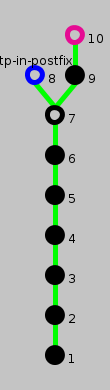
Proof Tree for definedness-E14 (View conclusion)
The following image shows the proof tree of sequent calculus. The proved goal is at the bottom. You can click on the nodes to view additional rules. See here for details on colors in a proof tree.
| ⊦ ( (gs.owns(ls.node) = Some(ls.tid) ∧ ls.lst ∈ gs.orl + gs.qrl ∧ ls.nxt = gs.vs[ls.lst].next ∧ ls.nxt ≠ null) ∧ ( listp(gs.orl + gs.qrl, gs.vs, gs.ps, gs.owns) ∧ ¬ dups(gs.orl + gs.qrl) ∧ markedp(gs.orl, gs.ps) ∧ markedp(gs.orl, gs.vs) ∧ unmarkedp(gs.qrl, gs.ps) ∧ gs.orl ≠ [] ∧ gs.phead ∈ gs.orl ∧ rvownerok(gs.vretRefs, gs.vrvHp, gs.rvowns) ∧ allocrv(gs.vretRefs, gs.vrvHp) ∧ nonullRetRefs(gs.orl + gs.qrl, gs.vs, gs.vretRefs, gs.pretRefs) ∧ rvownerok(gs.pretRefs, gs.prvHp, gs.rvowns) ∧ allocrv(gs.pretRefs, gs.prvHp) ∧ dom gs.vrvHp = dom gs.prvHp ∧ ( gs.vs[gs.vhead].next ≠ null ∧ gs.vs[gs.vs[gs.vhead].next].deqID ≠ None → gs.rvowns(gs.vretRefs(gs.vs[gs.vs[gs.vhead].next].deqID.tid)) = Claimed(gs.vs[gs.vs[gs.vhead].next].deqID.tid, gs.vs[gs.vs[gs.vhead].next].val)) ∧ ( gs.orl.last = gs.vhead ∧ (gs.qrl ≠ [] → unmarkedp(gs.qrl.tail, gs.vs)) ∨ gs.orl.butlast ≠ [] ∧ gs.orl.butlast.last = gs.vhead ∧ gs.phead ≠ gs.orl.last ∧ unmarkedp(gs.qrl, gs.vs)) ∧ ( gs.vtail = (gs.orl + gs.qrl).last ∨ gs.qrl ≠ [] ∧ gs.vtail = (gs.orl + gs.qrl.butlast).last ∧ gs.vs[gs.qrl.last].deqID = None ∧ gs.vs[(gs.orl + gs.qrl).last].next = null)) ∧ (ls.node ∈ gs.ps ∧ ls.node ∈ gs.vs ∧ ls.node ≠ null ∧ ¬ ls.node ∈ gs.orl ∧ ¬ ls.node ∈ gs.qrl) ∧ gs.vs[ls.node] = mk(ls.value, None, null) ∧ gs.ps[ls.node] = gs.vs[ls.node] ∧ ¬ ls.success ∧ nextnottid(ls.tid, gs.vhead, gs.vs) ∧ noid(ls.tid, gs.orl + gs.qrl, gs.vhead, gs.vs) ∧ oneowns(ls.tid, ls.node, gs.owns, gs.vs, gs.ps)) ∧ pre(gs, ls, E14, a) → (ls.lst ∈ gs.ps ∧ ls.lst ∈ gs.vs) ∧ (gs.orl + gs.qrl ≠ [] ∧ (ls.lst = (gs.orl + gs.qrl).last ⊃ ls.lst ∈ gs.vs;true)) ∧ gs.orl + gs.qrl ≠ [] ∧ (ls.lst = (gs.orl + gs.qrl).last ⊃ ls.lst ∈ gs.vs;true) |
ls.nxt = gs.vs[ls.lst].next, gs.owns(ls.node) = Some(ls.tid), gs.vs[ls.node] = mk(ls.value, None, null), gs.ps[ls.node] = gs.vs[ls.node], dom gs.vrvHp = dom gs.prvHp, ls.node ≠ null, ls.nxt ≠ null, gs.orl ≠ [], allocrv(gs.vretRefs, gs.vrvHp), allocrv(gs.pretRefs, gs.prvHp), listp(gs.orl + gs.qrl, gs.vs, gs.ps, gs.owns), markedp(gs.orl, gs.ps), markedp(gs.orl, gs.vs), nextnottid(ls.tid, gs.vhead, gs.vs), noid(ls.tid, gs.orl + gs.qrl, gs.vhead, gs.vs), nonullRetRefs(gs.orl + gs.qrl, gs.vs, gs.vretRefs, gs.pretRefs), oneowns(ls.tid, ls.node, gs.owns, gs.vs, gs.ps), pre(gs, ls, E14, a), rvownerok(gs.vretRefs, gs.vrvHp, gs.rvowns), rvownerok(gs.pretRefs, gs.prvHp, gs.rvowns), unmarkedp(gs.qrl, gs.ps), ls.lst ∈ gs.orl + gs.qrl, gs.phead ∈ gs.orl, ls.node ∈ gs.ps, ls.node ∈ gs.vs, ¬ ls.success, ¬ dups(gs.orl + gs.qrl), ¬ ls.node ∈ gs.qrl, ¬ ls.node ∈ gs.orl, gs.vs[gs.vhead].next ≠ null ∧ gs.vs[gs.vs[gs.vhead].next].deqID ≠ None → gs.rvowns(gs.vretRefs(gs.vs[gs.vs[gs.vhead].next].deqID.tid)) = Claimed(gs.vs[gs.vs[gs.vhead].next].deqID.tid, gs.vs[gs.vs[gs.vhead].next].val), gs.orl.last = gs.vhead ∧ (gs.qrl ≠ [] → unmarkedp(gs.qrl.tail, gs.vs)) ∨ gs.orl.butlast ≠ [] ∧ gs.orl.butlast.last = gs.vhead ∧ gs.phead ≠ gs.orl.last ∧ unmarkedp(gs.qrl, gs.vs), gs.vtail = (gs.orl + gs.qrl).last ∨ gs.qrl ≠ [] ∧ gs.vtail = (gs.orl + gs.qrl.butlast).last ∧ gs.vs[gs.qrl.last].deqID = None ∧ gs.vs[(gs.orl + gs.qrl).last].next = null ⊦ (ls.lst ∈ gs.ps ∧ ls.lst ∈ gs.vs) ∧ (gs.orl + gs.qrl ≠ [] ∧ (ls.lst = (gs.orl + gs.qrl).last ⊃ ls.lst ∈ gs.vs;true)) ∧ gs.orl + gs.qrl ≠ [] ∧ (ls.lst = (gs.orl + gs.qrl).last ⊃ ls.lst ∈ gs.vs;true)
| ls.nxt = gs.vs[ls.lst].next, gs.owns(ls.node) = Some(ls.tid), gs.vs[ls.node] = mk(ls.value, None, null), gs.ps[ls.node] = gs.vs[ls.node], dom gs.vrvHp = dom gs.prvHp, ls.node ≠ null, ls.nxt ≠ null, gs.orl ≠ [], allocrv(gs.vretRefs, gs.vrvHp), allocrv(gs.pretRefs, gs.prvHp), listp(gs.orl + gs.qrl, gs.vs, gs.ps, gs.owns), markedp(gs.orl, gs.ps), markedp(gs.orl, gs.vs), nextnottid(ls.tid, gs.vhead, gs.vs), noid(ls.tid, gs.orl + gs.qrl, gs.vhead, gs.vs), nonullRetRefs(gs.orl + gs.qrl, gs.vs, gs.vretRefs, gs.pretRefs), oneowns(ls.tid, ls.node, gs.owns, gs.vs, gs.ps), pre(gs, ls, E14, a), rvownerok(gs.vretRefs, gs.vrvHp, gs.rvowns), rvownerok(gs.pretRefs, gs.prvHp, gs.rvowns), unmarkedp(gs.qrl, gs.ps), ls.lst ∈ gs.orl + gs.qrl, gs.phead ∈ gs.orl, ls.node ∈ gs.ps, ls.node ∈ gs.vs, ¬ ls.success, ¬ dups(gs.orl + gs.qrl), ¬ ls.node ∈ gs.qrl, ¬ ls.node ∈ gs.orl, gs.vs[gs.vhead].next ≠ null ∧ gs.vs[gs.vs[gs.vhead].next].deqID ≠ None → gs.rvowns(gs.vretRefs(gs.vs[gs.vs[gs.vhead].next].deqID.tid)) = Claimed(gs.vs[gs.vs[gs.vhead].next].deqID.tid, gs.vs[gs.vs[gs.vhead].next].val), gs.orl.last = gs.vhead ∧ (gs.qrl ≠ [] → unmarkedp(gs.qrl.tail, gs.vs)) ∨ gs.orl.butlast ≠ [] ∧ gs.orl.butlast.last = gs.vhead ∧ gs.phead ≠ gs.orl.last ∧ unmarkedp(gs.qrl, gs.vs), gs.vtail = (gs.orl + gs.qrl).last ∨ gs.qrl ≠ [] ∧ gs.vtail = (gs.orl + gs.qrl.butlast).last ∧ gs.vs[gs.qrl.last].deqID = None ∧ gs.vs[(gs.orl + gs.qrl).last].next = null ⊦ (ls.lst ∈ gs.ps ∧ ls.lst ∈ gs.vs) ∧ (gs.orl + gs.qrl ≠ [] ∧ (ls.lst = (gs.orl + gs.qrl).last ⊃ ls.lst ∈ gs.vs;true)) ∧ gs.orl + gs.qrl ≠ [] ∧ (ls.lst = (gs.orl + gs.qrl).last ⊃ ls.lst ∈ gs.vs;true) |
ls.nxt = gs.vs[ls.lst].next, gs.owns(ls.node) = Some(ls.tid), gs.vs[ls.node] = mk(ls.value, None, null), gs.ps[ls.node] = mk(ls.value, None, null), dom gs.vrvHp = dom gs.prvHp, gs.orl + gs.qrl ≠ [], ls.node ≠ null, ls.nxt ≠ null, gs.orl ≠ [], allocrv(gs.vretRefs, gs.vrvHp), allocrv(gs.pretRefs, gs.prvHp), listp(gs.orl + gs.qrl, gs.vs, gs.ps, gs.owns), markedp(gs.orl, gs.ps), markedp(gs.orl, gs.vs), nextnottid(ls.tid, gs.vhead, gs.vs), noid(ls.tid, gs.orl + gs.qrl, gs.vhead, gs.vs), nonullRetRefs(gs.orl + gs.qrl, gs.vs, gs.vretRefs, gs.pretRefs), oneowns(ls.tid, ls.node, gs.owns, gs.vs, gs.ps), rvownerok(gs.vretRefs, gs.vrvHp, gs.rvowns), rvownerok(gs.pretRefs, gs.prvHp, gs.rvowns), unmarkedp(gs.qrl, gs.ps), gs.phead ∈ gs.ps, gs.phead ∈ gs.vs, gs.phead ∈ gs.orl, ls.node ∈ gs.ps, ls.node ∈ gs.vs, ¬ ls.success, ¬ dups(gs.qrl), ¬ dups(gs.orl), ¬ dups(gs.orl + gs.qrl), ¬ ls.node ∈ gs.orl, ¬ ls.node ∈ gs.qrl, gs.vs[gs.vhead].next ≠ null ∧ gs.vs[gs.vs[gs.vhead].next].deqID ≠ None → gs.rvowns(gs.vretRefs(gs.vs[gs.vs[gs.vhead].next].deqID.tid)) = Claimed(gs.vs[gs.vs[gs.vhead].next].deqID.tid, gs.vs[gs.vs[gs.vhead].next].val), gs.vtail = (gs.orl + gs.qrl).last ∨ gs.qrl ≠ [] ∧ gs.vtail = (gs.orl + gs.qrl.butlast).last ∧ gs.vs[gs.qrl.last].deqID = None ∧ gs.vs[gs.qrl.last].next = null, ls.lst ∈ gs.orl ∨ ls.lst ∈ gs.qrl, gs.orl.last = gs.vhead ∧ (gs.qrl ≠ [] → unmarkedp(gs.qrl.tail, gs.vs)) ∨ gs.orl.butlast ≠ [] ∧ gs.orl.butlast.last = gs.vhead ∧ gs.phead ≠ gs.orl.last ∧ unmarkedp(gs.qrl, gs.vs) ⊦ ls.lst ∈ gs.vs ∧ ls.lst ∈ gs.ps
Used simplifier rules: a: ⊦ (x + y) + z = x + y + z; from specification list[reflist] ⊦ x + y = [] ↔ x = [] ∧ y = []; (as) a: ⊦ ¬ dups(x + y) → ¬ dups(x) ∧ ¬ dups(y); (forward) from specification list-dup[reflist] fw-some-oneowns: ⊦ oneowns(tid, r0, owns, vs, ps) ∧ owns(r) = Some(tid) ∧ r ∈ ps ∧ r ∈ vs → r = r0; (forward) from specification DMSQ list-elem-in-app11: ⊦ listp(orl + qrl, vs, ps, owns) ∧ node ∈ orl → node ∈ vs; (forward) from specification DMSQ list-elem-in-app12: ⊦ listp(orl + qrl, vs, ps, owns) ∧ node ∈ orl → node ∈ ps; (forward) from specification DMSQ ⊦ y ≠ [] → (x + y).last = y.last; (s) ⊦ pre(gs, ls, E14, a) ↔ a = (ls.lst = (gs.orl + gs.qrl).last ⊃ doEnq(gs.owns(ls.nxt).tid);τ); (s) ⊦ a ∈ x + y ↔ a ∈ x ∨ a ∈ y; (s)
| ls.nxt = gs.vs[ls.lst].next, gs.owns(ls.node) = Some(ls.tid), gs.vs[ls.node] = mk(ls.value, None, null), gs.ps[ls.node] = mk(ls.value, None, null), dom gs.vrvHp = dom gs.prvHp, gs.orl + gs.qrl ≠ [], ls.node ≠ null, ls.nxt ≠ null, gs.orl ≠ [], allocrv(gs.vretRefs, gs.vrvHp), allocrv(gs.pretRefs, gs.prvHp), listp(gs.orl + gs.qrl, gs.vs, gs.ps, gs.owns), markedp(gs.orl, gs.ps), markedp(gs.orl, gs.vs), nextnottid(ls.tid, gs.vhead, gs.vs), noid(ls.tid, gs.orl + gs.qrl, gs.vhead, gs.vs), nonullRetRefs(gs.orl + gs.qrl, gs.vs, gs.vretRefs, gs.pretRefs), oneowns(ls.tid, ls.node, gs.owns, gs.vs, gs.ps), rvownerok(gs.vretRefs, gs.vrvHp, gs.rvowns), rvownerok(gs.pretRefs, gs.prvHp, gs.rvowns), unmarkedp(gs.qrl, gs.ps), gs.phead ∈ gs.ps, gs.phead ∈ gs.vs, gs.phead ∈ gs.orl, ls.node ∈ gs.ps, ls.node ∈ gs.vs, ¬ ls.success, ¬ dups(gs.qrl), ¬ dups(gs.orl), ¬ dups(gs.orl + gs.qrl), ¬ ls.node ∈ gs.orl, ¬ ls.node ∈ gs.qrl, gs.vs[gs.vhead].next ≠ null ∧ gs.vs[gs.vs[gs.vhead].next].deqID ≠ None → gs.rvowns(gs.vretRefs(gs.vs[gs.vs[gs.vhead].next].deqID.tid)) = Claimed(gs.vs[gs.vs[gs.vhead].next].deqID.tid, gs.vs[gs.vs[gs.vhead].next].val), gs.vtail = (gs.orl + gs.qrl).last ∨ gs.qrl ≠ [] ∧ gs.vtail = (gs.orl + gs.qrl.butlast).last ∧ gs.vs[gs.qrl.last].deqID = None ∧ gs.vs[gs.qrl.last].next = null, ls.lst ∈ gs.orl ∨ ls.lst ∈ gs.qrl, gs.orl.last = gs.vhead ∧ (gs.qrl ≠ [] → unmarkedp(gs.qrl.tail, gs.vs)) ∨ gs.orl.butlast ≠ [] ∧ gs.orl.butlast.last = gs.vhead ∧ gs.phead ≠ gs.orl.last ∧ unmarkedp(gs.qrl, gs.vs) ⊦ ls.lst ∈ gs.vs ∧ ls.lst ∈ gs.ps |
ls.nxt = vs[ls.lst].next, ps[ls.node] = mk(ls.value, None, null), vs[ls.node] = mk(ls.value, None, null), dom vrvHp = dom prvHp, gs = mkgs(ps, vs, phead, vhead, vtail, vretRefs, pretRefs, vrvHp, prvHp, qrl, orl, owns, rvowns), owns(ls.node) = Some(ls.tid), orl + qrl ≠ [], ls.node ≠ null, ls.nxt ≠ null, orl ≠ [], allocrv(pretRefs, prvHp), allocrv(vretRefs, vrvHp), listp(orl + qrl, vs, ps, owns), markedp(orl, vs), markedp(orl, ps), nextnottid(ls.tid, vhead, vs), noid(ls.tid, orl + qrl, vhead, vs), nonullRetRefs(orl + qrl, vs, vretRefs, pretRefs), oneowns(ls.tid, ls.node, owns, vs, ps), rvownerok(pretRefs, prvHp, rvowns), rvownerok(vretRefs, vrvHp, rvowns), unmarkedp(qrl, ps), ls.node ∈ vs, ls.node ∈ ps, phead ∈ orl, phead ∈ vs, phead ∈ ps, ¬ ls.success, ¬ dups(qrl), ¬ dups(orl), ¬ dups(orl + qrl), ¬ ls.node ∈ orl, ¬ ls.node ∈ qrl, vs[vhead].next ≠ null ∧ vs[vs[vhead].next].deqID ≠ None → rvowns(vretRefs(vs[vs[vhead].next].deqID.tid)) = Claimed(vs[vs[vhead].next].deqID.tid, vs[vs[vhead].next].val), orl.last = vhead ∧ (qrl ≠ [] → unmarkedp(qrl.tail, vs)) ∨ orl.butlast ≠ [] ∧ orl.butlast.last = vhead ∧ phead ≠ orl.last ∧ unmarkedp(qrl, vs), ls.lst ∈ orl ∨ ls.lst ∈ qrl, vtail = (orl + qrl).last ∨ qrl ≠ [] ∧ vtail = (orl + qrl.butlast).last ∧ vs[qrl.last].deqID = None ∧ vs[qrl.last].next = null ⊦ ls.lst ∈ vs ∧ ls.lst ∈ ps
Used simplifier rules: ⊦ ( ( ( ( ( ( ( ( ( ((ps = gs.ps ∧ vs = gs.vs) ∧ phead = gs.phead) ∧ vhead = gs.vhead) ∧ vtail = gs.vtail) ∧ vretRefs = gs.vretRefs) ∧ pretRefs = gs.pretRefs) ∧ vrvHp = gs.vrvHp) ∧ prvHp = gs.prvHp) ∧ qrl = gs.qrl) ∧ orl = gs.orl) ∧ owns = gs.owns) ∧ rvowns = gs.rvowns ↔ gs = mkgs (ps, vs, phead, vhead, vtail, vretRefs, pretRefs, vrvHp, prvHp, qrl, orl, owns, rvowns); (elim) Used terms: qrl, ps, phead, vrvHp, vretRefs, vhead, vtail, gs, owns, rvowns, orl, prvHp, pretRefs, vs
| ls.nxt = vs[ls.lst].next, ps[ls.node] = mk(ls.value, None, null), vs[ls.node] = mk(ls.value, None, null), dom vrvHp = dom prvHp, gs = mkgs(ps, vs, phead, vhead, vtail, vretRefs, pretRefs, vrvHp, prvHp, qrl, orl, owns, rvowns), owns(ls.node) = Some(ls.tid), orl + qrl ≠ [], ls.node ≠ null, ls.nxt ≠ null, orl ≠ [], allocrv(pretRefs, prvHp), allocrv(vretRefs, vrvHp), listp(orl + qrl, vs, ps, owns), markedp(orl, vs), markedp(orl, ps), nextnottid(ls.tid, vhead, vs), noid(ls.tid, orl + qrl, vhead, vs), nonullRetRefs(orl + qrl, vs, vretRefs, pretRefs), oneowns(ls.tid, ls.node, owns, vs, ps), rvownerok(pretRefs, prvHp, rvowns), rvownerok(vretRefs, vrvHp, rvowns), unmarkedp(qrl, ps), ls.node ∈ vs, ls.node ∈ ps, phead ∈ orl, phead ∈ vs, phead ∈ ps, ¬ ls.success, ¬ dups(qrl), ¬ dups(orl), ¬ dups(orl + qrl), ¬ ls.node ∈ orl, ¬ ls.node ∈ qrl, vs[vhead].next ≠ null ∧ vs[vs[vhead].next].deqID ≠ None → rvowns(vretRefs(vs[vs[vhead].next].deqID.tid)) = Claimed(vs[vs[vhead].next].deqID.tid, vs[vs[vhead].next].val), orl.last = vhead ∧ (qrl ≠ [] → unmarkedp(qrl.tail, vs)) ∨ orl.butlast ≠ [] ∧ orl.butlast.last = vhead ∧ phead ≠ orl.last ∧ unmarkedp(qrl, vs), ls.lst ∈ orl ∨ ls.lst ∈ qrl, vtail = (orl + qrl).last ∨ qrl ≠ [] ∧ vtail = (orl + qrl.butlast).last ∧ vs[qrl.last].deqID = None ∧ vs[qrl.last].next = null ⊦ ls.lst ∈ vs ∧ ls.lst ∈ ps |
ls.nxt = vs[ls.lst].next, vs[ls.node] = mk(ls.value, None, null), ps[ls.node] = mk(ls.value, None, null), dom vrvHp = dom prvHp, owns(ls.node) = Some(ls.tid), orl + qrl ≠ [], ls.node ≠ null, ls.nxt ≠ null, orl ≠ [], allocrv(vretRefs, vrvHp), allocrv(pretRefs, prvHp), listp(orl + qrl, vs, ps, owns), markedp(orl, ps), markedp(orl, vs), nextnottid(ls.tid, vhead, vs), noid(ls.tid, orl + qrl, vhead, vs), nonullRetRefs(orl + qrl, vs, vretRefs, pretRefs), oneowns(ls.tid, ls.node, owns, vs, ps), rvownerok(vretRefs, vrvHp, rvowns), rvownerok(pretRefs, prvHp, rvowns), unmarkedp(qrl, ps), phead ∈ orl, ls.node ∈ ps, ls.node ∈ vs, phead ∈ vs, phead ∈ ps, ¬ ls.success, ¬ dups(orl + qrl), ¬ dups(orl), ¬ dups(qrl), ¬ ls.node ∈ orl, ¬ ls.node ∈ qrl, vs[vhead].next ≠ null ∧ vs[vs[vhead].next].deqID ≠ None → rvowns(vretRefs(vs[vs[vhead].next].deqID.tid)) = Claimed(vs[vs[vhead].next].deqID.tid, vs[vs[vhead].next].val), vtail = (orl + qrl).last ∨ qrl ≠ [] ∧ vtail = (orl + qrl.butlast).last ∧ vs[qrl.last].deqID = None ∧ vs[qrl.last].next = null, ls.lst ∈ orl ∨ ls.lst ∈ qrl, orl.last = vhead ∧ (qrl ≠ [] → unmarkedp(qrl.tail, vs)) ∨ orl.butlast ≠ [] ∧ orl.butlast.last = vhead ∧ phead ≠ orl.last ∧ unmarkedp(qrl, vs) ⊦ ls.lst ∈ vs ∧ ls.lst ∈ ps
Used simplifier rules: a: ⊦ (x + y) + z = x + y + z; from specification list[reflist] a: ⊦ ¬ dups(x + y) → ¬ dups(x) ∧ ¬ dups(y); (forward) from specification list-dup[reflist] list-elem-in-app11: ⊦ listp(orl + qrl, vs, ps, owns) ∧ node ∈ orl → node ∈ vs; (forward) from specification DMSQ list-elem-in-app12: ⊦ listp(orl + qrl, vs, ps, owns) ∧ node ∈ orl → node ∈ ps; (forward) from specification DMSQ
| ls.nxt = vs[ls.lst].next, vs[ls.node] = mk(ls.value, None, null), ps[ls.node] = mk(ls.value, None, null), dom vrvHp = dom prvHp, owns(ls.node) = Some(ls.tid), orl + qrl ≠ [], ls.node ≠ null, ls.nxt ≠ null, orl ≠ [], allocrv(vretRefs, vrvHp), allocrv(pretRefs, prvHp), listp(orl + qrl, vs, ps, owns), markedp(orl, ps), markedp(orl, vs), nextnottid(ls.tid, vhead, vs), noid(ls.tid, orl + qrl, vhead, vs), nonullRetRefs(orl + qrl, vs, vretRefs, pretRefs), oneowns(ls.tid, ls.node, owns, vs, ps), rvownerok(vretRefs, vrvHp, rvowns), rvownerok(pretRefs, prvHp, rvowns), unmarkedp(qrl, ps), phead ∈ orl, ls.node ∈ ps, ls.node ∈ vs, phead ∈ vs, phead ∈ ps, ¬ ls.success, ¬ dups(orl + qrl), ¬ dups(orl), ¬ dups(qrl), ¬ ls.node ∈ orl, ¬ ls.node ∈ qrl, vs[vhead].next ≠ null ∧ vs[vs[vhead].next].deqID ≠ None → rvowns(vretRefs(vs[vs[vhead].next].deqID.tid)) = Claimed(vs[vs[vhead].next].deqID.tid, vs[vs[vhead].next].val), vtail = (orl + qrl).last ∨ qrl ≠ [] ∧ vtail = (orl + qrl.butlast).last ∧ vs[qrl.last].deqID = None ∧ vs[qrl.last].next = null, ls.lst ∈ orl ∨ ls.lst ∈ qrl, orl.last = vhead ∧ (qrl ≠ [] → unmarkedp(qrl.tail, vs)) ∨ orl.butlast ≠ [] ∧ orl.butlast.last = vhead ∧ phead ≠ orl.last ∧ unmarkedp(qrl, vs) ⊦ ls.lst ∈ vs ∧ ls.lst ∈ ps |
ps[node] = mk(value, None, null), vs[node] = mk(value, None, null), dom vrvHp = dom prvHp, ls = mkls(tid, value, optval, node, nd, success, lst, nxt, rvref, optval0, first, othertid, addr), nxt = vs[lst].next, owns(node) = Some(tid), ¬ success, orl + qrl ≠ [], node ≠ null, nxt ≠ null, orl ≠ [], allocrv(pretRefs, prvHp), allocrv(vretRefs, vrvHp), listp(orl + qrl, vs, ps, owns), markedp(orl, vs), markedp(orl, ps), nextnottid(tid, vhead, vs), noid(tid, orl + qrl, vhead, vs), nonullRetRefs(orl + qrl, vs, vretRefs, pretRefs), oneowns(tid, node, owns, vs, ps), rvownerok(pretRefs, prvHp, rvowns), rvownerok(vretRefs, vrvHp, rvowns), unmarkedp(qrl, ps), phead ∈ ps, phead ∈ vs, node ∈ vs, node ∈ ps, phead ∈ orl, ¬ dups(orl + qrl), ¬ dups(orl), ¬ dups(qrl), ¬ node ∈ orl, ¬ node ∈ qrl, vs[vhead].next ≠ null ∧ vs[vs[vhead].next].deqID ≠ None → rvowns(vretRefs(vs[vs[vhead].next].deqID.tid)) = Claimed(vs[vs[vhead].next].deqID.tid, vs[vs[vhead].next].val), orl.last = vhead ∧ (qrl ≠ [] → unmarkedp(qrl.tail, vs)) ∨ orl.butlast ≠ [] ∧ orl.butlast.last = vhead ∧ phead ≠ orl.last ∧ unmarkedp(qrl, vs), lst ∈ orl ∨ lst ∈ qrl, vtail = (orl + qrl).last ∨ qrl ≠ [] ∧ vtail = (orl + qrl.butlast).last ∧ vs[qrl.last].deqID = None ∧ vs[qrl.last].next = null ⊦ lst ∈ vs ∧ lst ∈ ps
Used simplifier rules: ⊦ ( ( ( ( ( ( ( ( ( ( (tid = ls.tid ∧ value = ls.value) ∧ optval = ls.optval) ∧ node = ls.node) ∧ nd = ls.nd) ∧ (success ↔ ls.success)) ∧ lst = ls.lst) ∧ nxt = ls.nxt) ∧ rvref = ls.rvref) ∧ optval0 = ls.optval0) ∧ first = ls.first) ∧ othertid = ls.othertid) ∧ addr = ls.addr ↔ ls = mkls (tid, value, optval, node, nd, success, lst, nxt, rvref, optval0, first, othertid, addr); (elim) Used terms: value, nxt, optval, node, nd, ls, addr, tid, lst, first, rvref, othertid, success, optval
| ps[node] = mk(value, None, null), vs[node] = mk(value, None, null), dom vrvHp = dom prvHp, ls = mkls(tid, value, optval, node, nd, success, lst, nxt, rvref, optval0, first, othertid, addr), nxt = vs[lst].next, owns(node) = Some(tid), ¬ success, orl + qrl ≠ [], node ≠ null, nxt ≠ null, orl ≠ [], allocrv(pretRefs, prvHp), allocrv(vretRefs, vrvHp), listp(orl + qrl, vs, ps, owns), markedp(orl, vs), markedp(orl, ps), nextnottid(tid, vhead, vs), noid(tid, orl + qrl, vhead, vs), nonullRetRefs(orl + qrl, vs, vretRefs, pretRefs), oneowns(tid, node, owns, vs, ps), rvownerok(pretRefs, prvHp, rvowns), rvownerok(vretRefs, vrvHp, rvowns), unmarkedp(qrl, ps), phead ∈ ps, phead ∈ vs, node ∈ vs, node ∈ ps, phead ∈ orl, ¬ dups(orl + qrl), ¬ dups(orl), ¬ dups(qrl), ¬ node ∈ orl, ¬ node ∈ qrl, vs[vhead].next ≠ null ∧ vs[vs[vhead].next].deqID ≠ None → rvowns(vretRefs(vs[vs[vhead].next].deqID.tid)) = Claimed(vs[vs[vhead].next].deqID.tid, vs[vs[vhead].next].val), orl.last = vhead ∧ (qrl ≠ [] → unmarkedp(qrl.tail, vs)) ∨ orl.butlast ≠ [] ∧ orl.butlast.last = vhead ∧ phead ≠ orl.last ∧ unmarkedp(qrl, vs), lst ∈ orl ∨ lst ∈ qrl, vtail = (orl + qrl).last ∨ qrl ≠ [] ∧ vtail = (orl + qrl.butlast).last ∧ vs[qrl.last].deqID = None ∧ vs[qrl.last].next = null ⊦ lst ∈ vs ∧ lst ∈ ps |
vs[node] = mk(value, None, null), ps[node] = mk(value, None, null), dom vrvHp = dom prvHp, owns(node) = Some(tid), orl + qrl ≠ [], vs[lst].next ≠ null, node ≠ null, orl ≠ [], allocrv(vretRefs, vrvHp), allocrv(pretRefs, prvHp), listp(orl + qrl, vs, ps, owns), markedp(orl, ps), markedp(orl, vs), nextnottid(tid, vhead, vs), noid(tid, orl + qrl, vhead, vs), nonullRetRefs(orl + qrl, vs, vretRefs, pretRefs), oneowns(tid, node, owns, vs, ps), rvownerok(vretRefs, vrvHp, rvowns), rvownerok(pretRefs, prvHp, rvowns), unmarkedp(qrl, ps), phead ∈ orl, node ∈ ps, node ∈ vs, phead ∈ vs, phead ∈ ps, ¬ dups(orl + qrl), ¬ dups(orl), ¬ dups(qrl), ¬ node ∈ orl, ¬ node ∈ qrl, vs[vhead].next ≠ null ∧ vs[vs[vhead].next].deqID ≠ None → rvowns(vretRefs(vs[vs[vhead].next].deqID.tid)) = Claimed(vs[vs[vhead].next].deqID.tid, vs[vs[vhead].next].val), vtail = (orl + qrl).last ∨ qrl ≠ [] ∧ vtail = (orl + qrl.butlast).last ∧ vs[qrl.last].deqID = None ∧ vs[qrl.last].next = null, lst ∈ orl ∨ lst ∈ qrl, orl.last = vhead ∧ (qrl ≠ [] → unmarkedp(qrl.tail, vs)) ∨ orl.butlast ≠ [] ∧ orl.butlast.last = vhead ∧ phead ≠ orl.last ∧ unmarkedp(qrl, vs) ⊦ lst ∈ vs ∧ lst ∈ ps
| vs[node] = mk(value, None, null), ps[node] = mk(value, None, null), dom vrvHp = dom prvHp, owns(node) = Some(tid), orl + qrl ≠ [], vs[lst].next ≠ null, node ≠ null, orl ≠ [], allocrv(vretRefs, vrvHp), allocrv(pretRefs, prvHp), listp(orl + qrl, vs, ps, owns), markedp(orl, ps), markedp(orl, vs), nextnottid(tid, vhead, vs), noid(tid, orl + qrl, vhead, vs), nonullRetRefs(orl + qrl, vs, vretRefs, pretRefs), oneowns(tid, node, owns, vs, ps), rvownerok(vretRefs, vrvHp, rvowns), rvownerok(pretRefs, prvHp, rvowns), unmarkedp(qrl, ps), phead ∈ orl, node ∈ ps, node ∈ vs, phead ∈ vs, phead ∈ ps, ¬ dups(orl + qrl), ¬ dups(orl), ¬ dups(qrl), ¬ node ∈ orl, ¬ node ∈ qrl, vs[vhead].next ≠ null ∧ vs[vs[vhead].next].deqID ≠ None → rvowns(vretRefs(vs[vs[vhead].next].deqID.tid)) = Claimed(vs[vs[vhead].next].deqID.tid, vs[vs[vhead].next].val), vtail = (orl + qrl).last ∨ qrl ≠ [] ∧ vtail = (orl + qrl.butlast).last ∧ vs[qrl.last].deqID = None ∧ vs[qrl.last].next = null, lst ∈ orl ∨ lst ∈ qrl, orl.last = vhead ∧ (qrl ≠ [] → unmarkedp(qrl.tail, vs)) ∨ orl.butlast ≠ [] ∧ orl.butlast.last = vhead ∧ phead ≠ orl.last ∧ unmarkedp(qrl, vs) ⊦ lst ∈ vs ∧ lst ∈ ps |
⊦ listp(rl, vs, ps, owns) ∧ r ∈ rl → (∃ rl1, rl2. rl = rl1 + r ' + rl2 ∧ listp(r ' + rl2, vs, ps, owns))
ps[node] = mk(value, None, null), vs[node] = mk(value, None, null), dom vrvHp = dom prvHp, owns(node) = Some(tid), orl + qrl ≠ [], vs[lst].next ≠ null, node ≠ null, orl ≠ [], allocrv(pretRefs, prvHp), allocrv(vretRefs, vrvHp), listp(orl + qrl, vs, ps, owns), markedp(orl, vs), markedp(orl, ps), nextnottid(tid, vhead, vs), noid(tid, orl + qrl, vhead, vs), nonullRetRefs(orl + qrl, vs, vretRefs, pretRefs), oneowns(tid, node, owns, vs, ps), rvownerok(pretRefs, prvHp, rvowns), rvownerok(vretRefs, vrvHp, rvowns), unmarkedp(qrl, ps), phead ∈ ps, phead ∈ vs, node ∈ vs, node ∈ ps, phead ∈ orl, ¬ dups(orl + qrl), ¬ dups(orl), ¬ dups(qrl), ¬ node ∈ orl, ¬ node ∈ qrl, vs[vhead].next ≠ null ∧ vs[vs[vhead].next].deqID ≠ None → rvowns(vretRefs(vs[vs[vhead].next].deqID.tid)) = Claimed(vs[vs[vhead].next].deqID.tid, vs[vs[vhead].next].val), listp(orl + qrl, vs, ps, owns) ∧ lst ∈ orl + qrl → (∃ rl1, rl2. orl + qrl = rl1 + lst ' + rl2 ∧ listp(lst ' + rl2, vs, ps, owns)), orl.last = vhead ∧ (qrl ≠ [] → unmarkedp(qrl.tail, vs)) ∨ orl.butlast ≠ [] ∧ orl.butlast.last = vhead ∧ phead ≠ orl.last ∧ unmarkedp(qrl, vs), lst ∈ orl ∨ lst ∈ qrl, vtail = (orl + qrl).last ∨ qrl ≠ [] ∧ vtail = (orl + qrl.butlast).last ∧ vs[qrl.last].deqID = None ∧ vs[qrl.last].next = null ⊦ lst ∈ vs ∧ lst ∈ ps
Used terms: ps, orl + qrl, owns, lst, vs
| ⊦ listp(rl, vs, ps, owns) ∧ r ∈ rl → (∃ rl1, rl2. rl = rl1 + r ' + rl2 ∧ listp(r ' + rl2, vs, ps, owns)) |
| ps[node] = mk(value, None, null), vs[node] = mk(value, None, null), dom vrvHp = dom prvHp, owns(node) = Some(tid), orl + qrl ≠ [], vs[lst].next ≠ null, node ≠ null, orl ≠ [], allocrv(pretRefs, prvHp), allocrv(vretRefs, vrvHp), listp(orl + qrl, vs, ps, owns), markedp(orl, vs), markedp(orl, ps), nextnottid(tid, vhead, vs), noid(tid, orl + qrl, vhead, vs), nonullRetRefs(orl + qrl, vs, vretRefs, pretRefs), oneowns(tid, node, owns, vs, ps), rvownerok(pretRefs, prvHp, rvowns), rvownerok(vretRefs, vrvHp, rvowns), unmarkedp(qrl, ps), phead ∈ ps, phead ∈ vs, node ∈ vs, node ∈ ps, phead ∈ orl, ¬ dups(orl + qrl), ¬ dups(orl), ¬ dups(qrl), ¬ node ∈ orl, ¬ node ∈ qrl, vs[vhead].next ≠ null ∧ vs[vs[vhead].next].deqID ≠ None → rvowns(vretRefs(vs[vs[vhead].next].deqID.tid)) = Claimed(vs[vs[vhead].next].deqID.tid, vs[vs[vhead].next].val), listp(orl + qrl, vs, ps, owns) ∧ lst ∈ orl + qrl → (∃ rl1, rl2. orl + qrl = rl1 + lst ' + rl2 ∧ listp(lst ' + rl2, vs, ps, owns)), orl.last = vhead ∧ (qrl ≠ [] → unmarkedp(qrl.tail, vs)) ∨ orl.butlast ≠ [] ∧ orl.butlast.last = vhead ∧ phead ≠ orl.last ∧ unmarkedp(qrl, vs), lst ∈ orl ∨ lst ∈ qrl, vtail = (orl + qrl).last ∨ qrl ≠ [] ∧ vtail = (orl + qrl.butlast).last ∧ vs[qrl.last].deqID = None ∧ vs[qrl.last].next = null ⊦ lst ∈ vs ∧ lst ∈ ps |
orl + qrl = rl1 + lst ' + rl2, ps[node] = mk(value, None, null), vs[node] = mk(value, None, null), dom vrvHp = dom prvHp, owns(node) = Some(tid), orl + qrl ≠ [], vs[lst].next ≠ null, node ≠ null, node ≠ lst, orl ≠ [], allocrv(pretRefs, prvHp), allocrv(vretRefs, vrvHp), listp(lst ' + rl2, vs, ps, owns), listp(orl + qrl, vs, ps, owns), markedp(orl, vs), markedp(orl, ps), nextnottid(tid, vhead, vs), noid(tid, orl + qrl, vhead, vs), nonullRetRefs(orl + qrl, vs, vretRefs, pretRefs), oneowns(tid, node, owns, vs, ps), rvownerok(pretRefs, prvHp, rvowns), rvownerok(vretRefs, vrvHp, rvowns), unmarkedp(qrl, ps), phead ∈ ps, phead ∈ vs, node ∈ vs, node ∈ ps, phead ∈ orl, ¬ dups(qrl), ¬ dups(orl), ¬ dups(orl + qrl), ¬ node ∈ rl1, ¬ node ∈ qrl, ¬ node ∈ orl, ¬ node ∈ rl2, vs[vhead].next ≠ null ∧ vs[vs[vhead].next].deqID ≠ None → rvowns(vretRefs(vs[vs[vhead].next].deqID.tid)) = Claimed(vs[vs[vhead].next].deqID.tid, vs[vs[vhead].next].val), orl.last = vhead ∧ (qrl ≠ [] → unmarkedp(qrl.tail, vs)) ∨ orl.butlast ≠ [] ∧ orl.butlast.last = vhead ∧ phead ≠ orl.last ∧ unmarkedp(qrl, vs), lst ∈ orl ∨ lst ∈ qrl, vtail = (orl + qrl).last ∨ qrl ≠ [] ∧ vtail = (orl + qrl.butlast).last ∧ vs[qrl.last].deqID = None ∧ vs[qrl.last].next = null ⊦ lst ∈ vs ∧ lst ∈ ps
Used simplifier rules: ⊦ a ∈ b ' ↔ a = b; (s) a: ⊦ (x + y) + z = x + y + z; from specification list[reflist] notin-forward: ⊦ rl + rl0 = rl1 + rl2 + rl3 ∧ ¬ r ∈ rl ∧ ¬ r ∈ rl0 → ¬ r ∈ rl1 ∧ ¬ r ∈ rl2 ∧ ¬ r ∈ rl3; (forward) from specification DMSQ ⊦ a ∈ x + y ↔ a ∈ x ∨ a ∈ y; (s)
| orl + qrl = rl1 + lst ' + rl2, ps[node] = mk(value, None, null), vs[node] = mk(value, None, null), dom vrvHp = dom prvHp, owns(node) = Some(tid), orl + qrl ≠ [], vs[lst].next ≠ null, node ≠ null, node ≠ lst, orl ≠ [], allocrv(pretRefs, prvHp), allocrv(vretRefs, vrvHp), listp(lst ' + rl2, vs, ps, owns), listp(orl + qrl, vs, ps, owns), markedp(orl, vs), markedp(orl, ps), nextnottid(tid, vhead, vs), noid(tid, orl + qrl, vhead, vs), nonullRetRefs(orl + qrl, vs, vretRefs, pretRefs), oneowns(tid, node, owns, vs, ps), rvownerok(pretRefs, prvHp, rvowns), rvownerok(vretRefs, vrvHp, rvowns), unmarkedp(qrl, ps), phead ∈ ps, phead ∈ vs, node ∈ vs, node ∈ ps, phead ∈ orl, ¬ dups(qrl), ¬ dups(orl), ¬ dups(orl + qrl), ¬ node ∈ rl1, ¬ node ∈ qrl, ¬ node ∈ orl, ¬ node ∈ rl2, vs[vhead].next ≠ null ∧ vs[vs[vhead].next].deqID ≠ None → rvowns(vretRefs(vs[vs[vhead].next].deqID.tid)) = Claimed(vs[vs[vhead].next].deqID.tid, vs[vs[vhead].next].val), orl.last = vhead ∧ (qrl ≠ [] → unmarkedp(qrl.tail, vs)) ∨ orl.butlast ≠ [] ∧ orl.butlast.last = vhead ∧ phead ≠ orl.last ∧ unmarkedp(qrl, vs), lst ∈ orl ∨ lst ∈ qrl, vtail = (orl + qrl).last ∨ qrl ≠ [] ∧ vtail = (orl + qrl.butlast).last ∧ vs[qrl.last].deqID = None ∧ vs[qrl.last].next = null ⊦ lst ∈ vs ∧ lst ∈ ps |
Used simplifier rules: reflist freely generated by [], +;; ⊦ listp(r ' + r0 ' + rl, vs, ps, owns) ↔ owns(r) = None ∧ r ∈ vs ∧ r ∈ ps ∧ r ≠ null ∧ ¬ weak?(vs[r].deqID) ∧ (ps[r].deqID = vs[r].deqID ∨ ps[r].deqID = None) ∧ ps[r].val = vs[r].val ∧ ps[r].next = vs[r].next ∧ ps[r].next = r0 ∧ listp(r0 ' + rl, vs, ps, owns); (s) ⊦ a + x = a ' + x; (s) ⊦ a ∈ b ' + x ↔ ¬(a ≠ b ∧ ¬ a ∈ x); (ss) a: ⊦ (x + y) + z = x + y + z; from specification list[reflist] ⊦ x + [] = x; (s) ⊦ listp(r ', vs, ps, owns) ↔ owns(r) = None ∧ r ∈ vs ∧ r ∈ ps ∧ r ≠ null ∧ ¬ weak?(vs[r].deqID) ∧ (ps[r].deqID = vs[r].deqID ∨ ps[r].deqID = None) ∧ ps[r].val = vs[r].val ∧ ps[r].next = null ∧ ( vs[r].next ≠ null → vs[r].next ∈ vs ∧ vs[r].next ∈ ps ∧ ps[vs[r].next] = vs[vs[r].next] ∧ ps[vs[r].next].deqID = None ∧ ps[vs[r].next].next = null ∧ weak?(owns(vs[r].next))); (s) ⊦ ¬ a ∈ []; (s)
The following image shows the proof tree of sequent calculus. The proved goal is at the bottom. You can click on the nodes to view additional rules. See here for details on colors in a proof tree.