Proof Tree for wf-lexicalind (View conclusion)
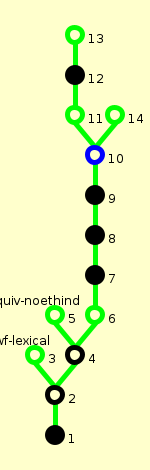
The following image shows the proof tree of sequent calculus. The proved goal is at the bottom. You can click on the nodes to view additional rules. See here for details on colors in a proof tree.
| ∀ b, c. (∀ b0, c0. wf1≪(b0, b) ∨ b0 = b ∧ wf2≪(c0, c) → q(b0, c0)) → q(b, c) ⊦ wf(wf1≪) ∧ wf(wf2≪) → q(b, c) |
wf(wf1≪), wf(wf2≪), ¬ q(b, c), ∀ b, c. (∀ b0, c0. wf1≪(b0, b) ∨ b0 = b ∧ wf2≪(c0, c) → q(b0, c0)) → q(b, c) ⊦
| wf(wf1≪), wf(wf2≪), ¬ q(b, c), ∀ b, c. (∀ b0, c0. wf1≪(b0, b) ∨ b0 = b ∧ wf2≪(c0, c) → q(b0, c0)) → q(b, c) ⊦ |
wf(wf1≪), wf(wf2≪) ⊦ wf(λ bc0, bc. wf1≪(bc0._1, bc._1) ∨ bc0._1 = bc._1 ∧ wf2≪(bc0._2, bc._2))
wf(wf2≪), wf(wf1≪), wf(λ bc0, bc. wf1≪(bc0._1, bc._1) ∨ bc0._1 = bc._1 ∧ wf2≪(bc0._2, bc._2)), ¬ q(b, c), ∀ b, c. (∀ b0, c0. wf1≪(b0, b) ∨ b0 = b ∧ wf2≪(c0, c) → q(b0, c0)) → q(b, c) ⊦
Used terms: wf1≪, wf2≪
| wf(wf1≪), wf(wf2≪) ⊦ wf(λ bc0, bc. wf1≪(bc0._1, bc._1) ∨ bc0._1 = bc._1 ∧ wf2≪(bc0._2, bc._2)) |
| wf(wf2≪), wf(wf1≪), wf(λ bc0, bc. wf1≪(bc0._1, bc._1) ∨ bc0._1 = bc._1 ∧ wf2≪(bc0._2, bc._2)), ¬ q(b, c), ∀ b, c. (∀ b0, c0. wf1≪(b0, b) ∨ b0 = b ∧ wf2≪(c0, c) → q(b0, c0)) → q(b, c) ⊦ |
⊦ wf(wf≪) ↔ (∀ p. (∀ a. (∀ a0. wf≪(a0, a) → p(a0)) → p(a)) → (∀ a. p(a)))
wf(wf1≪), wf(wf2≪), ¬ q(b, c), ∀ b, c. (∀ b0, c0. wf1≪(b0, b) ∨ b0 = b ∧ wf2≪(c0, c) → q(b0, c0)) → q(b, c), ∀ _p. (∀ bc. (∀ bc0. wf1≪(bc0._1, bc._1) ∨ bc0._1 = bc._1 ∧ wf2≪(bc0._2, bc._2) → _p(bc0)) → _p(bc)) → (∀ bc. _p(bc)) ⊦
Used terms: λ bc0, bc. wf1≪(bc0._1, bc._1) ∨ bc0._1 = bc._1 ∧ wf2≪(bc0._2, bc._2)
| ⊦ wf(wf≪) ↔ (∀ p. (∀ a. (∀ a0. wf≪(a0, a) → p(a0)) → p(a)) → (∀ a. p(a))) |
| wf(wf1≪), wf(wf2≪), ¬ q(b, c), ∀ b, c. (∀ b0, c0. wf1≪(b0, b) ∨ b0 = b ∧ wf2≪(c0, c) → q(b0, c0)) → q(b, c), ∀ _p. (∀ bc. (∀ bc0. wf1≪(bc0._1, bc._1) ∨ bc0._1 = bc._1 ∧ wf2≪(bc0._2, bc._2) → _p(bc0)) → _p(bc)) → (∀ bc. _p(bc)) ⊦ |
wf(wf2≪), wf(wf1≪), ¬ q(b, c), (∀ bc. (∀ bc0. wf1≪(bc0._1, bc._1) ∨ bc0._1 = bc._1 ∧ wf2≪(bc0._2, bc._2) → q(bc0._1, bc0._2)) → q(bc._1, bc._2)) → (∀ bc. q(bc._1, bc._2)), ∀ b, c. (∀ b0, c0. wf1≪(b0, b) ∨ b0 = b ∧ wf2≪(c0, c) → q(b0, c0)) → q(b, c) ⊦
Used terms: λ bc. q(bc._1, bc._2)
| wf(wf2≪), wf(wf1≪), ¬ q(b, c), (∀ bc. (∀ bc0. wf1≪(bc0._1, bc._1) ∨ bc0._1 = bc._1 ∧ wf2≪(bc0._2, bc._2) → q(bc0._1, bc0._2)) → q(bc._1, bc._2)) → (∀ bc. q(bc._1, bc._2)), ∀ b, c. (∀ b0, c0. wf1≪(b0, b) ∨ b0 = b ∧ wf2≪(c0, c) → q(b0, c0)) → q(b, c) ⊦ |
wf(wf1≪), wf(wf2≪), ¬ q(b, c), ((∀ bc0. wf1≪(bc0._1, bc._1) ∨ bc0._1 = bc._1 ∧ wf2≪(bc0._2, bc._2) → q(bc0._1, bc0._2)) → q(bc._1, bc._2)) → (∀ bc. q(bc._1, bc._2)), ∀ b, c. (∀ b0, c0. wf1≪(b0, b) ∨ b0 = b ∧ wf2≪(c0, c) → q(b0, c0)) → q(b, c) ⊦
| wf(wf1≪), wf(wf2≪), ¬ q(b, c), ((∀ bc0. wf1≪(bc0._1, bc._1) ∨ bc0._1 = bc._1 ∧ wf2≪(bc0._2, bc._2) → q(bc0._1, bc0._2)) → q(bc._1, bc._2)) → (∀ bc. q(bc._1, bc._2)), ∀ b, c. (∀ b0, c0. wf1≪(b0, b) ∨ b0 = b ∧ wf2≪(c0, c) → q(b0, c0)) → q(b, c) ⊦ |
bc = (b0, c0), wf(wf2≪), wf(wf1≪), ¬ q(b, c), ((∀ bc0. wf1≪(bc0._1, b0) ∨ bc0._1 = b0 ∧ wf2≪(bc0._2, c0) → q(bc0._1, bc0._2)) → q(b0, c0)) → (∀ bc. q(bc._1, bc._2)), ∀ b, c. (∀ b0, c0. wf1≪(b0, b) ∨ b0 = b ∧ wf2≪(c0, c) → q(b0, c0)) → q(b, c) ⊦
Used terms: b0, c0
| bc = (b0, c0), wf(wf2≪), wf(wf1≪), ¬ q(b, c), ((∀ bc0. wf1≪(bc0._1, b0) ∨ bc0._1 = b0 ∧ wf2≪(bc0._2, c0) → q(bc0._1, bc0._2)) → q(b0, c0)) → (∀ bc. q(bc._1, bc._2)), ∀ b, c. (∀ b0, c0. wf1≪(b0, b) ∨ b0 = b ∧ wf2≪(c0, c) → q(b0, c0)) → q(b, c) ⊦ |
wf(wf1≪), wf(wf2≪), ¬ q(b, c), ((∀ bc0. wf1≪(bc0._1, b0) ∨ bc0._1 = b0 ∧ wf2≪(bc0._2, c0) → q(bc0._1, bc0._2)) → q(b0, c0)) → (∀ bc. q(bc._1, bc._2)), ∀ b, c. (∀ b0, c0. wf1≪(b0, b) ∨ b0 = b ∧ wf2≪(c0, c) → q(b0, c0)) → q(b, c) ⊦
| wf(wf1≪), wf(wf2≪), ¬ q(b, c), ((∀ bc0. wf1≪(bc0._1, b0) ∨ bc0._1 = b0 ∧ wf2≪(bc0._2, c0) → q(bc0._1, bc0._2)) → q(b0, c0)) → (∀ bc. q(bc._1, bc._2)), ∀ b, c. (∀ b0, c0. wf1≪(b0, b) ∨ b0 = b ∧ wf2≪(c0, c) → q(b0, c0)) → q(b, c) ⊦ |
wf(wf2≪), wf(wf1≪), ¬ q(b0, c0), ¬ q(b, c), ∀ bc0. wf1≪(bc0._1, b0) ∨ bc0._1 = b0 ∧ wf2≪(bc0._2, c0) → q(bc0._1, bc0._2), ∀ b, c. (∀ b0, c0. wf1≪(b0, b) ∨ b0 = b ∧ wf2≪(c0, c) → q(b0, c0)) → q(b, c) ⊦
wf(wf2≪), wf(wf1≪), ¬ q(b, c), ∀ b, c. (∀ b0, c0. wf1≪(b0, b) ∨ b0 = b ∧ wf2≪(c0, c) → q(b0, c0)) → q(b, c), ∀ bc. q(bc._1, bc._2) ⊦
| wf(wf2≪), wf(wf1≪), ¬ q(b0, c0), ¬ q(b, c), ∀ bc0. wf1≪(bc0._1, b0) ∨ bc0._1 = b0 ∧ wf2≪(bc0._2, c0) → q(bc0._1, bc0._2), ∀ b, c. (∀ b0, c0. wf1≪(b0, b) ∨ b0 = b ∧ wf2≪(c0, c) → q(b0, c0)) → q(b, c) ⊦ |
wf(wf1≪), wf(wf2≪), ¬ q(b0, c0), ¬ q(b, c), (∀ b1, c1. wf1≪(b1, b0) ∨ b1 = b0 ∧ wf2≪(c1, c0) → q(b1, c1)) → q(b0, c0), ∀ bc0. wf1≪(bc0._1, b0) ∨ bc0._1 = b0 ∧ wf2≪(bc0._2, c0) → q(bc0._1, bc0._2) ⊦
Used terms: b0, c0
| wf(wf1≪), wf(wf2≪), ¬ q(b0, c0), ¬ q(b, c), (∀ b1, c1. wf1≪(b1, b0) ∨ b1 = b0 ∧ wf2≪(c1, c0) → q(b1, c1)) → q(b0, c0), ∀ bc0. wf1≪(bc0._1, b0) ∨ bc0._1 = b0 ∧ wf2≪(bc0._2, c0) → q(bc0._1, bc0._2) ⊦ |
wf(wf2≪), wf(wf1≪), ¬ q(b0, c0), ¬ q(b, c), ¬ q(b1, c1), ∀ bc0. wf1≪(bc0._1, b0) ∨ bc0._1 = b0 ∧ wf2≪(bc0._2, c0) → q(bc0._1, bc0._2), wf1≪(b1, b0) ∨ b1 = b0 ∧ wf2≪(c1, c0) ⊦
| wf(wf2≪), wf(wf1≪), ¬ q(b0, c0), ¬ q(b, c), ¬ q(b1, c1), ∀ bc0. wf1≪(bc0._1, b0) ∨ bc0._1 = b0 ∧ wf2≪(bc0._2, c0) → q(bc0._1, bc0._2), wf1≪(b1, b0) ∨ b1 = b0 ∧ wf2≪(c1, c0) ⊦ |
Used terms: (b1, c1)
| wf(wf2≪), wf(wf1≪), ¬ q(b, c), ∀ b, c. (∀ b0, c0. wf1≪(b0, b) ∨ b0 = b ∧ wf2≪(c0, c) → q(b0, c0)) → q(b, c), ∀ bc. q(bc._1, bc._2) ⊦ |
Used terms: (b, c)
The following image shows the proof tree of sequent calculus. The proved goal is at the bottom. You can click on the nodes to view additional rules. See here for details on colors in a proof tree.